Want to Increase Customer Reach? Try These 6 Proven Outbound Tactics [+Workflows]


![Want to Increase Customer Reach? Try These 6 Proven Outbound Tactics [+Workflows]](/_next/image?url=https%3A%2F%2Fimages.ctfassets.net%2Fkyprwggh4muz%2F2BvMQXkaBoRBAwyYrHVcrV%2F74cbcfeb2293da05558f109b95aa0f60%2FWant_to_Increase_Customer_Reach___Cover_.webp&w=3840&q=75)
Every sales leader wants more pipeline. But few know how to expand reach without burning their budget.
Well, there’s good news. The problem usually comes down to tactics, and it’s solved relatively easily.
In this guide, we’ll break down six ways to expand your customer reach and show you how AI can do the heavy lifting.
How to Increase Customer Reach (6 Key Strategies)
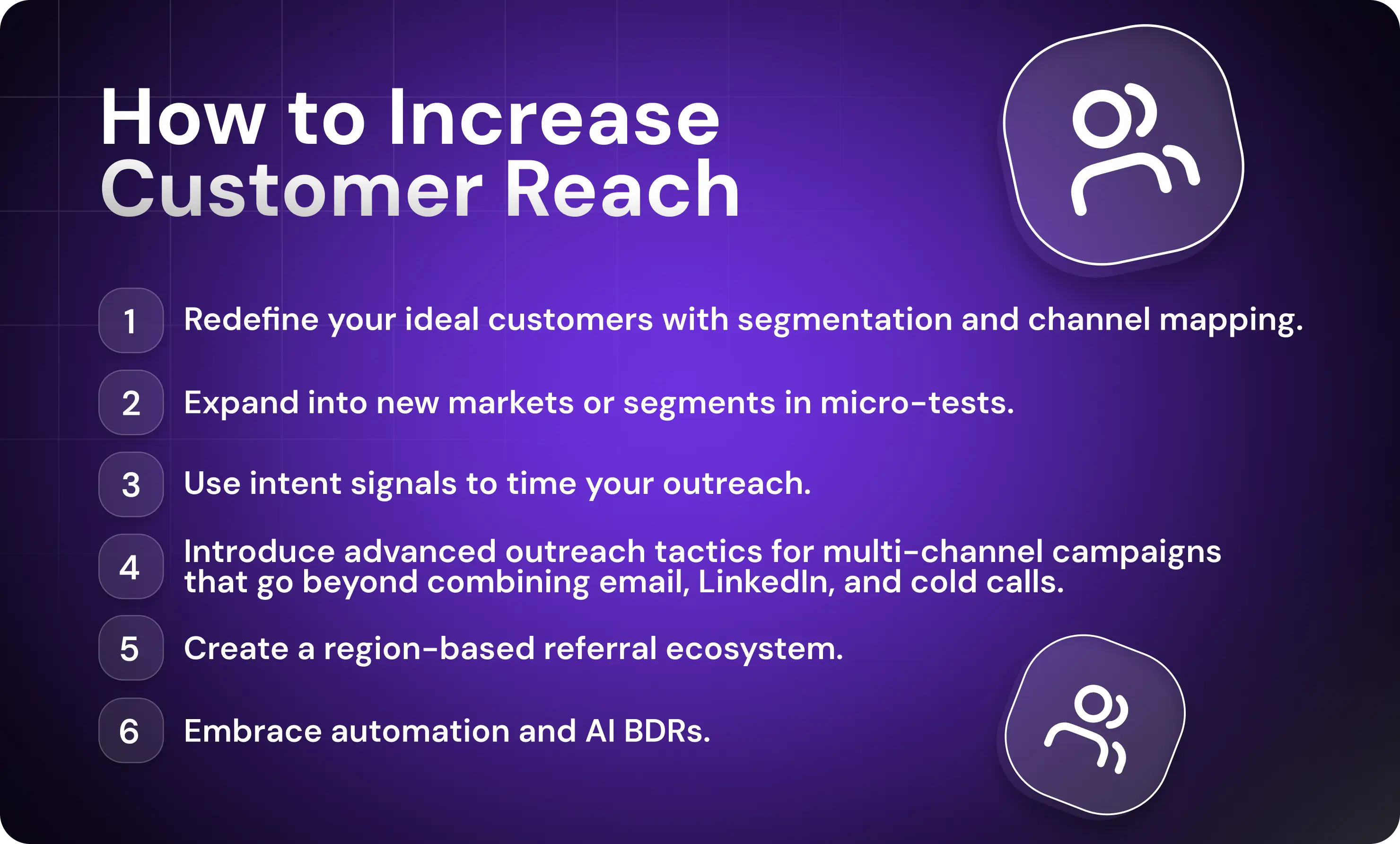
Instinctively, salespeople think of hiring extra BDRs to make more calls, write more cold outreach sequences, and double down on prospecting. But these motions won’t help when the foundation is shaky.
The fix is getting sharper with targeting and smarter with channels.
1. Redefine Your Ideal Customers (and Where to Find Them)
You already have your ICP, so let’s skip the basics. The real move is looking at your ICP and buyer personas at a different angle. Get your CRM data ready and start analyzing for the patterns that unlock growth opportunities.
Step 1: Use Historical Data for Segmentation
Segmentation based on historical data is like a revenue-mix analysis. It shows who buys the fastest, spends the most, and expands over time. To find your best segments, export closed-won data from the last six months and group deals by the following criteria:

Firmographics: Industry, company size, region
Technographics: What tools they use, what they’ve recently adopted/dropped
Buying signals (if you collect them): Funding rounds, job postings (hiring BDRs indicates outbound maturity, for example), recent leadership hires
Historical performance data: Annual contract value (ACV), expansion rate, retention, and average deal velocity
How should you read the findings?
The simplest way is to feed the data to LLMs and ask them to spot patterns. For example, ChatGPT might unearth that companies using Gong close with a $120,000 ACV in 45 days, while another segment drags the deal out over 9 months for a $50,000 ACV.
Step 2: Channel Mapping
Once you know who closes best, the next step is to identify where they actually respond. Channel mapping is about proving which touchpoints convert for each persona.
Here’s how to map channels in three steps.
Pull raw engagement data. Export replies, booked meetings, and accepted connections from the last three to six months across email, LinkedIn, and phone.
Break this data down by role and seniority. CFO vs. VP Sales vs. Ops Manager—don’t stop at titles. Slice it by deal size and industry, too.
Categorize by time to response. Fast replies within 24 hours often signal a stronger channel fit than slow trickles.
Look for standout patterns. For instance, if product leaders convert on LinkedIn but ignore email, give them three LinkedIn touches before the first call.
2. Expand into New Markets or Segments
When your core market plateaus, the next wins usually come from adjacencies tested through a series of controlled experiments.
Start with your highest-performing ICP and ask, “Who has the same pain but sits in a different industry, location, or company size?” Since you’ve already redefined your ICP, the answer will come naturally, as some deals will be outliers.
Then, run micro-tests. Launch campaigns for 50 to 100 accounts per segment. Keep messaging tightly tied to the shared pain point.
Also pay attention to the channel. Launch pilots via LinkedIn, email, and cold calls. Your job is to understand how and where a newly developed segment responds. According to the Belkins study, C-level contacts showed the lowest responsiveness on email across nearly every industry. But on LinkedIn, C-suite reply rates reached 6.98%.
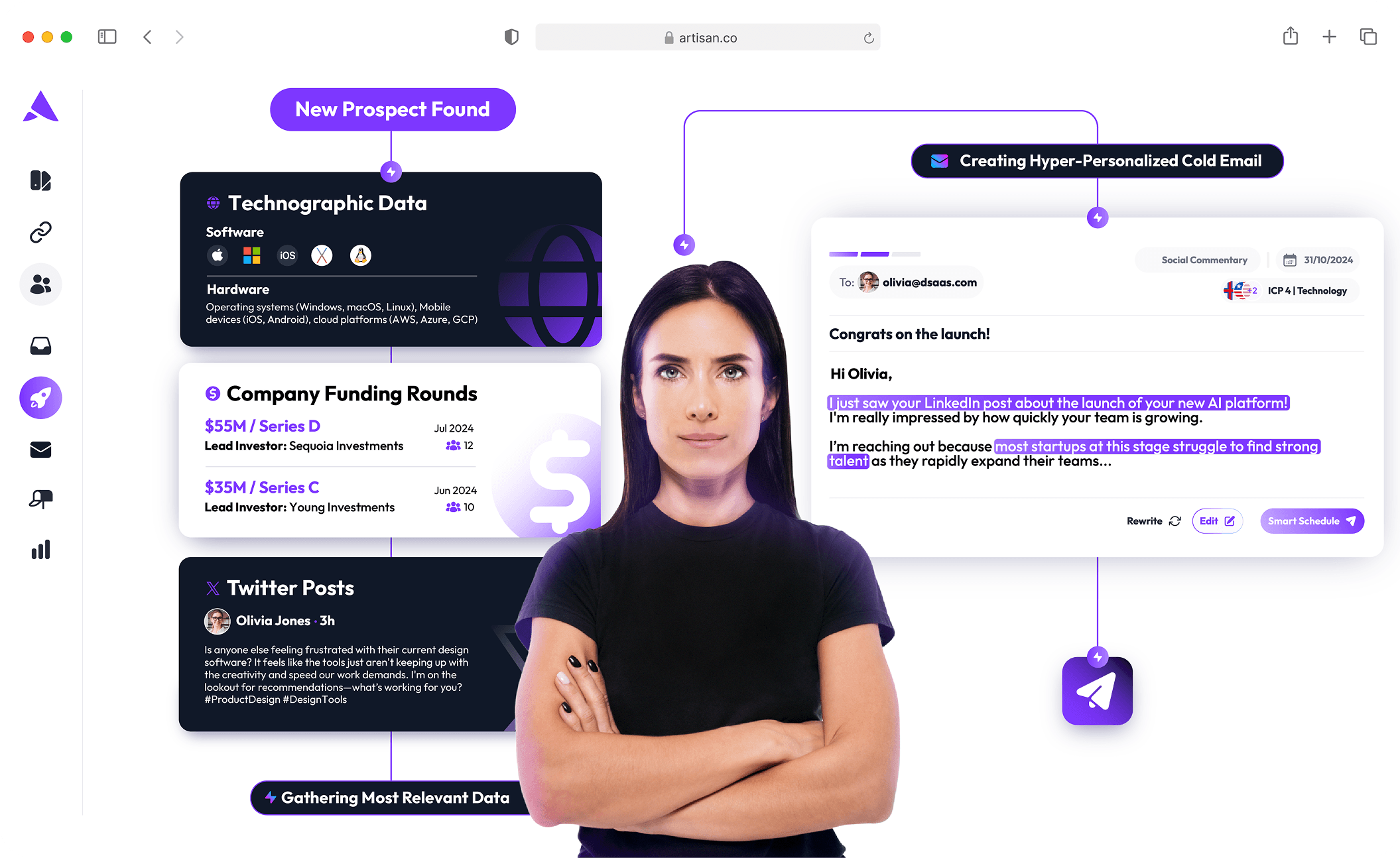
Artisan’s AI BDR Ava can help you schedule LinkedIn and email sequences and prospect leads for newly identified segments. She does all this on autopilot and at scale.
3. Use Trigger Events to Time Your Outreach
Cold outreach underperforms when timing is random. Trigger events create urgency and relevance that generic campaigns never hit. Hence, your reply rates surge.
What are those triggers? They’re not necessarily blatantly direct, like your buyer persona posting on LinkedIn that they need a vendor tomorrow. Instead, you’ll be looking into different intent signals:
Contact-level: Leadership hires, promotions, role changes
Behavioral: Repeat website visits, pricing page views, webinar attendance, behavior on landing pages tied to marketing campaigns, scroll depth, and time on site
Account-level: Funding rounds, new product launches, expansion into new geos
Social listening: Statements of intent on LinkedIn, X/Twitter, Reddit, etc.
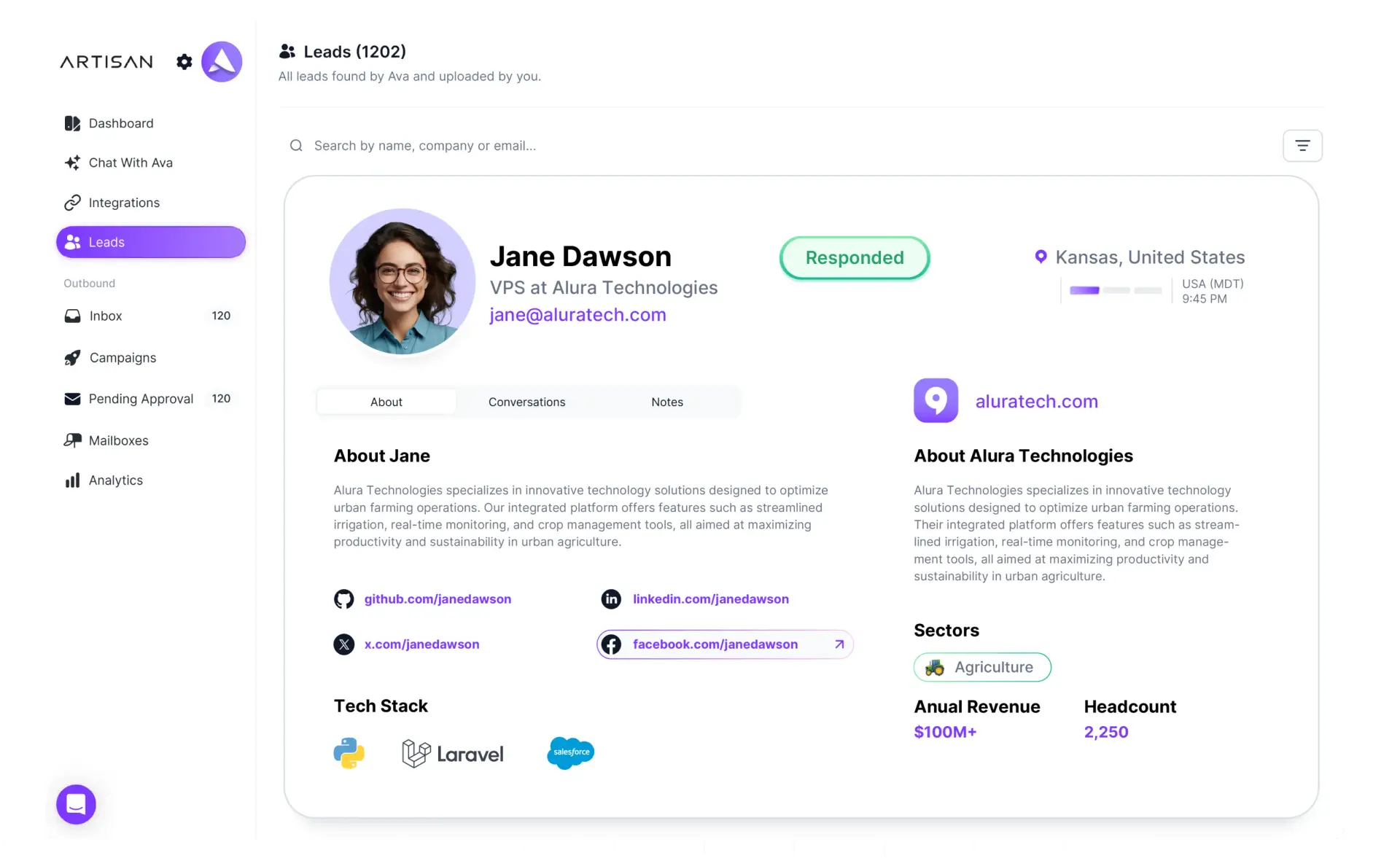
To get this data, RevOps specialists should connect intent data providers like Bombora, LinkedIn Sales Navigator, 6sense, or Artisan too their CRMs. Ava, for instance, collects real-time data insights from LinkedIn, Crunchbase, company websites, funding rounds, and more, and swiftly develops personalized pitches based on them.
4. Multiply Your Channels (Go Multi-Channel Outreach)
BDRs have been dealing with increasing outreach fatigue over the past two years and are now seeing a mere 7% reply rate. Everybody is sick of having even more AI-written cold emails. The cure is going multichannel.
For example, the healthcare industry hits a 9.25% reply rate on LinkedIn,with only 5.01% via email and 1.12% via cold calling. Does this mean that you have to invest heavily in LinkedIn sales? No, since a combined effort with new tactics yields greater results.
As such, following up via cold calling results in 52% of all appointments, according to 5 million cold dials analyzed by Nooks. Yet, fewer than 21% of outbound SDRs use them.
To put all the insights into action, design sequences where each step builds on the previous one.
A simple multi-channel example might look like:
Day 1: Email
Day 3: LinkedIn connect and DM
Day 5: Voice note
Day 7: Cold call
Salespeople also layer in the following advanced tactics for multi-channel outreach:
Video and voice notes online (e.g., insert a 30-second Loom or LinkedIn voice note after your second email).
WhatsApp notes in EMEA, or WeChat in APAC.
Event touchpoints that tie outreach to where prospects already engage—for example, a DM on LinkedIn the week before an industry event and a follow-up by phone after their talk or panel.
Offline layers like direct mailing for enterprises or gifts delivered to the office of a potential prospect.
Blending more sophisticated tactics with simple touchpoints like LinkedIn will help you stand out in crowded inboxes.
5. Leverage Existing Customers and Partners
Referrals are a standalone channel that B2B sales reps often neglect. And if you think that dropping a line like “I would appreciate you recommending us to your circles,” will suffice, it won’t. Turning referrals into pipeline demands structure, incentives, and a cadence that compounds reach.
Here’s your step-by-step process to start off and generate your first new deals from existing customers:
Start with accounts showing high net promoter scores (NPS), fast time-to-value, or multiple active members. These customers are the most likely to refer.
Select a small segment and reach out to them with a simple ask to recommend your services to their peers—and inquire whether they feel comfortable doing so. Better via phone so you can pick up on their tone of voice, mumbling, or hesitation.
Mention the referring account in your outreach to instantly build rapport with new accounts, e.g., “We’re thrilled that [referring company name] recommended us. They’ve been valued clients for over three years.”
Identify adjacent tools or consultancies your ICP already pays for. Cross-promote with joint webinars, playbook swaps, or bundled offers.
To make the most out of your referrals, track this channel in your CRM. Knowing conversion rates lets you allocate resources with confidence and scale up partnerships.
6. Embrace Outbound Automation and AI
You can’t scale your reach by hiring more people. It’s simply ineffective and burdens you with BDRs' ramp-up time, enrichment, prospecting, added costs, etc., even among the best-trained teams. Automation and AI, on the contrary, extend coverage without hassle.
Here’s how AI sales tools help BDRs to increase customer reach:
Offloads prospect research, list enrichment, and CRM updates
Performs trigger-based outreach at scale
Enables personalization waterfalls—advanced AI doesn’t just insert {{first name}}, but rather finds relevant prospect details and builds messages around them
Automates multi-channel syncing and logs touchpoints into your CRM
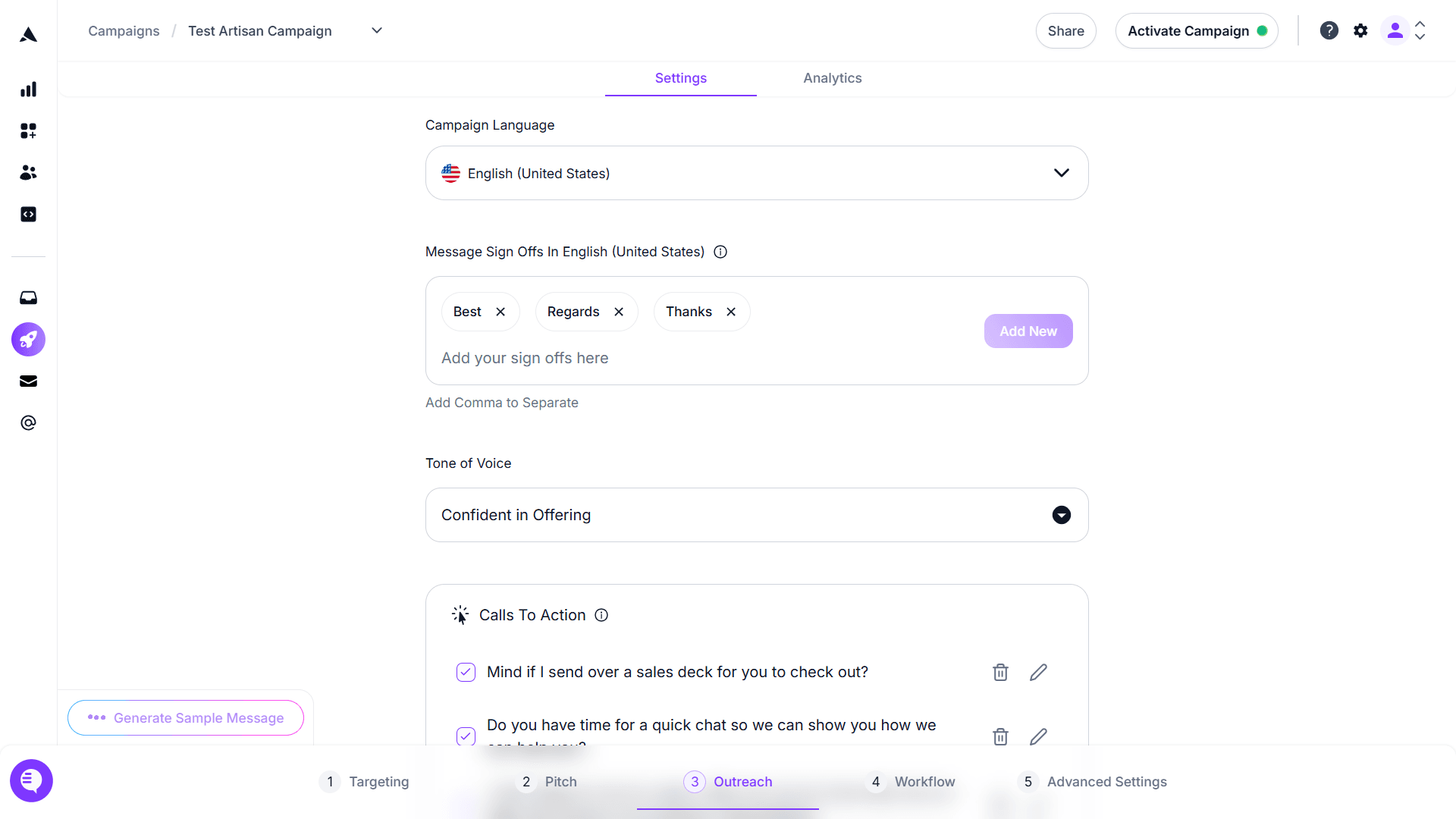
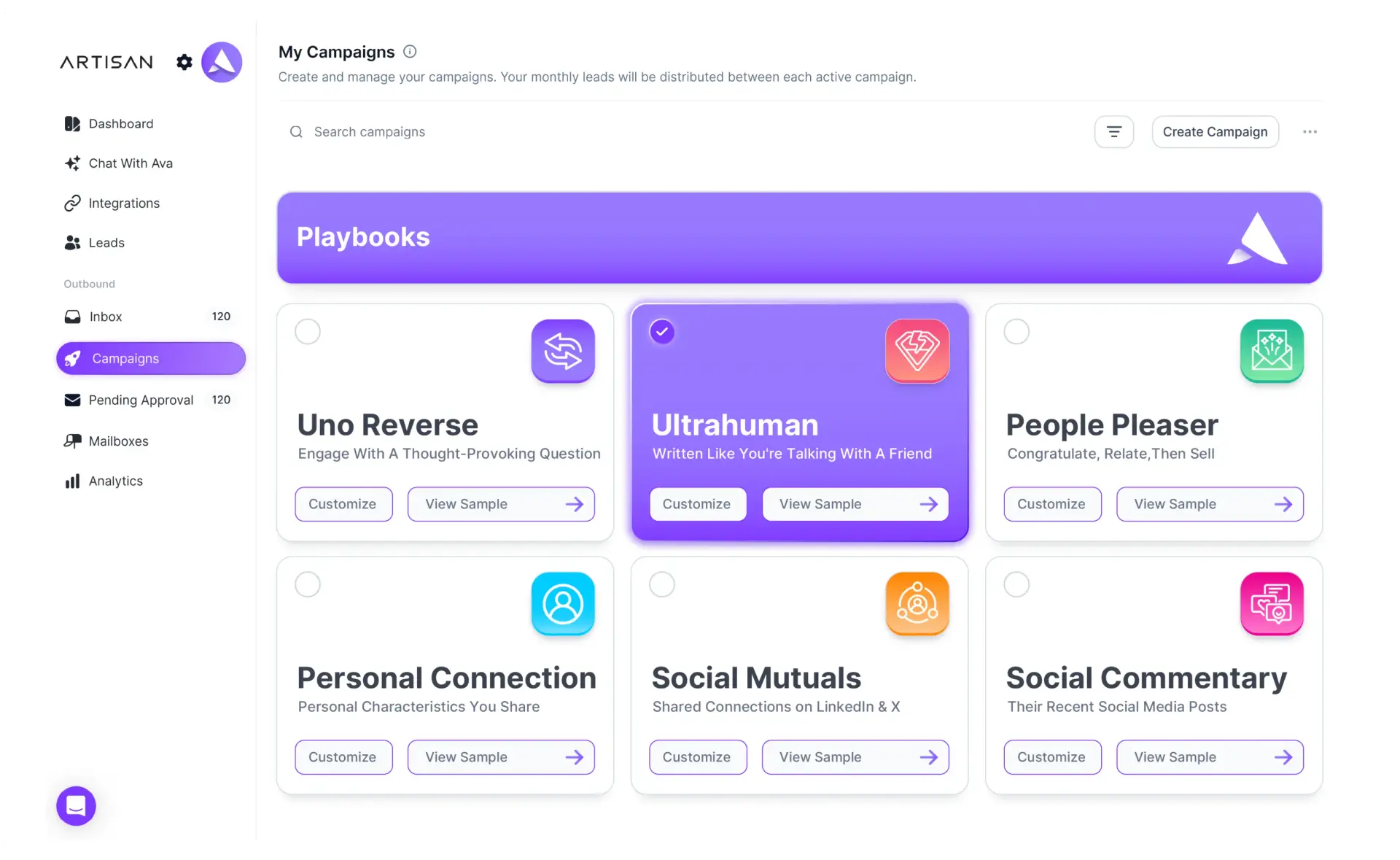
Ava, Artisan’s virtual BDR, is an always-on BDR that prospects 24/7, sources intent signals for every lead, and drafts LinkedIn and email sequences. She continually refines tone of voice and targeting for as long as outreach campaigns are live.
Real-World Scenarios: Increasing Reach in Action
Different growth stages require tailored approaches. Startups can’t afford solutions for enterprises, and mid-market businesses have outgrown startup tactics. But all can learn and steal ideas from each other.
Startup Founder Example
Early-stage founders face a painful dilemma—adding headcount is expensive, but slowing outbound means starving the pipeline. The simplest and most effective solution is to plug in AI BDRs to automate outreach at scale and let real humans (your SDRs) focus on conversations.
However, there are more ways startups can expand customer reach:
Expanding beyond core target markets to adjacent niches
Expanding geography to cater to international demand (this can be automated with an AI BDR, too)
Community-led growth (e.g., the founder builds a Discord or LinkedIn community and uses it as a pipeline engine)
Partnering with a complementary startup (e.g., analytics and CRMs) to cross-sell into each other’s accounts
Launching a free tier or integration that exposes the product to a broader user base (e.g., marketplace listing and Chrome extension)
Mid-Market Sales Team Example
At the mid-market stage, the sales team is big enough to cover lots of accounts, but workflows get messy, and channels saturate fast. Sales leadership often finds themselves in a position of saying, “Seems like we’ve used up all prospective accounts, and now it’s hard to find more growth opportunities.”
To fill this prospecting gap, sales reps can carry out the following battlefield-proven tactics:
Re-assigning accounts by vertical or deal size to give reps a sharper focus and reduce overlap
Systematizing referrals and upsells, as mid-market accounts typically have multiple departments or regions that are still untapped
Launching trigger-based outreach automatically on news of events like funding, leadership hires, tech adoption spikes, and social cues like event attendance, comments, and posts
Running orchestrated cadences that layer email, LinkedIn, calls, and even WhatsApp (in regions where it performs well)
Splitting reps by strength—some should double down on phones, others run LinkedIn-heavy sequences—and then routing leads accordingly
Syncing with marketing on ABM campaigns so reps piggyback on warm intent instead of relying entirely on cold prospecting
Enterprise BDR Example
To expand customer reach at the enterprise level, business development representatives need to start using more sophisticated tricks. They also need to lean on CRM data in a big way.
Here’s how to operationalize your enterprise prospecting for greater reach:
Break giant account lists into micro-segments and design tailored cadences for them. Group account lists by shared characteristics like sub-verticals, tech stack maturity, organizational structure, and so on.
Map five to seven decision-makers per account to increase multi-thread engagement.
Centralize buying signals and route them instantly to the right rep.
Resort to less saturated channels like direct mail or even in-person events.
Leverage partner ecosystems and integrators to co-sell—partners often have existing enterprise relationships you can’t replicate.
Split global BDR teams by geography to the city/region level to increase cultural and channel fit.
Dedicate a fraction of reps to constant A/B testing of messaging, sequences, and formats, then roll out proven wins org-wide.
Build a referral ecosystem in a region. Enterprise accounts usually have multiple business units and global offices—build repeatable internal referral plays to reach new stakeholders.
Reduce outbound sales tool sprawl (multiple sequencing platforms, enrichment vendors) to cut handoffs and unify reporting.
The rule of thumb is to go granular and act on those micro-segments. You can still use cadence templates, but make sure they’re hyper-tailored to the pain points you’ve unearthed.
Increasing Customer Reach with Artisan’s Outbound Automation
AI sales agents are changing how sales teams expand their reach. They can fill your pipeline with new opportunities but without added headcount. Let’s look at how Artisan’s AI BDR Ava makes this happen.
Let Ava Handle the Busywork
Outbound scale breaks when humans are stuck on admin. AI BDR Ava clears that bottleneck by automating the repetitive but critical motions that burn hours every week.
Here’s what Ava does:
Enriches contacts automatically so reps never chase stale data
Spots funding rounds, new hires, and repeat site visits and launches sequences instantly
Sends polite nudges across email and LinkedIn until a reply comes in and stops when needed so reps don’t double-touch
Logs every step into Salesforce or HubSpot, keeping records accurate without manual updates
Multi-Channel, One Platform
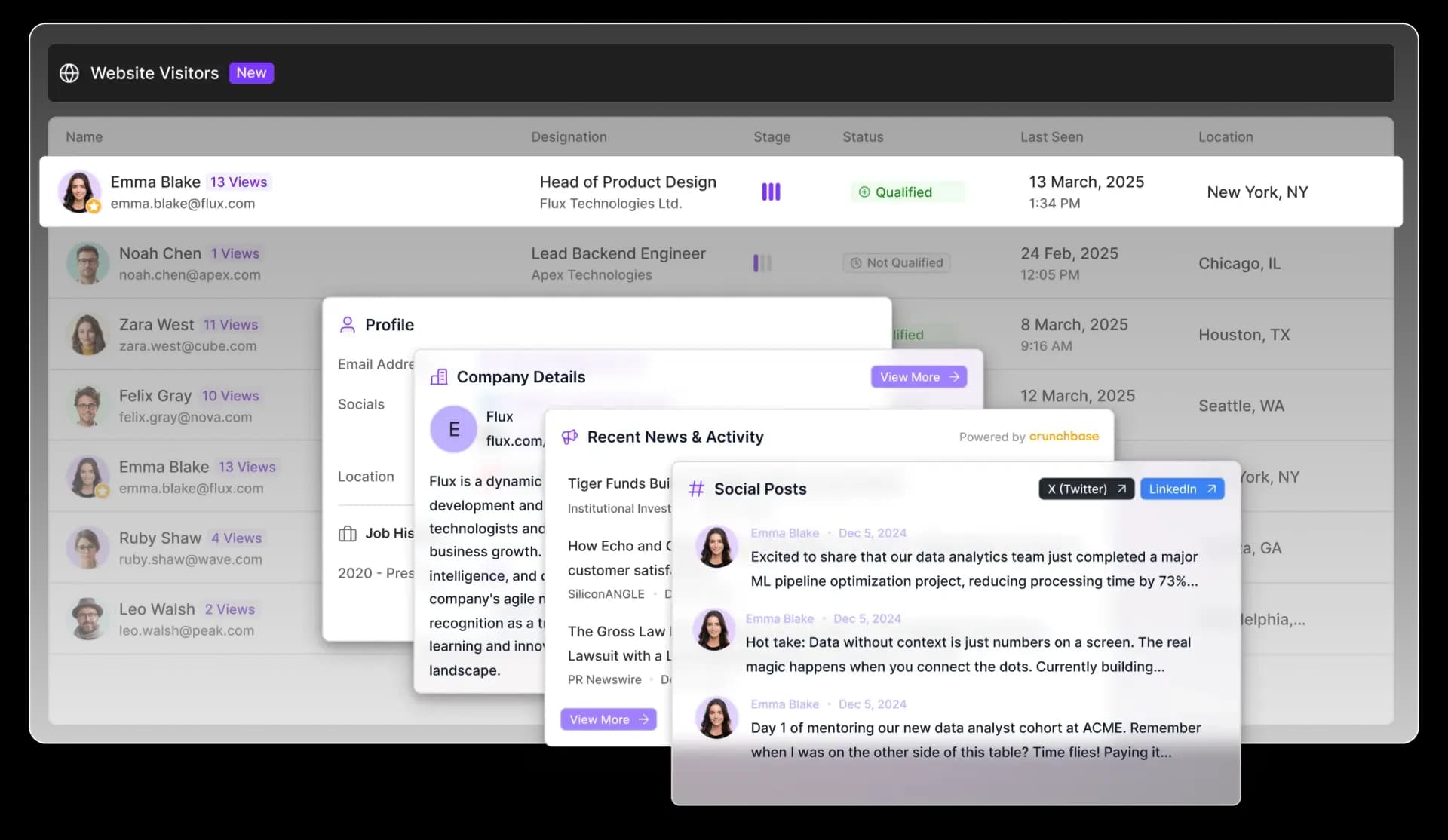
Artisan is more than a mere prospecting tool. Customers also benefit from built-in inbox warmup, website visitor tracking, automated follow-up sequences, deliverability monitoring, deep outreach analytics (like ICP performance), and data enrichment. Artisan swiftly integrates with LinkedIn, email, and your CRM.
Built for Teams Who Want to Scale
For startups, Ava can replace the first 1 to 2 BDR hires with an AI agent that prospects, follows up, personalizes messages, and books meetings. Similarly, mid-market teams can integrate AI BDRs into their existing workflow to cover more accounts, enrich CRM data, and sync channels.
Meanwhile, enterprise teams can increase outreach volume by letting AI handle prospecting and message delivery, freeing reps up to focus on closing warmed-up leads.
You’ve Got the Plan. Ava’s Got the Firepower.
Finding the best outbound strategy takes time, and it’s easy to become frustrated. However, the effort you’re expending now will pay dividends.
It’s also vital that you don’t overlook the powerful role AI can play in your sales process. A tool like Artisan is designed to dramatically speed up and scale your workflow with automated prospecting, outreach personalization, campaign optimization, and more.