Corporate sponsorships can be a powerful revenue driver.
If you’re a startup, small business, event organizer, or nonprofit, you can make mutually beneficial trades with larger companies. The sponsor gets exposure, and you get much-needed income.
Today, we’ll cover everything you need to know about securing sponsorships, including how to reach out across different channels.
Identifying Potential Sponsors (Finding Your Best Targets)
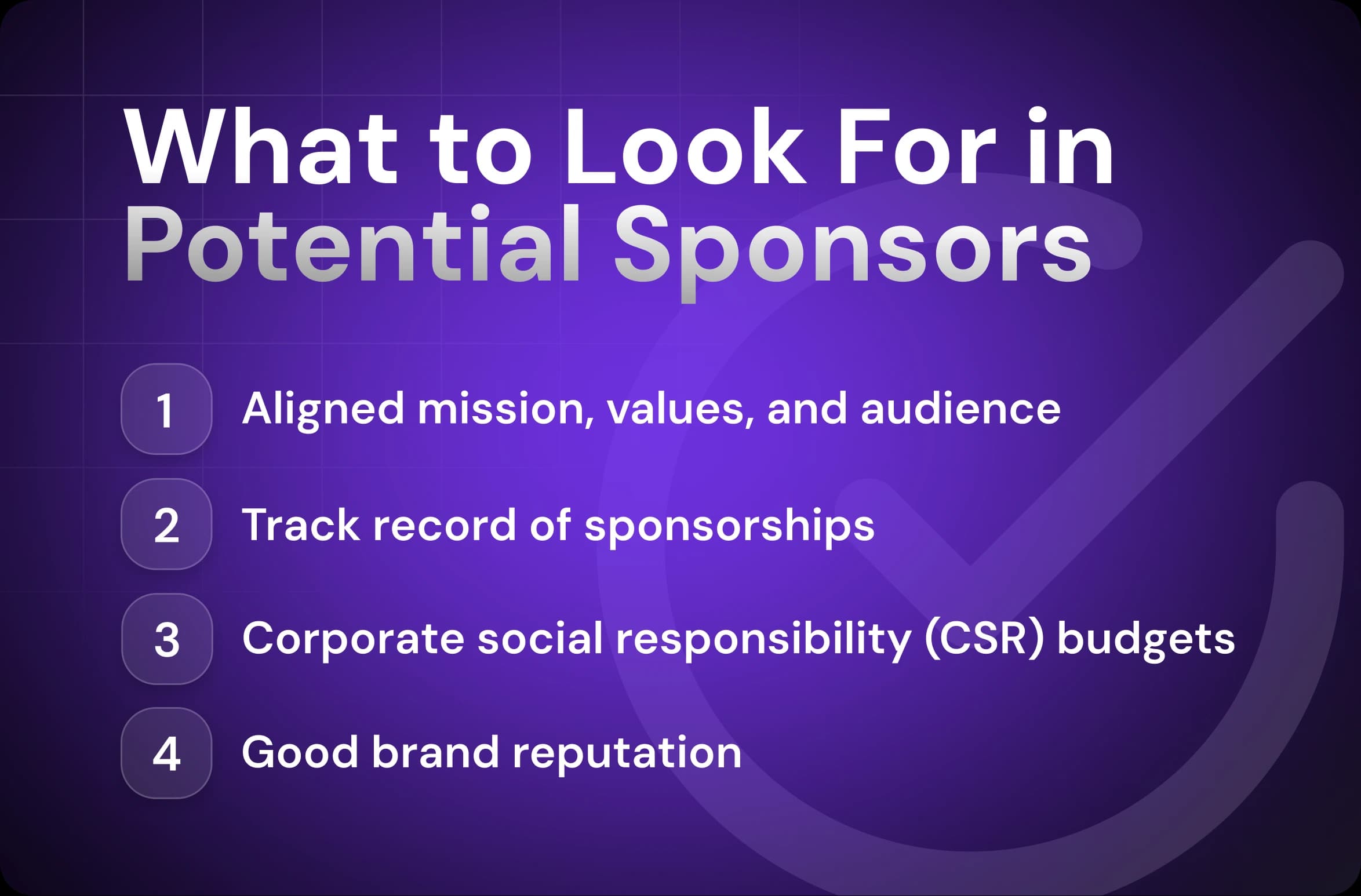
The best sponsors are businesses with a target audience that matches your customer base. They’re the ones most easily persuaded to partner with you because they have the most to gain.
It’s also important to make sure the sponsor shares your brand’s values. If you partner with a brand that shares your mission, people will perceive that partnership as proof that your brand truly cares about what your marketing says it does.
Here are the best ways to find potential sponsors that satisfy the above criteria:

Scan your ideal customers’ favorite publications and see which brands advertise there.
Review sponsors from previous industry events.
Find businesses in your area that also serve local customers (best for local businesses).
Check LinkedIn connections to find people in your network who share your audience.
If you find an ideal sponsor, research their competitors.
Once you’ve identified some potential sponsors, qualify them by researching the following:
Marketing goals: Can you help them reach KPIs?
Past sponsorships: Have they sponsored businesses like yours?
Budget and spending capacity: Do they have the funds to meet your goals?
Brand reputation and perception: Does their branding overlap with yours?
Corporate responsibility: Do their labor practices align with your moral compass?
Remember, this is to help you as much as them, so make sure the brands you engage with can offer what you need, whether that’s money or in-kind support like event space or products to give to customers. Set sponsorship goals before reaching out to ensure you’re targeting the right potential partners.
Crafting Your Sponsorship Packet & Value Proposition
Asking for a sponsorship isn’t the same as asking a relative to sponsor your 5K run. It requires more professionalism. A powerful indicator of this seriousness is your sponsorship packet.
Why a Sponsorship Packet Matters
Your sponsorship packet acts as your professional pitch and a menu of sponsorship opportunities.
It persuades potential sponsors to support your business by explaining the program or event they’ll sponsor and sharing the benefits of doing so, whether that’s access to your audience, community goodwill, or brand exposure.
What to Include in a Sponsorship Packet
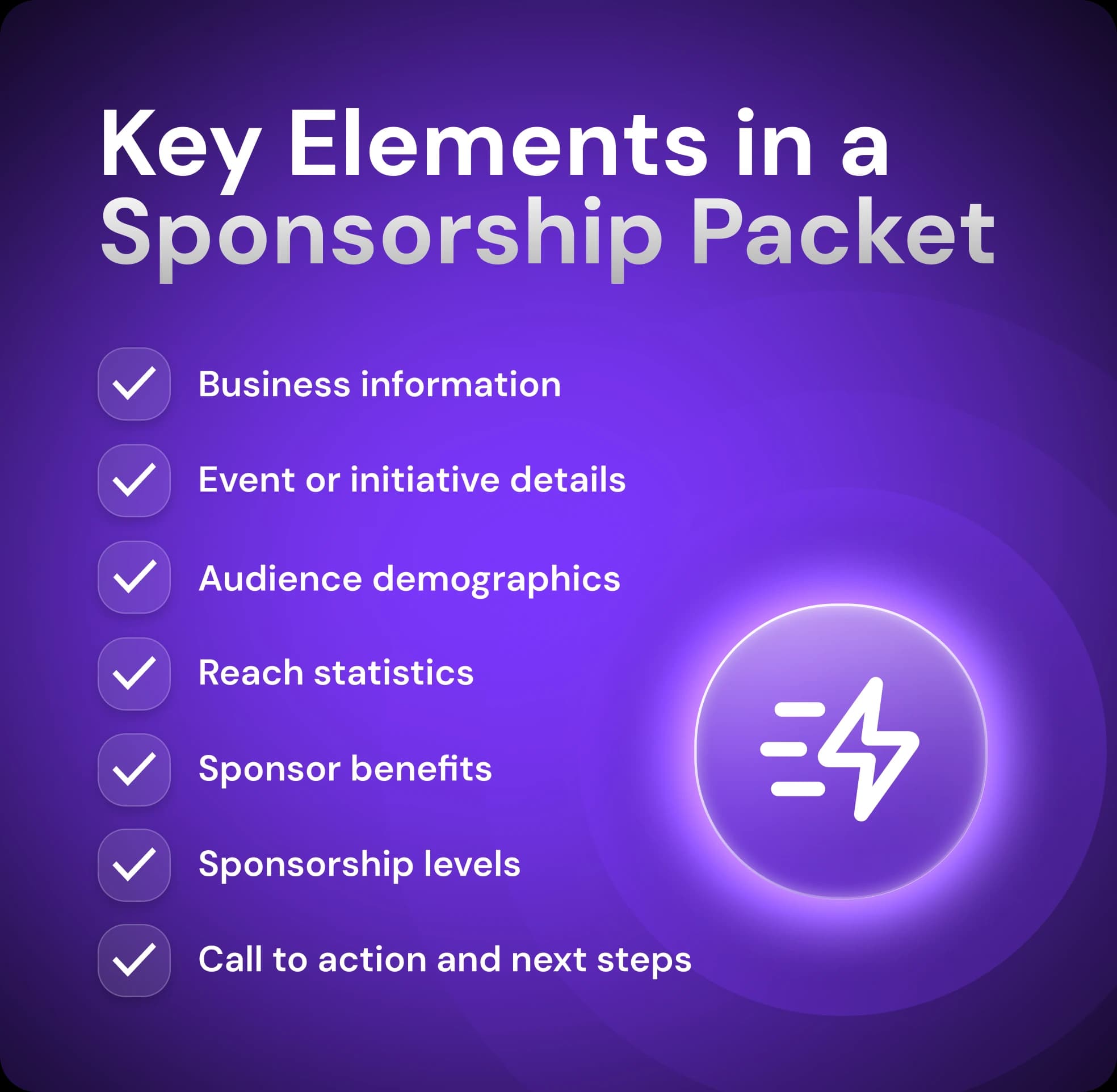
Your sponsorship packet should include the following details:
Business introduction: Introduce your business in a few short paragraphs. Help the sponsor see that you are a business worth partnering with due to your shared values, mission, and audience.
Program/event overview: Where is it, and when does it take place? What are the core activities? What outcomes do you want to achieve? Why is this program or event unique in your industry? Is it an in-person or virtual event?
Audience and reach stats: Describe the demographics, interests, and needs of the audience, and show statistics that give the sponsor an idea of how many people will see their brand. For example, a football stadium should provide regular attendee numbers.
Sponsorship benefits: Cover logo placement, shout-outs, speaking slots, VIP access, and email list access.
Sponsorship levels: Provide different sponsorship levels, categorized by how much the sponsor pays. Common tiers are bronze, silver, gold, and custom.
Call to action: Ask them to take the next steps with you—often that’s having a meeting or a call—and provide contact details.
It makes sense, especially if you’re a nonprofit, to take a mission-driven angle, focusing on how the sponsor will be assisting in a higher purpose, like democratizing AI or preserving the forests. Playing on potential sponsors’ heartstrings has always been an effective persuasion technique.
Making Your Pitch Attractive & Customizable
Your sponsorship packet should be visually appealing, designed with your brand colors, and skimmable—make use of white space, bulleted lists, visuals, and headings to break up large chunks of text.
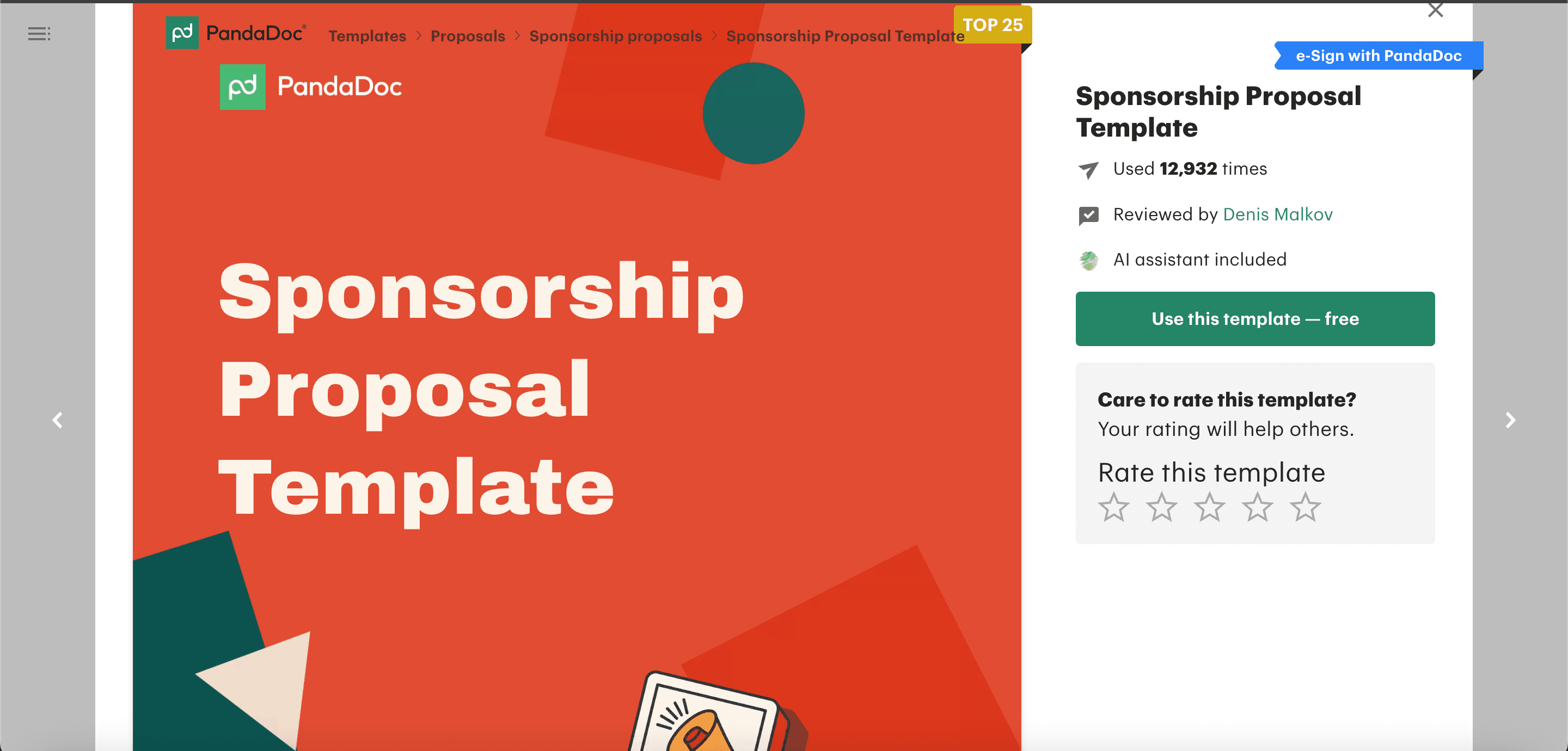
You can use design tools like Canva or PandaDoc to design your packet or access pre-made templates.
For example, here’s a sponsorship proposal template from Pandadoc:
If possible, tailor packets to individual sponsors, highlighting how your partnership will help them reach their specific marketing objectives.
And throughout the packet, focus on their benefits over your needs. The goal is to get them excited about the opportunity you’re offering.
Outbound Outreach Strategy: Making the Ask
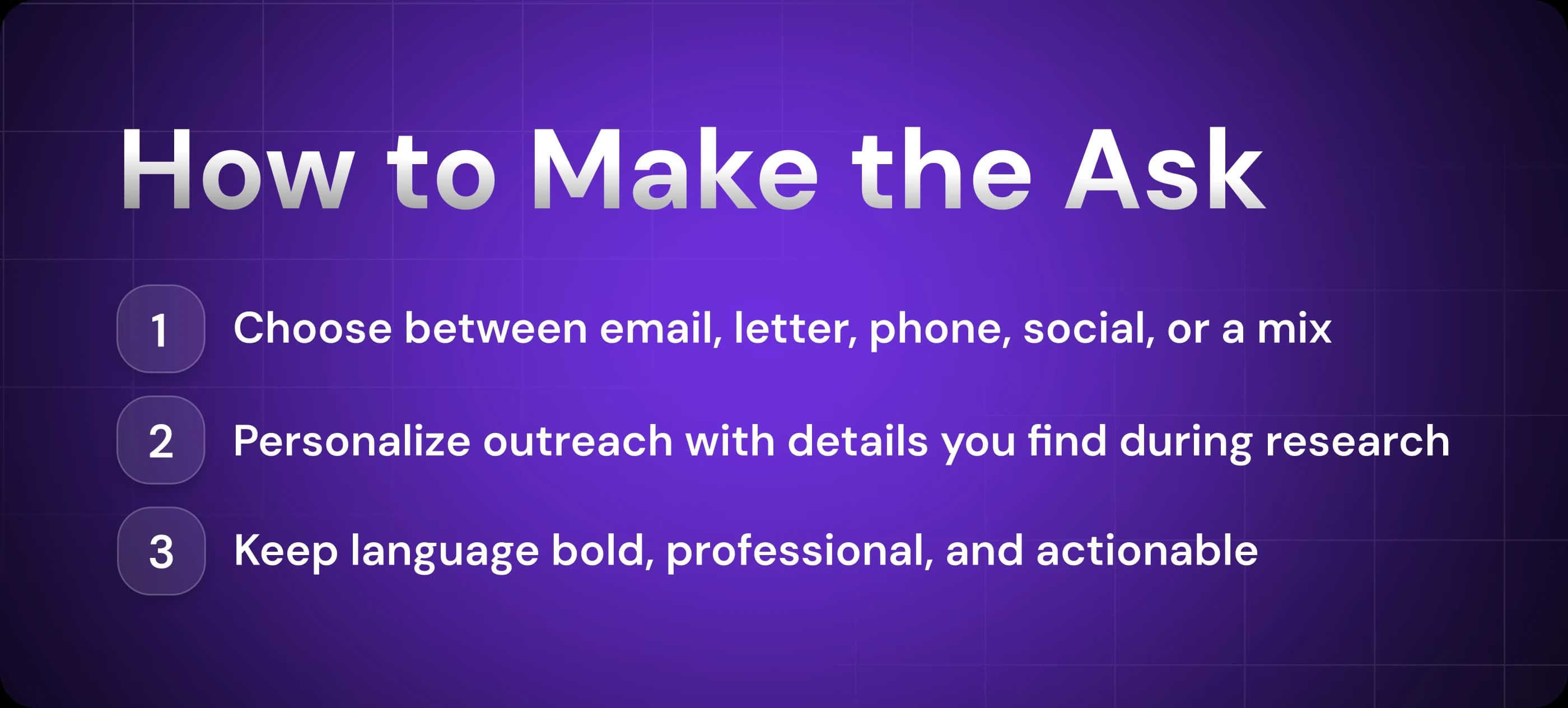
A solid sponsorship request meets three criteria: it’s sent on the right channel, it’s personalized, and it’s actionable. Cover all three, and you’ll see interest in your packages soar.
Choosing the Right Channel
The three major channels for sponsorship outreach are email, phone, and physical letters. Brands are also increasingly using social media to connect with potential sponsors.
Here are the benefits of each of these channels:
Email is easy to scale and delivery is instant. Recipients get to respond on their own time, and senders can track open and reply rates (which is crucial for outreach optimization) and attach supporting materials like sponsorship packets.
Phone calls are good for rapport-building and immediate feedback about your offer. They also give you the chance to uncover and handle objections.
Letters stand out in a digitized business world, especially if you’re using creative packaging. They’re a nice touch that expresses your genuine interest in working together.
Social media platforms like LinkedIn, Instagram, and Twitter enable you to connect via direct message with brand executives where they’re already active.
In general, it’s best to use a multi-channel outreach approach. For example, on day one you might send an email, on day two, a LinkedIn message, and on day four, make a phone call.
There’s one more point to keep in mind, too. If you regularly reach out to sponsors on social media, having a reputation on these platforms is a significant benefit. Mathew Tran, founder of Birchbury, is active on niche subreddits like r/barefootshoetalk and in minimalist Facebook groups.
He says that “offering exclusive deals and responding to feedback has built trust within these highly engaged groups and opened doors for collaborations and sponsorships.”
Personalize Everything
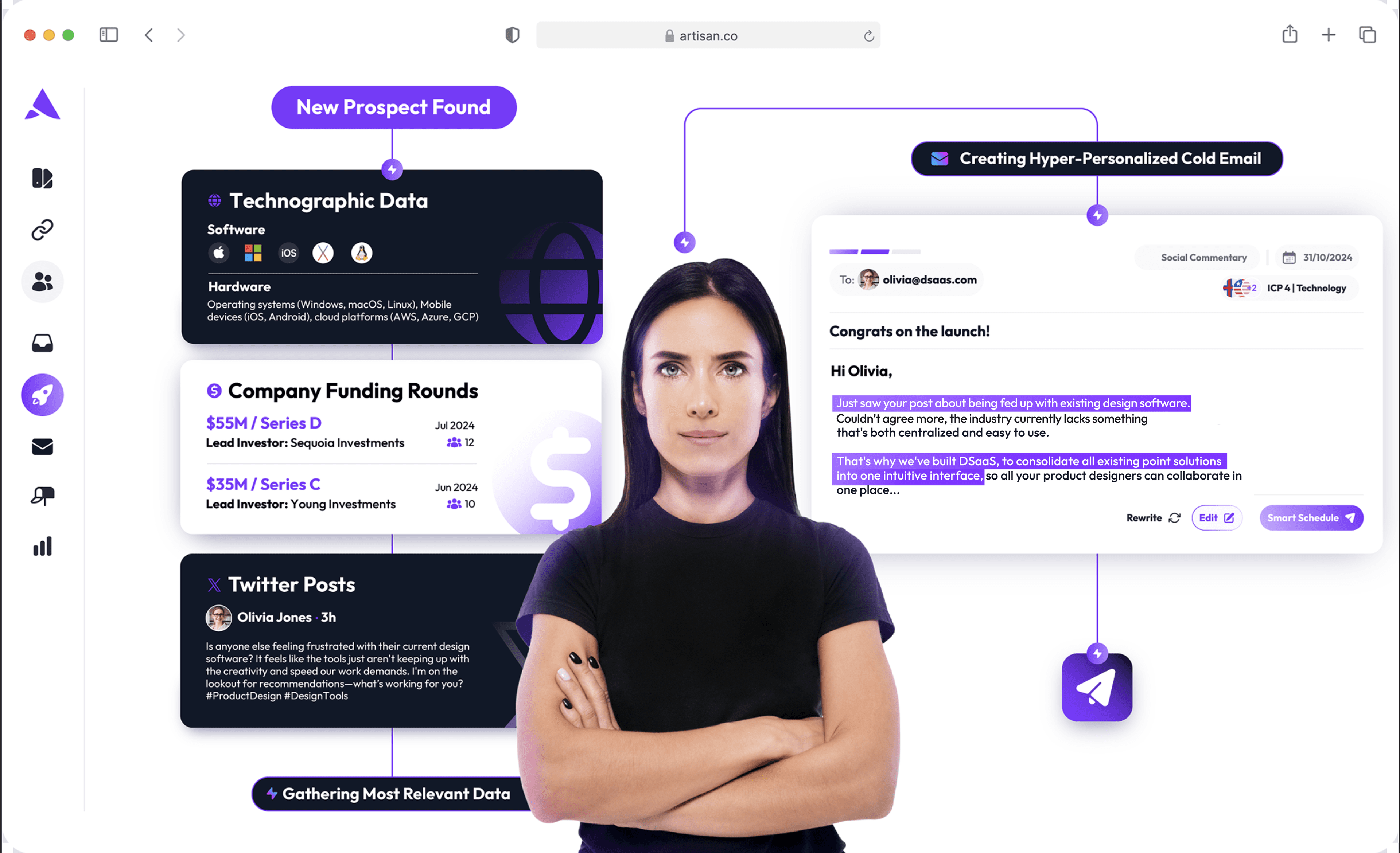
Before sending any outreach, research every lead so you can personalize your outreach and pack it with relevant benefits.
In particular, look for the following lead information:
What they’re posting on social media to get a sense of their values and interests
Their company mission to identify mission overlaps
Their past and current sponsorships to see what brands they like to sponsor
Recent company news and product launches, which are good to use as icebreakers in your messages
Target audience and demographics so you can pitch your audience overlap
Annual reports and announcements to understand their business priorities
LinkedIn profiles of decision-makers to learn the interests of the people in charge of sponsorships
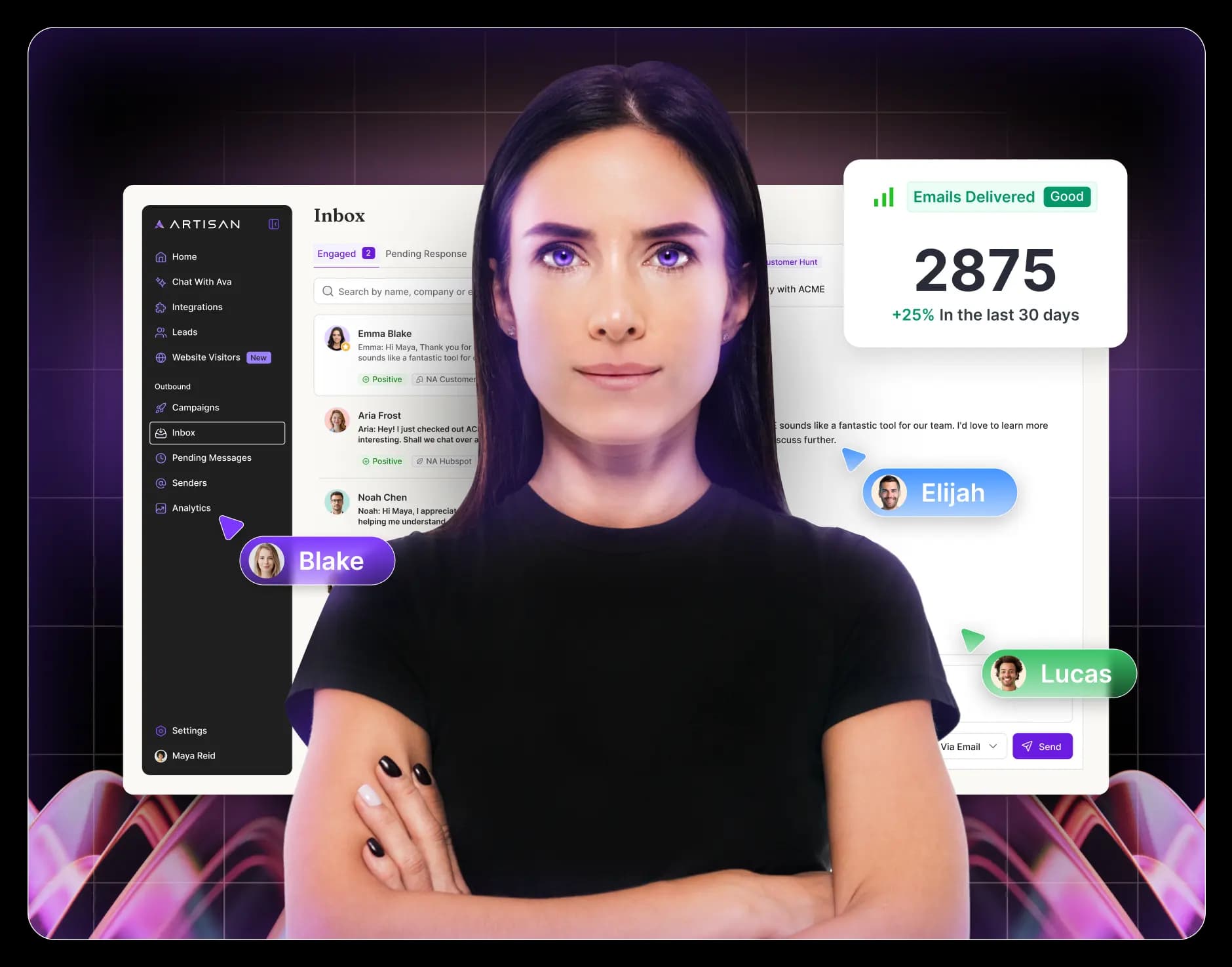
An AI outbound automation tool like Artisan can streamline this tedious research process. AI BDR Ava automatically researches target decision-makers across social media and the web and then crafts and sends personalized messages to them. She essentially generates meetings on autopilot so you can focus on holding convos with sponsors, not getting their attention.
Keep It Bold & Actionable
Be confident and respectful in your outreach.
Here’s a trick for striking the right tone for calls and emails. Pretend you’re writing to a former college study buddy (not your drinking buddy) who is now a working professional—someone you didn't know too well but have some rapport with.
This will lighten you up and set you at ease, while still ensuring you maintain a professional and courteous tone.
Then end with a clear call to action. That might be a meeting, a call, or some other next step that leads you closer to a deal.
How to Ask for Sponsorships via Email
Use the template below as inspiration for your first sponsorship outreach email. Or, if it fits, feel free to use it as is.
Personalized greeting: Hi [Name], I saw [company name]’s recent work on [event/campaign], and I couldn’t help but admire your commitment to [shared cause related to your sponsorship opportunity].
Hook with value to sponsor: I’m reaching out because there’s strong alignment between your values and our [event/program/project]. We’re expecting [number] attendees/viewers from [target demographic].
Briefly state the ask: I’d love to explore a sponsorship partnership with you. Our package includes [2-3 major benefits like logo placement, speaking opportunities, etc.].
Include a clear CTA: Are you available for a quick 15-minute call this week to discuss this more in-depth?
Professional sign-off: Looking forward to hearing from you. All the best, [your name].
Avoid sending your sponsorship packet in the first email. You’re trying to start a conversation. Only send the full packet once they’ve agreed to explore the opportunity.
Also consider using AI-powered email tools to automate email campaign writing, scheduling, and analytics.

How to Ask for Sponsorships With a Letter
Letters are good to mix into your sponsorship outreach for those leads that will likely respond well to a more personal, professional touch. They’re especially popular in formal, traditional industries like finance, law, and manufacturing.
Here’s how to send an effective letter asking for sponsorship:
Follow the same email structure: Introduce your company, state your mission and how it aligns with theirs, ask for the sponsorship, share the benefits of working together, give next steps, and sign the letter.
Keep the tone reasonably formal: Use professional language, avoid contractions and exclamation points, and sign off with “sincerely.” This conveys seriousness and professionalism to your potential sponsor (whose reputation will be connected to yours if they agree to sponsor you).
Attach sponsorship packet: Unlike in an email, you can include a personalized sponsorship packet in the envelope. Detail the sponsorship tiers, target audience, event details, past sponsor results, and key benefits of partnering.
There’s no way to know if they’ve opened and read your letter, so it’s best practice to call five business days after it was delivered to check in and open a conversation.
Follow-Up Without Being Pushy
The decision-makers you’re contacting are busy and overwhelmed with emails, so don’t give up if they don’t respond immediately. As the adage goes, the squeaky wheel gets the grease. Keep “squeaking” and you’re more likely to get noticed.
When following up, follow these best practices:
Reach out three days after initial contact: This way you never come off as pushy but still reach them before they’ve forgotten about your first message.
Keep track with a mini sponsorship pipeline: Use your CRM or sales engagement to set up auto-alerts that remind you to send the follow-up.
Adjust approach based on feedback: For example, if you find that social media follow-ups two days after an outreach email have higher reply rates than when waiting a week, alter your process accordingly.
Use a variety of channels: Alternate your follow-up techniques. Switch between social media, email, and phone to ensure you’re reaching out by their preferred channel.
Share case studies of past sponsors: Use your follow-up emails to give them proof that sponsoring you pays off.
Many businesses are turning to platforms like Artisan to scale outreach at a fraction of the usual cost. AI BDR Ava follows up with leads at exactly the right time across a range of channels and alerts you when a lead sends a positive response.
Tailoring the Ask to Different Sponsorship Categories
Your outreach approach depends on your specific sponsorship scenario. For example, asking a company to sponsor your nonprofit is different from asking them to sponsor your small business. Let’s look at three common cases and how to win sponsorships for them.
How to Ask for Sponsorships for Nonprofits
If you're a nonprofit, here are four tips for boosting the reply rates of your outreach:
Lead with mission and impact: What change are you trying to produce in the world? Save the wetlands? Help immigrants start businesses? Lead with this mission, show data to prove your impact, and discuss how this aligns with the values of the sponsor.
Target companies with corporate social responsibility (CSR) budgets: Some companies set aside money to invest in corporate social responsibility initiatives. The best way to find out if a company does this is to see if they have a CSR manager. If they do, that means they have a budget for it.
Emphasize recognition and goodwill: Large corporations know sales can plummet if they lose the trust of the public. They also know that people buy from companies they find ethical. So emphasize how this partnership will help them boost brand reputation.
Use storytelling: Tell a narrative about the problem your nonprofit solves, the people it helps, and the changes you’ve made in their lives. Emotionally resonant stories, paired with evidence, are powerful persuasion tactics.
How to Ask for Sponsorship Money for an Event
For event sponsorship outreach, follow these best practices:
Discuss event experience: Share metrics about the success of past events, like “Last year’s event generated 553 new leads for sponsors.”
Highlight audience numbers: Mention metrics like “1,000 registered attendees” and “hundreds of decision-makers in [industry].”
Offer tiered packages or specific sponsorship assets: Offer tiered packages at different dollar amounts. Alternatively, let sponsors pick specific assets to sponsor, like the keynote stage, venue rental, or swag.
Talk about event-specific benefits: Discuss the benefits sponsors get at each tier. That might be logo placement on the bronze tier, booth space and logo for silver tier, and speaking slots, VIP networking, and high-traffic booth space for gold tier.
Start outreach early: Start outreach at least four months before the event. This gives sponsors advanced notice so they can prepare. Create urgency by offering early-bird specials and the chance to pick which asset to sponsor.
How to Ask a Company to Sponsor You (Individual and Small Org)
Startups, small businesses, and solopreneurs should approach sponsorship outreach with two principles in mind:
Position yourself as a credible brand: Tell your brand’s origin story, share your growth numbers, and provide indicators of credibility, like company features in respected publications or past sponsorships from reputable brands.
Emphasize professionalism and alignment: Discuss how your brands share the same audience and values. Give evidence to support this, like your audience demographics.
To illustrate, here’s an example script asking a company for support:
Hi [Name],
I’ve been following your business for some time now, and I’ve always appreciated your [compliment about their mission], especially as it manifested recently in your [company news].
It looks like we are both working towards [mission] for [audience demographics]. That’s why I wanted to reach out to discuss a potential sponsorship partnership.
My name is [name], and I’m the founder of [company name], which helps [short value proposition]. Over the last year alone, we’ve grown by [growth numbers] and were even featured in [reputable publication] for our commitment to [mission].
I believe a partnership could help you [benefit 1] and [benefit 2].
Would you be open to connecting for a short call this week to discuss sponsorship opps in more detail?
All the best,
[Name]
Sealing the Deal & Managing Sponsor Relationships
Congrats. If you’re here, the sponsor has agreed to discuss the opportunity. However, don’t assume your work is done once you’ve got a soft yes. There’s still ground to cover.
Here’s how to close the deal and keep your sponsor happy:
Be flexible in your negotiation: If the sponsor asks for benefits that aren’t covered in your normal package, be open to these.
Get agreements in writing: Send over a detailed sponsorship contract so the agreement is legally binding and to serve as a way to establish expectations.
Deliver on early promises: If the sponsorship package includes pre-show mentions, ensure that you fulfill these commitments. This prevents any doubts from arising prior to the main event.
Send post-event follow-up: After the event or program, send a thank you note and a recap report of sponsorship benefits. For example, you might say something like, “Our event recording received 104,013 views on social media.” This encourages repeat sponsorship.
During your follow-up, always frame the sponsorship as an investment with returns rather than an act of charity (even if you’re a nonprofit).
For example, Gor Gasparyan, founder of Passionate Agency, regularly works with sponsors. He found the best approach to acquire corporate sponsors and keep them happy was to position packages as an investment opportunity.
“I ended up developing a $20,000 package for a consumer goods company to fund a co-branded digital experience. Within six weeks, the project returned 15,000 qualified leads, and 12% translated into paying customers for the sponsor. Because of those numbers, the conversation shifted from one of generosity to one of investment.”
Quick Tips for Obtaining Sponsors
Implemented all of the core advice already covered? Great. You’re well on your way to winning your first sponsors.
Here are our best quick tips for making your outreach even more effective:
Do your homework: Find the right contact to reach out to, learn about their marketing goals and business mission, and tailor your messaging accordingly. That’s how you make your outreach stand out—by showing you did the research.
Lead with value: Begin emails, calls, and requests with an explanation of how the partnership will help the sponsor achieve a business goal or solve a problem they care about.
Stay organized: Use a CRM to track leads and past sponsors, as well as your communications with them. Regularly analyze data associated with successful deals and use it to inform your future strategy.
Automate with software: Use business AI tools to automate busywork involved in finding sponsors, emailing them, drafting packets, and managing documents.
Communicate across multiple touchpoints: Don’t just reach out via email. Spread a wide net—cold call and send social media DMs.
Show proof of past success: How have past sponsors benefited from working with you? Highlight event attendance metrics, exposure data, and lead generation examples wherever appropriate.
Aim for long-term relationships: Consistently check in with past sponsors. Offer additional value, like introducing them to a potential client. The warmer the relationship, the easier it is to ask for referrals and future sponsorships from them.
Smart Outreach Beats Spray and Pray
Mass, generic emails don’t cut it anymore. Smart, targeted, personalized outreach to sponsors who share your mission and audience is how you win sponsorship agreements that work for everybody involved.
That’s where AI BDR software provides a significant competitive advantage. Artisan is a full-scale outbound automation tool that automatically finds and researches target leads and sends them personalized, multichannel sequences, allowing your team to reach new sponsors at scale and focus on the all-important human aspects of closing deals.