Winning over high-value sponsors that naturally align with your event isn’t easy. The events industry is booming, and organizers are all vying for the same sponsorship dollars.
One of the easiest, most effective ways to stand out is to tailor your packages so they closely match the desires and pain points of your ideal sponsors. Combine this with a targeted marketing strategy, and you’ll never have to worry about empty slots again.
What Are Event Sponsorships?
Event sponsorship is when companies or individuals support an event—typically by purchasing a promotional package, but sometimes by offering resources or digital assistance. In return, the sponsor gains visibility, data, and sales opportunities.
Why Does Event Sponsorship Matter?
Event sponsorship matters because it’s a primary revenue source. Often, the difference between profitability and breaking even is a roster of good sponsors. Sponsors also add credibility and offer opportunities for partner promotion.
Here are the benefits of sponsorship to organizers:

Provides a predictable, high-margin source of revenue
Diversifies revenue beyond ticket sales
Adds credibility if brand partners are reputable
Expands event reach through partner promotion
Allows for attendee perks (swag, sponsored WiFi, food, lounges, etc.)
But these benefits only come to well-chosen sponsorships that fit seamlessly with the event experience—or even better, enhance it. Sponsor presence should enhance trust and add value. Poorly matched sponsors, on the other hand, are at best a distraction and at worst a credibility-killer—what would you think if a gambling site was sponsoring a SaaS marketing event, for example.
The Main Types of Event Sponsorship To Consider
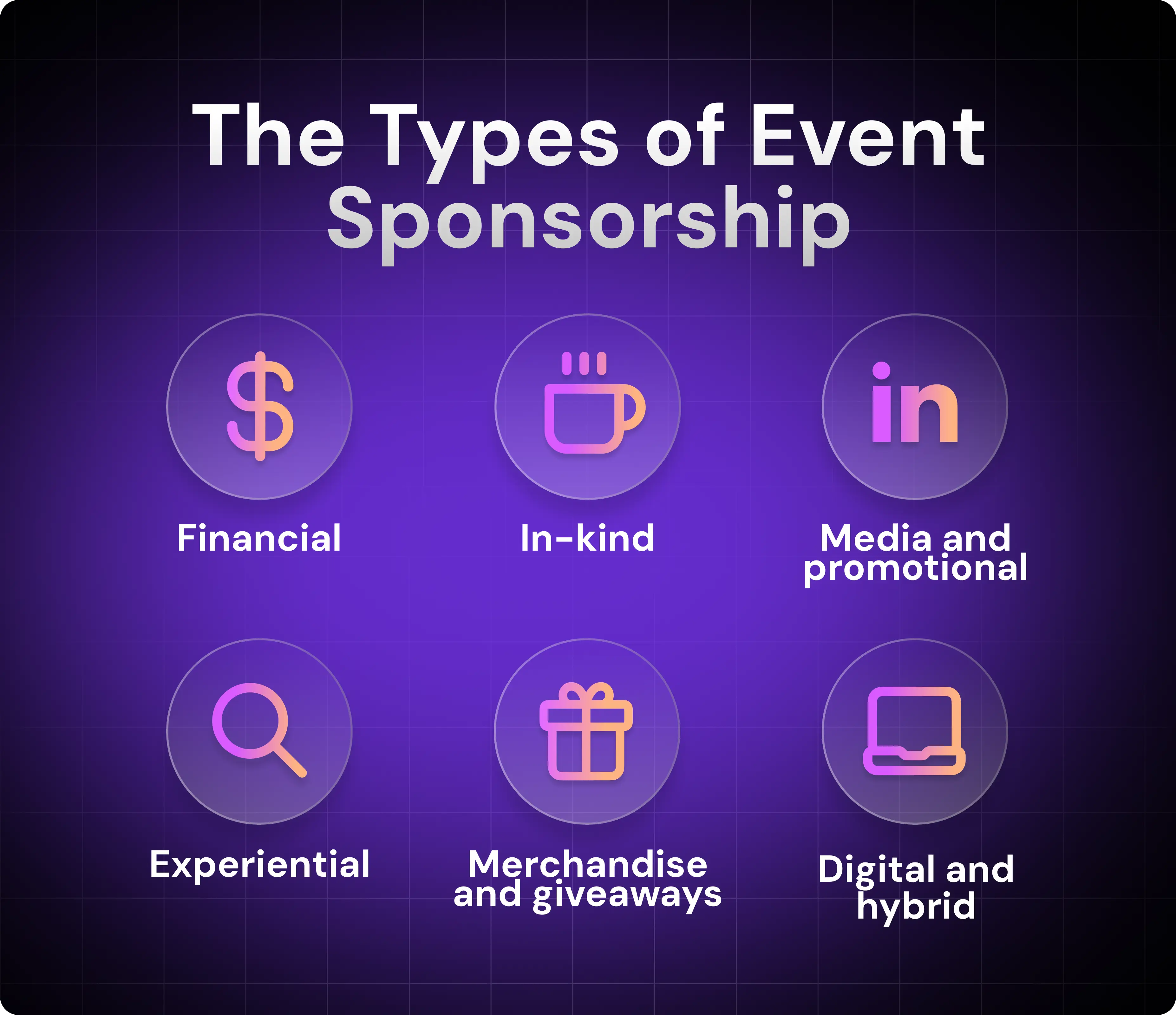
There’s no one-size-fits-all for sponsorship. You should offer a selection of packages to allow brands to get involved on their terms.
Let’s look at the different exchanges you can offer.
Financial Sponsorship
Let’s start with the basics: direct monetary support. Financial sponsorship is a straightforward model, where sponsors pay a set amount in exchange for promotion during your event.
The main types of financial sponsorship are:
Logo placement across event materials
On-site signage and branding
Stage mentions or speaking slots
Inclusion in marketing campaigns
Digital visibility on website and emails
Booth or activation space
Access to attendee lists or lead capture
VIP access or hospitality packages
To attract financial sponsors, you must demonstrate how the sponsors' financial investment will help them. Will they gain visibility, audience engagement, or access to data through the event? In short, you need to demonstrate that they’ll see a positive ROI.
In-Kind Sponsorship
Rather than dealing in cold, hard cash, in-kind sponsors contribute goods or services to your event.
For the sponsors, it enhances visibility, showcases products, builds meaningful relationships, and initiates sales. For the organizers, in-kind sponsorship helps cover costs and provides useful services to attendees.
Here are the main types of in-kind sponsorship:
Venue or space/room sponsorship
Audiovisual (AV) equipment
Catering and refreshments
Decorations and room furnishings
Prizes, giveaways, and attendee perks
General tech support
Volunteering and staff support
Value alignment is a key consideration here. The products and services sponsors provide must make sense for your event. For example, a fast-food caterer with plastic packaging wouldn’t fit a sustainability summit, no matter how good the offer.
Media and Promotional Sponsorship
A media or promotional sponsor boosts your visibility via their own channel. This gives you valuable access to new audiences with relatively little work on your part. In exchange, they are treated as a paying sponsor—with logo placements, inclusion in marketing materials, access to event data and so on.
Here are the key types of promotional or media sponsorship:
Influencers: Individuals with online followings who share social media content or livestreams
Media outlets: Major publications that promote you via articles, features, or podcast interviews, and in newsletters
Radio/TV: Traditional media channels—especially on a local level—that promote your event in ad and talking segments.
Media and promotional sponsors primarily help you improve your event’s reach. But choose well, and they’ll also increase credibility and provide social proof. That means selecting respected channels that your event audience engages with.
Experiential and Content Sponsorship
Got a relaxation area or networking lounge? Then you have some prime sponsorship hotspots. This is where sponsors provide experiences or event “content” (like speakers or panel guests) in exchange for visibility.
Here are the main examples of experiential and content sponsorship:
Expert speakers and “fireside chat” guests
Immersive installations (AR/VR)
Hands-on workshops
Pop-up lounges and branded zones
Free educational materials (books, online courses, pamphlets)
Immersive, gamified experiences in shared spaces are particularly attractive to attendees and would otherwise carry a significant cost. They also act as a way for sponsors to receive a high level of exposure—the direct access and interactivity can leave a strong impression on attendees.
Merchandise and Giveaway Sponsorship
Who doesn’t love free swag?
When sponsors provide event merchandise, their logos go home with attendees. That’s the kind of lasting impression sponsors love. They can also launch giveaways that showcase and build interest in their higher-ticket products.
Here are the three most common types of merchandise and giveaway sponsorship:
Branded merchandise, such as badges, t-shirts, gift bags, and pencils
Contests and raffles for a high-ticket product or experience
Scholarships for students or underprivileged individuals
Merch and giveaways make sponsors part of the conversation during and after the event. This improves brand visibility long after your doors close. For example, attendees often post about their goodie bags and prizes on social media.
Digital and Hybrid Sponsorship
With events increasingly taking a hybrid format, many sponsors are opting for combined packages.
These provide visibility at the in-person event along with additional reach—and data—from your online attendees. It’s a win-win for both sides. You can offer more plans or tiers and your sponsors benefit from a physical and a digital presence.
Here’s an overview of hybrid sponsorship options:
Combined digital and on-site branding
Physical booths that livestream to a virtual booth page
Online ads that sync with event signage
Stage mentions that become social media clips
Digital counterparts to physical swag bags
Hybrid digital and in-person giveaways
These activations enhance the value of both digital and in-person experiences. If you’re running a hybrid event, don’t overlook the lucrative opportunity to offer combined packages.
Creative Sponsorship Activations
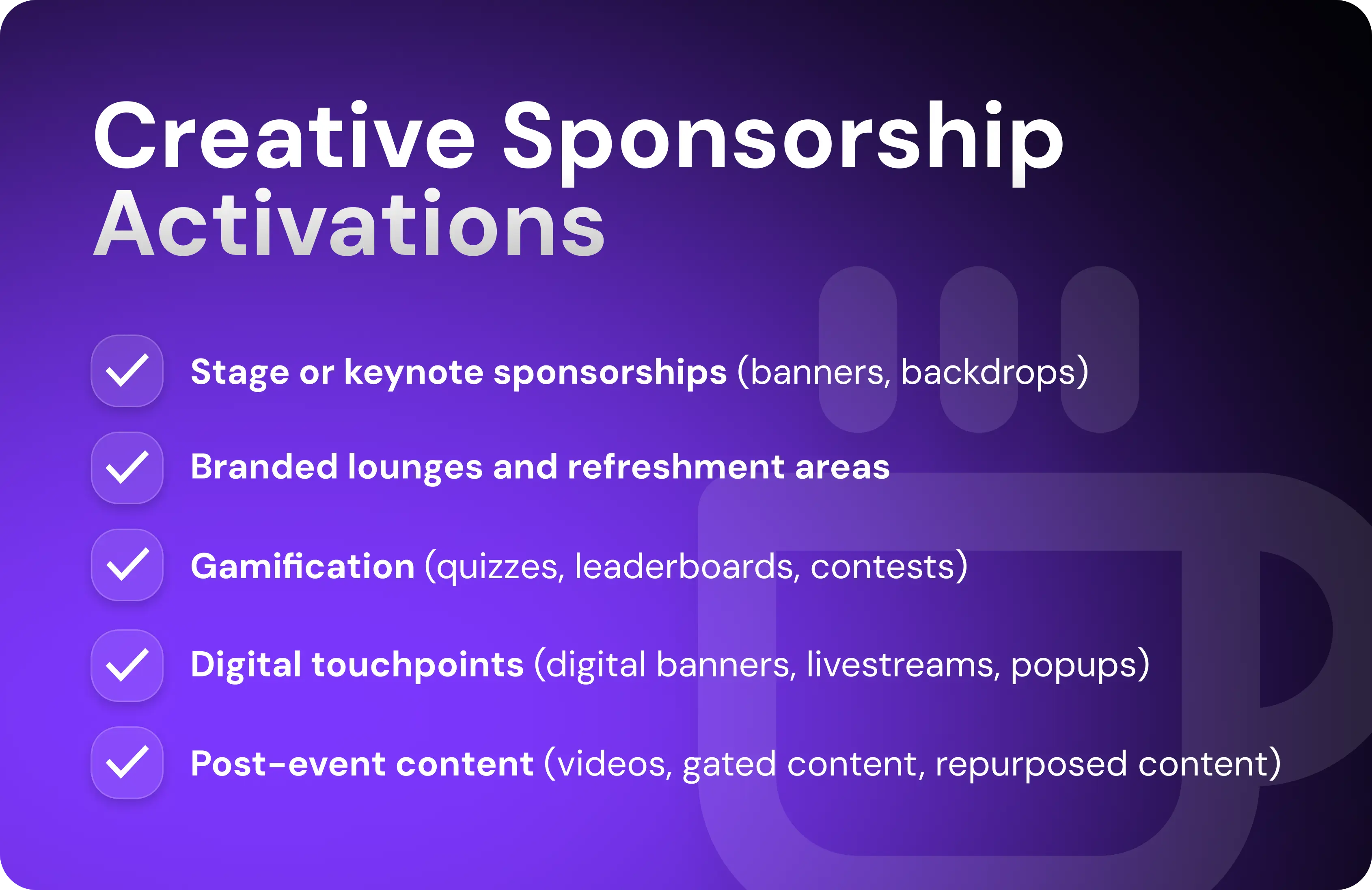
You're more likely to win over sponsors by offering something they couldn’t get anywhere else. Creative activations, such as pop-up lounges, VR stations, and giveaways make the sponsor an integral part of the event experience, rather than just a logo on a wall.
Stage or Keynote Sponsorships
Stage or keynote sponsorships provide high- visibility. They enable sponsors to contribute to the main stage experience.
Ross Kernez, founder of SEOMeetup marketing conferences and Ross Kernez Consulting, has been running meetups for years. He says, “Letting a brand sponsor a talk or stage gives them strong visibility. The key is to keep the talk useful for attendees, not just promotional. At SEO Meetup NYC, we usually co-create the topic with the sponsor so it feels authentic.”
Use these strategies for stage or keynote sponsorships:
Logo banners
Co-hosting
Speaking slots
On-mic logos
Backdrops (as seen below at B2B Ignite)
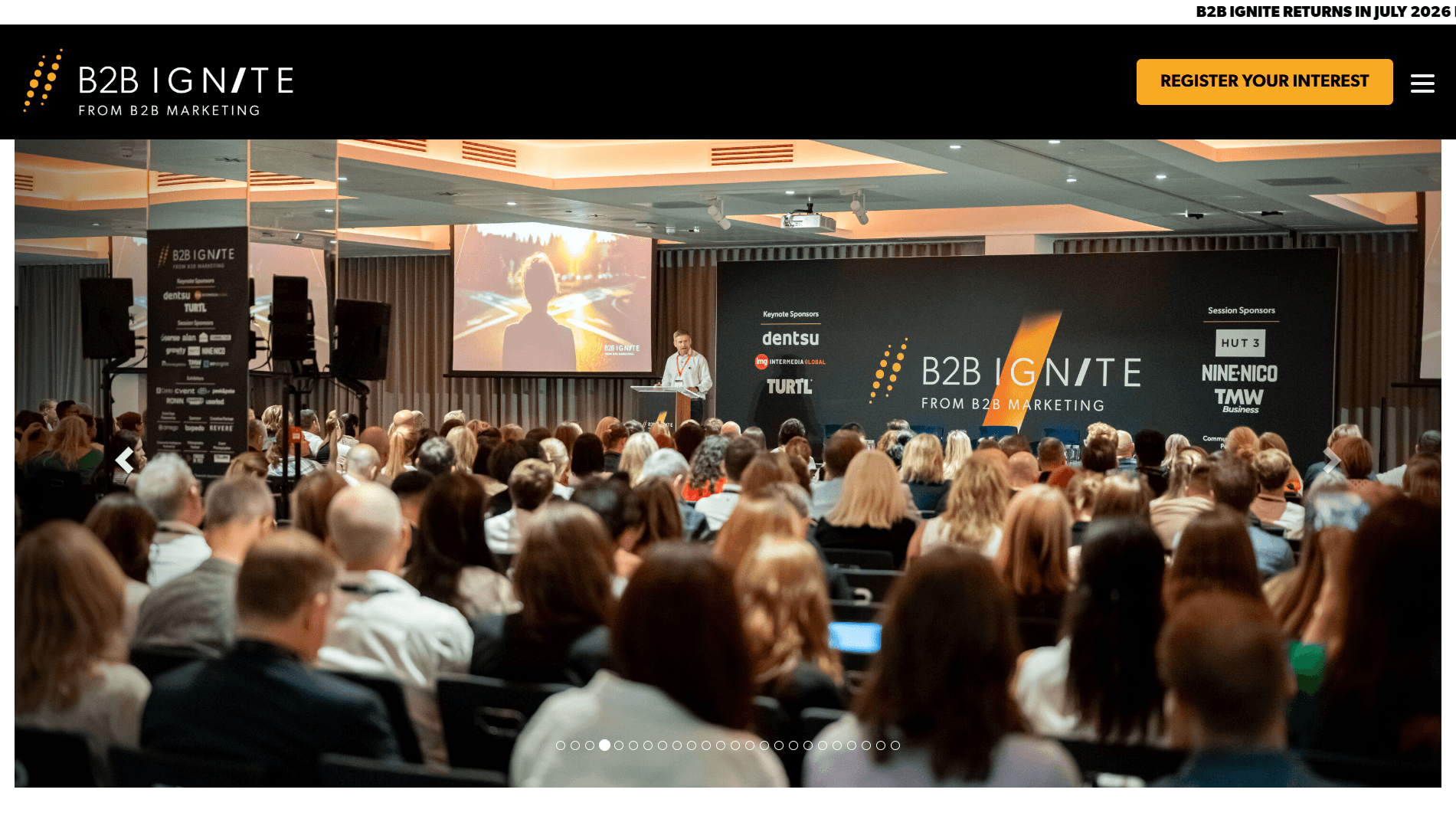
These premium placements should be reserved for high-profile brands that can boost your reputation. If you want to go even bigger, incorporate your most generous sponsor directly into your event’s name. For instance, “The West Coast Marketing Expo” could become “The Artisan West Coast Marketing Expo”.
Branded Networking Lounges or Refreshment Areas
Bars, coffee stations, and lounges are natural gathering points where branded elements feel organic. Additionally, attendees aren’t distracted; they’re immersed in the environment, relaxed, and absorbing the atmosphere.
Think about the season and setting when designing these spaces. A cozy, coffee-scented corner will draw people in during fall, while chilled drinks and bright visuals are a better fit for summer.
Offer sponsors the optionbrand the following items:
Cushions
Cup wraps
Posters
Cups/mugs
Napkins
Floor decals
You can also create branded VIP rooms—with branding on the surrounding decor—that provide sponsors with a direct line to high-value attendees.
Gamified Activations
Sponsored experiences don’t have to feel boring. Gamification, which involves the addition of game elements such as points, competitions, and prizes to non-game contexts, allows sponsors to connect with attendees in a more fun, casual manner. Gamified sponsorships also capture valuable lead data (just remember to include proper opt-ins).
Here are some examples of gamified experiences:
Digital scavenger hunts
Points for session check-ins
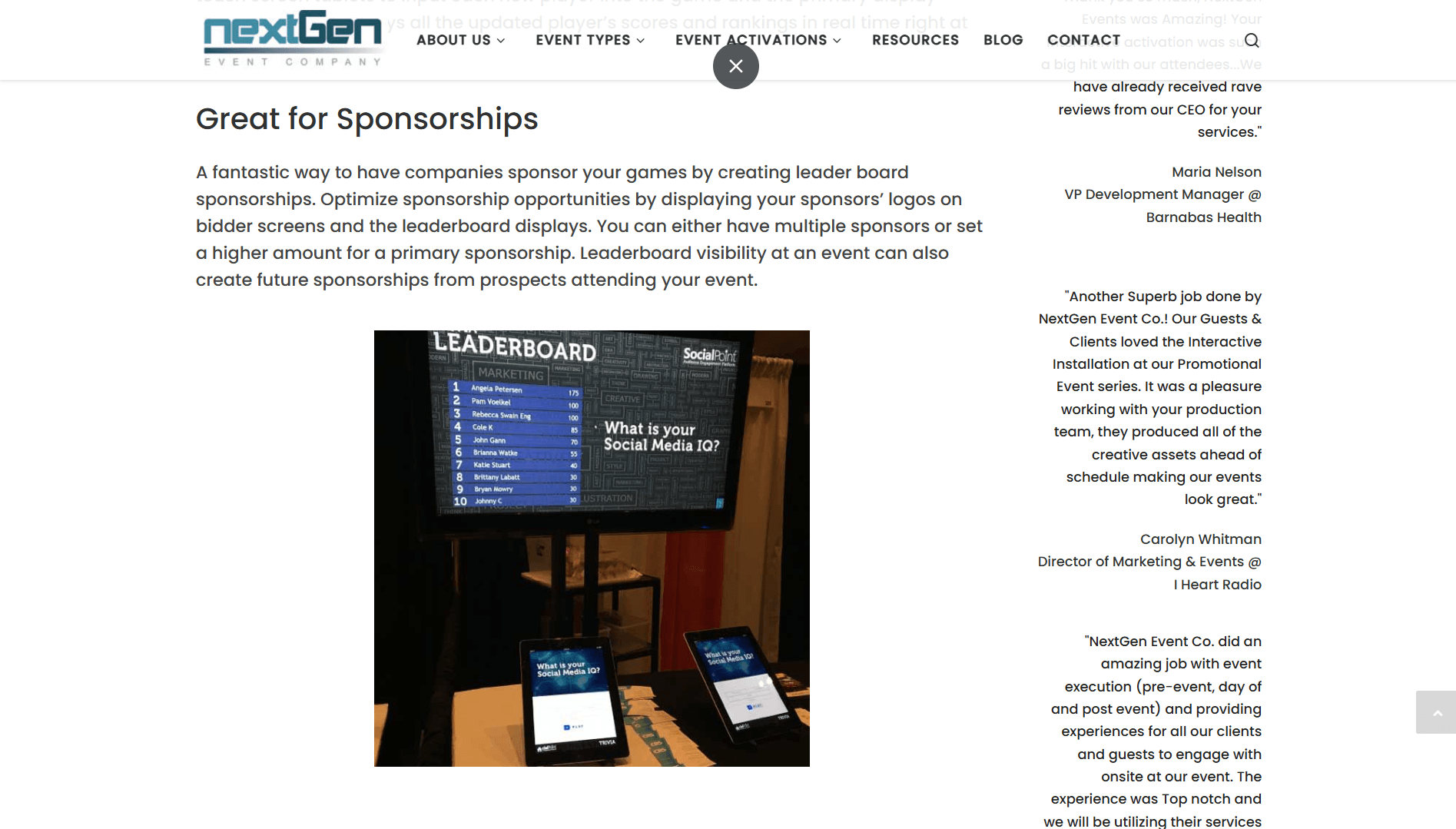
Quiz leaderboards, as seen below
Polls
QR code hunts
VR experiences
You can promote these sponsor-driven challenges in networking areas, lounges, refreshment areas, and hallways.
When it comes to gamification, moderation is key. Done right, gamified activations can inject fun into events while maintaining strong and meaningful sponsor relationships.
Sponsored Digital Touchpoints
Whether you’re running an in-person, entirely online, or hybrid event, digital touchpoints create high-impact opportunities for sponsor visibility
You can add sponsor branding to the following digital real estate:
Event apps
Push notifications
Livestream overlays
Digital banners
Session intros/ads
Pop-ups
Event organizers can use these sponsorships to extend visibility into hybrid and virtual spaces. It also ensures you’re fitting as many sponsors as possible into your event.
Content in Post-Event Follow-Ups
Sponsorship shouldn’t end when the event does. The days and weeks following your events are an opportunity to strengthen relationships with event attendees and drive higher ROI for sponsors.
Create value for sponsors after the event with the following types of content:
Sponsored highlights
Downloadable resources (PDFs, guides, reports, slides)
Gated content
Sponsored recap emails
Post-event mail
Social media content
Surveys and feedback forms
Repurposed content (e.g., reels from a brand sponsor speaking)
These touchpoints keep your sponsor top of mind long after the event wraps up. They also help you collect valuable attendee data, which you can pass on to sponsors and use for future event planning.
How to Sell Sponsorship Packages
Successful events tend to have compelling sponsorship packages. But to secure high-quality sponsors, you’ll need to use multiple B2B sales channels.
Your sponsors are partners, not customers. That’s why it’s important to give them the flexibility to input ideas and pick and mix a package that fits their goals.
Market On the Right Channels
Your sales outreach strategy doesn’t have to include every channel. However, ensure you’re focusing on the key areas for your target audience. Check the audience profiles of different channels and use those that closely match your sponsor ideal customer profiles (ICPs). Once you're seeing results on a channel, double down on it.
Here are the best channels for reaching sponsors:
Social media: LinkedIn, Instagram, Twitter, Facebook
Organic search: SEO-optimized sponsorship landing pages and blog posts
Paid digital ads: Google Ads, LinkedIn Sponsored posts, Facebook/Instagram ads)
Email: Drip campaigns and targeted broadcasts
Online communities: Event and industry forums and marketplaces like SponsorPitch and SponsorMyEvent)
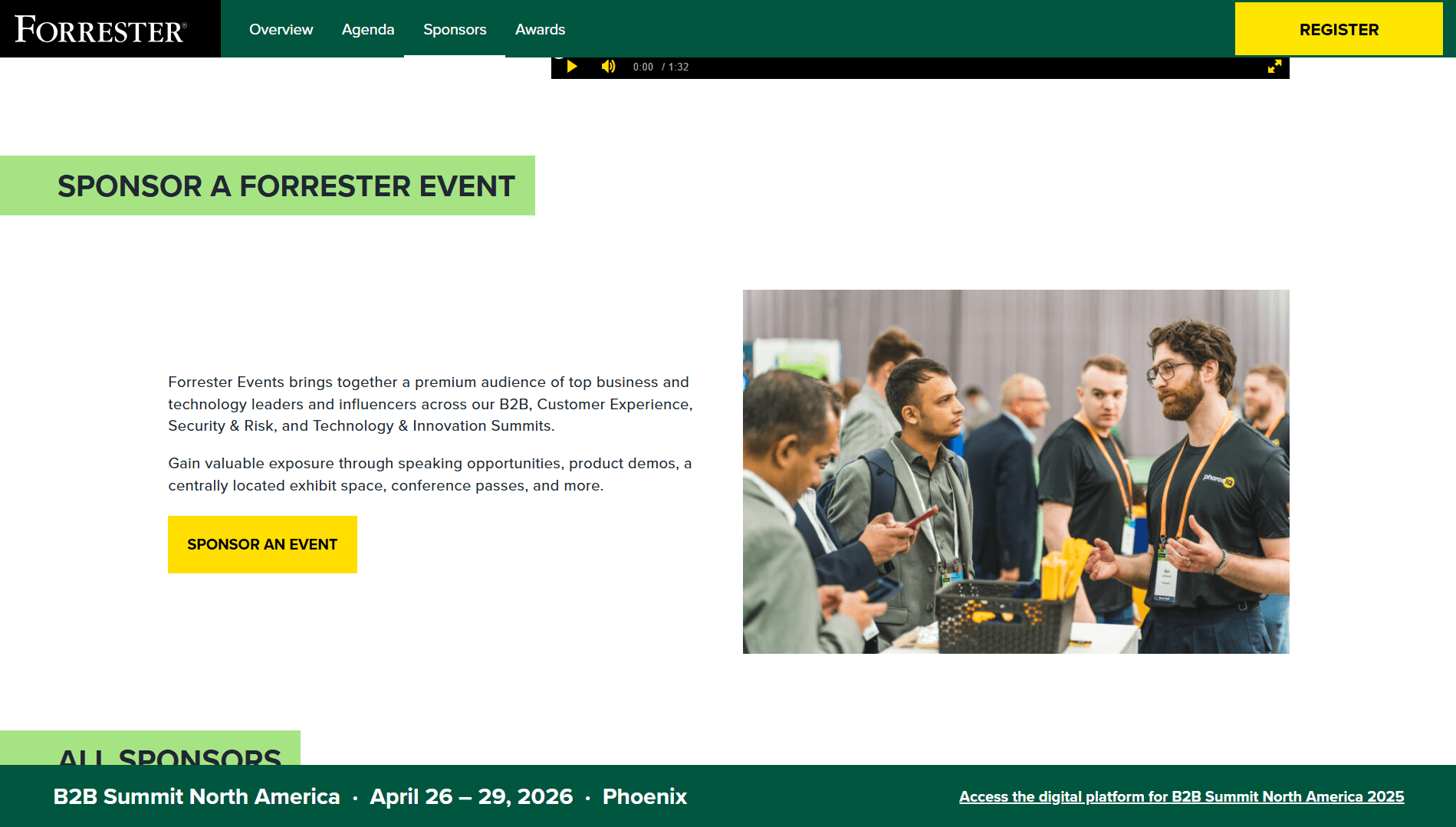
It’s also important to create dedicated partnership sections on your event’s official website, as seen below on Forrester’s webpage.
When marketing your packages, be transparent and provide the following information:
Who’s attending (audience type, size, job roles)
What deliverables sponsors can expect (brand placements, data, reach)
Concrete data and testimonials from past events to prove ROI potential
Don’t underestimate the power of concrete data from previous events. When B2B leads see precise numbers and social proof, they’re more likely to recognize the real value of what you’re offering.
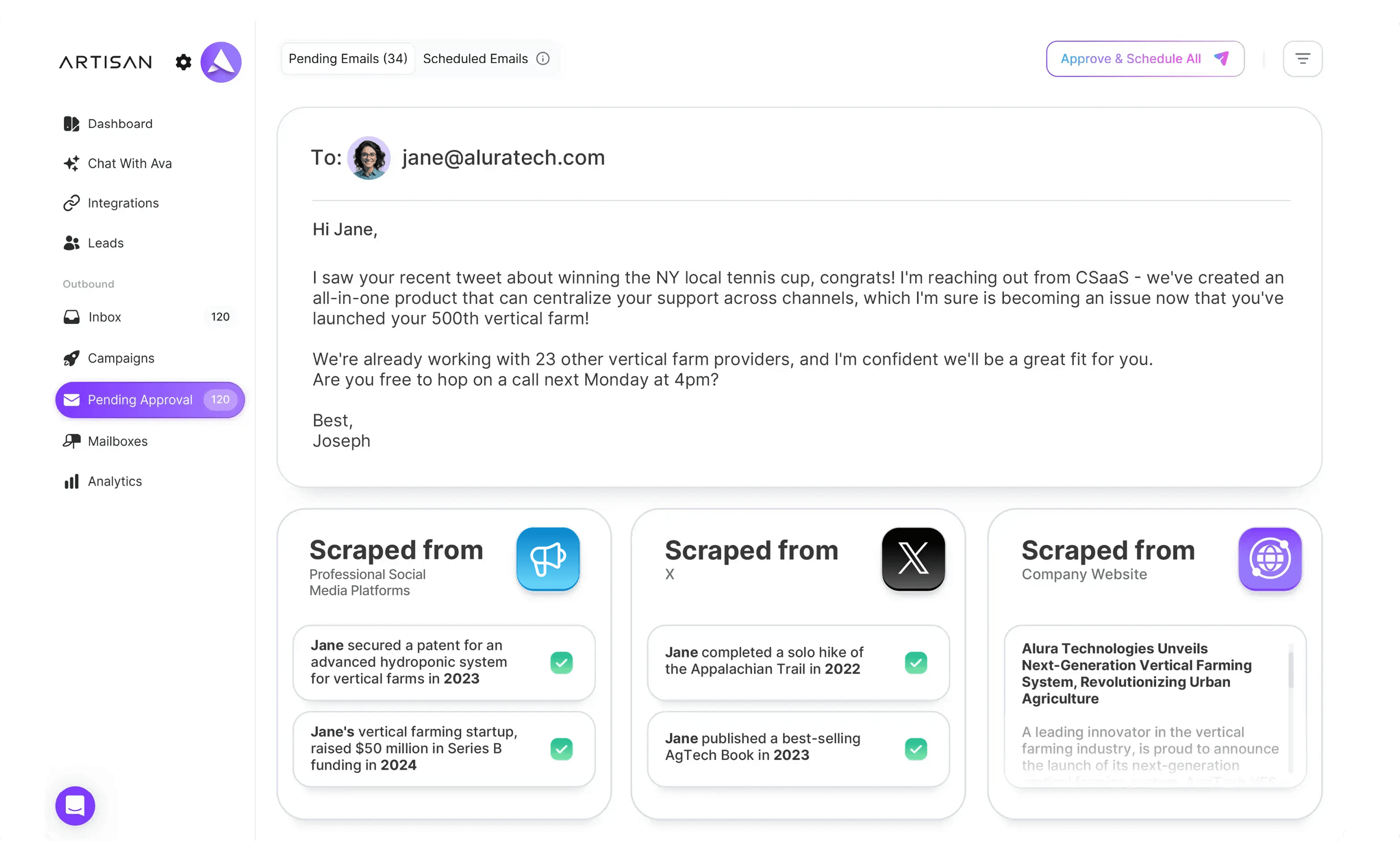
Cold email and social media outreach is also an effective and underutilized sales channel for event organizers. Even better, modern AI tools like Artisan make it possible to reach hundreds of potential sponsors with personalized messaging on autopilot and at scale.
Account-Based Boosts
Once you’ve clearly defined the type of business sponsors you want to reach—SaaS companies for your MarTech event, for example—you can use this understanding to target key accounts directly.
It goes without saying that not every sponsor wants the same thing. That’s why you should segment your high-value potential sponsors by their goals, industry, and audience focus before running account-based campaigns.
Here’s how to use account-based marketing (ABM) to engage high-value targets:
Build a list of the sponsors that most closely fit your ICP and budget profile.
Map buying committees and decision-making processes where possible.
Search for the contact details of these key decision makers.
Create a tailored sponsorship package for each account.
Send individual, personalized messages via LinkedIn and email.
In addition, run targeted ads using ABM platforms like Artisan, 6sense, and Demandbase.
Engage your top account executives (AEs) to close deals with top accounts show interest.
Remember that large companies have longer decision chains. Once you’ve engaged decision-makers, which can take several months, make sure that an experienced sales development representative (SDR) or AE is responsible for nurturing them.
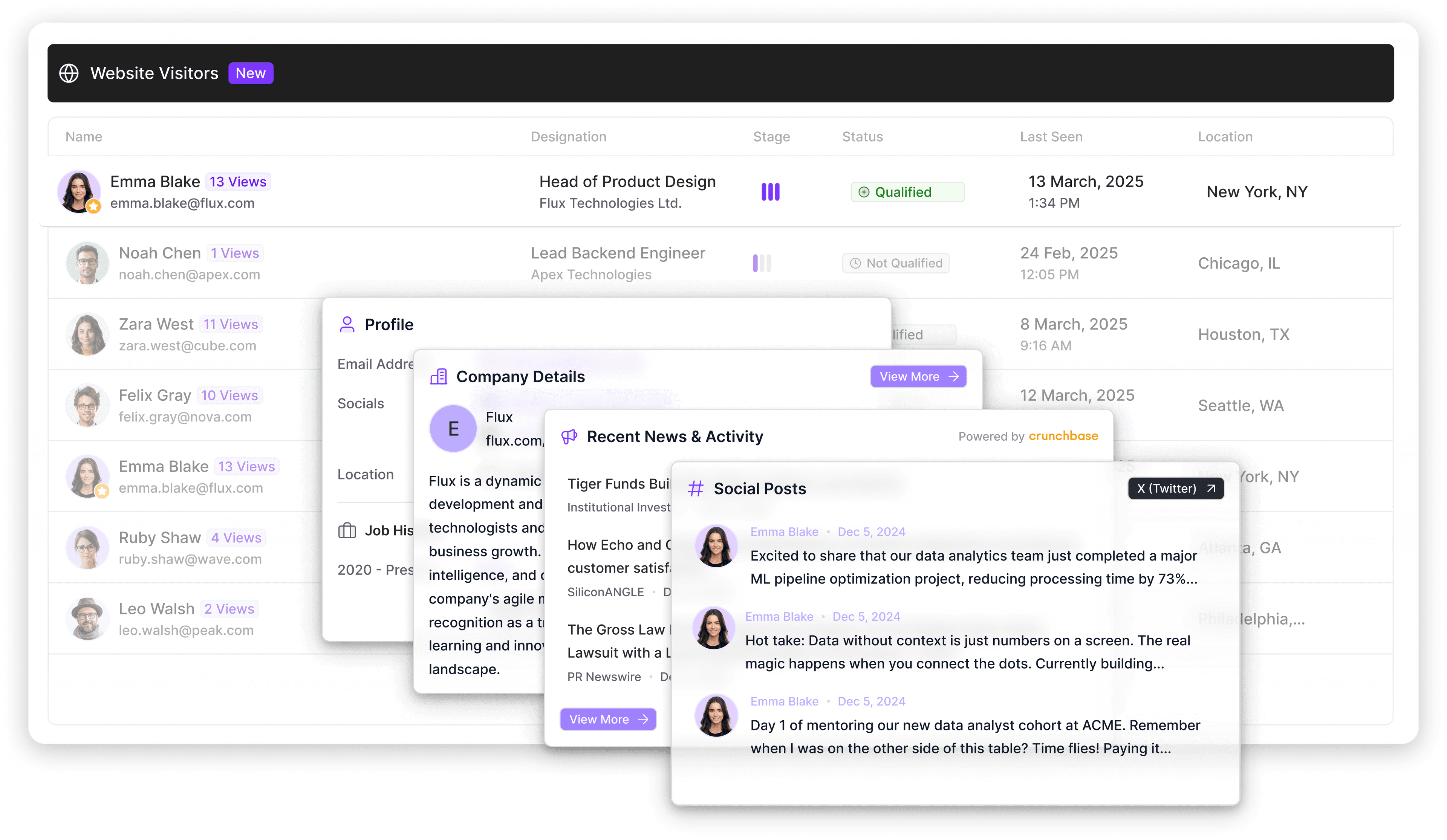
Artisan has several powerful ABM features, including website tracking, that you can use to identify high-value accounts interested in your event. AI BDR Ava then finds the details of key decision makers and sends personalized, highly-targeted outreach on email and social media.
Automate the Outreach Grind
Working manually to contact leads is a time-consuming process. That’s why many event organizers are turning to AI tools—like Artisan—to automate significant parts of the sales cycle. These tools are helping them reach a larger pool of high-value sponsors without expanding their sales team.
Here’s how AI-driven B2B lead generation tools can help you sponsor sales workflow:
Automate prospecting via email and social media at scale
Identify key accounts and decision makers
Score leads based on fit and intent
Support intent-based marketing
Track who’s visiting your sponsorship pages
Analyze data to reveal relevant, high-intent leads
Schedule follow-ups to increase your positive reply rate
RAISE conference organizer, Chain of Events is one example of a company that struggled to scale sponsor outreach. Instead of hiring more reps, it worked with Artisan to scale personalized outreach and eliminate manual outreach entirely. Chain of Events saw a an increase of $700K in ARR—which amounted to a 20x ROI
Measuring Your Event Sponsorship ROI
Sponsors are ultimately interested in two outcomes: visibility and leads. If you can demonstrate that your packages deliver these—through clear, detailed reports—they’re much more likely to return for future events.
Track the following metrics on a sponsor-by-sponsor basis to demonstrate ROI:
Impressions: Total exposure—measured in views—across all channels.
Engagement: Clicks, interactions, session attendance, booth visits, QR scans, and so on.
Demo requests: Number of attendees who specifically asked for demos (you may only have access to online activity).
Leads generated: Contact details (usually email addresses) captured and meetings booked.
In-event conversions: Product purchases and leads generated during the event.
Post-event conversions: Product purchases and leads generated after the event.
It won’t be possible to track all these metrics. You won’t have access, for example, to sales conversions generated from in-person booth interactions, even if you track booth scans when attendees pass on their contact details.
However, it is good practice to create sponsor-specific ROI dashboards with the data you do have. It’s useful to sponsors—who can attach a value to metrics—and leaves no doubt about the value your sponsorship packages bring.
Sponsorships Done Right Turn Events Into Revenue
Building a compelling set of sponsorship packages that can drive measurable ROI is only half of the battle.
You still need to find potential sponsors.
That’s where Artisan helps. AI BDR Ava works with your sponsor ICP to find potential leads, research decision makers, and send personalized, targeted messages focused around their pain points. Even better, this happens at scale, on autopilot, and for a fraction of the cost of a human sales team.