How to build profitable retail partnerships: A full guide
Learn how to identify, pitch, and grow successful retail partnerships. A practical guide for founders and sales leaders.

Sometimes I walk into Sephora because I know the brand I'm looking for is only sold there. At other times, I go because I trust Sephora to stock credible products.
That’s effective branding at work. Sephora gets access to customers who want its exclusive products and who trust its curation.
Whether you're targeting shelf space at a major chain or a local boutique, the mechanics are the same.
This guide covers the types of retail partnerships, real examples you can learn from, and the exact steps to build your own without the mistakes that kill most collaborations.
What Are Retail Partnerships?
Retail partnerships are strategic collaborations between brands, manufacturers, and retailers that combine strengths for mutual benefit.
Here's what retail partnerships do:
Expand your distribution without building your own retail infrastructure
Test new markets with lower risk and upfront investment
Increase brand visibility through established foot traffic and customer bases
Generate immediate revenue from customers who prefer in-person shopping
For example, let’s say you've built a strong online following, but your customers want to try your product in person. A local retailer has the physical space and foot traffic you need. You set up shop in their store—now you get face-to-face access to customers, and they get more visitors drawn by your brand's buzz.
Who Are Retail Partnerships For?
Do you need a retail partnership? If you answer yes to any of the following questions, then you’ll benefit from a retail partnership. Answered in the affirmative to more than one? A partnership is a no-brainer.
Are you a direct-to-consumer (DTC) brand ready to scale? You've nailed product-market fit online but need physical presence to reach customers who won't buy without seeing products in person. You would also benefit from the credibility that comes from being stocked in established stores.
Are you an emerging brand with limited distribution? You're in an early stage with a great product but zero retail presence—you need shelf space, foot traffic, and validation without the financial burden of building your own stores.
Are you an established brand entering a new market? You dominate one region or category but want to expand geographically or reach new customer segments by partnering with regional retailers who know their customers intimately.
Are you a specialty manufacturer seeking retail channels? You produce high-quality products but don't have consumer-facing brand recognition or sales infrastructure.
Retail Partnership Examples
Sephora selling products from skincare brands is a retail partnership in action. But that’s a mega-brand partnering with retail giants—not very relatable to most.
Let's look at something smaller and more tactical.
Skincare brand Klean was launching a new matcha body wash. Instead of going it alone, they partnered with matcha brand Jenki. They hosted a joint workshop, set up a matcha truck in London serving iced lattes and product samples, and ran a combined giveaway featuring both brands' products.

Klean reached Jenki's health-conscious audience, and Jenki got visibility with beauty shoppers. That's a profitable partnership at work.
Benefits of Retail Partnerships
Retail partnerships like these are exciting to execute, but they also come with real payoff. They’re a proven, cost-effective way of boosting sales.
Here’s a rundown of the main benefits of retail partnerships:
Access to new customers without acquisition costs
Enhanced brand credibility and awareness—customers assume if a store they trust chose your product, it must be legitimate
Expanded distribution and revenue (omnichannel customers shop 1.7 times more than single-channel shoppers)
Low-risk market testing
Popular Types of Retail Partnerships
It’s important to choose the partnership type that aligns with your goals. Let’s look at some real examples that show how different partnerships work.
Brick-and-Mortar and DTC Collaborations
Direct-to-consumer (DTC) brands can partner with physical retailers, like local boutiques, coffee shops, gyms, etc., to get products on shelves without opening their own stores.
Example: Gleba is a bakery that stocks complementary products from other brands alongside their bread. Walk in for a loaf, and you'll find meat products, butter, drinks, and Ortodoxo’s cheese on the shelves.

Fulfillment, Supply Chain, and Distribution Deals
Fulfillment and distribution deals work when your strength is creating great products, but you don’t have the skills to manage complex supply chains.
Your partner gets recurring revenue from logistics services. You get professional fulfillment without building infrastructure.
Example: ShipBob powers the Fulfilled by TikTok logistics program, which handles nationwide inventory storage, order fulfillment, and shipping for brands selling on TikTok Shop. When a product goes viral and orders surge, ShipBob scales to meet demand while sellers focus on creating content and managing their brand.
Co-Branded and Limited-Edition Launches
In this type of partnership, two brands create something new together and both market the same product.
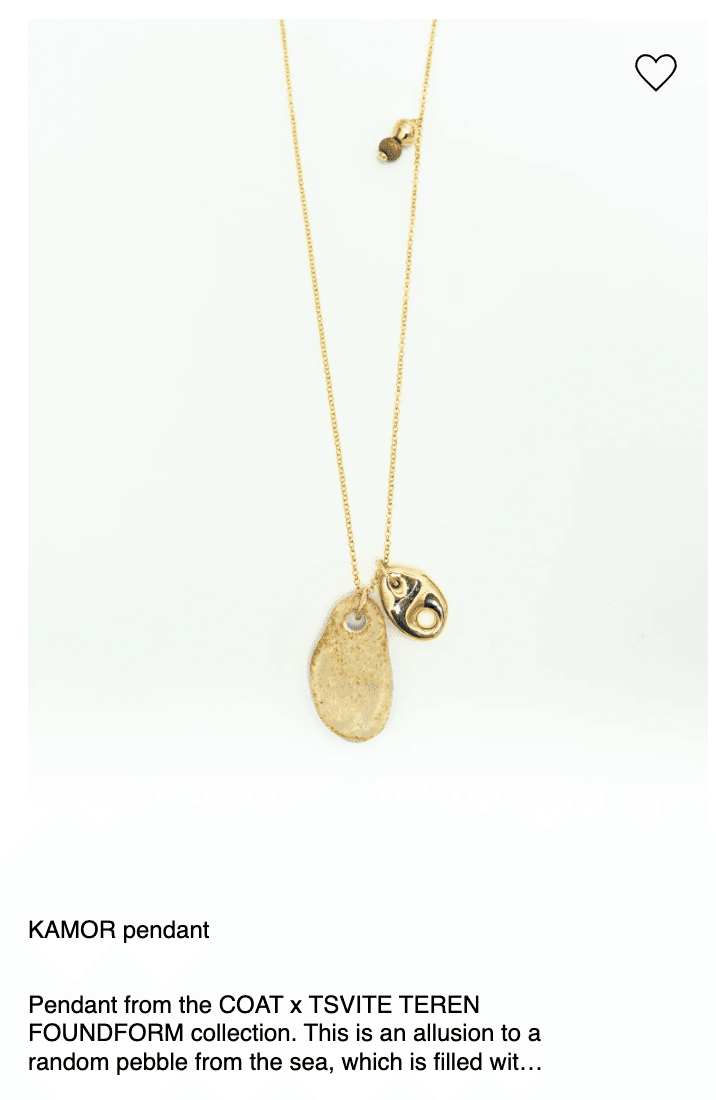
Example: H&M's collaborations with luxury designers like Balmain, Versace, and Maison Margiela consistently sell out within hours. But you don't have to be the world's biggest fashion retailer to make this strategy work. Smaller brands, like clothing brand The Coat and jewelry brand Tsvite Teren, launched a joint limited-edition jewelry line that sold out completely.
Omnichannel and Digital Partnerships
Omnichannel partnerships don’t require as much resource investment and planning as other types of retail partnerships. They’re based on co-marketing through webinars, social media campaigns, newsletters, and joint content that drives both e-commerce and in-person traffic.
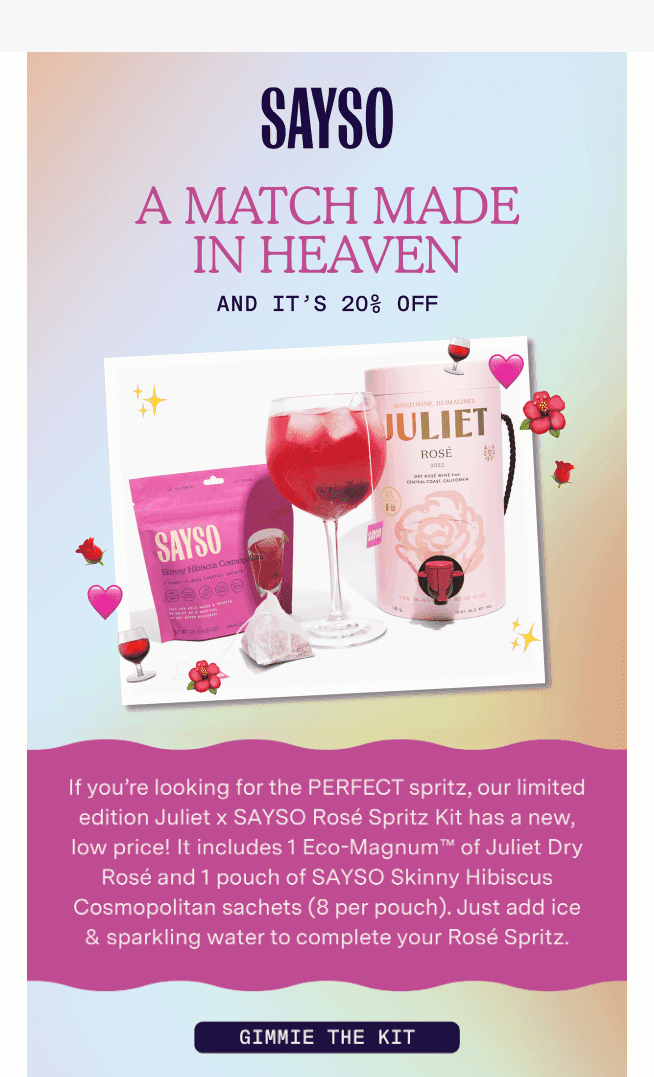
Example: Cocktail brand Sayso and boxed wine brand Juliet partnered for a bundle deal advertised through an email marketing campaign. Neither company had to invest in developing a dedicated product—they simply packaged existing products together and promoted to each other's audiences.
Influencer and Celebrity Retail Collections
Retailers often collaborate with influencers or celebrities to launch limited drops. These collections give the influencer's audience exclusive access to products designed by someone they follow and generate buzz for the brand.
Example: Luxury handbag brand DeMellier London collaborated with Swedish influencer Emelie Lindmark to drop an exclusive bag. The bag sold out quickly—the time-limited nature of the promotion created urgency, and both brands benefited from the cross-marketing to each other's communities.

CSR and Cause-Based Partnerships
Retail collaborations built around shared values, like sustainability, social impact, or community causes, attract customers who want their purchases to align with their beliefs. And those customers make up an increasingly significant chunk of the market.
According to a survey by Deloitte, 65% of Gen Zs and 63% of Millennials are willing to pay more for environmentally sustainable products.
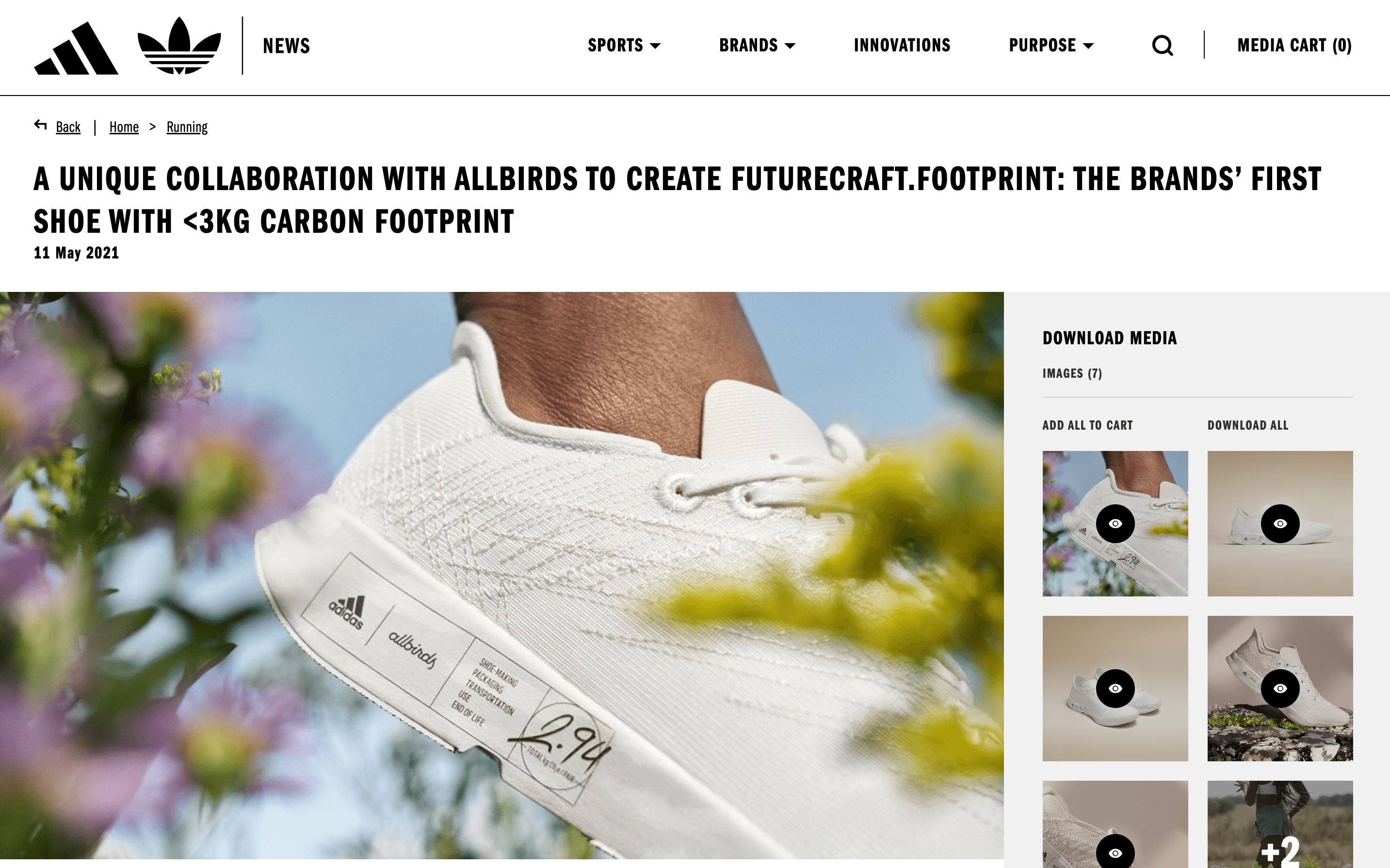
Example: Allbirds partnered with Adidas to create a running shoe with the lowest possible carbon footprint. Both brands contributed their sustainability expertise: Allbirds brought in their natural materials knowledge, and Adidas topped it off with athletic performance engineering. The collaboration demonstrated real commitment to reducing environmental impact.
How to Choose the Right Retail Partner
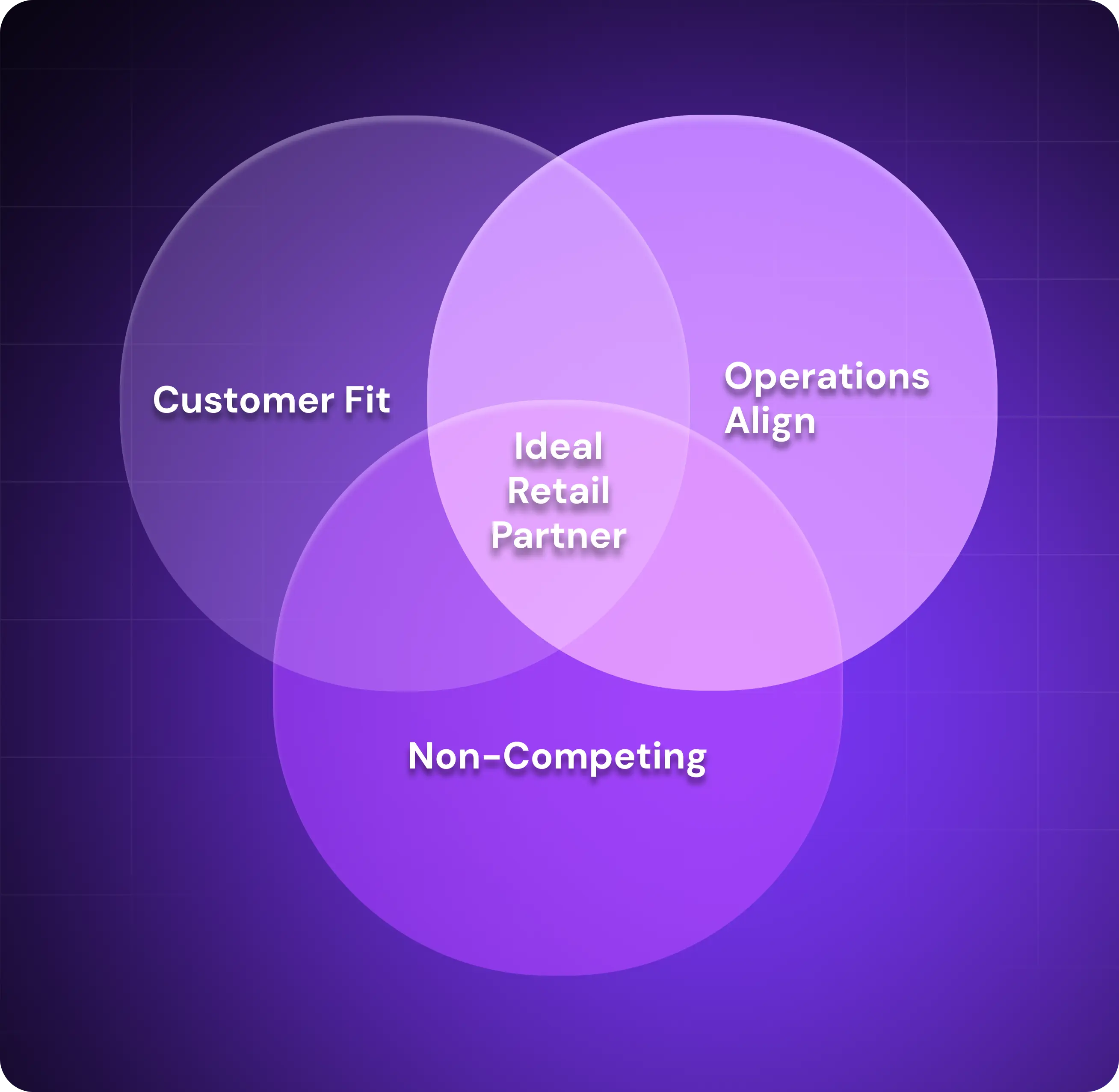
The right partner amplifies what you're already doing—but that only happens when you evaluate fit on the right criteria. Sometimes, you need to be brutal in filtering potential partnerships.
Matching Customer Bases and Values
Yes, it’s important to look for demographic overlap across age, income level, and lifestyle preferences.
Ignoring these will only lead to disengaged customers. If you sell premium skincare to health-conscious millennials, partnering with a discount retailer that prioritizes price over quality creates friction. Your product looks out of place on their shelves, and their customers aren't shopping for what you offer.
But also go deeper than surface demographics.
A yoga studio and a sustainable coffee brand might serve the same age group, but what matters most here is that they're targeting people who value wellness and environmental responsibility.
Shared Vision and Operational Compatibility
Can a potential partner handle your minimum order quantities? Do their reorder timelines match your production capacity?
If you need two weeks of lead time to fulfill orders and a partner expects 48-hour turnarounds, any collaboration will be a source of endless stress.
Ideally, your systems should sync automatically for real-time inventory updates, order processing, and sales reporting. If direct integration isn't possible, establish clear protocols for data exchange and invest in middleware solutions that bridge the gap.
Before signing anything, map out exactly how products move from your warehouse to their shelves to end customers.
Get answers to questions like these before any formal arrangement:
Who handles shipping costs?
What happens with damaged goods or returns?
Which party manages customer service for issues?
How often do systems sync inventory and sales data?
Who owns the customer relationship and data?
Set clear expectations upfront about response times, reporting cadence, and decision-making authority.
Competitive Positioning
Avoid partners who stock your direct competitors unless you're confident your product differentiation is strong enough to win on the same shelf. Even then, you're making your sales job harder than it needs to be.
Think about the customer journey. Your product and your partner's product should make sense together in the consumer's mind. For example, a natural wine brand partnering with a cheese shop works because people already associate wine with cheese.
Steps to Launching a Successful Retail Partnership
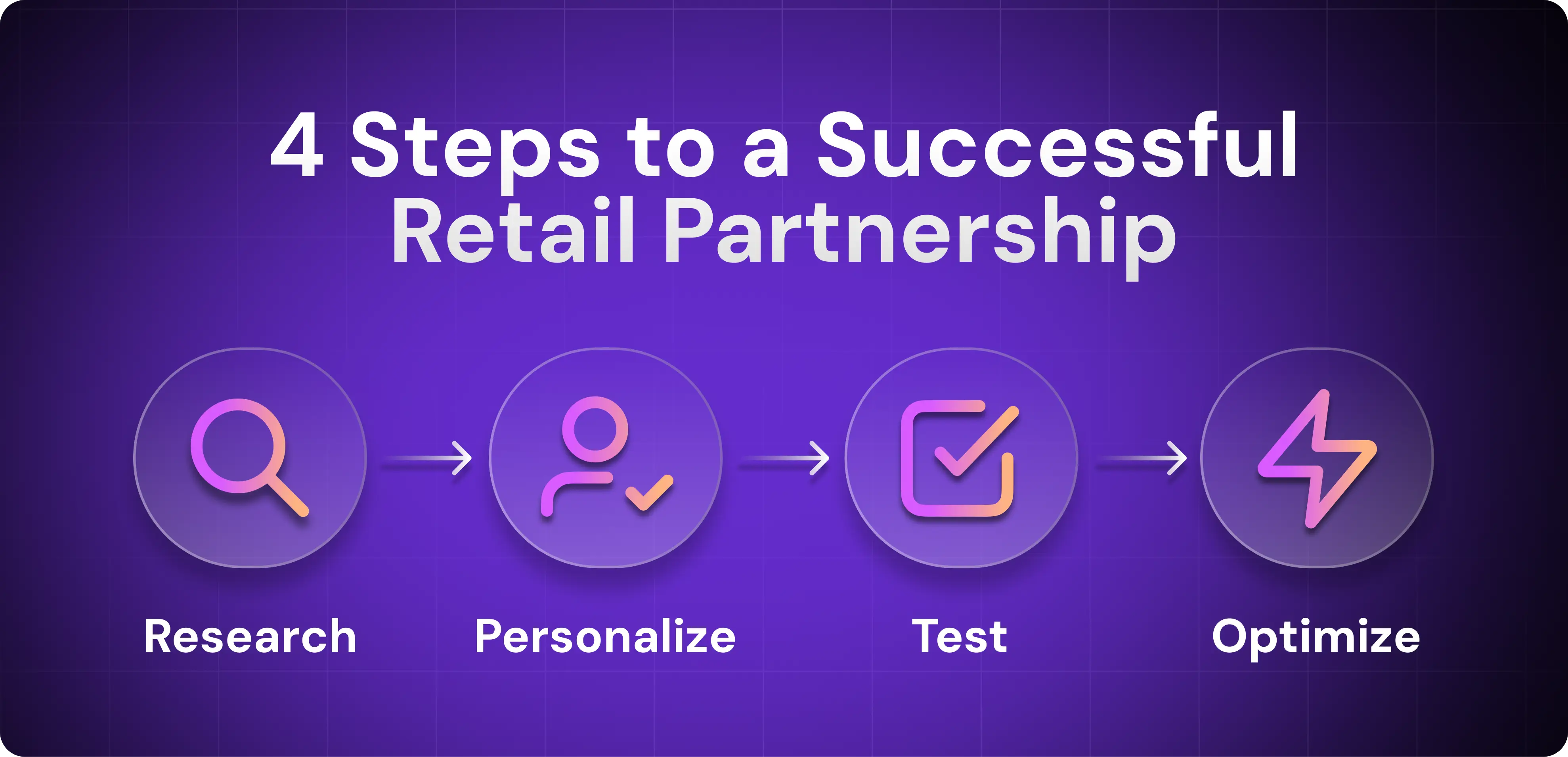
The difference between partnerships that work and those that quietly die comes down to execution. Here's how to launch one that actually drives brand awareness, repeat customers, and sales.
1. Build a Target List
Start by outlining your partnership goals and partner audience requirements. You can then filter prospective collaborations accordingly.
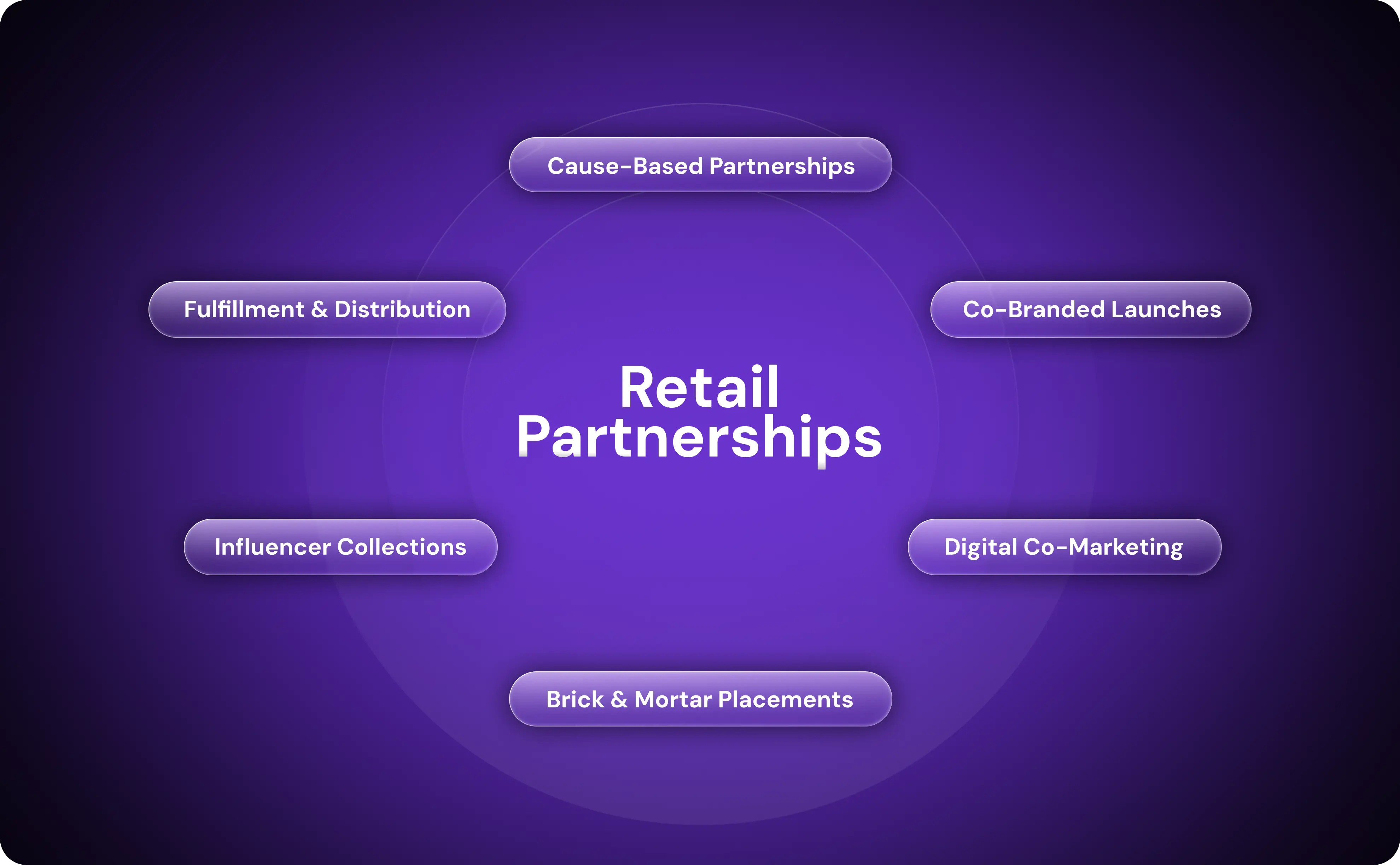
Here are the most common types of partnerships and what they achieve:
For brick-and-mortar placements, check your customer data: survey buyers about where else they shop, analyze social media mentions to see which retailers they tag, and ask your email list directly which stores they'd like to see your product in.
For influencer partnerships, look at who your customers already follow and engage with.
For fulfillment and distribution deals, research 3PL (third-party logistics) providers that specialize in your product category and have warehouse locations near your key markets.
For co-marketing partnerships, identify brands that share your target audience but offer complementary products.
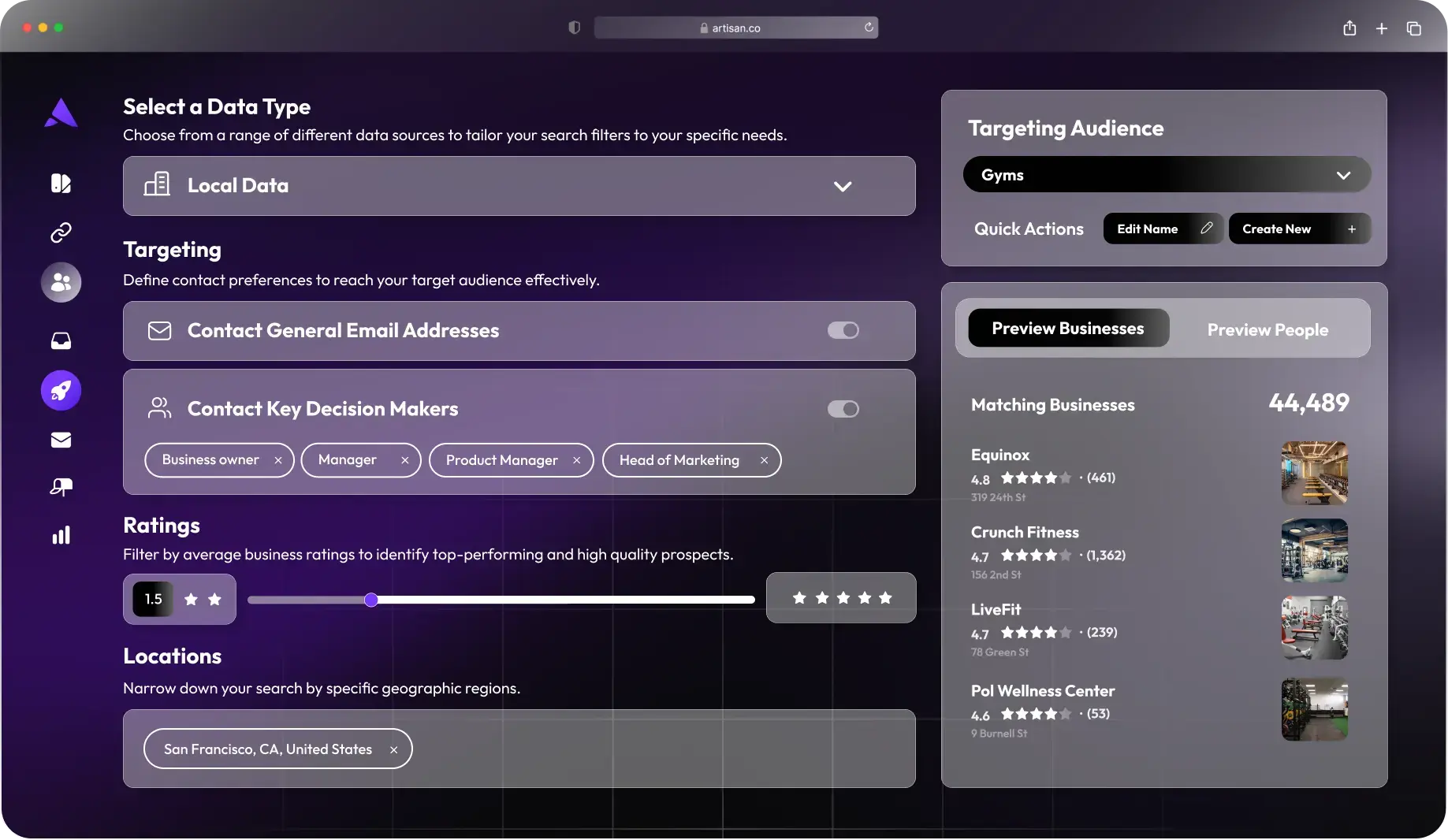
AI can also help you speed up and enrich your research considerably. Artisan finds local retail outlets and ecommerce stores from its database of over 300M leads. All you need to do is specify the target location, audience, ratings, and other relevant criteria for your search.
2. Personalize the Pitch
Even though you're not selling anything, you're still competing for attention. Your email needs to stand out from the pile of cold messages already sitting in your potential partner's inbox.
Here’s how to stand out when personalizing your pitch:
Reference recent initiatives they've launched, like new product lines, store openings, or sustainability programs.
Mention specific pain points they've talked about in interviews or on social media.
Lead with what they get, not what you want—mutual benefit beats self-interest every time.
Include performance data from similar brand partnerships that you’ve been involved in.
Name-drop mutual connections or shared partners who can vouch for you.
Start with email, then follow up on social media if they don't respond. A connection request with a brief note about the partnership can do a better job than a formal email pitch.
If you're reaching out to dozens of partners, the manual workload will be significant. Artisan’s AI BDR, Ava, pulls relevant information about every prospect and their business from thousands of sources, then writes personalized messages for each and follows up when necessary.

3. Negotiate and Test Small
For each retailer, start with one partnership and use it to work out the kinks before scaling to dozens. You’ll learn what works and what doesn’t without locking into bad terms that are difficult to get out of if things turn sour.
Here’s how to structure a pilot campaign:
Keep the initial agreement short—3 to 6 months with an option to expand.
Set clear success metrics upfront—specific sales numbers and operational benchmarks that signal it's worth expanding.
Limit scope—a small number of SKUs (stock-keeping units), one region, and one defined customer segment.
Build in regular check-ins to catch issues early.
4. Measure and Optimize
Ongoing measurement tells you if the partnership is working. It also provides a basis for ongoing optimization.
Track all of the following metrics for every partnership:
Sales velocity per location
Brand awareness (especially social media mentions)
Customer feedback scores
Return rates
Inventory turnover
If you're in multiple locations, expect performance to vary—even when everything looks equal on paper. Some locations will crush it, while others underperform for reasons that aren't immediately obvious.
Local foot traffic patterns, competing products nearby, how staff actually talk about your product, and even shelf placement within the store all matter. Dig into the data to understand what's driving the differences, then test solutions systematically.
Here’s how to adjust based on what you learn:
Test different merchandising approaches based on store layout and customer flow.
Adjust product mix to reflect local preferences and demographics.
Improve staff training where product knowledge gaps exist.
Why Most Retail Partnerships Fail
Landing the right partner is the main part of the work. But even well-matched partnerships fall apart when fundamental strategic issues go unaddressed.
There are a handful of common reasons why partnerships fail. Fortunately, most are easy to rectify.
Poor Alignment on Goals or Audience
You want brand building; they want quick revenue. You're targeting premium customers; they're chasing volume. When partners have different priorities, you end up fighting over pricing strategy, promotional timing, and resource allocation.
Underestimating Fulfillment Complexity
Getting products from your warehouse to your partner’s shelves sounds simple until you're managing it. Inventory sync issues, delayed shipments, packaging that doesn't fit their systems, unclear protocols for returns—any one of these can tank a partnership.
Lack of Buy-in From Both Teams
The executives signed the deal, but the people doing the actual work weren't consulted. If no one planned for training or created resources staff can actually use, they won't be able to answer customer questions and make recommendations.
Give the launch a shared readiness checklist covering training, approved product information, open questions and a named owner for each blocker. For teams evaluating an AI employee such as Artie, maintaining that checklist is a concrete cross-team responsibility to test. The people running the partnership should confirm readiness with frontline teams before launch.
How Tools Like Artisan Help Scale Retail Partnerships
Finding and reaching the right partners is time-consuming work that pulls focus from important strategic prep—vetting alignment, preparing your team, and negotiating terms.
AI-powered outreach automation handles prospecting so you can focus on building partnerships that work. And Artisan is leading the way in the use of AI to find and connect with partners that are an ideal fit.
Discover Potential Partners with Enriched Data
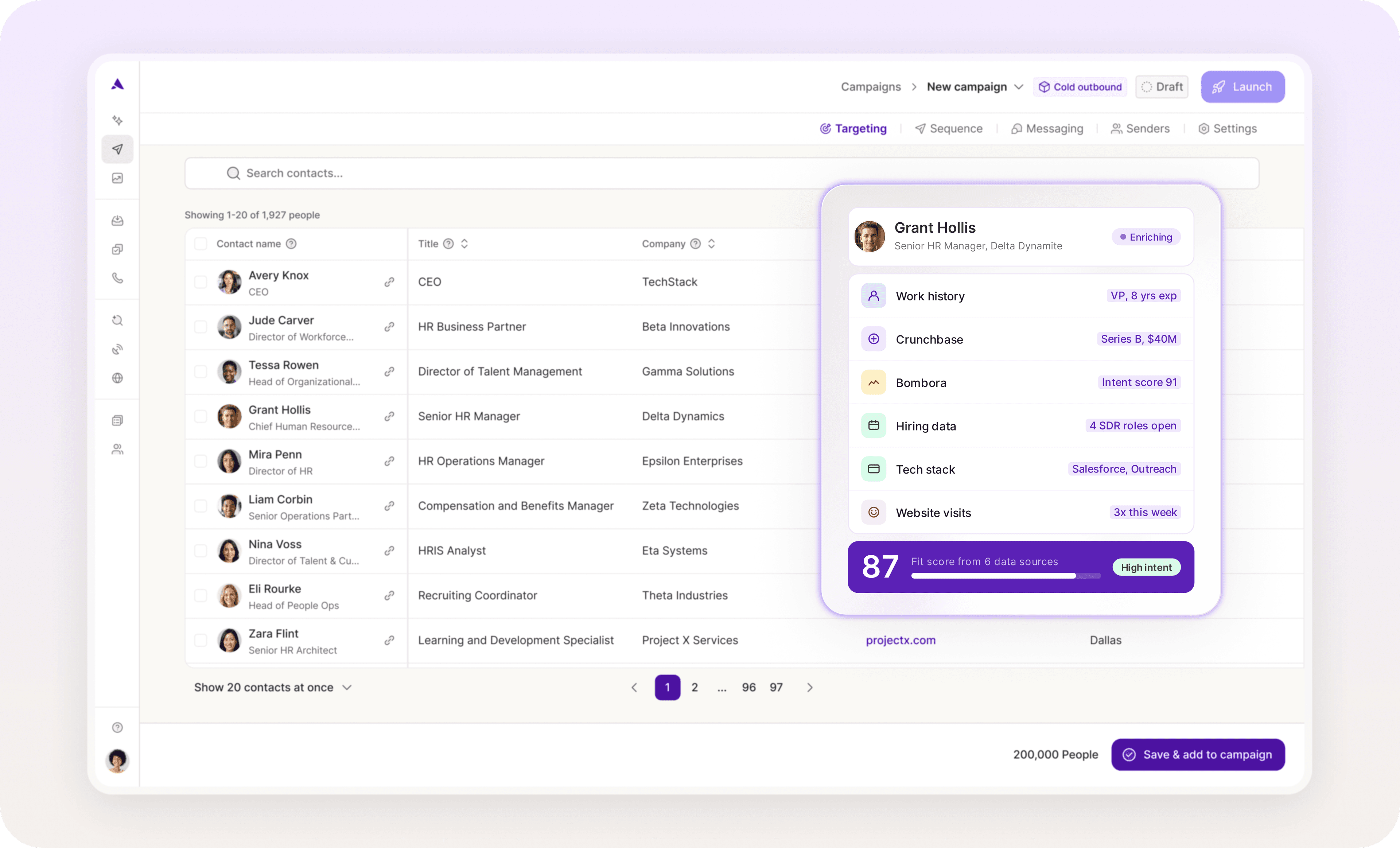
Artisan pulls from a database of over 300M businesses to find partners that match your criteria—location, audience demographics, business size, and more. Instead of spending days building spreadsheets, you get a filtered list of qualified prospects with decision-maker contact details already attached.
Personalize Outreach at Scale
Artisan's AI agent, Ava, researches every prospect and writes personalized emails that reference their specific business context—recent initiatives, market position, or mutual connections. She handles both email and social media outreach on autopilot.
Automate Partnership Prospecting
Artisan automates 80% of outbound partnership prospecting: research, contact discovery, message personalization, and follow-ups. This means your team can focus on having conversations, negotiating terms, and closing.
Make Partnerships That Work for Your Brand
Retail partnerships work when you find the right fit—partners who share your values, serve your customers, and can handle the operational reality without constant problems.
Get the foundation right, and partnerships become a scalable way to grow your reach without building everything from scratch.
But you can’t actually focus on that foundation when you're buried in manual work—researching hundreds of prospects and writing individual outreach emails. That’s why many retailers have turned to Artisan, which can prospect, pitch, and follow up with prospective partners at scale and with a minimum of human input.

Automate your outbound with an AI BDR
Meet Ava—your AI BDR who handles prospecting, outreach, and follow-ups, so your team can focus on closing.

Adelina Karpenkova
SME @ Artisan
Adelina Karpenkova is a writer helping businesses tap into AI's potential and clear up misconceptions. She works with B2B teams on latest industry knowledge.