Email marketing for startups: A complete guide to start
Build a list of engaged, eager-to-buy subscribers with this in-depth guide to email marketing for startups and early-stage companies.
Running a startup is equal parts exciting and next-level hard work.
The satisfaction of building something disruptive from the ground up is difficult to match. But boy, does it require blood, sweat, and tears.
Budget-strapped startups need to pick their marketing channels carefully. When it comes to ROI, few strategies match email marketing. It consistently ranks as one of the best ways of converting leads.
Ready to learn how to hit (and go beyond) your first 1000 subscribers?
Why Email Marketing Campaigns Matter for Startups
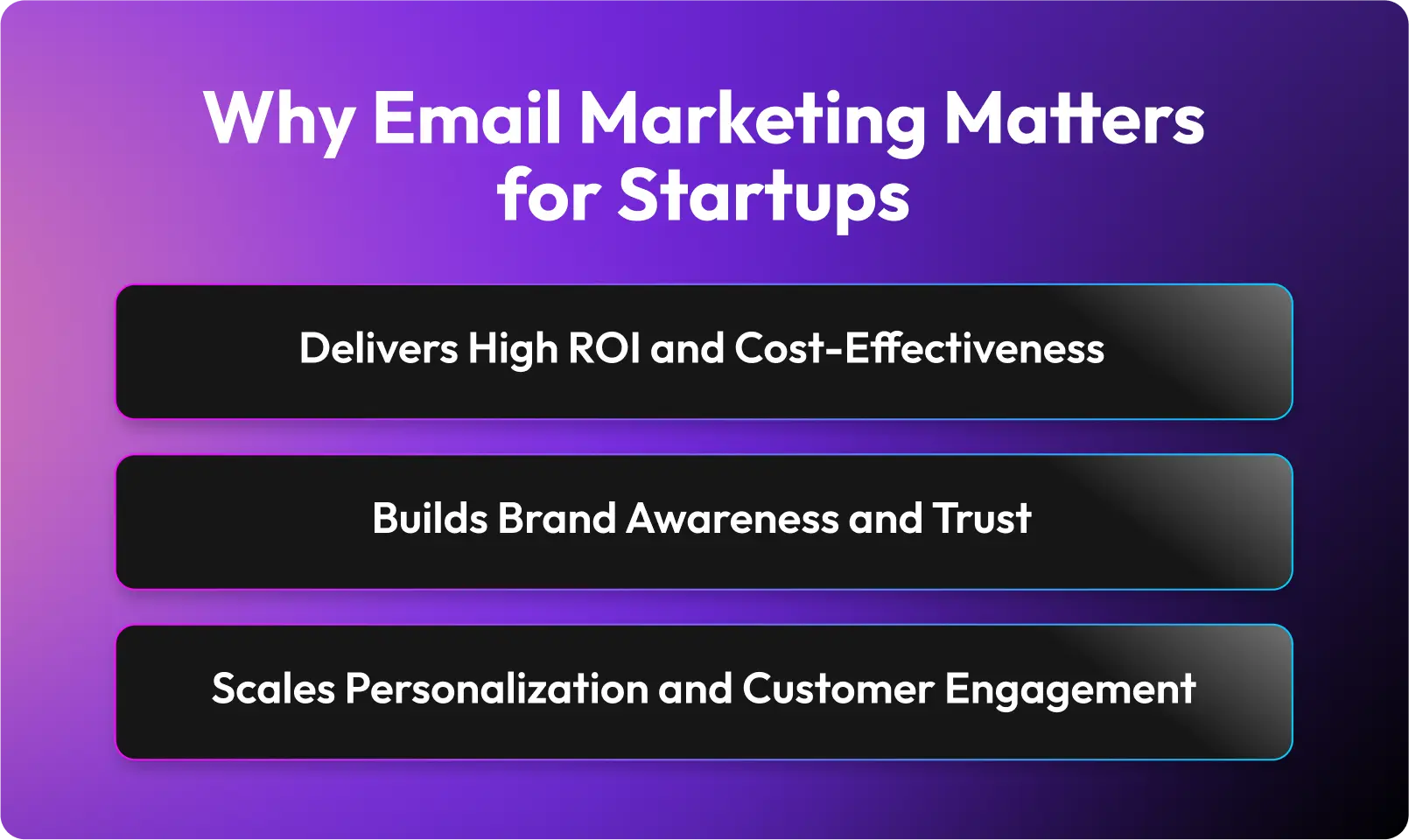
Email marketing matters to startups for two straightforward reasons: it’s inexpensive and effective.
The main cost associated with building a list is reaching new prospects, but organic and guerrilla methods can go a long way in netting you your first few thousand subscribers.
Let’s have a closer look at the benefits.
Delivers High ROI and Cost-Effectiveness
One of email marketing’s biggest selling points is its ROI. Research shows that ROI can be as high as 4000%, with marketers consistently ranking it among their preferred channels.
Equally importantly, tracking ROI is a relatively simple task. Your cost per subscriber (CPS), calculated on a channel and campaign basis, gives you an overview of expenditure. You can then combine this with conversion and sales data to track performance.
Builds Brand Awareness and Trust
Regular, consistent communication is one of the keys to long-term awareness and trust. Most B2B buyers compile a shortlist of potential providers before making a purchase, so it’s important to be top of mind and trusted when this happens.
Email is unique as a marketing channel because it gives you a direct line to your potential customers’ inboxes. This is perfect for creating a long-lasting connection and maintaining awareness of your brand, ensuring you make that shortlist when it gets written up.
Scales Personalization and Customer Engagement
According to research by McKinsey, sales and marketing activities that incorporate personalization drive 40% more revenue.
Email newsletters provide ample opportunity for personalization, from using the recipient’s first name to providing tailored offers based on behavioral insights.
What’s more, most email marketing tools have features that allow for personalization at scale and don’t require technical data skills. It’s a no-brainer for startups and one of the easiest ways to add a layer of personalization to a broader digital marketing plan (with all the benefits that follow).
Cold email is another email marketing strategy for which automation tools can scale personalization. Tools like Artisan use enriched lead profiles to send personalized emails at scale.
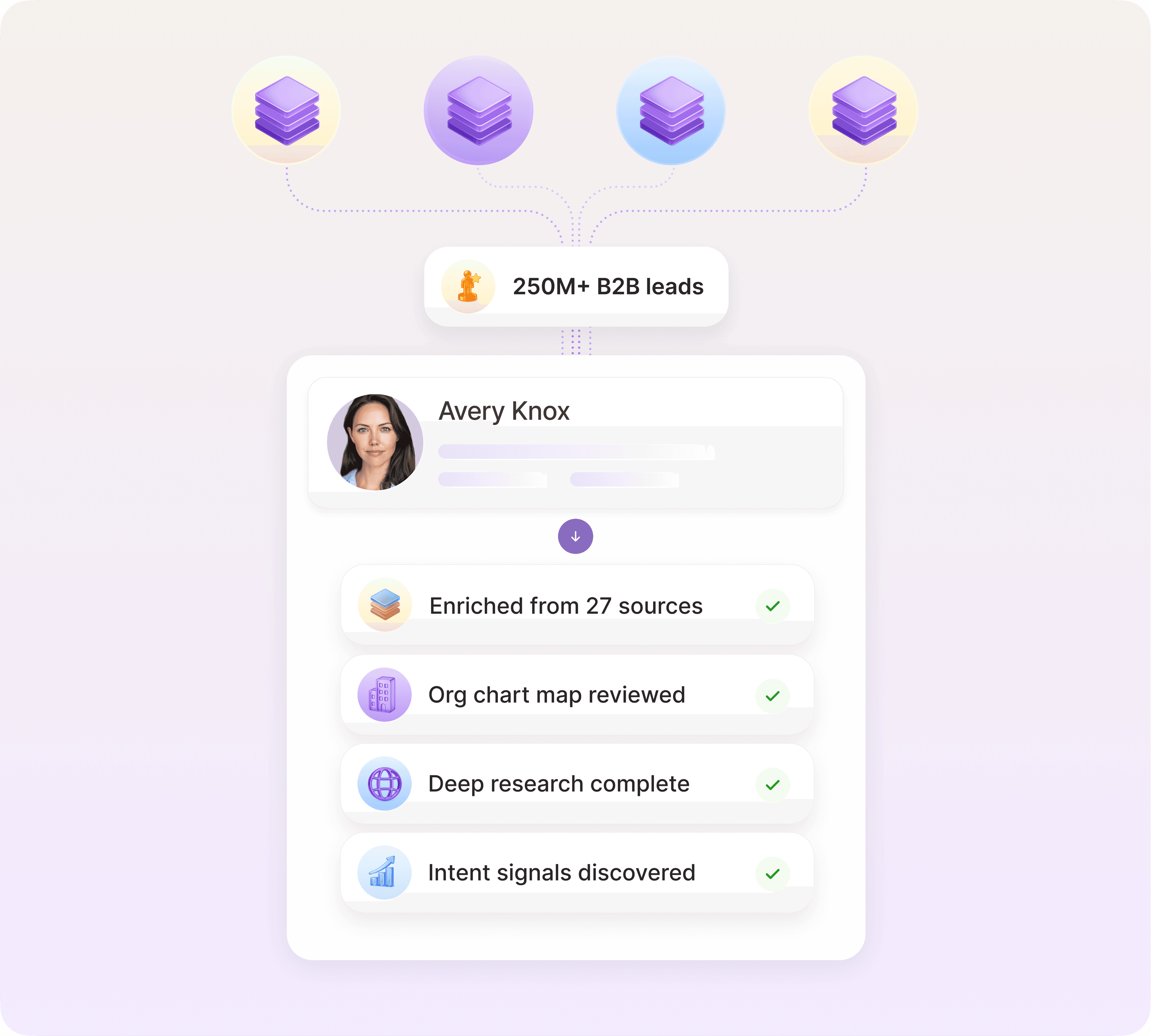
If you’d like to see how a next-gen, AI-driven outbound platform can boost your sales, get in touch for a demo of Artisan.
Types of Emails Startups Should Send (With Examples)
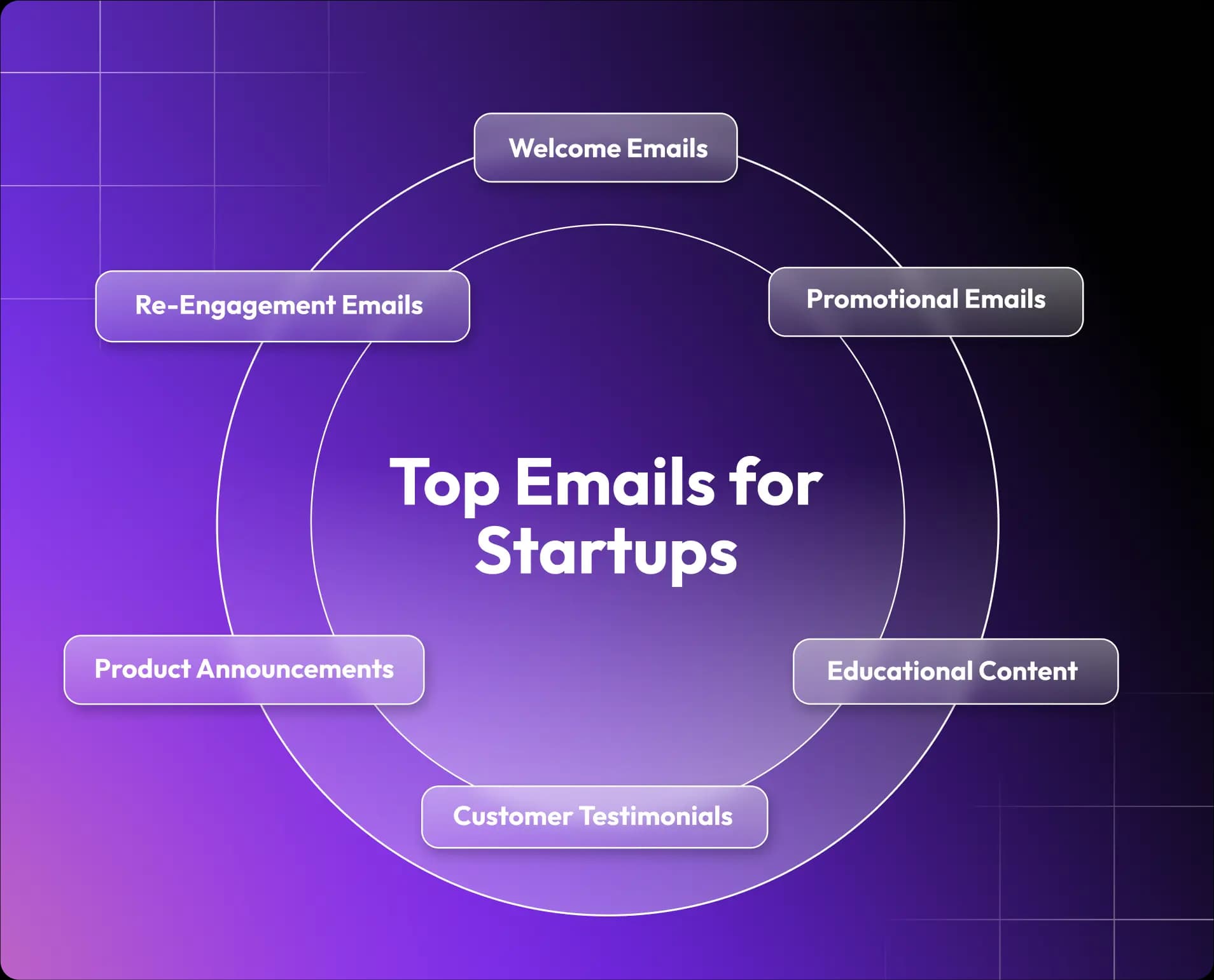
Successful email marketing efforts draw on an assortment of email types, accounting for all stages of the buyer journey.
A diverse strategy gives you the best chance of not just engaging with your subscribers but also converting them into paying customers.
Let’s look at the most important email templates, with practical examples.
Welcome Emails
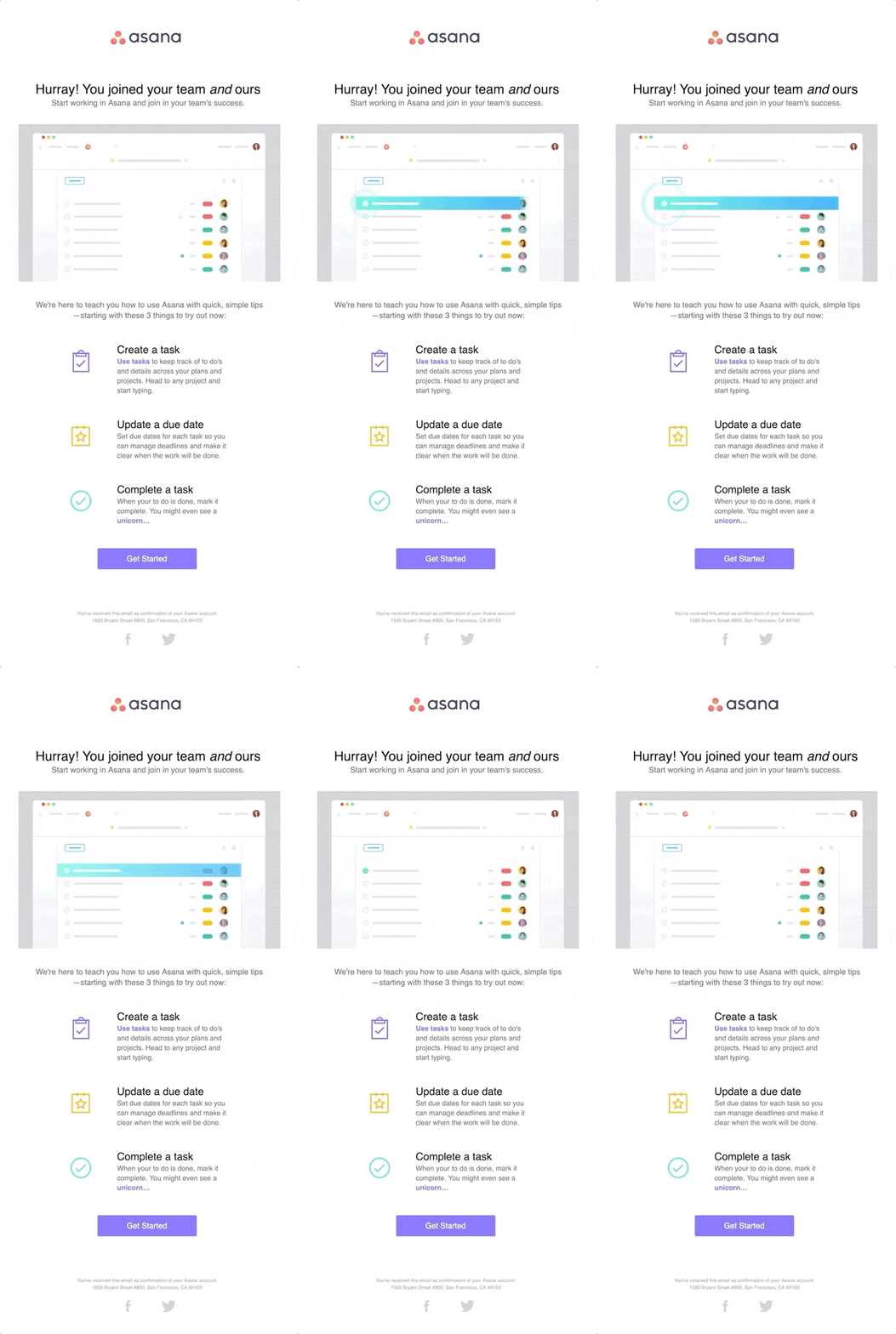
Welcome emails are a chance for you to introduce your brand more thoroughly to prospects and offer initial value—discount vouchers and introductory offers are always good options. If new subscribers opted in for a lead magnet, provide the download link again.
Here’s an example from Asana:
Promotional Emails and Product Announcements
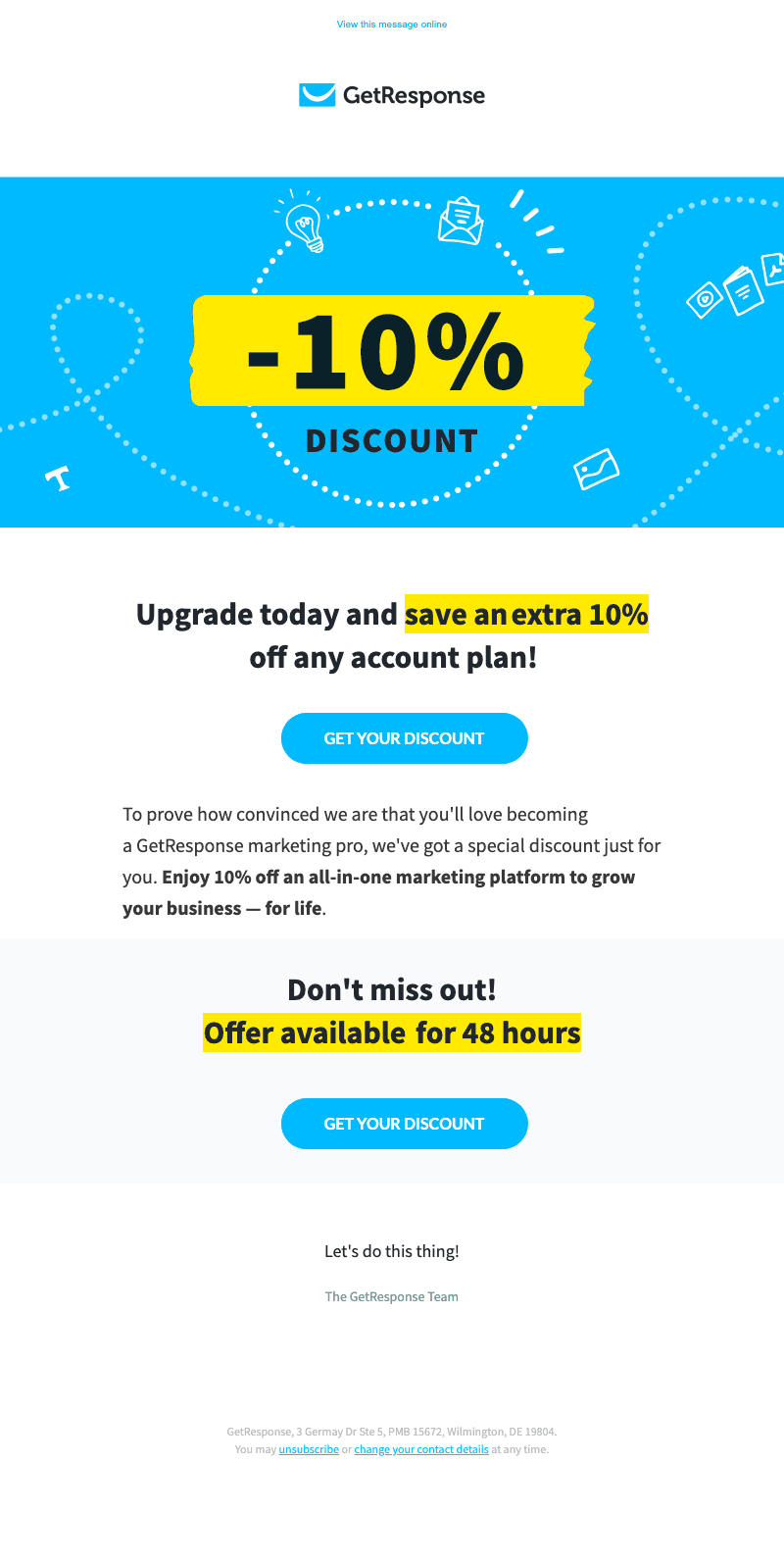
Promotional emails are among the top revenue drivers of all email types. There are various types of promotional emails and product announcements—early-bird offers, countdown reminders, final offers, and more—and you should incorporate several of these into your campaign, depending on its length.
Here’s an example from GetResponse:
Educational and Value-Driven Content
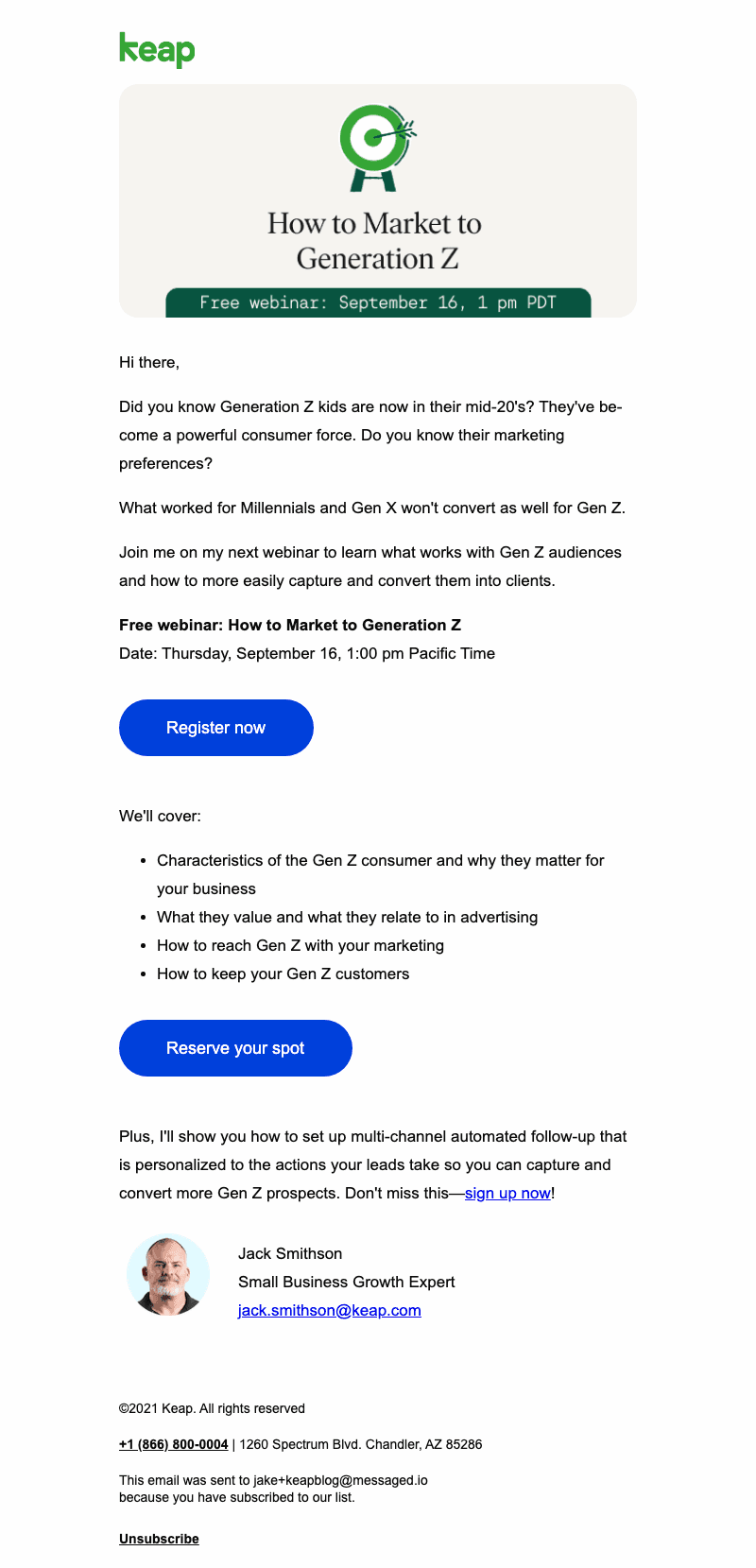
While promotional emails are the primary drivers of sales, educational content is essential for maintaining long-term engagement. Educational content complements and supports sales-focused broadcasts.
An important point with value-based email content is to provide it within the email. There’s growing research that readers prefer zero-click content.
Here’s a great example from Keap:
Customer Success Stories and Testimonials
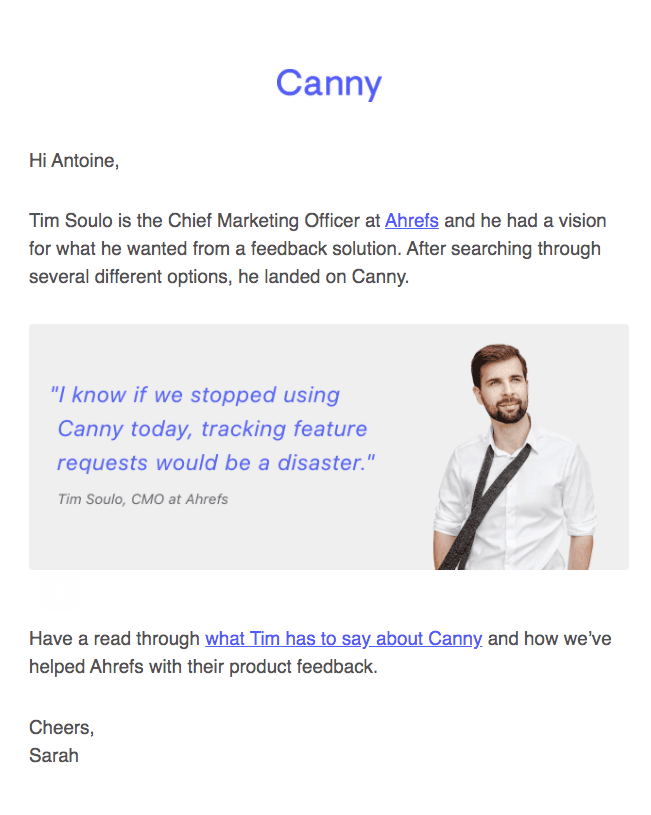
Customer success stories fulfill two functions. For subscribers that aren’t thinking about a purchase but may in the future, they cultivate a positive impression of your brand over the long term. For prospects actively in the buying stage, they help facilitate a sale.
Here’s a cool example from Canny:
Re-engagement Emails
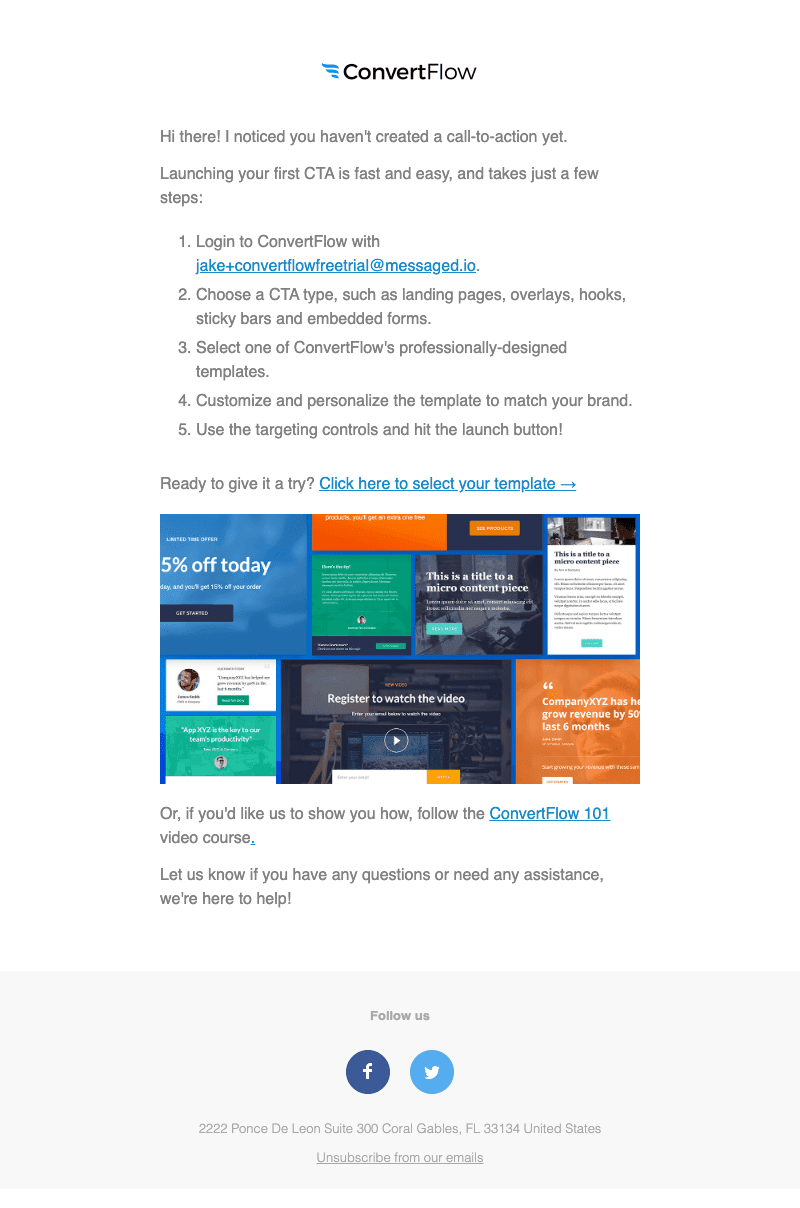
The cost of acquiring a new customer is five times higher than keeping an existing one. Re-engagement emails bring subscribers back into the fold at a fraction of the cost of generating a new subscriber.
Keep in mind, however, that you’ll have to try a little bit harder with unengaged prospects. Offer something of significant value for the best chance of reconnecting.
Here’s a re-engagement email from ConvertFlow:
Best Practices for Startup Email Marketing
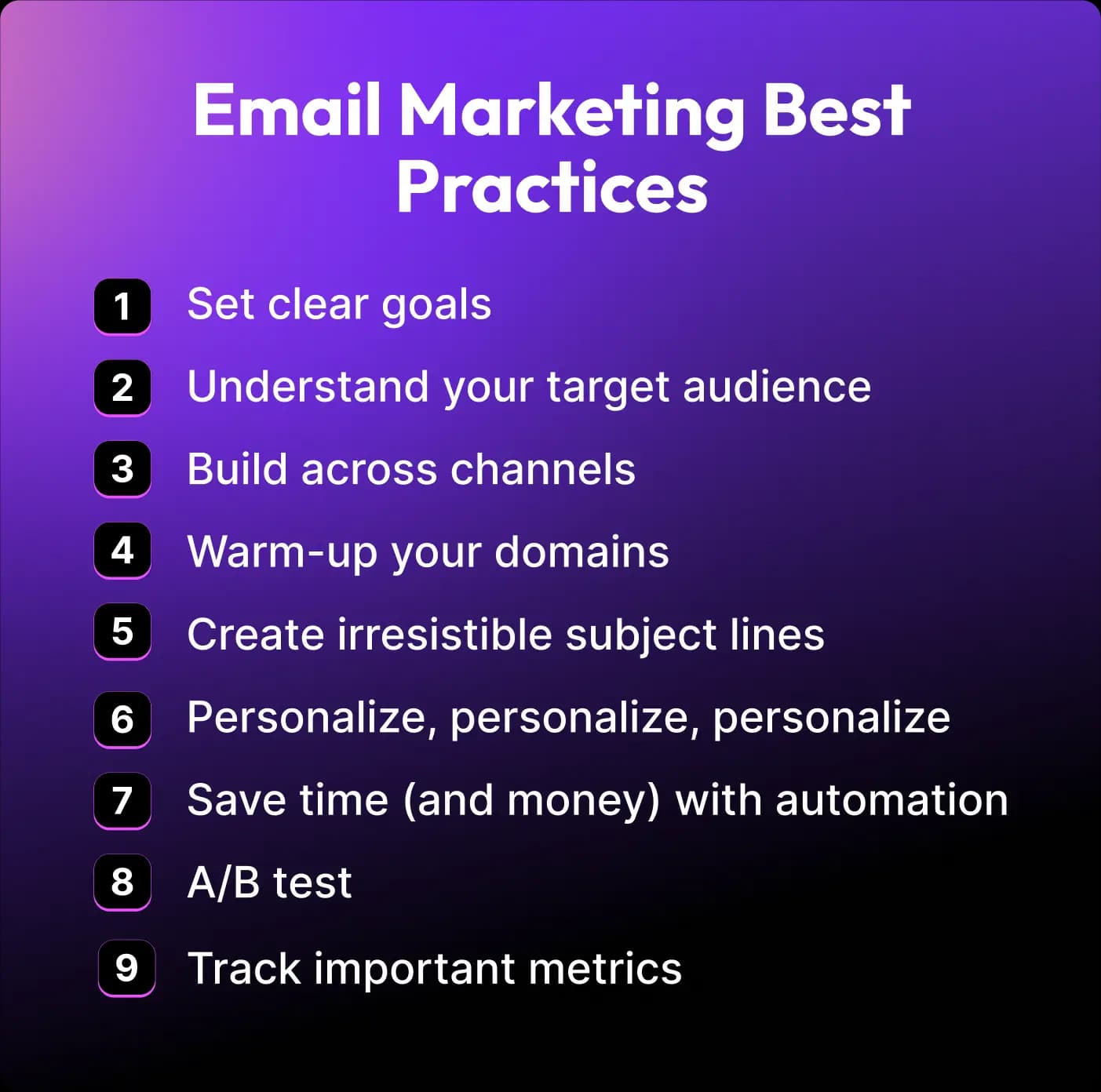
Startups wanting to benefit from email marketing should follow nine best practices:
Set clear goals
Understand your target audience
Build across channels
Warm up your domains
Create irresistible subject lines
Personalize, personalize, personalize
Save time (and money) with automation
A/B test
Track important metrics
Let’s look at each of these in depth.
1. Set Clear Goals
Defining goals early on is essential for tracking success and optimizing campaigns. But what are the right goals for an email marketing campaign?
A well-rounded campaign should perform in three areas:
Awareness: Are your emails creating greater industry awareness of your brand and products?
Engagement: Are recipients opening your emails and reading your content?
Sales: Are prospects clicking your call-to-action link and buying your products?
Engagement and sales are relatively easy to track. Either people are reading your emails and buying your products, or they’re not. Awareness is a little more tricky, but metrics like social shares and brand searches can give you a good idea.
2. Understand Your Target Audience
Understanding your target audience means having a complete picture of their needs, preferences, and pain points. Your ideal customer profile (ICP) should be more than a technical list of demographic data points (although these are important, too).
Here are the best ways to gather audience insights:
Third-party data sources
Scraping and social media platform analysis
Direct surveys and questionnaires
Customer feedback
Analysis of reviews on sites like G2 and Capterra
Competitor research
Companies that really get to the root of their clients’ pain points take a multi-pronged approach. Yes, quantitative data analysis is important. But it’s also essential to get in a room and talk to your customers.
3. Build Your Email List Across Channels
An omnichannel approach is vital when you start building your list. Promote it everywhere—on social accounts, your website, events, in lead magnets, and even at family gatherings. Every subscriber counts.
Here’s an overview of list-building tactics for startups:
Website popups and exit popups
Embedded forms in website content
Social media forms
List shares with other businesses
Incentivized referrals from current subscribers
Selective purchases of lead lists
Sign-up forms at in-person events
Segmentation is also crucial because it allows for personalized outreach. Where appropriate, collect details like company name and job title. You can often use this data to enrich lead profiles in other ways.
4. Remember to Warm Up Your Emails
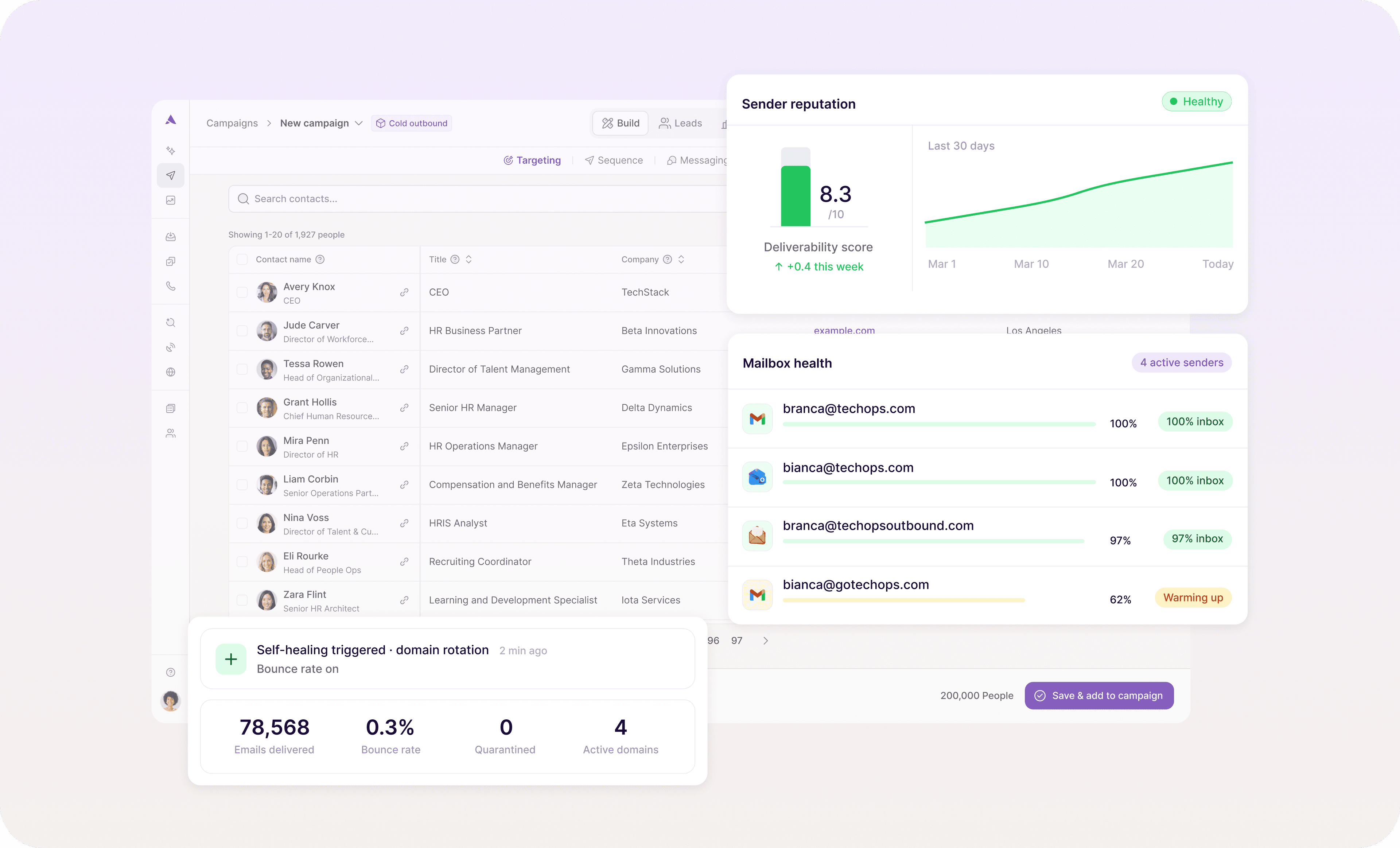
Email domain warmup is an essential preliminary technical task. It is one of the easiest and most cost-effective ways to improve deliverability.
Email warmup is almost always handled by a third-party service. It involves sending emails using your domain to vetted inboxes, where they’re automatically opened. This boosts your sender score and reduces the chances your messages will end up in a spam folder.
Artisan, which is geared towards cold email marketing, takes care of warmup on autopilot. It then continues to monitor mailbox health and flag any issues.
5. Craft Irresistible Subject Lines
Engaging subject lines boost open rates. And higher open rates typically mean more click-throughs and a better spam score.
Here are some tips for making subject lines brief, relevant, and action-oriented:
Don’t overcomplicate things. Keep your subject lines short (30 to 50 characters) and in plain English.
Focus on benefits. Keep the subject line focused on the main benefit your email offers, whether practical guidance, a discount, or even entertainment.
Experiment with emojis. Don’t be afraid of testing the use of emojis at the end of your subject line. They can increase open rates.
As always, testing is key. You may find that subject lines you thought would be an absolute flop convert well. One of the most successful subject lines ever? “Hey.” Barack Obama sent it as part of a fundraising drive.
6. Personalize Your Emails
For cold email campaigns, personalization is based on research. Scraping, social media analysis, and third-party sources are the most common tools.
For newsletters, enrichment is your greatest ally. Enrichment tools can take an email and provide you with a host of details, including social media profiles, employer, job title, phone number, location, and more.
Personalization at scale is difficult, and a good third-party service is the way to go. In particular, AI has seen colossal innovations in this area in recent years, now matching human-quality outputs.
Artisan, and its AI BDR Ava, automates lead enrichment and personalization of content. If you would like to see how Ava can boost your sales, get in touch to arrange a demo.
7. Use Automation to Save Time
You don’t need to craft every email from scratch. Regular broadcasts should be original and contain timely insights. But there are many opportunities to use templates and pre-written emails.
The following emails are perfect for automation:
Welcome emails
New subscriber series
Re-engagement campaigns
Checkout reminders
Pre and post-purchase offers
Sales and marketing automation tools are also perfect for cold outreach “email marketing.” A tool like Artisan, for example, can take care of all of the early stages of a cold email campaign with automated multichannel outreach flows.
8. A/B Test Your Emails for Optimization
A/B testing should sit at the heart of every email strategy. You can read all the advice in the world. However, you’ll never know what applies to the nuances of your industry and market if you’re not testing.
Here are the top elements to track:
Subject lines
Openings
Types of personalization used (first name, location, industry, etc.)
Email layouts
CTAs
Offers
Send times
Also consider testing the variables you use to segment your list. A lot of brands overlook segmentation testing, which is a shame because it can have significant results.
9. Track Important Metrics
Email marketing metrics fulfill two purposes. First, they allow you to compare your campaigns against industry benchmarks. If you’re significantly below the usual figures, you likely have a basic issue with your workflow. Second, metrics show you whether you’re making gradual optimization gains over the long term.
Here are the most important email metrics:
Deliverability: (Emails delivered / emails sent) * 100
Open rate: (Emails opened / emails sent) * 100
Click-through rate: (Emails clicked / emails sent) * 100
Conversion rate: (Emails that resulted in a sale / emails sent) * 100
Ultimately, your overall ROI will determine the success of your campaigns. You calculate this by dividing campaign returns by campaign cost.
Recommended Email Marketing Platforms for Small Businesses
Artisan
Artisan is an AI-first email marketing and lead generation platform. It is pioneering virtual business development representatives (BDRs), not just as add-ons but as core components of the system.
Artisan’s AI BDR, Ava, automates lead prospecting and campaign management. She takes most of the manual work out of the early and middle stages of outbound email campaigns, allowing human reps and account executives (AEs) to focus on the important task of closing deals.
AI is changing the way startups run email marketing campaigns and promote new products. Artisan is at the absolute forefront of that trend.
Key Features
Prospecting from an email database of hundreds of millions of leads, including local business and ecommerce data contacts
In-depth personalization based on a unique waterfall system that selects the best information from lead profiles
Automated email hygiene and lead enrichment
Campaign management, personalization, and testing
Integrations with social media for multichannel campaigns
Pricing
Artisan offers a custom pricing model to give users the best possible deals. Contact sales for more information.
If you would like to see how Artisan can scale outbound email marketing for your startup, get in touch to schedule a demo.
Mailchimp
Mailchimp is a market leader and offers a range of newsletter and SMS features. It is a good option for smaller companies and startups because of its intuitive interface and sliding pricing that’s based on number of subscribers.
Key Features
Email broadcasts and nurture sequences
Sign-up forms and popups
Analytics and segmentation
A/B testing
Pricing
Mailchimp offers several plans with sliding price scales, starting at $20/month for 500 subscribers.
MailerLite
MailerLite is similar to Mailchimp. It has a user-friendly interface, and plans are based on the number of subscribers. Its extensive free plan makes it a good option for smaller companies, and it is better priced (though not by much) in some areas. Notably, you can send unlimited emails. Consider trialing it alongside Mailchimp to see which one you prefer.
Key Features
Full suite of tools for newsletters and nurturing sequences
Segmentation and email groups
Drag and drop email editor
AI-enhanced content creation
Pricing
MailerLite’s email plan, which doesn’t include SMS, starts at $20 per 500 subscribers.
Common Email Marketing Challenges for Startups and How to Overcome Them
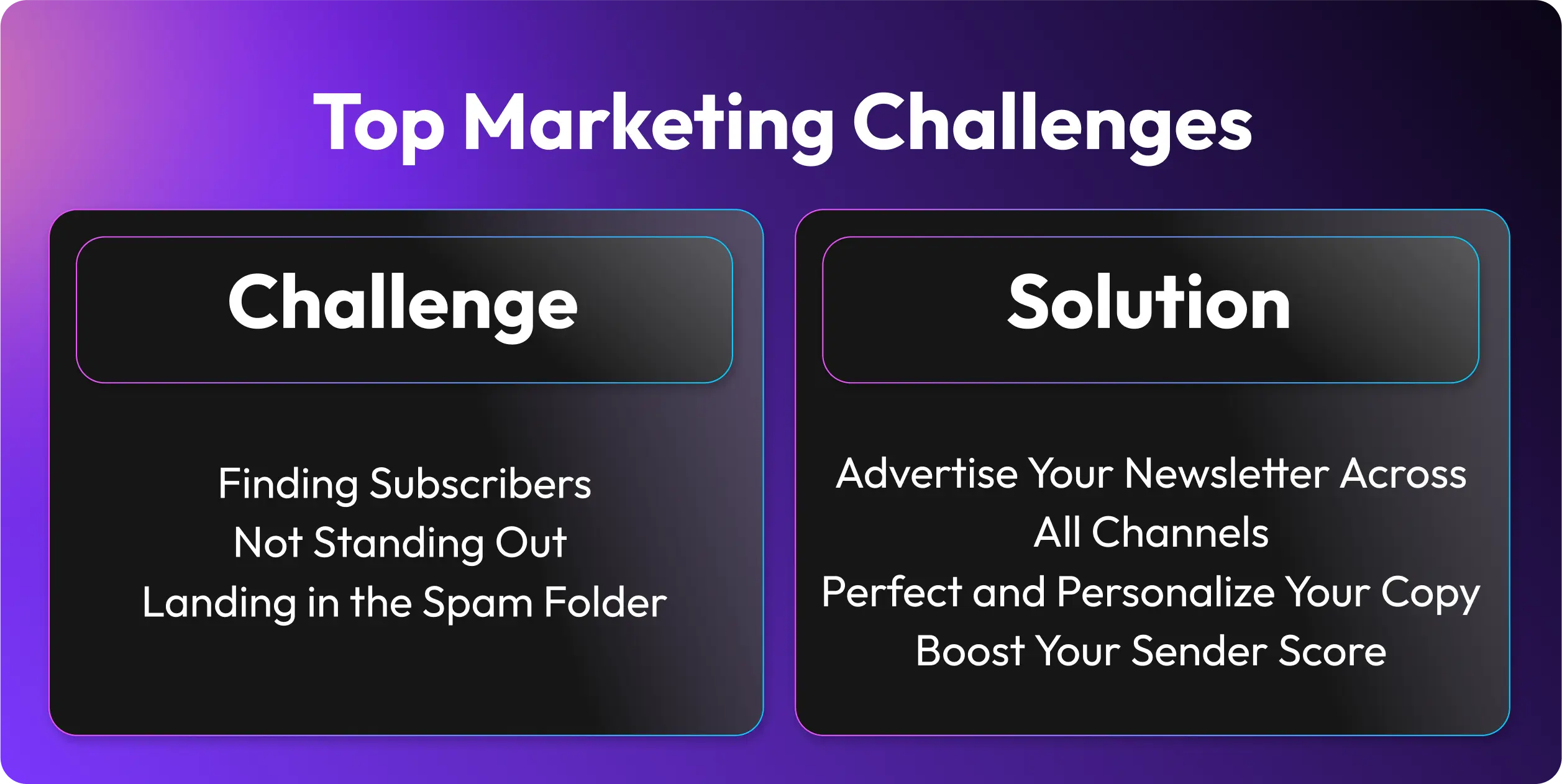
There are three main challenges that startups and entrepreneurs face with their email marketing:
Finding their first subscribers
Crafting emails that stand out
Landing in the spam folder
Fortunately, they’re fairly easy to solve. Let’s look at how.
Finding Subscribers
Ah, it’s the perennial question. Where can you find leads?
The short answer is to create a compelling offer—a killer lead magnet—and talk about it everywhere.
Hitting your first 1000 is a good initial goal to aim for. By the time you hit that number, you’ll likely have worked out how to generate leads and can scale your methods.
Here’s how to hit your first 1000 followers:
Identify your target market’s hottest pain point and create a lead magnet offering a solution.
Promote your email newsletter everywhere on social media using a variety of content types.
Seek out joint ventures with lists of a similar size.
Experiment with paid ads to determine if you can achieve a positive ROI.
Consider buying access to a database for highly targeted outreach.
Incentivize existing subscribers with rewards to refer your list to their colleagues.
If you follow all of these steps, you will almost certainly see consistent growth of your subscriber numbers.
Getting Lost in Your Recipients’ Inboxes
Inboxes are more crowded than ever. A commonly cited statistic is that the average person receives 120 emails a day. In our view, that figure is likely significantly higher for B2B buyers.
Pay attention to the following areas to stand out:
Subject lines: Keep them short and benefit-focused.
Email body content: Zero-click content is growing in popularity, so provide the bulk of the value in the email itself through well-written copy.
Personalization: Personalized emails—subject lines and body copy—perform better than non-personalized ones.
BIMI: Set up the BIMI specification to display your logo next to your email.
One quick win that we can’t suggest enough is to take care of BIMI straight away. It’s a relatively new technology, and most people aren’t using it.
Avoiding Spam Filters and Staying Compliant
Avoiding spam filters is largely a technical process. If you’re creating valuable, enticing content and not overusing spam words, you’re doing everything you can as far as the emails themselves are concerned.
What’s left are the technical aspects of avoiding spam folders. These are things like DKIM, SPF, DMARC, and domain warmup.
Follow these steps to stay compliant:
Warm up your domain with a respected third-party service.
Use a double opt-in and include an unsubscribe button.
Take care of DKIM, SPF, and DMARC.
Regularly run list hygiene checks.
Monitor your sender score to identify problems.
If you’re providing valuable content, you’ve won 90% of the battle when it comes to avoiding the spam folder. It’s the single most important thing for your domain reputation.
Boost Your Startup Growth with AI-Driven Email Marketing
Email marketing to a list of opt-in subscribers is just one part of the email puzzle. Using cold email to supplement your inbound strategy can help you grow your customer base (and your revenue) exponentially.
AI has made significant strides in recent years. Artisan's AI BDR Ava takes care of all the early and middle stages of the outbound sales cycle. Right from prospecting through to follow-up.
If you’d like to see how Artisan can automate your cold email campaigns and boost your sales, get in touch to arrange a demo.

Dan Mowinski
SME @ Artisan
Dan Mowinski is a writer and journalist. He's written for top SaaS companies like Pipeline Magazine, PandaDoc, and EU Business School, focusing on technology.