Top 6 outbound sales process optimization tactics
Learn how to optimize your outbound sales process with AI and automation, clean and tighten your funnel, and close more deals.
When win rates are trending downward, writing better outreach emails won't save you.
You need a sales process and funnel overhaul.
Easier said than done, right? With SDRs’ calendars already stuffed to the brim, where do you even start?
Well, you’re in luck. We’ve put together a detailed guide on how to fix your outbound sales inefficiencies with proven plays.
Your Outbound Sales Engine Is Probably Leaking (Here’s Why)
Your sales pipeline looks full, but nothing's closing. SDRs are busy, but demos aren't converting. You've invested in sales automation, but reps are still drowning in routine tasks.
These aren't lead volume problems or software problems. Your process is leaking.
Unscored Leads and Low-Quality Outreach
Lead generation, lead generation, lead generation.
It's a craze.
According to a recent report by Affiliate Summit, 28% of companies allocate over 60% of their digital marketing budget to lead generation. At the same time, Outreach's 2025 sales data report suggests that lead qualification is now the number one challenge for sellers.
The fixation is on volume—bigger lists, more leads, wider reach. But most teams don’t have the tools or mechanisms to properly qualify and prioritize what they generate. So reps work bloated lists with no filtering, sending outreach to companies outside the company’s ICP, contacts who can't buy, and prospects who'll ghost after the first call.
Reps Drowning in Busywork Instead of Selling
Most sales orgs know they need automation. According to Vendr's 2025 SaaS Trends Report, workflow automation is among the most-purchased SaaS categories
The problem is that investment doesn't translate to execution. Teams buy automation tools, but those tools require configuration, manual inputs, and constant maintenance.
Sound familiar?
You've automated some of your sales operations, but you're still manually building the foundation—sourcing leads, enriching customer data, and deciding who gets outreach and when.
No Alignment With the Buyer’s Journey
Your CRM tracks internal sales stages: MQL, SQL, demo scheduled, proposal sent, negotiation, and closed-won. These help you forecast and track progress internally, but they don't move leads forward. That’s because buyer decision-making is rarely straightforward.
A lead tagged with "proposal sent" could be weeks away from getting budget approval. This mismatch creates false urgency, premature follow-ups, and sales representatives pushing too hard at the wrong times.
When your sales stages reflect your workflow instead of buyer intent, you optimize for the wrong metrics. You celebrate stage progression that doesn't match real buying signals, and you forecast based on internal milestones that don't accurately predict close probability.
Misunderstanding of Sales Funnel vs. Sales Cycle
Teams use the terms “sales funnel” and “sales cycle” interchangeably and end up following only one concept. The reality is that you need both.
A sales funnel visualizes lead flow through conversion stages—top of funnel (TOFU) awareness, middle of funnel (MOFU) evaluation, and bottom of funnel (BOFU) decision-making. It shows how many leads enter at each high-level stage and what percentage converts to the next. Funnel analysis reveals where drop-off happens.
A sales cycle tracks time and specific touchpoints from first contact to closed deal. It measures velocity—how long deals take, how many interactions are required, and which stages cause delay.
Focus only on funnel metrics, and you'll hit volume targets while deals take twice as long to close because you’re reducing drop-off without speeding up the buyer journey. Focus only on cycle metrics, and you'll speed up closures but lose leads because you’ve not sealed up major drop-off points.
How Top Teams Optimize the Sales Process (And You Can Too)
The good news is that funnel leaks are fixable, and sales cycle friction can be smoothed over.
However, you need to put three foundational elements in place to understand what’s really happening in your current sales process.
You can then implement automation infrastructure and data hygiene practices, which will act as the basis of your tactical optimization gameplan.
Start by Mapping What’s Really Happening
Break down your current sales stages from TOFU to close, the way it’s working right now. List each stage a lead goes through from initial contact to closed-won.
But the stages alone don’t tell much. You need conversion data for each stage to see where the process thrives and where it breaks.
Pull the following key pieces of CRM data:
Time-in-stage reports
Conversion rates between stages
Drop-off points
Then add qualitative feedback from your salespeople to supplement this qualitative data.
Ask reps the following questions:
Where do deals stall?
What slows them down?
Which stages feel broken?
Use CRM data to spot patterns—good or bad—and staff feedback to understand what’s driving them. For example, high no-shows for booked demos signal an issue with follow-ups or meeting reminders. Low contacted-to-engaged conversion means your messaging or targeting is off.
Use Automation to Remove Bottlenecks
Automation is the foundation of successful long-term optimization. Individual tactics are all well and good, but automation is what lets you scale across the whole sales cycle.
Ensure the following automation infrastructure is in place:
CRM data syncing across your entire tech stack, e.g., lifecycle stage updates flow automatically into your sales outreach tool
Conditional workflows that adjust automatically, e.g., reschedule no-shows without manual follow-up
Automated lead qualification based on firmographics, technographics, and intent signals
Outreach triggers based on buyer behavior, e.g., buying signals like pricing page views
Platforms like Artisan handle this with end-to-end automation. Ava discovers leads, scores them, enriches profile data, launches personalized sequences, and adjusts outreach based on real-time signals. All of this happens on autopilot and at scale.

Streamline Your CRM Workflows
Let’s say you set up sales automation long ago. Most teams already have—90% of sales leaders believe AI will revolutionize or improve the sales process. . But those systems still produce messy results, like sequences firing at the wrong time, follow-ups hitting unqualified leads, etc.
How would you fix that?
Automation only delivers when your CRM data is clean, which is usually the problem. Research by Validity found that 76% of organizations say less than half of their CRM data is accurate and complete.
Enforce field hygiene across your team to make your CRM workflows…work:
Create clear account ownership rules to avoid duplicate data entries and conflicting updates.
Require call notes, email summaries, and meeting outcomes in a standard format so the data is searchable (CRMs with built-in call tracking and transcription handle this automatically).
Set clear rules that dictate when prospects move from marketing-qualified leads (MQL) to sales-qualified leads (SQL) to opportunity so data about lead stages is uniform.
Clean CRM data is one of the foundational elements of a successful optimization strategy. If you don’t have accurate data, you simply can’t identify bottlenecks and track whether changes are effective.
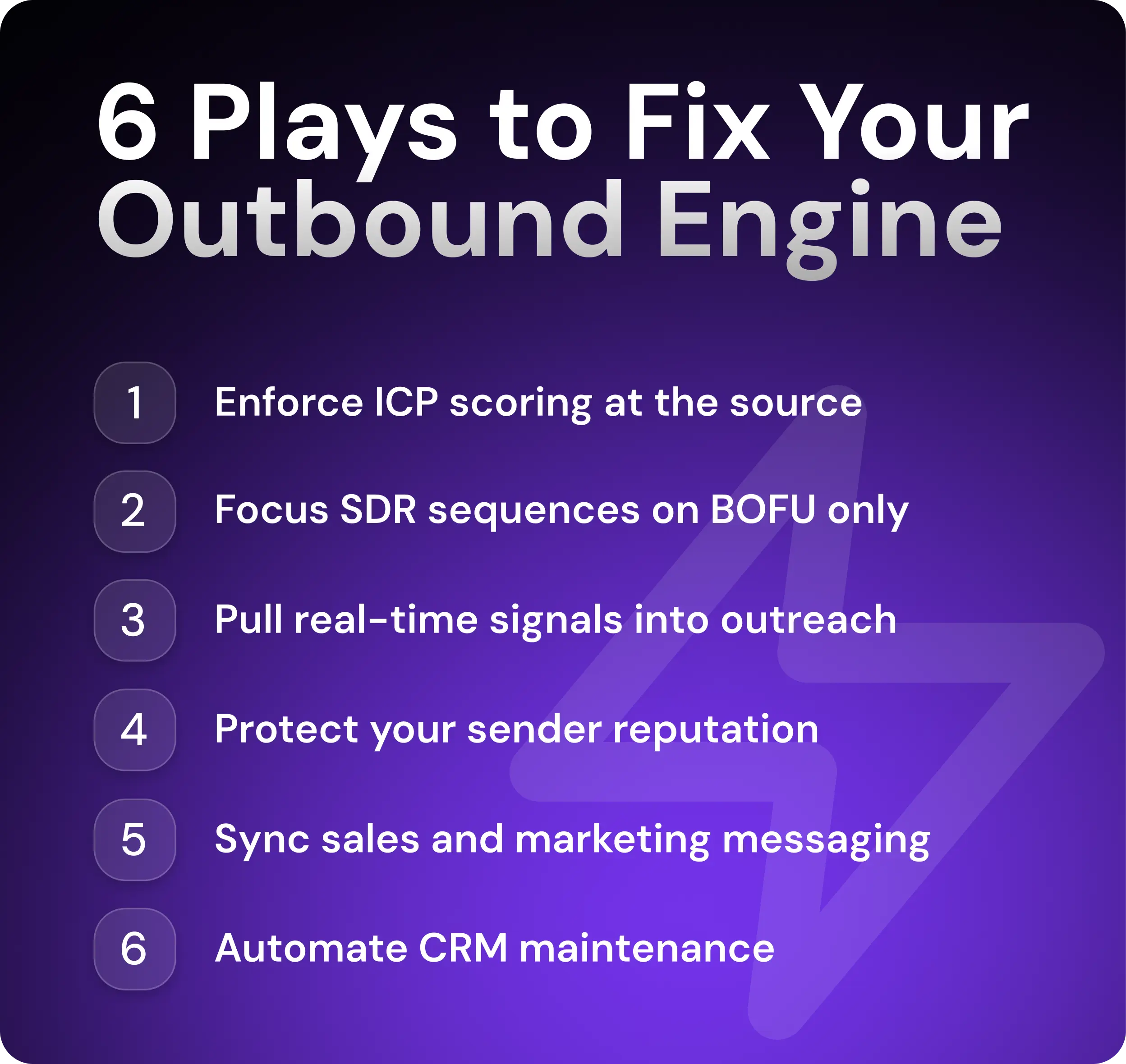
The 6 Tactical Plays to Optimize Outbound for Conversions
For years, sales teams have focused on closing deals and improving their win rate. According to Outreach, there's now a new trend—the bottleneck has shifted to the top of the funnel. And that’s where you should start your changes.
1. Tighten Your ICP and Scoring Rules
Arguably the easiest way to improve the performance of your whole sales process is to disqualify poor fits as early as possible.
Most teams have an ICP (ideal customer profile)—they just don't enforce it at the source. Leads flow in from scraped lists, inbound forms, and purchased databases without any filtering.
Filter leads using the following data:
Firmographics: Company size, industry, revenue range
Technographics: Tools they use, tech stack maturity
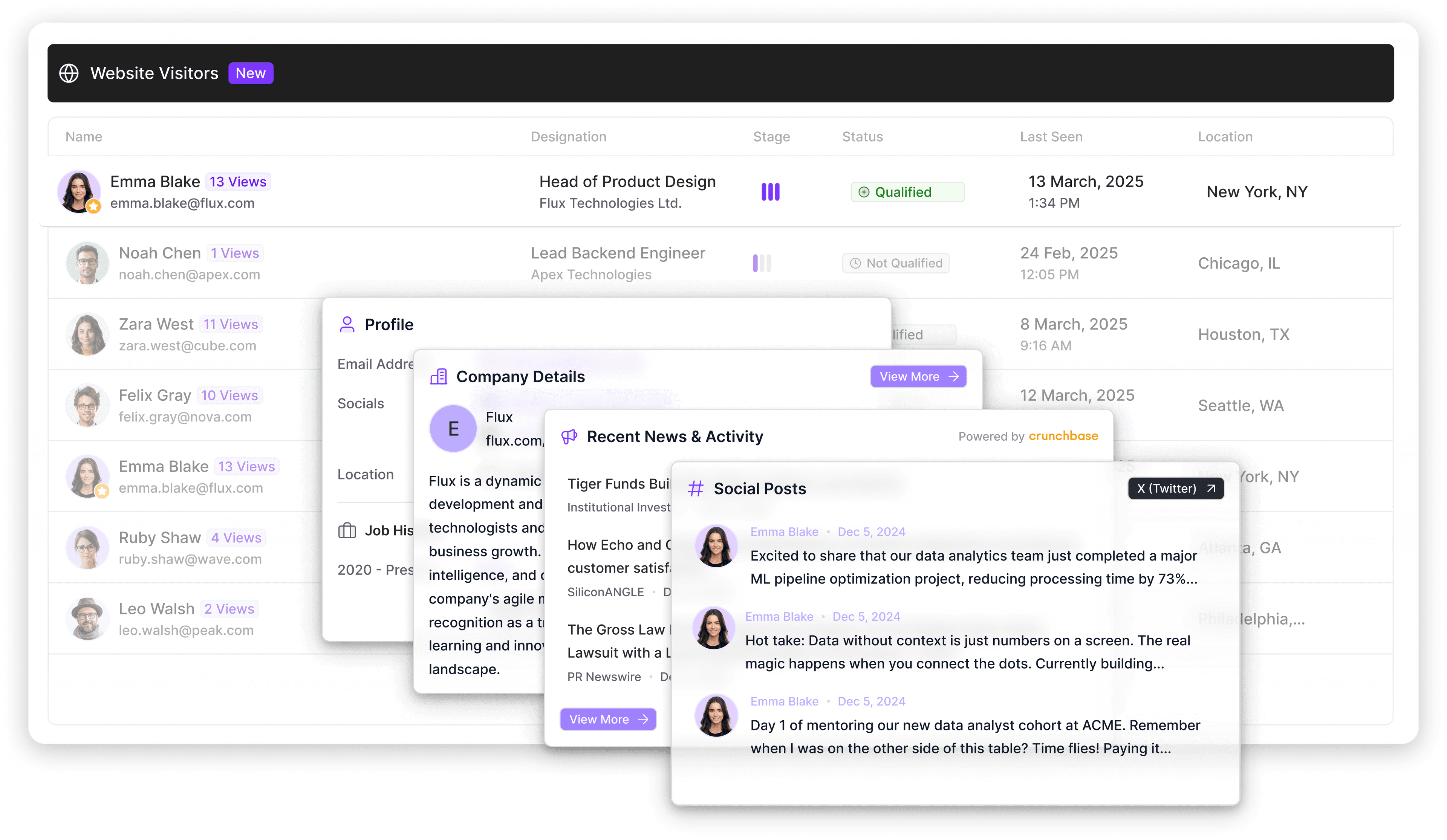
Intent signals: Job postings, funding rounds, product page visits, website behavior
While firmographics and technographics have mostly made it into qualification criteria generally, intent signals are still largely overlooked. You might be targeting GTM leaders at SaaS companies with 50 to 100 employees, for example, but not filtering for whether they're actually in-market.
Should you disqualify every lead that hasn't visited your pricing page but matches on firmographics and technographics? No. You need tiered scoring.
Set up scoring logic that weighs these factors automatically:
If an account matches firmographic criteria, assign 10 points
If an account uses complementary tech in their stack, assign 15 points
If an account posted a relevant job in the last 30 days, assign 20 points
If a lead visits your pricing page, assign 25 points
Anyone who hasn’t reached 15 points is disqualified. Leads that hit 25 points or more go into nurture sequences—marketing emails, retargeting ads, and LinkedIn campaigns.
Leads that hit 40 points or more enter your outbound sequences. These are high-intent prospects where personalized, direct outreach makes sense.
Many modern AI tools automate this process. Artisan's Watchtower feature tracks buying signals on autopilot—collected data includes funding rounds, job postings, and website activity. When leads hit your threshold, they're automatically added to your lists.
2. Build Conversion-Focused Outreach Sequences
Outreach sequences should be built around specific conversion actions—whether that’s a click, a reply, or a booked meeting. Build each sequence with one specific action in mind.
Here’s an example of a simple three-touch outreach sequence to a high-intent lead:
Day 1 (email): Reference the specific signal that triggered outreach (such as a funding round announcement or website visit), then propose a short call.
Day 4 (follow-up email): Send proof like customer results, security certifications, integration compatibility, etc.
Day 6 (LinkedIn): Send a connection request and, once accepted, a direct message with a calendar link and two to three specific time slots
Of course, such a direct approach won’t be suitable for every lead. Adjust your message and CTA to intent and readiness to buy. A lead who is only starting to evaluate solutions, for example, is more likely to appreciate educational content over a hard sell.
However, keep in mind that over-sending emails in a sequence increases unsubscribe and spam complaint rates. One initial email and three follow-ups is a good benchmark.
Finally, make it easy to reschedule for no-shows. Send them the short version of what they missed in the demo and a new calendar link. Skip the guilt trip—just offer them another chance to connect.
3. Use Data to Personalize Every Touchpoint
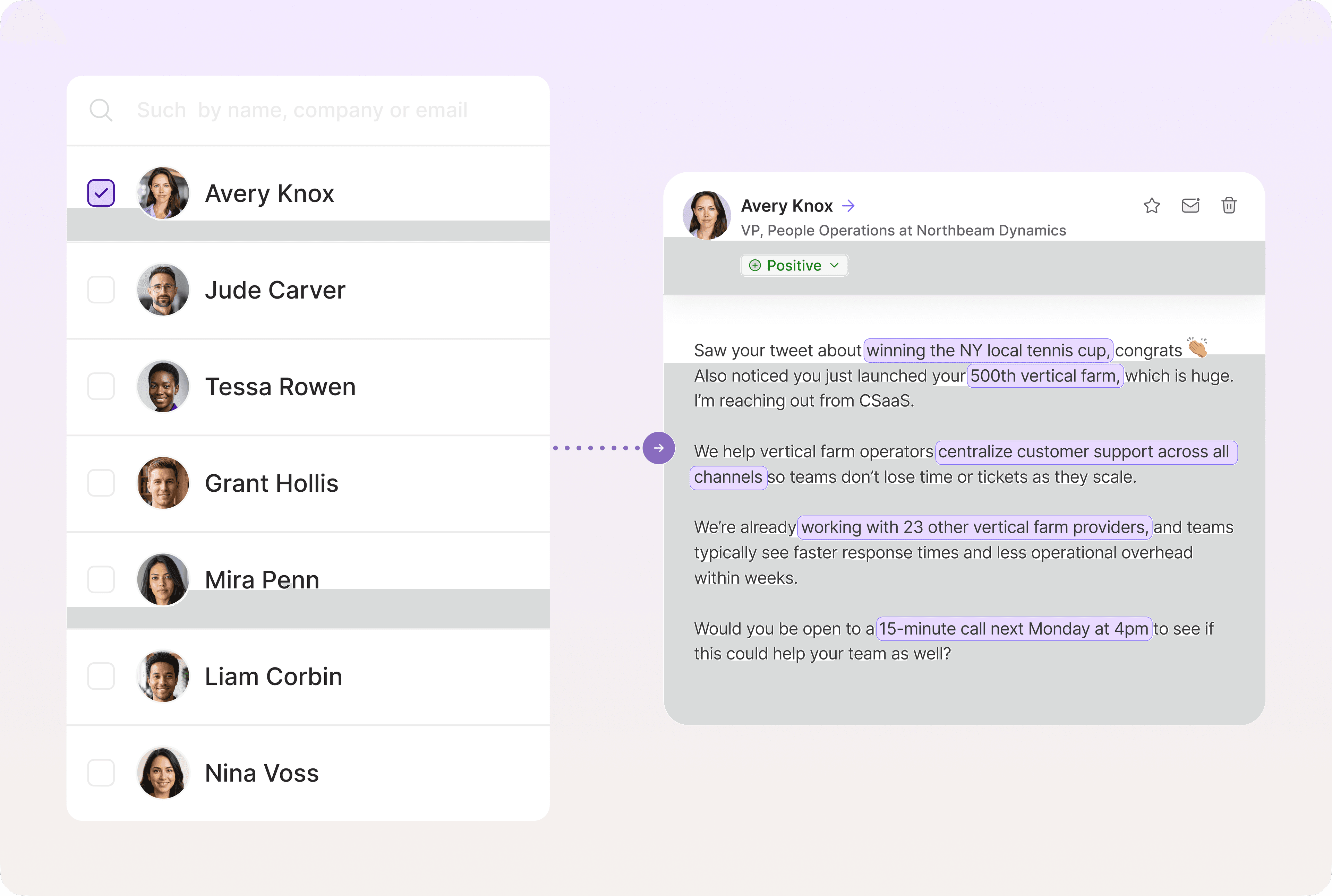
Cold outreach only works if your messages get opened, and that needs personalization. And not just generic first name automations—deep, meaningful personalization.
Track these data points to personalize outreach:
Crunchbase: Set up alerts for funding rounds, leadership changes, mergers and acquisitions (M&A), and expansion news
LinkedIn Sales Navigator: Monitor job postings, new hires, content engagement, and recent promotions
Website tracking (via your CRM or tools like Clearbit, 6sense): See which pages they visited, dwell time, repeat visits to pricing or case study pages
Google Alerts or news aggregators: Track product launches, office openings, and partnerships announced
Doing this manually means checking every source before writing a message—about 30 minutes per prospect. Factor in crafting the actual outreach, and you're looking at five prospects per day if you're fast.
That’s why sales teams are increasingly turning to AI to automate outreach. Artisan's AI BDR Ava pulls real-time insights (funding rounds, job postings, pricing page visits) from around the web and composes highly personalized emails at scale.
4. Warm Up and Protect Your Email Deliverability
Email deliverability is important because it’s the one logistical issue that can kill an outbound strategy before it gets started. Fortunately, deliverability optimization is a relatively straightforward task.
Follow this schedule to ramp up send volume gradually:
Week 1: 10 to 20 emails per day
Week 2: 20 to 40 emails per day
Week 3: 40 to 60 emails per day
Week 4: Scale to your target volume
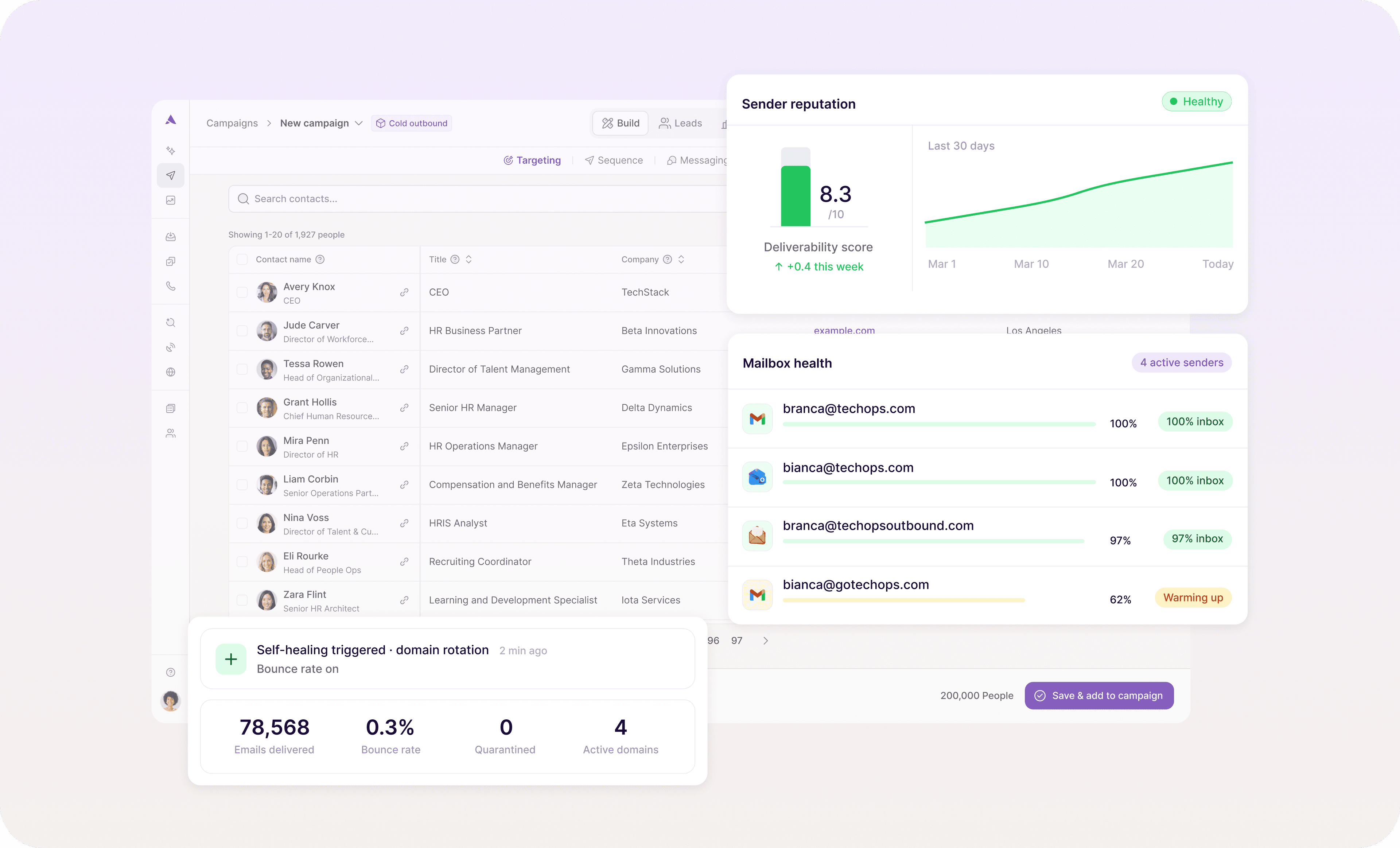
As you’re warming up, monitor inbox placement and bounce rates. If open rates drop below 20% or bounces exceed 3%, pause and check your sender reputation.
Just like lead enrichment and signal tracking, warm-up doesn't need to be manual. In fact, a dedicated tool is usually the cheapest and fastest option.
Artisan handles warm-up automatically. It sends personalized emails to real addresses (not fake accounts), removes them from spam folders, and marks them as important to build your sender reputation. Artisan also runs regular health checks on your mailbox, monitoring blacklists and verifying your SPF, DKIM, and DMARC settings are properly configured.
5. Align Sales and Marketing Touchpoints
When a marketing team runs ads targeting VPs of Sales at Series B companies, your outbound team should be reaching the same audience with complementary messaging.
Use shared CRM lifecycle stages so both teams know:
Who's been contacted
What messaging they've seen
Where they are in the buying process
Which team owns the next touchpoint
In addition, set up regular syncs between sales and marketing (weekly or biweekly) to review:
Which accounts are in active outreach
What content is performing in ads (SDRs should use it too)
Where leads are stalling (adjust messaging together)
When your LinkedIn ads, retargeting campaigns, and BDR outreach all hit the same accounts with consistent messaging, prospects recognize you. They've seen your brand before the BDR reaches out, so the cold email doesn't feel cold anymore. That familiarity is what gets emails opened and calls answered.
6. Eliminate Manual CRM Upkeep
Sales reps spend an average of 13 hours per week looking for data to fulfill requests, according to research by Validity. Arguably the primary cause of this is poorly maintained CRMs—an issue that can be fixed with automated upkeep.
Here’s how to keep your CRM records complete and up to date without manual input:
Trigger fields to update automatically. For example, “lifecycle stage” changes based on activity—once an email is opened, the lead moves to the "engaged" stage.
Auto-tag leads based on behavior. For example, if a lead downloads a white paper, they’re tagged with a label like “White paper downloaded.”
Sync lead profiles across your tech stack. For example, call notes flow into your CRM via Zapier or native integrations.
Run ongoing enrichment: Connect your CRM with an enrichment solution—like Artisan—that will automatically monitor, update, and expand your lead profiles.
From Leads to Wins: Optimize Every Stage of the Funnel
How should outreach change as leads move down your sales funnel? The best outbound email campaigns aren’t just TOFU motions. They adapt based on lead intent and the level of pre-existing awareness of your brand.
TOFU: Capture & Prioritize Attention
You're identifying TOFU accounts that fit your ICP and showing intent signals (hiring, funding, tech stack changes). When they demonstrate those signals, launch cold outreach tied to their business context. Reference the trigger, for example, "Saw you're hiring SDRs—most teams at your stage hit a wall around lead quality. We offer free workflow audits for teams scaling up, no strings attached."
The problem is that BDRs usually jump at TOFU prospects with sales pitches too early, pushing for product demos when buyers aren't ready. You have to respect where they are in the sales journey to make your funnel work.
MOFU: Guide and Nurture Conversations
Direct outreach works best for MOFU prospects—who are aware of your brand and may even be evaluating it but haven’t made contact with a rep. Either way, the goal is the same: book a meeting to understand where they are in their evaluation, what's holding them back, and whether they're the right fit.
Start by asking qualifying questions in your first real conversation:
"What's driving this search right now?"
"Who else is involved in decision-making?"
"What other solutions are you looking at?"
"What would make this a no-brainer for you?"
Don’t present these as interrogation questions—weave them into natural conversation. The answers tell you whether they're early-stage browsing or actively evaluating.
If they're still early in research, don't push for a demo. Point them to resources that match where they are: "Based on what you're looking at, this case study from [similar company] might be helpful. Take a look and let me know if you want to dig deeper."
If they're comparing vendors actively, they'll tell you. They'll mention other tools they're evaluating, ask specific questions about pricing or features, or reference their timeline.
BOFU: Accelerate Conversions
BOFU is where speed wins. These leads are close to making a buying decision. Your outreach at this stage should focus on scheduling meetings or pushing them over the line with incentives.
Here’s how to move fast and make booking easy with outreach:
Use hyper-targeted social proof, such as customers from their industry or case studies from similar companies.
Add urgency if relevant, like limited Q4 slots, year-end pricing changes, etc.
Offer one-click calendar links with multiple time slots.
BOFU leads are the easiest to work, right? They're ready to buy—you just book the meeting and move on.
Not quite. Besides a killer pitch, you need to handle plenty of potential pitfalls along the way.
Here’s how to increase your chances of closing BOFU leads:
Prevent no-shows before they happen. Set up an automated reminder to confirm attendance the day before.
Qualify who should be in the room upfront. Before confirming the demo, ask, "Who else should join from your side?" and "Will the final decision-maker be on this call?"
Push for the earliest slot possible. Aim for this week or early next week maximum. If they insist on a later date, try to engage them days before the call to keep them warm.
Brief your account executive (AE) thoroughly. Send a quick message that covers pain points discussed, competitors they're evaluating, timeline, who's joining the call, and any specific objections or concerns.
BOFU looks simple on paper. But proper qualification and smooth handoffs are what separate booked meetings from closed deals.
Track What Matters: KPIs That Prove It’s Working
When it comes to outbound sales optimization, you can't improve what you can't measure. At the same time, you don't need a bloated dashboard tracking every possible sales performance metric.
Focus on the following core outbound KPIs:
Email reply rate: 5% to 10% is solid for cold outreach across most industries. Check benchmarks for your specific niche, but more importantly, compare your own rates over time.
LinkedIn reply rate: Aim for 25% connection acceptance and 5 to 10% message replies once connected. This data is based on Belkins' analysis of over 20 million LinkedIn outreach attempts.
Lead-to-demo rate: Around 6% is a good benchmark for B2B sales, according to First Page Sage's 2025 internal sales data.
Sales cycle length: Most outbound sales orgs now see sales cycles of 10 months or longer, according to 6Sense's 2025 B2B Buyer Experience report.
Forecast accuracy: Compare predicted revenue against actual closed revenue each quarter—aim for 90% accuracy or greater.
Common Sales Process Mistakes (And What to Do Instead)
Optimization sounds simple until you start. And even when you think you're improving, it's easy to fall into mistakes that pull you right back to where you started. Knowing which mistakes to avoid gives you an instant head start.
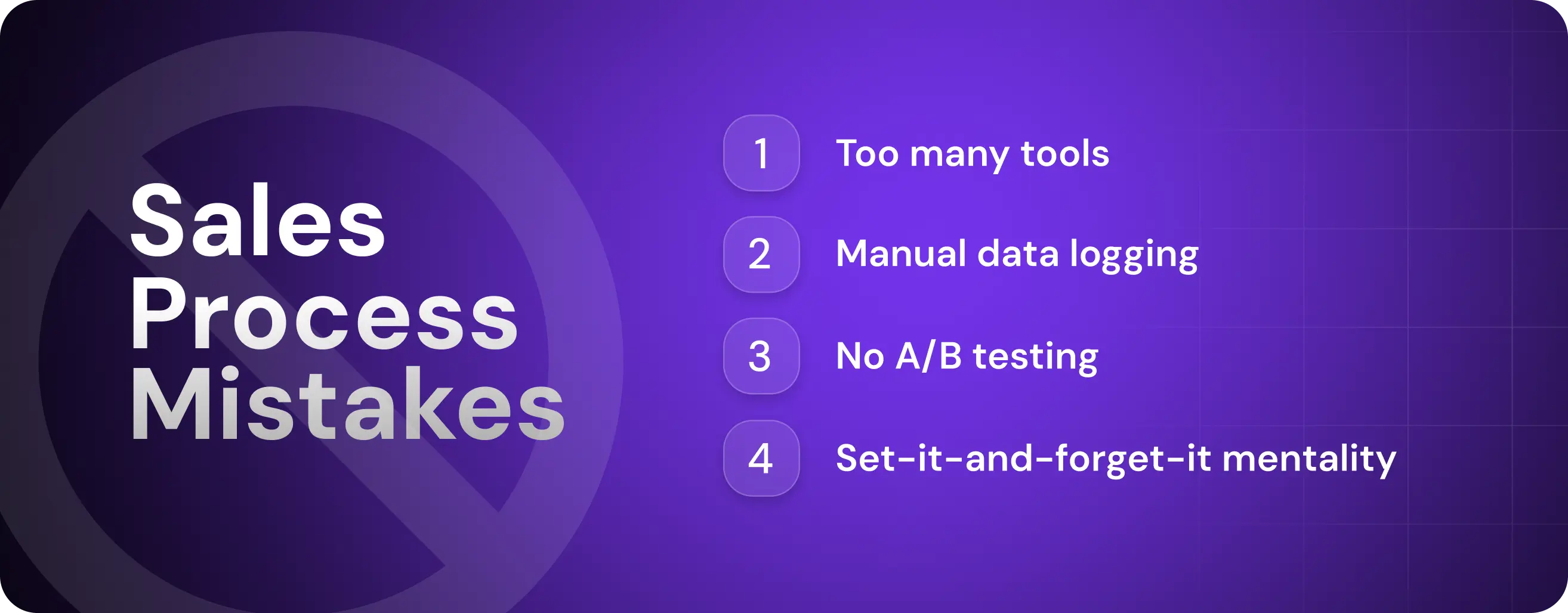
Overengineering Your Tech Stack
As you adopt different sales optimization strategies, it's easy to end up with too many tools. It happens to the best of us. If reps need to click through five tabs to send one email, it's time to consolidate your tech stack.
According to a 2025 report by Hubspot, 45% of sales pros say their tech stack has become overwhelming. Tools that combine AI-driven lead scoring, forecasting, and automation offer a solution, and they are becoming more widely available and affordable.
Relying on Reps for Manual Updates
Expecting reps to log every call, update CRM fields, and tag contacts leads to scattered, incomplete records. They forget, they rush, they skip. Ensure that data is synced across
Skipping Sequence Testing
Your campaign might flop because your target customers hate capitalized subject lines, but you'd never know without testing.
A/B test every element of your sequence: opening lines, subject lines, timing, and CTAs. Change one variable at a time, then roll out winners across your entire team.
Treating Optimization Like a One-Time Fix
Optimization is a long-term game. Incremental improvements compound over time until you start to see significant revenue gains. Review your sales process every quarter to identify emerging bottlenecks and refocus attention on the most urgent areas.
Your Team’s Ready, The Tech Needs to Catch Up
Your sales reps know how to sell. They just can't do it effectively when they're buried in manual list building and hunting for intent signals across five different tools.
You need automated systems to find qualified leads, score them automatically, personalize outreach at scale, and keep your CRM clean without human intervention.
Artisan handles these processes at scale and on autopilot. AI BDR Ava manages lead discovery, profile enrichment, outreach sequencing, and CRM syncing from one consolidated platform, freeing your reps to focus on the all-important human task of closing deals.

Adelina Karpenkova
SME @ Artisan
Adelina Karpenkova is a writer helping businesses tap into AI's potential and clear up misconceptions. She works with B2B teams on latest industry knowledge.