Event sponsorships can cover your venue costs, bring in high-quality speakers, and turn your event from a break-even project into a revenue generator.
But you know that already.
What you don’t know is how to attract and sign the right sponsors for your event.
That's where we come in. We've drawn on our vast experience with events to create a step-by-step guide to finding high-value sponsors.
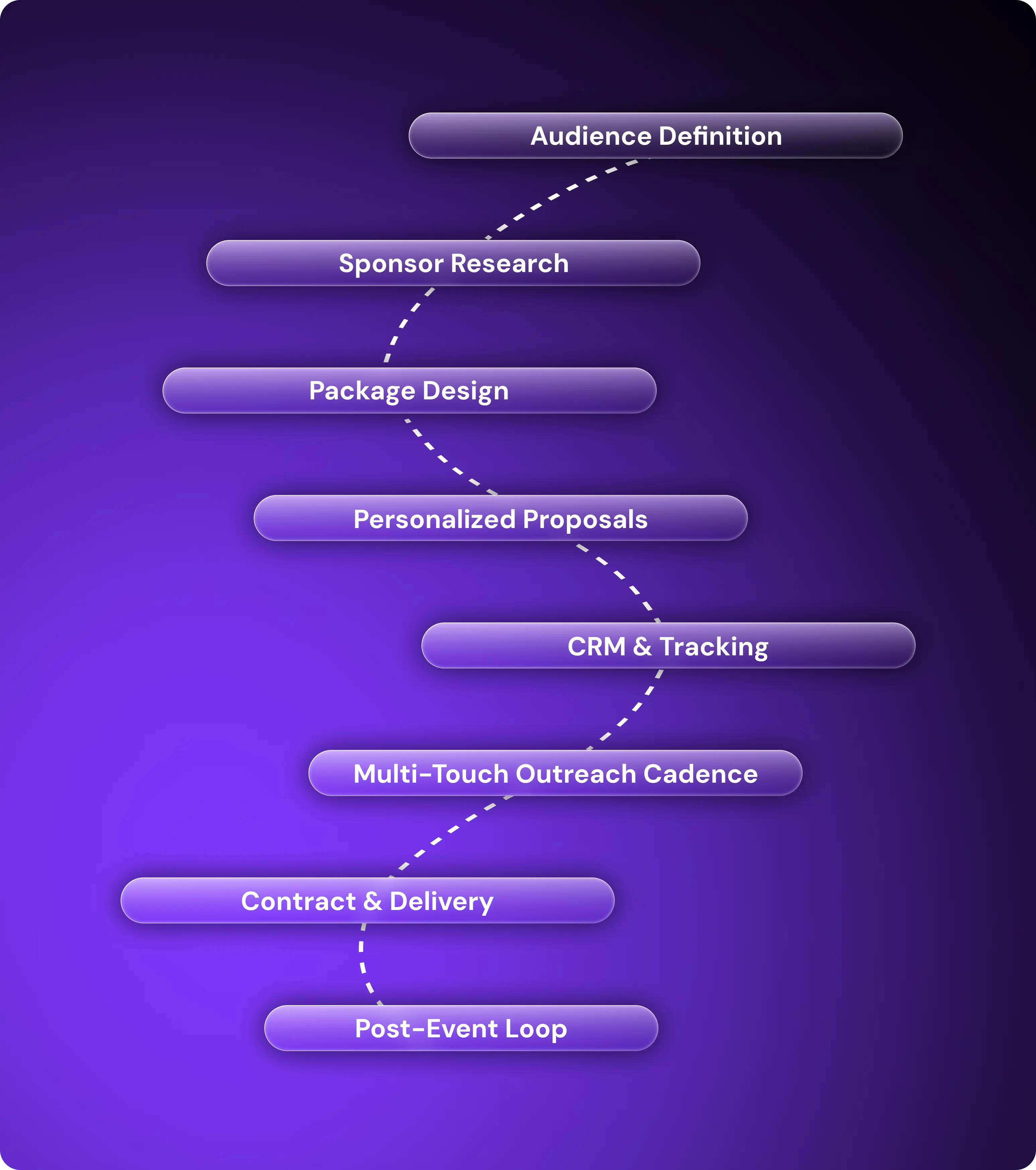
Step 1: Define Your Event’s Unique Value and Audience
Event sponsors are buying access to your audience, so you need to define and present that audience clearly. Whether you're hosting an in-person summit or a series of online workshops, who's showing up?
Just don't lock yourself into one narrow job title. That's limiting and unrealistic.
Suppose you're targeting founders. You'll probably get a mix of managers, decision-makers, and a chunk of founders. And even within "founders," you're looking at a spectrum. The bulk might be aspiring founders—not leaders of SaaS companies with $10M annual recurring revenue.
But that's not a problem. That's data.
Your job is to ride that data and present it in the most appealing way to potential sponsors.
Here’s an example of how to frame your event’s audience honestly:

Primary segment (30 to 40%): "VP and C-level operators at B2B companies with 50 to 500 employees.”
Secondary segment (25 to 35%): "Directors and senior managers at growth-stage startups."
Aspirational attendees (10 to 20%): "Early-stage founders building their first ventur.e"
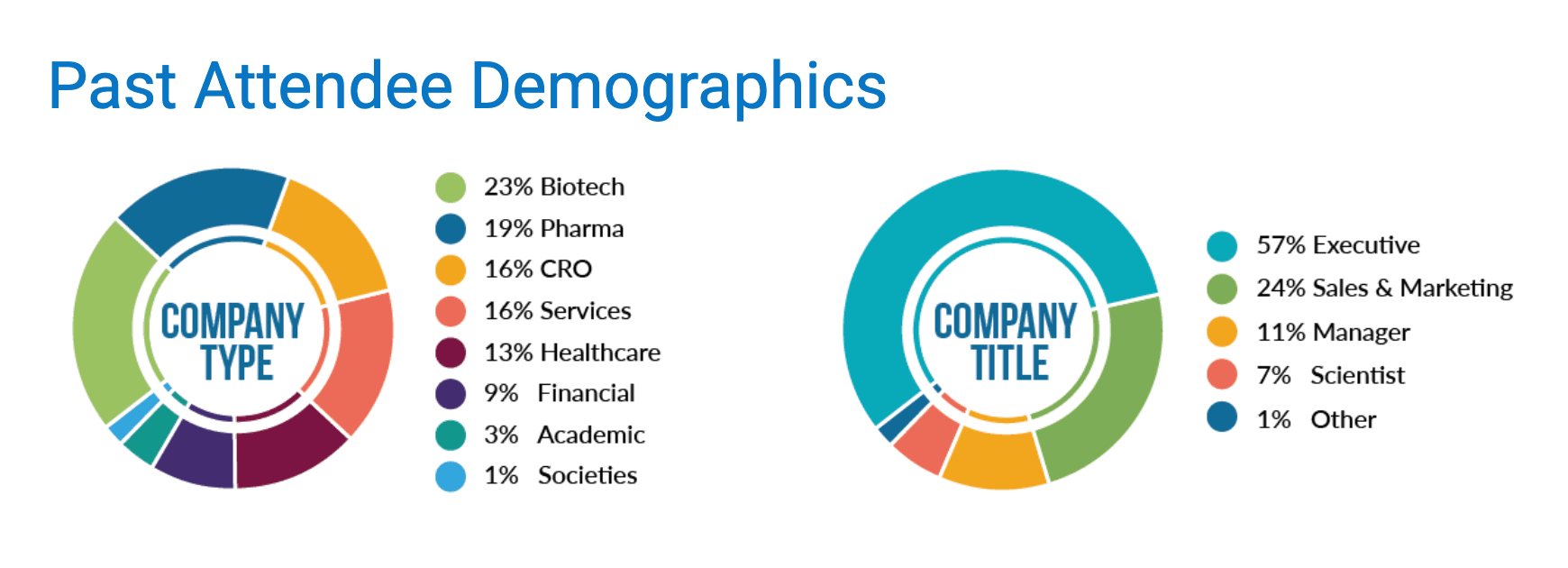
Like Scope Summit, you can present this breakdown right on your event sponsorship landing page in a nice doughnut chart.
Next, turn your attention to value.
Different sponsors have different goals. Some want brand exposure. Others want qualified leads. Some need a platform to launch a new product. Show them how your upcoming event will deliver on each goal.
Match items in your packages to specific outcomes for sponsors:
Booth placement: Connect with qualified prospects, schedule demos, and build a pipeline of high-value deals.
Coffee stand or lounge sponsorship: Brand visibility to every attendee, multiple touchpoints throughout the day.
Speaking panel or workshop slot: Position yourself as a thought leader or demo new features.
Swag or gift bag insert: Physical brand presence attendees take home, extended brand recall.
Step 2: Identify Potential Sponsors
The pool of potential sponsors for your event is likely massive. A marketing conference can attract product companies across dozens of niches, service providers, banks, educational institutions—the list goes on.
If you start with random selection, your lead list balloons to thousands of companies, and most of them don't even do sponsorship marketing at all.
Your best shot is to reach out to companies already sponsoring events. They've validated the channel, have a budget, and know how to measure ROI. Skip the cold education process and go straight to brands that get it.
Research Similar B2B and SaaS Events
Pull up pages from events in your industry (and even adjacent ones) that show their sponsors. You're building a list of companies that already invest in event sponsorships.
Start with events comparable to yours in size, audience, or format:
Community-driven, localized events like DevOps Days
AI conferences, like Humanx
Product- and SaaS-focused events, like ProductCon
Brand-driven community events, like Ahrefs Evolve
Niche industry gatherings, like CPDP
Regional events, like SaaS North (Canada)
Large-scale tech summits, like Web Summit
These are just examples to get you started, of course. But don't limit yourself to your exact vertical. If you're running a fintech event, check out dev tools conferences, too. SaaS companies often sponsor across categories if the audience overlaps.
Find the Right Contacts
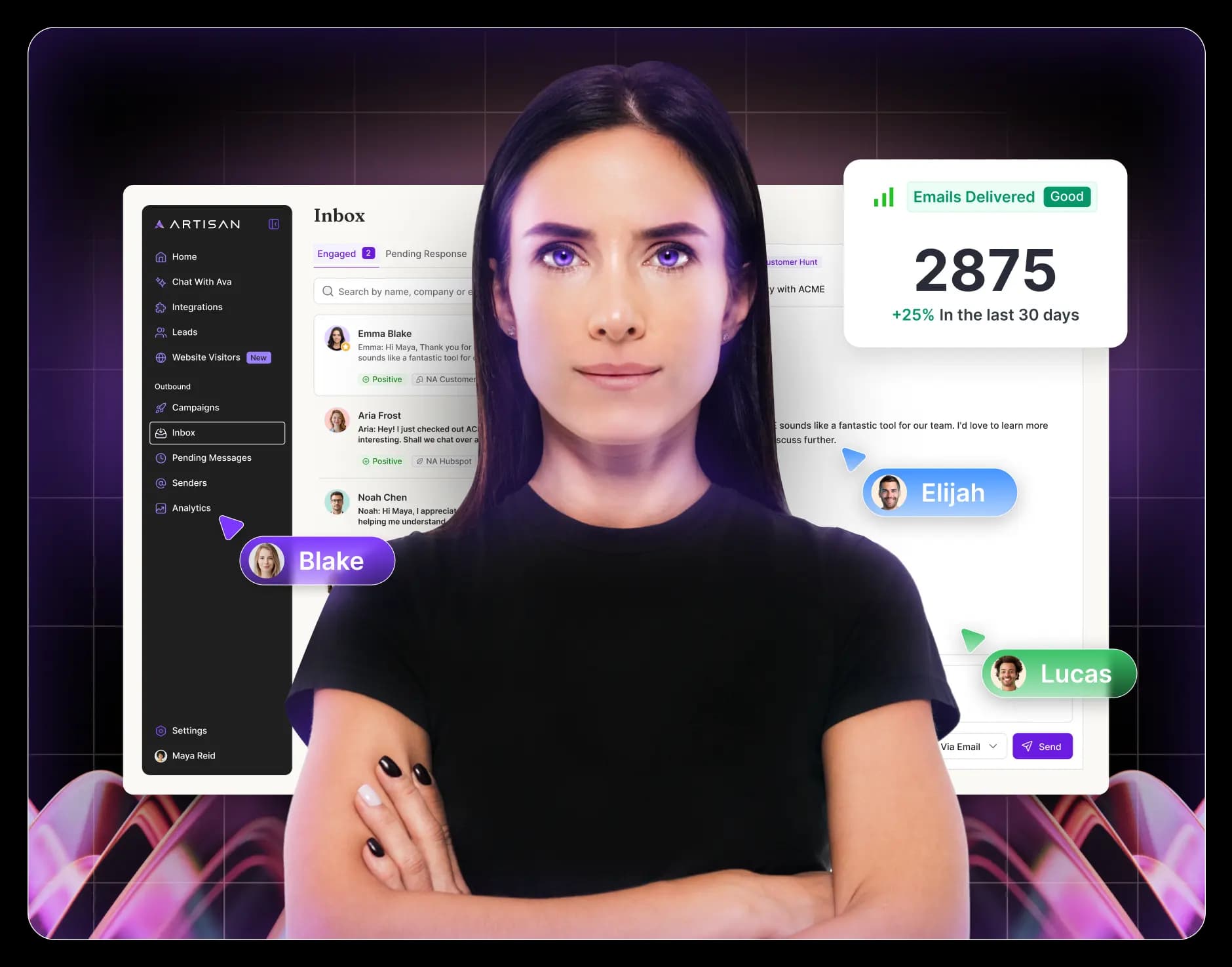
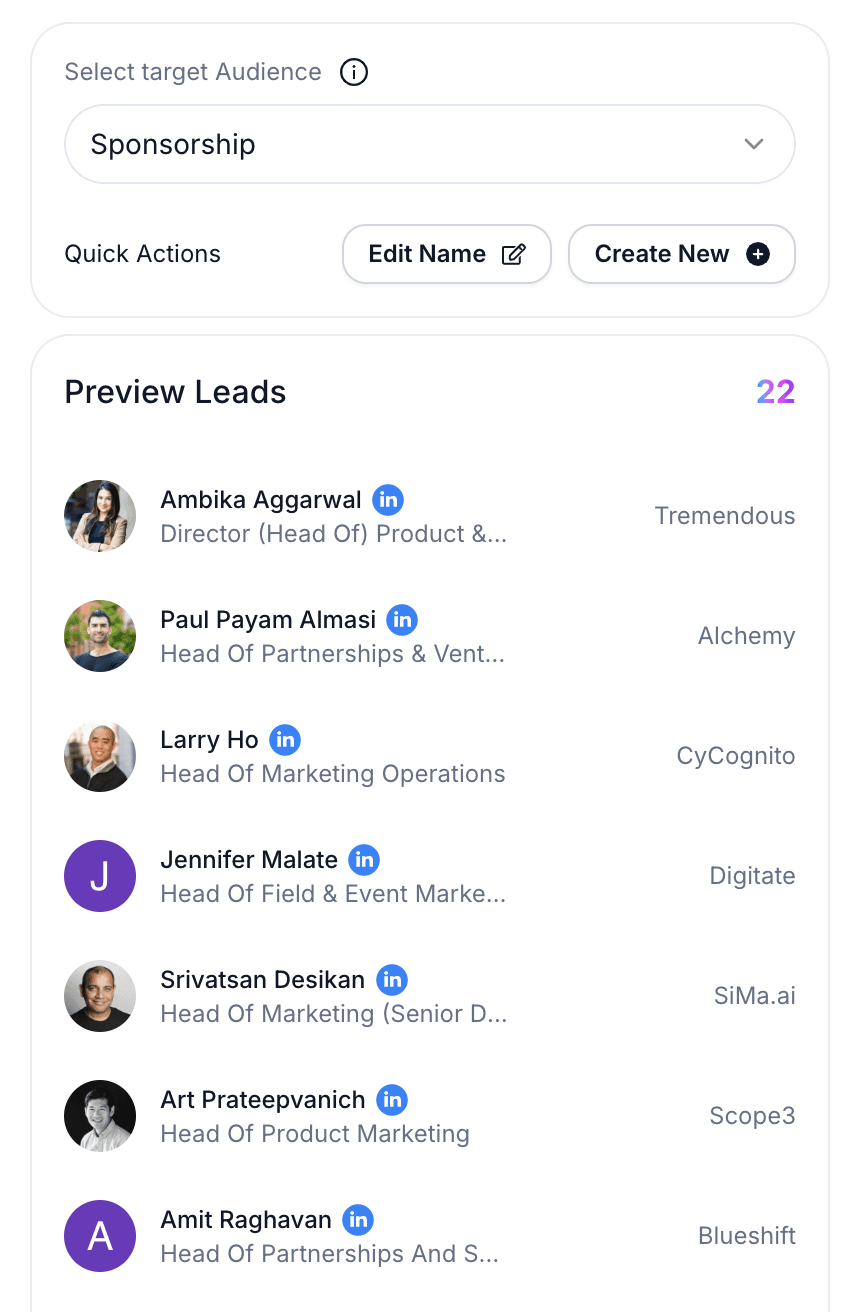
The list you've built serves two purposes. First, it's your outreach target list. You can use a prospecting tool like Artisan, Apollo, or Hunter to find the contact details of decision makers—marketing leads usually consider sponsorships—and reach out to them.
Second, it reveals patterns you can exploit. If you noticed B2B security SaaS companies show up repeatedly as sponsors, dig deeper into that niche and find similar companies.
Pay attention to company size, too. The same event can have Google and a 10-person startup on the sponsor roster. Don't limit yourself to one end of the spectrum.
Aim to include all of the following types of sponsors:
Corporate sponsors (Salesforce, HubSpot, Zoom)
Growth-stage startups (Series B to D companies)
Local businesses or service providers (co-working spaces, catering companies, swag vendors)
Once you've identified your target profile, you can then scale your prospecting with an outreach tool like Artisan, which includes access to a database of over 300 million leads. Specify your niche, location (if relevant), target company size, and job titles—and Artisan will surface the best-matching contacts for your sponsor outreach.
Leverage Your Network
Add your advisors, partners, and clients to the list, too. Even if these companies don't usually do sponsorship marketing, you've got a warm path to them.
Filter your existing client list in your CRM by vertical and size, and reach out to those that might be interested in purchasing a package. It’s usually good practice to offer a discount or exclusive sweetener—such as a stage slot—to companies or individuals you already do business with.
Step 3: Build an Attractive Sponsorship Package
You've identified who to target. Now you need to show them exactly what they're buying. The quality of your sponsorship packages can easily make or break your event.
Create Tiered Sponsorship Options
Let’s look at a sample set of sponsorship tiers—along with a standard set of benefits for each—that you can use as inspiration when creating your own packages.
Package | Price | What you get |
Platinum | $25K to $50K | Keynote speaking slot Premium booth placement Full attendee list Logo on all materials Dedicated email blast |
Gold | $10K to $20K | Panel or workshop slot Standard booth Logo on website and signage Social media mentions Attendee list access |
Silver | $5K to $10K | Video ad rotation on conference screens Logo on website and emails Swag table placement Social media mentions |
Bronze | $2K to $5K | Logo on website Name in closing remarks Swag table placement |
In addition, don't forget in-kind sponsorships. Consider creating a tier for companies that can't offer direct financial sponsorship but can provide venue space, catering, or swag.
Focus on ROI-Driven Perks
Start with a high-level package overview on your landing page or in your sponsorship brochure. Then build out a detailed deck to send during conversations.
Include all the following information in your sponsorship sales deck:
Expected attendance: "We're projecting 1,200 attendees."
Email reach: "Your logo will appear in 8 pre-event emails sent to over 5,000 registrants, with projected 30 to 35% open rates."
Website traffic: "Our event site will reach over 15,000 monthly visitors in the lead-up, based on similar event benchmarks."
Social media impressions: "Sponsors will receive approximately 50K impressions across LinkedIn and Twitter from event-related posts."
Booth traffic estimates: "Gold booth sponsors can expect 250 to 350 conversations over two days based on floor layout and breaks."
If this is your first event, pull benchmarks from comparable events or use conservative estimates.
Step 4: Craft a Winning Sponsorship Proposal
You've done the research. You know who to target and what to offer. But you still need a proposal—in the form of an email—that's compelling enough to spark interest and excitement.
Lead With the Sponsor’s Perspective
Before you write a single sentence, research the company. Check their recent initiatives, product launches, and market expansions. Look at who they've sponsored before and what they got out of it.
Then open your proposal by connecting those dots.
Don't write something like, “We're excited to invite you to sponsor [Event Name], a premier gathering for SaaS professionals."
Instead, lead with energy and personalization: "You just launched your AI-powered sales platform targeting mid-market SaaS companies. Our audience is 60% sales leaders at companies with 50 to 500 employees—exactly who you need in front of your demo."
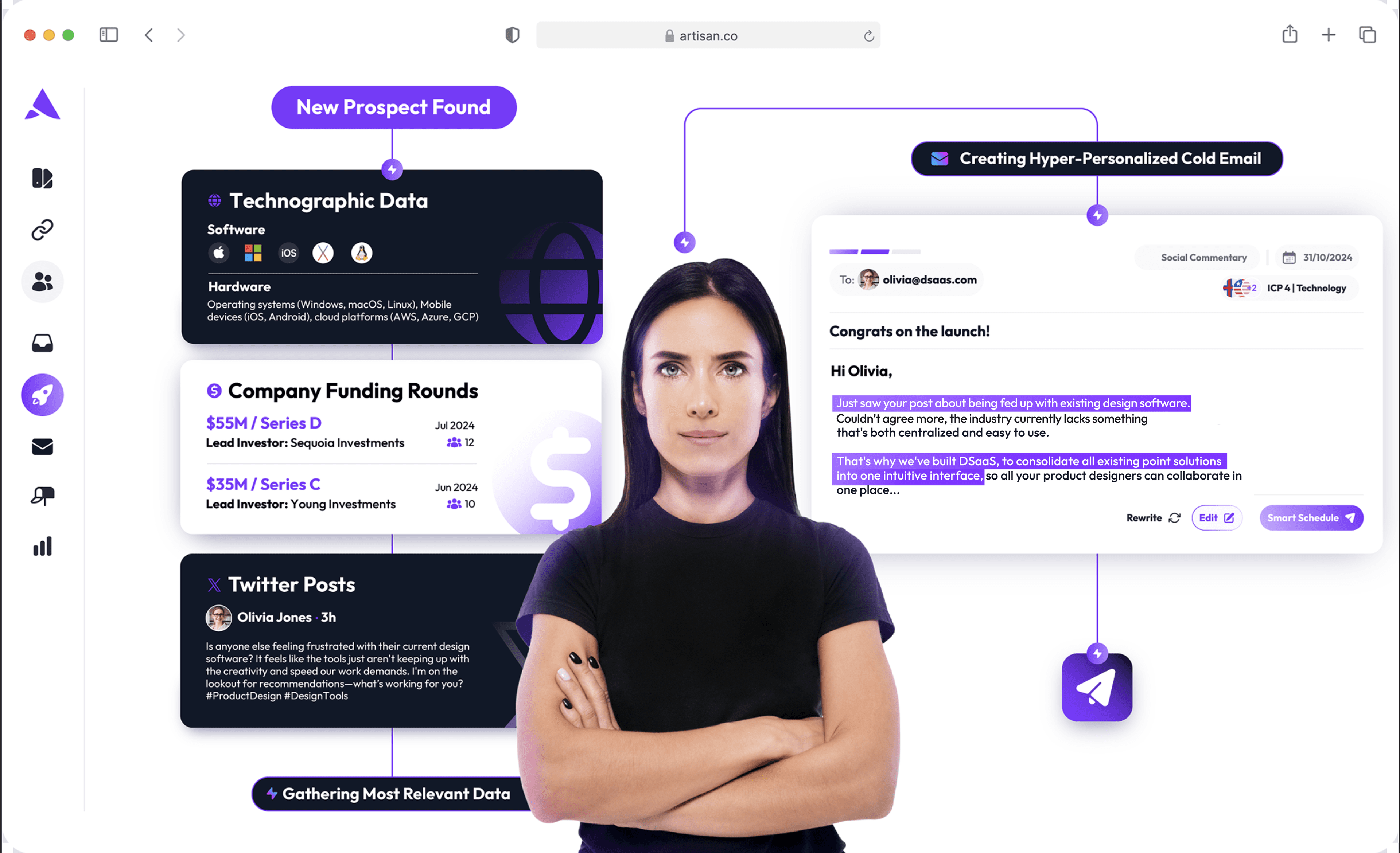
Researching this kind of data for dozens of sponsors will take hours. AI BDR Ava, one of Artisan’s most powerful features, is a virtual employee that enriches lead profiles with fresh, relevant info in seconds and uses it to craft personalized messages for every prospect—at scale and on autopilot.
Structure the Proposal for Impact
Put all relevant information about your sponsorship package into the email. Your sponsorship pitch should be scannable right in their inbox.
Include all of the following elements in your proposal:
Event overview (two to three sentences): What it is, when it is, why it matters
Audience insights (three to four bullet points): Who attends, their titles, company sizes, pain points
Sponsorship tiers: Packages, pricing, key benefits at each level
Why this matters for them (one paragraph): Connect the sponsor’s goals to specific outcomes from your event
Clear next step: A CTA inviting them to discuss which package is best for them
If they need to scroll more than twice, it's probably too long.
You can attach a detailed sponsorship deck for reference, but the email should stand alone. If they're interested, they'll open the attachment. If they're not, the attachment won't save you anyway.
Back It Up With Social Proof
If this isn't your first event, reference past success. Add a sponsor list at the bottom of your email or reference specific numbers (if sponsors gave you permission).
If you've already secured several sponsors for this event, name-drop them. When we talked with Jimmy Daly, formerly of Superpath, he shared tips for creating sponsorship proposals and admitted name-dropping worked like a charm: "I name-drop a lot. I love to mention other companies we've worked with (we have some great logos), and I find that social proof is very effective."
To take it further, create visual mockups showing sponsor placement for inclusion in your deck. A prospect can instantly picture their logo on stage, their booth in a high-traffic zone, or their brand featured in a pre-event email blast.
Create simple renderings like these:
Email template with sponsor logo placements in the header and footer
Floor plan showing booth locations with clear traffic flow patterns
Stage backdrop with sponsor logos sized by tier
Screenshot of your event website with a prospect’s logo in the sponsor section
Step 5: Execute Effective Outreach
Sponsorship deals don't die from bad packages—they die from inconsistent outreach. One unanswered email doesn't mean a sponsor isn't interested. It means they're busy, and you need a system to stay on their radar without being a nuisance.
Treat Sponsor Outreach Like Outbound Sales
Sponsorship outreach is a sales process. And in a sales process, you need a system to track who you've contacted, when you contacted them, and what happened next.
In other words, you need a CRM to manage your pipeline.
Focus on the 20 to 30 sponsors with the strongest audience fit first. Staggering your outreach lets you test messaging, refine your pitch based on responses, and manage follow-ups without getting overwhelmed.
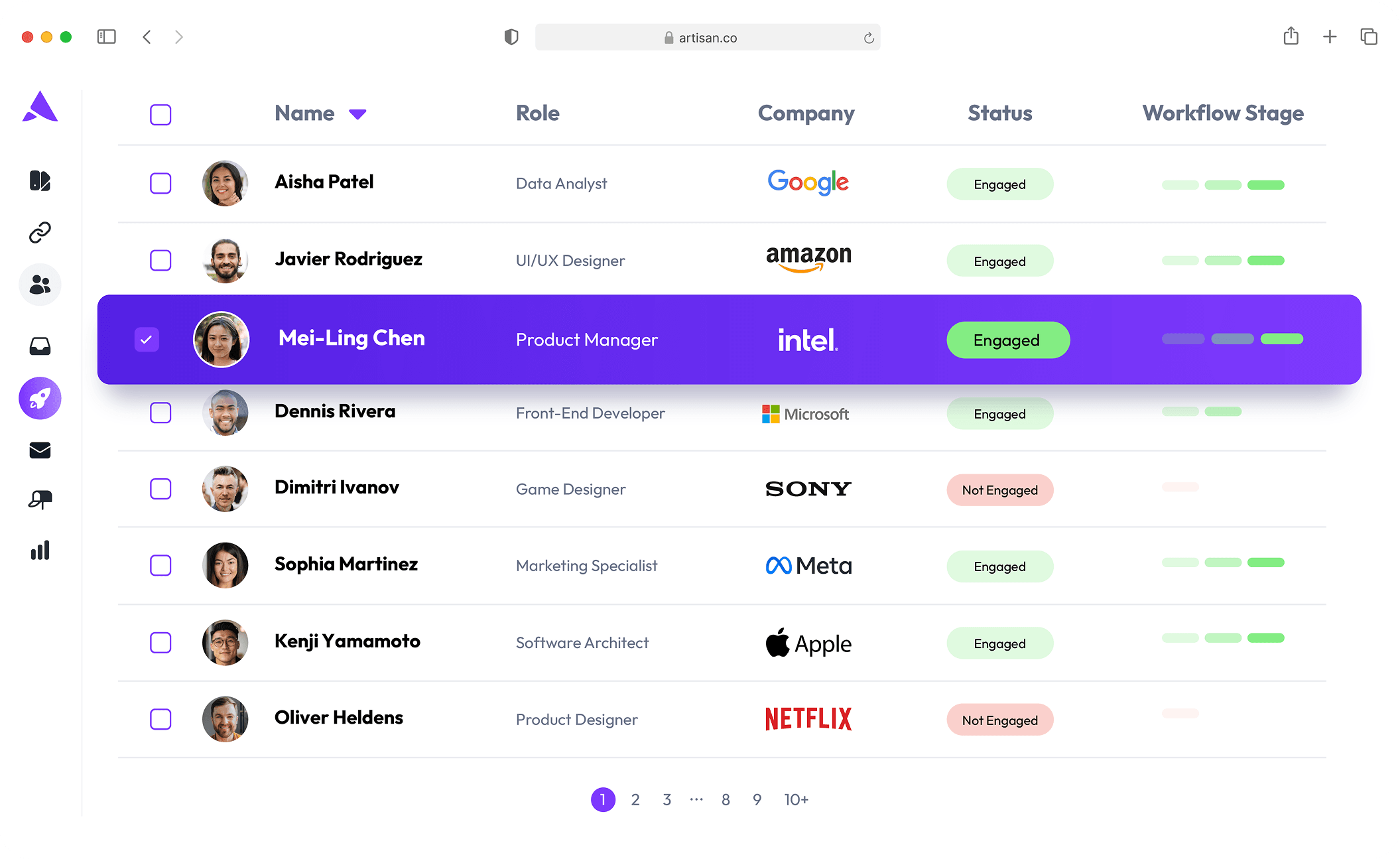
If you're using a tool like Artisan, much of this process is automated. Artisan’s lead tracking tools log interactions, send automated follow-ups, and monitor response rates in one place.
Use a Consistent Outreach Cadence
You’ve already crafted a proposal. Now it’s time to turn it into your first outreach message. Personalize the subject line and opening based on what you researched about each company, then drop in your pitch deck.
You may need three to five touchpoints before a potential sponsor responds, and that's normal. Create a cadence of multiple touchpoints across email and social media to follow up without making it feel too aggressive.
Here’s a sample outreach cadence:
Day 1: Send an initial email with a sponsorship deck attached.
Day 4: Send a follow-up email with a new detail, e.g., a new confirmed speaker, milestone hit, or early-bird deadline.
Day 8: Connect on LinkedIn and send a follow-up direct message.
Day 13: Send a soft, short reminder via email.
Research shows that around three email follow-ups is ideal, after which you’ll see diminishing returns. A combined email and social media strategy is almost always the best approach.
Don’t forget that you can set up your whole sequence in Artisan and let Ava run it for you. Artisan will coordinate your email and social media outreach, auto-optimizing send times and pinging you whenever there’s a response.
Always Add Value
Here’s one last tip for your follow-ups: each touchpoint should add something new.
Don't just "check in.” Share updates that strengthen your case—like a sponsor who just signed on, updated attendance numbers, or a speaker announcement that aligns with a lead’s target audience.
Step 6: Follow Up and Close the Deal
You've initiated conversations successfully, but the contracts aren’t signed yet. Staying flexible on perks while protecting your pricing and making sure both sides know exactly what to expect from the partnership is a sure route to a closed deal with two happy parties.
Negotiate with Flexibility
Sponsors will ask for adjustments. That doesn't mean something's wrong with your pricing structure. It's part of the process. Just leave some wiggle room for perks instead of cutting your rates.
Here are five ways to add value without dropping price:
Newsletter inclusion in your pre-event or post-event broadcasts
Extra attendee tickets for their team
Extended logo placement on your website beyond the event dates
Access to raw attendee survey data for market research
Co-branded social posts highlighting their involvement
Creative bonuses cost you little but feel valuable to sponsors. A dedicated Instagram story or a mention in your founder's LinkedIn post doesn't change your bottom line, but it sweetens the deal for them.
Send a Clear Agreement
Once they say yes, lock in with a formal agreement. A handshake or an email confirmation is nice, but only a contract will keep both sides accountable.
Include all of the following details in your sponsorship agreement:
Sponsorship tier and total cost
Payment terms
Payment due dates and accepted methods
Full list of deliverables from both sides
Deadlines for sponsor materials (e.g., booth graphics)
Full breakdown of your commitments and timelines
Cancellation and refund policy
Post-event reporting commitments
Make sure the agreement spells out deliverables from both sides in detail. Sponsors shouldn't feel like they're the only ones with obligations. If you promise a dedicated email blast two weeks before the event, put that in the contract.
Secure Early Commitments
The earlier you close sponsors, the easier it is to fill the rest of your roster.
Aim for sign-offs six to twelve months before the event. Early sponsors give you cash flow to invest in marketing, venue upgrades, and better speakers. They also serve as social proof—once you land one or two recognizable brands, others follow.
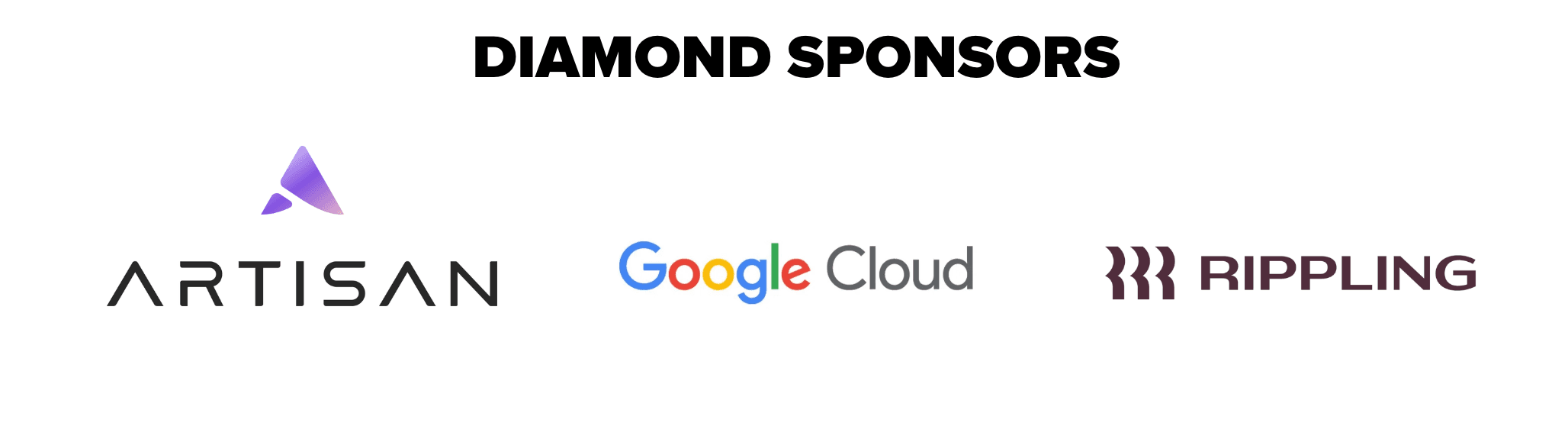
You should prominently show confirmed sponsors on your event website and in your outreach materials. Displaying recognizable logos—like Google, Artisan, and Rippling in the example below—does two things. It attracts more high-quality sponsors who want to be part of that lineup, and it boosts your event's credibility with attendees.
Step 7: Deliver Value and Build Partnerships
You closed the sponsors. The contracts are signed. Now comes the part that determines whether they'll sponsor your next event: delivering on what you promised, and then some.
Activate Sponsors
Don't wait until the week before your event to feature sponsors. Start promoting them the moment the agreement is signed.
Add their logos to your event website right away. Include them in your next email newsletter. Tag them in social media posts announcing your partnership.
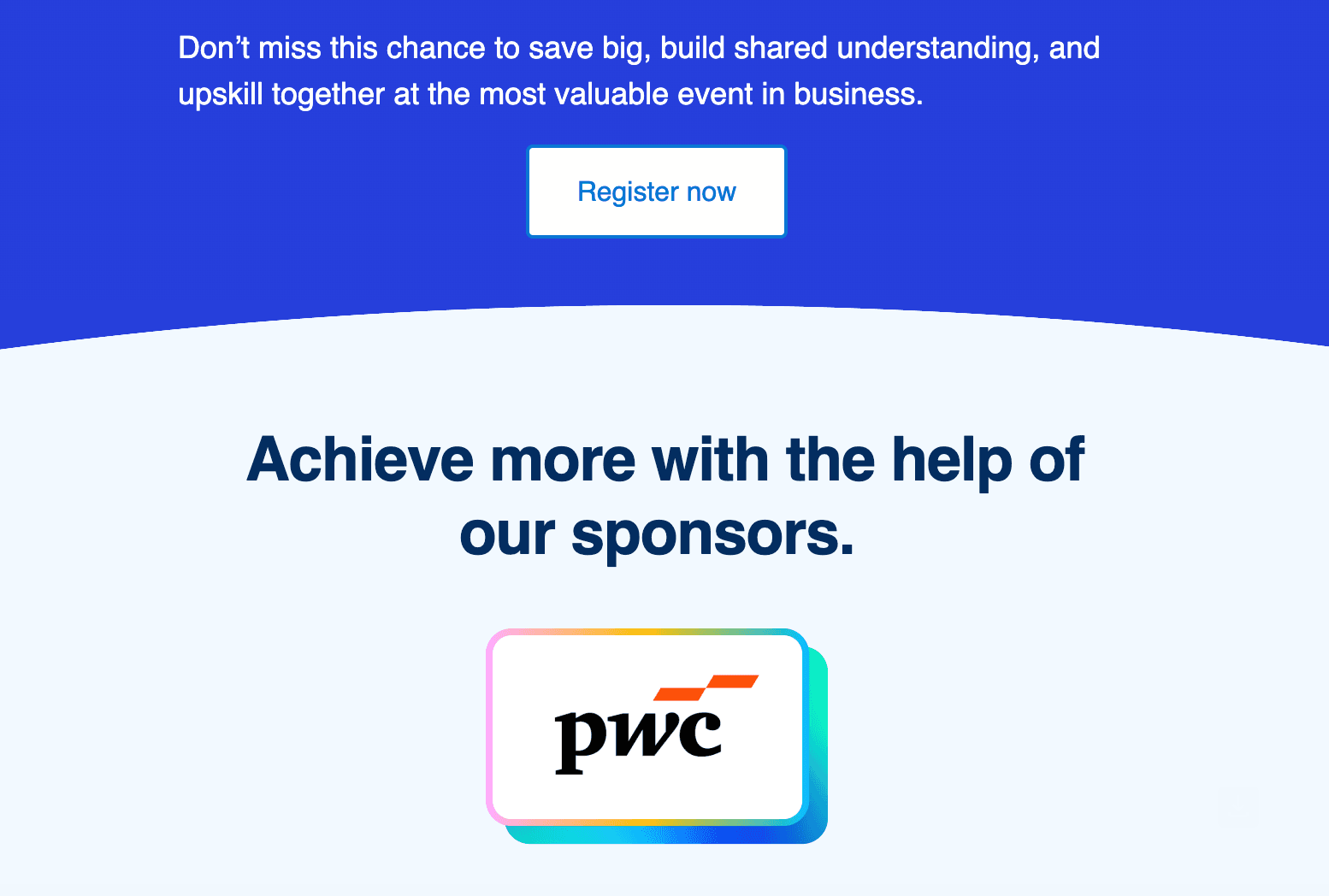
Take Dreamforce—they feature top-tier sponsors in newsletters promoting the event months before it starts.
Keep Communication Smooth
Send sponsors a pre-event checklist at least 30 days out. This should include all the practical details they need to ensure their placements run smoothly.
Include the following points in your pre-event checklist:
Booth setup instructions (dimensions, power access, WiFi details)
Load-in and load-out times
Speaking slot timing and audiovisual (AV) requirements (e.g., size of PowerPoint slides)
Deadlines for submitting logos, graphics, and promotional materials
Key contact info (sponsor support, venue coordinator, AV team, etc.)
The days leading up to your event will be chaotic, no matter how well you’ve prepared for it. That's why you need to assign a dedicated point of contact for sponsor communication before things get hectic. This person should be able to answer questions, coordinate deliverables, and handle last-minute requests without pulling you away from bigger priorities.
Make ROI Obvious
You can't report on metrics you didn't track. Before the event even starts, set up systems to capture the data you’ll be sending in follow-up reports.
Here’s how to set up a comprehensive tracking system:
Use event management software to track registration data, session attendance, and attendee demographics.
Set up UTM parameters or tracking pixels for sponsor-specific links in emails and on your website.
Advise sponsors on using QR codes for their booths and throughout on-site event placements.
Deploy post-event surveys (for qualitative data) immediately after the event closes while engagement is high.
Monitor social media mentions and engagement using platform analytics or tools like Sprout Social.
Your post-event reports, tailored to individual sponsors, should include all the following data:
Total attendance and attendee breakdown by job title, company size, and industry
Sponsor-specific metrics, including booth traffic estimates, email open rates, and social impressions
Engagement numbers for session attendance, Q&A participation, and networking interactions
Qualitative feedback from post-event surveys
Send the report within two weeks of the event while everything's still fresh. Then follow up a month later to check in and start the conversation about next year.
Step 8: Do Post-Event Reporting for Long-Term ROI
The event might be over, but your sponsor relationship isn’t. What you do in the subsequent weeks determines whether sponsors come back next year.
Ask for Feedback and Testimonials
Send a brief sponsor feedback survey within a week of the event. Keep it under seven questions and make sure it’s relatively open.
Here’s a simple template you can modify for your own event:
What worked well about the sponsorship?
What could we improve?
Did you achieve your goals? (lead gen, sponsor visibility, networking, etc.)
Would you sponsor again?
Can we use your feedback as a testimonial?
Request metrics-driven testimonials where possible. A quote from a satisfied sponsor featured in your next deck will carry more weight than anything you can say about your event.
Reconnect Early for Future Events
Within 30 to 60 days of your event ending, send a renewal offer to sponsors. Thank them for their partnership, share key wins from the event, and offer an early-bird discount or priority tier selection for next year.
To Wrap It Up: End Strong, Start Smarter Next Time
The most successful event organizers treat sponsorship outreach like outbound sales. If you research prospects, track outreach, follow up strategically, and prove results with data, you’ll build a sponsor base that grows with you.
However, completing all these tasks manually is nigh on impossible. That’s why event organizers are turning to AI automation tools to help them scale and streamline outreach.
Artisan handles the entire outbound process—from finding the right contacts to running personalized sequences across email and social media. All of which means you can focus on what you do best—creating a superb event.