31 ways of promoting an event: Proven tactics
Learn how to promote your event with proven strategies—from social media campaigns and influencer collabs to out-of-the-box stunts.
There are over 200 tech events happening in San Francisco alone in any given month—workshops, networking meetups, conferences, parties, and more.
Listing yours on Eventbrite helps, but it won't be enough when seven other events are competing for the same audience on the same day.
To help you put together a promotional strategy that cuts through the noise, we've pulled together 31 event promotion tactics—some from our own experience, others from watching what works at other companies.
Social Media: Your Event’s Hype Machine
Event marketing usually starts with social media because of, ya know, the social component. Most social media tactics are free, take minimal effort, and can help spread your reach significantly (with the ever-present possibility of going viral and semi-viral).
1. Build Event Pages and Update Your Profiles
Event pages on Facebook and LinkedIn are where potential attendees can find all an event’s details, RSVP, and share with their networks. Unlike standalone web pages, these platforms have built-in discovery features that help your event reach people beyond your immediate followers.
Here's how to optimize for reach and conversions when building your event page on LinkedIn:
Cover the basics with a compelling title, clear date and time, and detailed description that highlights key speakers, agenda highlights, and attendee benefits.
Add a professional cover image that includes your event branding, date, and key speakers or themes.
Include direct registration links in both the event description and as a call-to-action button.
Add speakers in the designated field; they will be shown in the event’s Details section and presenter area.
Update your personal LinkedIn bio and banner to prominently feature your event.
Pin announcement posts about registration deadlines and key speakers to the top of your LinkedIn profile.
Encourage your network to mark "Interested" or "Going" to expand reach through their connections.
2. Craft a Branded Hashtag
A branded hashtag will help people find your posts, provide an easy way for speakers and attendees to tag the event, and help you track engagement and mentions pre- and post-event.
Here’s how to come up with a branded hashtag for your event:
Choose a unique, memorable hashtag that's short and event-specific (like #TechSummitSF or #SaaSConnect2026).
Add it to all promotional content and social media posts.
Encourage attendees, speakers, and sponsors to use it when posting about the event.
You can even create two hashtags—one with your actual event name (#SaaSConnect2026) and a second memorable, industry-specific one that works like a slogan or tagline (#CodeAndCoffee or #SaaSMeetsReality). The slogan hashtag has more viral potential, which makes it a powerful add-on.
3. Pre-Event Social Buzz
Your posting cadence should mirror your event size—larger conferences might need weekly posts starting two to three months out, while smaller meetups work better with daily posts during the two weeks leading up to the event.
Here are the best pre-event promotion ideas for socials:
Countdown content with registration reminders and key event highlights
Speaker spotlights featuring their backgrounds, what they'll cover, and why attendees should care
Polls asking your audience what topics they're most excited about or what questions they want answered
Short-form videos like Reels or TikToks with speaker teasers, venue sneak peeks, or behind-the-scenes prep
Clips from previous events to show the energy and value attendees can expect
“Day in the life" content of your event planning process to humanize your brand
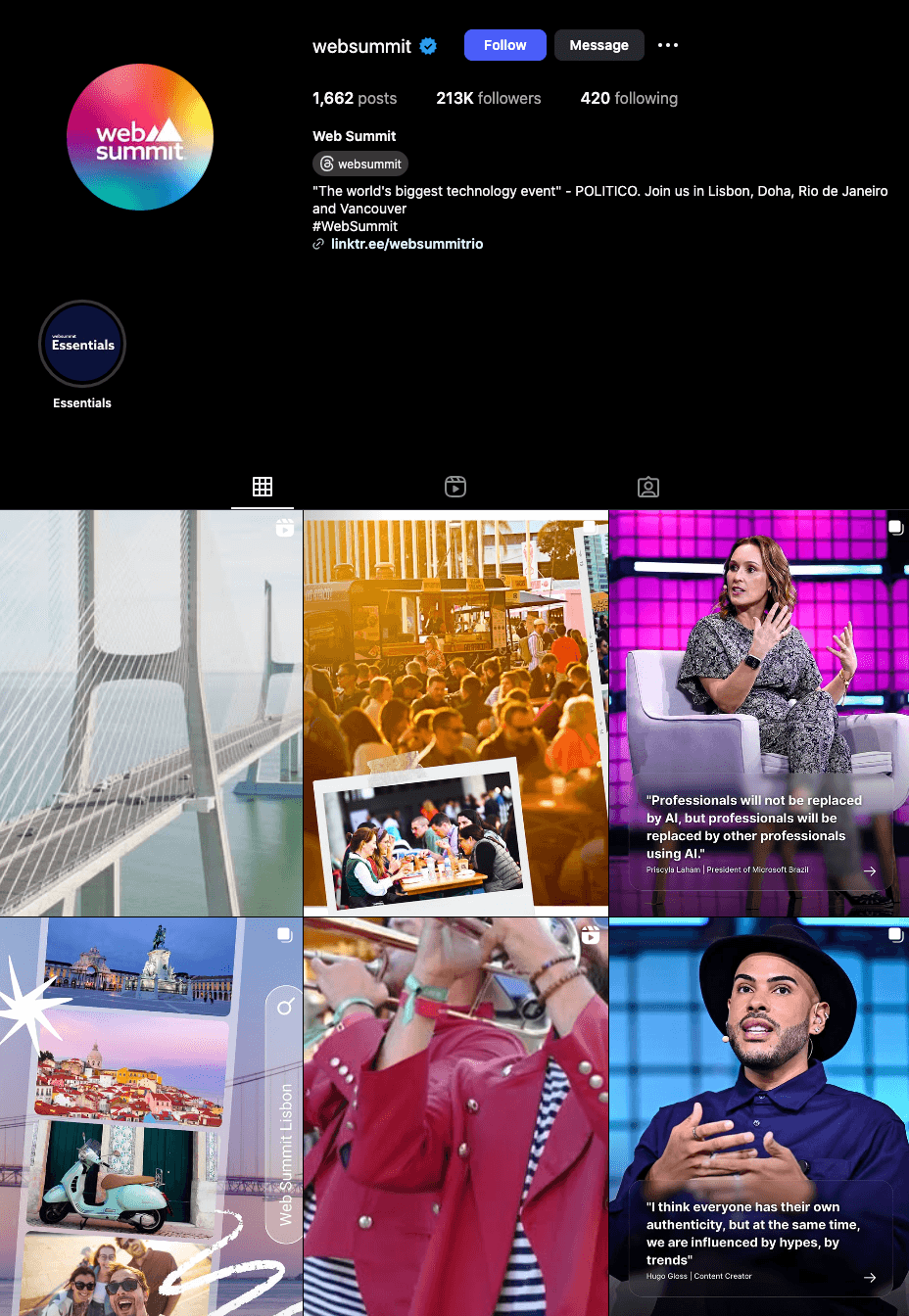
Web Summit, an annual technology conference, has mastered the art of event promotion through social media. Its Instagram account is filled with recaps from past events and teasers of what's ahead.
4. Partner and Influencer Amplification
Encourage your speakers and partners to spread the word about the event to multiply your reach and add credibility.
To make sure your content gets shared, create a simple social media kit with branded graphics, suggested captions, and your event hashtags. Share post templates for those who aren't regular social media users.
At the end of the day, the easier you make it to share quality content about your event, the more amplification you'll get.
5. Interactive Campaigns
Event promotions don't always achieve traction on social media, so you need a creative approach to boost your reach and engagement—and interactive campaigns are among the most innovative approaches available to event organizers.
Here are six proven interactive event promotion formats:
Run ticket giveaway contests where people share your event post and tag friends to enter.
Launch UGC challenges using your branded hashtag—ask people to share their biggest industry challenge or why they're excited to attend.
Host pre-event live Q&As with speakers on LinkedIn Live or Instagram to answer audience questions and build anticipation.
Offer virtual venue tours or behind-the-scenes live streams to give potential attendees a preview of what’s to come.
Create polls about session topics, networking preferences, or what attendees want to learn most.
Run "guess the speaker" games with clues about your lineup.
Make participation simple and the rewards real. A whitepaper or an “exclusive” report won’t cut it. Free tickets, exclusive networking sessions, and branded swag sound much more appealing.
6. During and Post-Event Content
You've invested heavily in your event, so the payoff shouldn't end when the last attendee leaves. Post live and post-event content so your event becomes a source of ongoing marketing assets that also build momentum for future events.
Here are some content ideas for during the event:
Live-tweet key quotes, insights, and memorable moments from speakers.
Share Instagram Stories of behind-the-scenes moments, networking sessions, and attendee reactions.
Encourage attendees to post using your branded hashtag.
Go live on LinkedIn or Instagram during breaks to show the event’s energy and engagement.
A good event keeps delivering value long after the doors close. After the event, use the following tactics to maximize overall engagement:
Create highlight reels featuring the best moments, quotes, and audience reactions.
Share key takeaways and actionable insights from each session.
Post thank-you messages to speakers, sponsors, and attendees.
Publish recap content that showcases the impact and success of your event.

Automate your outbound with an AI BDR
Meet Ava—your AI BDR who handles prospecting, outreach, and follow-ups, so your team can focus on closing.
Digital Marketing and Online Outreach
Let’s look at how to best use owned and paid channels for promotion. A twin approach can be extremely powerful because paid and organic channels complement each other.
7. Optimize Your Event Landing Page
The event page on a social media platform works great as a discovery tool. But to collect attendees’ emails and other info, you need an optimized landing page with a lead capture form.
Here's how to optimize your event landing page for conversions:
Design mobile-first.
Ensure fast loading times (under 3 seconds).
Place clear, prominent CTAs above the fold and throughout the page.
Use event schema markup to help search engines understand your event details.
If you’re hosting an in-person event, optimize for local SEO with keywords like "tech conference [city]" or "SaaS event [location]”.
Include all essential information: date, time, location, speakers, and agenda highlights
Add social proof like past attendee testimonials and speaker credentials
Make registration as simple as possible—ideally, a single form with a minimum of required fields.
Treat your landing page as if it's the visitor's first touchpoint with your event—include all the necessary details they might have missed on other channels. Also add lead capture forms at both the top and bottom of the page so people who want to register immediately can do so without scrolling.
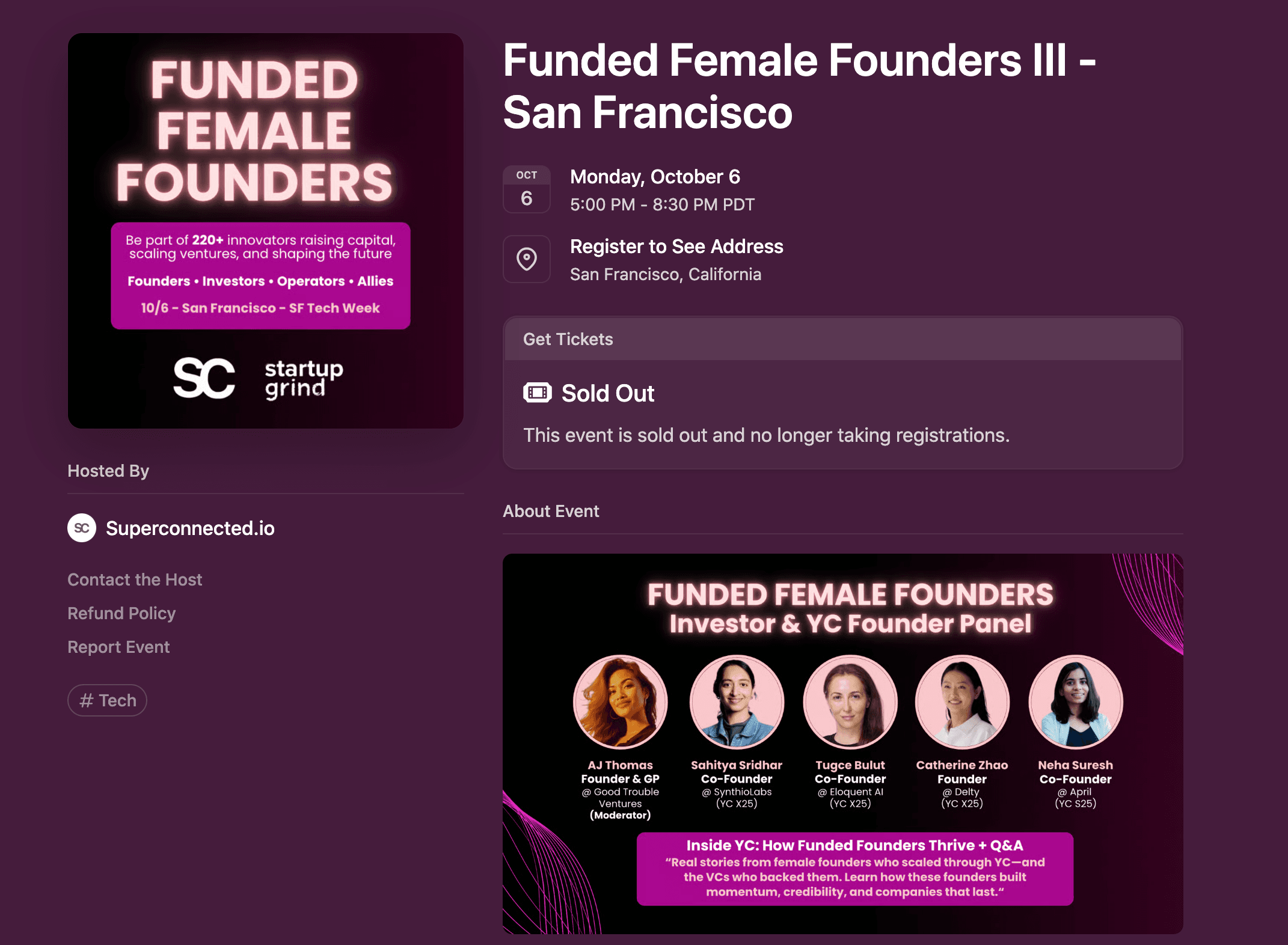
This landing page for the Funded Female Founders event within San Francisco Tech Week, for example, was published across different platforms. It was simple and concise but included everything potential attendees might want to know.
8. Leverage Email Marketing
Unlike social media, you own your email list and can deliver targeted messages directly to people who've already shown interest in your brand.
Here's how to make the most of email campaigns when promoting your event:
Segment your audience based on engagement history: past attendees, new leads, long-time subscribers, etc.
Personalize subject lines and content beyond just adding their first name.
Create urgency with time-sensitive offers like early-bird pricing, last-chance reminders, and only 50 seats left–style messaging.
Send a strategic sequence—for example, an announcement, then an early-bird offer, then speaker spotlights, then a final reminder, then a last-chance notification.
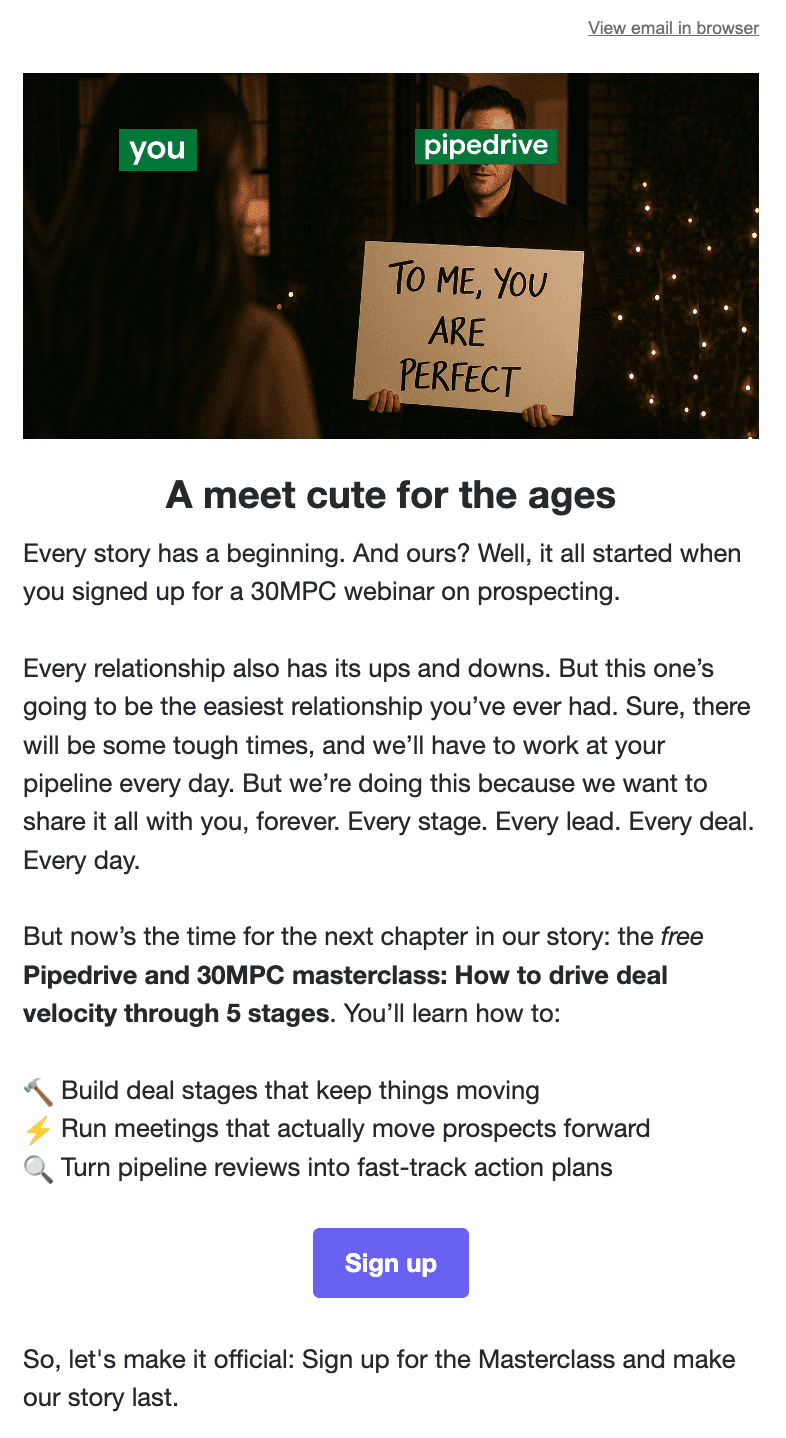
Take this webinar promotion campaign by Pipedrive. The heartwarming subject line and "Love Actually" reference catch your attention and pull you into the email. Then, the body copy mentions the specific webinar you attended before inviting you to the next one. That's how you do personalization right.
9. Private Invitations for VIPs
If you want big names or key prospects at your event, go the extra mile with your invitations.
Here’s how to capture their attention:
Send handwritten notes or physical invitations to top-tier prospects, major clients, and industry influencers.
Create a separate "invitation-only" networking session before or after the main event.
Provide complimentary tickets with premium add-ons that regular attendees pay for.
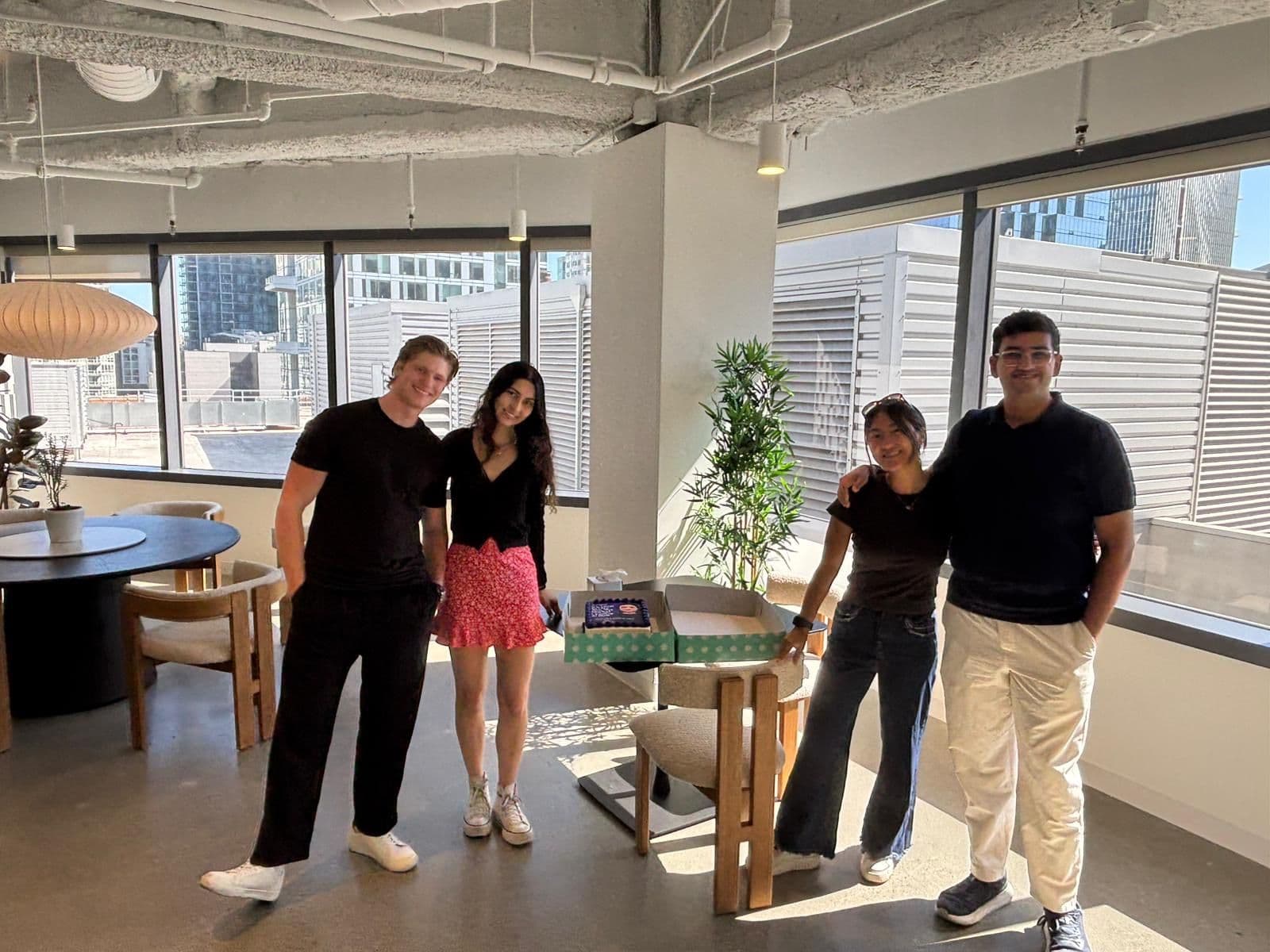
We weren't exactly inviting people to any event, but our team delivering custom cakes that said "Hire Ava, she'll make outbound a piece of cake" is a great example of going the extra mile to get noticed.
10. Make the Most of Existing Organic Traffic
Use existing organic traffic to your website and articles alongside creating event-specific content.
Set up exit-intent pop-ups on your website offering event tickets to visitors who are about to leave.
And if you already publish non-event content regularly, use it to promote your event. You can, for example, insert CTAs in relevant blog posts linking to your registration page. If you have an article about sales enablement and you're hosting a sales conference, add a banner or inline link promoting the event.
11. Webinars and Lead Magnets
If you're running a high-ticket event, it's worth putting in the extra effort upfront. A preview webinar or downloadable resource helps you build credibility while giving new audiences a taste of what's coming.
Here’s a tentative workflow for a preview webinar:
Schedule a 30 to 45-minute session featuring one of your event speakers.
Focus on a single high-value topic from your event agenda.
End with a clear pitch: "This is just a preview—get the full experience at [event name]".
Send the registration link to attendees immediately after the webinar ends.
Follow up with a recording and a second CTA to register for the main event.
If you're going with a downloadable resource, here’s a quick guide:
Create a resource tied to your event theme (industry report, framework, checklist, or template).
Gate it with a simple form asking for a name, email, and company.
Include a banner or button on the download page: "Want more? Register for [event name]".
Add event registration CTAs in the confirmation email and weeklong follow-up sequence.
Even if people don't register right away, you're collecting qualified leads who have already shown interest in your event's topic. If you add them to a nurturing sequence, they might not make this event, but they'll be warmed up for future ones and other offers down the line.
12. Online Ads and Retargeting
Add paid ads to your promotion mix to increase reach beyond your organic audience.
Here’s a roundup of the best tactics:
Set up pixels on your event landing page to show ads to people who visited but didn't register—they already know about your event, so conversion rates will likely be higher.
On LinkedIn, target specific job titles, company sizes, and industries that match your ideal attendee profile.
Once you have over 50 registrations, create lookalike audiences on Facebook or LinkedIn to find similar people.
Run A/B tests with different formats—video ads showing speaker clips often outperform static images for event promotion.
Spend more on promotion in the first two weeks and last two weeks before your event—early to build awareness, late to capture last-minute registrations.
Community and Influencer Partnerships
Does your audience hang out in communities or have influencers they trust? These networks can be an excellent source of high-quality leads.
13. Partner with Industry Influencers
Beyond your speakers and sponsors, look for influencers in your industry who can help promote your event to their audience.
These don't need to be massive names with millions of followers. Micro-influencers with 5,000 to 50,000 engaged followers in your niche will drive better results than bigger accounts with less relevant audiences.
Here’s how to approach them:
Offer free tickets or VIP access in exchange for promotion.
Provide affiliate codes so they earn a commission on ticket sales.
Pay for sponsored posts if you have the budget and they're a strong fit.
Give them exclusive content to share (speaker interviews, behind-the-scenes access, early announcements).
Make promotion easy for influencers by creating a content kit with the following:
Pre-written social posts they can customize
Branded graphics and video clips
Your event hashtags and key messaging
Unique discount codes to share with their followers
The right influencer partnership puts your event in front of qualified audiences who already trust their recommendations.
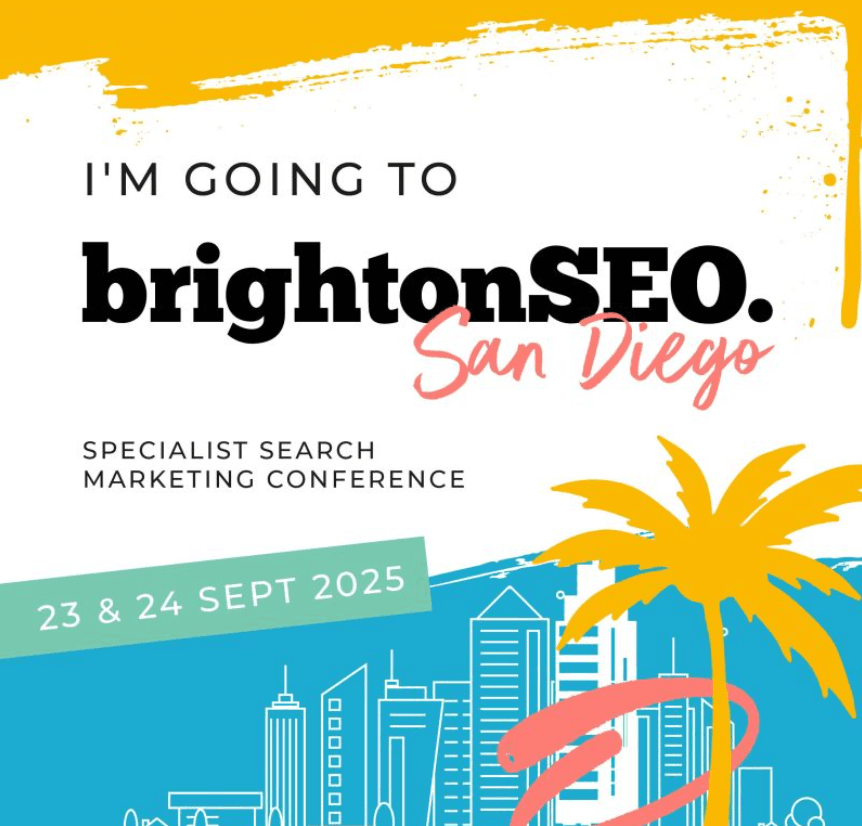
BrightonSEO treated their attendees as micro-influencers by giving them an easy way to spread the word about their attendance. The conference created branded visuals that users could share on LinkedIn, saying "I'm going to BrightonSEO" (for attendees) and "I'm speaking at BrightonSEO" (for speakers).
14. Tap Into Online Communities and Forums
Community promotion is tricky. You need a strong affinity with the group and clear disclaimers when promoting. Otherwise, you'll get called out fast.
If you want to use communities as a consistent promotion channel, invest in building a real presence. Answer questions, share insights, and contribute to discussions regularly.
But if you don't have the resources to do that authentically, don't waste your time trying to fake it. Instead, look for sponsorship opportunities with community moderators or newsletters that reach those audiences. Pay for the reach rather than pretending to be part of the community.
15. Campus and Niche Outreach
If your event targets students or specific niches, go where they are.
For college events:
Partner with relevant student organizations to co-promote.
Recruit campus influencers (club presidents, popular students) as ambassadors.
Offer student discounts or group rates for clubs.
Post in campus-specific Facebook groups and Discord servers.
For niche audiences:
Collaborate with industry associations that already have access to your target audience.
Reach out to micro-communities. Smaller, highly engaged groups beat massive generic ones.
Sponsor newsletters or podcasts that your niche actually listens to.
The tighter the community, the more word-of-mouth matters. One trusted recommendation in a close-knit group beats a hundred generic ads.
16. Referral Programs
Here comes the lowest-effort approach: turn your registered attendees into your sales team.
Give each registrant a unique referral link they can share. When someone uses it to register, reward both the referrer and the new attendee.
Here’s how to make your referral program work:
Make the reward valuable—a discount on the second ticket, exclusive swag, or VIP networking access, for example.
Use a simple one-click "invite a friend" button that pre-fills an email or generates a shareable link.
Send reminder emails with their referral stats—"You're 2 referrals away from a free ticket!"
Most event platforms have built-in referral features that handle tracking automatically. If yours doesn't, tools like ReferralCandy or Viral Loops can plug into your registration system and make sharing frictionless.
17. Build an Attendee Community
Create a space where attendees can connect before, during, and after your event.
Set up a dedicated Slack workspace or WhatsApp group specifically for event attendees. This isn't just pre-event hype—it becomes the foundation of ongoing engagement.
Before the event:
Introduce attendees to each other.
Let people share what they're hoping to learn and who they want to meet.
Host speaker Ask Me Anything (AMA).
Share exclusive content.
During the event:
Share real-time updates and session notes.
Create channels for specific topics or breakout discussions.
Facilitate meetups and networking.
After the event:
Keep conversations going around key takeaways.
Share recordings, slides, and resources.
Start building momentum for your next event.
The community you build around your event can be more valuable than the event itself. It keeps people engaged year-round and makes them way more likely to come back next time.
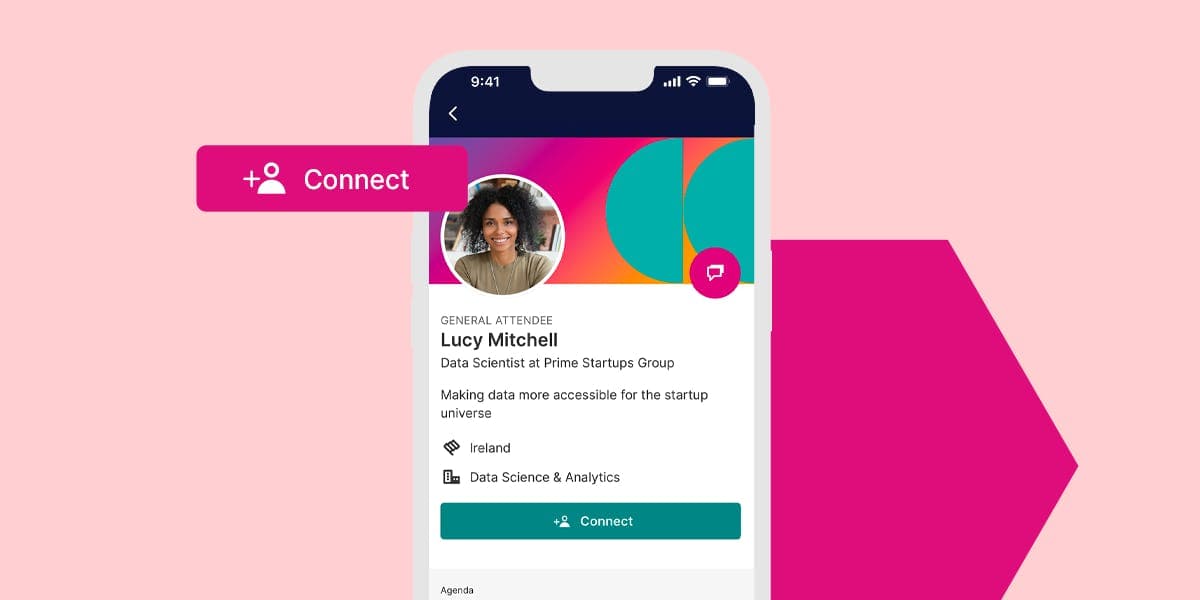
For example, Web Summit built a full mobile app for attendees. It includes a customizable event planner, speaker bios, and networking features that let you connect with other attendees based on shared interests.
PR, Media, and Publicity Tactics
Media coverage gives you backlinks from high-authority sites and the legitimacy that comes from being featured on recognizable platforms. Other journalists are also more likely to cover the event if it’s featured in a big-name publication.
18. Write a Press Release
To pitch your event to publications or distribution services, you need a press release.
Here's a basic structure for a press release.
Clear headline stating what the event is and why it matters
Opening paragraph covering who, what, when, where, and why—all the essential details upfront
Quote from a speaker or organizer that adds perspective or explains the event's value
Event details that include registration information and how to attend
Media contact for journalists who want more information
Once your release is written, you can distribute it in one of two ways (or, resources allowing, both):
Pay a distribution service like PR Newswire or Business Wire to push it to news aggregators and journalist networks. Costs range from a few hundred to a couple of thousand dollars, depending on reach.
Pitch it directly to specific journalists and publications. This takes more time and might not drive any results, but it costs nothing.
19. Local Media and Niche Publications
If there are local or niche publications your audience reads, pitch your press release there.
All of the following are good options:
Local newspapers and business journals for location-based events
Industry trade magazines for professional audiences
Specialized newsletters and blogs in your niche
Some may feature you for free; others will charge a fee. To increase interest, also consider offering media passes or exclusive speaker interview access.
20. Event Directories and Calendars
You’ve probably already thought about posting on Eventbrite (and that’s the right thing to do), but there are many more event sites to add to your promotion mix.
Cross-post your event on these platforms:
Meetup
LinkedIn Events
City event calendars
Industry-specific aggregators
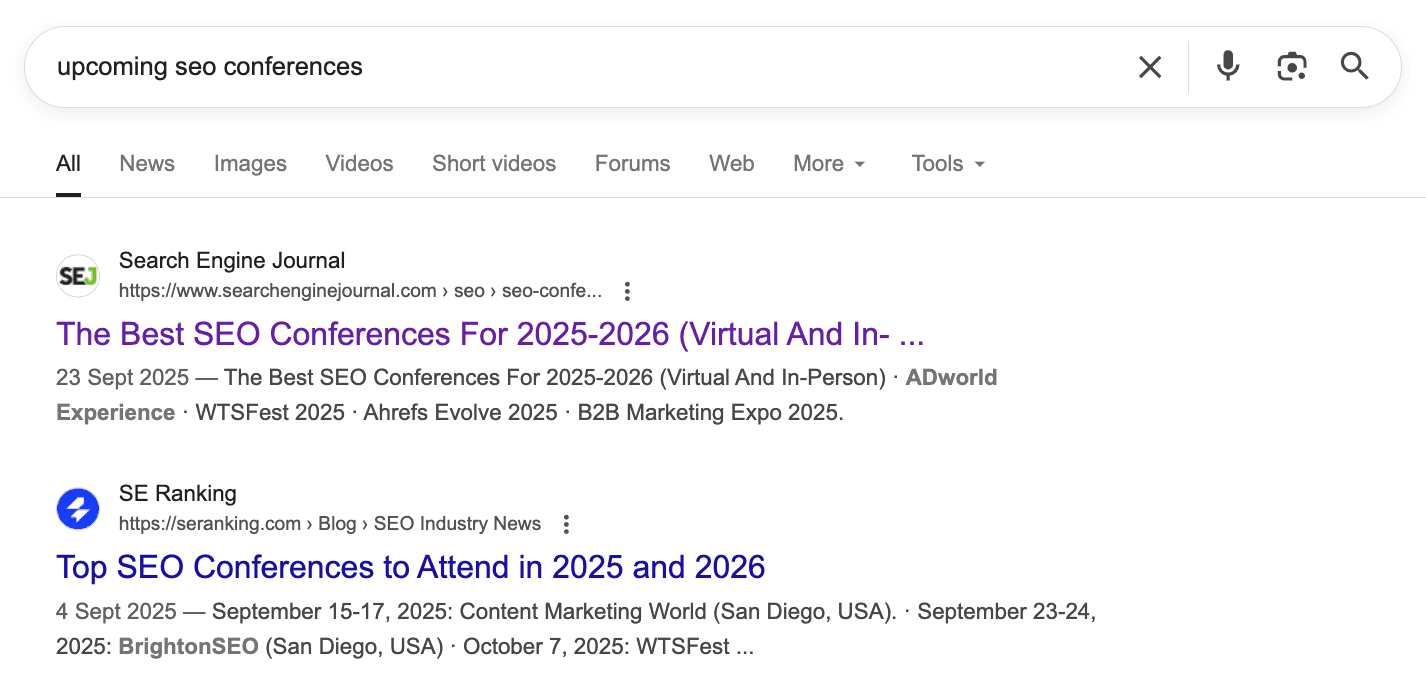
In addition, look for relevant blog posts featuring upcoming events in your niche on the first page of search results.
For instance, when searching for "upcoming SEO conferences," there's a host of listicle articles ranking first on Google. If we were hosting an SEO event, we’d reach out to these publications asking for an insertion.
21. Guest Appearances
Podcasts and webinars are excellent channels to promote your event in the weeks before it launches. Podcast hosts are eager for expert guests, so if you or your co-organizers can fill that role, it’s a win-win.
On the podcast, discuss relevant topics and mention the event naturally as context. Always target shows that will reach your ideal attendees.
22. Media Kit for Partners and Press
We’ve already touched upon this, but it deserves a dedicated mention: make it ridiculously easy to promote your event for everyone involved.
Package everything partners and press need in one place:
Event logos and branding assets
Speaker headshots and bios
One-page event overview
Pre-written social posts
Branded graphics for different platforms
Press contact information
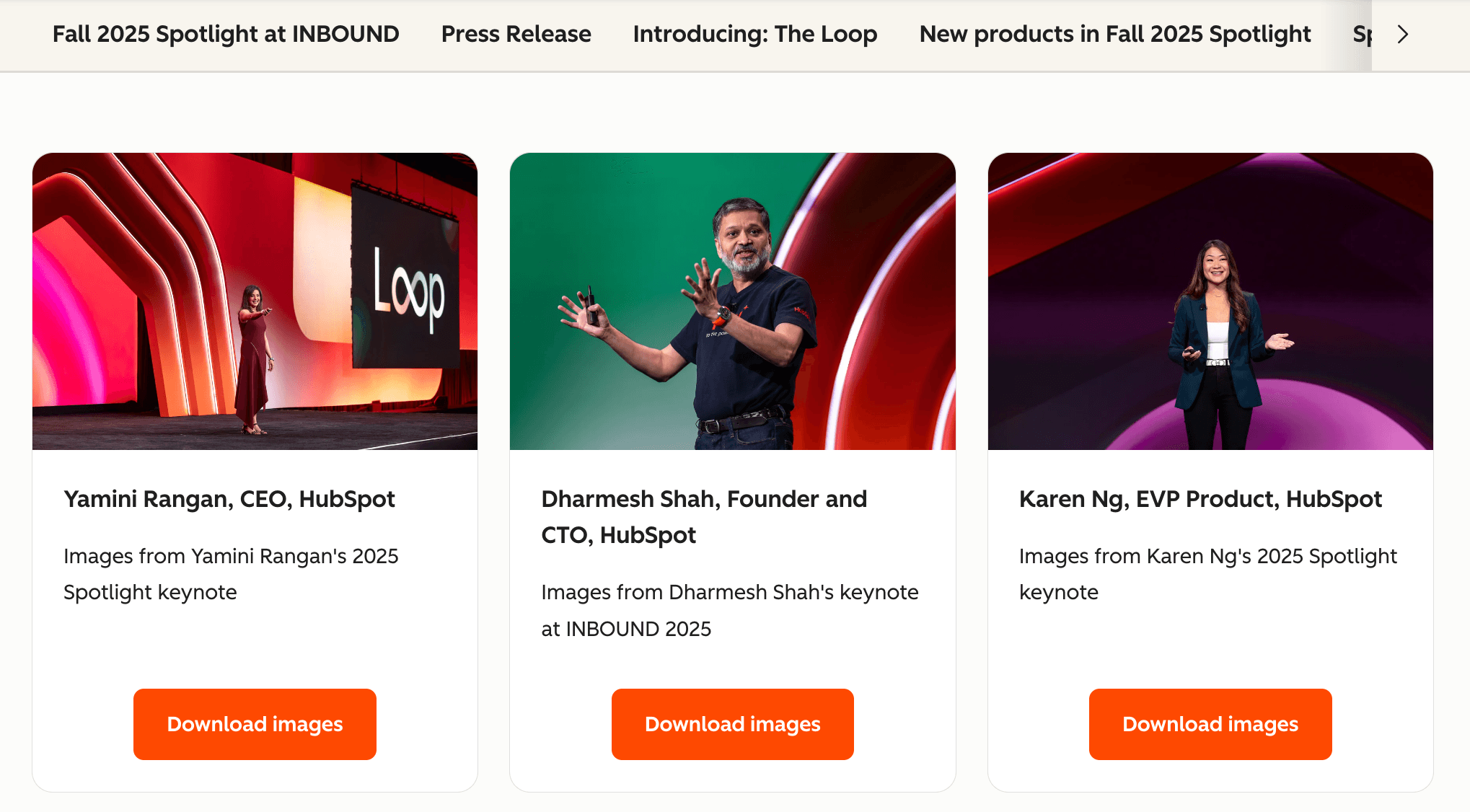
HubSpot takes this further with a dedicated press center where journalists can download photos from INBOUND and access relevant press releases.
Creative and Out-of-the-Box Promotion Ideas
If your event has the budget and audience for it, unconventional tactics can generate traction that traditional marketing can't match.
23. Guerrilla Marketing Stunts
Guerrilla marketing works when it's unexpected, ties directly to your event theme, and gets people talking.
Here are examples that work:
Flash mobs in high-traffic areas performing something related to your event topic
Interactive street demos that let passersby experience what attendees will learn
Pop-up installations in unexpected locations with clear branding and event info
Just keep it relevant. If you're hosting a cybersecurity conference, project fake "system breach" warnings on building facades in the financial district at night with a message linking to your event. Random stunts that don't connect to your event are more likely to confuse people.
And always include a clear call to action that's easy to follow. QR codes linking directly to your registration page work well—people can scan and sign up on the spot.
24. Experiential Installations
This tactic is less viral but more applicable and focused on your target audience. Set up physical stations where potential attendees can have relevant interactive experiences.
Here are some ideas to use as inspiration:
Challenges that test skills related to your event topic
VR or AR experiences
Live stations where experts give quick consultations related to your event theme
For example, if you're hosting a design event, let people use professional software to create something they can take home.
25. Contests and Gamification
If you have an active community around your event, gamified experiences can boost engagement and keep your event top of mind.
Here are three contest ideas that drive engagement:
Online scavenger hunts where participants find clues across your social channels or website
Trivia competitions testing knowledge on topics your event will cover
Leaderboard challenges where the most engaged participants win prizes
Make the rewards worth competing for—free tickets, VIP upgrades, exclusive networking access, and premium swag are all good options. Track participation publicly if your audience is competitive—seeing others win motivates more people to join.
26. First-Timer Specials
As someone who's never attended Web Summit, I have the same concern every time I consider going: what if I don't make the most of it and get lost in the noise?
If you're running a recurring or large-scale event, first-time attendees often feel overwhelmed or unsure about what to expect. Helping them feel prepared increases both attendance and satisfaction.
Here are the best ways to help first-timers:
Host orientation webinars explaining what to expect, how to navigate the event, and how to get the most value.
Create first-timer guides with tips on networking, which sessions to prioritize, and logistics.
Set up a buddy system pairing newcomers with past attendees.
Offer first-timer-only networking sessions so they can meet others in the same boat.
Share video walkthroughs of the venue or platform if it's virtual.
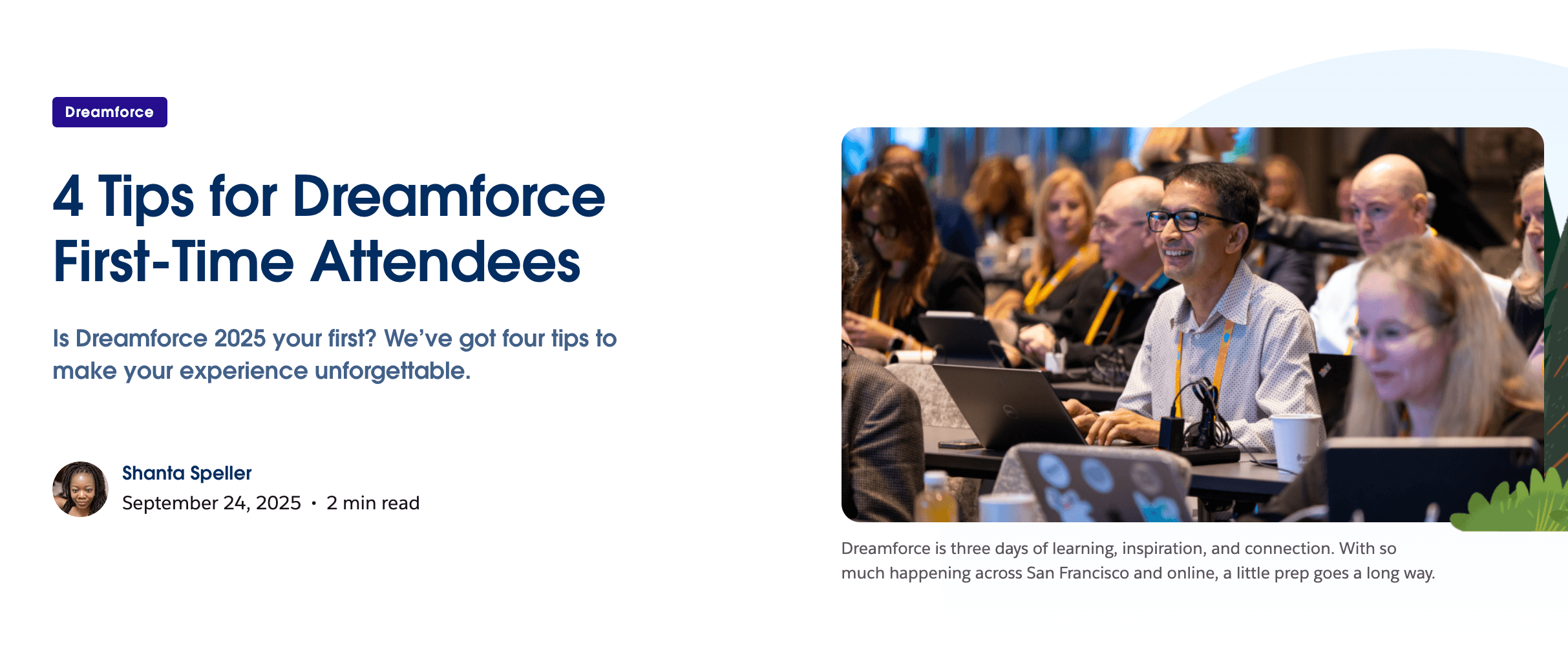
Salesforce does this well with Dreamforce. They publish detailed first-timer guides covering everything from what to wear and how to plan your schedule to navigating the massive venue and making the most of networking opportunities.
27. Personalization That Scales
Personalize at every stage—from your social ads right through to post-registration follow-ups and pre-event reminders.
Use segment data to tailor your messaging in the following ways:
Segment your list by industry, role, company size, or past behavior.
Reference specific pain points relevant to each segment in your email copy.
Highlight speakers or sessions that match segment interests.
Use dynamic content in emails that changes based on recipient data.
Target ads to specific job titles or industries rather than broad audiences.
B2B Outreach & Direct Engagement Strategies
You don’t have to wait for people to find out about your event. Reach out directly to put your target audience’s eyes on it.
28. Account-Based Invitations
If you're targeting enterprise clients or high-value accounts, treat event invitations like an ABM campaign.
Identify key accounts you want at your event and research who is most likely to attend from each company. This might include decision makers in your target departments, but also HR professionals responsible for learning and development—they're often the ones approving or coordinating team attendance at industry events.
Send personalized email invitations explaining why the event is relevant to their specific challenges, goals, or industry position.
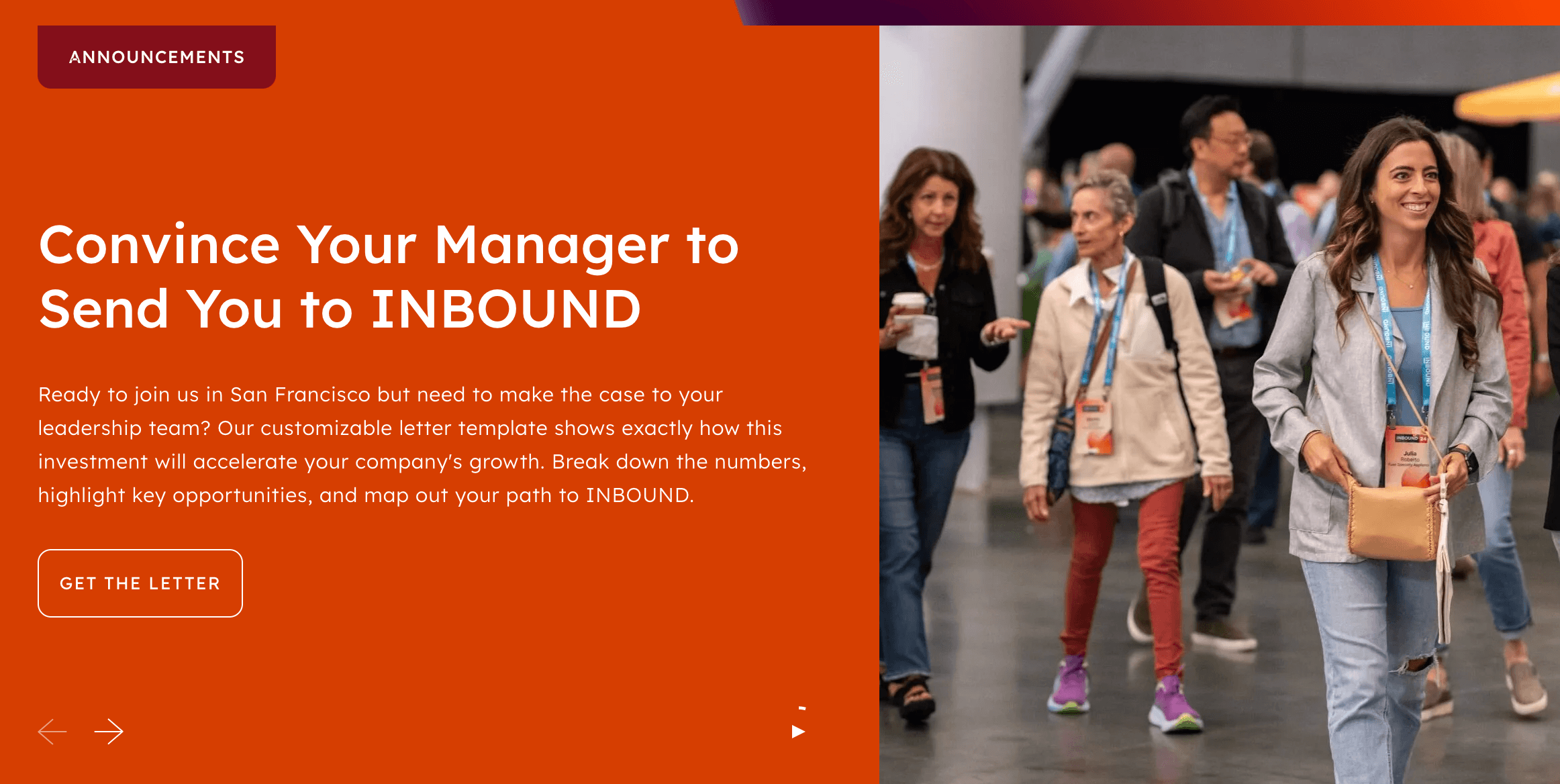
For example, INBOUND provides a customizable letter template that potential attendees can tailor and send to leadership, explaining the ROI, key opportunities, and how attending will benefit the company.
29. LinkedIn & Direct Messages
Use LinkedIn outreach as a complementary channel to email outreach to increase your chances of reaching prospects.
Send personalized connection requests or DMs to prospects who fit your ideal attendee profile, referencing something specific about their role, company, or recent posts. Explain why your event addresses challenges they're likely facing.
If someone accepts your connection but doesn't respond, follow up with value—share a speaker interview, highlight a relevant session, or offer an exclusive discount.
30. Lead-Gen Events Feeding the Big Event
Run smaller digital events regularly to build a qualified lead base for your main event.
Host ongoing activities like the following:
Monthly webinars on topics related to your event theme
A podcast featuring industry experts and thought leaders
Online workshops or training sessions
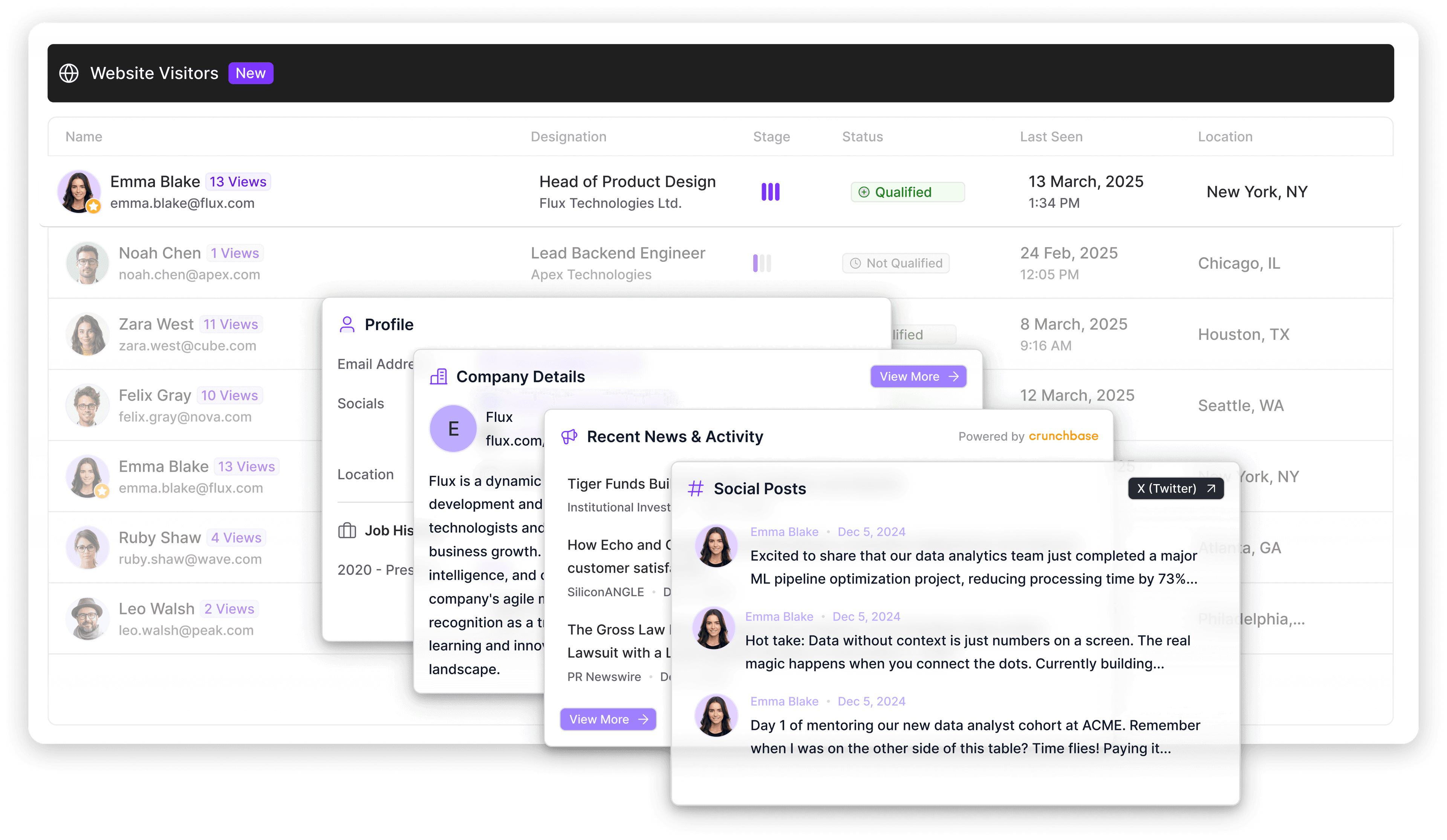
You can use Artisan's Watchtower Campaigns feature to monitor visitors who interacted with your webinar landing pages, podcast show notes, or workshop content but didn't convert. AI BDR Ava will then construct a personalized outreach sequence to push them over the line.
31. Follow-Up Sequences
Getting someone to register doesn't guarantee they'll show up. This is especially true for free or low-cost events where there's little financial commitment keeping people accountable.
Here’s an example of a follow-up sequence that can be sent between registration and the event:
Immediate confirmation with calendar invite and key details
Speaker spotlights highlighting sessions they shouldn't miss
Networking tips or suggested connections they can make at the event
Logistical reminders (what to bring, parking info, app download)
Final 24-hour reminder with your contact info for day-of questions
Consistent communication between registration and event day significantly reduces no-show rates.
Tools & Tech to Scale Event Promotion
Even if you just pick a few of these tactics, that’s a lot of work on top of preparing the actual event itself. The right tech helps you cut the manual work and get more out of your promotional strategy.
Marketing & CRM Tools
You need to remove manual work so you can focus on strategy and relationships instead of copying and pasting invitations.
Here’s how you can use marketing automation and CRM platforms to assist with event promotion:
Automate social media posting across channels with tools like Buffer or Hootsuite.
Set up email sequences that trigger based on registration status and behavior.
Track registration data and segment audiences in your CRM.
Use event management platforms that integrate with registration and ticketing portals for immediate data syncs.
Deploy event apps that keep attendees engaged during and after the event with schedules, networking features, and live updates.
AI-Powered Outreach
When you're targeting hundreds or thousands of potential attendees, use AI tools to handle personalization at volume.
Artisan is an example of a next-gen AI outreach platform—built around AI BDR Ava—that handles all of the early and middle stages of the outbound sales cycle.

Event organizers are using Artisan to automate both email and outreach on professional social networks with hyper-personalized messaging based on the online activity and behavior of potential attendees and sponsors.
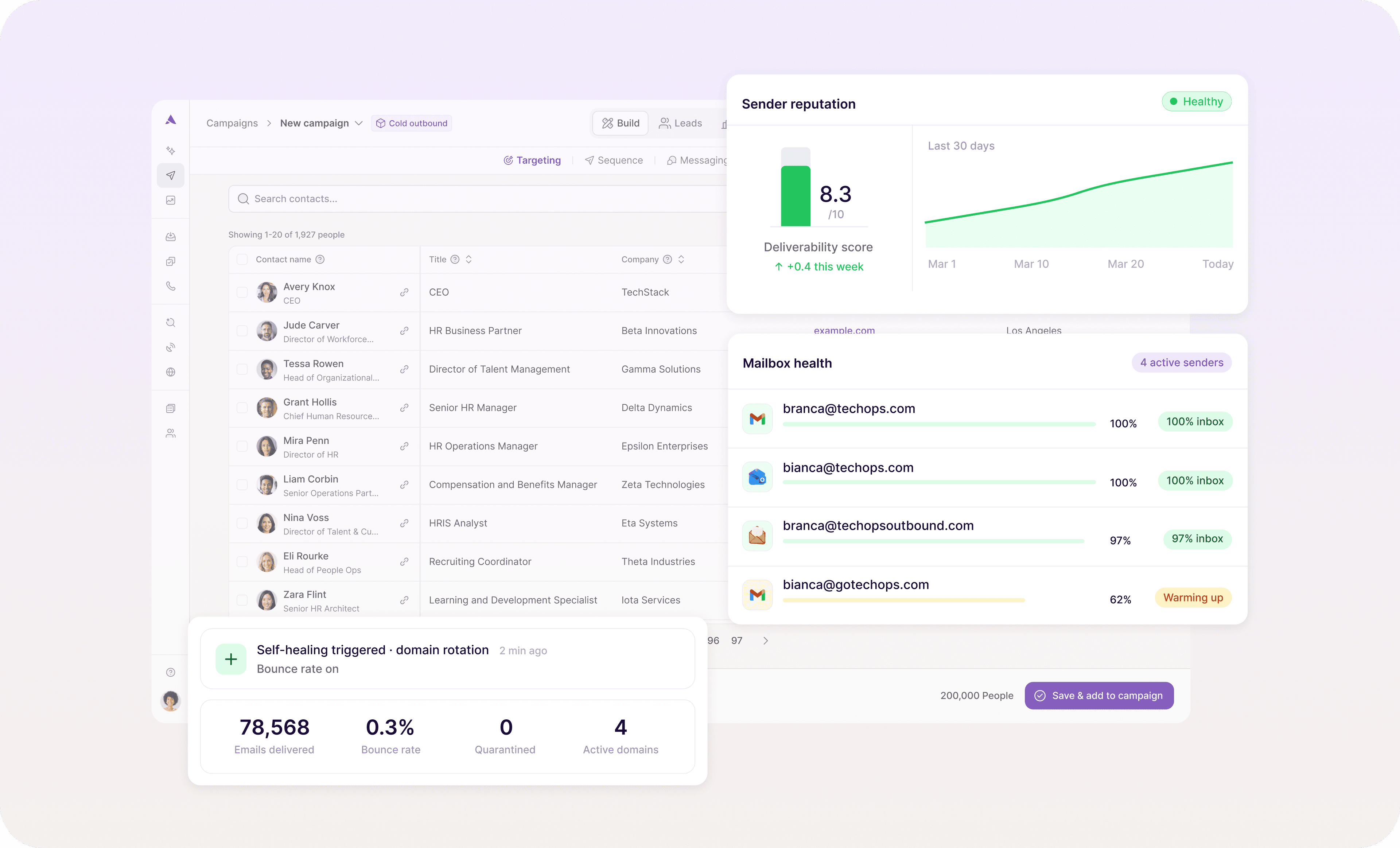
Artisan also looks after your deliverability score, with built-in warm-up and domain monitoring. This allows you to send email at scale without worrying about ending up in recipients’ spam folders.
Analytics and Optimization
Here’s what you need to track to know what's working and what's wasting budget:
Email open rates, click-through rates, and conversion rates by segment
Ad performance across platforms (cost per registration, conversion rates, audience engagement)
Social media metrics (reach, engagement, referral traffic)
Registrations by channel
A/B test results for subject lines, ad creative, landing page copy, and CTAs
For event organizers, it’s important to look beyond mere cost per conversion. It’s also important to factor in scalability. A niche newsletter might deliver registrations at $20 each, while LinkedIn costs $100 per registration—but if the newsletter can only reach 500 people and LinkedIn can reach 50,000, the higher cost might be justified for volume.
Sometimes you need both: use low-cost channels to maximize efficiency and test creatives, then invest in scalable (but pricier) channels like paid ads to hit your attendance targets.
Stop Hoping, Start Booking Seats.
However innovative and unique your event is, you need to promote it to the right people.
Outbound sales should be the first tactic on your to-do list. It lets you target the right people at scale and hit solid conversion rates without the unpredictability of mass marketing.
Artisan’s AI BDR Ava automates hyper-personalized outreach across email. She finds your ideal attendees and sends them messages tailored to their specific interests and challenges—on autopilot and at scale.
Automate your outbound with an AI BDR
Meet Ava—your AI BDR who handles prospecting, outreach, and follow-ups, so your team can focus on closing.

Adelina Karpenkova
SME @ Artisan
Adelina Karpenkova is a writer helping businesses tap into AI's potential and clear up misconceptions. She works with B2B teams on latest industry knowledge.