A complete guide to outreach automation: Strategies & tools
Learn how to implement time-saving, cost-cutting automation outreach workflows in your business in this step-by-step guide.

Is there anything better in B2B sales than receiving a positive reply to a cold email you don’t even remember sending?
It feels like a rare gift from those fickle sales gods.
But it’s not.
It’s the result of well-designed outreach automation.
And, with the right approach, you can make it happen again and again.
What Happens When You Implement Outreach Automation in Your Business?
When you implement outreach automation, you’ll see three main benefits:
You will save time and reduce manual input
You will boost recipient engagement through personalization
You will gain insights through advanced analytics
Let’s look at each of these in depth.
You Will Save Time and Reduce Manual Effort
Outreach automation handles a host of repetitive, time-consuming customer outreach tasks. Tasks like sending a follow-up email or adding a new subscriber to a drip campaign.
Many outreach automation platforms also have AI functionality, which enables outbound sales teams to automate more complex tasks, like designing automated outreach sequences or writing highly personalized emails.
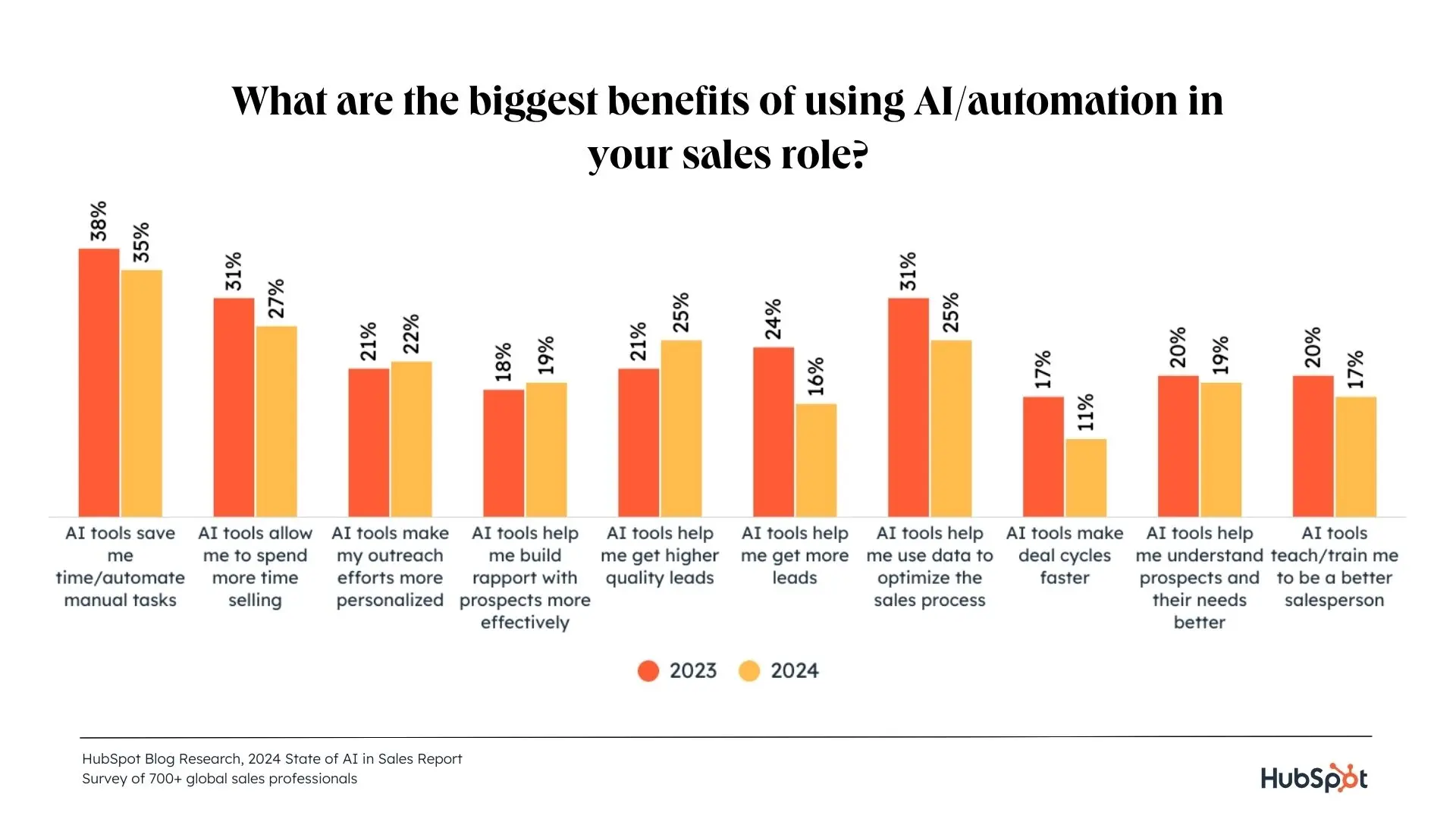
Sales professionals who use AI or automation say the biggest benefit is that it reduces the time they spend on manual tasks, according to the HubSpot Sales Trend Report.
You Will See Higher Engagement and Personalization
Outreach automation ensures the right people get the right message at the right time, on a grand scale and without manual effort.
This mass personalization leads to more engagement with your sales emails and social messages. In fact, 70% of sales reps who use AI for prospect outreach say it has improved their response rate.
The ability to send timely, relevant messages relies on three key features:
Segmentation tools that use filters to intelligently divide your leads and customers into lists based on their interests, behavior, and current stage in the buyer’s journey.
Trigger-based delivery that allows you to set up “if, then” automations that send emails based on a schedule or a specific action.
Auto-personalization platforms that connect with your CRM and use info about lead purchase history, location, and other intel to personalize messages.
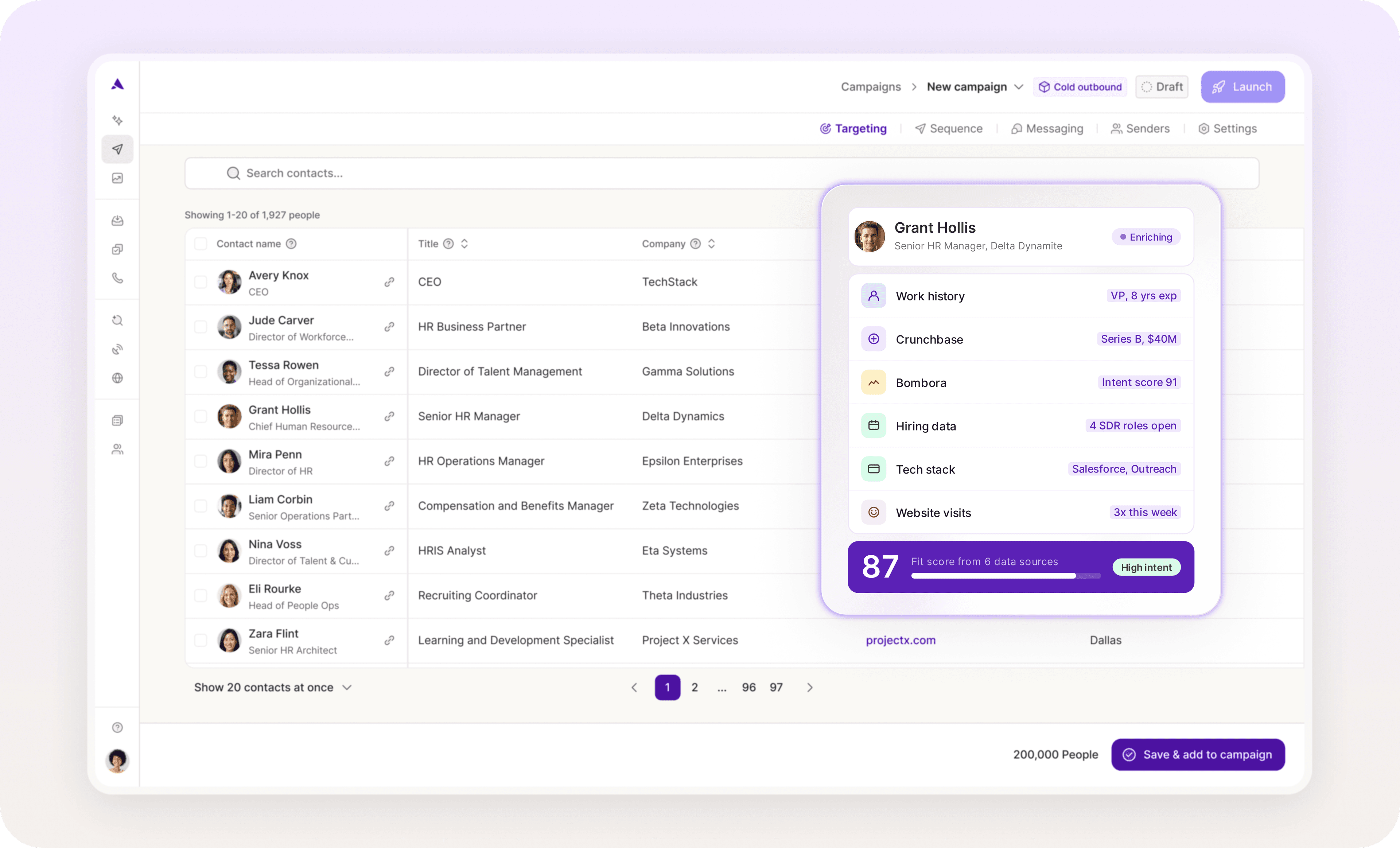
Artisan’s AI business development representative (BDR) Ava, for example, uses ideal customer profiles (ICPs) to filter from a pool of over 300 million contacts. She then crafts highly personalized outreach and follow-up messages.
You Will Gain Valuable Insights and Improved Tracking
Outreach automation tools offer engagement tracking to monitor key outreach success metrics for your campaigns.
You can use automation tools to track the following metrics:
Open rates
Click-through rates
Reply rates
Campaign conversion rates
Number of meetings booked
Email bounce rates
With clarity around outreach performance, you can make informed decisions about how to improve your messaging, sequences, and outbound playbooks.
When to Use Outreach Automation in Your Strategy
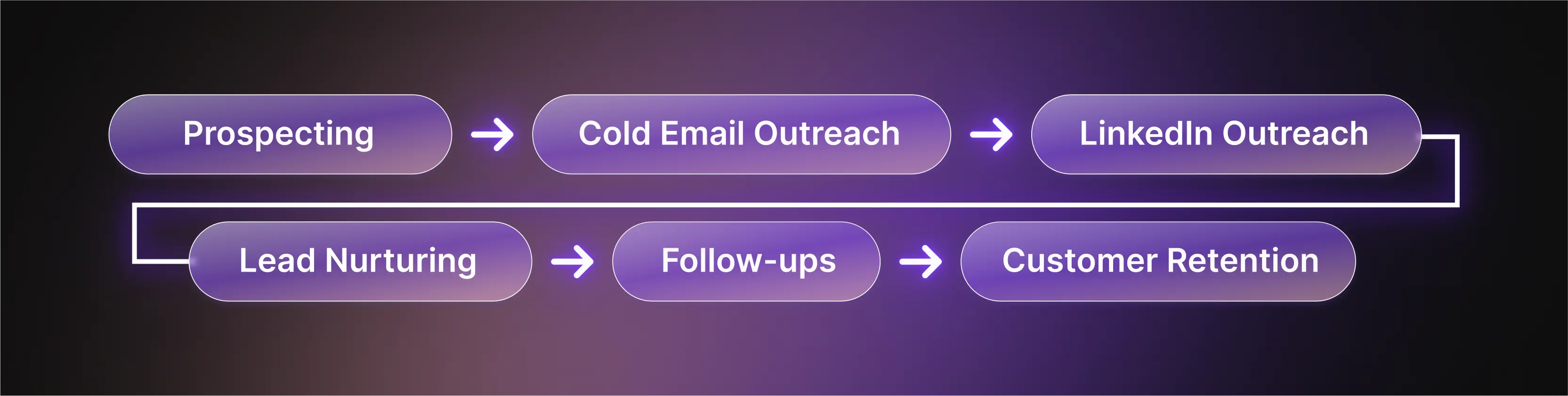
Here are some of the highest-ROI opportunities for automating your outreach:
Prospecting: Find leads who match your ICP. Use a B2B database with accurate data and filtering to build these lists in minutes.
Cold email outreach: Use sales engagement software to build cold email sequences for your different audience segments, with emails auto-personalized to each recipient.
LinkedIn outreach: LinkedIn automation tools automatically connect with and message professionals.
Lead nurturing: Automated email warm-up campaigns nurture leads by consistently sending them content that relates to their current interests.
Follow-ups: Create triggers that automatically send emails to leads or customers when they take a specific action, like signing up for a demo, or not responding after three days.
Customer retention: Build email outreach campaigns designed to boost product usage, answer common questions, and encourage renewals and upgrades.
Through integrations, most outreach tools also reduce the time your team spends updating your CRM and related software. No more double entries. When a message is sent in a sales engagement tool, it will be reflected in your CRM.
Top Email Outreach Tools
Now you’ve got the theory locked down, let’s look at three of the most effective tools for email outreach automation.
1. Artisan
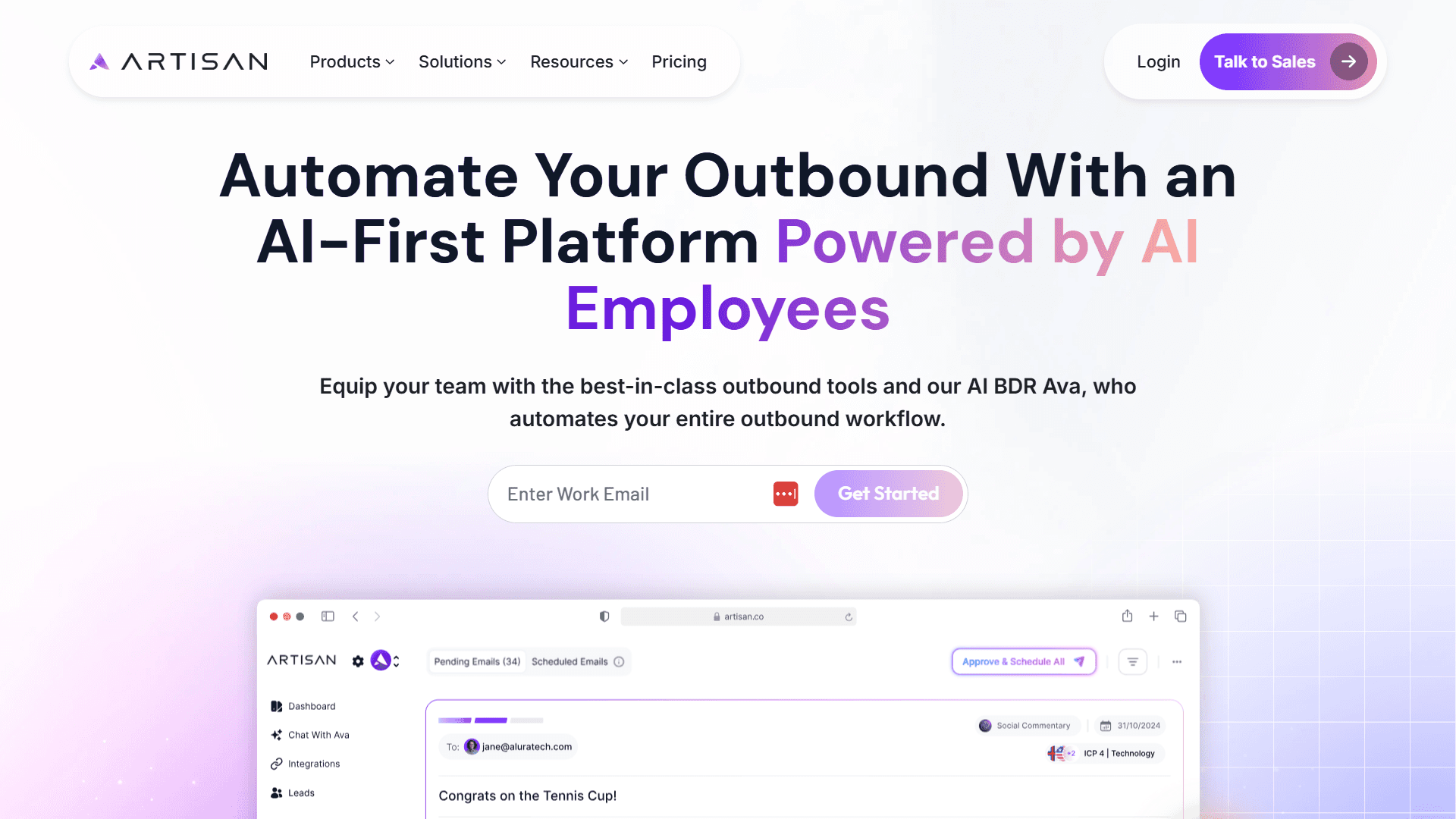
Artisan is an all-in-one, AI-first sales automation platform.
Powered by AI BDR Ava, Artisan executes the entire B2B outbound sales process right up to the point where the lead is handed to an account executive.
Ava handles the following time-consuming outreach tasks:
Builds lead lists based on your ICP, using a B2B database of 300+ million contacts
Researches leads using advanced web scraping methods
Identifies the best outreach playbook for each lead
Composes and sends high-quality, personalized outreach emails
Sends automated outreach to high-intent corporate accounts by tracking your website visitors
Improves your campaigns over time with background A/B testing
By outsourcing 80% of SDR-related tasks to Artisan, you can dramatically scale your outbound sales strategy without growing your team. You also free up your sales reps, who can spend more time connecting with buyers.
Key Features
AI BDR that automates the entire outbound sales process
Social media outreach automation
Automated email sequences
Sales playbooks
A/B testing
Database of over 300 B2B, ecommerce, and local leads
Unique “waterfall” algorithm for human-like personalization
Pricing
Artisan customizes all plans to individual clients. Reach out to the sales team for a quote.
Artisan is changing the way sales teams execute outbound campaigns. Want to see how AI BDR Ava can boost your conversions and revenue? Get in touch to schedule a demo.
2. Mailshake
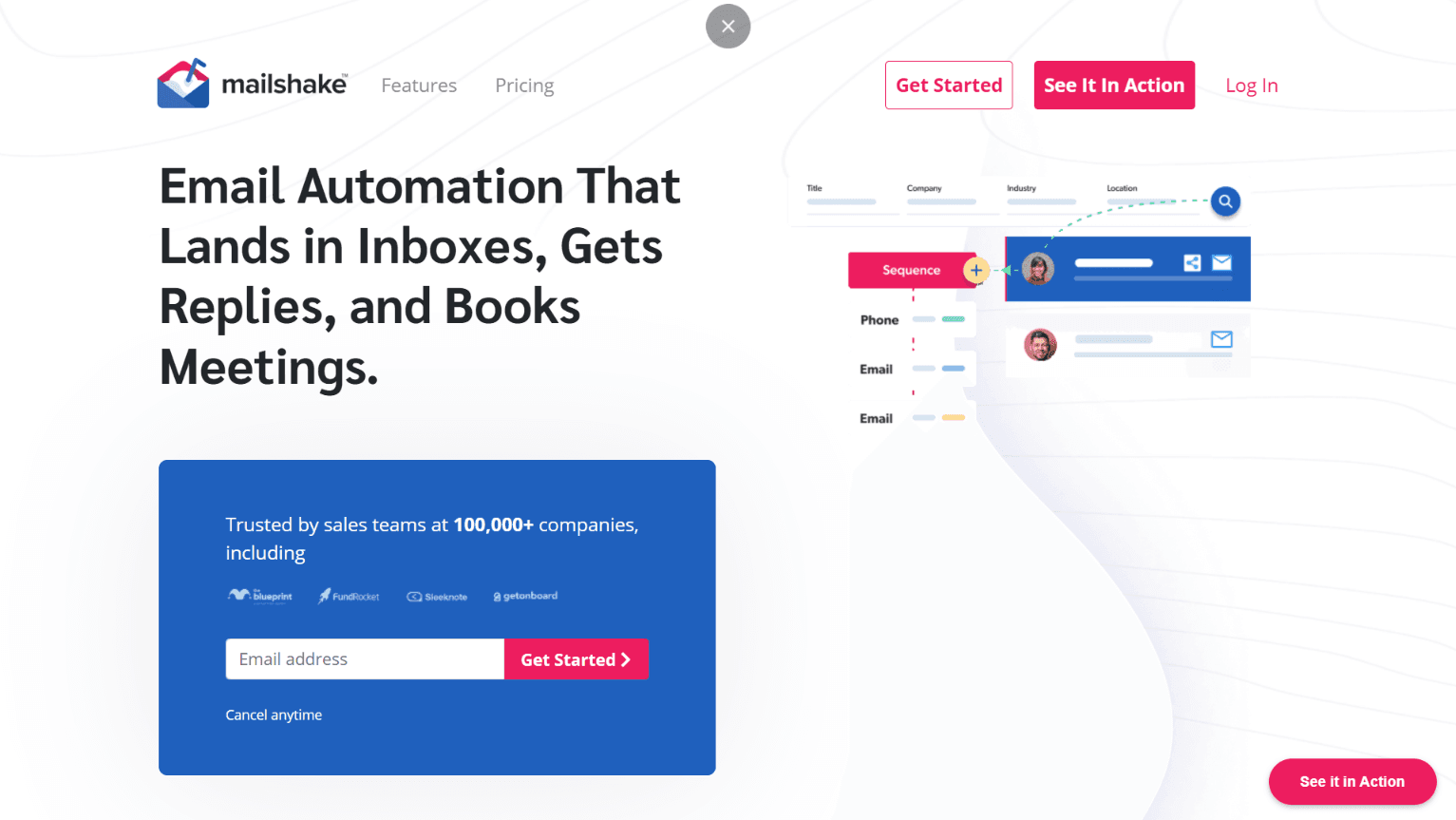
Mailshake is a sales engagement and B2B lead platform.
Sales teams leverage the platform’s built-in contact database to find quality leads. They reach out to these leads over email in a semi-automated fashion using the AI email writer, email scheduling, and email campaign builder.
Mailshake also offers LinkedIn automated messaging, connection requests, likes, and comments on the posts of target leads.
One drawback is that many of the best outreach automation features, including LinkedIn automation, are only available on the Sales Engagement Plan, the most expensive package. G2 ratings also suggest that Mailshake is hard to learn.
Key Features
AI email writer
Email personalization
Power dialer
LinkedIn automation
Automated follow-ups
Pricing
Starter: $25 per month
Email Outreach: $45 per month
Sales Engagement: $85 per month
3. Apollo
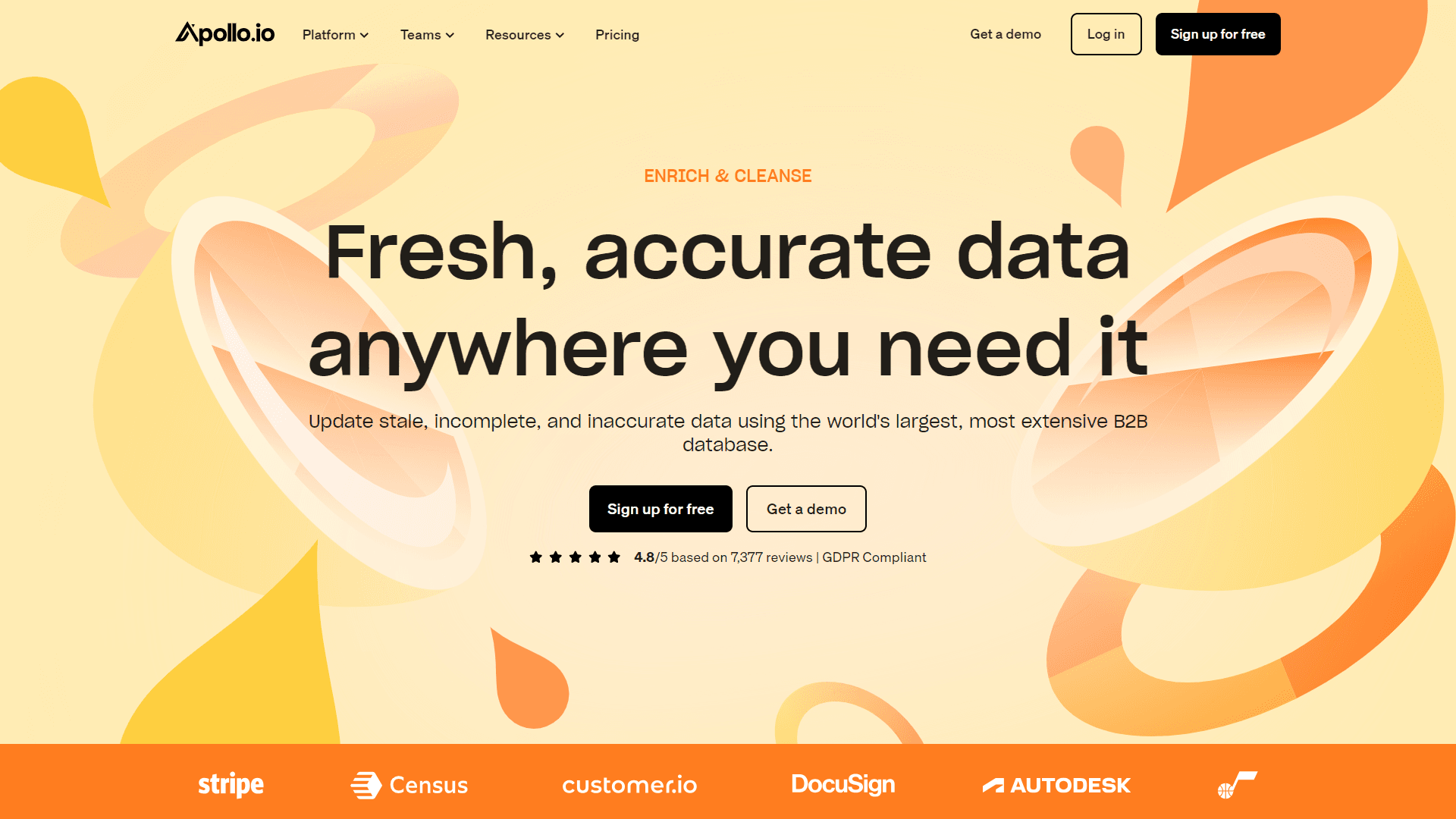
Apollo is an AI sales platform for automating B2B lead generation.
Apollo primarily helps B2B sales teams build lead lists, write emails, and streamline multi-channel outreach. It also automates cold calling tasks, offering a built-in autodialer along with call recording, transcripts, CRM logging, and conversational intelligence.
Notably, the platform helps you prepare for sales meetings by scraping the web and providing you with relevant news stories about target accounts.
Key Features
Lead database
Lead scoring
Email sequence automation
Outreach workflows
AI writer
Pricing
Free: 1,200 credits/year per user
Basic: $49/month per user
Professional: $79/month per user
Organization: $119/month per user
How to Implement Outreach Automation in Your Strategy
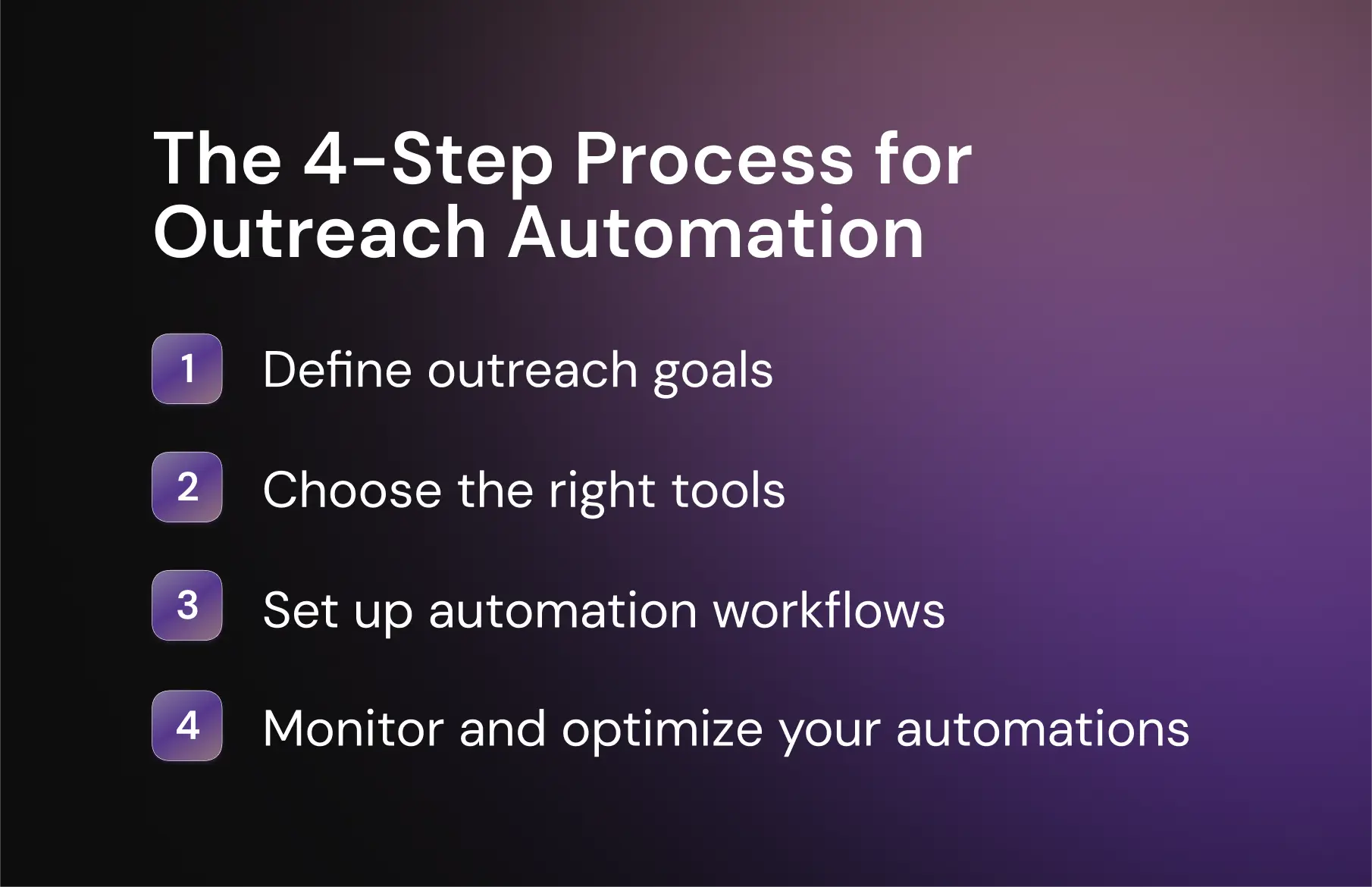
We’ve covered the theory and showcased some of the best tools on the market. Now let’s look at the practicalities of automating your outreach.
Our four-step framework helps you define your goals, choose the right software, set up your first automations, and optimize performance over time.
Step 1: Define Your Outreach Goals
To automate lead generation, customer engagement, and prospect nurturing, you need to define the specific results you’d like to achieve.
Here are some examples of outreach goals:
Scale cold outreach by 300% (3x as many emails sent) by automating cold email.
Reduce lead response time by 50% through trigger-based follow-up emails.
Boost email marketing campaign conversions by 15% via mass auto-personalization.
Save each sales rep five hours per week by automating outreach-related tasks.
Improve close rates by 10% with automated email nurturing campaigns.
Step 2: Choose the Right Tools
Once you know your outreach automation goals, it’s time to evaluate different software solutions.
Outreach automation tools fall into the following categories:
AI-first outbound sales software
CRM systems
Email automation platforms
Sales engagement platforms
Let’s have a look at each one.
AI-First Outbound Sales Software
AI-first outbound sales software is a revolutionary form of salestech.
Instead of simply streamlining sales processes, it fully automates them. And we mean fully. A recent Salesforce survey found that 83% of sales teams that used AI experienced revenue growth in the past year. It was 66% for those without AI.
For example, platforms like Artisan allow you to deploy AI sales professionals—called, you guessed it, “artisans”—who discover leads, research their online activity, monitor who visits your site, and send personalized email and social media sequences.

CRM Systems
Every business needs a CRM. How much you should rely on it for your automation processes depends on your needs.
Most modern CRMs, like HubSpot and Salesforce, offer the following email automations:
Smart email templates
Email sequence creation
Email tracking
Activity logging
Email scheduling based on triggers.
However, unless you’re fine with basic automations, these tools are best when paired with a dedicated outreach automation platform.
Email Automation Platforms
Email automation platforms like MailChimp, ActiveCampaign, and Artisan help marketers create, automate, and track targeted email marketing campaigns that adapt based on the actions of the recipients.
For example, if a recipient signed up for a free trial, the system might add them to a free trial email sequence, a series of pre-written emails that teach the lead about the solution while persuading them to upgrade.
Here’s an example of an automated cold email sequence in Artisan:
Sales Engagement Platforms
Sales engagement platforms like Outreach and Salesloft help salespeople manage, personalize, and automate their communications with prospects and customers.
With these platforms, you can build automated outreach sequences that contain emails that auto-populate with recipient details, like job title or company name.
They’re effective for reducing time spent writing and personalizing emails, but they often don’t take automation as far as most companies would like, nor do they offer tools for social media outreach.
For instance, they don’t entirely automate lead research or email writing, and most don’t offer social media automation functionality.
If you’d like to see how Artisan can automate all of the early and middle stages of your sales cycle, right up until a lead is ready for a human conversation, get in touch to schedule a demo.
Checklist: How to Pick an Outreach Automation Platform
Below are some pointers to help you pick the right outreach automation software:
Cost: Make sure the pricing structure aligns with your budget. Some tools charge per user, while others, especially email marketing platforms, charge per contact.
Features: Key features depend on your specific goals, but some to look for include email templates, automated sequences, AI sales agents, auto-personalization, trigger-based outreach, social media automation, scheduling, AI writing, and outreach analytics.
Integrations: The right tool will connect with your CRM and other sales and marketing tools. This ensures smooth data transfer between systems.
Data: Some tools come with a B2B contact database and data enrichment. Accurate data improves email deliverability and personalization.
Scalability: Make sure the platform will still perform well as your contact list grows and your marketing and sales outreach strategies become more complex. Check for seat limitations and the costs of upgrading to higher plans.
Ease of use: The lower the learning curve, the faster your team can start using the tool. A quick trip to G2’s user reviews can help you assess its user-friendliness.
Step 3: Set Up Automation Workflows
Now that you have your software solutions, it’s time to set up automation workflows.
Here are some examples of workflow automations you can copy:
Create a welcome email sequence that sends five educational emails to all new subscribers.
Set up automated lead segmentation based on factors like industry, company size, and engagement level.
Connect your CRM and platform so all your messages are automatically logged in the CRM.
Build cold email campaigns for your most valuable customer segments.
Launch a post-purchase nurturing sequence that onboards the new customer.
Create an automated notification that goes to sellers when a lead clicks on an email link.
Set up outreach dashboards for reps to help them track their success metrics.
Before deploying any automations, test them. Make sure the auto-personalizations and triggers work.
Otherwise, you risk leads receiving emails that start with “Hey {First Name}.”
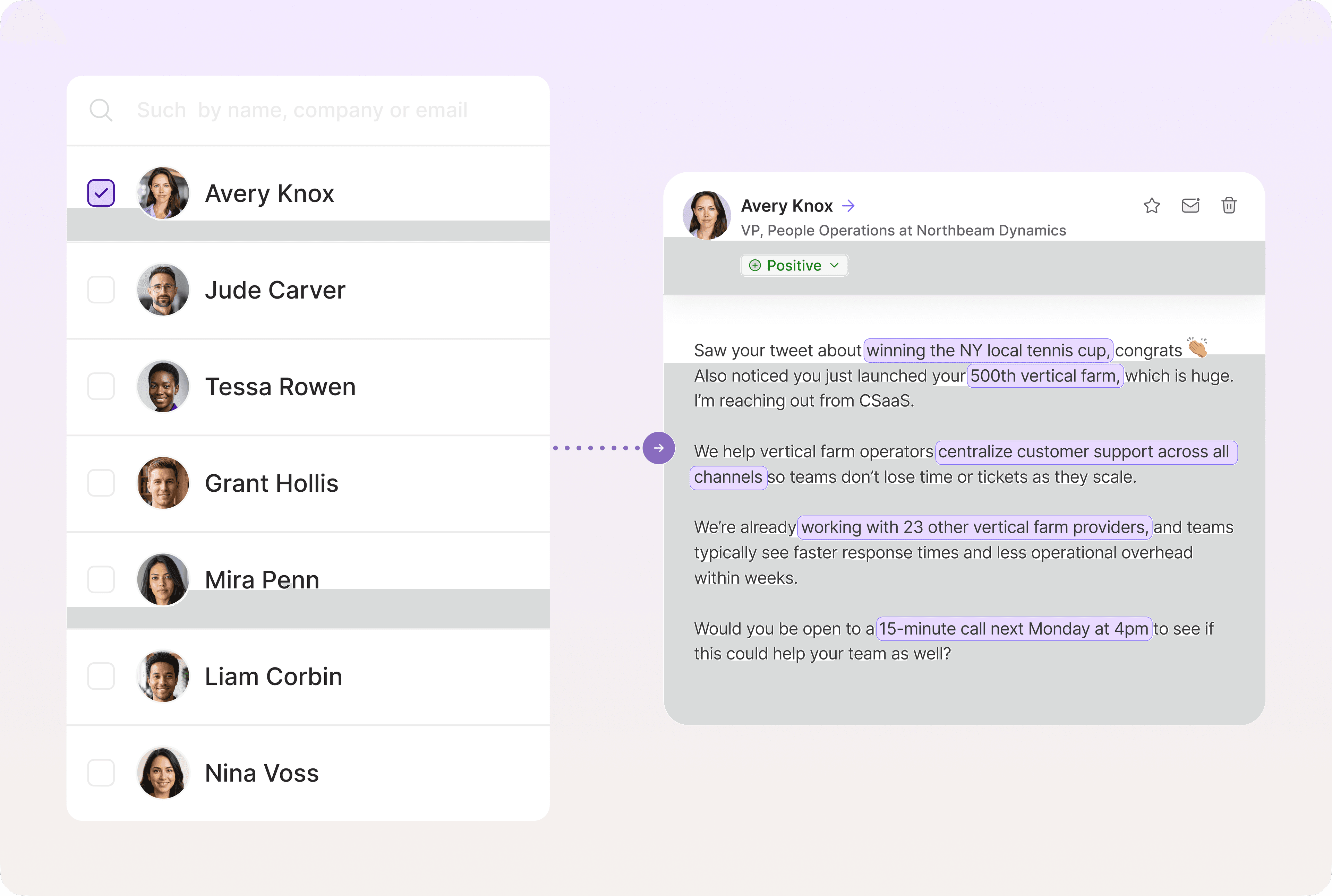
Here’s an example of an auto-generated cold email done the right way in Artisan:
Step 4: Monitor and Optimize
Even though we’re talking about automations, you can’t just set and forget. Like any newly implemented part of your business, you need to monitor it.
Track the following key outreach success metrics:
Deliverability
Open rates
Click-through rates
Response rates
Meetings booked
Overall sales conversions
Most outreach automation platforms offer real-time analytics that allow you to easily monitor these metrics across your team’s various outreach campaigns, industries, and sales channels.
Ask questions like the following to pinpoint issues with your automations:
Which cold email works best?
Which type of lead is most likely to reply to our emails?
Which email subject lines get the highest open rates?
Do open rates differ across market segments?
Which segments are getting the worst conversion rates?
Maximize Your Outreach with Automation
Creating engaging, relevant sales outreach takes a lot of time and effort. And don’t even get us started on managing campaigns and remembering to follow up.
Fortunately, automation platforms take many outreach tasks off your hands, from crafting personalized social media messages to triggering follow-up emails.
Automation tools run by AI—like Artisan—are even more powerful. They can save sales professionals upwards of two hours per day, all while scaling key sales processes.
Want to see how Artisan can help your business automate its entire outbound sales process? Get in touch to schedule a demo.

Sam Rinko
SME @ Artisan
Sam Rinko is a former SaaS sales rep turned tech writer. He sold real estate software before writing about lead generation, cold calling, and AI sales tools.