Slow ticket sales can be a mystery. You’ve got top speakers, strong content, and a jam-packed schedule, so why aren’t people booking?
Often, the issue isn’t the event; it’s the marketing. Switch up your approach, and you can reach more potential customers and convince them to buy. The event may even sell out long before the big day.
Why Ticket Sales Stall (and How to Fix Them)
There are many reasons why ticket sales might dry up (or not take off in the first place). A single issue may be letting you down—or a combination.
Ticket sales can stall due to:

Poor timing
Unclear pricing
Clunky ticket platforms
Lack of urgency
Event-audience mismatch
For example, Pavitra Balakrishnan, co-founder & COO of Virtual Racing Hub, a high-fidelity motorsport simulator brand for B2B events, found that low urgency and poor targeting were stalling sales.
“Mid-cycle, we noticed that ticket sales were flat, so we implemented a few strategies to turn the situation around. We introduced early-bird and group-pricing tiers, added a 48-hour booking deadline, and ran targeted social media ads to warm audiences and our partner communities.”
These efforts resulted in approximately a 25% lift in checkout conversions, and the event sold out three days before it was scheduled to begin.”
Get it right, and you’ll see a significant lift in sales over a relatively short period.

Create Urgency with Pricing Strategies
According to Charles Dickens, “Procrastination is the thief of time.” But when your potential attendees procrastinate, it also robs you of sales.
So, here’s how to make customers act right now.
Early-Bird Discounts
Offering early-bird discounts—a limited selection of cheaper tickets for the first ticket buyers—boosts sales when you announce the event.
Here are the key benefits of providing early-bird discounts:
Improves cash flow
Increases organic momentum via social media mentions and word of mouth
Builds a sense of community for your biggest fans
Adds urgency to the early sales period
You don’t need to offer up a large chunk of tickets—around 10% of tickets is the norm.
Build anticipation for early-bird tickets with a countdown timer for the first release. And remember to outline the cancellation process, especially if the event line-up or venue changes.
Tiered & Group Pricing
You can maintain urgency in the long term with tiered pricing—early-bird discounts are only the start.
For example, if you’re selling 100 tickets, you could use the following structure:
Early Bird: 10 tickets ($120)
Tier 1: 30 tickets ($150)
Tier 2: 30 tickets ($180)
Tier 3: 30 tickets ($210)
At each stage, use urgency indicators, such as “X tickets remaining,” or precise deadlines to build pressure. And make sure the price difference is significant enough to motivate early buyers.
Alongside tiers, group or corporate discounts encourage corporate team members to attend in larger numbers.
Flash Sales & Bundles
When sales stall, stoke interest with bundles and flash sales that last 24 to 48 hours.
Also consider aligning flash sales with seasonal events, such as Black Friday, or relevant days, such as Micro, Small, and Medium-sized Enterprises Day (World MSME Day).
For time-limited bundles, include complementary experiences, such as:
VIP experiences
Workshops
Merchandise
You can discount bundles during a flash sale or offer them separately to boost sales of high-profit items. To generate the most engagement, promote deals at the same time via social media and email.
Tap Into Social Media & Influencers
Two-thirds (66%) of U.S. adults use social media as a search engine, according to Statista. So, you need to be present on these platforms. It’s where your attendees are looking.
Build Buzz on LinkedIn, X, Instagram
Your event needs a page on every platform where people might look for it. For B2B events, that’s LinkedIn, X, and Instagram.
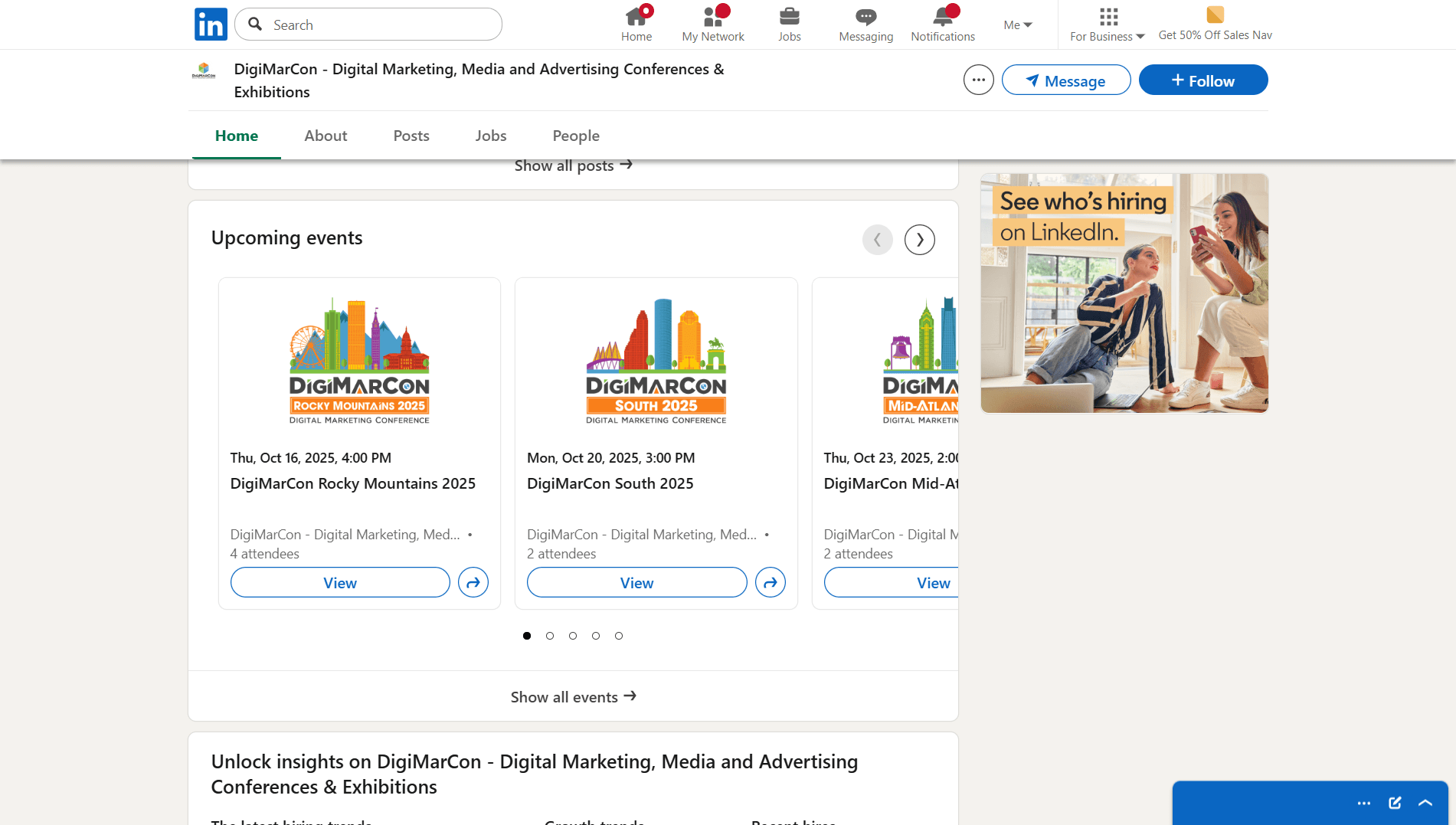
As you can see in the screenshot below, B2B conference DigiMarCon has a clear list of upcoming events on its LinkedIn profile. This helps people find their events, check out details, and share the page.
Share the following types of content on social media to build buzz:
Teaser posts and save-the-dates (with branded hashtags)
Speaker announcements and topic reveals
Behind-the-scenes preparation
Event-related polls, countdowns, and Q&As with speakers
Attendee and partner spotlights
Always fit the content to the platform and add a clear CTA. For example, on Instagram, where captions cannot include links, you might say, “To buy a ticket, click the link in bio.”
You can also run social media ad campaigns. These are particularly effective when they target your highest-value attendee ICP.
Your social media ads should:
Show social proof (e.g., number of people attending)
Include key details (date and location)
Have a clear CTA
Partner with Influencers & Speakers
Are you making the most of your network? Your speakers likely have large online audiences—not involving them in promotion is a missed opportunity.
How does that look in practice?
Ted McKenna, a speaker at ATD’s SELL Conference, shared a promotional post to his over 7,000 followers, extending the event’s visibility.
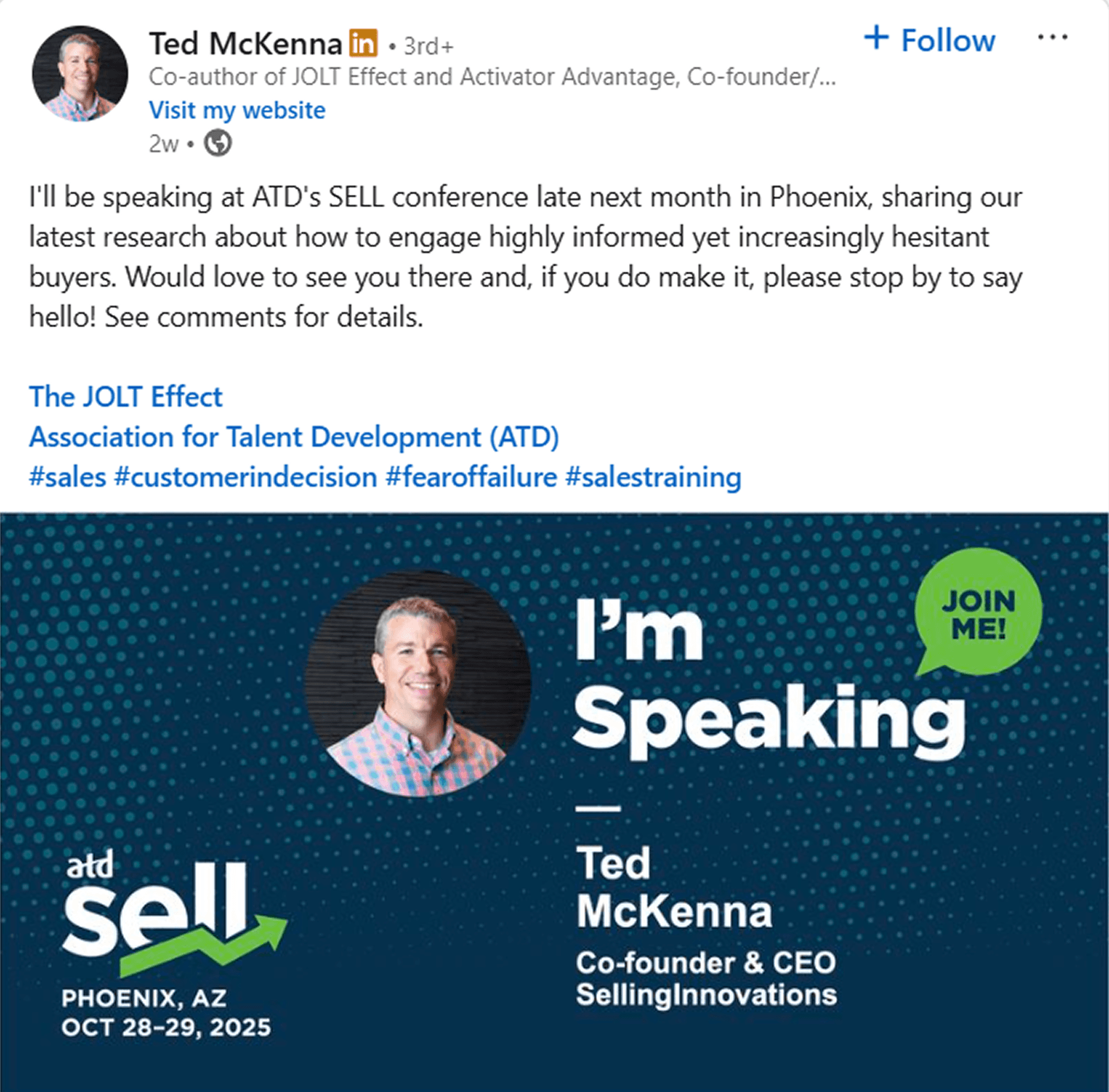
These audiences are already interested in your lineup and are likely a good match for your target audience. When marketing via speakers, sponsors, and partners, supply branded graphics to keep the content professional.
You can also invite influencers to attend or promote the event. Influencer marketing gives you access to creators’ trusted audience connections.
Here’s a quick influencer compatibility checklist:
Check influencer audiences match your target market with a tool like Not Just Analytics.
Look for a high engagement rate—this signals an invested audience.
Don't get distracted by follower counts alone; content should feel authentic and align with your brand message.
Consider the success of their previous collaborations.
There are many ways to work with social media influencers. Use one of these frameworks for your influencer partnership:
Sponsored posts (paying a flat fee for content)
Gifting influencers tickets to the event
Affiliate marketing, a low-risk tactic that rewards influencers on a commission basis by tracking unique promo codes and links to sales
Boost Ticket Sales with Email Marketing
Email drip campaigns are a staple in most marketing strategies. Events are no different. A clever email campaign engages potential attendees with messages personalized to their interests and pain points.
Segment & Personalize
Segmenting your B2B email list allows you to tailor messages and subject lines to different sections of your audience. You can highlight the speakers, workshops, networking opportunities, etc., most likely to interest them.
Segment groups using the following data:
VIPs (high-value leads)
Past attendees
Cold leads
Company data (recent news, company size, or industry)
Website activity
For example, you could send cold leads a testimonial from a previous attendee and VIPs exclusive access to high-end bundles. Or you might send startups that have made a recent funding announcement information about speakers at your event who will be talking about growth.
Automated Drip Campaigns
A drip campaign is a type of B2B sales automation workflow that triggers emails and social media messages at set intervals or after certain behaviors. This tactic builds momentum slowly, all without your team needing to lift a finger.
Here’s a step-by-step guide to running a drip campaign:
Send an initial invite that explains the schedule, speakers, and what’s on offer.
Send several follow-ups—spaced three to four days apart—that keep the event top of mind while building interest, highlighting benefits, showing social proof, and offering tiers and discounts.
Send your “last chance” message before you stop selling tickets.
Wondering how to write a sales email? In the event promotion email below, legendary copywriter Drayton Bird highlights that it is the last opportunity to make a purchase, with clear descriptions of the benefits, location, and speakers.
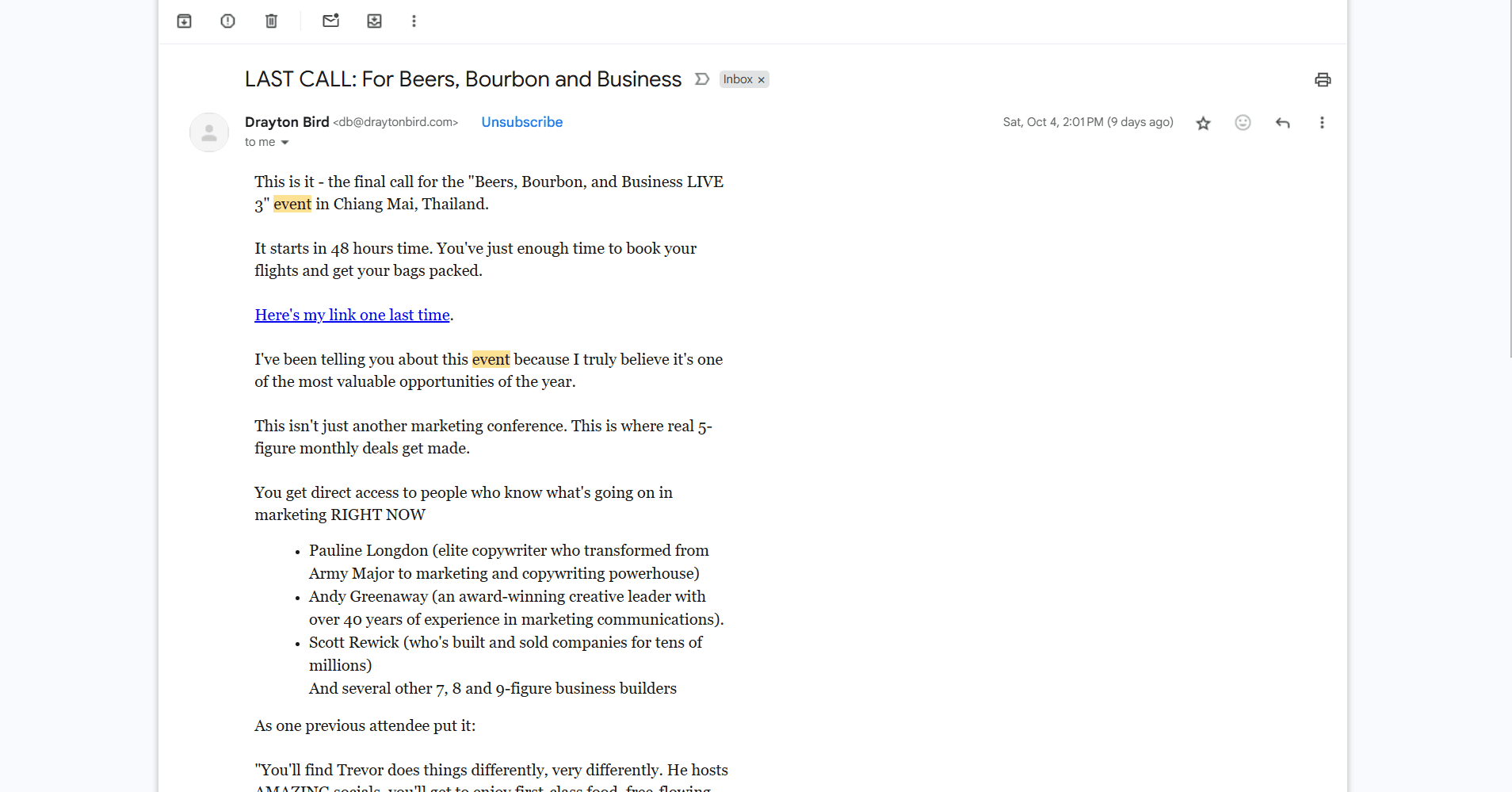
Pay attention to the subject line. It’s catchy, that’s for sure. But it also creates urgency and subtly explains the event’s value. All with a sense of humor that’s perfectly on-brand.
Imagine sending thousands—or perhaps even tens of thousands—of these messages manually. The event would come and go before you made an impact. But cold email marketing software can automate high volumes of outreach, allowing you to scale your messages.
Chain of Events, the team behind the RAISE AI conference, lacked personalized outreach. Their manual stack was time-consuming and fragmented. They started running automated outreach with Artisan. Ai BDR Ava handled the workload of five human SDRs, and in just six months, Chain of Events sourced $700K in ARR—a 20x ROI on their $28K investment.
Build Scarcity and FOMO Into Your Event
One of the most effective ways of encouraging purchases is to evoke a fear of missing out (FOMO). It’s a powerful emotion that works across a range of sales settings.
Limited Tickets and Visual Cues
Creating a sense of scarcity makes people less likely to leave your website or ticket sales portal, as they feel it’s too risky to leave tickets unbought.
Text is powerful, but visual cues are more immediate. Images get your message across even when people scan your emails or webpage.
Use these visuals on your checkout pages to show remaining tickets:
Progress bars
Ticket counters
Percentages
Countdowns
Research on NFL events found that presenting remaining tickets as a percentage rather than a number inspires more sales. So test approaches to see what sticks.
VIP and Exclusive Perks
Your event should cater to all demographics, including those who are looking for a VIP experience.
VIP experiences also allow you to add another type of scarcity. Listing a limited VIP package with luxurious extras will encourage many customers to buy. You can also create VIP bundles to allow shoppers to curate their day.
Offer some or all of the following VIP experiences:
Meet and greets with speakers
Premium merchandise
VIP lounges with drinks or food included
Backstage access
Invites to exclusive parties or workshops
Optimize Your Landing Page & Checkout
When you walk into an event, the colors, fonts, and decorations immediately give you an impression of what to expect. Your event landing page should do the same.
High-Converting Landing Page
Ask any UX expert, and they’ll say that a landing page should be clear, cohesive, and easy to navigate on mobile and desktop.
As your digital foyer, the landing page should also grab attention, provide information, and prove your value.
Social proof is a great way to show the value of the event. So, don’t forget testimonials—if browsers see that similar people benefited from past events, they’re more likely to buy.
Many event pages use videos as visuals and social proof. They immediately hook attention, tell web visitors what to expect, and show the best moments.
Showcase the following information on your landing page:
Client logos
Event details, such as timing with a countdown and location
Ticket pricing
Speaker and workshop schedules
Tabs for more information
An attention-grabbing headline
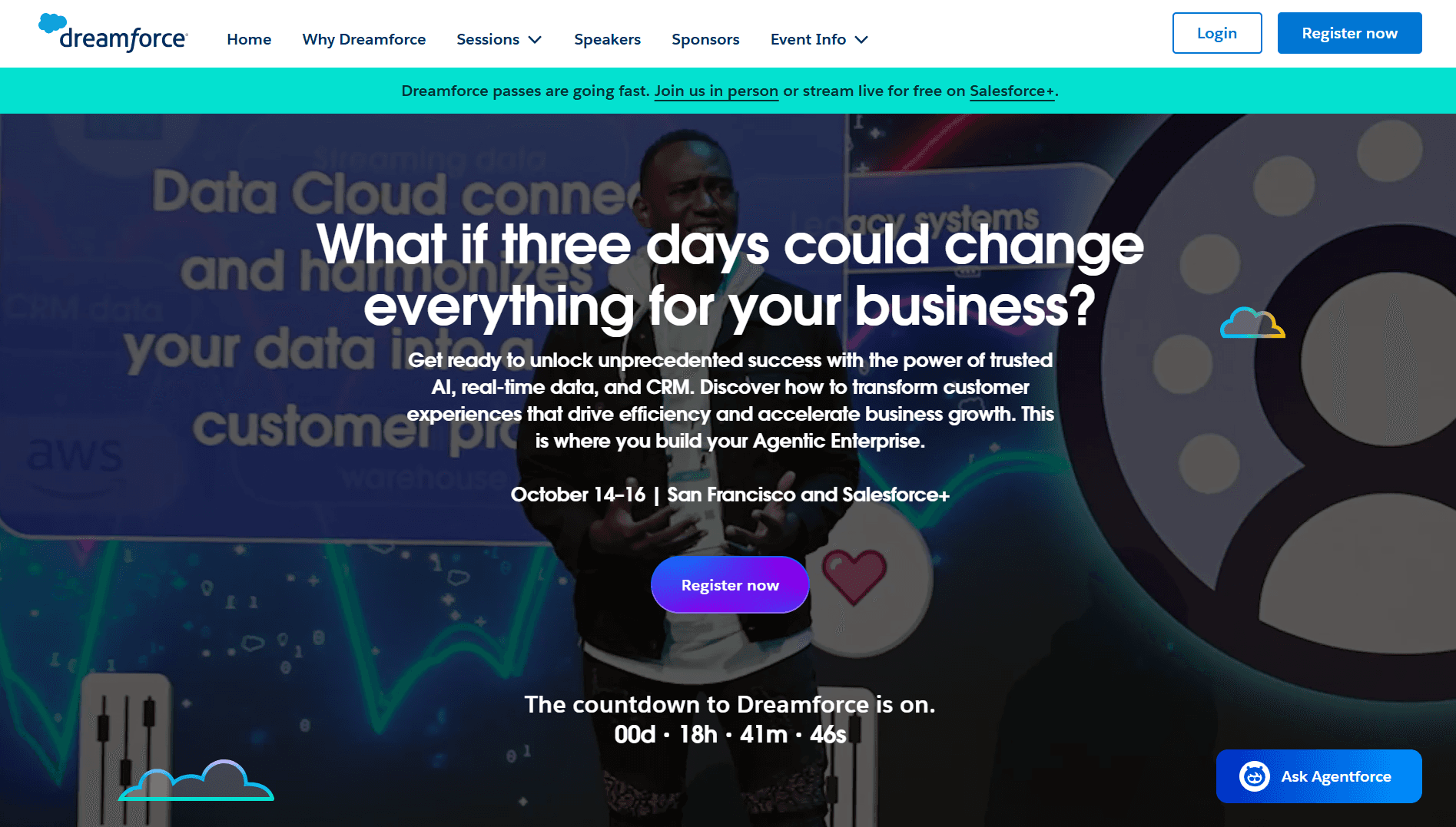
A good example is Dreamforce’s landing page. It shows a video of a past event, clearly explains the benefits of the current event, and provides specific information, such as the event date, location, and how to purchase.
Seamless Ticket Purchase
Convincing web visitors to click “buy now” isn’t the final step. You must also remove friction from the checkout process itself. For the best results, buying should be a few clicks from the landing page at most.
Here’s how to ensure a smooth checkout process:
Enable guest checkout
Offer free shipping if possible
Be transparent about additional costs
Keep forms short
Offer different payment options, such as Apple Pay, PayPal, Klarna, etc.
Ensure checkout forms are responsive on mobile and web
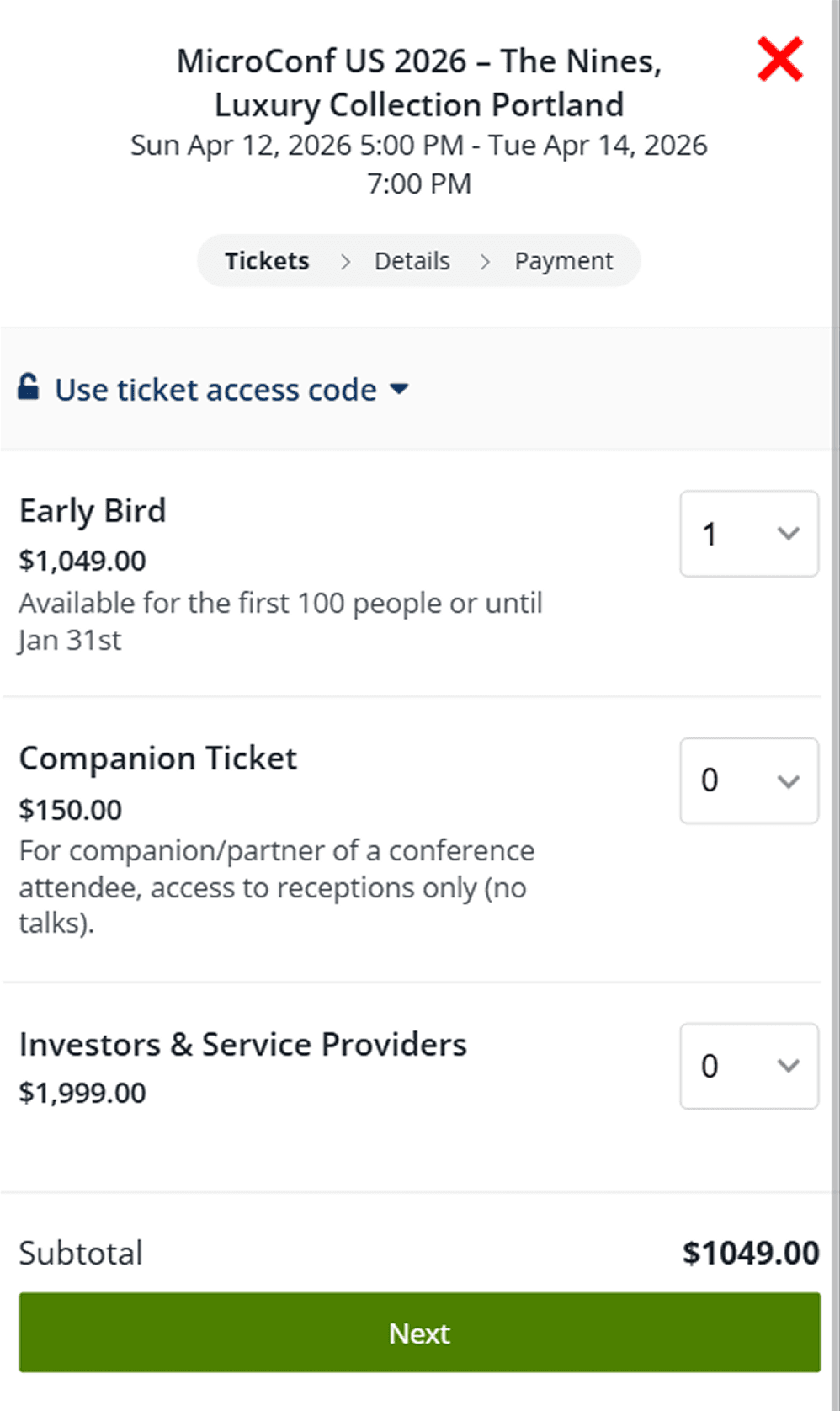
As you can see in the example below, MicroConf 2026 is simple, clear, and responsive to mobile screens.
Activate Referrals and Community Networks
A solid referral program can drive large numbers of ticket sales. The key is to make the process of sharing event details easy and offer attractive incentives.
Referral Programs
Turn your attendees into advocates by giving them unique referral links or codes that reward both invitees and referrers for successful sign-ups.
Here are some examples of rewards you can offer:
Free tickets
Discount vouchers for event activities
VIP upgrade
Merchandise bundle
Meet-and-greet with speakers
Future event credit
Research shows that referral programs create a snowball effect: people who join through a referral are more likely to refer others. By launching your program early, you can build steady momentum.
Pre-Event Webinars and Communities
Host free pre-event webinars to give businesses a taste of what’s coming. These short, high-value sessions should educate and create interest without feeling overly promotional. You want to give a sense of the value you can provide.
At the same time, use your existing Slack or Discord communities to engage past and current attendees.
Use these spaces to share updates, answer questions, and build anticipation. These channels also help your audience bond, making them more likely to attend events where they can meet people they have an existing relationship with.
Track, Analyze & Refine in Real Time
Even with the best strategy, your first campaign likely won’t be perfect. And that’s okay. The key to a sell-out event is to keep improving your marketing through continuous tracking and optimization.
Key Metrics to Watch
Start by ensuring your sales and marketing teams are on the same page. They both need access to the same data to understand performance at a granular level.
Keep a close eye on the following metrics:
Cart abandonment: Identify where potential attendees drop off and optimize your checkout flow.
Conversions by source: Measure sales driven by affiliate links, email campaigns, paid ads, and social media channels.
Bounce rates: Identify which landing pages or messages aren’t resonating and adjust accordingly.
Use these insights to refine your messaging, improve targeting, and inform sales forecasting. Iteration is the key to a repeatable template that you can reuse for future events.
Test & Adapt
Constant testing is the key to long-term growth. Focus A/B and multivariate tests on the elements that have the most impact on conversions, especially on paid ads and prominent parts of key landing pages.
All of the following are good options for A/B testing:
Email subject lines
Ticket pricing tiers
Types of social proof
Social media images and videos
CTAs
Discounts and offers
Landing page headlines
Once you know which creatives and message formats drive the most sales, double down on what works—and start small with new ideas to gauge reactions before scaling.
Scale Ticket Sales with Smart Automation
Improving ticket sales is operationally complex. Thankfully, you can now automate much of the process. As an AI-first outreach platform, Artisan takes care of prospecting, qualification, cold email marketing, message personalization, and more.
AI BDR to Grow Email Marketing and Communications
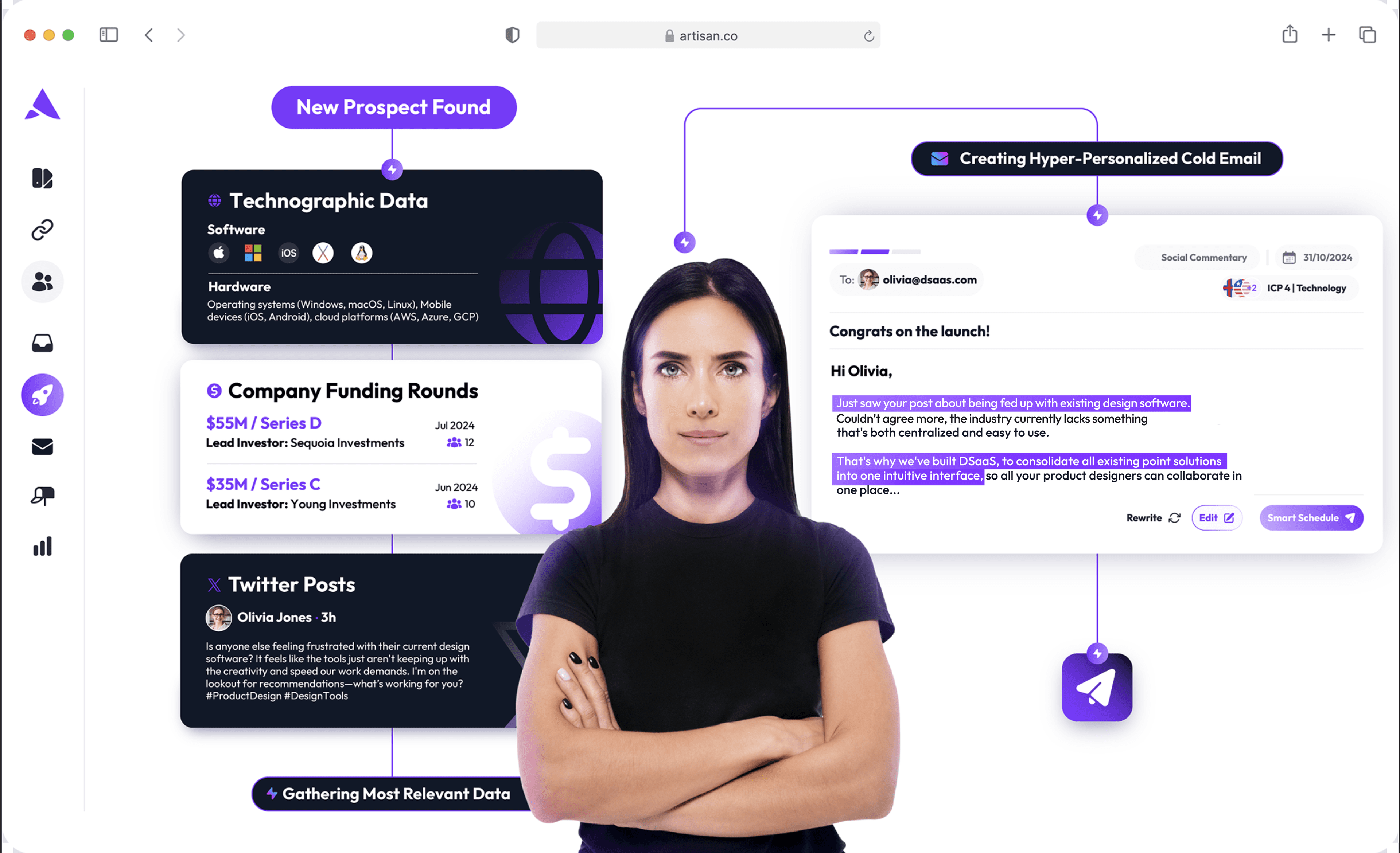
Ava, Artisan’s AI BDR, can send thousands of cold emails, follow-ups, and reminders per day. She prospects from a database of over 300 million B2B, ecommerce, and local leads and drafts personalized messages that match, and even surpass, human quality.
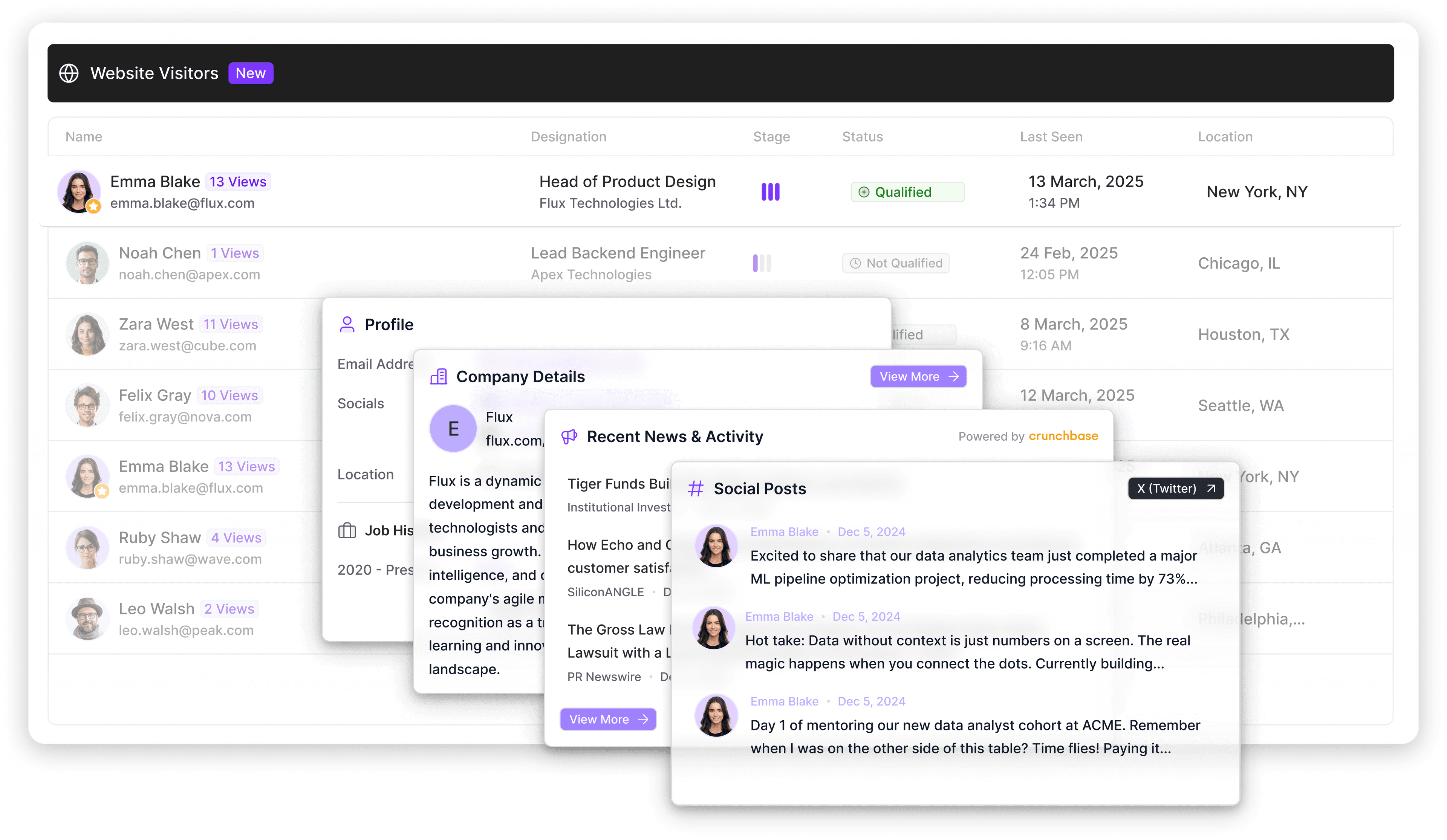
Track Website Visitors
Artisan website visitor tracking identifies visitors in real time, adds them to your prospect list, and enriches their profiles with data—even if they don’t fill out forms.
Reach More Inboxes and Not the Spam Folder
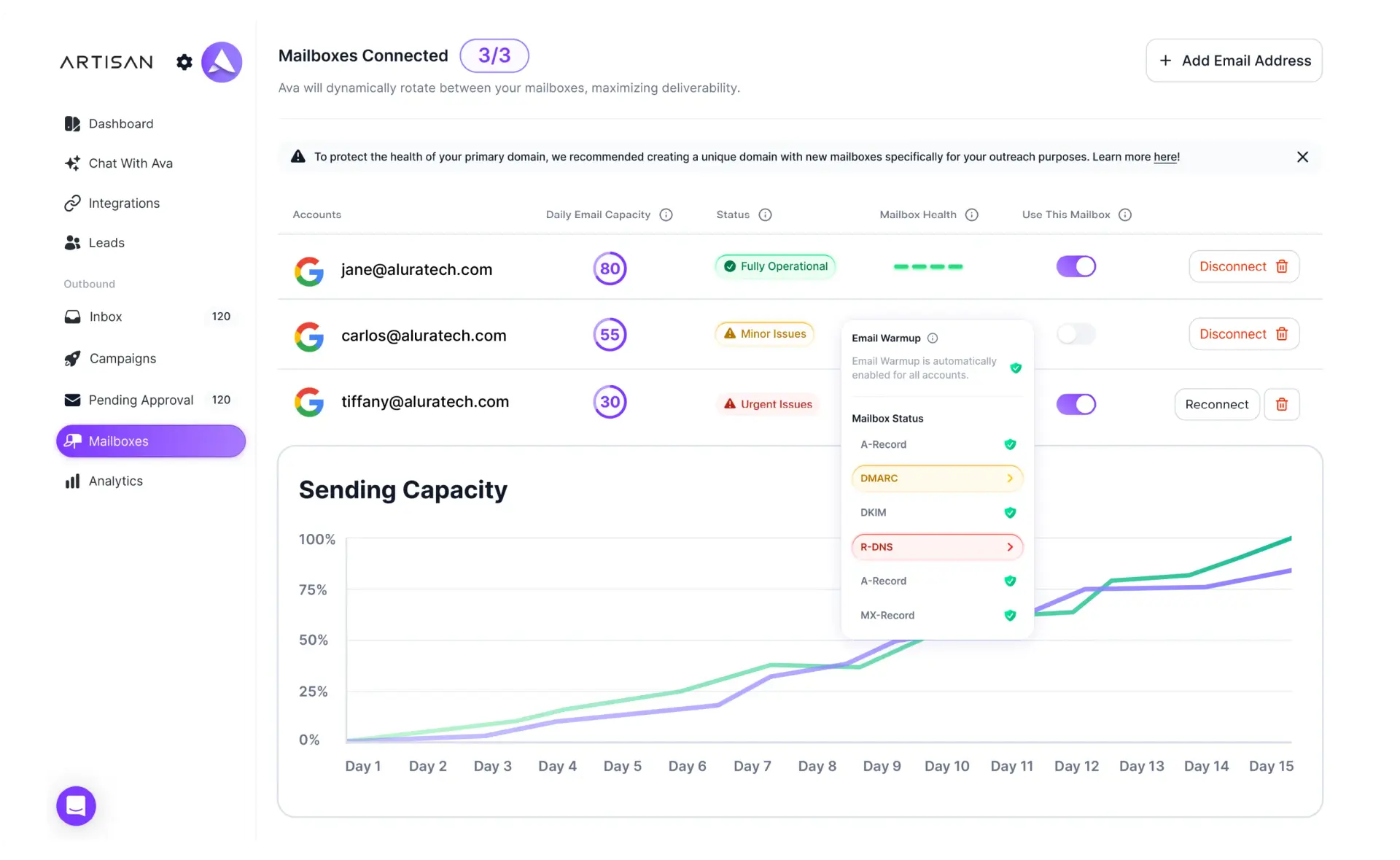
Artisan ensures emails reach inboxes thanks to ongoing deliverability optimization, including mailbox health checks, warm-ups, and bounce testing. After all, there’s no point in painstakingly planning your marketing campaign if messages land in the spam folder.
Your Next Event Can Sell Out
Your sales don’t have to stall. With a clear strategy, data-backed decisions, and the right tools, you can turn slow ticket sales into a sell-out success.
With Artisan, you can prospect and connect with hundreds of prospective attendees every day. AI BDR Ava runs your outbound lead gen system on autopilot, allowing your marketers and reps to focus on those all-important human tasks.