A sales rep who can generate leads with cold calls is a force to be reckoned with. The phone, after all, is the fastest path to rapport with a potential buyer.
In this guide, you’ll learn cold calling tactics, scripts, and processes that will help you master the art of the B2B cold call.
Afterwards, no sales quota will be out of reach.
Before You Dial, Set Yourself Up to Win

Failing to prepare before a cold call is a one-way ticket to the dial tone. That’s why it’s vital to research the lead and their company, draft a personalized script, and call at the right time to improve your chances of booking a meeting.
Start with Research That Actually Matters
Don’t just skim your lead’s LinkedIn headline and call it a day. Gather intel that will allow you to identify their pain points, personalize your cold call opener, and speak to their interests.
Use the following sources for lead data:

Recent social media posts and profiles to uncover interests and connections
The company website to learn about their business
The Team/About Us page for job responsibilities
Recent industry or company news sites for trigger events
Intel already in your CRM, such as past interactions, purchases, and call notes
Aside from just gaining a contextual understanding of their situation, you're primarily looking for some piece of information you can use in your opener as a reason for calling them—preferably one that piques the lead’s attention and makes them feel like you did your homework.
For example, in my days as an SDR at a proptech company, if I discovered which software they were using for property management, I’d often open calls with something along the lines of “I noticed you’re using [a competitor]. A lot of our clients also did, too. How’s that going?”
Before placing a call, research the following about the lead and their business:
Lead name
Job title and core functions
Company name
Industry
Mutual connections (these are excellent for a credibility-building opener)
One to two potential pain points
Relevant buyer persona
A recent trigger event (expansions, funding, events, promotions, etc.)
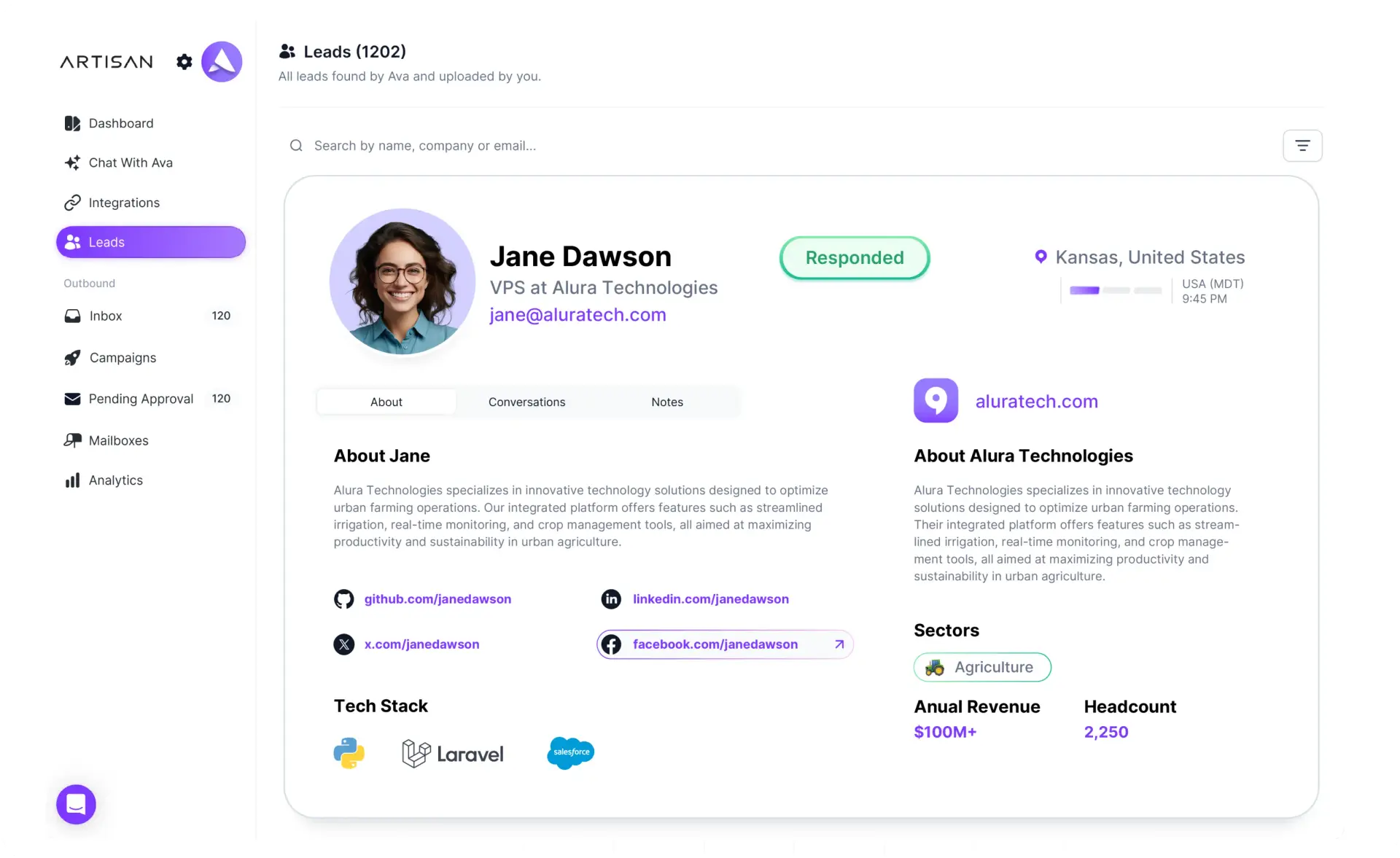
If you’re looking for a way to streamline this data gathering, AI tools can automate pre-call research. For example, you can use Artisan’s B2B data enrichment tool to enrich all lead records with data like job title, company insights, technology use, and even buyer intent data.
Pick the Right Time (and Phone Number)
Cold calling is best done in blocks of 45 to 90 minutes. This allows you to get into a focused flow state and perform at a high level without burning out.
It’s a good idea to schedule these blocks at the same time every day, so as to make it a habit. When I was a sales development representative (SDR), I’d perform a 90-minute block first thing every morning since it was the hardest and most important part of my day.
When deciding on a time for your personal cold calling blocks, consider when you’re freshest and most alert.
Combine this with data on what days and times leads are most likely to pick up:
Tuesday, Wednesday, and Thursday are the days with the highest cold call connection rates, according to ZoomInfo’s analysis of over 1 million sales calls.
Between 4 PM and 5 PM and 11 AM and 12 AM are the best times to place cold calls, according to a study by CallHippo.
While these are useful guidelines, the best time to place a cold call depends on the work habits of leads in your target industries. I cold-called property managers in the mornings because I expected them to be out in the field in the afternoon, and thus less likely to answer.
Now, if I’d had access to their mobile phone numbers, maybe that would’ve changed my approach. Direct dial and mobile numbers heighten your chances of contacting decision-makers because you can reach them away from their desk and bypass gatekeepers.
If you want to quickly identify the best times for your industry, use an AI tool that analyzes past call data to identify the times at which leads were most responsive.
Outline Your Script, Don’t Memorize It
A cold call script should help you confidently open, navigate, and close your cold call. It helps you personalize the conversation based on the lead’s interests and responsibilities. What it shouldn’t do is make you sound like a robot.
Build a flexible “talk track” outline that covers the following key call moments:
Opener: Tell the lead who you are and a little about your company.
Example: “Hi [name], this is [your name]. I head up new business at [company name], which works with many [company type] brands like yours. Have you heard our name before?”
Reason for calling: Tell the lead why you’re calling. This has been found to boost success rates by 2.1 times. Connect your reason to something you learned during lead research.
Example: “The reason for my call today is that I noticed on LinkedIn you were recently promoted to Content Marketing Director at [their company].”
Pain point question: Ask them if they’re experiencing any of the pain points you identified.
Example: “A lot of the new directors we work with came to us because they were struggling with team management demands and had a serious lack of visibility into project progress. What has your experience been in the new position so far? Do any of these issues resonate with you?”
Solution hint: After gathering information about their situation, make a hint at a feature, service, or product that could help them overcome their challenges.
Example: “We actually have a project management tool made specifically for content strategists. It has helped customers like [reputable client name] boost output by 43% with significant improvements in content quality.”
Meeting request: Make the ask for a meeting.
Example: “Would you be open to a 20-minute web demo where you can learn more about how this tool could help you?”
You’re going to say a lot more than these scripted talking points during the call. But you only need to script the most predictable and important moments. This balance of scripted and improvised cold calling will help you strike a human yet intentional style that regularly books meetings.

The First 30 Seconds: Hook or Hang Up

You have maybe thirty seconds to convince the lead you’re worth talking to. Make it count. You need to nail your opening line if you’re going to come off as a genuine person interested in problem-solving rather than selling.
Nail the Opening
The opening is where you introduce yourself, provide context, and earn permission to have a full conversation. It’s essential that you use a strategy that disarms and intrigues the lead.
Here are the two best opening line formats according to Gong’s analysis of 300M cold calls:
The “Have you heard of me?” opener: This confident opener generates instant credibility. It’s a lesser-used opening, so it still stands out.
Script: “Hey [name]. We work with a few companies in [lead’s industry]. It’s [your name] from [company name]. Heard our name tossed around?”
The permission-based opener: This honest opener dispels tension by admitting upfront that you’re making a cold call.
Script: “Hey [name]. I just saw your recent post online about [relevant company news]. I’m going to be honest—this is a cold call. Can I get 30 seconds to prove to you that I can help you [value proposition]?”
Never open with “Did I catch you at a bad time?”
Gong found this to be the least effective opener. This is probably because in business, every time is a bad time to field a random call from a stranger. All the lead has to say is “yes,” and BAM, it’s over. You’ve just spoon-fed them an objection you cannot overcome.
Sound Human, Not Scripted
Nobody wants to talk to some humorless robot. They want someone sharp, confident, and knowledgeable.
Here are four tricks for sounding like an expert that leads want to talk to:
Modulate tone and pacing: Vary speaking speed and energy level throughout the conversation. Slow down for important points. Pause to think of a response to a lead’s statement. This variety in speech proves you’re not reading from a script.
Stand or walk: I used to make my calls standing because, for whatever reason, when I paced, my mind was more alert and agile, and my voice more confident.
Smile and dial: Smile while the phone is ringing. It will put you in a friendly, happy mood that comes through in your tone of voice.
Power pose before the call: Stand tall like Superman with your chest up and your hands on your hips. This tricks your brain into feeling confident. I used to do it as an SDR before big calls, and I still do it before sales calls with freelance writing prospects.
During the Call: Build Trust and Book the Meeting
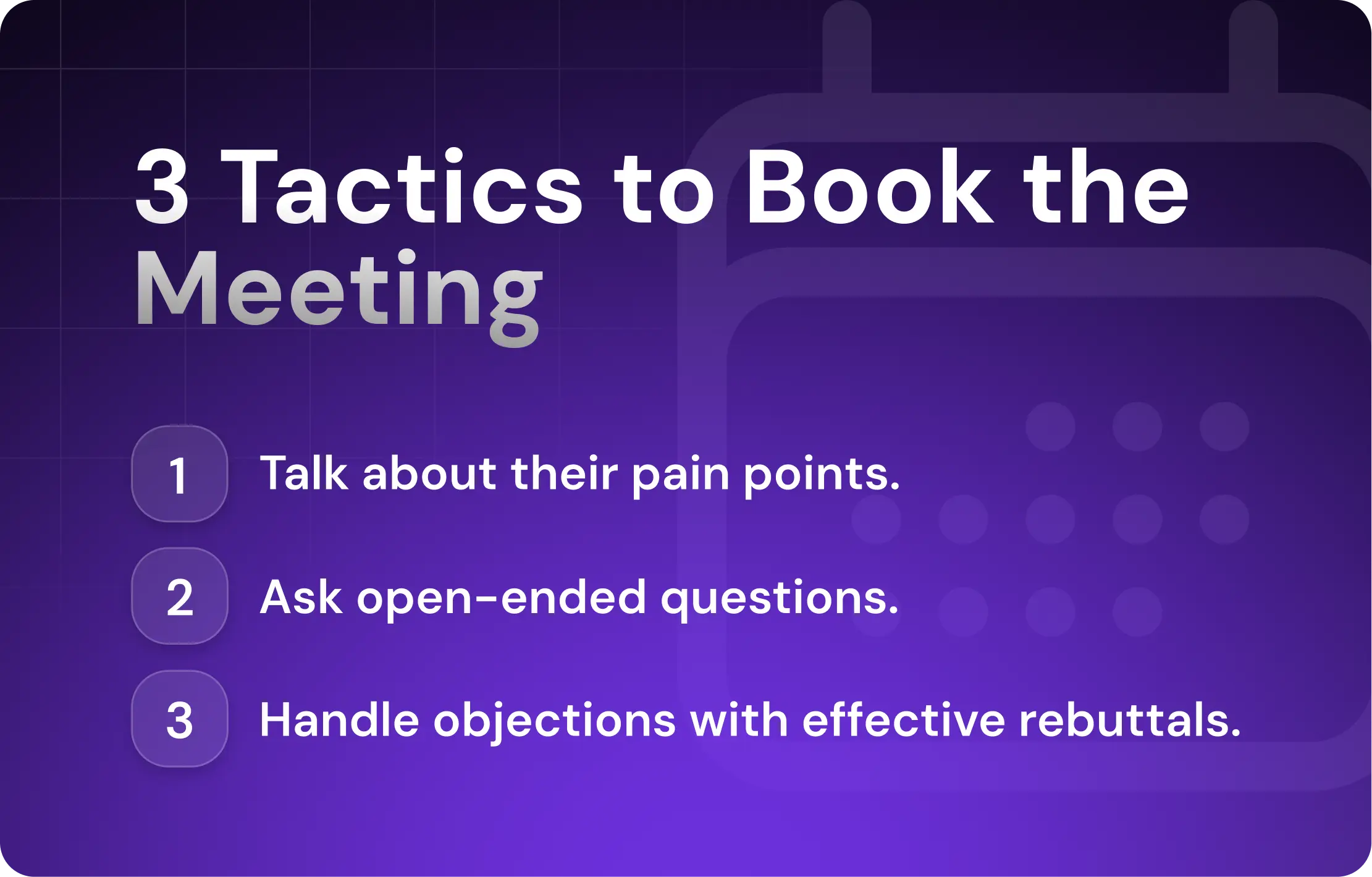
The goal of a cold call is not to sell your solution. It’s to book a sales meeting. To spark interest in a meeting, focus on pain points, ask smart open-ended questions, and handle objections with tact.
Focus on Pain Points, Not Product Features
Blabbing about features positions you as a salesperson. Mentioning pain points, on the other hand, positions you as a problem-solver, and every smart businessperson wants a problem-solver on their side.
Steve Case, a consultant at insurance comparison site Insurance Hero, follows this philosophy. He says that when a lead hears you mention their struggles, their ears perk up: “Start off by naming the single strongest pressure the customer feels each day. Hearing someone name your problem quickly gets your attention more effectively than all the fluff you tend to hear from salespeople.”
How does this apply in practice? After your opening line, mention one or two pressing pain points the lead is likely to be experiencing. So it doesn’t feel like you’re pointing fingers, frame these pain points as issues that your other customers are suffering from.
Here’s an example of a pain-point question that an SDR could ask after opening a call:
“A lot of NYC property management businesses have been coming to us recently because they’re sick of getting slammed with expensive fines and failing inspections that cost them buckets in legal fees. Does that sound familiar?”
When you do start to finally talk about your solution, describe it quickly in a one to two sentence elevator pitch that focuses mainly on the amazing outcomes the lead will receive, not the features.
Remember that you’re teasing the solution to generate enough interest to secure a sales meeting where you can tell them more about how your solution works.
Ask Smart, Open-Ended Questions
Open-ended questions are like rocket fuel for sales conversations.
They prompt leads to share details about their challenges, process, and goals. Uncovering this intel helps you spin a relevant pitch when it comes time to ask for the meeting.
Here are five questions that will help you understand and qualify leads on cold calls:
How are you currently handling [pain point] today?
What’s been the biggest challenge with your current approach?
If you had a magic wand and could fix one thing about [pain point], what would you choose?
When you think about improving [key KPI], what’s most important to you?
You’ve stayed on for a minute—I’m curious, what prompted you to take this call?
While questions are powerful for rapport builders, it’s important to remember that a cold call is not a discovery call. The lead has not permitted you to ask ten questions about the inner workings of their business. Rather than generating goodwill, peppering the lead with too many questions can actually hurt your chances of winning a meeting.
In fact, according to data from Gong, cold calls where the rep does more of the talking (55% talking and 45% listening) are more successful than cold calls where the rep predominantly listens. In other words, ask a few questions, but focus on persuading them to book a meeting.
Handle Objections Without Panicking
The three most common cold calling objections, according to Cognism’s Cold Calling Report, are “I’m not interested,” “We don’t have that problem,” and “We already have something for that.”
Here are effective rebuttals to these objections:
“Not interested”: “That’s okay. I wasn’t interested in Settlers of Catan until my buddy made me play a round. Now I’m an addict. But seriously, most of our clients weren’t interested at first. Can I get 20 seconds to prove that I can help your business?”
“I don’t have the problem you’re describing”: “We hear that a lot. But after a look under the hood, we often find this issue is the core reason our clients are struggling to achieve [desirable goal]. I’m curious—how are you handling [process related to problem] at the moment?”
“We already have a solution for that”: “Understood. It can be annoying to switch vendors. Tell me—what’s the biggest challenge you’re having with your current [software/provider/vendor]?”
Notice how in almost all of these rebuttals, we’re acknowledging the objection and then redirecting the lead’s attention with a question. We’re never bulldozing.
Instead, we show the lead we’re listening to their concerns. This builds trust and rapport while also encouraging them to reveal more information about their situation, which we can use to demonstrate the value of taking a meeting.
Listen, acknowledge, explore, and respond—handle objections with this four-part framework, and you’ll find more leads coming to your side of thinking.
After the Call: Follow-Up Like a Pro

Follow-up is key in cold calling. Sending follow-up emails, voicemails, and multi-channel outreach automation nurtures leads and keeps sales opportunities alive.
Always Send a Follow-Up Email (Here’s a Template)
Irrespective of whether a cold call ended in a booked meeting or “no thanks,” send a follow-up email recapping the conversation, reaffirming the value of a meeting, and describing next steps. Send it within an hour of the call so you’re still fresh in the lead’s mind.
Here’s an effective follow-up template for leads that said “yes”:
Recap: “It was great talking with you today, and thanks for taking the time to share with me how your team is [one to two sentence description of any goals, problems, or challenges they mentioned].”
Reason: “I’m looking forward to learning more about [process you’re focused on fixing] and showing you how [product/service] can help you achieve [desired goal].”
Meeting Details: “I’m looping in our product expert, [AE name]. Your meeting is confirmed at [time] on [date]. They’ll dig into what you shared today and give you a walkthrough of how [service/product] could help.”
Here’s a follow-up email template for leads that said “no”:
Recap: "Thanks again for taking some time to talk with me today. It sounded like you were [summary of situation in one to two sentences].”
Reason: “Completely understand that right now isn’t a great time. That said, I still think that [product/service] would be a good fit to help you [relevant value proposition].”
CTA: “If anything changes and you want a quick walkthrough to see if this is worth revisiting, feel free to reach out anytime. And here’s a [blog post, report, video] I thought you might find interesting.”
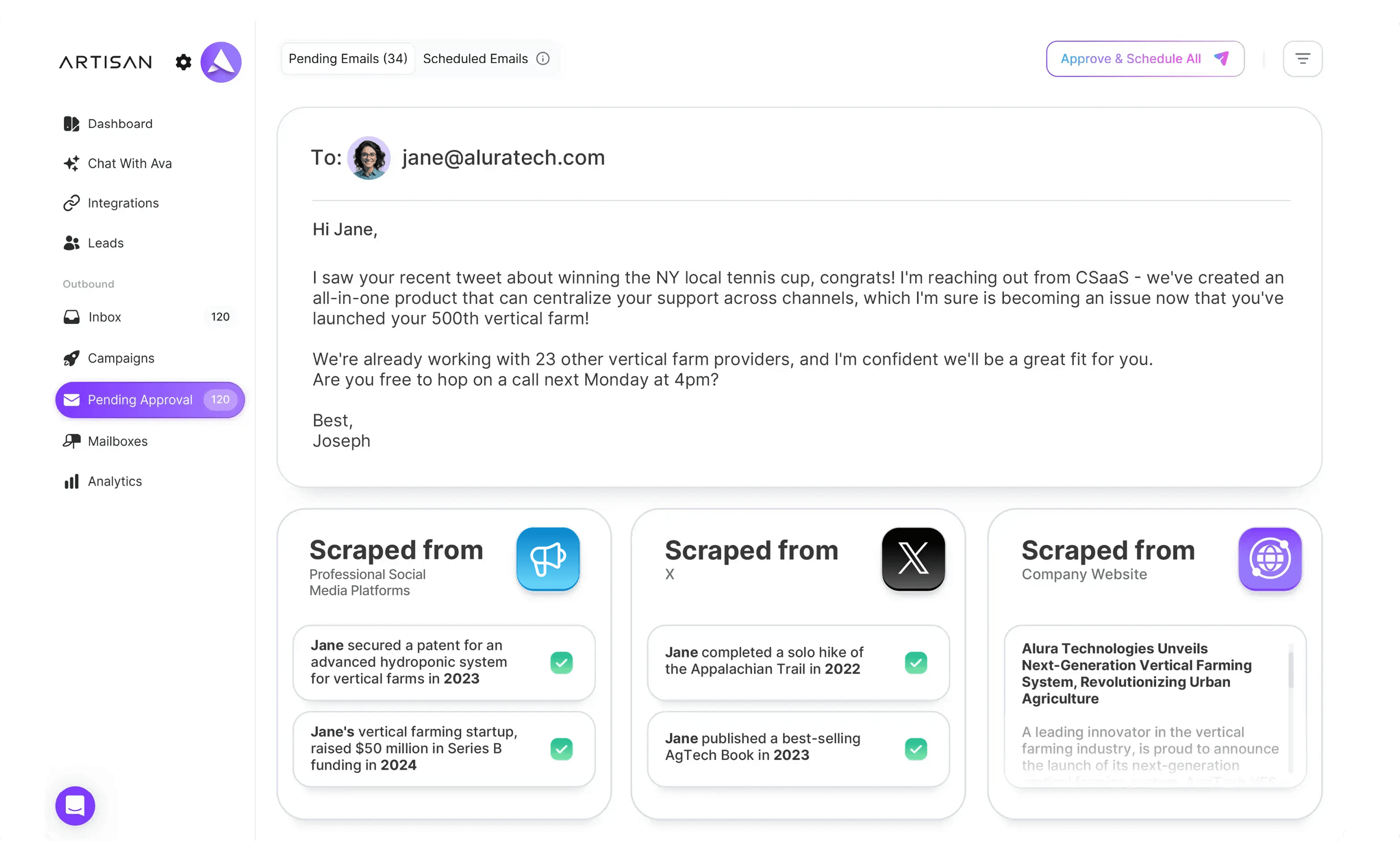
While follow-ups are powerful, sending them is time-consuming. That’s why reps are increasingly turning to AI to automate follow-up at scale. An AI BDR tool like Artisan personalizes and delivers these emails instantly, ensuring no follow-ups fall through the cracks.
Voicemails That Don’t Get Deleted
Voicemails can help you turn failed connections into second chances via email. In fact, according to Gong’s cold calling data, leaving a voicemail nearly doubles the reply rate of cold emails (which you should be sending alongside cold calls).
Here’s how to leave a strong voicemail:
Keep it under 20 seconds.
Say your name and number twice.
Be specific about why you’re calling.
Mention one to two pain points to get their attention.
Include a clear CTA.
Here’s a short yet powerful voicemail script that encourages leads to call (or email) back:
“Hi [lead name].
This is [your name] from [company name]. We’ve been working with [similar company], and they just achieved [specific outcome] with our [one-line description of solution].
Based on the fact that you’re [research about lead’s business, like size, revenue, or news], I thought we could do the same for you.
If interested, call me anytime at [phone number].
Again, this is [your name] at [company name].”
Finally, use the voicemail drop feature in your cold call or power dialer software to automatically leave prerecorded voicemail messages with a single click, as opposed to manually leaving one for every call.
Build a Multi-Touch Follow-Up Sequence
Never give up after one failed attempt to connect. Instead, run a multi-touch sequence to engage the lead from all sides and warm them up before your call.
Here’s a 7-touch cadence, spaced over 14 days, you can use to follow up and get a meeting:
Day 1: First cold call and cold email
Day 3: Follow-up email
Day 5: Social media connection request with message
Day 7: Second cold call
Day 10: Second email
Day 14: Final cold call attempt and email
Managing all these touches in addition to cold calling can be taxing mentally. Modern sales teams often use AI BDRs like Artisan's Ava to automate this process. She can craft and send personalized emails and social media messages in intelligent sequences, freeing reps to focus on speaking to leads directly.

Cold Calling at Scale: Use AI to Multiply Your Output
By automating busywork and feeding you lead data, AI can help you make more cold calls in less time. All while improving the quality of those cold calls. You can use AI SDR tools, CRM integrations, and sales playbooks to create a highly scalable cold calling process.
Meet Ava: Your AI SDR
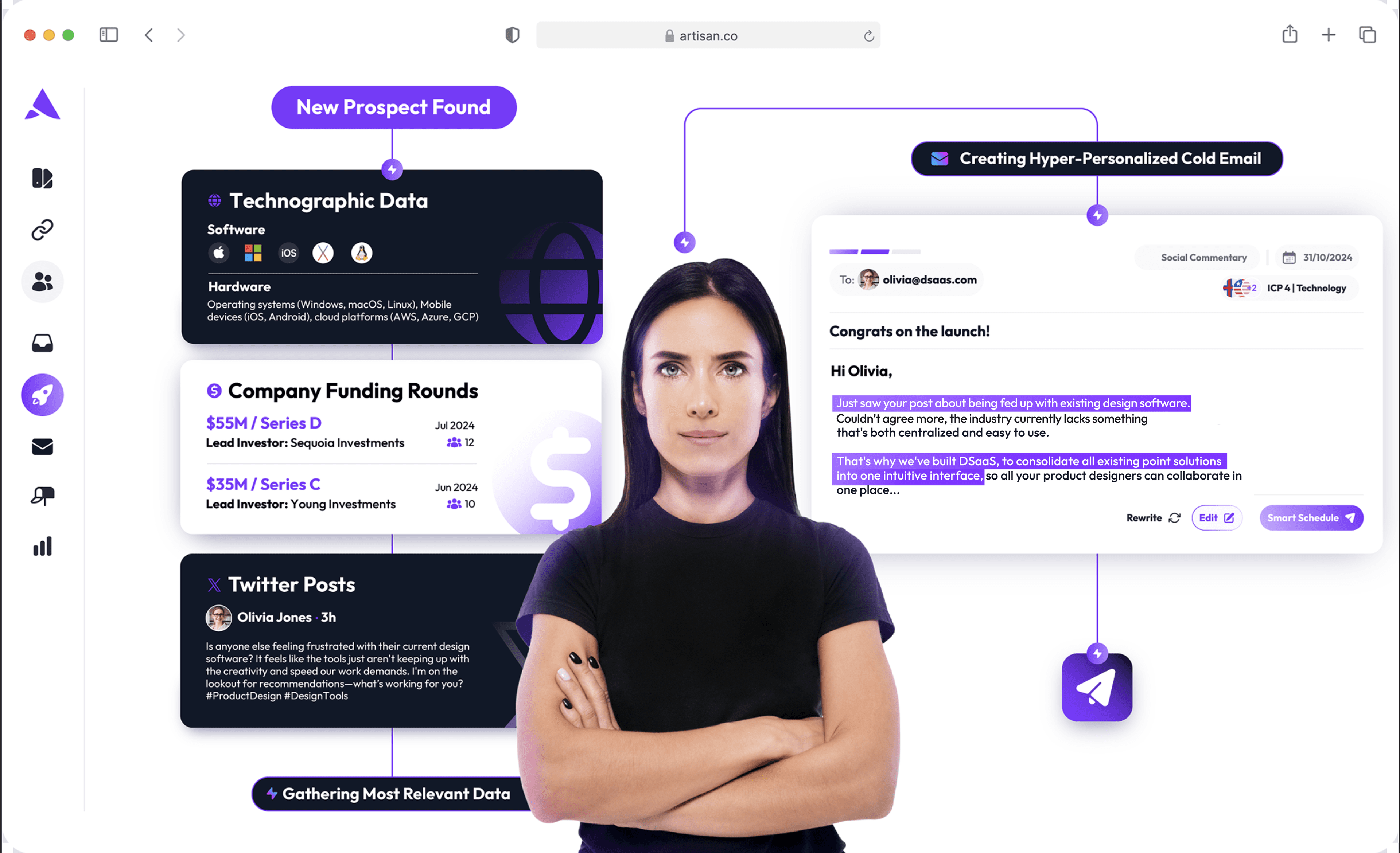
Artisan is an outbound AI sales platform that automates all of the early and middle stages of the cold outreach process.
The platform’s AI SDR is called Ava, and she handles the following tasks:
Finds ICP-fit leads
Researches them on social and the web
Runs targeted multi-channel outreach sequences
Follows up on social media and email
Monitors replies
Routes hot leads to humans
This isn’t just automation—it’s smart delegation. AI BDR Ava manages the cold outreach for your team, warming up leads and booking meetings on autopilot so your SDRs can focus on cold calling.
Plug into Your CRM so Things Don’t Fall Apart
Track calls and meeting notes in your CRM. Otherwise, you and your team members will lack important context about the lead’s buying situation and past interactions.
The best way to do this is to connect your phone system with your CRM. HubSpot, Salesforce, and other popular CRMs offer seamless integrations.
Some CRMs even include built-in dialing solutions. For example, Salesforce Dialer allows reps to place calls directly from the Salesforce platform. After the call, reps can quickly jot down notes in the CRM—no more bouncing between apps or double data entry.
Let Playbooks Do the Heavy Lifting
A sales playbook is a collection of sales scripts, processes, and best practices for cold calling. It serves as a reference guide for your SDRs, showing them how to execute each move in the process. Playbooks, therefore, boost productivity and ensure consistent messaging.
Here are the major components of a cold calling sales playbook:
Buyer personas
Scripts for these different buyer personas
Rebuttals to common sales objections
Step-by-step outline of the cold calling process, from list creation and lead research to scheduling the meeting and following up
Voicemail scripts
Key metrics (like the ideal number of calls to make per day)
What to Track (and How to Actually Improve)
Tracking cold calling metrics is how you confirm your processes are working, spot areas for improvement, and hone best practices. Ideally, you should review data on a weekly or monthly basis.
Key Metrics to Monitor
In your CRM or sales enablement tool, set up a dashboard to track key cold calling metrics. Visibility into cold call data helps you spot what’s working and what isn’t, so you can optimize your approach and scripts.
Here are the most important cold calling metrics to monitor:
Calls per day: The number of cold calls made per day by a rep. Most SDRs aim to make between 30 and 60 calls per day.
Connect rate: The rate at which a cold call results in a conversation with a decision-maker. This gives you insight into how to optimize call times.
Voicemail-to-callback ratio: How often a cold call voicemail results in a callback from a lead. This is useful for measuring the effectiveness of your voicemails.
Meetings booked per 100 calls: The average number of meetings booked per 100 cold calls. Between 1 and 3 per 100 is standard.
Number of quality conversations: The number of cold call conversations that last over one minute. This helps you understand the effectiveness of your opening lines.
Conversion-to-meeting ratio: The percentage of quality conversations that turn into a booked meeting. Helps you measure the effectiveness of your CTA and closing strategy.
Learn from the Data, Don’t Just Dial Blind
Hold weekly meetings with your sales team to review top objections, exemplary cold calls, and which scripts booked the most meetings. If you’re using a conversational analytics tool, present any new insights generated by the platform and listen to recordings with coachable moments.
After the meeting, tweak your sales playbooks based on what you learned. Consistent review and iteration in this way is how you steadily march towards an optimized cold calling process.
Cold Calling Tips from Top Reps
What can we learn about cold calling from hostage negotiators, top sales trainers, and cold callers so good they had movies made after them?
Here are insider cold calling tips that’ll help you book more meetings:
Use the word “fair,” as in “sound fair?” or “fair enough?” In the Stratton Oakmont sales training guide (The Real Wolf of Wall Street), the word “fair” appears nine times across cold call scripts. According to Gong's cold call data, it’s one of seven words that sell.
Open with “I head up new business at X” instead of “I’m an SDR at X.” This creates authority, according to Mike Weinberg in his classic book New Sales. Simplified.
Never multitask during a call—immerse yourself in the conversation. When I was an SDR, I used to stand and pace, so I wasn’t even looking at my computer.
Use silence. Don’t rush to fill the gap—leads fill it for you, revealing key intel. This is based on a key negotiation tactic from hostage negotiator Chris Voss.
If you feel a lot of resistance, make failure your goal. I’ve heard of new SDRs setting failure-based goals like “I’m going to fail 30 cold calls today,” as a way to get over their fear of failure.
Be a scout on the call. An account executive called Willie McDonald told me that “tech and automation give us access to a ton of lead information these days, but it’s on the cold call where you can really get a true picture of the lead’s unique day-to-day pain points and needs.”
Here’s a final tip to round off the list: creatively visualize. Hang with me here. The first time I surpassed 150% of my sales quota was the quarter I started my visualization practice. I wrote, “I will book 66 meetings by quarter’s end,” in my planner. Before bed I would close my eyes and recite those words to myself, see the number in my mind’s eye, and feel what it would be like to get that commission. I ended that quarter with 65 booked meetings, nearly twice as many as the previous quarter.
Tools to Make Cold Calling Work (Without Burning Out)
There’s a lot of hidden work involved in a cold call, from researching the lead to dialing the number and following up. Fortunately, there are sales tools designed to automate these tasks and help you scale your outreach.
Here are the main app categories and what they do:
Sales dialers (e.g., Nextiva): Automate dialing to maximize connection rates and reduce manual work.
CRMs (e.g., HubSpot, Salesforce): Capture lead information and track interactions to keep calls personalized.
AI note-takers (e.g., Fathom, Otter.ai): Automatically transcribe and summarize cold call conversations so you don’t have to take manual notes.
Sequence automation (e.g., Artisan): Schedule and send personalized follow-up emails and social media messages to maintain consistent outreach.
Objection trackers (e.g., Notion, Gong snippets): Capture and categorize common objections to refine your rebuttals over time.
Conversation analytics/coaching tools (e.g., Gong, Clari): Analyze call patterns to identify cold call best practices and individual and team coaching opportunities.
Let’s Make Cold Calling Less of a Grind
Cold calling becomes a lot more fun once you’re regularly booking meetings with cold leads.
But it can be hard to get enough practice if you’re always spending time doing non-calling work like finding leads, researching leads, and writing follow-up emails.
Modern sales teams are using Artisan’s AI BDR software to automate these tasks, allowing reps to spend more time doing what cannot be automated—having engaging conversations with leads, booking meetings, and closing deals.