How to create a B2B customer acquisition strategy
Learn how to create an effective B2B customer acquisition strategy. From targeting and lead gen to automation, this guide covers it all.
Customer acquisition and customer retention. Get those two growth factors right, and revenue will take care of itself.
Today, we’re going to help you with the acquisition side of the growth equation.
We’ll walk you through the core components of B2B customer acquisition, the nine most effective acquisition tactics, and how to create and optimize your growth formula.
What Is a B2B Customer Acquisition Strategy?
A B2B customer acquisition strategy is a structured plan to attract business leads and convert them into loyal customers.
To create this strategy, B2B sales leaders and marketers identify their target audience, craft relevant value propositions, pick the right sales channels, and map out the outbound and inbound sales and marketing tactics they’ll use to target, engage, and close new leads.
Unlike its B2C cousin, B2B customer acquisition has to overcome two unique challenges:
Longer sales cycles: Solutions tend to be expensive and complex, which means more sales meetings and marketing touches are needed to build sufficient trust with prospects.
Multiple decision-makers: Businesses must create messaging for each buyer persona—for example, a software brand might create one email campaign for execs and another for middle-manager end-users.
To create a sense of urgency and win over each stakeholder on the evaluation committee, the best customer acquisition strategies emphasize pain points in their messaging and build trust through tailored, automated lead nurturing.
Why Customer Acquisition Matters for B2B Companies
Companies should invest thought and time into building an optimized customer acquisition for three main reasons:
Repeatable processes: An established strategy gives revenue-facing teams repeatable processes for attracting and closing new customers.
Departmental alignment: A unified strategy also aligns marketing and sales so they can create campaigns that support shared goals.
Predictable growth: As a result of the two preceding benefits, the business has more predictable, sustainable revenue.
We all know we need more customers. A strategy outlines how you’ll sustainably do that month by month.
Core Components of an Effective B2B Customer Acquisition Strategy
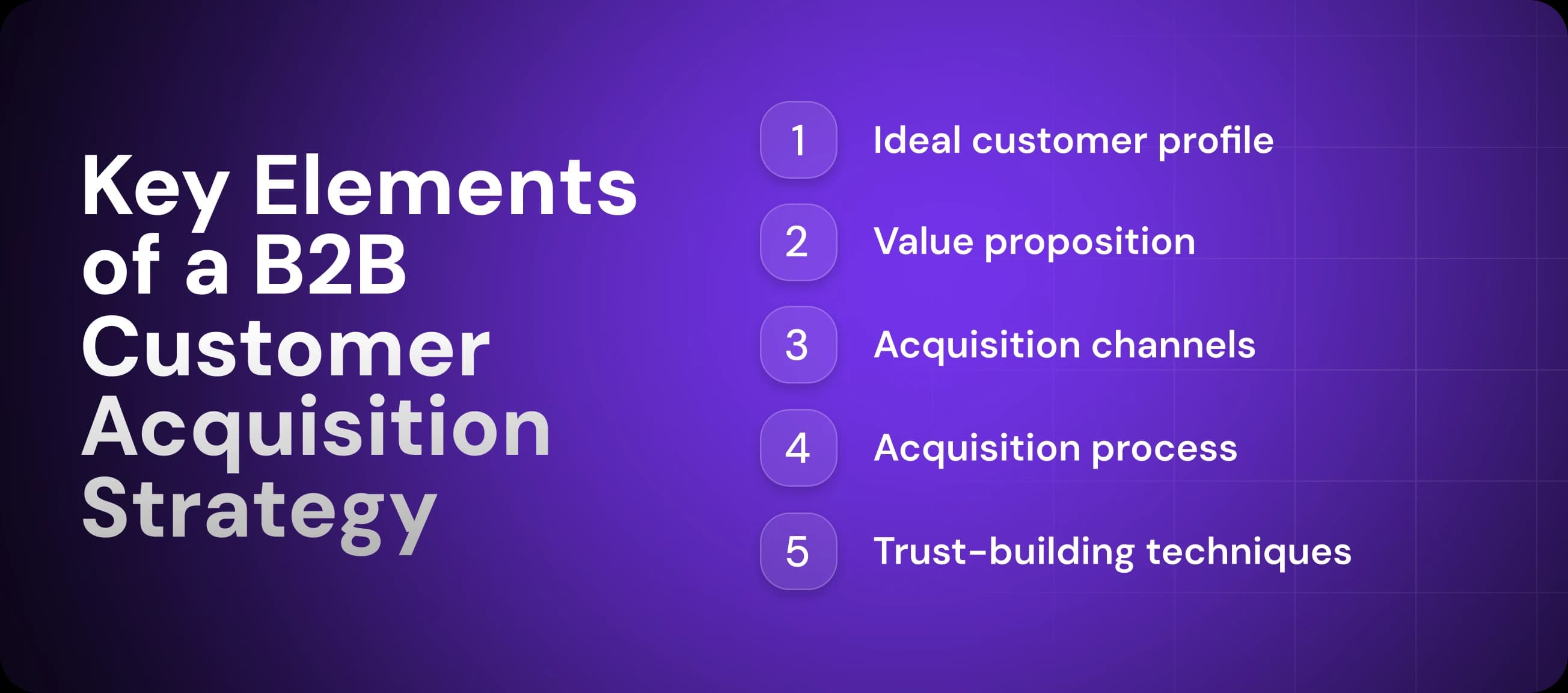
The most effective B2B customer acquisition strategies share five key steps:
Identify your target audience and ICPs.
Craft compelling value propositions.
Select proven and promising acquisition channels.
Clearly map the customer acquisition process.
Build trust before pitching.
Let’s look at each of these stages in depth.
Identifying Your Target Audience and ICP
To determine which leads to pursue, create an ideal customer profile (ICP)—a description of the accounts that will receive the most value from your product or service.
A strong ideal customer profile contains the following information:
Industry
Location
Company size and revenue
Challenges
Goals
Pain points
Since you’ll be pitching to actual people, not office buildings and storefronts, you also need to create a buyer persona. This is like an ICP, but instead of describing an ideal corporate account, it outlines the target professionals within those businesses, detailing their job titles, demographics, goals, fears, and motivations.
Knowing both your ICP and buyer personas enables you to identify high-quality leads and craft resonant messaging.
Crafting Value Propositions and Messaging
Create value propositions and competitive messaging for your various campaigns and marketing assets, from landing pages and ads to cold emails and even sales scripts.
Remember to connect your solutions to pain points and benefits. In fact, after every piece of messaging you create, ask yourself, “Where are the pain points and benefits?” If you don’t see them, it’s time to rework.
For example, on our homepage, we don’t just blabber about AI sales agent technology. We emphasize the benefit clients care about up front: how Artisan automates outbound sales and drives more revenue.
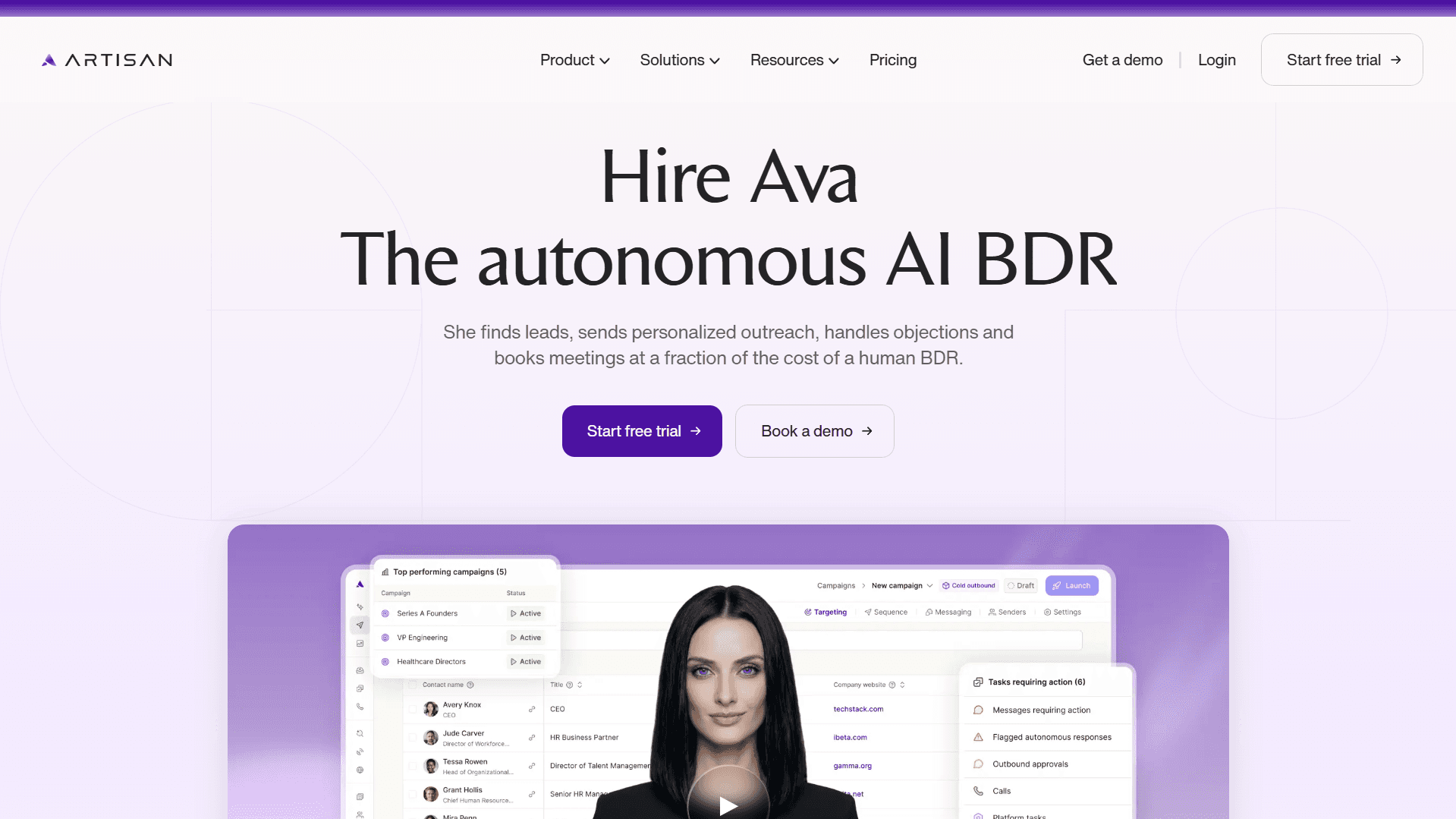
Social proof is another essential aspect of a B2B acquisition strategy because it helps build the high level of trust that is necessary to convert prospects into buyers. So don’t forget to weave in testimonials and ratings and use figures in your messaging.
Selecting Acquisition Channels
The best customer acquisition strategies include a mix of inbound and outbound channels.
Here are the most common acquisition channels:
Email marketing campaigns
LinkedIn direct outreach
SEO and content marketing
Online and in-person vents
Paid advertising
Cold calling
When assembling your mix, consider where your customers are most active. You can do this using industry reports and by studying your competitors. Then, focus on those channels. Track which ones have the highest conversion rates and double down when you have enough data.
Mapping the Customer Acquisition Process
A “map” of your customer acquisition strategy is a visual outline of how you’ll attract, educate, and close new leads at a high level.
It should be broken into three stages, each including its own set of sales and marketing strategies:
Lead generation: Attract leads and build interest in your solution (opting into the sales cycle). Tactics include intent signal tracking, cold outbound sales, email marketing, referral campaigns, SEO content marketing, social selling, and social media ads.
Lead nurturing: Educate qualified leads about their problem and your solution. Strategies include webinars, blog posts, case studies, email nurturing, demo recordings, and introductory sales calls.
Conversion: Persuade interested prospects to sign a contract. This stage is usually handled by account executives (AEs) in meetings.
Breaking your process down into these stages helps your team understand and optimize each one individually rather than trying to wrap your arms around the entire process in one go.
Building Trust Before the Pitch
In B2B customer acquisition, where price points are often high, it’s important to build serious trust with your prospects before making a sales pitch.
Here are the most effective B2B trust-building techniques:
Displaying testimonials on your website and across marketing materials
Asking for reviews of your product or service and publishing them on your site
Creating case studies for different ICPs and buyer personas
Implementing a referral system that incentivizes buyers to recommend your solution
Notice how almost all of these include social proof. While social proof represents one of the best ways to boost trust, it’s not the only way.
Don’t overlook the value of providing insights and expertise that help leads solve their problems, especially if you’ve not had time to build a pool of testimonials or case studies. Once a lead starts to see you as a knowledgeable value provider, they’ll feel more comfortable buying from you.
9 Effective B2B Customer Acquisition Strategies
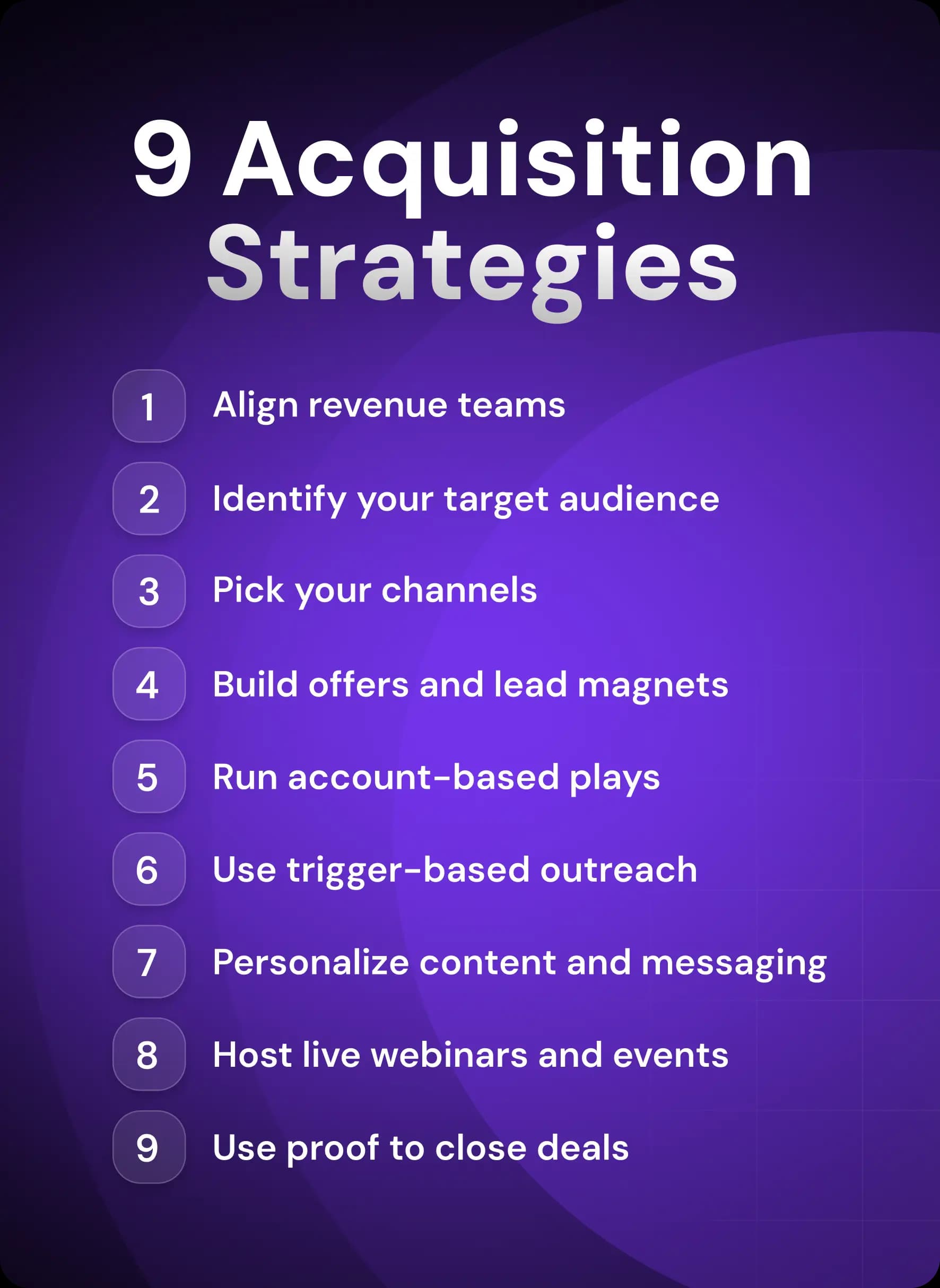
From running account-based plays to implementing buyer intent data, here are the nine best strategies for acquiring new B2B customers.
Step 1: Align Teams on Goals and Metrics
If sales and marketing aren’t aiming at the same target, you’ve already missed.
To align your departments, establish customer acquisition KPIs that both sales and marketing agree on:
Here are three of the best customer acquisition metrics to align your departments around:
Customer Acquisition Cost (CAC): The total cost of acquiring new customers. It helps you understand the efficiency of your acquisition process. Formula: CAC = Total Sales & Marketing Expenses / Number of New Customers Acquired.
Pipeline Velocity: Calculates how quickly new prospects move through your pipeline to become paying customers. Formula: Pipeline Velocity = (Number of Opportunities × Average Deal Size × Win Rate) / Length of Sales Cycle.
New Buyers Per Quarter: This is the total number of new customers acquired in a quarter. It’s a basic indicator of customer acquisition performance.
With both marketing and sales working to boost these numbers, activity and content alignment will follow.
Step 2: Define Who You’re Selling To (and Why It Matters)
B2B customer acquisition isn’t as easy as randomly launching t-shirts into a screaming crowd at a basketball stadium. Not everyone wants and needs what you’re selling.
You have to be more precise. You have to find the guy with the yellow mustard stain. Otherwise, you’ll burn through marketing and sales expenses.
Spend time identifying and studying your happiest, most successful customers. Look for common attributes. Then use what you discover to create a specific, narrow ideal customer profile that helps you identify other high-quality leads.
Here’s an example of a detailed ICP:
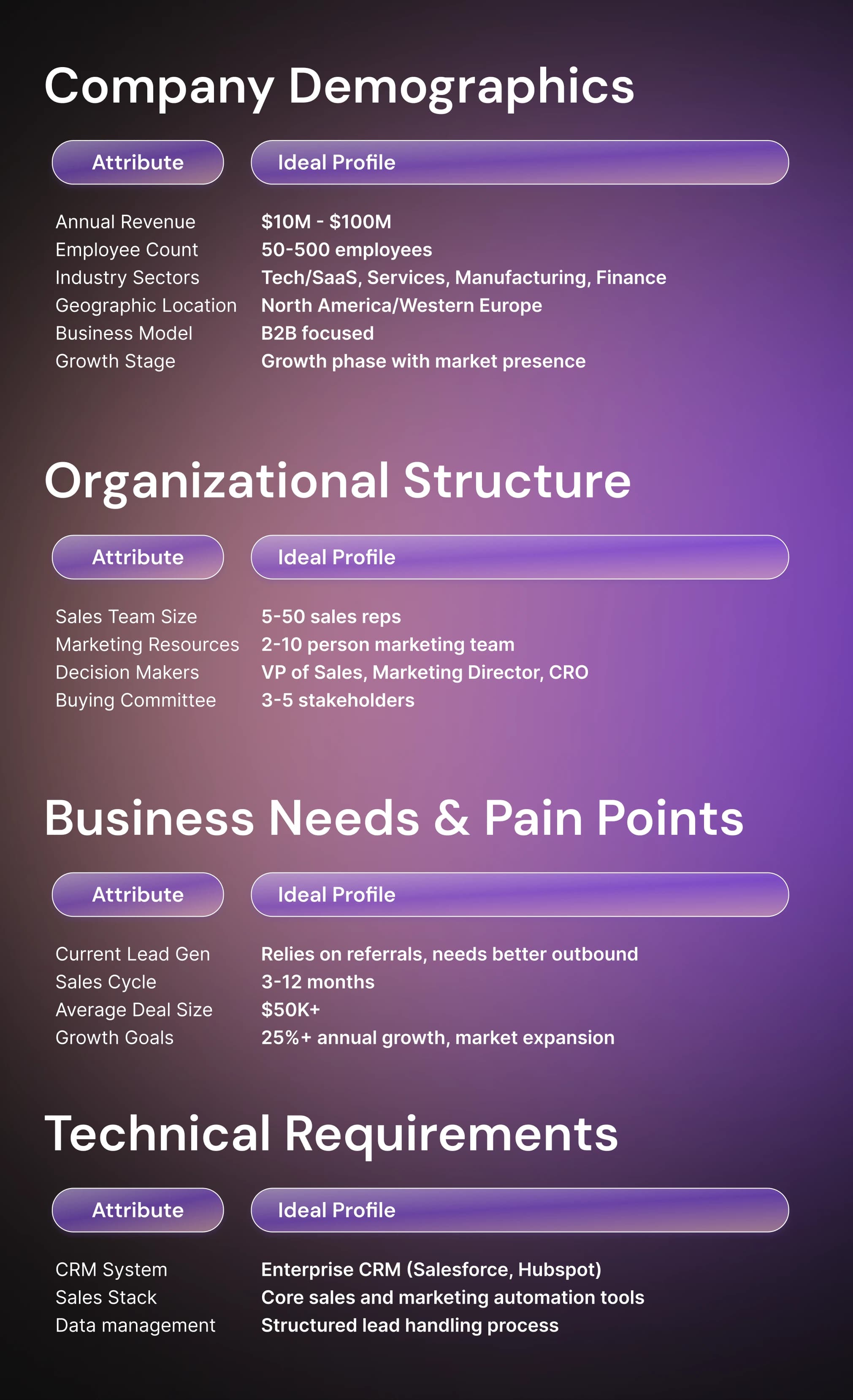
Here are the best ways to learn about your target audience to create your ICP:
Interview your best customers: Ask questions about job responsibilities, interests, pain points, goals, and what motivated them to buy your solution.
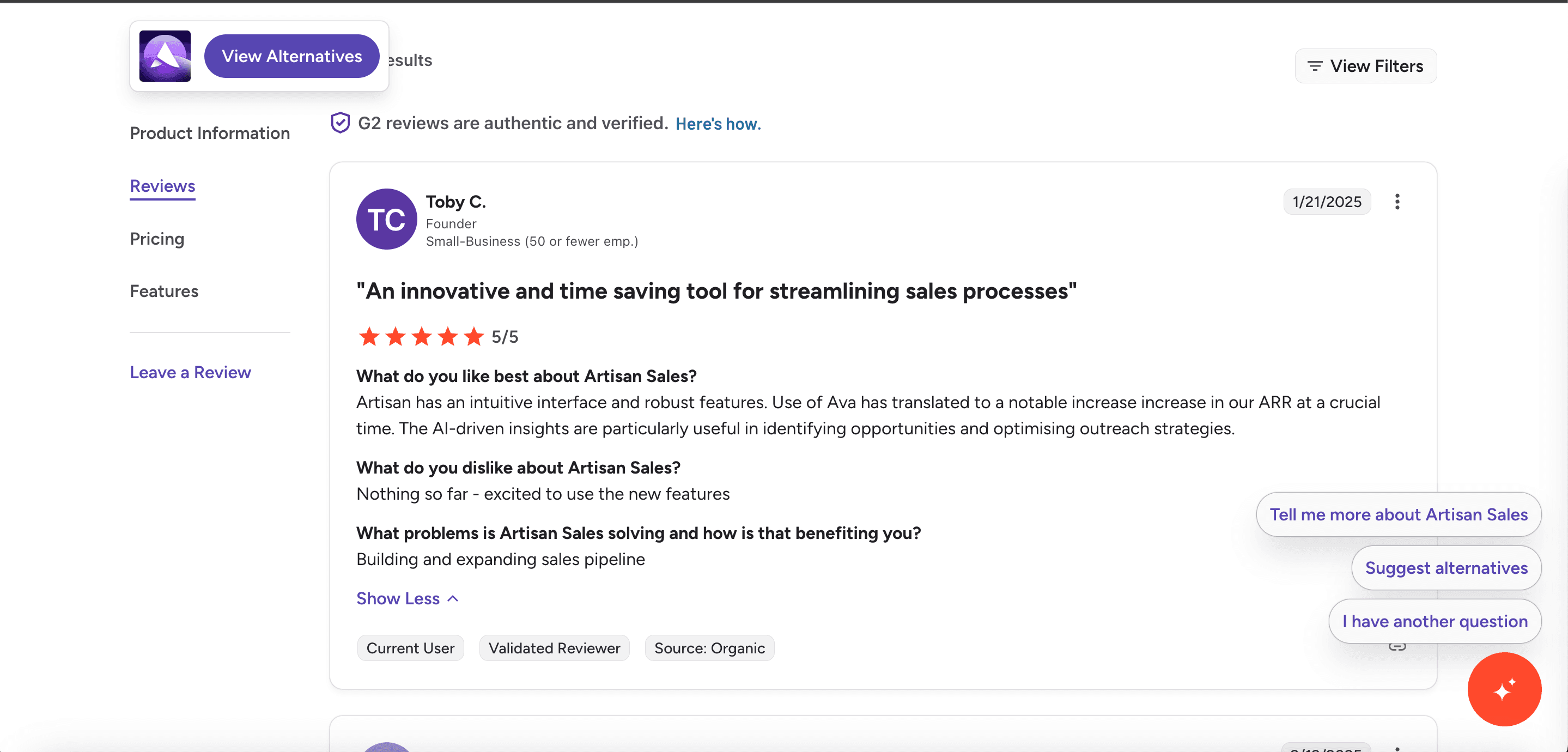
Scrape feedback: Check review sites and customer service tickets to see what customers like and dislike about your product or service. Answers about why buyers are using your solution can be especially helpful, like the comments in the G2 review below.
Dig through your CRM: Analyze your closed won accounts to identify common attributes across demographics, company size, revenue numbers, technology use, and more. If you lack this data, use a B2B data enrichment tool.
When you focus your marketing and sales efforts on businesses and leads that match your ICP, customer acquisition costs drop significantly. Sales is just easier when leads are already perfect matches for your product or service.
Step 3: Pick Your Channels (and Stick to Them)
You don’t need seventeen sales and marketing channels. That’s how you spread yourself too thin.
In actuality, you just need two or three that work well. Start with what fits your ICP best. Where is your audience most receptive? That might be phone, cold email, LinkedIn outreach, SEO, or paid advertising.
Don’t overthink this stage. Action brings clarity. Choose a channel and track metrics to see if it’s paying off. If after a few weeks, it’s generating quality leads, stick with it (SEO will take longer to pay off). If it’s not, try another channel. Once you find a handful that work for your ICP, focus on mastering them.
As a rule, after your two starter channels, adopt a third only once you’ve gained enough proficiency (and automated enough processes) to manage existing channels while investing the time and effort needed to train your team on a new set of channel-specific techniques and sales tools.
Step 4: Build Offers Worth Clicking
Build free lead magnets like checklists, demos, and ebooks that solve big pain points and give leads more value than they expected. This is how you collect contact info while also generating high levels of trust with new leads.
The best lead magnets have the following qualities:
They solve a specific pain point, whether that’s helping the lead research your product (white paper, case study, free trial, demo) or solving a business problem (checklist, template, ultimate guide).
They educate the lead about the importance of your solution, thus increasing the odds they will decide to buy your product or service. For example, an SEO tool provider might give away a PDF checklist for running a basic SEO audit, with copy at the end explaining the benefits of a more extensive, professional audit with the company’s tool.
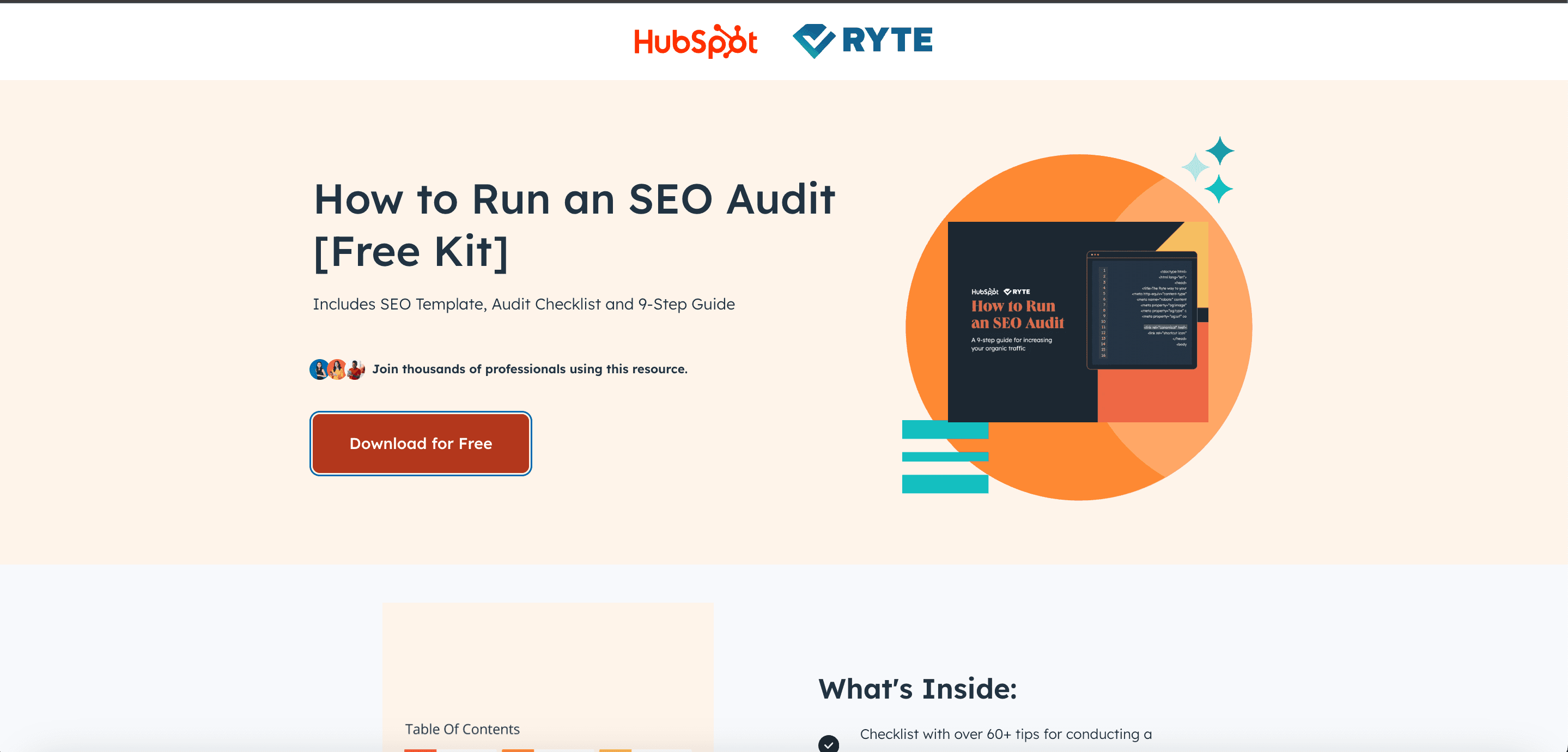
They are easy to sign up for/download. Don’t create friction with extensive sign-up forms that ask dozens of questions. Getting a lead magnet should feel seamless. HubSpot asks just one question (the most important) for their free SEO kit.
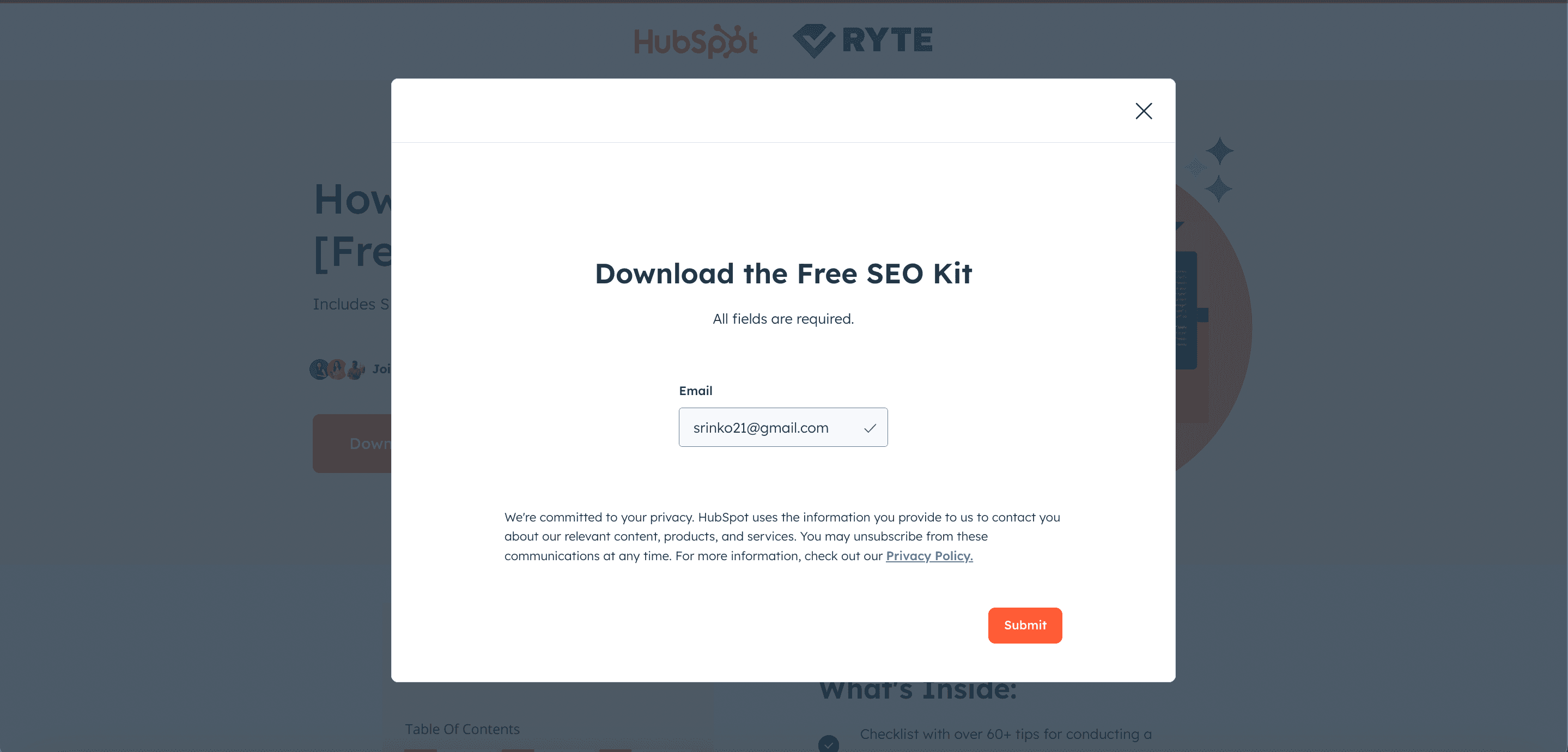
Once a lead submits their contact information, that’s when your marketing team can start nurturing the lead, eventually converting them into a sales qualified lead (SQL) for the sales team to close.
Step 5: Run Account-Based Plays
Identify high-value accounts and build an outreach strategy around their world—their industry, problems, and goals—not your sales pitch. With account-based marketing (ABM), precision and relevancy beat volume and generalization every time.
Here are the best practices for running account-based sales and marketing plays:
Do deep research: Understand the company’s recent news, organizational structure, business model, target customers, and relevant industry trends.
Create highly personalized content: Create valuable content and messaging that speaks to challenges in their specific industry. Reference current trends, competitors, and news.
Understand the decision-making team: Identify key stakeholders and create personalized multi-channel outreach sequences for each person.
Sending personalized outreach at scale is costly and time-consuming. That’s why sales teams are increasingly turning to AI-first outbound platforms that can personalize hundreds of emails a day. Artisan’s AI BDR Ava, for example, researches leads and composes personalized emails at a level that matches, and even surpasses, human quality.
Step 6: Move on to Triggers, Not Timelines
Intent signals are real-time data points that enable your team to target leads based on behaviors like visiting your website or actively researching products like yours.
Here are the top intent signals that indicate it’s a good time to reach out:
New funding rounds (a sign of more budget)
Job changes and promotions (a sign of more autonomy or new priorities)
Website visits, especially to pricing and product/service pages (a sign of interest in your solution)
Step 7: Personalize Without Burning Your Team
Manually researching accounts and writing personalized messages takes a tremendous amount of time, especially when you have to do it for dozens of cold leads per day.
Instead, use AI to automate cold outreach. This allows you to send highly personalized messages at scale, without increasing headcount or overwhelming your sales team with repetitive personalization tasks.
Take Artisan, for example. The platform is powered by an AI BDR called who automatically finds leads that match your ICP, researches their social profiles and websites, and sends them tailored messages on social media and email, essentially bringing you sales-qualified leads (SQLs) on autopilot.

Step 8: Host Live, Build Trust
Host live events where you educate leads about their problems, challenges, and potential solutions, including your product or service.
Here are proven examples of events you can host:
A webinar explaining a new industry regulation and its consequences for your target audience, just like SiteCompli, a proptech company, often does.

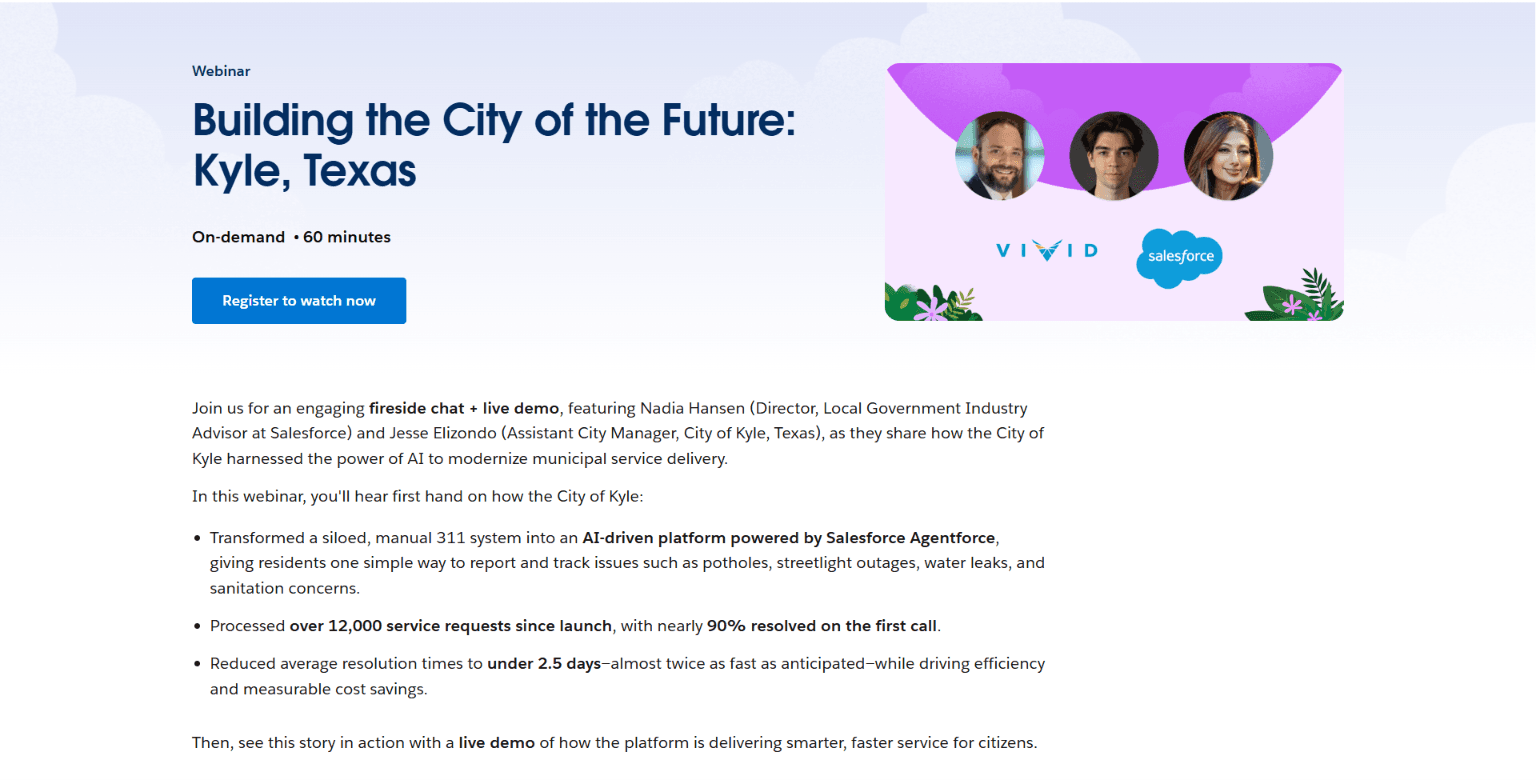
A virtual interview with a power user to demonstrate how customers are using your solution, as Salesforce has done below.
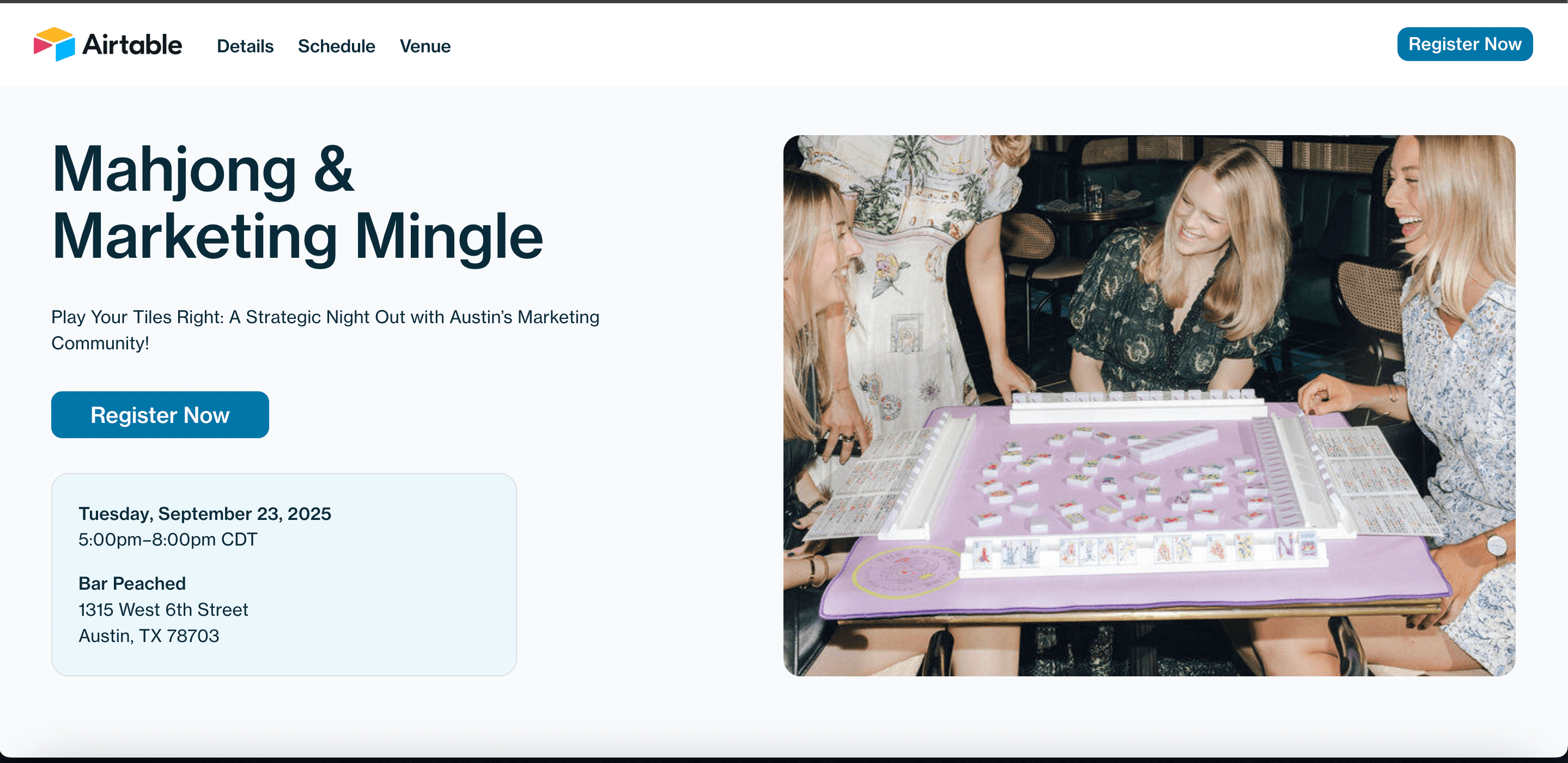
An in-person networking event like Airtable’s Mahjong and Marketing event, where marketers come together to play a strategy game that resembles marketing itself.
Including some of this education-based selling in your strategy helps your business generate demand without the hard sell.
Step 9: Let Proof Close the Deal
Prospects trust buyers more than brands. Make that work in your favor. Here are the best ways to leverage social proof at all stages of your customer acquisition process:
Set up a referral program: Referral programs incentivize buyers to refer your solution to ideal leads, usually by offering a discount or some other reward. These are great for leveraging the persuasive effects of word of mouth.
Ask your best clients for testimonials: Then post those testimonials on your homepage and use them to back up claims you make in cold emails, sales pages, and email marketing sequences.
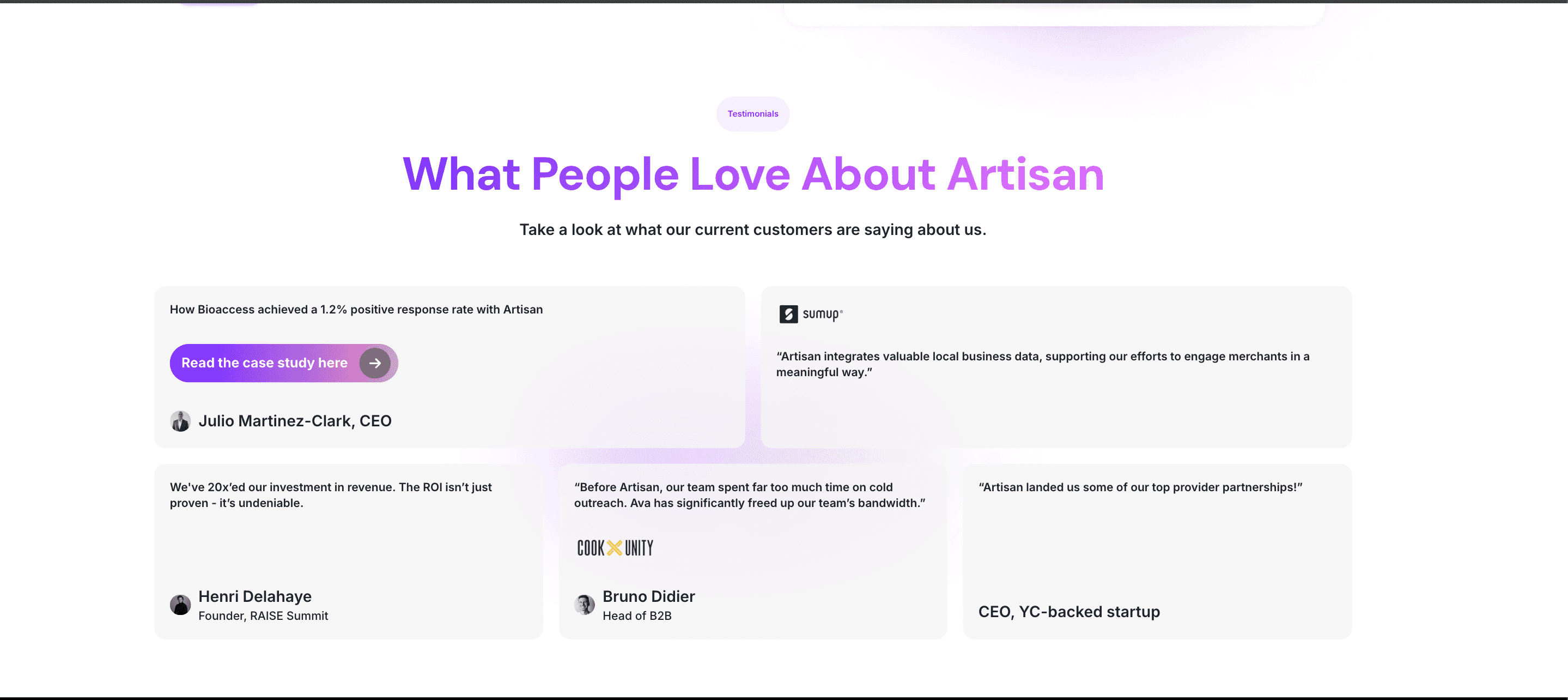
Highlight positive reviews from review sites: You probably already have good reviews. They're just on third-party review sites like G2 or Yelp. Screenshot those reviews and put them on your website and marketing materials. If you score highly in a specific category on that review site—like ease of use—put that in your sales copy.
Create case studies for different audience segments: For each major buyer persona, build interview-driven case studies about clients. Highlight the problem, the solution, and the positive results. You could even survey customers and share statistics about their success, as HubSpot has done.
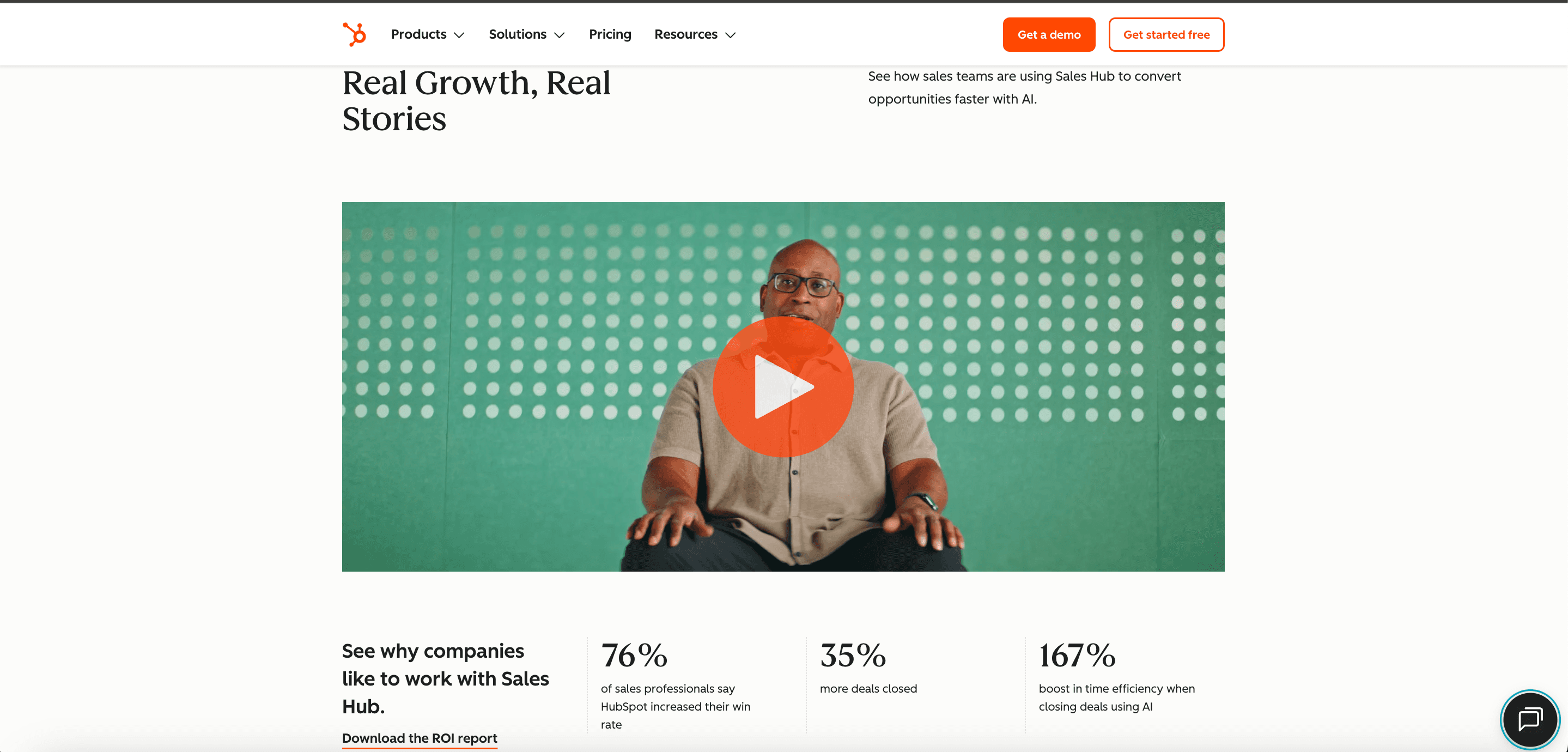
Social proof is especially crucial at the end of the sales process, when prospects often just need an extra bit of assurance that your solution will get the job done.
The Customer Acquisition Growth Formula (Framework)
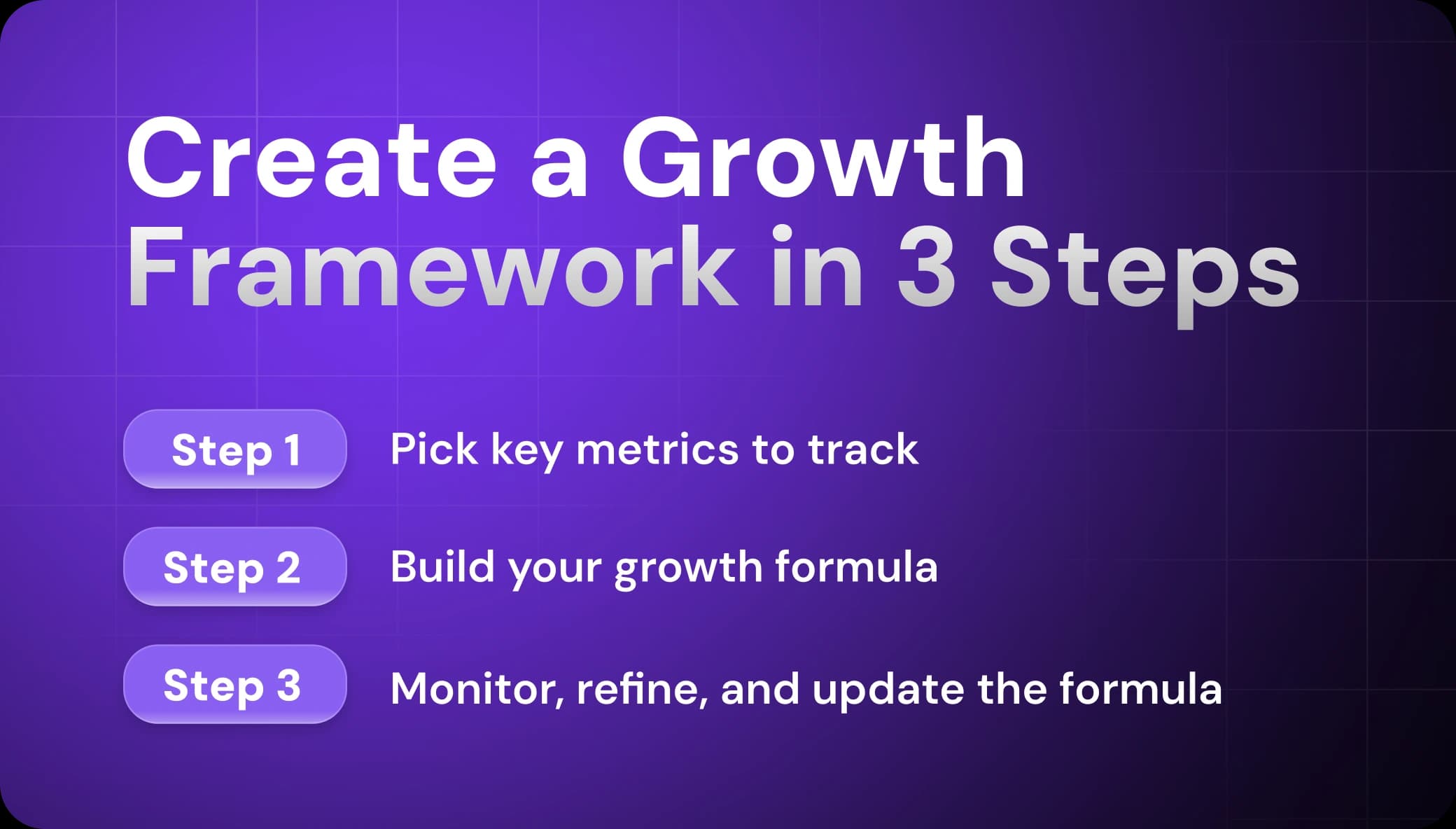
Let’s look at how to weave these tactics into a practical customer acquisition formula that helps you predict, drive, and maintain growth.
Key Metrics to Monitor
Track the following key customer acquisition metrics:
Customer acquisition cost (CAC)
Customer lifetime value (LTV)
Retention rate
Conversion rates (like MQL to SQL conversion rate and SQL close rate)
Overall ROI from your acquisition efforts
These will help you determine which strategies and channels are working and which need some adjustment.
Build Your Acquisition Growth Formula
Your acquisition growth formula is a mathematical model that helps you predict and drive sustainable company growth.
Here’s an example of a common B2B acquisition growth formula:
Growth = (Leads Generated × Conversion Rate × Avg Deal Value) × Retention Rate.
However, it’s best to create a custom, detailed formula that will serve as the guiding model for our particular business. It should factor in key acquisition metrics like leads generated, conversion rates, and new customers acquired, and tie them to overall revenue growth.
You can start with assumptions for the inputs in the formula. Over time, however, you should adjust them based on real data.
Here’s an example acquisition growth formula that a subscription-based or SaaS brand might use:
Monthly Recurring Revenue Growth = [(MQLs Generated × 0.14 SQL conversion rate × 0.27 close rate × $55K ACV) + (Customer Base Size × 0.23 expansion rate × $10K expansion)] × 0.89 retention rate.
The company could then go even further, breaking down inputs like MQLs generated into sub-metrics like MQLs generated from SEO and MQLs generated from paid ads.
The more specific your formula, the more you know about which levers to pull to improve revenue growth.
Iterate and Optimize the Formula
Over time, you should optimize your formula—updating assumptions, testing tactics, and adding new variables.
Here are the best ways to ensure your acquisition formula stays fresh and helpful:
Hold regular reviews: Update conversion rates and channel performance metrics on a quarterly basis.
Test variables to improve inputs: Break down monthly recurring revenue by channel to identify the best candidates for split-testing and optimization. If ROI is consistently poor, consider reallocating resources.
Refine the formula with real data: Replace assumptions like “I believe more cold calls equals more MQLs” with actual data once you collect it. It’s OK to use assumptions—such as predicting that you will maintain your current cold call conversion rate as you hire new reps—as long as you update them if the data disagrees.
Common Mistakes That Kill B2B Customer Acquisition
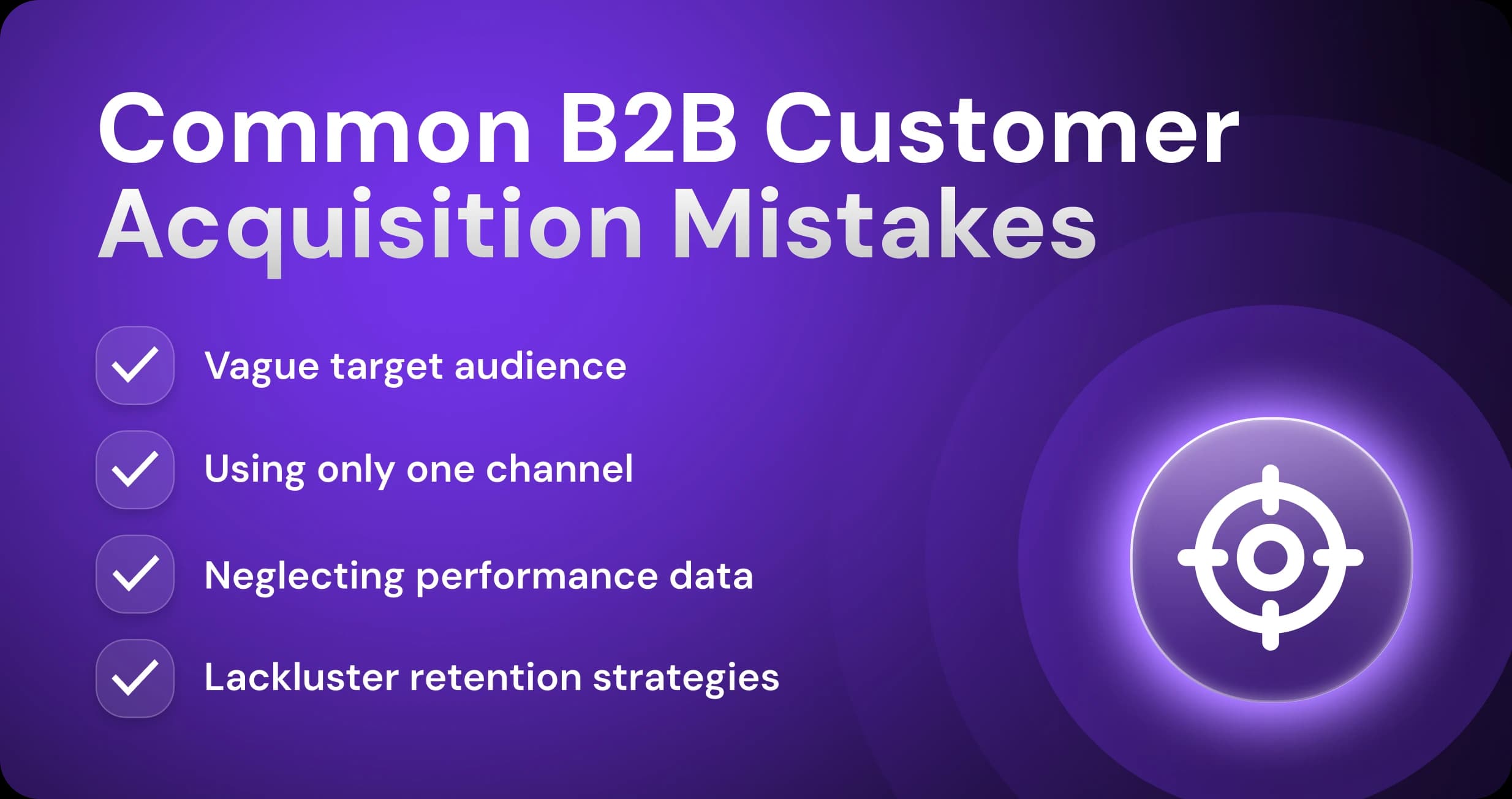
Often, the best way to improve at a skill is to identify the most common mistakes others are making. Let’s look at four errors that will hurt your B2B customer acquisition if they’re left unresolved.
No Clear Target Audience or ICP
Without a clear target audience, you’re likely to see the following negative outcomes:
Marketing conversion rates will suffer because messaging and content are often irrelevant.
Cold outreach will be inefficient and unscalable because you can’t standardize messaging.
Sales cycles will slow down because low-quality, non-ICP leads enter the sales pipeline.
So don’t chase an overly broad market. Get specific about what types of businesses desperately need your help, and zoom in on them through targeted lead generation.
Over-Reliance on One Channel
Don’t put all your budget and talent into a single sales channel.
Diversified lead generation strategies yield better results because they increase the rate at which your leads see your content. You can’t cold email a lead five times in a week without making them annoyed. But you can email them twice, call them once, and send them two social media messages.
To diversify outreach without buying multiple tools, use an all-in-one AI sales automation platform like Artisan, which uses an AI BDR to build and run personalized, multi-channel outreach sequences via email and social media.
Ignoring Customer Data and Feedback
Lack of data around your acquisition strategies kills any chance of optimization.
You need to monitor key metrics across your marketing and sales channels, from email conversions to ad clicks, and iterate your messaging and strategy based on what you see.
Also, be sure to survey customers about their buying journey to find ways to make it more seamless based on this qualitative data.
Neglecting Post-Sale Retention
For most businesses, B2B customer acquisition is never truly over.
After the sale is made, make sure the customer is happy with their experience and getting the most out of your service or product. That’s how you turn them into repeat buyers for decades, not one-off customers you never see again.
Unfortunately, many brands neglect post-sale retention strategies, and this leak seriously hurts their overall growth rate by lowering the lifetime value of customers.
Start with the handoff from sales. Record the outcome the customer bought, the promises made and the first setup milestone, then name an owner for unresolved dependencies. Artie lists customer onboarding from sales handoff through first value among its AI employee use cases. Evaluate that end-to-end responsibility against your own onboarding process.
Ready to Win More B2B Customers?
Improving your B2B customer acquisition strategy can have dramatic effects on company growth, revenue, and profits.
But some lead generation methods and technologies take time to show results. An SEO campaign, for example, can take months to generate its first lead.
Fortunately, AI speeds things up.
Sales teams can set up Artisan’s AI BDR platform in hours. Once configured, AI BDR Ava requires little oversight—she automatically identifies target leads, crafts relevant messages, and runs automated outreach sequences, generating qualified leads on autopilot for your sales reps.

Automate your outbound with an AI BDR
Meet Ava—your AI BDR who handles prospecting, outreach, and follow-ups, so your team can focus on closing.

Sam Rinko
SME @ Artisan
Sam Rinko is a former SaaS sales rep turned tech writer. He sold real estate software before writing about lead generation, cold calling, and AI sales tools.