Best practices to grow your customer base and boost revenue
Grow your customer base the smart way. Automate prospecting, personalize outreach, and close deals faster with AI-driven sales tactics.
A growing customer base is the foundation of predictable revenue and long-term resilience.
But how do you get there?
Every so-called expert seems to have an opinion. But we advocate a simple approach: you grow your customer base by matching the right mix of inbound and outbound tactics with the ICPs of your most profitable segments.
Let’s look at how to do that.
What Growing Your Customer Base Really Means
A customer base is a pool of paying customers. Your customer base doesn’t include leads, even if they’re qualified—customers must have actually made a purchase.
But it’s worth noting that not all customers offer equal value. While you can focus on either quality or quantity, quality is invariably the most effective route.
Let’s say Customer A spends $500 on your business per year, and Customer B spends $10,000. You’d need 2,000 Customer As to reach $1M in sales. But you’d only need 100 Customer Bs to reach the same goal.
To win over buyers, you need a strong lead generation and nurturing strategy. And there are two key approaches: inbound and outbound.
Inbound sales techniques draw leads to your page organically. They put you in front of buyers when they’re searching on Google, talking to AI, or scrolling on social media. On the other hand, outbound lead generation is more direct. It requires you to find leads and engage them where they are.
Both are necessary. And finding the best mix of channels ultimately comes down to creating detailed ICPs that closely match the highest-quality, most profitable segments of your market.
Why a Larger Customer Base Matters
Let’s start with the jump-in-your-face reason to grow your customer base: more customers equal more revenue.
A fuller pipeline also means more security and predictability. As you grow your customer base, you gain a deeper understanding of your market, which in turn leads to a faster and more effective sales cycle. This results in a lower customer acquisition cost (CAC), thereby increasing ROI.
This benefits every type of business. Startups with larger customer bases will attract more investors. Mid-market companies have more opportunities to reinvest and drive growth. And enterprise leaders improve efficiency and consistency at scale.

Automate your outbound with an AI BDR
Meet Ava—your AI BDR who handles prospecting, outreach, and follow-ups, so your team can focus on closing.
Key Strategies to Grow Your Customer Base
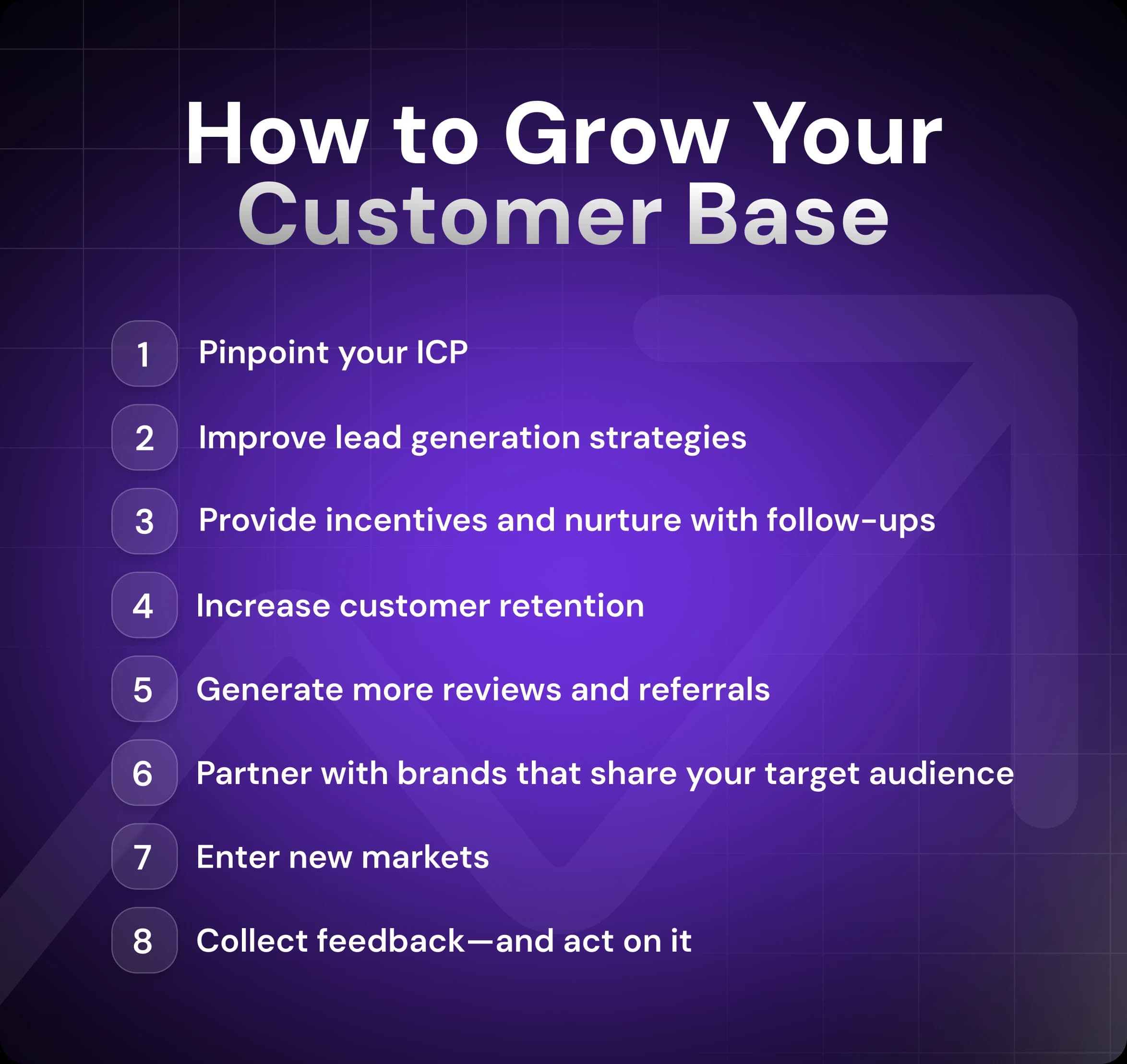
To win customers, you need a structured approach that defines your ICP, streamlines lead generation, promotes customer loyalty, generates social proof, and adapts to feedback.
Let’s break down the eight steps to growing your customer base.
1. Define Your Ideal Customer
Your ICP must be accurate and detailed. If you get it wrong, you’ll spend time connecting with leads who don’t really need what you offer. Mismatched prospects are more likely to ignore communications, spend less, and, ultimately, churn.
Targeted lead gen relies on insights from your customer relationship management software (CRM) and a data enrichment tool.
Define the following qualities of your ICP:
Industry (construction, SaaS, beauty)
Role (business owners, CMOs, head of sales)
Company size (small businesses, startups, enterprises)
Region (country or city)
Tech stack (Adobe, HubSpot, Canva)
Budget (the price they can pay for your product)
Buyer triggers (hiring, quick growth, or funding rounds)
2. Optimize Lead Generation Channels
Optimizing your existing lead gen channels is one of the easiest ways to increase your customer base.
Most companies, whether one-person startups or multinational enterprises, can get more from their lead gen channels with the right approach.
Here’s a rundown of the most effective optimization tactics:
Identify top-performing channels: Track which platforms deliver the most qualified leads and increase budget accordingly.
A/B test creatives: Compare different visuals, headlines, and CTAs to find what drives the most clicks and conversions.
Simplify conversion paths: Shorten forms and remove unnecessary friction.
Retarget engaged visitors: Show follow-up ads to users who visited key pages but didn’t convert.
Use intent data: Focus cold outreach on leads showing active buying signals.
Personalize content where possible: Match content and offers to each visitor’s source or behavior where possible.
Automate lead scoring: Rank leads by engagement and likelihood of buying so reps can focus on the most promising leads.
3. Offer Free Trials and Demos
“Try before you buy” isn’t solely a B2C concept. Offering a taste of your product will push more leads over the finish line.
According to ChartMogul's 2026 SaaS Conversion report, the median free-to-paid conversion rate across B2B software products is 8%, but top-performing products see over 20%.
Ideally, offer all three of the following:
Free trials
Webinars
Video demonstrations
Demos
The aim here is to give prospects as much exposure to your product as without forcing them to hand over their payment details before they’re ready. Buyers will appreciate the fact that you’re not making them work just to see if the product has the features they need.
4. Strengthen Customer Retention
Getting customers on board is only the first step. You need to keep them, too. If your churn rate is low, your overall growth rate will naturally be greater.
Providing quick, helpful customer support is a big part of retention. In addition, customer loyalty programs, which reward customers for making purchases and offer exclusive deals, are a valuable tactic for retaining your existing customers. Rewarding loyal customers can reduce churn by 5 to 10%.
Finally, remember to personalize your communications to existing customers. Learn what they want—ideally from data like purchase history and platform engagement—and give it to them, rather than flooding their inboxes with boring, irrelevant messages.
5. Encourage Reviews and Referrals
Growing your customer base can feel like a chicken-and-egg problem: to attract new customers, you need reviews. But to get reviews, you need customers.
The key is to make it easy for customers to share their experiences and refer new customers with low-friction touchpoints, such as post-purchase emails and in-app prompts. And reward them with incentives like discounts, loyalty points, or exclusive perks.
Here are five steps for encouraging reviews and referrals:
Publicize your referral program widely: Promote your program through post-purchase emails, checkout prompts, and social media posts.
Encourage user-generated content: Ask customers to share authentic testimonials, photos, and posts about your product, ideally in exchange for a reward or discount.
Run social contests: Incentivize customers to post content or tag your brand to win prizes.
Promote customer success stories: Collaborate with B2B clients to publish case studies on your website.
Ask for reviews across customer segments: Buyers are more likely to respond to social proof from customers with similar pain points and characteristics. So aim to generate reviews and testimonials from a variety of segments.
Research shows that customers brought to your company via referrals are 31 to 57% more likely to refer other customers—a phenomenon dubbed “referral contagion”—so don’t overlook these important tactics.
6. Build Strategic Partnerships
If you have a similar client base to a non-competitor, collaborating encourages the complementary brand’s customer base to try your business. It’s like a professional endorsement.
For example, Microsoft offers Adobe’s marketing and digital document tools as part of its Dynamics 365 and Azure solutions. The brands share a target market: enterprise marketers requiring a unified tech stack for data storage and business management.
Use these popular co-marketing tactics for collaboration:
Co-hosting events or webinars
Joint social media content creation
Cross-promotion with partner discounts after checkout
Another notable example in B2C is the partnership between Red Bull and GoPro. GoPro was the official campaign camera for Red Bull Rampage, a mountain biking competition in Utah. This endorsement strengthened GoPro’s credibility while publicizing Red Bull to GoPro’s customer base.

7. Expand Into New Markets
Sometimes the issue isn’t failure to maximize your existing lead gen channels. You might instead be limited by your physical location or narrow ICP targeting.
In these cases, expanding into suitable new markets is one of the best ways to drive growth. The key to not wasting resources is to research and test rigorously before rollout.
Here’s how to expand into new markets:
Look for opportunities regularly: Use tools like Exploding Topics, CB Insights, and Google Trends to spot sectors you can serve showing early signs of growth.
Run pilot campaigns: Run small-scale marketing initiatives for potential new markets to gauge demand before full entry.
Assess customer signals: Track inbound inquiries, website traffic, and engagement from new geographies or segments for early indicators of interest.
Interview customers from segments you don’t target directly: Run discovery calls with decision-makers from untargeted segments to test for ICP fit.
Track competitors: Map competitors in other regions or related verticals to see where you might be able to provide a differentiated or superior product or service.
8. Collect and Act on Feedback
Feedback puts a spotlight on customer needs you may not be satisfying. Over time, this qualitative input solidifies qualitative data collection, which together create a potent mix for improving the customer experience.
Here’s an overview of the best ways to collect customer feedback:
Net Promoter Score (NPS) and Customer Satisfaction (CSAT) surveys, delivered via email or in-app, use short, structured questions to gain qualitative performance data.
In-app feedback widgets are always-on prompts that capture quick ratings, open-text suggestions, or feature requests at the moment of use. These generate both qualitative and quantitative results.
Reviews, live chat transcripts, and social media mentions provide rich, unstructured feedback that highlights customer sentiment, recurring issues, or brand perceptions. Use AI analysis to spot patterns and common customer complaints.
One-on-one user interviews are deep-dive conversations that uncover motivations, frustrations, and expectations that numbers can’t capture.
Give feedback follow-through an owner. Keep a digest of recurring issues, supporting conversations, the team responsible for each issue and what happened after it was raised. For teams evaluating Artie, maintaining that digest is a concrete ongoing assignment to test. Keep individual comments distinguishable from patterns supported by several customers.
How AI Automates Your Outbound Outreach
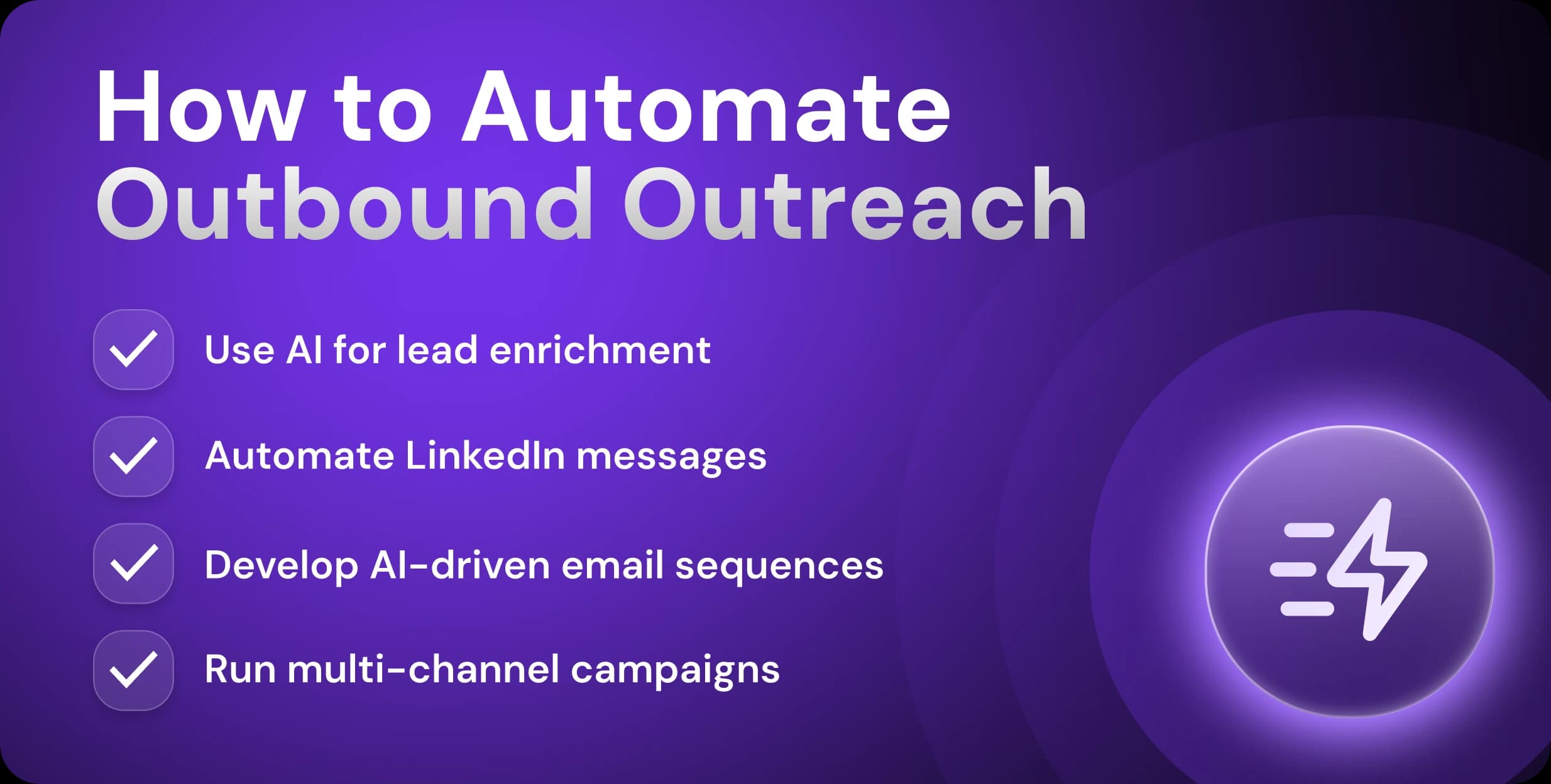
Manual outbound outreach is time-consuming. It requires sales representatives to personalize, draft, and organize messages individually. Automation changes that, freeing up sales reps to focus on human calls and meetings.
Let’s break down how to automate outbound outreach effectively.
AI-Powered Lead Enrichment
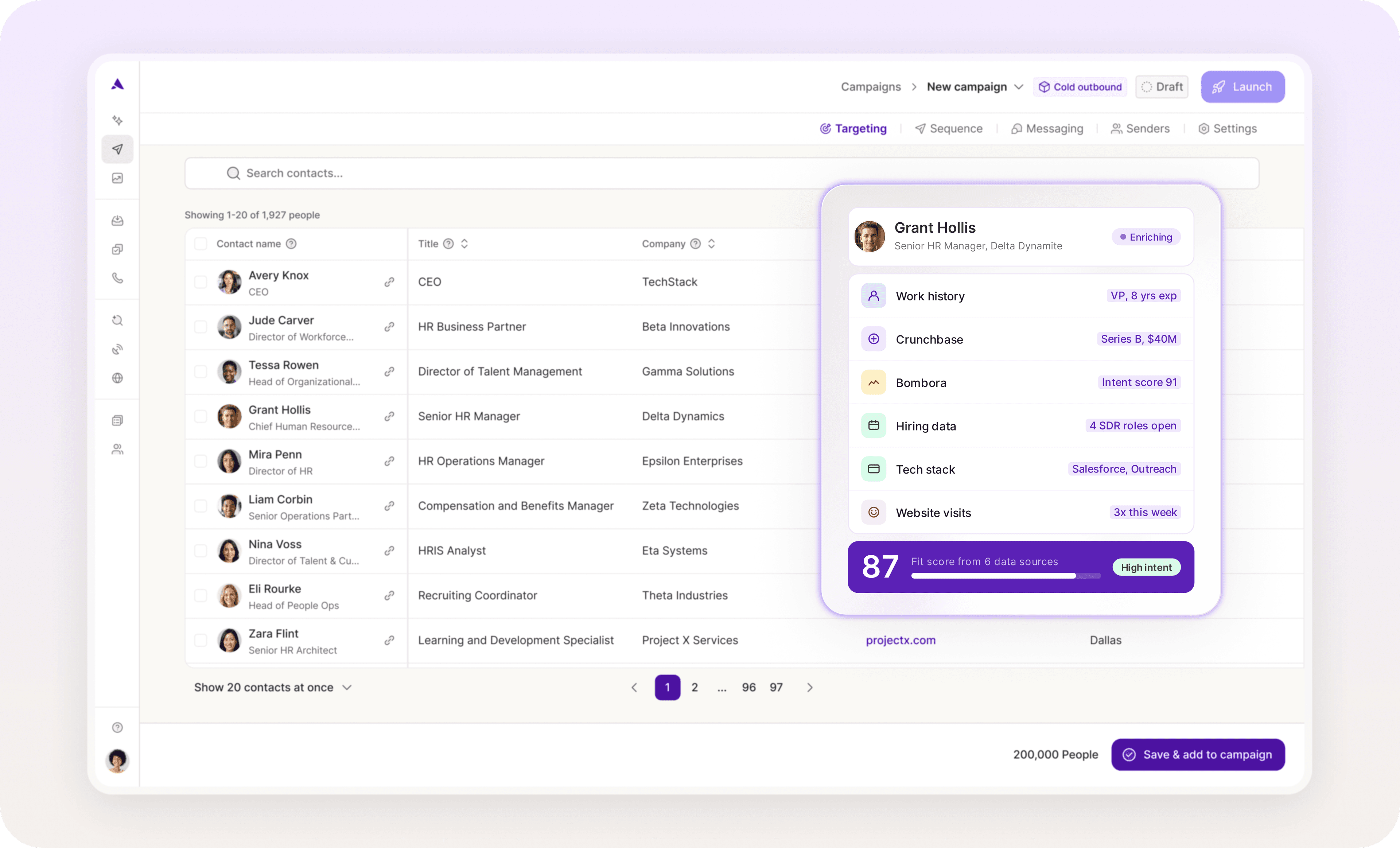
Unless you live under a rock (and a pretty large one), you’ll know that AI tools are improving at rocket speed. When it comes to outbound outreach, AI can find, enrich, and qualify lead profiles to ensure you focus only on in-market targets who match your ICP.
Artisan, for example, uses an in-house database of over 300 million B2B, ecommerce, and local leads to build new prospect lists and automatically update lead data in your CRM.
Automated Email Sequences
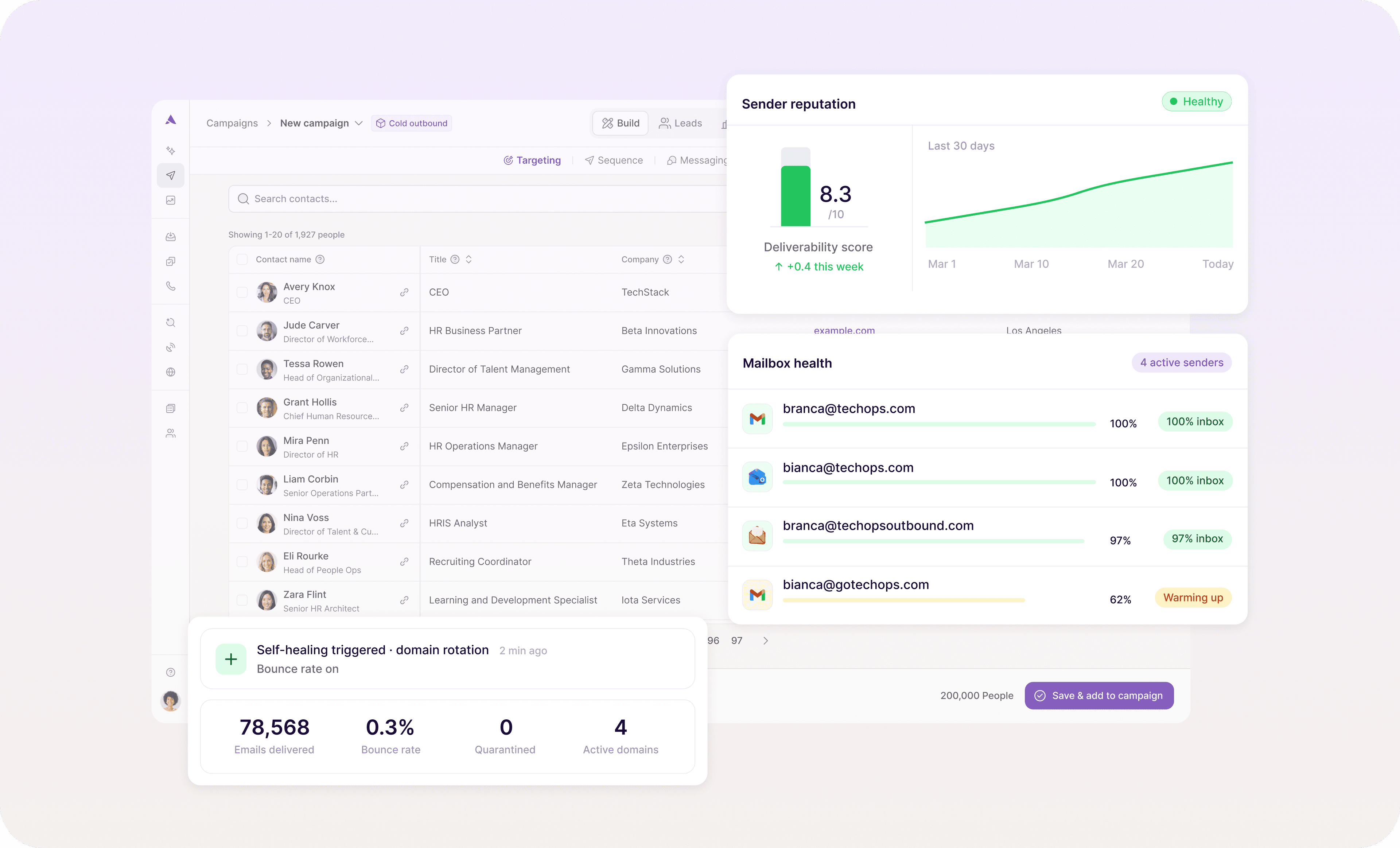
Email campaigns are still the staple for outbound messages. You can use AI for cold email to personalize messages and follow-up sequences at scale, ensuring the message connects with the lead.
You can also automate A/B testing to take the optimal approach. Many tools have deliverability checks that help keep your emails reaching inboxes. Artisan, for example, has built-in deliverability optimization as part of its comprehensive outreach feature set.
Multi-Channel Cadences
Today's B2B buyers use an average of ten interaction channels during the buying journey and switch suppliers if the experience isn't seamless, according to McKinsey's 2026 Global B2B Pulse Survey.
George Avetisov, a recognized sales leader and founder of 1up.ai, has grown his startup with smart omnichannel cadences. He shared his strategy: "Outbound growth is most effective when it’s precise, automated, and multi-channel. Instead of blasting generic sequences, use AI to enrich leads with real context. For example, if a CTO just posted about a pain point, layer LinkedIn touches, personalized emails, and timely follow-ups with that pain point.
Scale Smart: Optimize and Iterate
Perfection doesn’t come the first time. The best results come from trying, testing, trying again—and you guessed it, testing again.
Here are the most effective ways to scale your outreach.
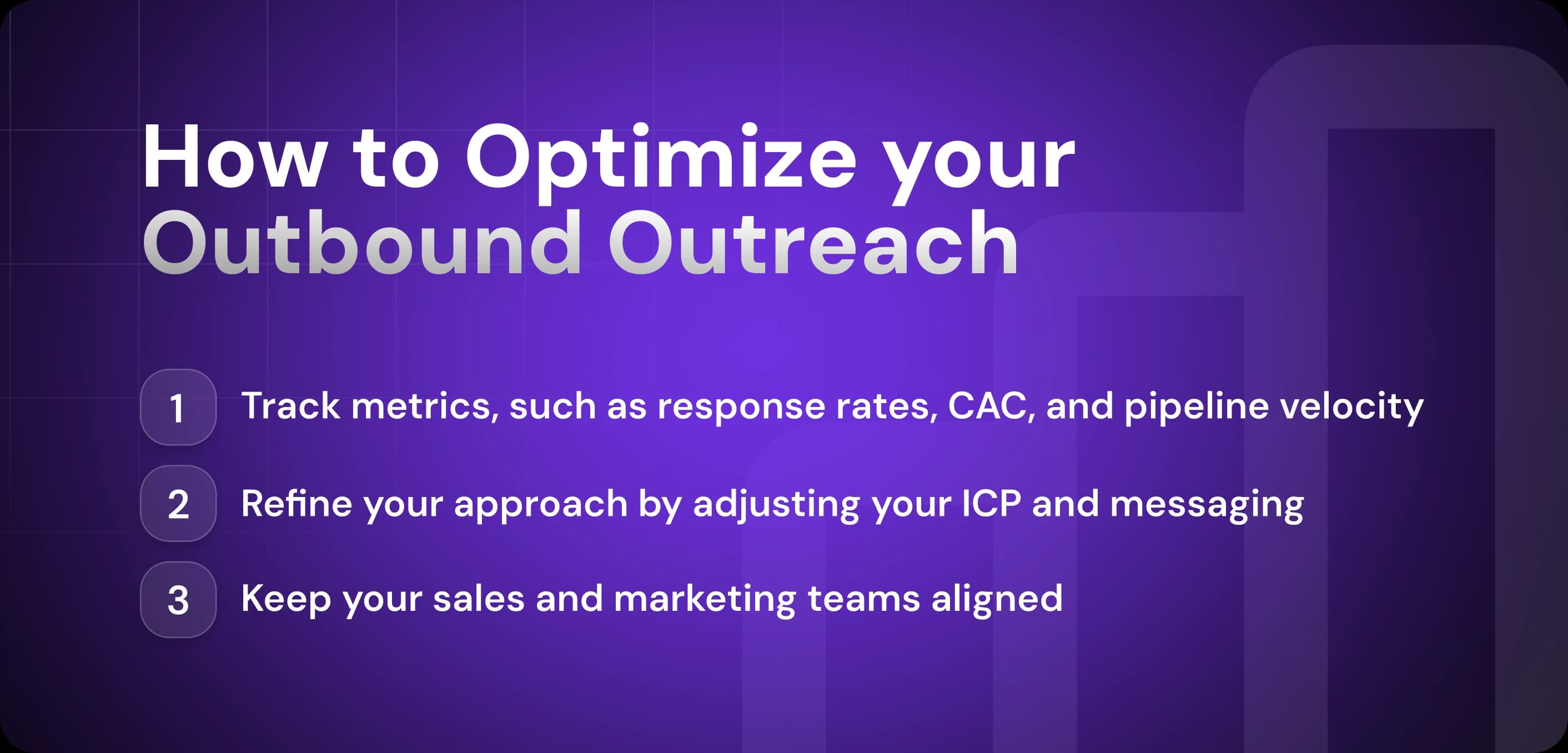
Track Key Metrics
Here are the key SDR metrics you should track:
Response rate: The percentage of prospects who reply to your outreach
Customer Acquisition Cost (CAC): The average cost of acquiring a new customer
Pipeline velocity: The speed at which leads move through your funnel
Customer lifetime value (CLV): The average projected revenue from a customer over time
In addition, use cohort analysis to track how different groups of leads (by campaign, channel, or time period) perform across these metrics for sharper insights.
Refine Your Targeting
Suppose you unexpectedly identify high response rates for leads in a particular industry, region, or role based on the preceding metrics. It’s now time to shift your assumptions.
For example, if targeting CMOs in the transport industry yields better results than targeting your initial ICP of startup owners, don’t resist the change. Double down on targeting the engaged group.
Your ICP and messaging should reflect the groups of customers most interested in your product or service today—not yesterday.
Align Sales and Marketing
Marketing campaigns and sales messaging must align. Leads should feel like the same company is contacting them on every channel.
To keep your sales and marketing teams on the same page, establish feedback loops, set automated notifications, and ensure tools are as integrated as possible. This will help you score leads and act on insights quickly—warm leads should be routed to sales reps immediately.
Artisan: Your Next Step in Scaling Smarter
Growing your customer base is the best way to boost revenue. And a key part of successful growth is optimizing your outbound outreach by automating repetitive sales processes.
Artisan takes care of all of the early and middle stages of the outbound sales cycle, prospecting, qualifying, and running outreach across multiple channels—at scale and for a fraction of the cost of a manual sales team.
Automate your outbound with an AI BDR
Meet Ava—your AI BDR who handles prospecting, outreach, and follow-ups, so your team can focus on closing.

Marsha Dunn
SME @ Artisan
Marsha Dunn is a writer helping businesses connect with customers and build credibility. She specializes in B2B thought leadership rooted in expertise.