7 upselling strategies to increase sales in B2B SaaS
Discover upselling strategies that feel helpful, not pushy. Learn how to use CRM data, product usage, and tools like Artisan to find upsell opportunities and increase sales.
If a waiter tells you about the restaurant’s special menu for New Year’s Eve, you don’t feel like you’re being tricked into a higher-priced option. Instead, you would probably be glad they brought the premium option to your attention.
How do you strike the same chord with B2B customers? How do you generate more revenue from current customer relationships without coming off as aggressive?
The best strategy is personalized, AI-enabled upselling throughout the customer life cycle.
What is upselling in B2B and SaaS?
Upselling is the promotion of a higher-priced version of a product or service to a customer. In B2B and SaaS, that’s usually the next tier of a plan. The goal is to increase total revenue per customer while also improving the buyer’s experience.
Businesses use a mix of upsell strategies. For offers with a high price point, it’s often customer success managers or sales reps who initiate and close the upsell. For lower-priced deals, automated email campaigns and promotional in-app pop-ups are common.
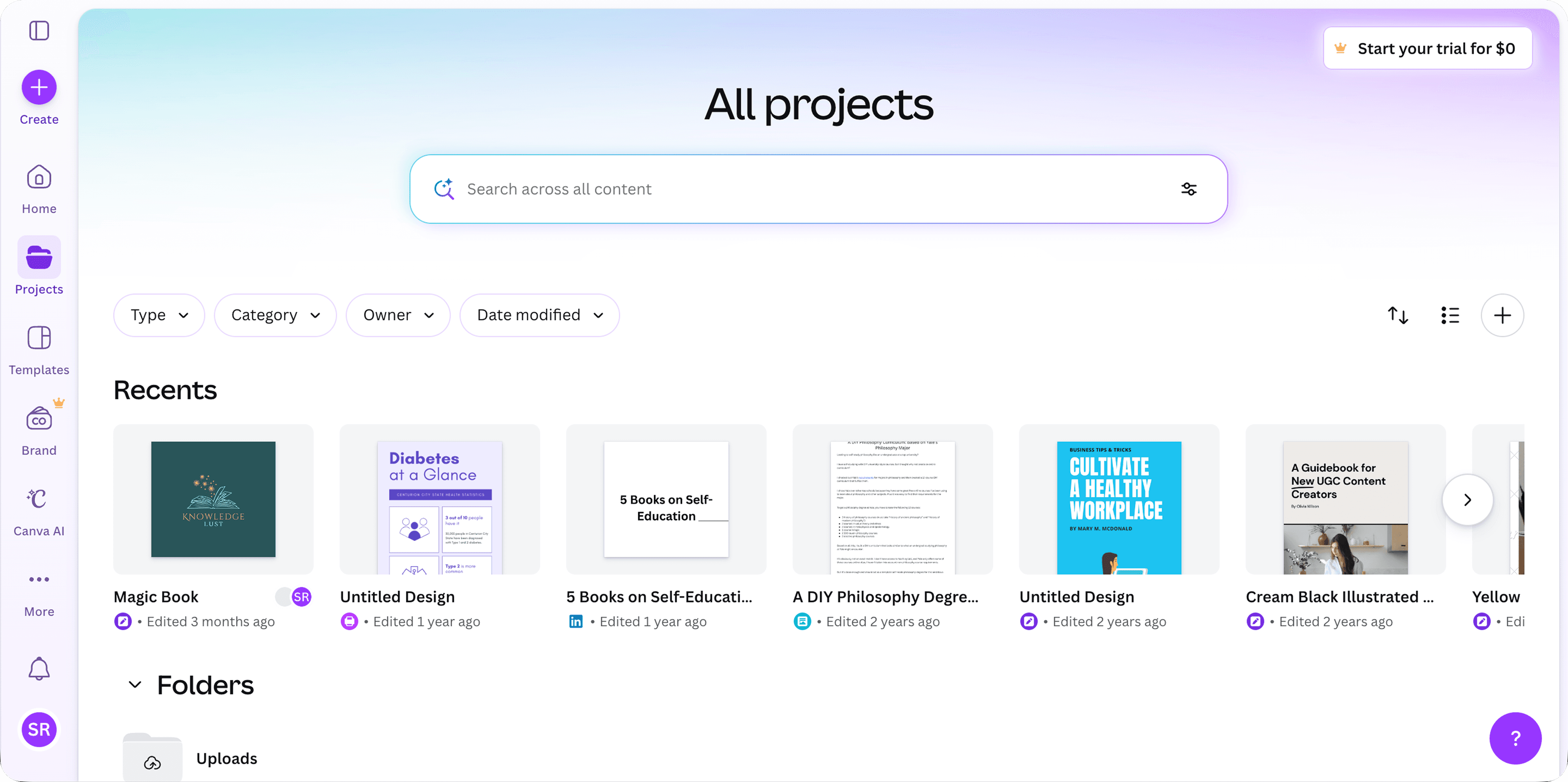
For example, when I log into Canva, I immediately see a pop-up promoting its premium plans.
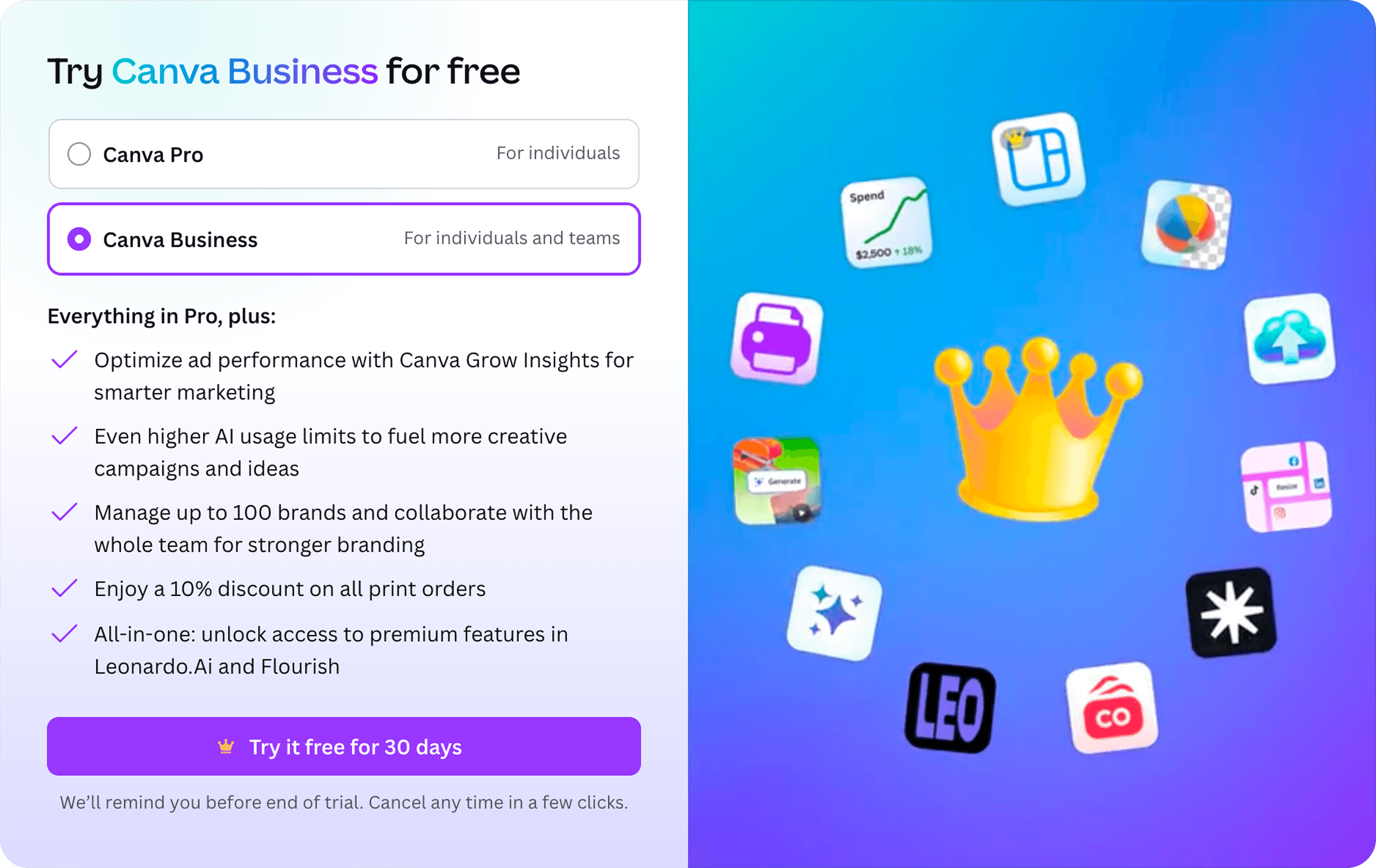
The most common examples of upsells are:
Premium or upgraded versions of an original product or service
Higher-tier plans with additional features, seats, or usage
Comprehensive service add-ons tied to customer needs (these can be separated from cross-sells if they modify the plan significantly)
As a rule, you should position upsells as attempts to add value. If the customer ever feels like you’re trying to pressure them to buy something they don’t need, trust will disappear.
For example, a software brand might respond to a customer’s concerns about lengthy implementation by suggesting that the prospect buy the Gold plan rather than Silver, since it comes with an account manager.
Because it uncovers revenue hidden in your current relationships, upselling is a cost-efficient strategy for increasing average order value, profit margins, and customer lifetime value.
Upselling vs. cross-selling: Key differences
If you sell someone a toothbrush, it would be smart to offer them toothpaste to go with it.
This scenario is an example of cross-selling: recommending complementary products or related products alongside the original purchase to increase the order value.
Let’s look at another example of a standard cross-sell and up-sell flow to clarify the differences.
Imagine a SaaS brand sells its starter software package to a customer. During the sale, the rep tries to cross-sell additional software tools that help the customer accomplish their goal.
Several months later, the business initiates an upsell, offering the customer a higher-tier plan with more seats and functionality, potentially also including a discount for existing customers.
Why upselling strategies matter for revenue
It’s much easier to convert a current customer or late-stage prospect than it is to convert a new lead. This makes spelling a cost-efficient way to boost revenue.
Unlike generating and closing net new logos, which requires steep investments in lead nurturing, you already have a foundation of trust. The customer will be far more open to hearing your offering than they were before they knew your brand.
Upselling strategies are also typically more personalized than cold outreach. They often occur months or years into the relationship. This existing intel helps you craft highly relevant offers.

Automate your outbound with an AI BDR
Meet Ava—your AI BDR who handles prospecting, outreach, and follow-ups, so your team can focus on closing.
Foundations of successful upselling
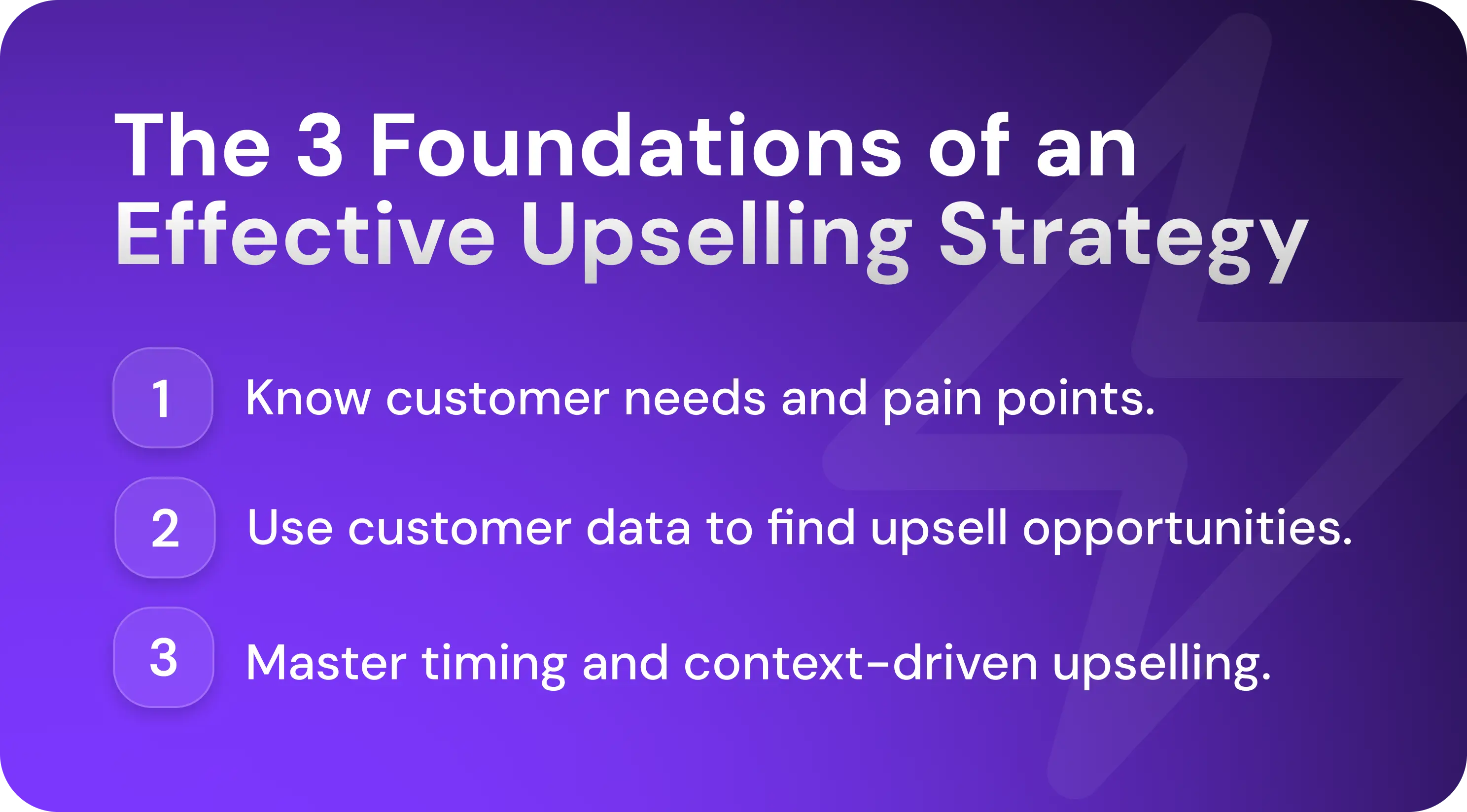
To upsell effectively, you need to identify your customers’ needs, build a customer data infrastructure that allows you to spot upsell opportunities, and master timing and context.
Start with customer needs and use cases
Before brainstorming specific upsell ideas, research the needs and priorities of your customers. This provides a foundation for determining what your offers should be and how you can tailor your pitch directly to different segments.
Here are the best methods for learning about your buyers:
Discovery calls
Product usage data
Customer support tickets
NPS surveys
To create a targeted strategy, divide your customer base into different groups based on industry and maturity. Then, create specific upsells for each segment.
After you’ve researched your buyers and have tailored segment offerings, map those upsells to specific outcomes, like faster onboarding, higher ROI, or better support—these will feed into your pitches.
Use customer data to spot upselling opportunities
User data in your CRM, product analytics tools, and web visitor tracking software is the key to identifying your most valuable upsell opportunities.
Here are the best indicators of upsell opportunities:
High feature or credit usage (approaching their current plan’s cap)
Frequent support requests on missing functionality
Milestone achievements like annual renewal
Repeat visits to the pricing or product page
Engagement with content about advanced features
Most behavior tracking and intent data tools allow you to set up real-time notifications that alert sales reps when customers are engaging in activities that suggest purchase intent. You can configure these alerts to go directly to the account owner’s Slack or email so they can act fast.
Timing and context: When to upsell
Timing matters as much in upselling as it does in comedy.
There are specific moments in the customer lifecycle when your chance of successfully securing an upsell is highest.
Here are the best moments to promote an upsell to users:
Checkout, when they’re excited about working with you
Onboarding, when they’re learning the solution (and their plan’s limitations)
Mid-contract, when they’re getting full value from the solution
Pre-renewal, when they’re already thinking about your partnership
If you make an upsell too early in the sales process, you could hurt the trust you’ve worked to build. Stick to placing upsell requests near “aha moments” or usage spikes, as these are moments when the customer is feeling satisfied and excited about your solution.
7 upselling strategies for SaaS and B2B teams
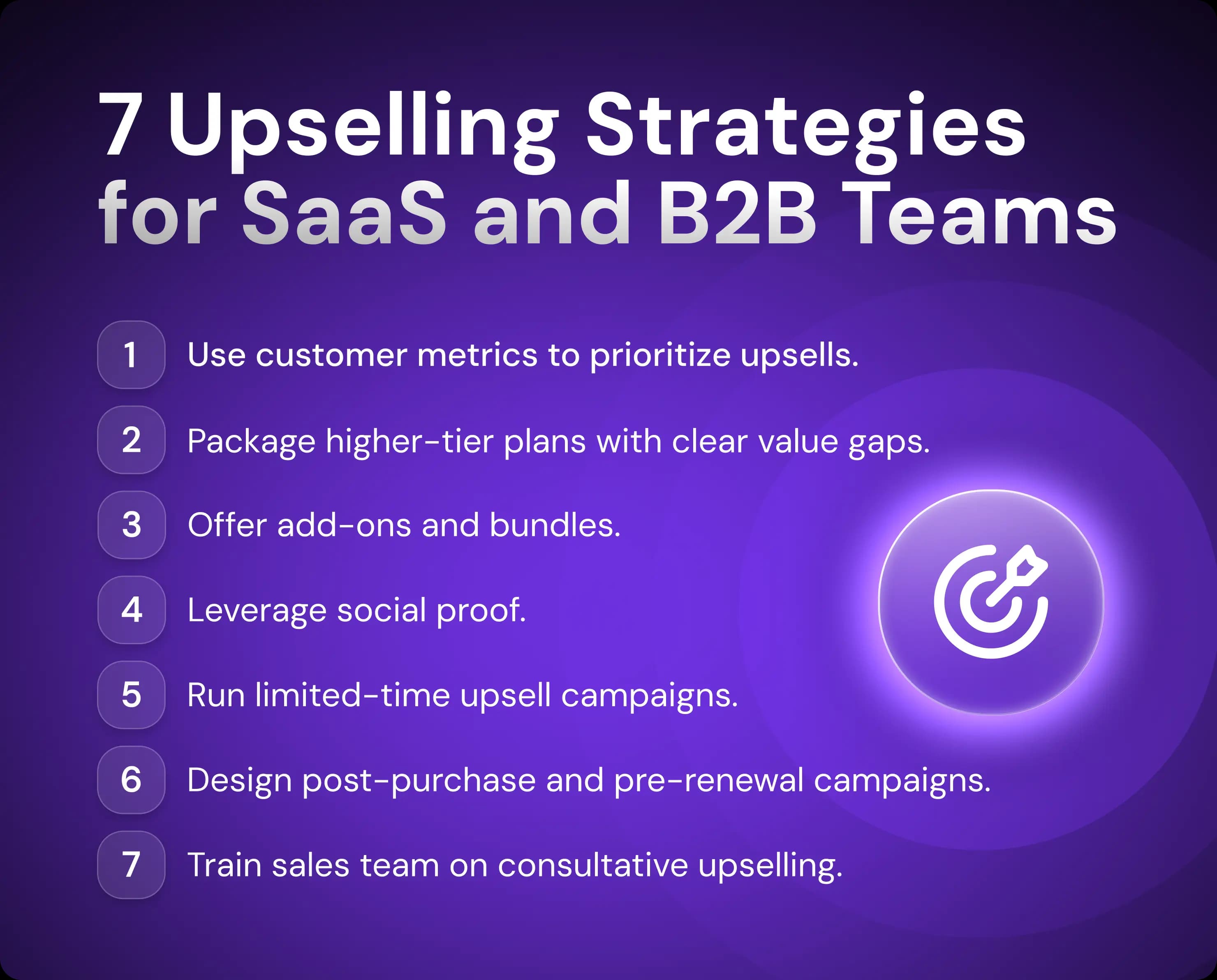
The best sales teams don’t haphazardly ask for upsells. They use tested strategies that routinely persuade customers to move up a pricing tier.
1. Use customer metrics to prioritize upsell targets
The first step to any successful upsell campaign is to identify customer behaviors that indicate an account is ready for the next tier of your service.
In your CRM and product analytics tools, you can track specific behaviors to identify and prioritize these high-value accounts. You can then use these behaviors to score and rank customers for upsell outreach based on their likelihood to buy.
Base your scoring model on the following metrics:
Product usage: Are customers adopting key features, increasing usage frequency, or approaching limits?
Pricing page visits: How often is a customer exploring website pages related to higher-tier products?
Support tickets: Has the customer asked for features that are available in higher-priced plans?
Firmographic changes: Did a company account receive new funding, expand into a new office, or launch a new line of products?
SaaS companies should give special consideration to usage-based upselling. This is where you offer a higher-tier package to users who are approaching the usage limit of their current tier.
For instance, an email marketing software company might offer a middle-tier plan that allows users to manage up to 10,000 emails. If a customer is at 8,000 emails, the company will likely see positive results from sending a targeted email or in-app advertisement promoting an upgrade.
2. Package higher-tier plans with clear value gaps
To increase the perceived value of your higher-tiered packages, design them in ways that solve more complex pain points or unlock functionality that’s meaningful to the buyer.
Here are common examples of offerings that differentiate higher-tier SaaS plans:
Advanced automation features
Better reporting capabilities
More users, seats, or credits
More team admin features
On your website, add comparison charts that clearly demonstrate to customers the value they're missing out on by choosing the lower-priced tier.
HubSpot does this well on its pricing page. Immediately, the buyer sees they don’t get any access to one-to-one video messaging on the Starter Plan but receive full access on the Professional Plan.
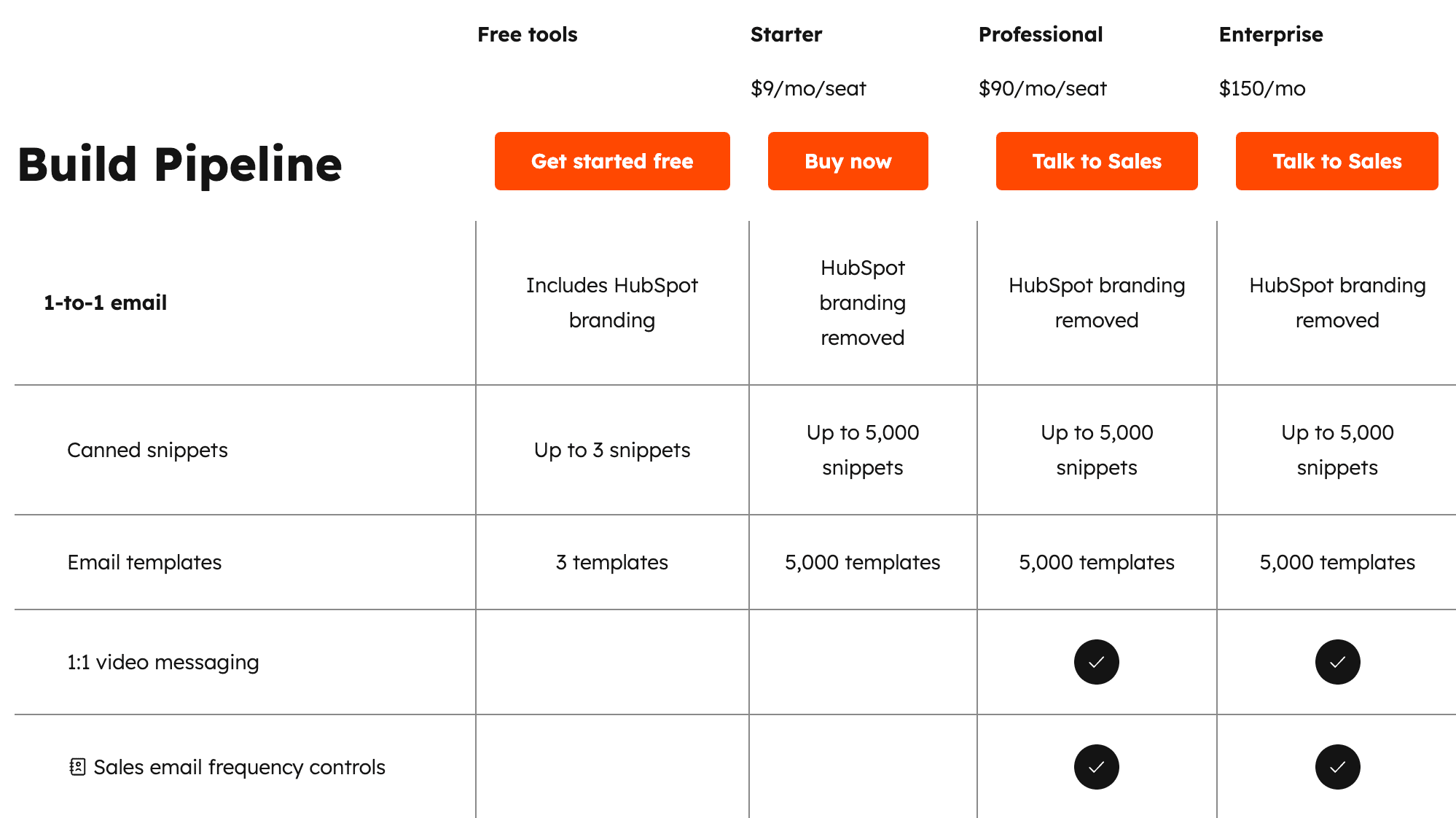
If HubSpot wanted to upsell the Professional Plan, they could send the following email to users on the Starter Plan:
“Tired of low conversion rates on cold emails? Try sending your leads a personalized video instead with our one-to-one messaging feature…”
In the email, they might also mention additional features that buyers would unlock by upgrading.
3. Offer relevant add-ons and bundles
If you self-publish an ebook online, you can charge anywhere from $5 to $30 for it.
However, if you package that ebook into a bundle that includes tutorial videos and helpful worksheets, you can charge double or triple that amount, and customers will think nothing of it. That’s the powerful effect of bundling on your market positioning.
The ebook is no longer competing with other ebooks. Instead, it’s a holistic learning experience in a market of its own. In B2B, bundling relevant add-ons can work just as well at increasing the perceived value of your product or service.
The following are examples of complementary products or services you can upsell to customers:
Onboarding packages
Custom integration setup
Higher support tiers
Extended warranty
Dedicated account management
White-glove migration assistance
Increased usage limits
Advanced AI tools
The key to picking the right one is knowing which add-on will be most compelling to the decision-maker you’re talking to.
A sales director, for example, will likely be more willing to pay for increased usage limits than a CTO responsible for custom integration setup. Know your audience and pitch the add-on that will make their lives easier and help them reach their goals.
4. Use social proof and testimonials to de-risk upsell offers
Positive reviews, testimonials, and case studies are excellent for persuading customers to accept your upsell. If they can see that businesses like theirs benefited from buying a premium version, they will feel more confident making the upgrade.
Provide social proof in all these places:
Product pages
In-app upsell modals
Pitch decks
Promotional emails
To improve the relevance of your social proof, create short testimonials and case study snippets tied to each upsell product or feature set. Make sure they demonstrate how upgrading helped customers achieve desirable outcomes, such as increased revenue, time saved, and better retention.
5. Create limited-time upsell campaigns
Campaigns with limited-time offers for upgrades, add-ons, or bundles can be very effective because they create urgency.
Just keep in mind that too many price discounts can lower the perceived value of your upgraded tier. Consider running upsell campaigns where the value is not a discount but an exciting add-on like a complimentary one-off service.
For instance, a marketing agency might give all customers a free website audit if they upgrade to the Premium package in the month of March.
6. Design post-purchase and renewal upsell sequences
Immediately after a purchase, when trust is high, and right before a renewal, when outreach is expected, are among the best times to make an upsell.
Here’s an example of a multichannel upsell sequence that runs from post-purchase to pre-renewal:
Welcome email (day 1): Confirm the purchase, set expectations, and share a checklist of steps to take for the first week. Include a soft mention of a higher-tier plan you think would be right for them.
Feature highlight email (day 7): Spotlight two features the user likely hasn’t discovered yet, then introduce a third that’s part of a higher-tier plan.
Check-in call (day 14): Ask questions about their experience. Look out for expansion signals, such as a customer mentioning they want more automation functionality or increased credits. Mention the upsell if it makes sense.
Pre-renewal email (60 days before renewal): Share what you’ve helped them accomplish so far, such as usage statistics, time saved, and goals hit. Then pitch an upsell that would help them achieve even better results next year. Top it off with a relevant case study.
Pre-renewal upsell email and call (30 days before renewal): Lead with a specific upsell idea that will resonate with the customer. Pitch the upsell in an email containing a comparison chart displaying the new capabilities and benefits they will get if they upgrade. If they don’t respond, follow up with a phone call.
In upsell emails, calls, and in-app prompts, always include a call to action, such as a one-click upgrade to a free trial of a higher-tier plan or a link to book a strategy call.
7. Train sales teams on consultative upselling
Consultative upselling is a soft, diplomatic sales methodology that involves asking pointed questions, listening for upsell cues, and avoiding any overselling.
The goal is to make your customers feel like they are talking with an expert who is helping them generate the best possible ROI from a product or service.
To illustrate, here’s an example of a consultative upsell conversation where a rep for an outreach platform is trying to persuade the buyer to upgrade their plan:
Sales rep: “How has your experience been so far with the automated buyer signal notifications?”
Customer: “They’re great. We have an up-to-date overview of lead activity with the analytics and have increased speed to lead.”
Sales rep: “That’s good to hear. A lot of our clients love that feature. Have you ever considered automating the full follow-up process by letting an AI BDR reach out to leads for you in a personalized manner? That way, speed to lead is essentially zero, and your reps can focus on other, more high-value work rather than chasing new leads.”
Customer: “We haven’t really thought of that, actually. But it sounds interesting.”
Sales rep: “No pressure, but if you’re interested, we could give you a quick live demo of the feature. It’s part of our advanced automation package, which would be one up from your current one. Clients have found that making the switch helps them save a lot of time and book more meetings. What do you think? Interested in a short demo?”
To train your reps to become effective consultative sellers, share these best practices with them:
Lead with curiosity: Go into customer meetings with the intention to learn about their current experience. Ask questions, listen closely, and then identify a worthwhile upsell if there is one.
Connect upsells to business outcomes: Prioritize talking about benefits, like increased revenue, reduced operational costs, and saved time, over features.
Remove pressure with low-risk next steps: Suggest frictionless, low-commitment CTAs, like short demos and free trials.
Share social proof: Bring up relevant customer success stories. Cover the reason the buyer upgraded and how it helped their business.
Use completed customer conversations to coach the difference between discovering a need and pushing an upgrade. Choose a specific moment, agree on a better approach and revisit it in a later call. Artie’s public use cases include sales and customer success coaching over time. Keep the customer’s actual goals at the center of the coaching rubric.
Bonus: channel-by-channel upselling techniques
The best upsell strategy makes use of multiple channels. A comprehensive strategy promotes upgrades on checkout pages, in the app, across email campaigns, and during customer success meetings.
Upselling on product pages and during checkout
SaaS brands should upsell customers near the end of the sales funnel, when enthusiasm is high, by displaying potential add-ons or upgrades on the pricing and checkout pages.
Here are the main UX elements that will help you increase average order value:
Pricing comparison grids: On your pricing page, create grids that compare plan features, as in the example form
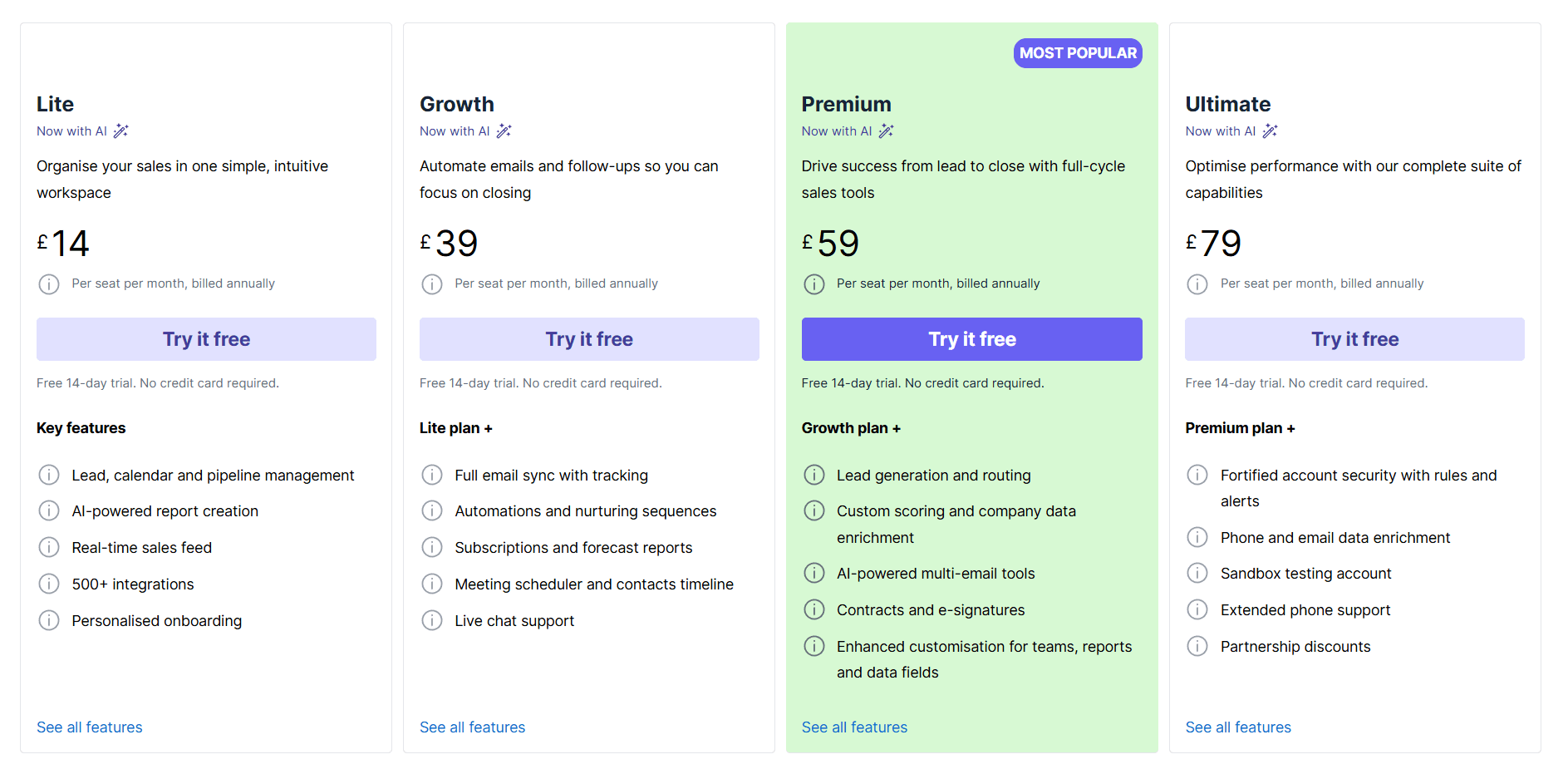
Add-on toggles: This is a user interface element that allows the buyer to click a button (often a checkbox or switch) on the checkout page to instantly add relevant add-ons to their cart.
Product recommendations near checkout: You can use pop-ups directly on your checkout page to recommend relevant add-ons.
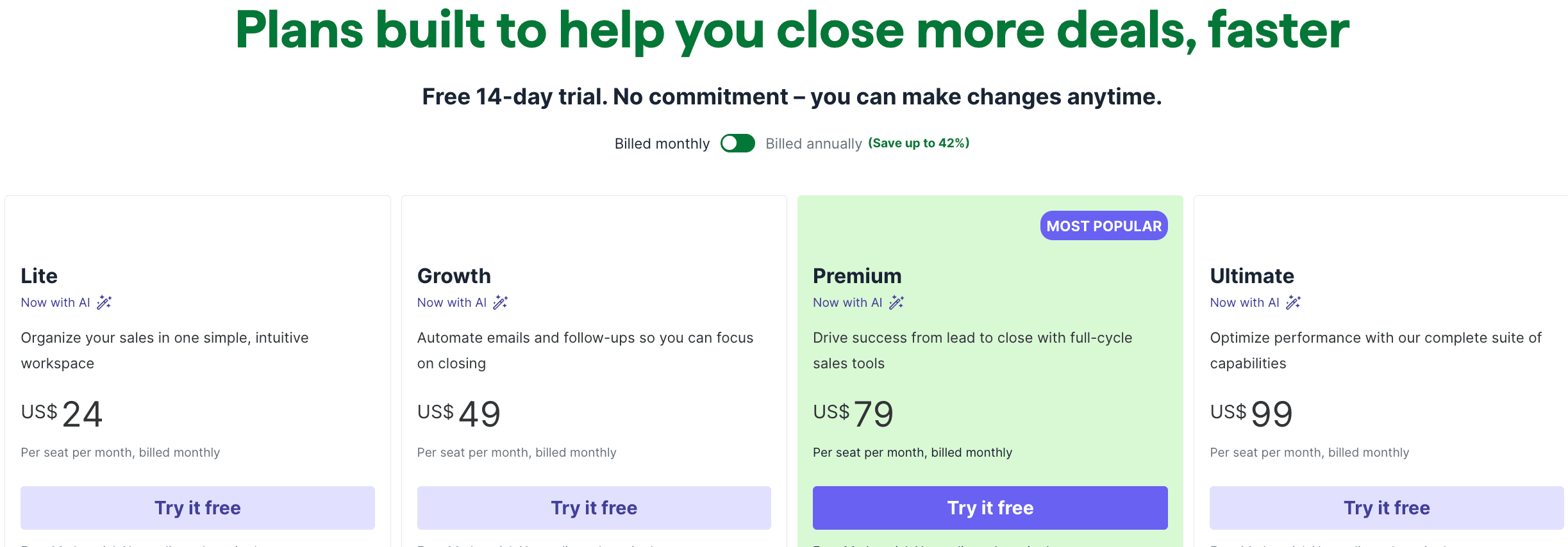
A popular and effective SaaS example of a UX upsell element is the use of annual and monthly billing toggles, which helps you sign more annual contracts because it clearly displays the lower overall cost.
For example, here’s Pipedrive’s pricing page when monthly billing is selected:
And here’s the pricing after hitting the annual billing switch.
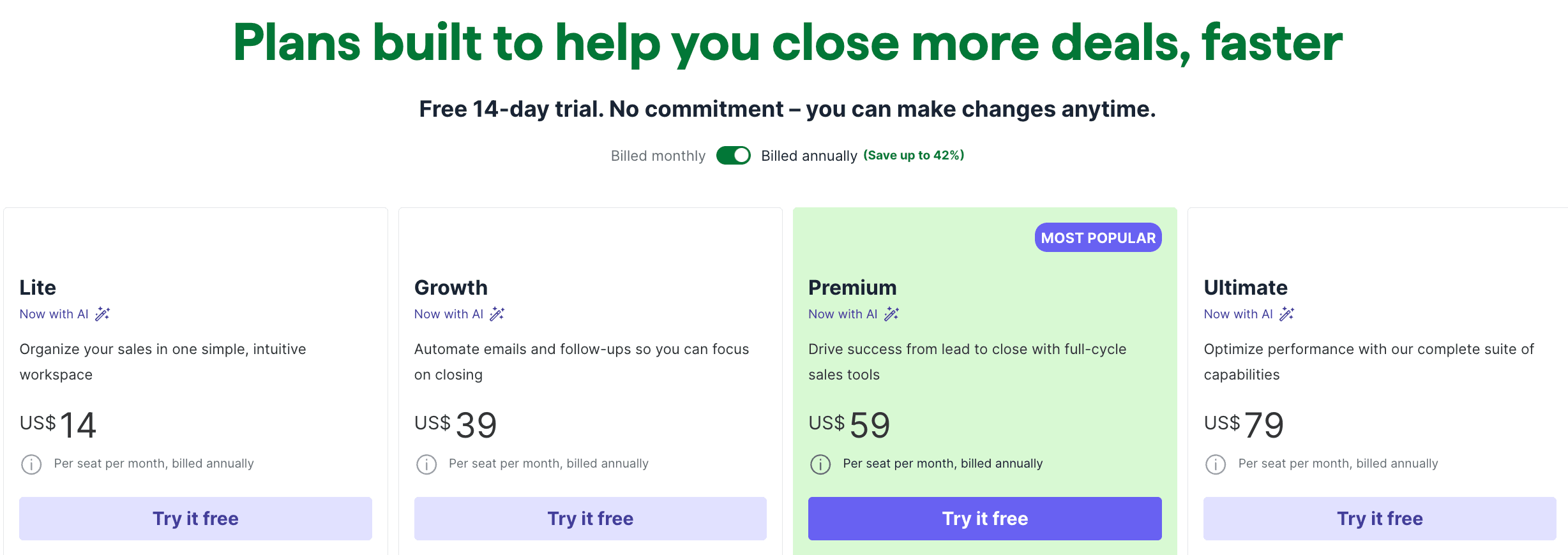
By making the price drop clear on your pricing page, you can persuade the buyer to choose it over the monthly plan, thus helping you boost order value and lock in annual contracts.
Upselling inside the product (in-app)
If you’ve ever used an app and tried to access a feature that was blocked, you were on the customer end of an in-app upsell strategy.
Instead of hiding the unavailable feature, the app made it clear that you cannot use it unless you upgrade. Often, this frustration leads the user to purchase the upgraded version.
There are various prompts you can put in your app to generate upsells:
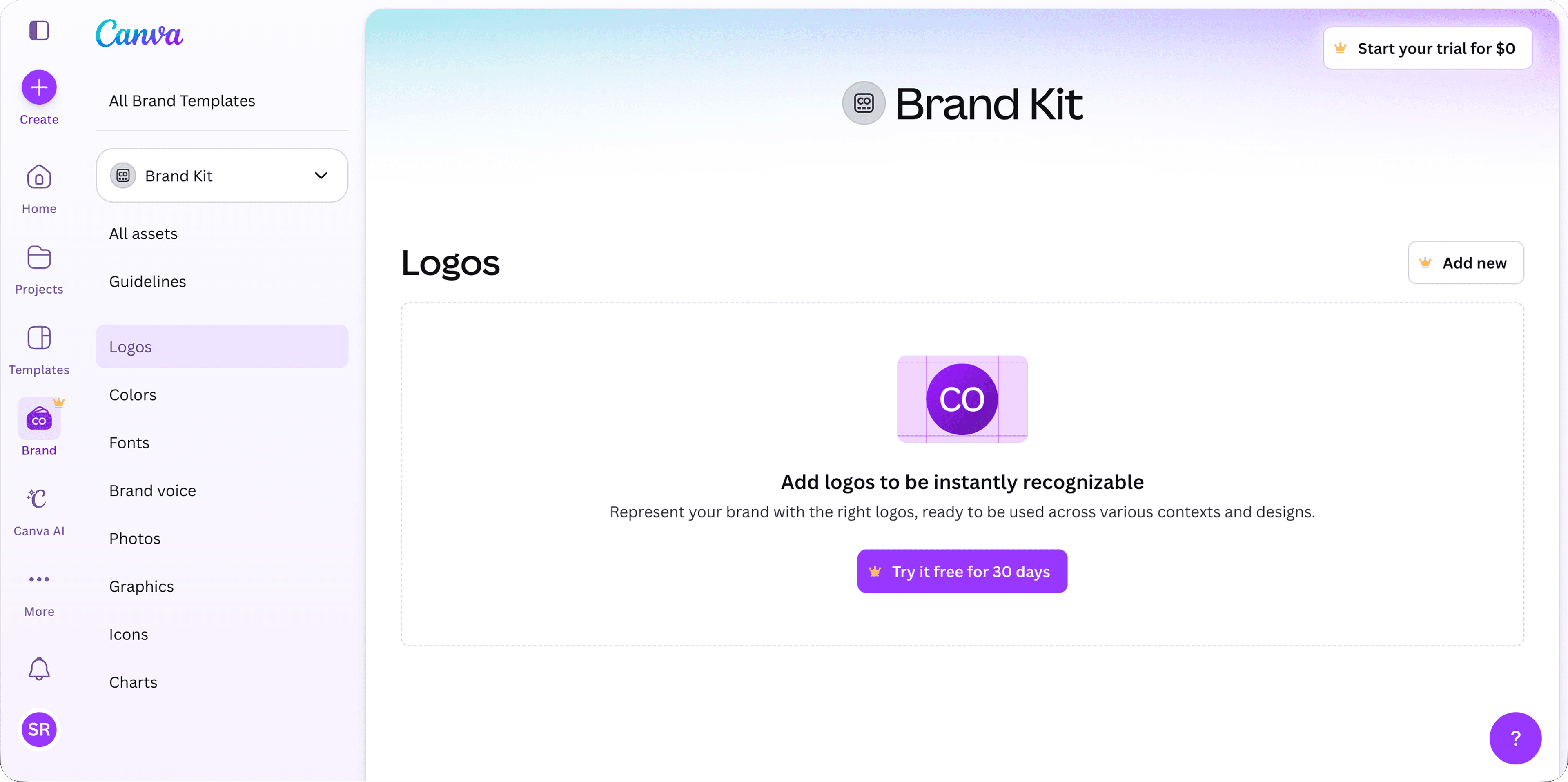
Feature gates: This is where a feature is blocked behind a paywall. To access it, buyers must purchase the upgraded plan. Alternatively, you can offer a free trial of the plan, as Canva does with an in-app CTA button that says, “Try it free for 30 days.”
Usage alerts: These are alerts that pop up in the notification section of a user’s profile and tell them when they’re running low on credits or approaching their plan’s usage caps. They include a CTA to upgrade to a higher-tier plan with more credits.
Upgrade banners: An upgrade banner is a non-intrusive UI element, usually at the top or bottom of the screen, that promotes a premium version of your apps. Canva puts its upgrade banner in the top right-hand corner of the screen:
Upselling through email and nurture sequences
Outbound email automation enables you to promote upsells at the perfect time. Specialized software monitors for intent signals on the part of your customers and triggers outreach campaigns as soon as they’re logged.
These are the most effective types of emails for upsells:
Behavior-based upsells: Triggered when a user hits a usage limit or repeatedly engages with a locked feature
Renewal nudges: Sent in the weeks leading up to renewal to both remind the user to renew and to highlight the advantages of upgrading plans
Ongoing email nurturing campaigns: A steady cadence of educational content and case studies designed to teach the customer about your higher-priced plans
Remember to segment your audience by plan, persona, and usage to keep offers relevant. Plan segmentation is especially critical here. Don’t send an email promoting an enterprise plan to a customer who is currently in your lowest plan.
How Artisan helps you reach new customers
Artisan is an AI outbound automation platform for reaching new customers at scale without adding headcount to your sales team.
AI BDR Ava, who acts as a fully autonomous sales rep, finds target accounts, tracks their online behavior, and sends tailored sequences to customers. You can also use the data she collects to pitch upsells to your existing customers via your CRM.
Detect upsell signals from website and product behavior
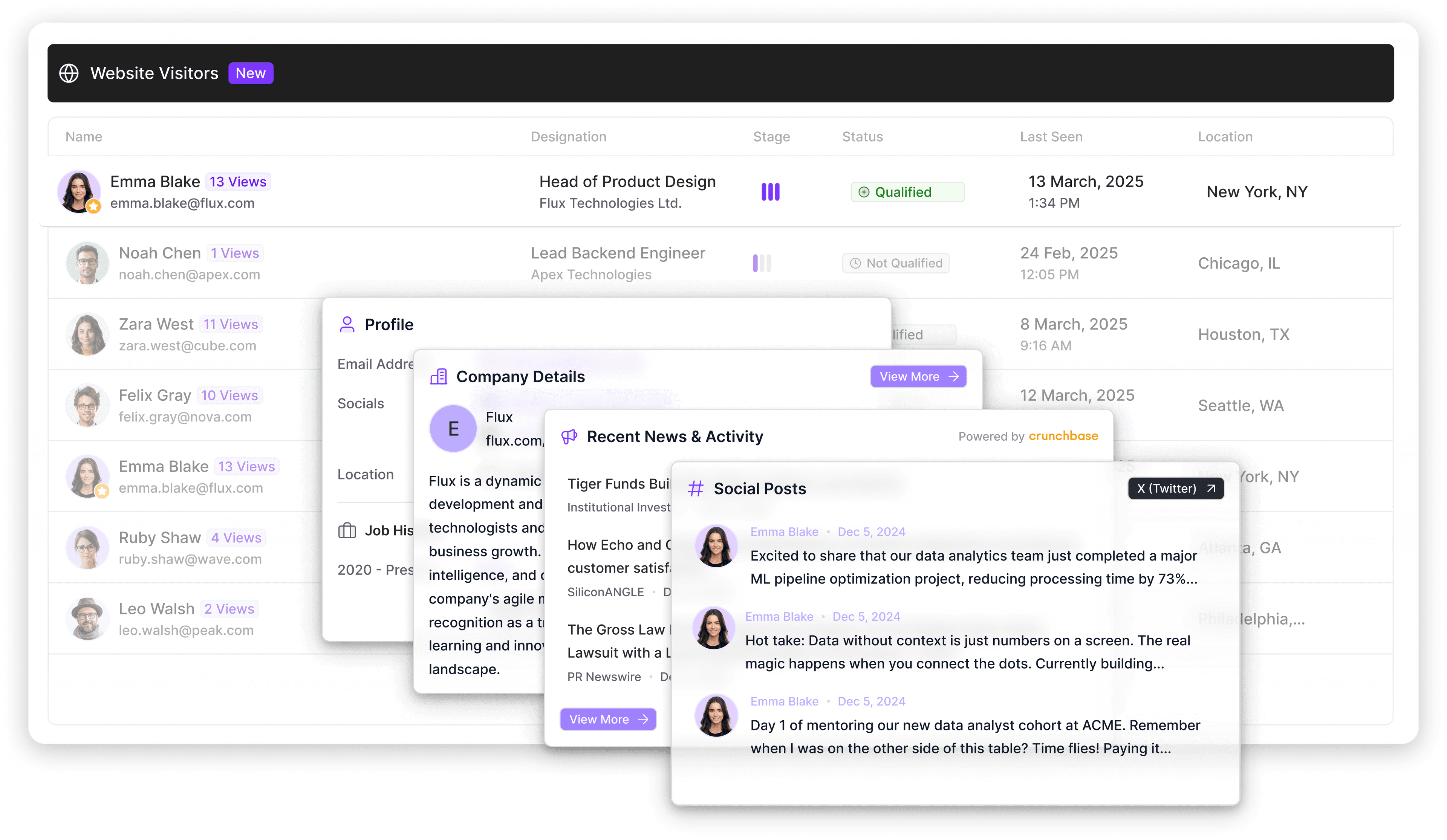
Artisan’s web visitor tracking software reveals your web visitors, tracks their behavior, and segments them based on their likelihood of buying. That way, your team can focus on selling to leads and existing customers who are already interested in a conversation.
Launch targeted sequences for new customers with Ava
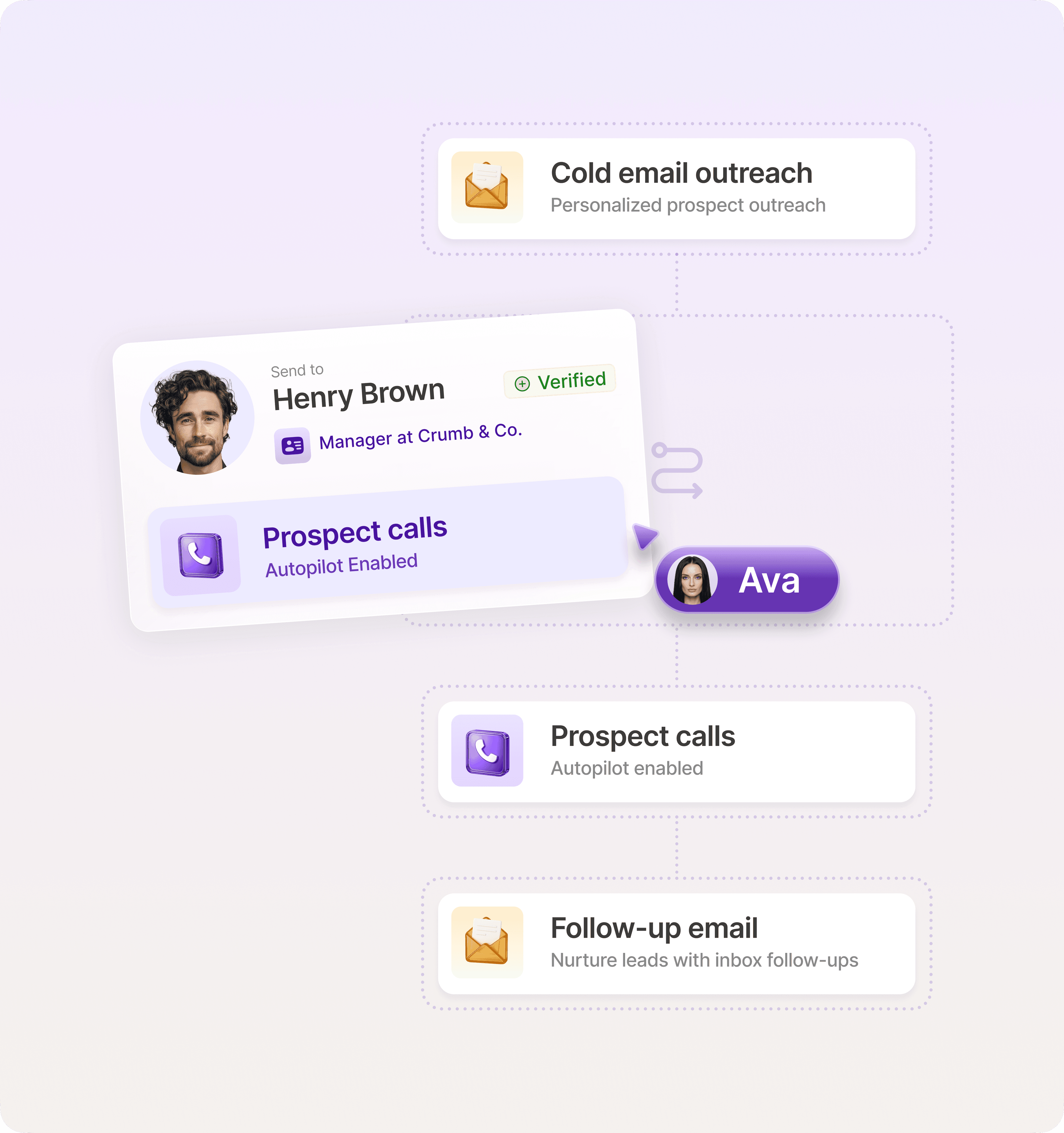
Ava automatically crafts personalized upsell sequences, sends them across email and social media, and flags decision-makers that respond positively. She sources meetings for your sales team on autopilot.
Keep CRM, metrics, and playbooks in sync
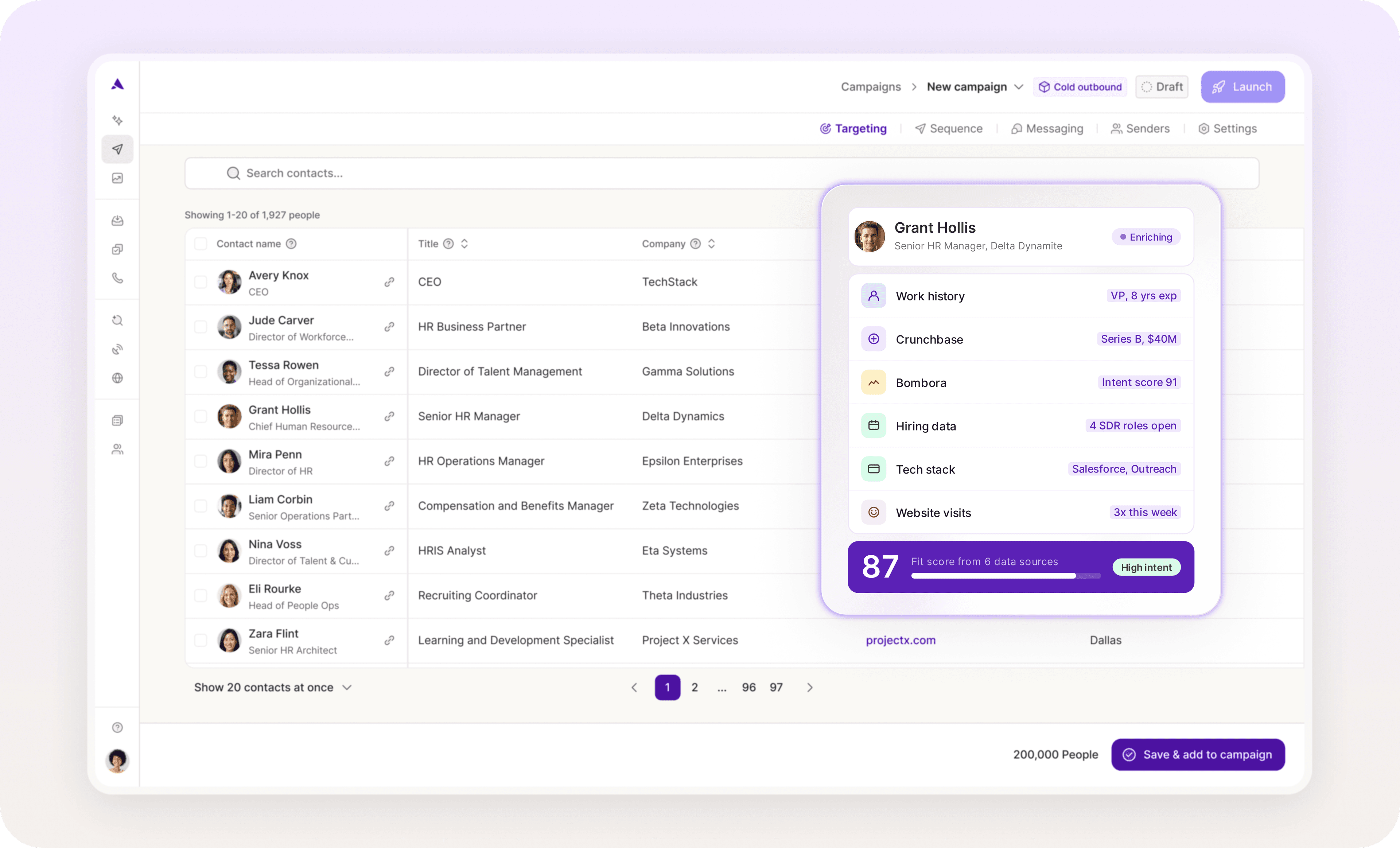
As an all-in-one outbound tool, Artisan combines B2B data enrichment, email delivery, web visitor tracking, and intent tracking, all while providing strong reporting and seamless CRM integrations. This allows you to consolidate your outbound tech stack and manage sales playbooks from a single platform.
Go from one-off emails to a scalable revenue system
An upsell strategy that relies primarily on manual opportunity identification and outreach is impossible to scale.
That’s why B2B SaaS sales teams are turning to AI to help them find opportunities, manage outreach, and set meetings.
Artisan runs automatic nurturing sequences for new leads and gives you the data you need to upsell existing customers. It lets you scale your marketing strategy and boost customer lifetime value without hiring new reps or sacrificing personalization.
Automate your outbound with an AI BDR
Meet Ava—your AI BDR who handles prospecting, outreach, and follow-ups, so your team can focus on closing.

Sam Rinko
SME @ Artisan
Sam Rinko is a former SaaS sales rep turned tech writer. He sold real estate software before writing about lead generation, cold calling, and AI sales tools.