B2B buyer persona guide for SaaS growth
Learn how to build B2B buyer personas that improve messaging, outbound, and conversion rates across your GTM motion.

If your B2B buyer personas are off, you’re almost certainly wasting budget on campaigns and outreach that aren’t resonating.
However, there’s good news. Once you create accurate personas, changing your messaging is a fairly easy process.
The result of messaging that targets buyers accurately? Deeper engagement, higher-quality meetings, and, naturally, more sales.
Where do most B2B buyer personas break down?
A B2B buyer persona represents a category of individuals responsible for buying decisions in your target accounts (these are usually companies in B2B). It is a fictional composite, or collection of traits, drawn from a segment of your potential market.
In theory, understanding the people behind your target accounts should be straightforward. But personas often fall short, sabotaging sales and marketing messages.
Buyer personas underperform for the following reasons:
Focusing on demographics above internal influences, success metrics, or constraints limits understanding.
Using target audiences as buyer personas results in profiles that lack deeper psychographic and behavioral insights.
Building buyer personas based on gut feelings rather than research, interviews, and CRM data leads to incorrect assumptions.
Failure to align sales and marketing teams leads to mixed messages throughout the funnel and inconsistent buyer experiences.
Imagine receiving two emails. One from a company that tells you how their tool can help you overcome your pain points and reach your goals. The other uses generic messages and fails to understand your challenges. Which one are you most likely to reply to?
The answer is obvious and backed by research. McKinsey found that 57% of market winners run highly personalized strategies. It’s one of the five key tactics that set leaders apart.
Dean Mahmoud, CEO of EcoGen America, has decades of experience running businesses that require deep, accurate customer data. He has seen firsthand how buyer personas directly impact conversion rates. “When we stopped sending broad, generic messages,” he told me, “and instead began tailoring the content to the unique operational objectives of each stakeholder involved with purchasing, our lead conversion rate grew 14.3%.”
What a high-impact B2B buyer persona actually covers
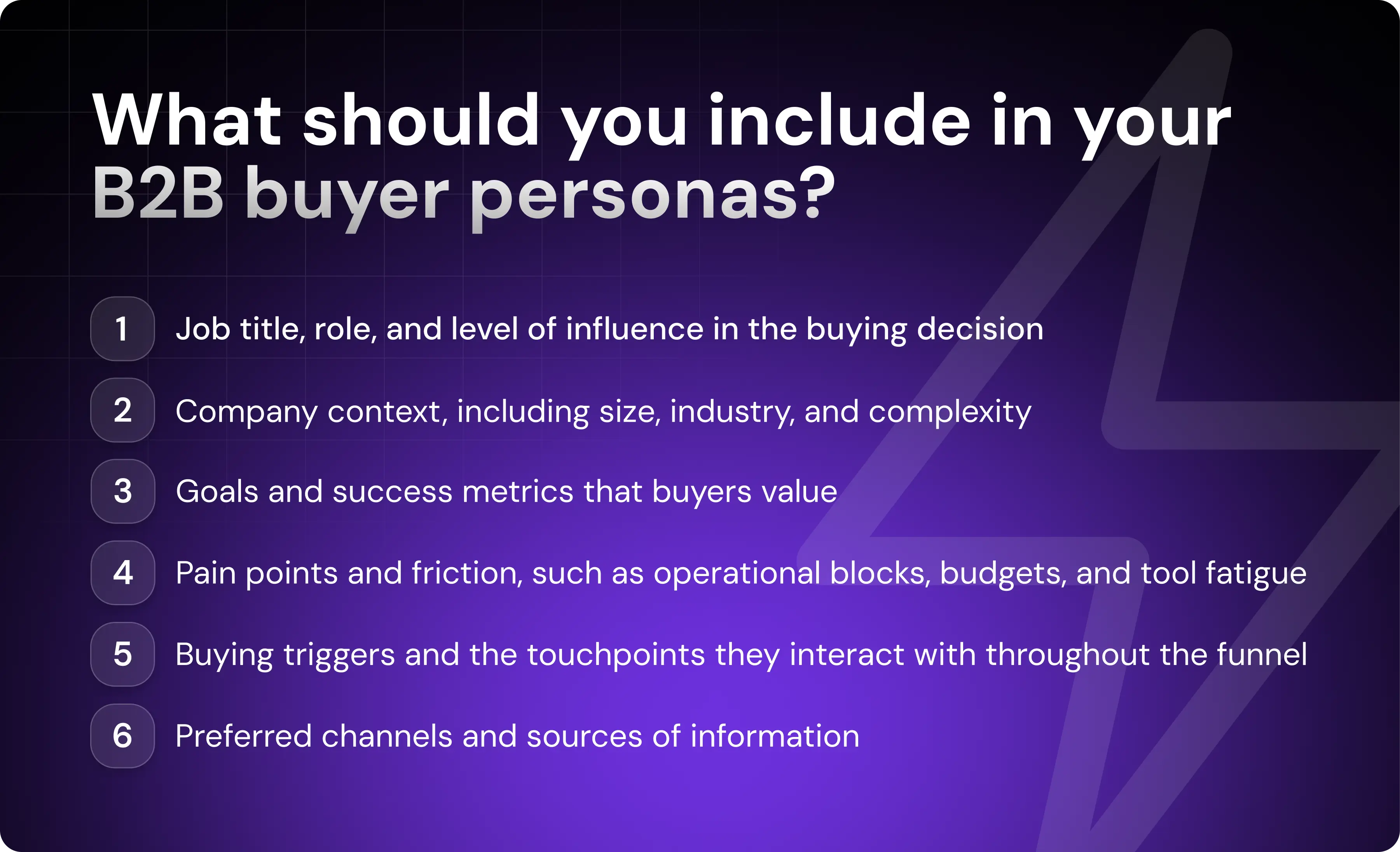
A buyer persona paints a clear picture of the people who purchase a particular type of product.
The best personas contain precise, practical information. They would, for example, enable a rep to write a relevant cold email or a marketer to develop targeted lead-generation strategies, even if they’ve never met somebody who fits the profile.
Role, job title, and influence
A persona is built, in part, around the roles of the buyers in a company’s target segment and includes information about their ability to impact buying decisions.
The following elements form the core of a buyer persona:
Primary job title: A job title represents a cluster of related roles within a segment. For example, you might pick “Head of Marketing” to represent marketing VPs, strategists, SEO leads, and so on.
Reporting line and authority: It’s worth noting which roles sit directly above and below each buyer in the hierarchy. Also, pinpointing whether they have command over budgets and goal-setting will give you a better understanding of their limitations.
Influence over the purchase decision: Here, you should outline how much influence the buyer has over the final purchase decision. Are they a final decision-maker or a link in a rather long chain?
To go one level deeper, some personas also include jobs to be done (JTBD)—the tasks buyers are responsible for daily. This gives marketing and sales a strong idea of their concerns and pain points. The key is to focus primarily on tasks that directly relate to a solution or category.
Company context
In B2B, a buyer persona should first and foremost represent the people behind buying decisions. But it’s still important to understand the type of business they work for.
These attributes of a persona provide company context:
Industry: Company niche and broader industry. For example, financial planning for seniors (niche) and finance services (sector).
Company size and growth stage: Company size by employees and revenue and pace of growth (startup, high-growth, mature, enterprise expansion, etc.) This provides context for understanding their decision-making process, risk tolerance, and budgets.
Internal complexity: The number of stakeholders involved in decisions and approval layers.
Goals and success metrics
What does success look like for an ideal buyer? This insight is crucial for salespeople and marketers because it helps them position a solution as an easy way for buyers to achieve their goals.
A persona will typically include all of the following buyer goals:
Commercial goals: What the buyer is hoping to achieve this quarter, year, or over the long term. For example, “gain more market share” or “increase customer satisfaction.”
Role-specific KPIs: The exact high-level metrics they track on a regular basis. An email marketer, for example, would monitor positive response rates.
Internal pressure points: The expectations senior employees and leadership have of the buyer. Positive ROI and a streamlined vendor sign-off process are both examples.
Pain points and friction
B2B buyers aren’t totally rational. They are under pressure to hit targets and impress stakeholders. If messaging speaks to those underlying motives, it’s far more likely to convert.
Personas usually include a mix of the following pain points and sources of friction:
Operational blockers: Issues that slow internal processes, like supply chain disruptions and slow approval cycles.
Process gaps: Inefficient parts of the buyer’s workflow, such as poor cross-team communication or limited visibility into individual performance.
Tool fatigue and manual workload: Any issue with their current stack that adds unnecessary stress. Such fatigue often stems from juggling multiple platforms or using limited or buggy ones. You should also note where the buyer still relies on manual tasks that your solution can automate.
Budget sensitivity and price concerns: The upper limit of what leads are willing to pay. Every buyer, no matter their role, will be conscious of how your product affects their bottom line. But buyers will have unique concerns. For example, a head of sales at an enterprise company may be willing to spend more and wait 12 months before seeing a profit, while a small business is more likely to want quick results.
Buying triggers and journey
A buyer persona should clarify why buyers might choose a solution by mapping their every potential move, from the moment they first start thinking about a product all the way through to purchase. This involves identifying the behavioral triggers that influence their actions or cause them to stall.
Personas should outline the following aspects of the buyer journey:
Events that initiate research: Performance dips, new growth targets, leadership changes, budget cycles, and competitive pressure.
The typical buying process length: Whether decisions happen in weeks or months and which stages tend to slow momentum.
Internal objection processes: Common concerns raised by stakeholders, how objections are raised internally, and the people who need to be convinced.
Approval steps before purchase: The sign-offs required before a deal can close.
Signals that indicate purchase readiness: Behaviors that indicate buying intent, such as viewing tool comparison articles, requesting case studies, or checking pricing pages.
Channels and information sources
The average B2B buyer journey is complex, with over seven touchpoints. SaaS marketing and sales teams need to understand how potential decision-makers behave online to meet them where they are with messages that engage them.
Personas usually combine the following data points to describe an optimal channel mix:
LinkedIn behavior: The posts buyers like, share, and comment on.
Preferred content formats: Whether a buyer prefers long-form articles, short videos, webinars, or case studies.
Influencers, peers, and communities: Industry voices, groups, newsletters, and peer networks that shape their opinions.
Progress-driving touchpoints: The interactions that advance the buyer through the funnel, such as viewing product demos, reading customer stories, or engaging in sales conversations.
Buyer persona vs. ICP vs target audience
You’ve probably seen the terms “ICP,” “buyer persona,” and “target audience” used interchangeably. However, they differ significantly. Each should have a distinct function in your SaaS marketing strategy, with buyer personas being the most in-depth of the three.
Ideal customer profile (ICP)
In B2B, an ideal customer profile (ICP) should outline the type of company that benefits most from your solution and, therefore, delivers the most value.
An ICP is made up of the following firmographic and operational data:
Company size and revenue range
Industry and market segment
Tech stack and existing tools
Budget maturity and buying capacity
Detailed ICPs are especially important for account-based marketing (ABM) campaigns where sales teams need to identify, prioritize, and target the most profitable accounts.
B2B buyer persona
A buyer persona goes a step beyond the ICP to profile a group of individuals who will influence or finalize the purchase. It dives deeper into psychology, behavioral triggers, and the influences that drive buyers to seek your solution.
Here are the three key types of buyer personas:
Primary: A primary persona describes key decision-makers who would be responsible for interacting with your sales team and finalizing a deal.
Secondary: A secondary buyer persona represents a category of employees who influence the buying decision but do not make the final decision. These stakeholders are often crucial to the final sale, and you will typically have multiple secondary buyer personas.
Negative: A negative buyer persona contains a collection of characteristics that indicate unsuitable leads. These personas help you to effectively focus marketing initiatives to save time, budget, and resources.
For example, a SaaS team collaboration tool targeting marketing teams may have a CMO as its primary persona and a marketing director as one of its secondary personas. The negative persona may represent companies with small marketing teams that don’t require collaboration tools.
Target audience
Your target audience is a group of accounts that you target for a particular campaign. Rather than a detailed individual profile, this is a segment within your addressable market that shares geographic, demographic, and firmographic characteristics. It refers literally to a set of individuals or companies, compared to buyer personas, which are semi-fictional profiles

Automate your outbound with an AI BDR
Meet Ava—your AI BDR who handles prospecting, outreach, and follow-ups, so your team can focus on closing.
How to build B2B buyer personas that convert
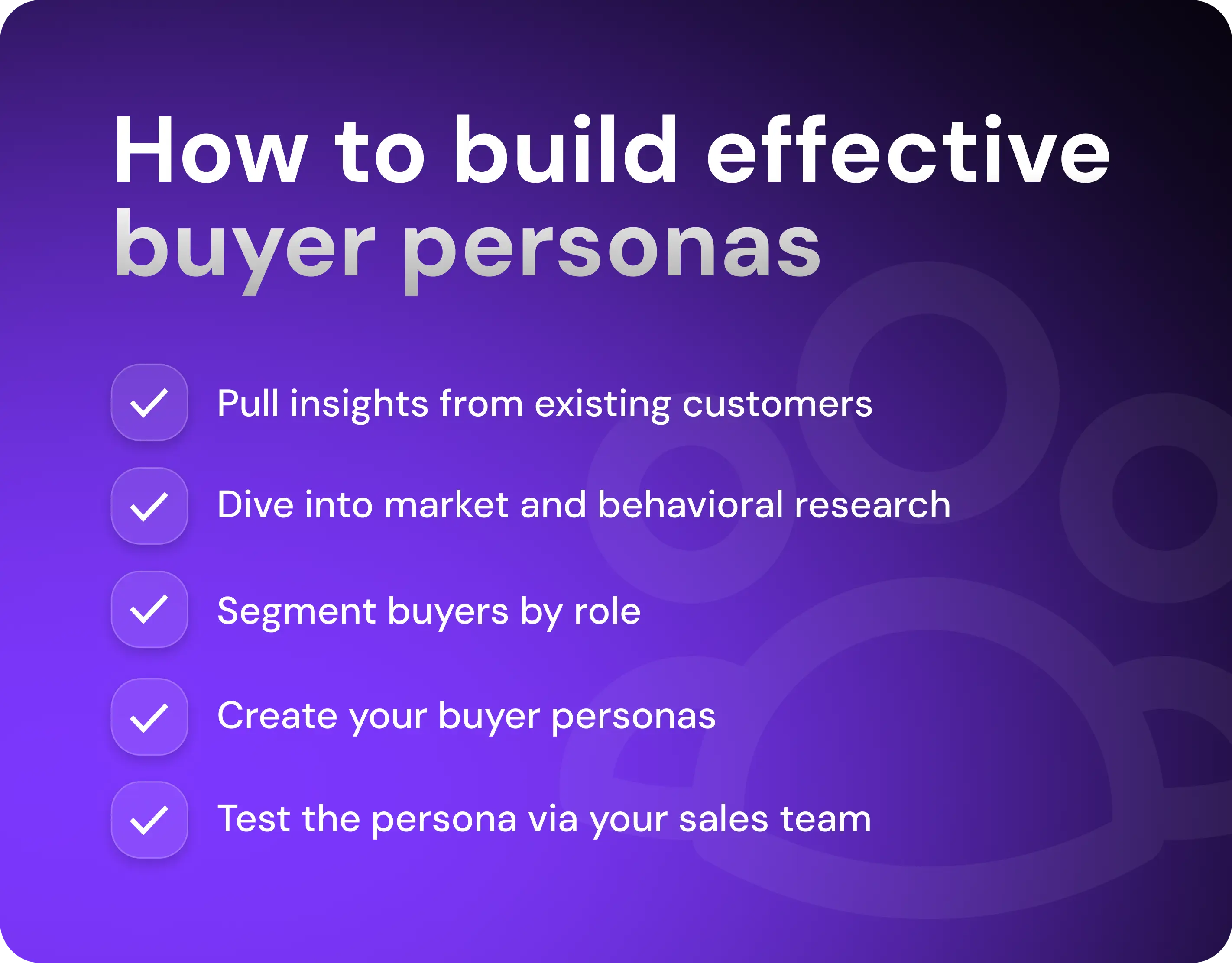
A B2B buyer persona is a blueprint that helps businesses understand and align with leads’ goals and pain points.
But a persona will only improve your communications if the details contained in it are correct. That means following a thorough research process to reveal what actually makes your customers buy.
Start with existing customers
Your first stop should always be your current customers. Look at the types of customers in each segment who choose your highest-tier plan, share sparkling feedback, and have stuck with you long-term. Once you’ve identified them, you need to obtain all the necessary insights for your persona.
Here’s how to learn more about your top customers to create full buyer personas:
Surveys and feedback forms: Send customer surveys with a mix of quantitative questions for easy analysis and open-ended questions that provide deeper insights.
Interviews or focus groups: Explore buyers’ perspectives face-to-face by asking about the devices they use, the product benefits they value most, and the pain points your product solves.
Analyze internal data: Pinpoint the messages, channels, and touchpoints that influenced their buying decision.
Remember to offer incentives if you’re asking for a significant amount of your customers’ time. This will encourage them to spend more time on answers, generating more accurate insights.
Layer market and behavioral research
Market data and behavioral signals are valuable sources of information for understanding how buyers behave across channels. Insights from data vendors, website tracking, and social media are all useful here.
Use the following sources to identify common behavioral patterns:
Buying signals and intent data: Track behaviors like website visits, content engagement, outbound replies, and demo requests among specific segments to better understand how they act prior to purchase. This information can then be included in the buyer persona.
Social listening: Examine the pain points, objections, and talking points buyers interact with and share on social media.
Content and channel activity: Identify which formats buyers trust and where they consistently spend time.
When it comes to behavioral insights, your tools matter. Artisan is an outreach platform powered by AI BDR Ava. Ava uses your personas—including specified behavioral patterns—to find leads from a database of over 300 million B2B, ecommerce, and local profiles.

Segment by decision role
Many B2B deals stall because messaging is aimed at a business rather than an individual. Typically, within a company, different types of buyers influence the purchase decision, each taking a unique role.
Segment your B2B buyers into three core decision roles:
Economic buyer: These have to approve funding for a product and are decision makers, although they may not use the product themselves. They are typically looking for ROI to be justified.
Technical evaluator: These analytic buyers care about complexity, implementation effort, and long-term maintainability. Roles include CTOs, technical leads, and solutions architects.
Champion or influencer: These are the buyers who are likely to be excited about your solution. They care about usability, speed, and outcomes and are typically managers, designers, and end users.
You should treat each of these buyers as a separate persona because they will respond to different messages about your product.
Angelina Losik, an expert in business strategy, has worked across multiple B2B marketing teams and has in-depth experience developing personas. For Angelina, it’s vital that personas address role-specific needs. “The COO, for instance, usually wants to reduce manual-intensive tasks and eliminate interruptions to their daily routine,” she told me. “The head of delivery, on the other hand, is responsible for delivering on plans and resolving issues that may arise.”
“Unfortunately, the majority of roles get clumped together when creating a buyer persona. For the buyer persona to provide real value to a company as part of its marketing strategy, it needs to go beyond just demographic information and encompass other aspects of who the client is—motivations, pain points, and aspirations.”
Create the persona: Template
While you should give your persona a name and identity, don’t get carried away with storytelling. There’s no need to write in flowery prose or mention that the buyer owns a cat.
Instead, focus on characteristics and emotions that are relevant to your solution and use direct language that sales and marketing teams can easily interpret.
Each buyer persona should clearly define:
Job title and core responsibilities
Primary goal, summarized in one sentence
Type of company, including industry, size, and growth stage
Team or department size
Role in the buying process (decision-maker, influencer, evaluator)
Key stakeholders who influence or contribute to decisions
Example of a buyer persona
Let’s put this framework into action. Here’s an example of a basic buyer persona for an accounting solution for SMEs.
Name
Tim Jankowski
Job title
Founder and CEO
Company type
Construction company
Company size
10 to 40 employees
Growth stage
Early growth, scaling operations, and taking on more projects
Team structure
Multiple crews working across several active projects
Buying role
Final decision-maker
Primary goal
Organize payroll, manage costs, and maintain profitability so the business can scale.
Key responsibilities
Overseeing multiple construction projects at once, managing payroll for salaried and contracted employees, monitoring project profitability, and ensuring compliance with labor laws.
Pain points and friction
Payroll is challenging to manage across projects and employee types, and project profitability is difficult to grasp. The team still relies on manual spreadsheets, causing errors and delays.
Buyer journey
The first interaction with the company occurs via a paid Instagram ad. It’s triggered by growth-related stress as the buyer becomes concerned that they can’t keep up with payroll.
Constraints and objections
The buyer is ROI-driven and skeptical of complex, expensive software. They want reassurance that the product is compliant, secure, reliable, and easy to implement.
What success looks like
A straightforward system that tracks hours, payroll, and project costs, reducing admin and accounting errors. The buyer wants the freedom to focus on growing the business while maintaining professionalism.
Channels and information sources
The buyer often uses social media content, ChatGPT, and blog posts to learn about business accounting.
Pressure-test with sales
Don’t treat a new persona as complete until it performs in the real world. You should start by asking your sales team to apply it in limited cases for fast feedback that won’t burn your budget.
To start, share the buyer persona profile with sales reps and give them a small set of trial messages to run across email and LinkedIn. Test several variations to target different pain points, triggers, and goals, then review the results.
Are you receiving more call bookings and responses from the right people?
Analyze key sales KPIs—such as meetings booked—to determine whether specific messages fall flat and refine your assumptions accordingly. In addition, update the persona based on what sales hears in live conversations. You can then rework and retest your profile, continuing the cycle until your persona connects with high-value buyers.
Using buyer personas across marketing and sales
Once you’ve developed a proven buyer persona, it’s time to put it into action. Buyer personas are useful at almost every stage of the sales cycle. They help you shape messaging, score leads, and can inform sales conversations.
Messaging and content creation
B2B buyers now self-educate before reaching out to salespeople. That’s why buyer personas must actively influence messaging and marketing decisions to ensure content resonates and addresses real concerns.
Apply your buyer persona to the following channels for inbound lead nurturing:
Persona-led content planning: Create content that aligns with a persona's priorities and pressures, not a broad audience. At Artisan, we include the persona directly in the content brief to keep content focused and commercially relevant.
Stage-based messaging: Align messaging to the buyer's journey stage. Early-funnel content should help readers understand the problem and solution, while mid-funnel content should help them evaluate options.
Formats mapped to decision roles: Often, individuals prefer different formats and channels depending on their role. Align content types across social, email, and long-form assets to how each persona prefers to learn about and evaluate options.
Outbound and outreach strategy
Buyer personas are foundational to effective outbound sales and marketing. Without them, lead nurturing quickly becomes generic, which puts off modern B2B buyers who expect precise targeting and, often, personalization.
When personas are clearly defined, you know who you’re targeting, which messages they’re likely to respond to, and where they’re most likely to engage. This makes communication much more effective, leading to a lower customer acquisition cost (CAC) and higher close rates.
Here’s how to apply buyer personas to B2B sales channels:
Persona-specific LinkedIn outreach: Tailor outreach to each persona's stage in the funnel to improve reply rates.
Email personalization: Structure emails and subject lines around the buyer’s fundamental challenges, business goals, and inefficiencies.
Multi-touch sequencing aligned with buying intent: Design sequences that tap into buyers’ preferred channels and way of progressing through the sales funnel, for example, discovery on social media and deepening engagement via case studies.
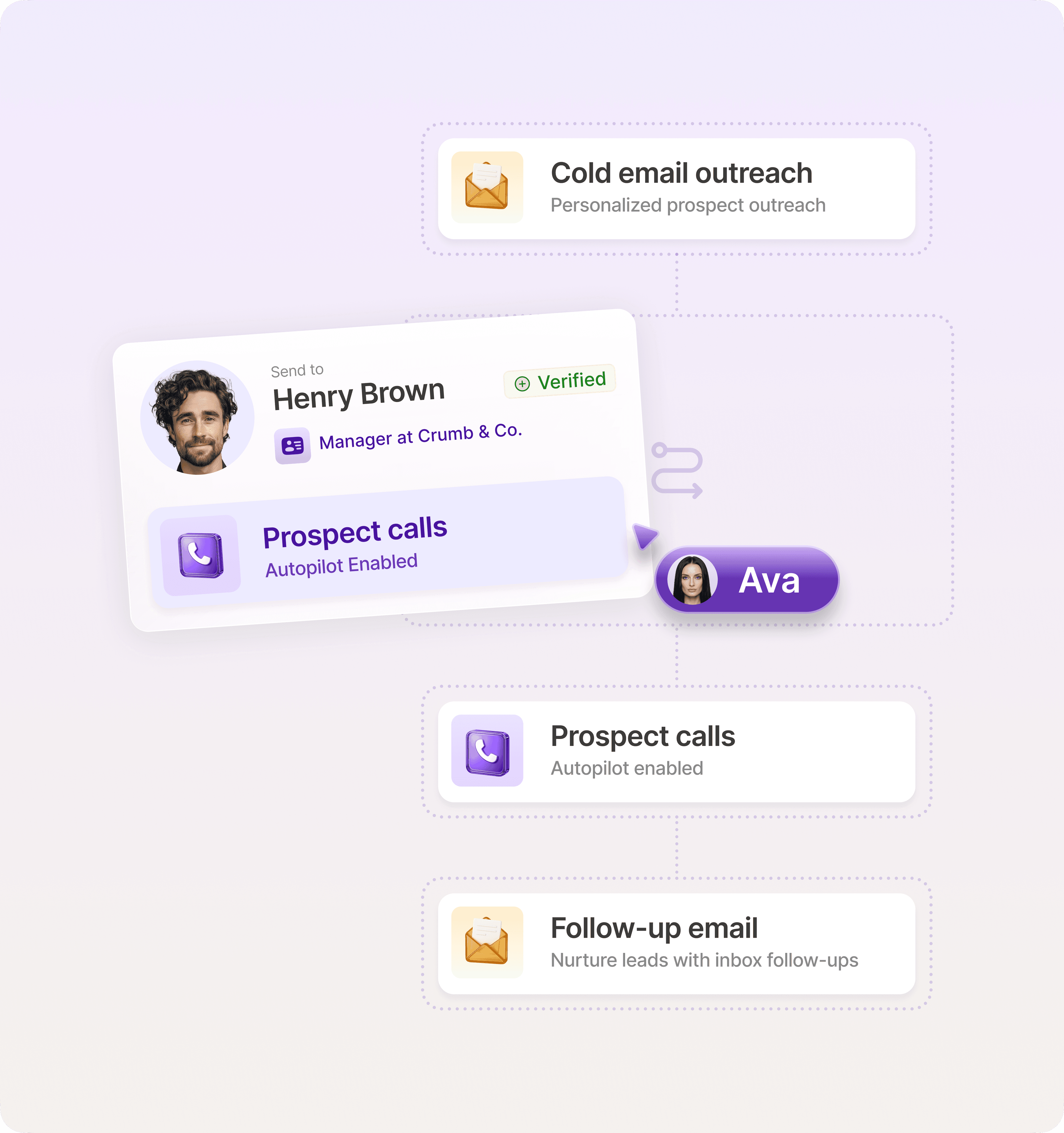
Artisan helps you create in-depth buyer personas and then automates outreach across email and social media. AI BDR Ava researches leads, crafts personalized messages, and delivers them at the best times and frequency—all on autopilot.
Keeping buyer personas relevant over time
Buyer personas are constantly in flux due to industry shifts, moving targets, and emerging technologies. You must update them regularly, or you risk running campaigns that fail to connect, even if you’ve been successful in the past.
Feedback loops with sales and marketing
Don’t make the mistake of leaving the design and development of the buyer persona to a single team—or worse, an individual.
You need collaboration from your sales, marketing, customer service, and business strategy teams to ensure the persona aligns with overall business goals and incorporates insights from every touchpoint.
Regular meetings to review the buyer persona, based on continuous data, help keep it fact-based and up to date across the entire funnel, from lead generation to sales meetings.
Give each proposed persona change a source. A short feedback digest should distinguish a pattern across several conversations from one customer's preference and flag evidence that contradicts the current persona. Maintaining that digest is a specific ongoing assignment to evaluate with Artie, an AI employee. Sales and marketing should still agree which findings justify a revision.
Updating personas for new products and markets
One persona doesn’t fit all. When you introduce something new—whether that's a product or customer segment—you need to adjust your persona to fit.
It’s vital to research the individuals that your new solution might appeal to. And in different markets, this can vary widely.
For example, the design tool Canva was originally for individual designers, small businesses, and marketers. However, they have since started to target enterprises. Recent ads show teams at large companies collaborating on ideas in the app. These ads have a distinctly different tone from messages like “What will you design today?” that were focused on individuals.
Your personas are ready but your stack might not be
Many businesses create buyer personas and then forget about them or refer to them only occasionally. But in truth, buyer personas are operational assets that help you drive quality pipeline. A persona that is well-researched, carefully developed, and tested acts as a solid basis for your sales and marketing campaigns.
Once you have a loose buyer persona, you can test and refine it using a tool like Artisan. Artisan’s AI BDR Ava automates email and social media outreach and runs A/B testing in the background, helping you quickly see which angles resonate with buyers.
Automate your outbound with an AI BDR
Meet Ava—your AI BDR who handles prospecting, outreach, and follow-ups, so your team can focus on closing.

Marsha Dunn
SME @ Artisan
Marsha Dunn is a writer helping businesses connect with customers and build credibility. She specializes in B2B thought leadership rooted in expertise.