How to approach retail stores to sell your product
Learn how to pitch retailers, prep your sell sheet, and get your product in stores. A step-by-step playbook for small brands and entrepreneurs.
You want as many consumers as possible to see your products.
However, retailers have high expectations. To impress them, you’ll need a carefully planned approach—tailored outreach, a smart pitch, and proven margins.
Is Your Product Retail-Ready?
Is your product retail-ready? If it’s not, even the best retailer outreach in the world won’t yield any results. That’s why it’s important to start by taking stock of your inventory, materials, and online presence.
Gut Check: Can You Deliver at Scale?
Before pitching to retailers, you must ensure you’re in a position to fulfill their requirements.
Here are four essential check-in questions to ask:
Do you have enough inventory? While a smaller store may only ask for a few months' supply on hand, larger stores often require stock for multiple locations and warehouses. That’s a lot to deliver. Can you live up to it?
Can you offer reliable fulfillment? Assess your logistics. If you’re offering a fulfillment and distribution deal, be sure that you can ship products when needed. Don’t forget to factor in pantry loading and the cycle of buying. Will customers be repurchasing your products once a year or once a month?
Does your packaging look sharp and shelf-ready? Your packaging should appeal to your target consumers. Avoid cheap sticker labels and flimsy packaging.
Is your pricing solid, with wholesale, retail, and margins clearly defined? You should be able to explain financial details with ease.
You must be ready to answer these questions with precise numbers—quantities, timelines, and margins—to prove you’re a reliable partner.
Prep Your Materials
When it comes to pitching, retailers typically expect to receive a standard set of documents.
Prepare all of the following before reaching out to retailers:
Line sheet (PDF or link): This is your catalogue. It should include pricing, stock-keeping units (SKUs), and minimum order quantities (MOQs) for each product.
Product sell sheet: A short, focused document outlining product benefits, key specifications, how to order, contact information, and high-resolution images.
Founder story (bonus): One or two sentences about you, plus any press coverage or social proof that builds credibility.
Every document should be polished and visually consistent, featuring fonts, colors, and images that align with your brand. If you don’t have an in-house editing and design team, tools like Canva offer templates that you can quickly edit to create appealing materials.
Be Findable and Credible
Retail buyers will often check Google and social media to judge whether you’re legitimate. That’s why an easy-to-find and attractive online presence can be the difference between a call back and radio silence.
Here are the two main channels you should maintain so retailers can find you online:
Your website or Shopify page: Ensure it uses brand colors, is up-to-date, and professionally showcases your products.
Your social media accounts: Stay active on the platforms your customers use most (Instagram, TikTok, LinkedIn, etc.).
On these channels, sprinkle in social proof at every opportunity by reposting customers’ social media content about your brand, highlighting positive reviews, and shouting about awards you’ve won. This will help retailers feel confident that consumers value your products.
Choose the Right Retail Stores (Don’t Spray and Pray)
The stores you choose are important. You’re essentially entering into a retail partnership with their brand.
Your choice of retailers must make sense to consumers—otherwise, you risk low sales or even harming your brand reputation. For instance, a luxury skincare line is unlikely to connect at a local discount store and may lower the brand’s perceived value.
Start Small, Win Fast
It’s better to start by learning how to catch a fish, not a whale. Quick wins from local marketing will build momentum and prepare you for bigger challenges.
Here are the key places to start looking for small business retailers:
Local stores: These retailers are more likely to support your brand because they're from the same area.
Indie boutiques: Here, alignment is key. Select specialized stores that cater to customers who make up your target market.
Neighborhood gyms and cafes: These aren’t traditional retail outlets, but if your product aligns with their customers, they may be open to stocking a small selection.
Direct-to-consumer (DTC) stores in your local area offer a lower-pressure, lower-risk way to test demand and boost your customer base. Pitching to small business owners is also a useful sandbox for refining your pitch, documents, and messaging.
Match Products to the Shelf
To sell to retail stores successfully, you need to understand what they’re looking for. That’s why it’s important to research potential partners thoroughly to ensure product fit before reaching out:
Ask the following questions when evaluating stores:
What price points do they target?
What types of products do they sell?
What complementary products are they missing?
Who is their target audience?
Are your products a duplication of existing product lines?
Do they already stock your competitor’s products?
In short, you should suggest unique products that fit their collection, appeal to their customer base, and offer a better ROI than their current stock.
Once you’ve answered these questions, create a list of viable products. Focus on your most popular and relevant items—those that customers are most likely to buy. Once those products start selling well, the retailer will be more open to expanding your inventory.
Make a Retail Hit List
Once you’ve identified the types of retailers you want to target, you can start building your hit list.
Create a list of 10 to 20 stores, including local and regional retailers alongside a handful of dream stores.
Collect the following details for each retailer:
Store owner and buyer name
Contact information, including store address, contact number, email address, and social media handles
Preferred contact method (some offer forms, others prefer DMs or email)
Type of store—such as grocery, indie boutique, or major retailer
Products to recommend and why they’re a fit
Once you have this information in a spreadsheet, you’re ready to start crafting your pitch.

Automate your outbound with an AI BDR
Meet Ava—your AI BDR who handles prospecting, outreach, and follow-ups, so your team can focus on closing.
How to Craft a Sales Pitch Retailers Want to Hear
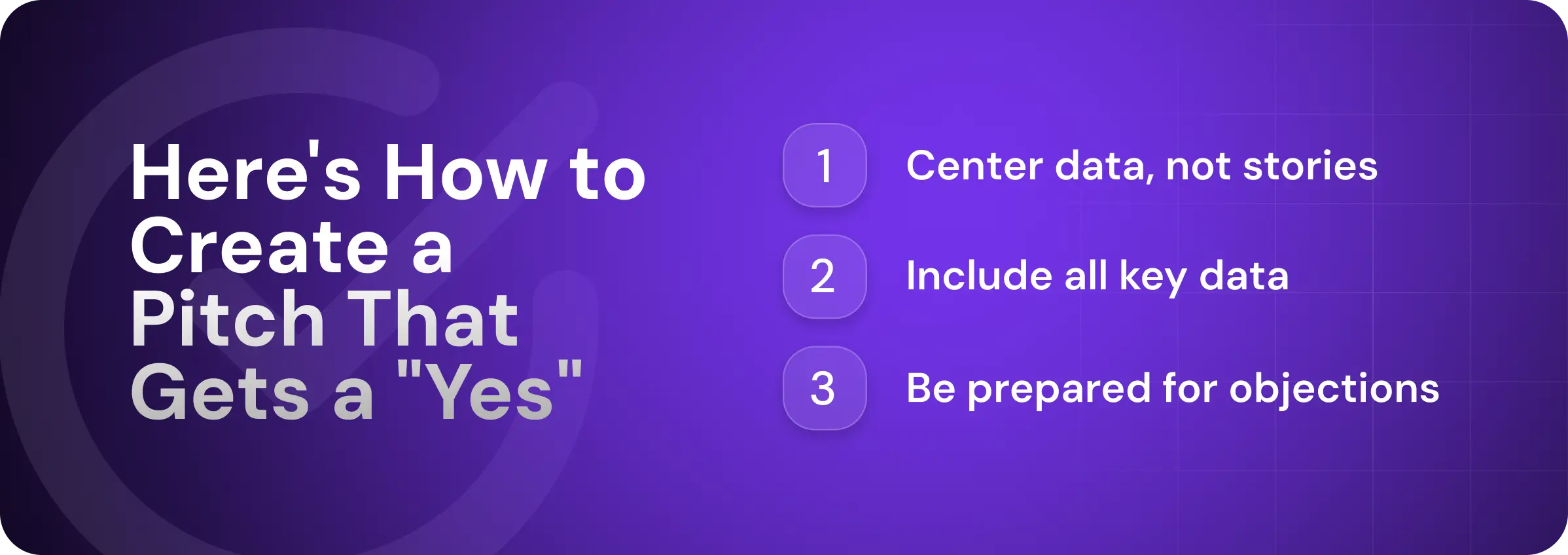
Your sales pitch is an opportunity to prove your value as a business partner. It should be data-driven, well-prepared, and share key details about your products. Cover all these bases and you can’t not impress potential retail partners.
Skip the Backstory and Lead with ROI
Shark Tank’s Mark Cuban once said, "Follow the green, not the dream."
He’s right. Retail buyers prefer proof over passion.
Brian Gunterman, founder and owner of DDR BBQ Supply, argues that leading with honesty and specificity is always the best approach: “You should guide with ROI since customers analyze products mathematically, not emotionally. Introduce the margin structure, the expected turn rate, and the fulfillment capacity in simple terms. Be open about your weak points without being asked and demonstrate the corrective systems you already have in place.”
Ask these two questions early in your pitch:
What will your product do for the store? Will it bring foot traffic? Fill a gap in the market? Offer better margins than competitors?
Who will buy your products? How does your product line connect to the retailer's key demographics, rather than “everyone”?
Precise data about sales growth, conversion rates, and repeat purchases hooks buyers far more effectively than vague promises. Build your pitch around these hard numbers.
Follow a Proven Pitch Template
Your pitch must be jargon-free and concise—ideally just a few minutes. The real challenge is packing in all the key information during that time.
Include all the following information in your pitch:
A short intro about your business, your product, and why you’re a fit
Wholesale prices and suggested retail prices
Lead time and MOQ
Profitability projections
Unique selling points (USPs)
A description of the unmet demand your product solves
Always remember to tailor your pitch to the store. For example, you might say, “I see that you carry [X] product. Our product [Y] serves the same audience but adds a wellness angle, which our research shows is a key consideration of this consumer group.”
Be Ready for Objections
Even the most compelling pitch will receive some pushback—that’s expected. Retail buyers will often test you. Prepare thoroughly for objections and you’ll never find yourself fumbling for an answer.
Here’s a roundup of the most common retailer objections and how to neutralize them:
“We don’t have space.” Solution: Show reorder velocity, SKU rotation, and bundling options that increase revenue without increasing shelf space.
“It’s too niche.” Solution: Present sales data, repeat-purchase rates, and reviews that prove a loyal, growing audience.
“It’s too expensive.” Solution: Share margins and evidence customers willingly pay premium prices.
“We already stock similar products.” Solution: Provide data demonstrating your USPs or higher margin potential.
“We don’t know if it will sell.” Solution: Offer a small trial order, guaranteed buyback, or promotional support.
“Your brand is new.” Solution: Share press coverage, influencer mentions, and customer testimonials showing that while it is new, your brand is also popular.
“We’re cutting back on new SKUs.” Solution: Highlight that your SKU performs above category averages.
“Your packaging won’t stand out.” Solution: Show customer research and images in situ (on the product shelf) that demonstrate your packaging is distinctive.
“We prefer established vendors.” Solution: Give evidence of your stable supply chain, fast lead times, and strong production capacity.
“We aren’t sure about the category generally.” Solution: Share category growth data and retailer case studies proving demand.
While you should absolutely prepare for objections, your primary goal should be to prevent as many as possible from arising. Ensure that your price point is competitive and that you have effectively explained the key product features, benefits, and margins before wrapping up the pitch and moving on to questions.
Reach Out to Retail Buyers Without Getting Ghosted
There’s always a risk that your outreach to buyers won’t receive a reply. But you can significantly lower that risk by using the messaging sequence and tailoring your approach.
Email to Cold Call to Unannounced Drop-In
You don’t need to reinvent the wheel every single time you contact a lead.
Your outreach should build momentum with a planned sequence that saves time with templates and, where possible, automation.
A cold email template should include:
A punchy subject line
A four-sentence body explaining benefits and a clear ROI
A link to an eye-catching sell sheet
Dynamic fields, leaving space for personalization
In addition, avoid these three common mistakes:
Attachments (these can trigger spam filters)
Long-winded backstories that create off-putting blocks of text
Overpromising or exaggerating product performance
While it’s a simple task to send a small amount of these emails, scaling your outreach takes significant time. With Artisan—a modern AI platform powered by AI BDR Ava—you can send personalized emails and sequences at scale without any human input.
Use LinkedIn Like a Pro
With over a billion professional users, LinkedIn is hands-down the best social media platform for connecting with retail buyers. The platform’s native message feature, InMail, lets you run multi-channel campaigns, rather than relying solely on email.
When looking for buyers on LinkedIn, send a short message, such as, “Hey, I have a product I think would be a hit at [Store]. Can I send details?”
A quick, unobtrusive intro feels less spammy and puts the buyer in control, which makes them more likely to engage.
Reaching Out In Person? Do It Strategically
In-person outreach at brick-and-mortar stores demonstrates a genuine investment in the retailer and allows your products to speak for themselves from the outset.
Here’s how to make the most of every in-person promotion:
Go during off-peak hours when owners or managers have time to talk.
Ask who reviews product lines before pitching; don’t launch a pitch to the sales assistant.
Bring one sample and a sell sheet to leave behind—nothing more.
This style of location-based marketing uses a gentle approach that may sound low-impact. But you’re actually giving retailers room to engage on their terms. Remember, the goal is to form a partnership at the end of the day.
Follow Up Without Being a Nuisance
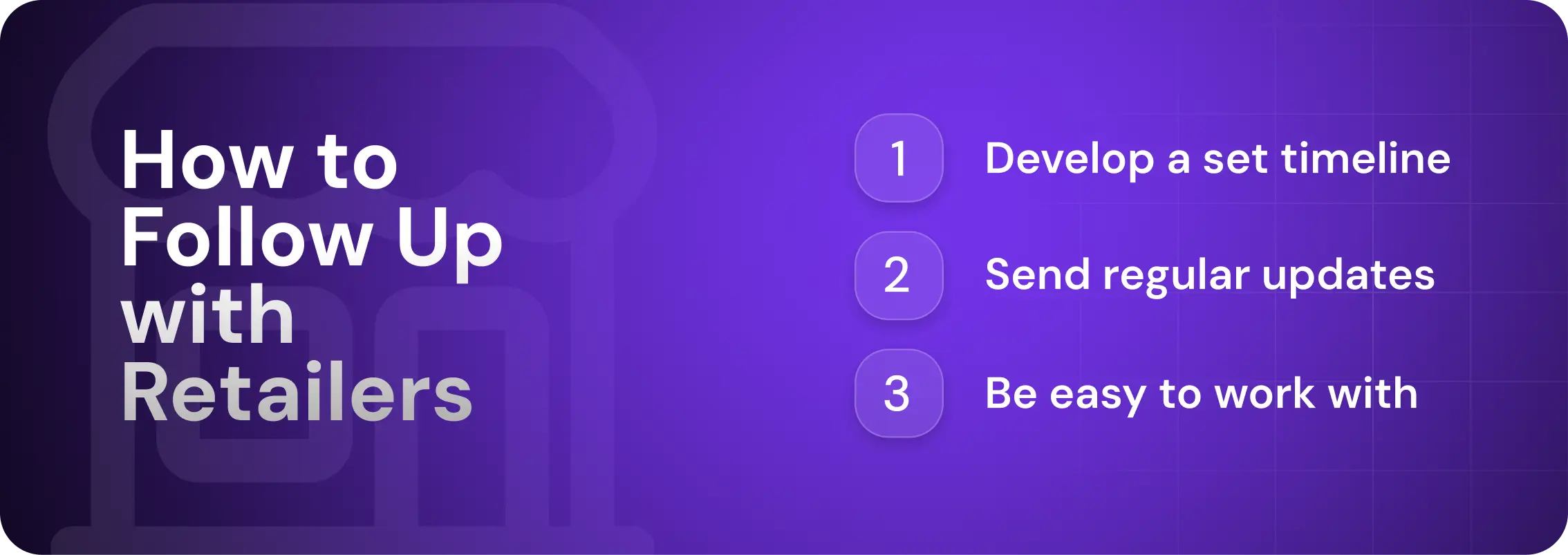
You’ve made your pitch. Now what?
You can’t just sit and wait. You need to send follow-up messages that are relevant and unobtrusive.
Follow-up Timeline
The goal of your follow-up is to check in without being overbearing.
Here’s a sample reply timeline for after the pitch:
24 to 48 hours: Send a brief thank-you email. A few sentences will do.
One week: Ping them with a short follow-up email after seven days.
Two weeks: If the retailer sounded interested during the pitch, try another short message that includes some impressive social proof, such as a recent product review.
If all these messages meet silence, move on. You're unlikely to win buyers over by badgering them.
Keep the Door Open
Over messaging isn’t a good look. But you don’t want to be forgotten. The solution? Look for natural ways to re-engage leads.
Circle back to retailers when one of the following happens:
New product releases that are relevant to the store
Awards that increase product desirability or brand reputation
Good reviews from customers who match the store’s ICP
Significant discounts or retailer promotions
Positive updates like these give retailers another reason to consider stocking your products. They also keep lines of communication open over the long term without annoying potential partners with offers they’ve already seen.
Be a Dream Partner
Retailers don't just want to stock great products. They also want to work with responsive, flexible partners.
Here’s how to be a dream partner:
Deliver orders on time. If something is delayed, communicate early and offer a workaround.
Follow up after the sale to gather feedback and ensure orders are running smoothly.
Promote the store on your channels to show your investment in their brand and drive traffic their way.
If you’re active and respond quickly, you can turn a sample order into repeat business. You may even secure more shelf space and referrals to other stores.
Scale to More Stores (Without Burning Out)
Retail outreach takes time. But you can speed up the process.
Scaling the easy way involves using tools, leveraging AI for cold email, attending expos, and targeting bigger stores (when you’re ready).
Trade Shows and Events
Trade shows and events give you the impact of in-person visits without the heavy time cost.
Here are the best places to set up shop:
Local exhibitions: These niche events put you in contact with highly targeted buyers who are interested in similar products.
Regional fairs: Farmers markets, fairs, and community events give you an opportunity to build relationships in your local area, network, and gather early product feedback.
Wholesale marketplaces (Faire, Abound): These platforms connect you with retailers who are actively looking for new products.
Pitching to Major Retailers
Don’t approach big-box retailers until you’ve mastered your pitch with smaller stores and perfected your logistics. By this point, you should have lots of compelling data to share.
Here are the essentials you’ll need to pitch to major retailers:
Buyer decks that highlight your product, ROI, and market fit
A logistics overview, including fulfillment capabilities
Barcodes and compliance documentation
High repeat purchases, business growth, and sales figures from stores you previously sold at
A solid marketing strategy that will sustainably drive traffic to their store
When it comes to stores like Target, expect high competition and a formal process. These major retailers expect professionalism, reliability, and the ability to scale without setbacks.
If you can offer an exclusive to major retailers, that’s an exciting opportunity. Sephora has an “Only at Sephora” section of its website, where it promotes exclusive products. These are more likely to bring customers into the store.
Use Artisan to Automate Your Outbound
Manual outreach can quickly become overwhelming as your company grows. Automation tools like Artisan, part of a powerful new category of AI outreach platforms, give you the power to scale outreach without undertaking the costly, delicate task of expanding your team.
Artisan automates all the following tasks:
Prospecting from a database of over 300 million leads
Ongoing lead enrichment in your CRM
AI-personalized outreach across email and social media
Lead intent tracking for high-intent accounts
Background A/B testing to refine your approach
AI BDR Ava, who powers Artisan, can send deeply personalized, targeted outreach to hundreds of new leads a day, which frees your team up to focus on the human task of closing deals.

Final Push: Get Your Product on Store Shelves
Approaching retail stores successfully requires in-depth research, a compelling pitch, and data that proves your value. Personalized outreach to potential retailers to initiate conversations is also a must.
A modern tool like Artisan helps you find, research, and reach out to retailers at scale. AI BDR Ava personalizes messages and connects with buyers through multi-channel outreach sequences. This means you can reach out to more stores that fit your requirements without hiring more reps.
Automate your outbound with an AI BDR
Meet Ava—your AI BDR who handles prospecting, outreach, and follow-ups, so your team can focus on closing.

Marsha Dunn
SME @ Artisan
Marsha Dunn is a writer helping businesses connect with customers and build credibility. She specializes in B2B thought leadership rooted in expertise.