Lead scoring software explained and 6 best tools reviewed
A practical guide to lead scoring software for SaaS teams using CRM, automation, and predictive scoring to close more deals.
Lead scoring in the AI era hits different. The tools have changed, and lead scoring plays have evolved with them.
This guide shows you how to refresh your old playbooks. It covers the fundamentals of lead scoring, outlines real AI applications, and demonstrates how to connect everything into a working process.
By the end, you’ll have a clear understanding of modern lead scoring software and how to use it effectively.
What is lead scoring software?
Lead scoring software evaluates accounts and buyers based on their likelihood of converting. It uses behavioral, firmographic, technographic, and intent data to produce clear priority signals inside your CRM and GTM workflows.
In practice, lead scoring software acts as a decision layer in lead generation. It ingests signals from across your stack and third-party sources, translates them into conversion probability, and (often) triggers the next action automatically.
Used correctly, lead scoring software answers one key question: what should happen next and why?
Sales teams miss high-quality leads without scoring
When prioritization lives in reps’ heads (or in a spreadsheet nobody trusts), high-fit leads blend into the noise. Automatic scoring gives sales teams a clear system for prioritization so that reps can focus on nurturing and closing.
CRM noise and manual guesswork
CRMs tend to accumulate volume faster than clarity. One successful marketing campaign, and you’re buried under hundreds of leads in a matter of weeks or months.
Without lead scoring tools, prioritization becomes pure guesswork. And the result is always the same. Poor lead management stalls the sales process.
Marketing and sales operate on different signals
The second most common issue with lead scoring is a mismatch between marketing automation and sales follow-up. It happens because marketing automation tends to optimize for engagement volume, while sales optimization tends to focus on deal progression.
When scoring isn’t tied to pipeline outcomes, both teams may execute correctly at first glance but without driving any meaningful impact on revenue. This problem typically stems from the absence of a shared definition of qualified leads.
How to standardize lead scoring across marketing and sales
Standardizing lead scoring models aligns sales and marketing teams. Marketing knows when to pass leads onto the sales team, and reps know which SQLs to prioritize.
Turn lead data into clear priorities
The first fix is structural. Lead data should act as a foundation for prioritization. This means taking attributes—which are usually stored in your CRM—and using them to create scores.
Demographic, firmographic, and behavioral inputs are evaluated together to assign a weight and rank a lead. This way, sales teams can determine whether a lead fits their ideal customer profile (ICP).
This is good, but it’s not enough on its own. A modern lead qualification and scoring system separates fit from engagement, with engagement indicating active buying behavior. When blended together, they surface the highest-quality leads—those that fit your ideal customer profile and are ready to buy.
Move from score to action inside the CRM
Once your customer relationship platform (CRM) captures intent and fit, it should trigger predefined workflows.
When a lead reaches a concrete score, your CRM should execute automatically, whether that involves routing them to a suitable rep via Slack or triggering an email outreach sequence.
How lead scoring software works in practice
Lead scoring works effectively when data, logic, and sales automation are tightly connected inside your CRM and marketing stack.
Let’s look at how that works in practice.
1. Data collection across the funnel
Modern CRMs like HubSpot and Atto already collect far more data than teams actively use. The key to effective scoring is to separate good data from bad data and then filter important data points from those that don’t indicate intent or ICP-fit.
Here is the data most modern lead scoring setups actually use:
Website behavioral data: Page views on pricing, product, integration, and comparison pages; repeat visits; session recency; return frequency.
Inbound form and conversion events: Demo requests, contact us forms, gated content tied to buying stages.
Email engagement: Replies and link clicks; reply sentiment and thread continuation.
Outbound interaction data: Email replies, social media responses, meeting scheduling events, conversation progression.
CRM attributes: Role seniority, department, account size, industry, region, opportunity history, prior disqualification reasons.
Event and webinar participation: Attendance duration, follow-up engagement, repeat participation across sessions.
Account-level signals: Multiple contacts engaging within the same account over a short time window.
2. Scoring rules and models
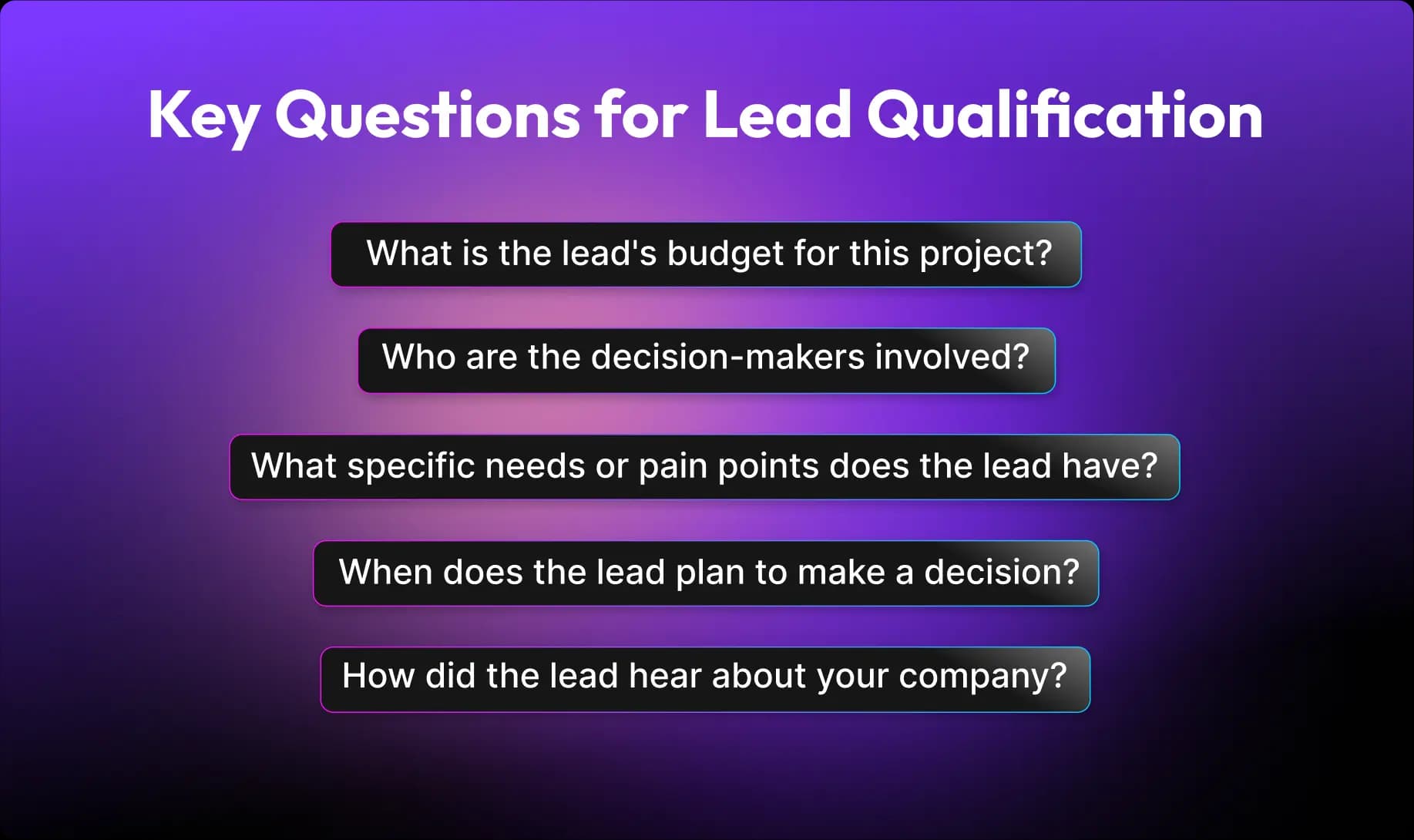
Once data points are defined, sales teams have to decide on scoring logic. Rule-based scoring remains foundational. Explicit rules define what “good fit” and “bad fit” look like using firmographic data, role seniority, geography, and disqualifying attributes.
A predictive scoring system builds on top of that foundation. Machine learning models analyze historical conversion data to identify patterns humans don’t reliably catch, such as behaviors that often precede a sale.
In addition, negative scoring is often underused but operationally critical. Poor-fit industries, inactive accounts, job seekers, competitors, and disengaged leads should actively lose priority.
Finally, when building your lead scoring models, weigh recent activity over historical engagement, and assign higher scores to accounts when there’s activity from multiple individuals within a group. When multiple contacts from the same company engage in parallel, there’s a high likelihood that the account will close.
3. Automation and workflows
The ultimate aim of implementing lead scoring is to trigger sales workflows when certain thresholds are reached.
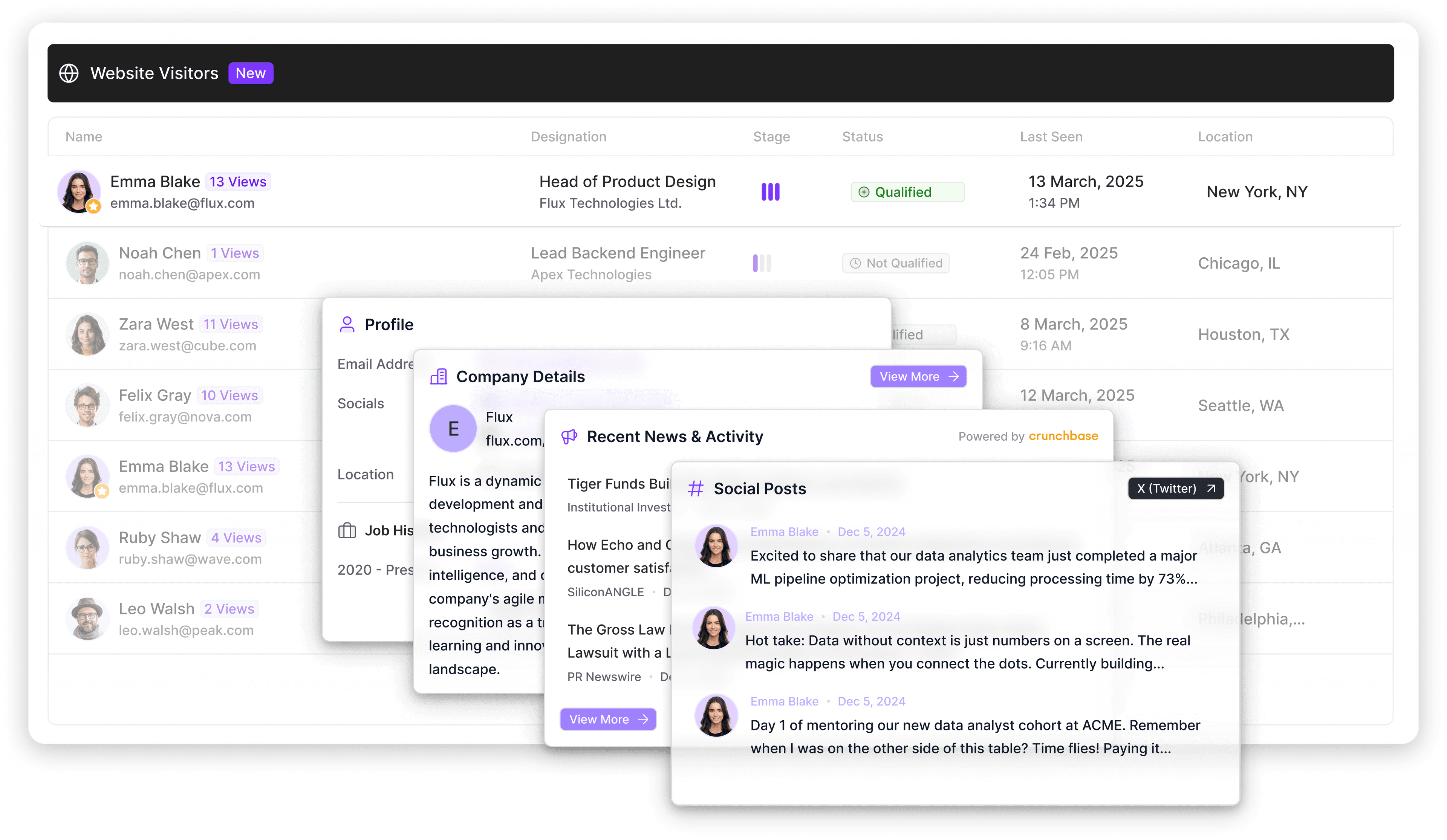
Let’s say, for example, that you’re tracking anonymous website visitors with a platform like Artisan. If an individual engages with your pricing page from a target account, the system would trigger a multi-step workflow.
Here’s what it might look like:
The tracking system identifies website visitors at the company level.
The automated lead scoring framework categorizes them as high priority.
The AI research agent builds a company profile, identifies decision makers, and finds contact details.
Leads are enrolled in an outreach sequence in which they are encouraged to book a meeting.
If a recipient sends a positive response, they are automatically routed to an account executive (AE).
In the age of AI automation, this is how effective lead scoring works. It’s fast and part of a larger AI system that significantly reduces manual input. Artisan’s web visitor tracking engine, for example, is just one component of a platform that offers functionality across the whole sales cycle.
Predictive lead scoring vs. traditional models
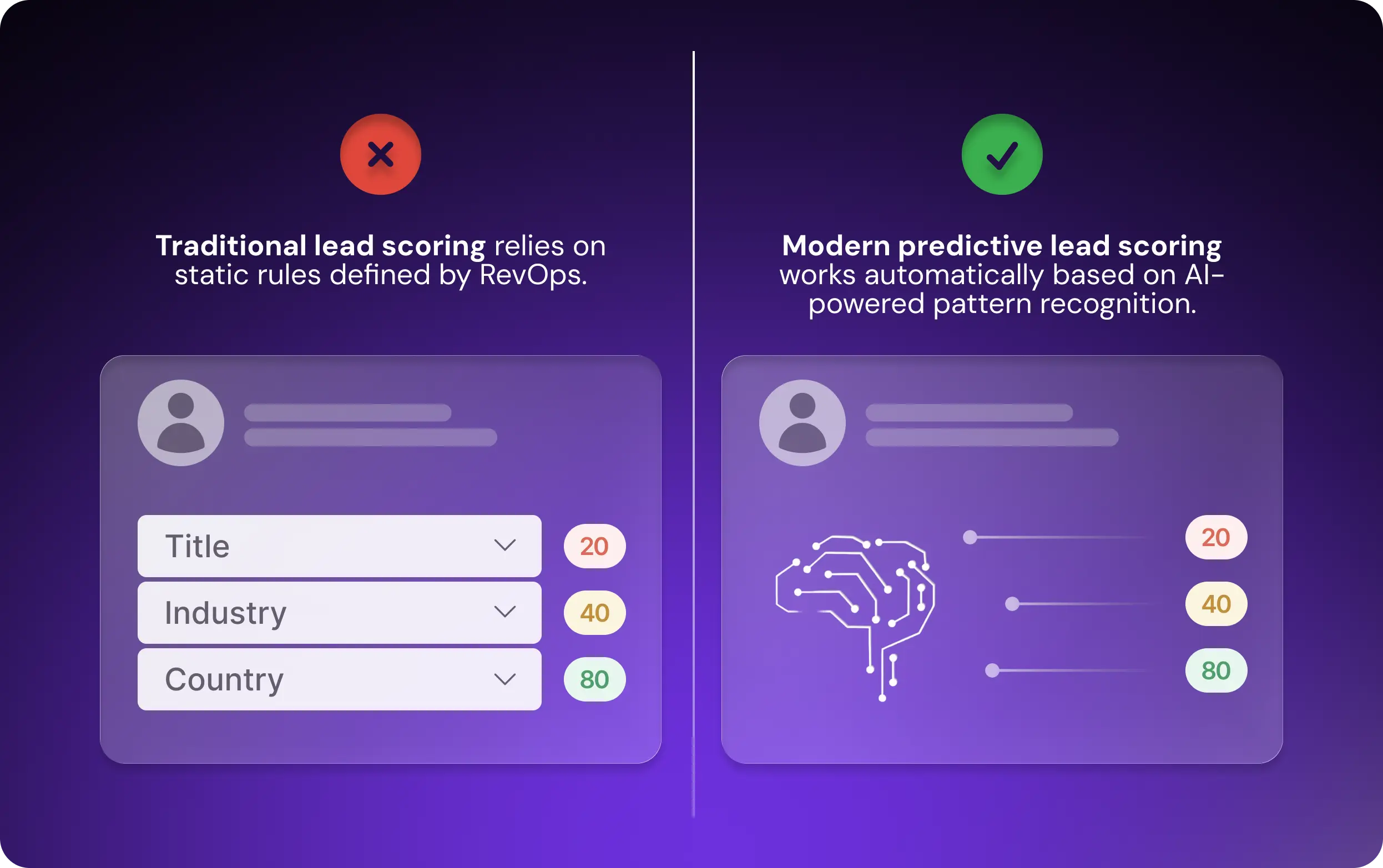
Anyone familiar with traditional manual scoring models understands the challenges they present. They work at the start. But as you add new segments and refine ICPs, they often break down, unable to deal with the additional complexity.
Where manual scoring breaks down
Traditional lead scoring relies on static criteria defined by marketing and sales. A company’s marketing team, for example, might create a rule to “Add 10 points when a contact fills out the demo form," or “Subtract 20 if a lead unsubscribes.”
This is problematic for several reasons. Manual scoring often relies on subjective judgment that only incorporates limited historical data about how leads have converted in the past. It is also somewhat static, failing to account for real-time data and intent signal changes. Perhaps most importantly for sales, manual scoring is impossible to scale past a certain point because leads must be updated manually.
What predictive lead scoring software adds
Predictive lead scoring works automatically and self-optimizes based on conversion data.
In HubSpot, for example, you do not design the rules yourself. A machine‑learning model analyzes the behavior and profiles of closed won/lost leads and predicts the likelihood of closing for open contacts.
Here’s the list of data points that HubSpot’s predictive system takes into account:
Website and email engagement (page views, visits, clicks, opens, replies, conversions, etc.)
CRM activity (notes, meetings, last contacted, next activity, days since created/updated, phone present, etc.)
Lifecycle stage and close date
Firmographics about the contact’s company (revenue, tech, employees)
Firmographics about your own business and CRM (contact volume, industry, revenue, etc.)
Associated contact activity (the combination of what a specific contact has done plus what’s going on with the records tied to them, like their company and deals)
Based on this data, the CRM calculates the likelihood of closing—a percentage probability that the contact will become a customer in the next 90 days. It then prioritizes the lead for the sales team as very high, high, medium, or low.
It’s also worth noting that the other added benefit of accurate predictive lead scoring is improved sales pipeline forecasting.
Features that matter in lead scoring tools
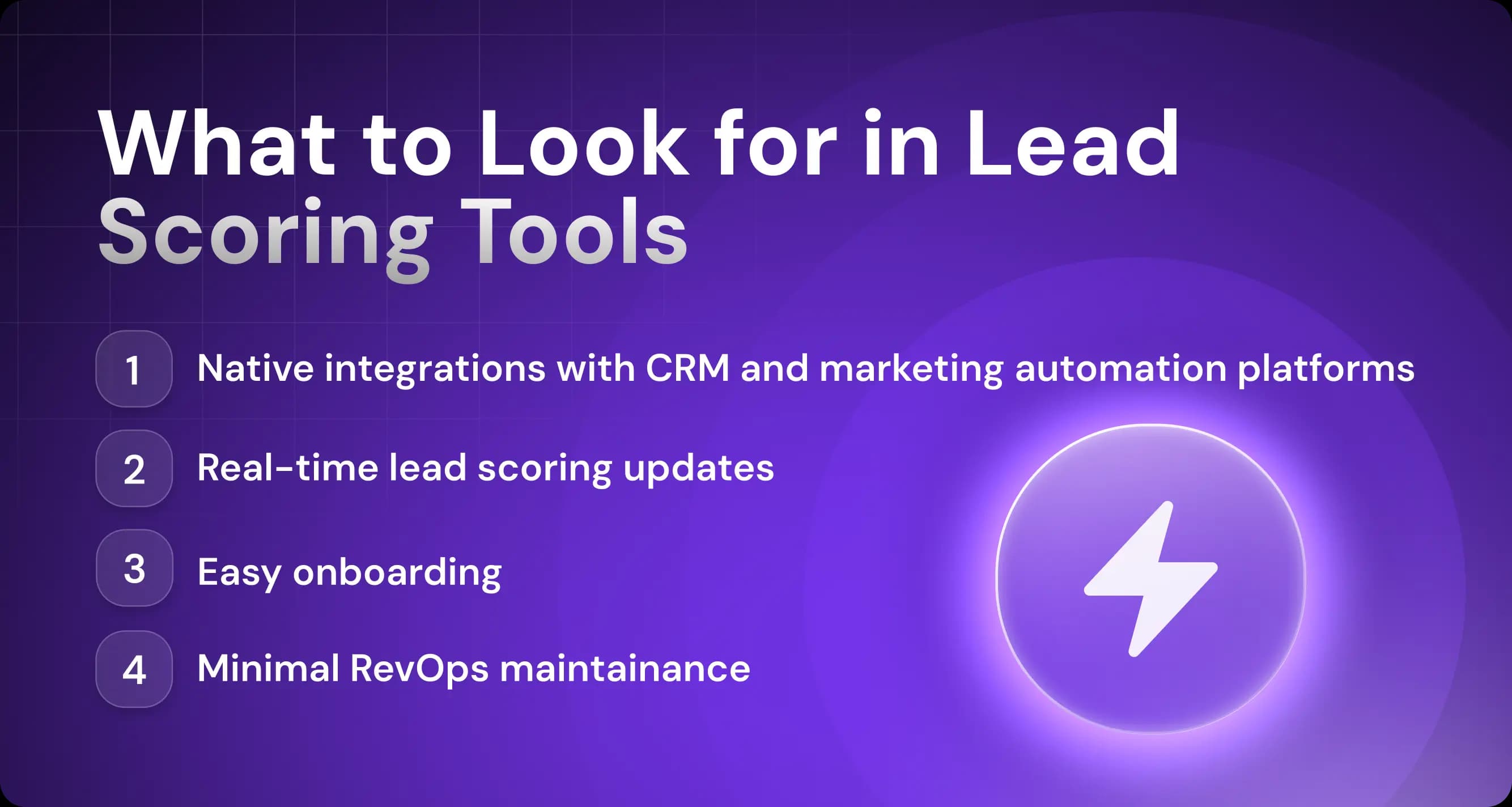
For a lead scoring system to run like clockwork, there are some critical features and capabilities to look for.
CRM and marketing automation integrations
If data like intent signals live outside the CRM, it’s imperative that these tools connect and pass the data without friction. Fragmented data also happens when marketing and sales use different systems.
Ensure your lead scoring software supports two-way data flows. In addition, a smooth integration between your CRM and marketing automation platforms ensures that scoring automatically triggers certain workflows.
Real-time dashboards and visibility
Real-time visibility means lead scores update immediately as new signals occur and are visible directly inside CRM records. To do this, your lead tool must recalculate scores instantly when key events happen, such as inbound conversions, outbound replies, or account-level engagement. Dashboards should also update in tandem.
Ease of use and scalability
Ease of use today is less about well-organized interfaces and more about ownership. The best lead scoring tools reduce ongoing ops involvement. They should be simple to set up, even for small businesses, scale with outbound volume, and have minimal RevOps maintenance.
Best lead scoring software for SaaS teams
Now that you know what to look for, let’s run through five of the top lead scoring platforms on the market. Don’t overlook this evaluation stage. Picking the wrong platform can cause countless tech and operational headaches as you refine and scale your workflows.
Artisan (outbound-first lead scoring software)
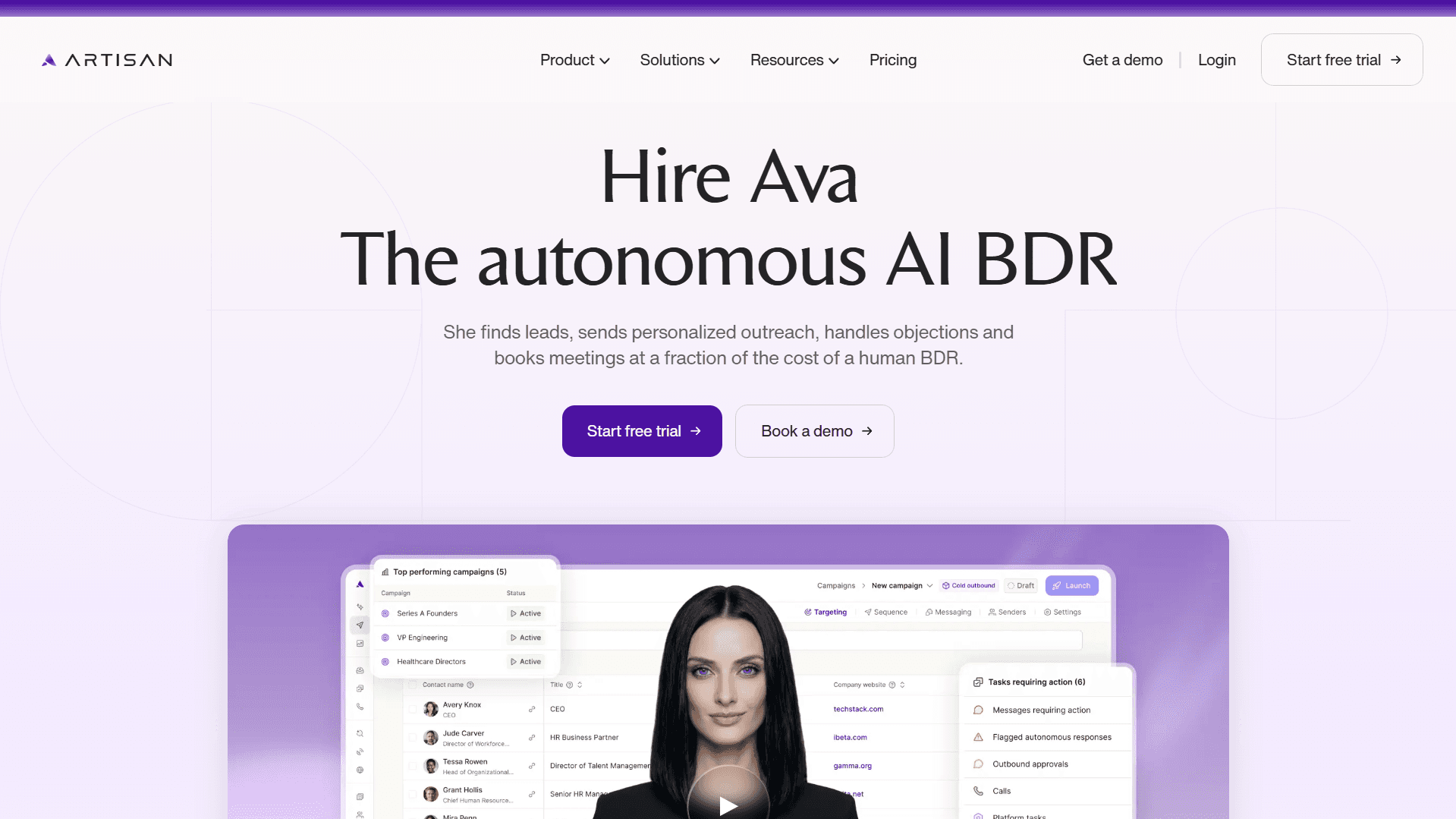
Artisan is an AI-powered outbound sales platform with Ava, an AI BDR, at its core. She gathers data about website visits, search history, social media activity, and more to personalize and trigger outreach sequences.
Who it’s for: Outbound-led SaaS sales teams that want prioritization tied directly to outreach and follow-up.
Scoring approach: Ava scores prospects' data based on ICP fit, intent data, and engagement signals. She can also turn anonymous website visitors into enriched profiles by finding company names and decision-makers.
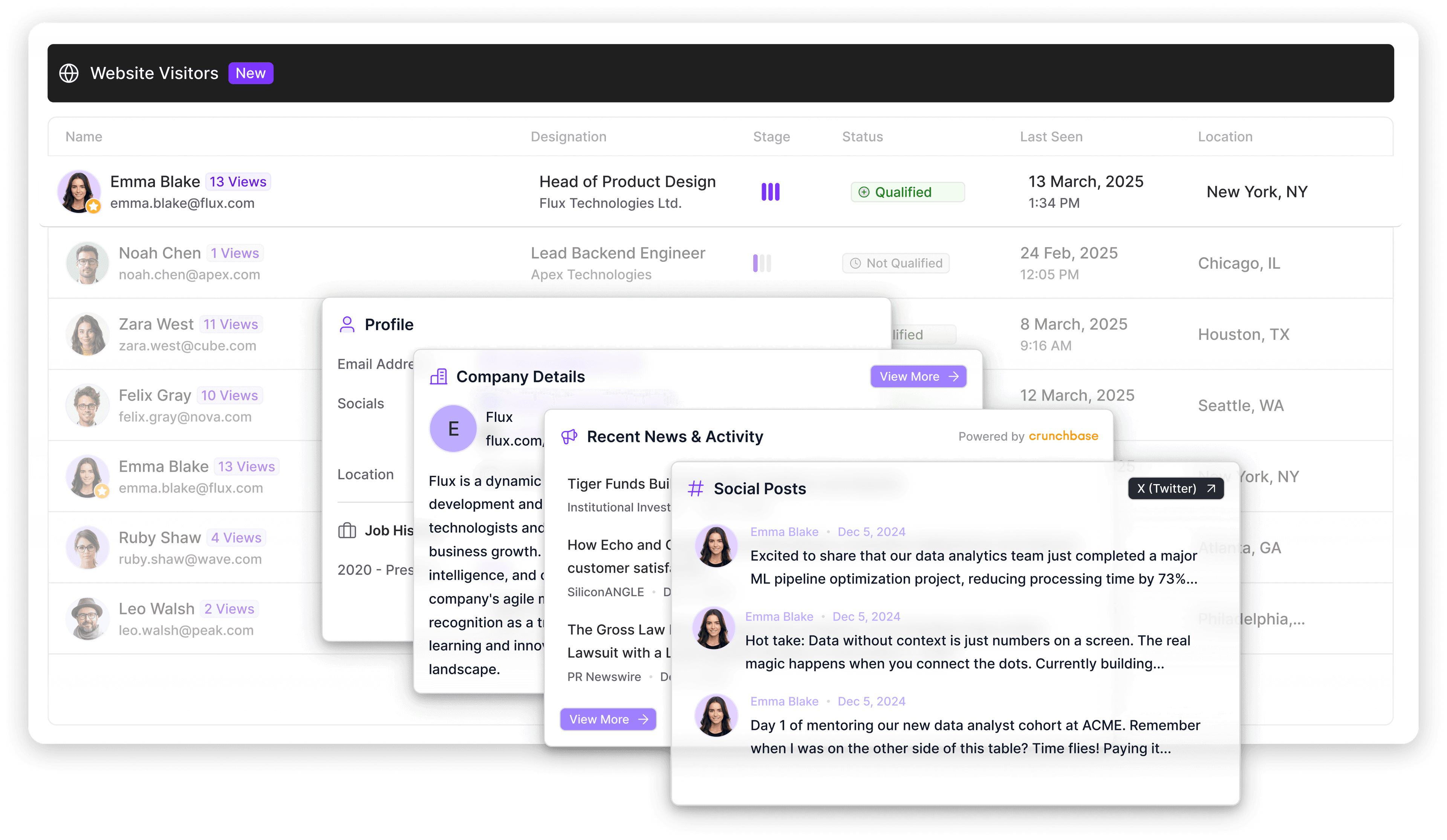
Where Artisan wins: Lead prioritization that connects to outreach workflows. It’s designed for sales execution.
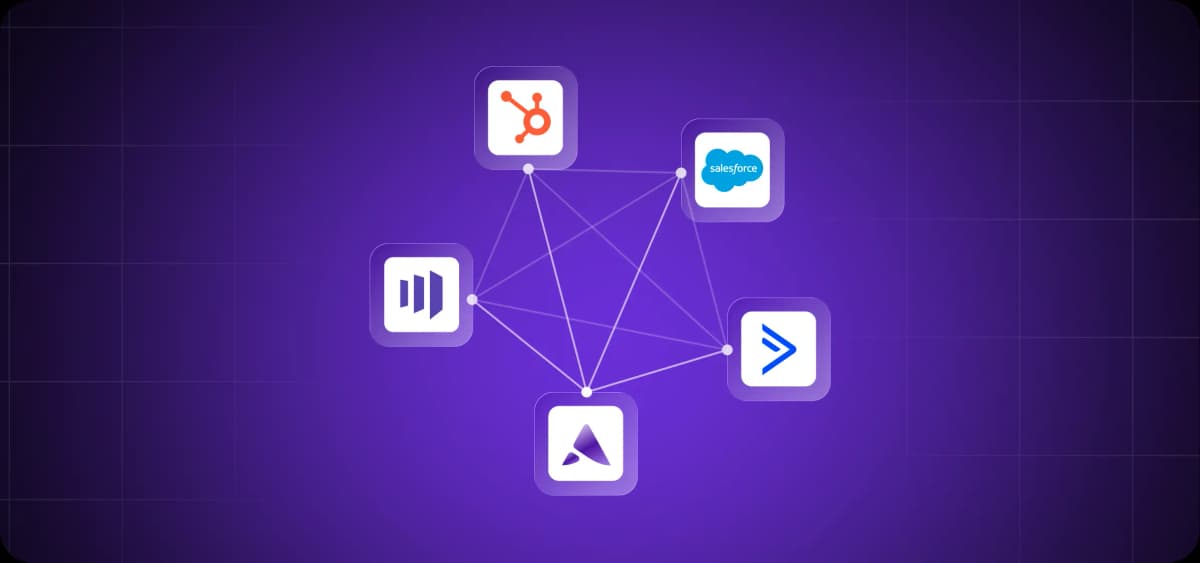
Integrations: Artisan natively integrates with HubSpot, Salesforce, and other CRM platforms to create and populate lead records. You can also blacklist everyone in your CRM to ensure you don’t reach out to the same prospects twice.
Pricing: For a pricing consultation, please reach out to Artisan’s sales team.
HubSpot (CRM and lead Scoring and marketing automation)
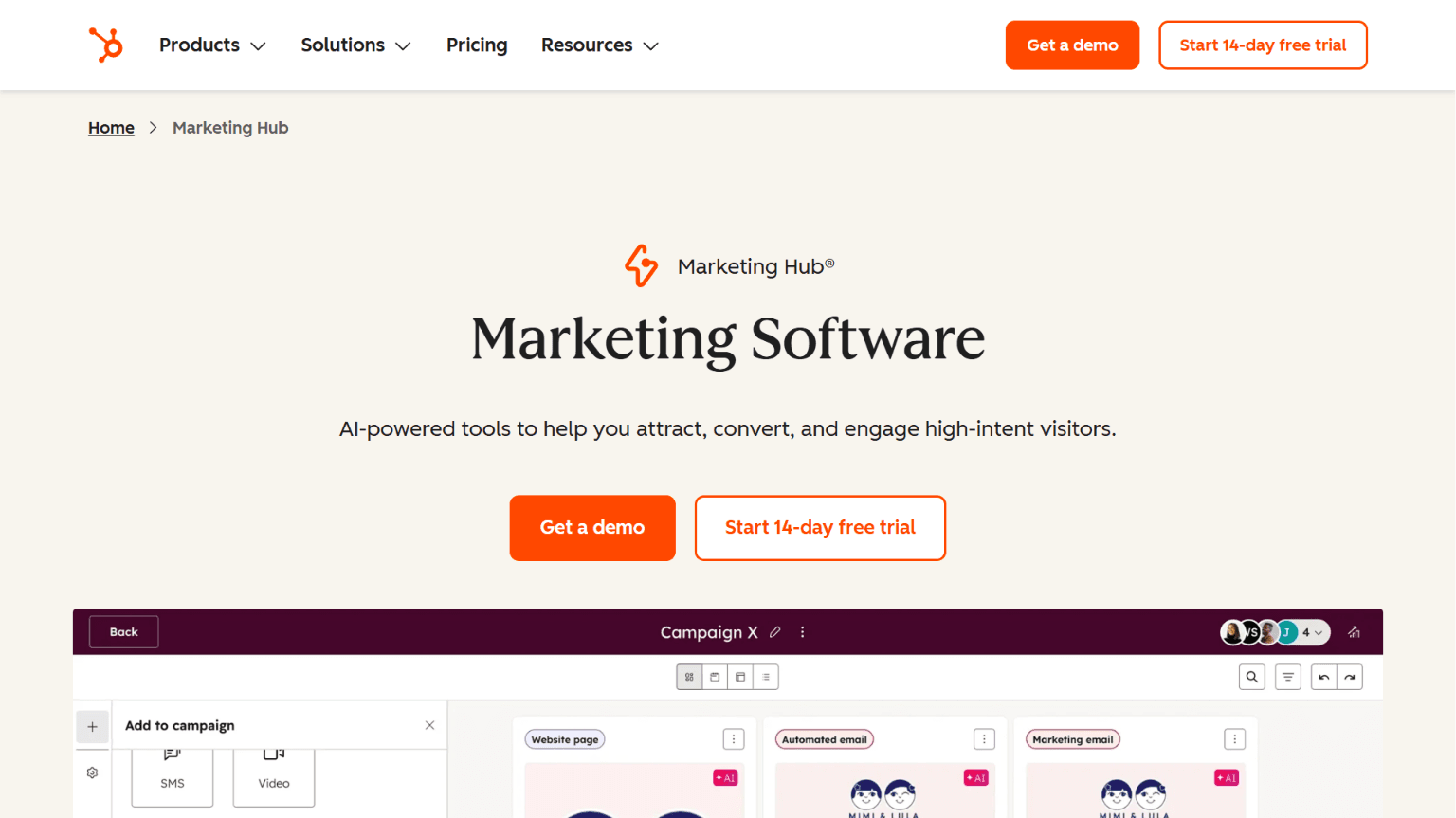
HubSpot is a leading AI-powered customer platform that unites marketing, sales, and customer service under one roof. Voted number one in its category multiple times by G2, it delivers remarkable results for every size of business, from freelancers to enterprises.
Who it’s for: Sales and marketing teams that want lead scoring inside an all-in-one CRM with strong marketing automation and lead management.
Scoring approach: Rule-based scoring (fit and engagement) with options that support automation and segmentation. It also offers predictive scoring and AI-powered scoring.
Where Hubspot wins: Ease of use, super-fast setup, and advanced workflow features for marketing teams supporting sales teams.
Integrations: It works inside the HubSpot ecosystem and integrates with over 1,500 applications. It integrates seamlessly with Artisan.
Pricing: HubSpot offers tier-based pricing, with lead scoring included in the Sales Professional plan at $100/month/seat.
Salesforce Einstein (predictive lead scoring for enterprise sales teams)
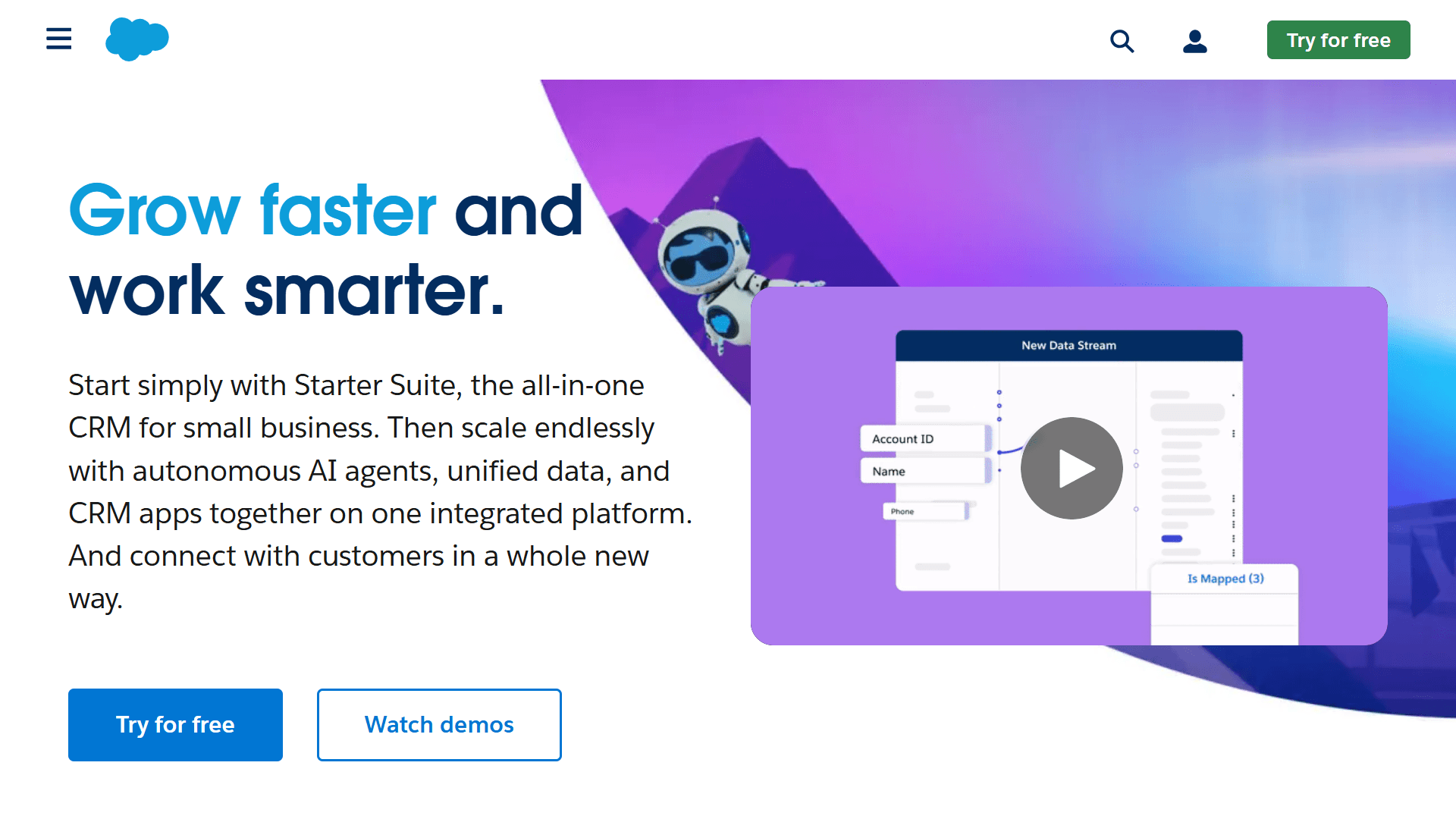
Salesforce Einstein is Salesforce’s native AI layer that applies machine learning across CRM data to predict outcomes and trigger workflows. In the context of lead scoring, Einstein analyzes historical pipeline and conversion data to prioritize leads based on their likelihood of progressing and converting.
Who it’s for: Enterprise sales teams already running Salesforce with enough lead data to support predictive lead scoring.
Scoring approach: AI-assisted predictive scoring, plus customizable scoring rules and dashboards for forecasting.
Where Salesforce wins: Deep CRM functionality, reporting, and scalability for large sales orgs.
Integrations: Salesforce offers extensive integrations through its partner ecosystem. It also supports native CRM-level integration with platforms like Artisan for outbound execution and enrichment.
Pricing: Pricing varies by Salesforce edition and Einstein add-ons. Predictive lead scoring is typically available in higher-tier plans.
Marketo Engage (advanced scoring inside a marketing automation platform)
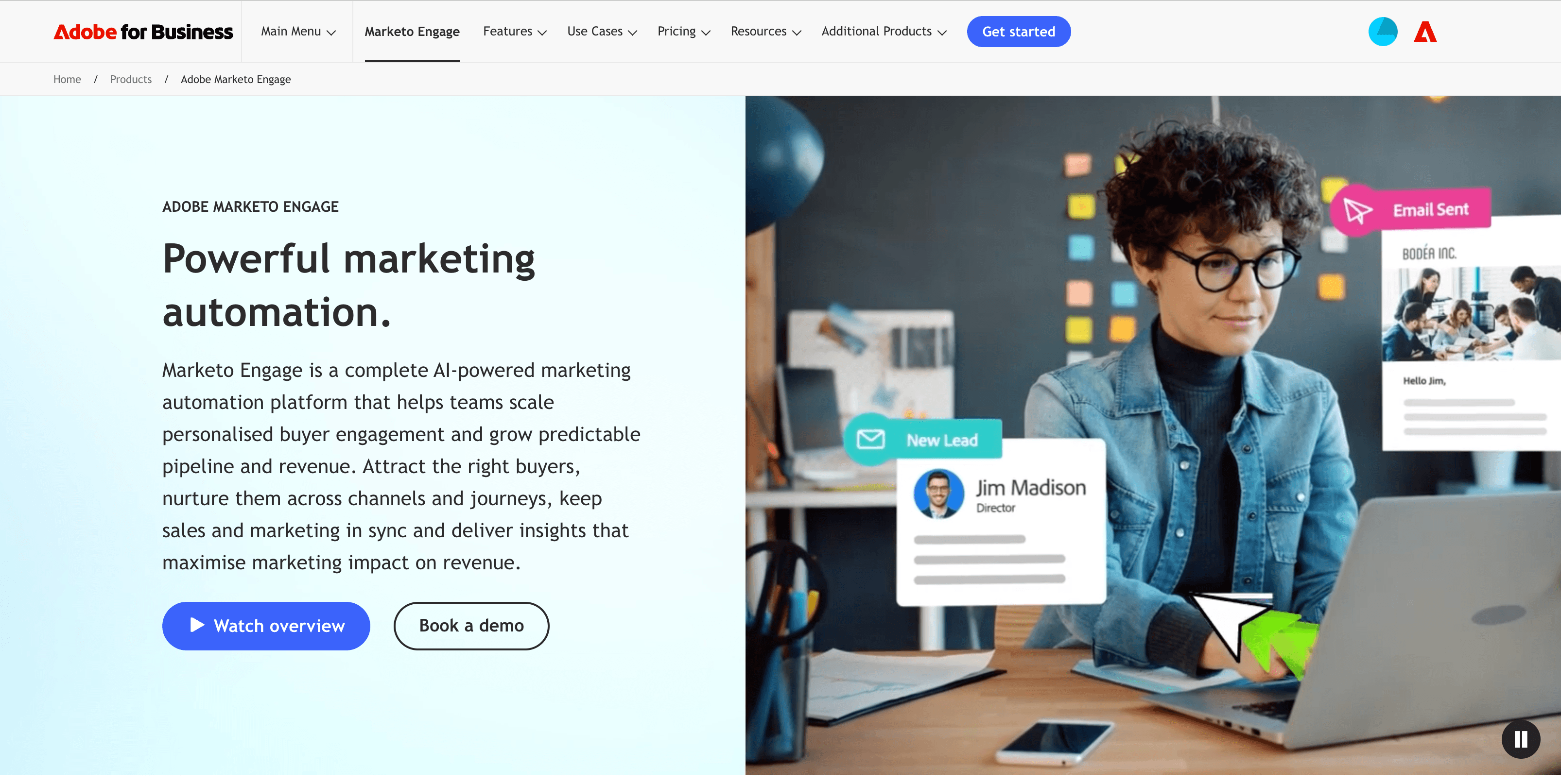
Adobe Marketo Engage is an enterprise-grade marketing automation platform designed to manage complex, multi-channel B2B journeys.
Who it’s for: Larger organizations with mature marketing operations, complex campaigns, ABM plays, and dedicated teams responsible for lead qualification before sales engagement.
Scoring approach: Marketo uses highly configurable, rule-based scoring across behavioral activity (email engagement, web activity, and events) along with demographic and firmographic attributes. Scoring is often split explicitly between fit and engagement.
Where Adobe Marketo Engage wins: Granular scoring models, segmentation, and enterprise-grade marketing automation workflows. It’s a strong option for marketing teams working across multiple products, regions, or ICPs.
Integrations: Commonly paired with Salesforce and enterprise stacks.
Pricing: Undisclosed, typically enterprise pricing.
ActiveCampaign (SMB-friendly automated lead scoring and email marketing)
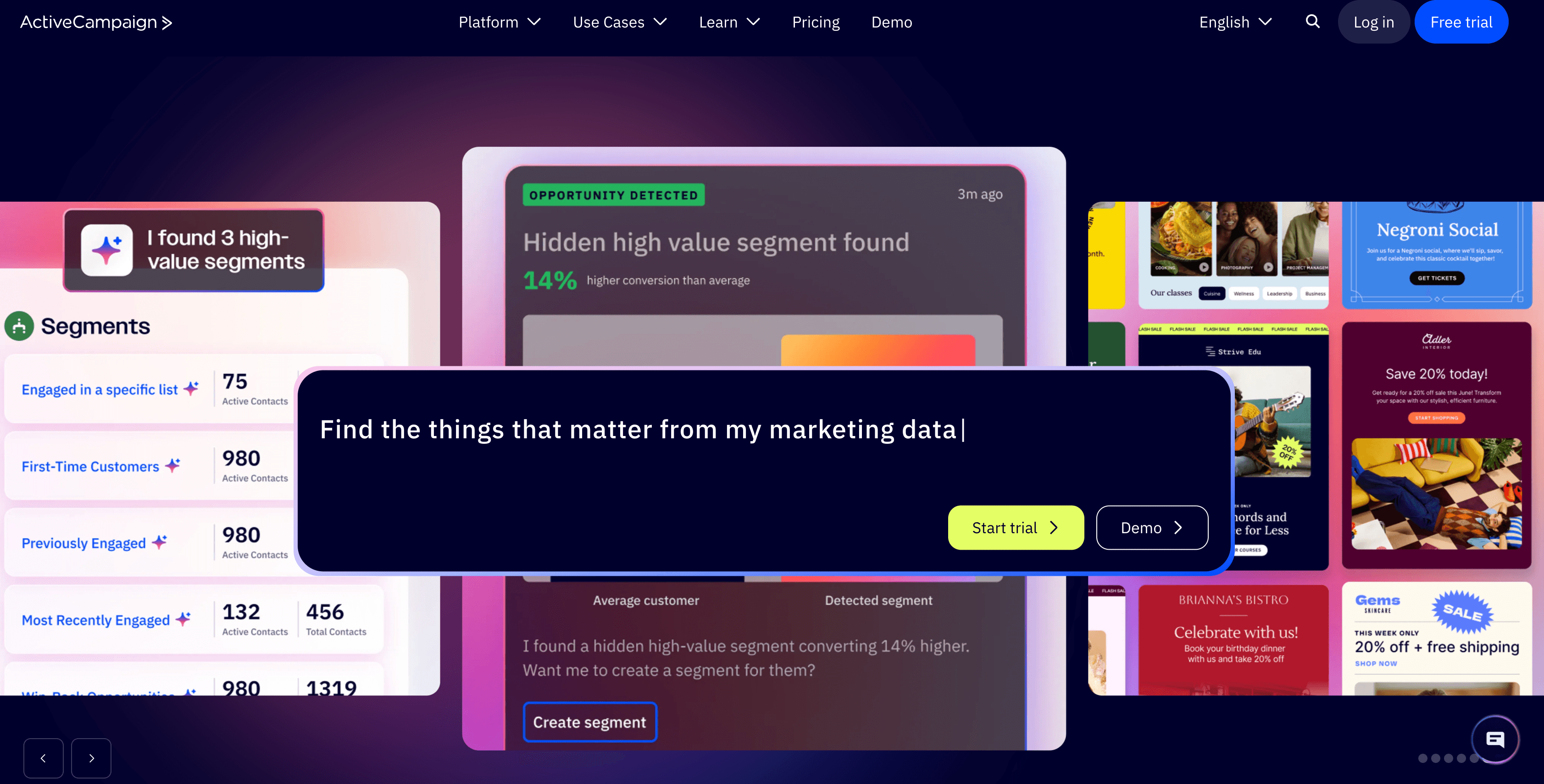
ActiveCampaign is a marketing automation and email platform designed for small teams that want basic CRM functionality, campaign automation, and lead scoring in one place. Its scoring features are tightly coupled with email automation workflows. It’s not suitable for complex sales forecasting.
Who it’s for: Small businesses and lean SaaS teams that need lightweight lead prioritization without additional complexity.
Scoring approach: Scoring rules tied to email opens, website visits, and campaign engagement. Scoring is connected to automation workflows.
Where it wins: Fast setup, practical automations, and a good balance of functionality and ease of use.
Integrations: Integrates with common SMB CRMs (Zoho CRM, Close, Pipedrive, HubSpot Starter) and marketing tools. It fits best in simpler stacks where email marketing is the primary engagement channel.
Pricing: The basic plan is $49/month (one user, 1000 email contacts). Pricing increases based on the number of contacts and users and whether you want to run outreach on email, WhatsApp, or both.
Autobound (signal-based prospect prioritization)
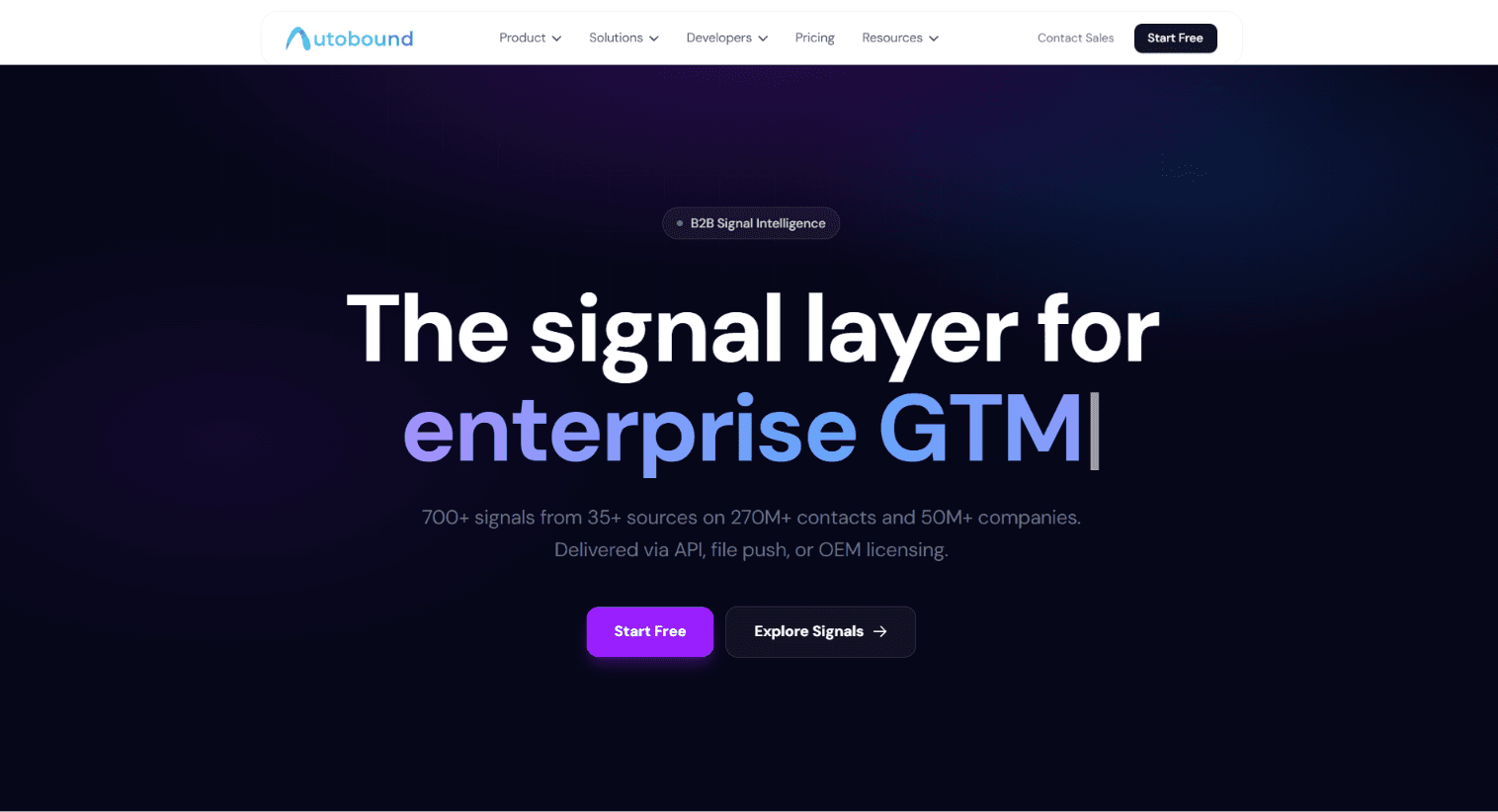
Autobound is a signal-ranking engine built on customer behavior and event data rather than a points-based scoring tool. It tracks 700+ signal types from 35+ sources across 250M+ contacts and 50M+ companies, then ranks each signal by how likely it is to indicate buying intent, effectively prioritizing who to contact.
Who it's for: Outbound and RevOps teams wanting prioritization driven by real-world behavior and events rather than form fills.
Scoring approach: AI ranks signals (for example, a funding round plus a hiring surge) by likelihood of buying intent, not a points model, then delivers them via API, MCP, or flat file so your CRM, sequencer, or AI SDR tool can act on them.
Where Autobound wins: Collecting behavioral data from sources scoring tools typically miss (filings, transcripts, Reddit, Glassdoor) and delivering it ranked into the tools that run your outreach.
Integrations: Salesforce, HubSpot, Outreach, Salesloft, Gmail, Instantly, Clay; MCP server; OpenAI function-calling.
Pricing: Credits from $19 to $4,999; no flat per-seat tier. New accounts get 1,000 free credits, no card required.
How Artisan applies lead scoring to outbound
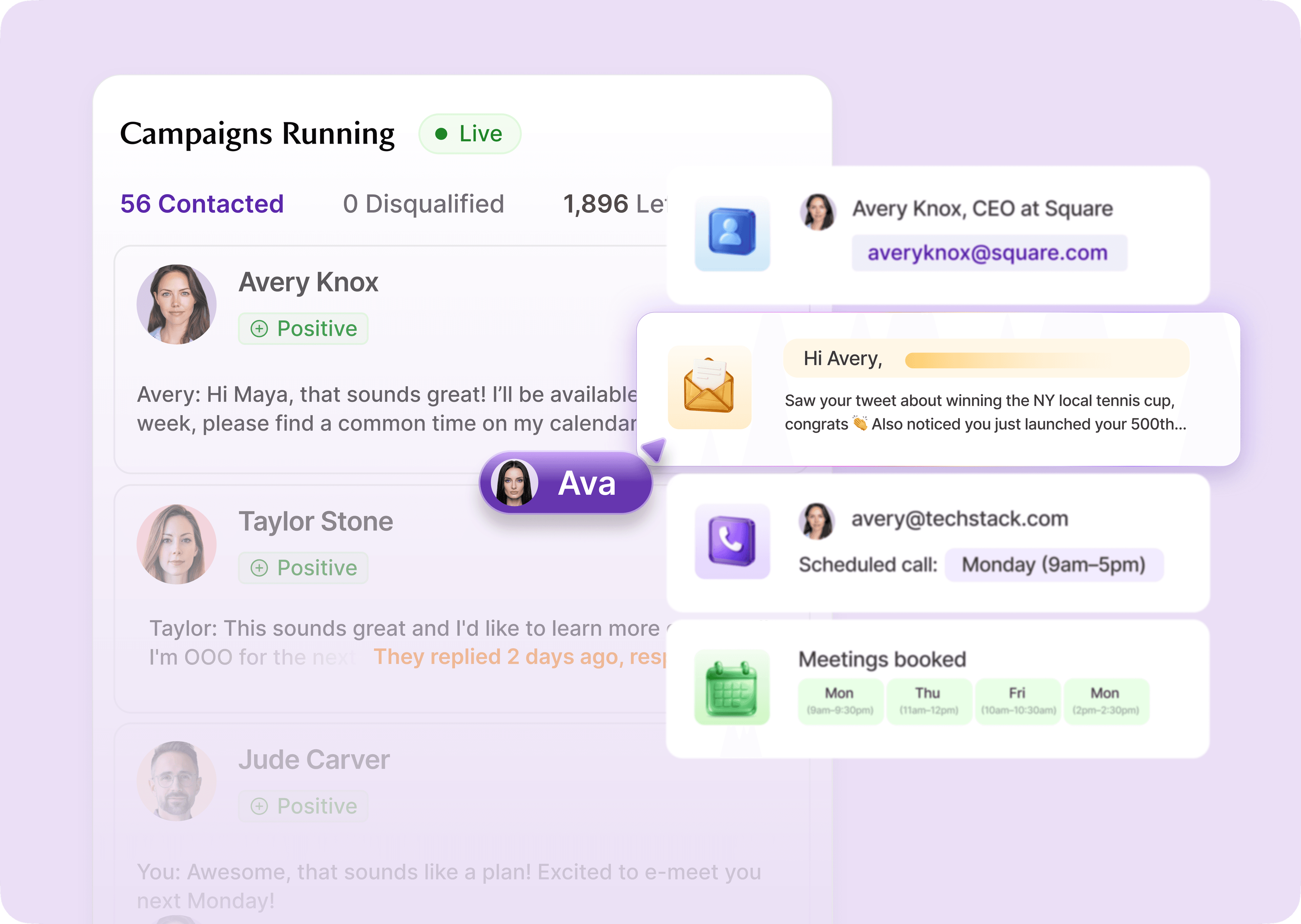
Artisan applies lead scoring directly to outbound execution. Prioritization determines who AI BDR Ava works with without any manual sorting.
Ava uses scoring to decide who receives the most attention
Artisan prioritizes leads and accounts based on ICP fit and intent signals. This AI-assisted scoring happens automatically in the background and is based on hundreds of data points collected from Artisan’s in-house database, across the web, and third-party sources.
Scores automatically trigger outbound actions
When a lead or account crosses a priority threshold, Ava launches deeply personalized outbound across email and social media without waiting for manual routing or approval. That said, you can set up semi-manual rules that require reps to check lead scoring before Ava sends cold emails.
Built to work alongside HubSpot and Salesforce
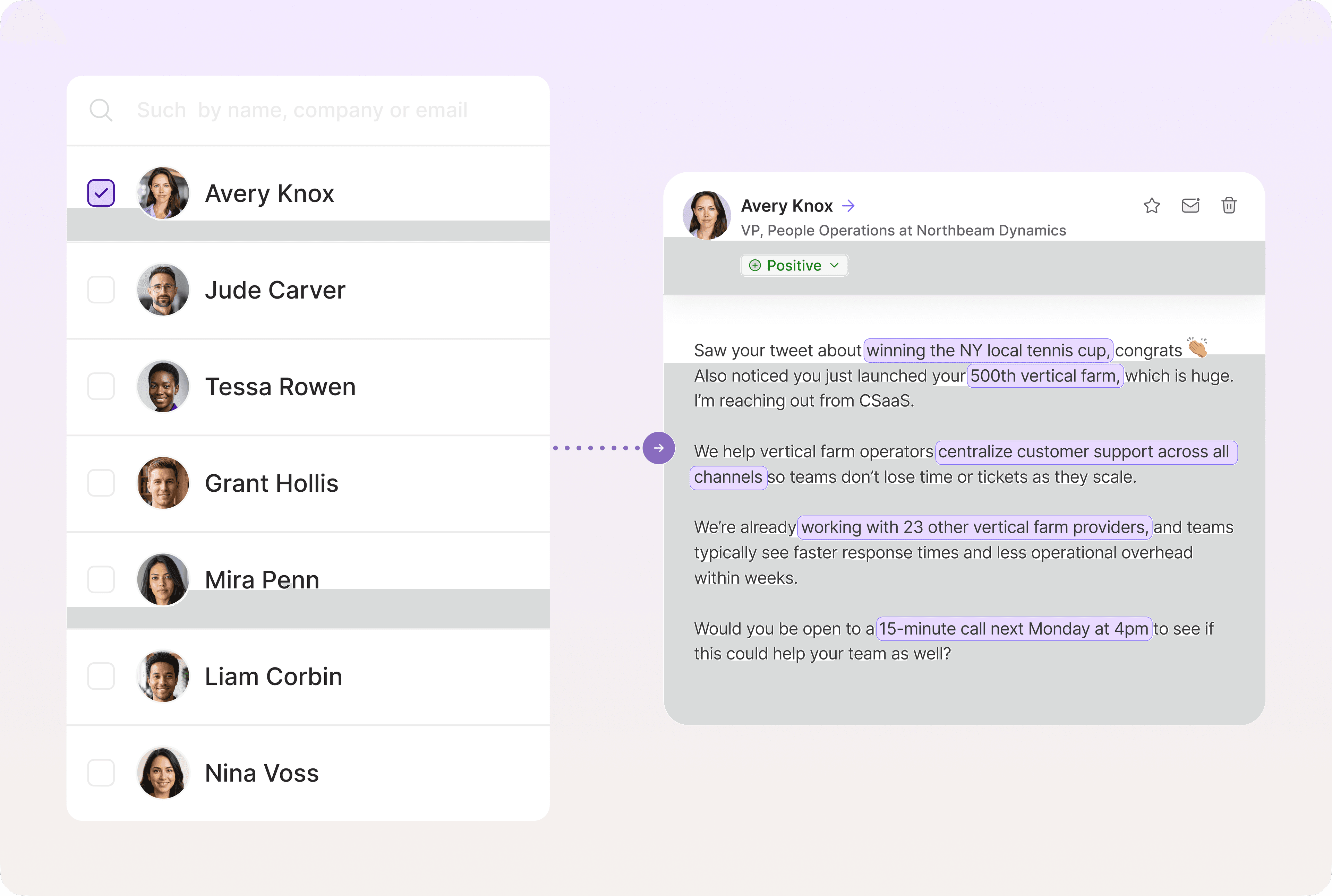
Artisan integrates directly with CRM platforms like HubSpot and Salesforce, syncing lead context and outcomes to improve scoring over time. Outbound results feed back into prioritization logic, closing the loop between scoring and revenue impact.

KPIs that prove lead scoring is working
If lead scoring is working well, the impact shows up in how fast deals move and how reliably pipeline turns into revenue. The right KPIs give leadership a clear way to validate that scoring is improving execution.
Sales cycle and conversion Metrics
Track the following metrics to confirm that scoring is improving sales efficiency:
Lead-to-opportunity conversion rate
Opportunity creation velocity
Stage-to-stage conversion rates
Sales cycle length
Speed-to-first-touch on high-score leads
MQL to SQL improvement
Revenue and Forecasting Impact
Focus on the following metrics that tie lead scores to revenue:
SQL-to-closed deal conversion rate
Average deal size for high-score leads
Forecast accuracy by score band
Revenue per outbound motion when new scoring models are used
Start with one scoring model that sales trusts
Overly complex models often create more friction than value. The key to lead scoring that works is to start small. Focus on fit and intent, validate models against revenue impact, and only add complexity once the model proves itself.
You should also take advantage of modern tools like Artisan to automate your scoring. Artisan draws on hundreds of data points to prioritize leads. AI BDR Ava then acts autonomously to trigger outreach across social media and email, with deep personalization at every stage. This means your sales team can focus on the vital human work of closing deals.

Automate your outbound with an AI BDR
Meet Ava—your AI BDR who handles prospecting, outreach, and follow-ups, so your team can focus on closing.

Jenny Romanchuk
SME @ Artisan
Jenny creates senior-level content for sales, SEO, and marketing professionals. She also leads partnerships at the District #1 Charitable Foundation.