How to run ABM campaigns that win
Launch ABM campaigns that convert. Learn how to pick target accounts, personalize outreach, and align your sales and marketing teams.
Successfully targeting an account with an account-based marketing (ABM) campaign comes down to providing value.
Reps should know the challenges faced by stakeholders inside out and use this understanding to send personalized, persuasive content.
Well-executed ABM can lead to valuable contracts with your ideal prospects while generating an ROI that many marketers would kill for.
How to lay the foundation for an ABM campaign
Account-based marketing is nothing new. The term was coined in 2024 by the Information Technology Services Marketing Association (ITSMA).
But that doesn’t mean it’s the same as it was 20 years ago. While the underlying principle of ABM is still “treat each account like its own market,” the tactics for doing so have changed due to advancements in technology and shifts in buyer expectations.
Define and prioritize your target account list
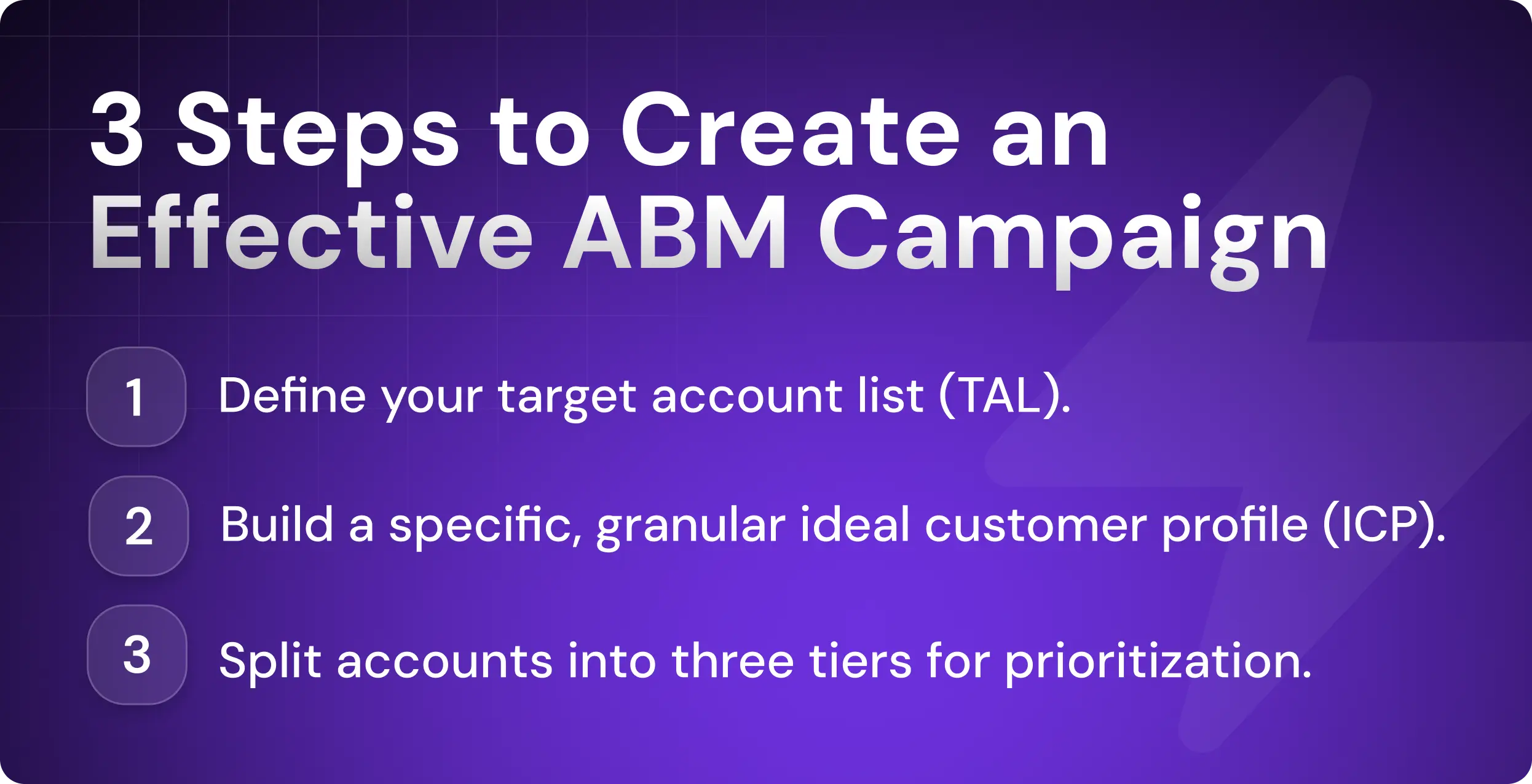
Your target account list (TAL) is a list of prospects with the highest revenue potential. Your TAL is the foundation of your ABM strategy. Miss here, and the rest of the campaign is in trouble.
Follow these steps to build a strong TAL:
Define an ideal customer profile (ICP): Analyze your best existing customers to find common characteristics like industry, revenue, size, technology use, pain points, and implementation timelines.
Put together your initial prospect list: Find accounts that fit your ICP. Most companies do this using a mix of manual research (on sites like Crunchbase) and third-party databases.
Prioritize high-intent accounts: Identify accounts with strong intent signals like recent funding rounds, market expansions, or other actions that signal buyer readiness.
Consider profitability factors: Filter accounts with high revenue potential and long-term strategic fit.
Enrich your list with B2B data: Use a data enrichment tool to automatically enrich the companies and professionals on your list with accurate, current information.
Revise your list based on new intel: Track KPIs like sales cycle length, close rate, and deal size to refine your ICP and TAL based on real sales and marketing outcomes.
Finally, limit your list to 50 to 150 accounts. It’s best to keep your list succinct so that you can give personalized attention to each entry.
Your list’s size will depend on your resource availability, although modern tech stacks typically allow for scale without adding headcount. With AI outbound sales software, for example, you can hit more accounts without losing deep personalization.
Build a tight ICP
Don’t waste time on accounts that are unlikely to convert.
Create a highly specific ICP so that only businesses that need your solution will make the cut. When you get granular with your ICP criteria, every marketing dollar is spent on hitting the accounts that matter.
To build your ICP, start by mining your existing CRM and deal data to find patterns across your top customers—the ones paying you the most and raving about your solution.
Then, create an ICP with the following sections:
Industry
Vertical
Company size
Revenue
Sales readiness
Technologies
Pain points
Goals
Location
Tier your high-value accounts
To efficiently allocate your limited outbound resources, break your target account list into three tiers. A tiered approach tells you how deep you should go on personalized content vs. automated outreach for each account.
For example, tier one accounts might be invited to expensive dinners with sales reps, along with highly tailored marketing outreach. Tier three accounts, on the other hand, receive cold calls or automated emails from your AI BDR.
Here’’s an example of a three-tier system and the types of leads that go into each:
Tier 1: Highly personalized, bespoke campaigns with lots of sales collaboration. Reserved for 3–5 of your highest-ROI businesses. Enterprise SDRs strategize with the marketing team to spear whales.
Tier 2: Semi-customized campaigns targeting small clusters of accounts with similar firmographics and pain points. Meant for high-value prospects on your TAL (5–30 accounts). Uses a mix of sales touches and automated marketing tactics.
Tier 3: Automated, tech-driven outreach for a larger volume of accounts that fit your ICP but are less profitable than tier two accounts. Involves personalization at scale using dynamic content and email triggers.
Map messaging to pain points, not personas
ABM doesn’t work if your messaging is fluff. It has to hit home. Decision-makers should feel like they have a friendly spy in their midst, intent on helping them solve their unique pains.
Get tactical with account research
To create enticing offers, engaging follow-ups, and compelling email scripts, you need to understand the interests and desires of the different decision-makers you’ll reach out to. In other words, you’re going to have to do some research.
Here are three proven techniques for tactical account research:
Use tools to understand decision-makers: B2B intent data software, LinkedIn Sales Navigator, and web visitor tracking tools help you gain insight into the interests and buyer journey stage of target stakeholders, helping you craft more relevant messaging.
Build pain point and solution grids: For each buyer persona, map their core business pain points to the specific way your product or service solves that issue. This grid will ensure your messaging is relevant on the contact level, not just the account level.
Document what each key stakeholder cares about: Whenever you learn about a decision-maker’s values or concerns, capture it in your CRM. Whether it’s ROI, integrations, or ease of use, these insights help you personalize outreach.
Build a modular messaging system
You shouldn’t create content for every new ABM campaign from scratch. A modular messaging system, with interchangeable content blocks, streamlines your marketing and sales outreach by ensuring you already have the main components already written out. You can then personalize them to specific accounts and segments.
To build this system, start with four modules:
Contextual intro: Mention company news, a competitor they use, or a role-specific trigger.
Pain-aligned use case: Describe how customers use your solution to solve a problem.
Proof Point: Include a customer story or an alternative credible signal that your solution works.
Clear CTA: Suggest next steps that match the buyer stage.
Use these blocks to quickly create lead-specific cold emails, landing pages, LinkedIn DMs, ad campaigns, webinars, and any other type of content you’re using to engage and nurture target accounts.

Automate your outbound with an AI BDR
Meet Ava—your AI BDR who handles prospecting, outreach, and follow-ups, so your team can focus on closing.
Choose the right ABM campaign style
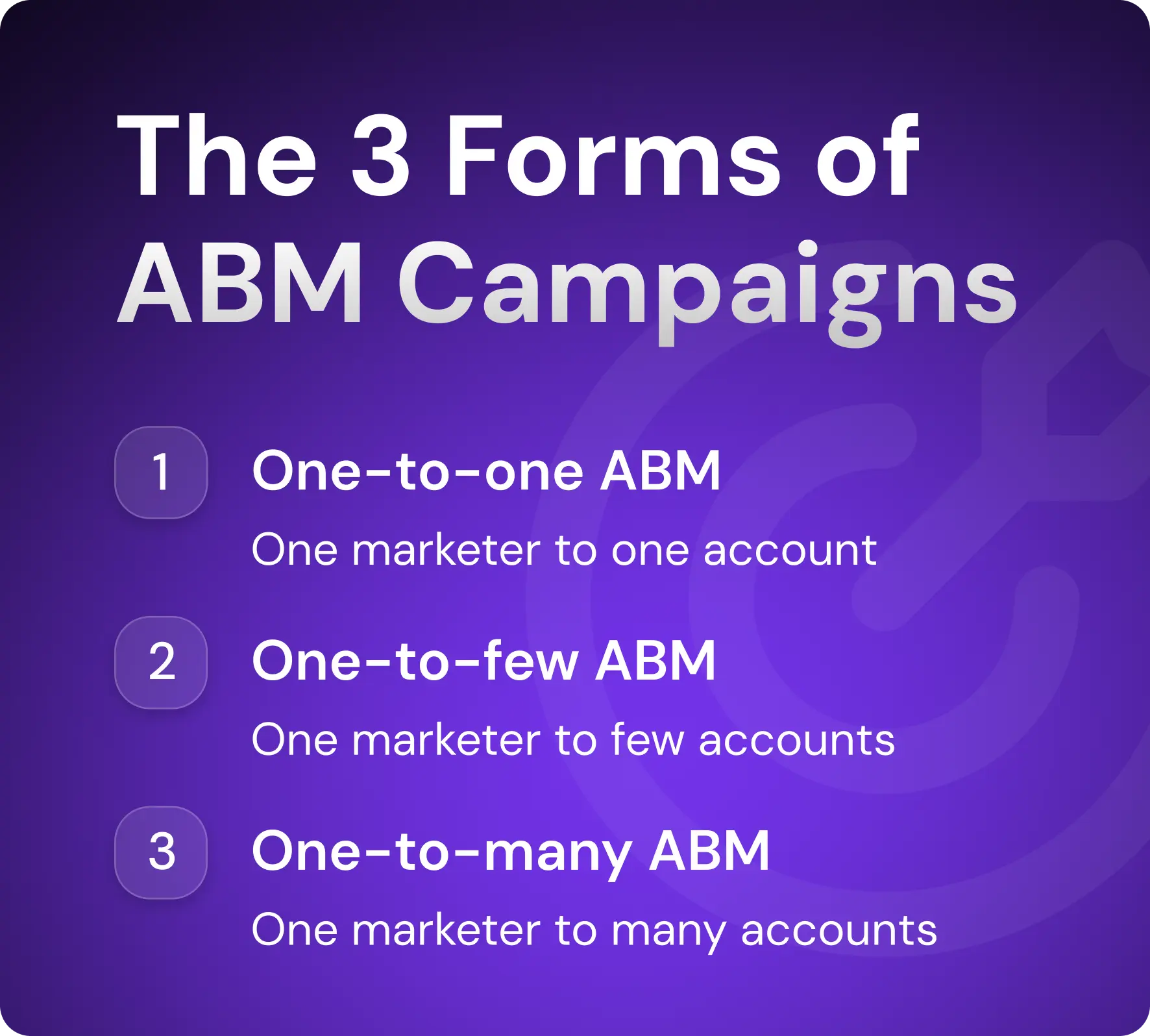
There are three approaches to ABM campaigns—one-to-one, one-to-few, and one-to-many. And it’s important to pick the style that works best with your resources and prospect types.
Alternatively, you split your accounts across these three styles based on their profitability and likelihood of closing, ensuring the highest-value accounts get the most personalized human attention.
One-to-one strategic ABM
One-to-one strategic ABM (one marketer to one account) is resource-intensive and reserved for top-tier key accounts with high profitability and serious purchase intent.
Here are the main strategies marketers and enterprise BDRs use for one-to-one ABM:
Tailored ads targeted at a single company
Full personalization in marketing and sales outreach
Microsites—a highly personalized web experience for that specific account
Executive dinners
Handwritten direct mail
Co-branded reports giving the business actionable insights
These strategies are intensive, but they can drive positive ROI when the deal size is large and the sales team is aligned around the importance of closing a particular account.
One-to-few ABM for small groups of leads
Lite ABM is when a marketer targets 5–30 similar accounts in a shared industry with the same pain points. Use it for businesses that have high value but are less likely to convert than your one-to-one accounts.
To run a one-to-few campaign, launch multi-channel campaigns with semi-tailored content. You might, for example, run an email sequence, webinar, and LinkedIn ads, each containing content that’s personalized to match a cluster’s pain points.
One-to-many ABM for large groups of leads
Programmatic ABM uses ABM-style personalization despite targeting a large group of leads.
It relies heavily on sales automation tools and intent data to create personalized experiences at scale, such as targeted ads, personalized emails, and dynamic landing pages.
This approach is ideal for smaller businesses that lack the resources to do one-to-one or one-to-many ABM. It’s also a popular way for resource-limited businesses to get many of the benefits of ABM without the high costs. Keep in mind, however, that you need strong segmentation for this to work. Don’t batch and blast.
Execute the ABM playbook across channels
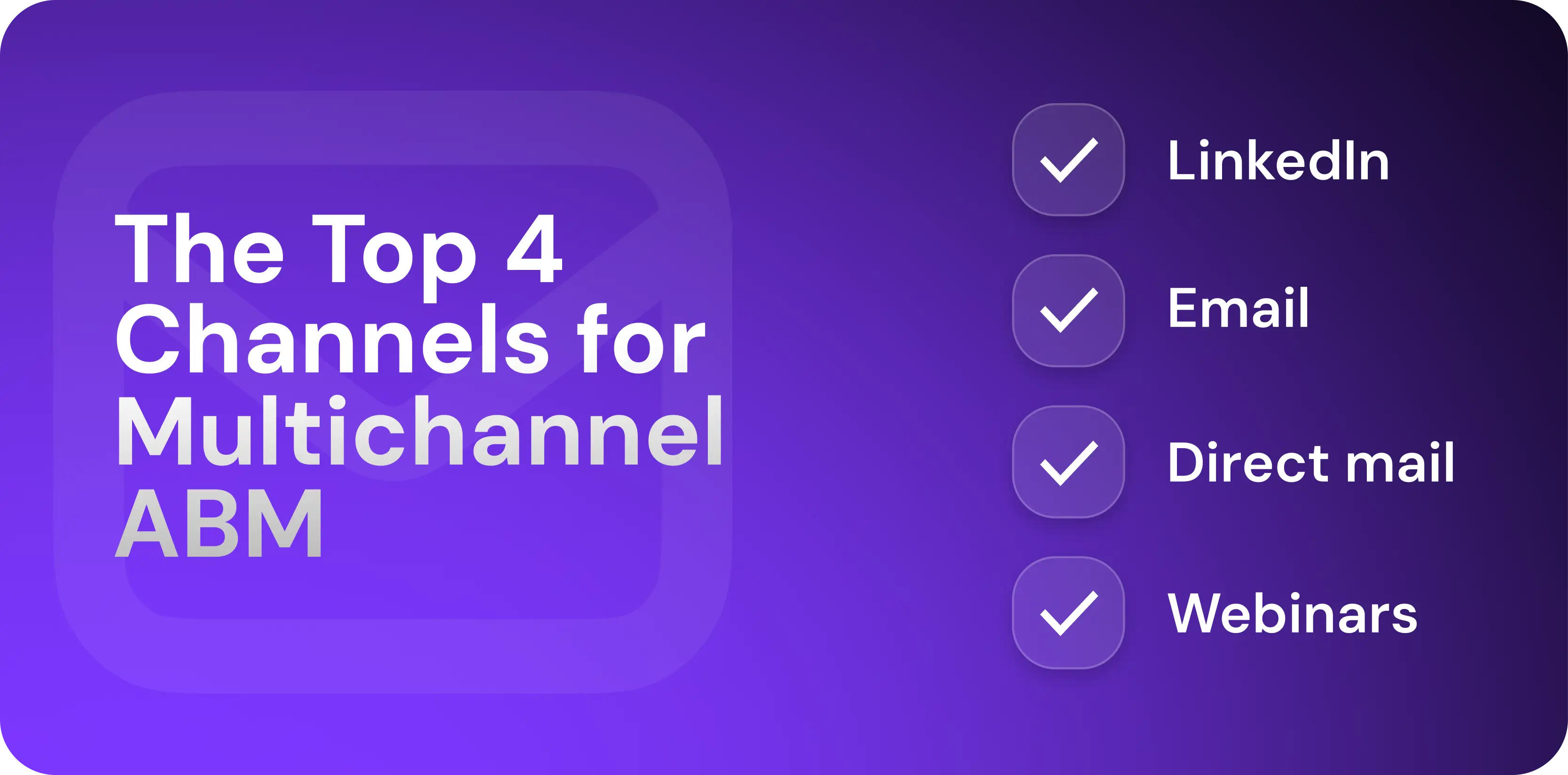
The best ABM playbooks use a variety of marketing and sales tactics to hit leads from multiple angles. The methods offering the biggest bang for your buck are LinkedIn outreach and ads, email sequences, direct mail, and webinars.
LinkedIn outreach and ads
With your sales reps handling LinkedIn outreach and your marketing reps running LinkedIn ads, you’re able to engage decision-makers across numerous touchpoints on a platform where buyers are open to learning about solutions to their business challenges.
Follow these tips when using LinkedIn in your ABM campaigns:
Use direct personalized messages and targeted ads.
Run ad campaigns that are shown only to your target account list.
Use SDR faces in creative assets to boost familiarity.
Email sequences (warm and cold)
In HubSpot’s 2026 State of Marketing Report, 75% of marketers said they’re planning on maintaining or increasing their email marketing investment in 2026.
Why? Because email converts.
It’s easy to personalize content and segment businesses, which makes it an excellent channel for ABM, where outreach customization is key.
Here’s how to run email sequences as part of your ABM strategy:
Build cold email flows that hit specific information needs at every stage of the buyer’s journey. You might focus a sequence on questions about your solution’s benefits, for example, or address common concerns over pricing and implementation.
Use automation for email follow-ups, but make sure emails sound like a human. If it sounds like AI, you’ve lost your credibility.
A/B test subject lines and track open and conversion rates. This is how you optimize your email copy over time.
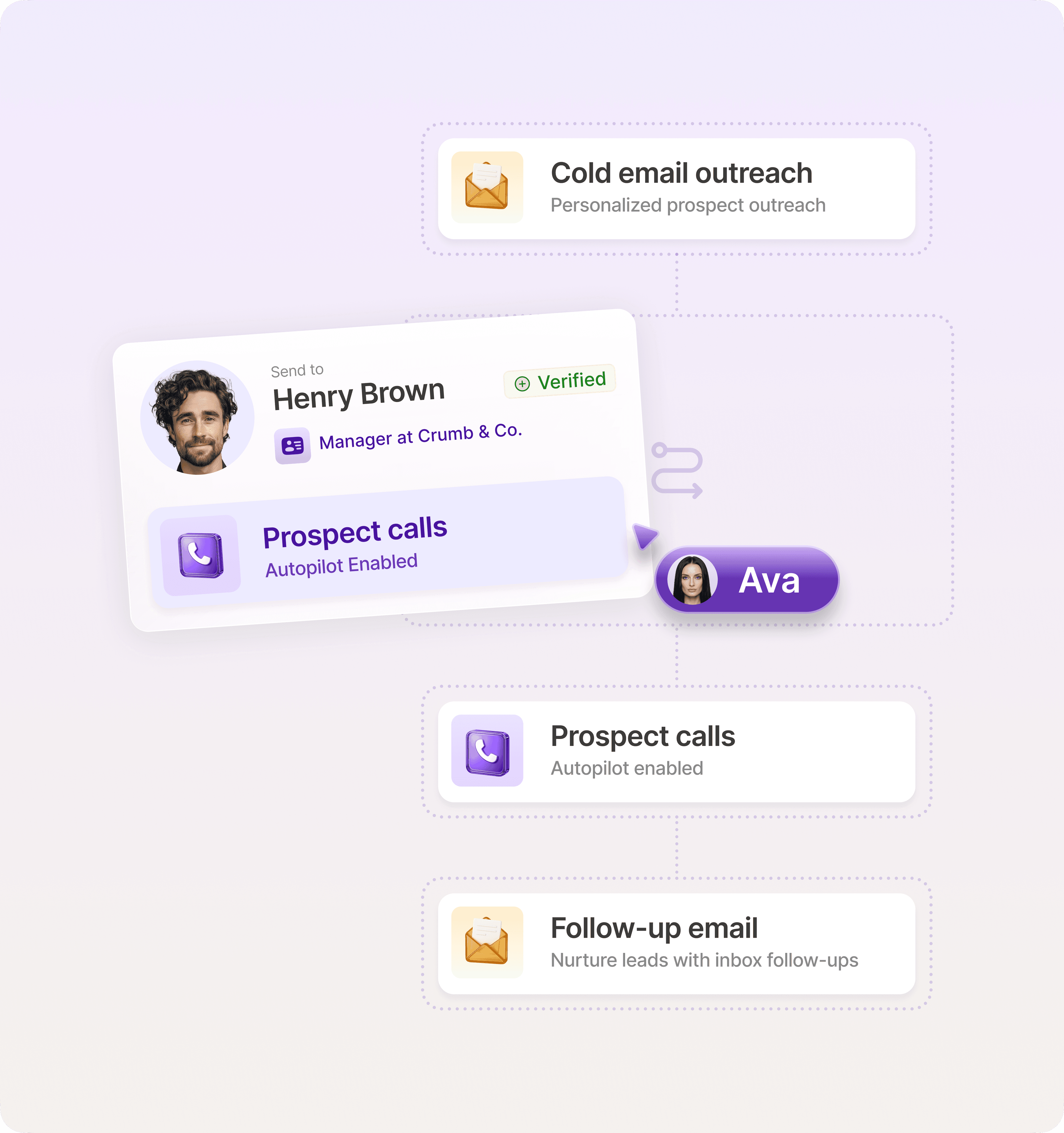
Artisan automates all of the early and middle stages of the email outreach process—right up until a recipient is ready to talk to a rep. AI BDR Ava, an autonomous sales agent around whom the platform is built, prospects and scores leads, personalizes and delivers messages, and routes positive replies to the most appropriate reps.
Direct mail and gifts
Direct mail and gifts are a classic ABM play. The personal touch builds rapport and functions as a great pattern interrupt.
Gifts are especially useful for reactivating dormant accounts and for big-stage plays when you need to win the attention of your most valuable accounts. But don’t just send a pair of branded socks and call it a day.
Here are the best direct mail tactics for ABM:
Send physical items to warm accounts (tiers one and two). Examples include gourmet food kits, branded apparel, tech accessories, or even physical books. Tailor them to the prospect’s specific role, industry, and interests.
Tie gifts into a personalized message or the campaign theme. For example, a lead generation software brand might send their prospects copies of a popular book about prospecting, along with a note explaining how the book’s philosophy of sales inspired the process they use to help clients.
Follow up: Reach out over LinkedIn and email a day or two after you sent the gift to make sure they received it. Don’t be afraid of asking if they’d like to learn more about your services.
Webinars and landing pages
If you want to go above and beyond in tailoring content to decision-makers at target accounts, create segment-specific webinars. For example, if five accounts on your TAL are struggling with the same specific challenge, create a webinar that covers how to solve it.
To increase the odds they attend, use dynamic landing pages tailored to their company name, job title, or vertical. This will make it feel like the webinar was created specifically for them.
After the webinar, follow up immediately using webinar engagement data, such as poll responses (especially around pain points and priorities), links they clicked, and questions they asked in the chat.
Coordinate sales and marketing or kill your campaign
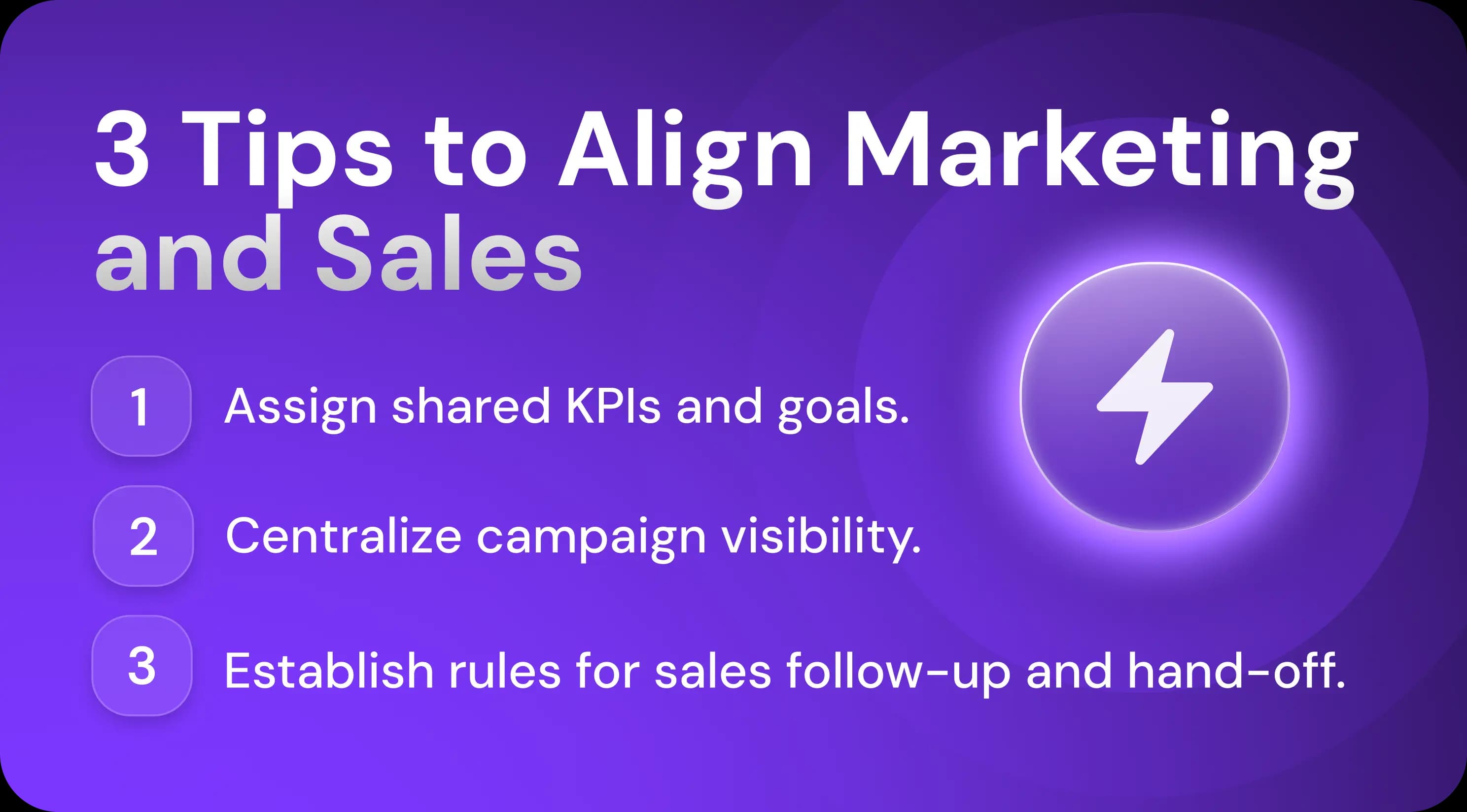
Whether it’s sales reps following up when the marketing team generates a lead or marketing using a sales rep’s learnings from a cold call to improve their messaging, sales and marketing coordination is critical for effective ABM.
Assign shared KPIs
There’s no better way to align sales and marketing than to give them the same clearly defined set of goals. And we’re not just talking about marketing-qualified leads (MQLs) generated. In ABM, you need to assign KPIs that demonstrate revenue growth.
Focus on these three KPIs to align sales and marketing:
Account engagement (like number of cold calls made and marketing emails sent)
Number of meetings booked
New pipeline created
Deal velocity and sales cycle length
Centralize campaign visibility
Use a single CRM or dashboard to track every touchpoint.
Give both teams access to live campaign data so they can track what’s working and what isn’t. A live data feed will enable teams to identify the next best steps to push the account further through the sales funnel.
For example, a sales rep might use a lead’s webinar engagement data to inform their opener for a follow-up phone call.
Keep an account brief next to that dashboard: the latest buyer conversation, the next agreed action, its owner and any missing information. If you are evaluating an AI employee such as Artie, maintaining that brief is a concrete recurring assignment to test. The brief should point back to the campaign data, so a rep can check the evidence before acting.
Set follow-up rules
Define rules for when sales should jump in and engage the lead directly over email, call, or LinkedIn message.
Here are the most common situations that would call for immediate sales follow-up:
Account visits the pricing page three times
A decision-maker views a webinar
Prospect submits a “web demo” form
24 hours after your direct mail gift has been delivered
When you pre-define follow-up rules and give both teams visibility into account communication history, your outreach will be coordinated, not chaotic.
Measure what actually matters in ABM
The best ABM metrics tell you whether your ABM campaigns are actually leading to revenue-generating outcomes. They’ll also help you spot opportunities to optimize.
Core metrics to track
Here are core metrics to track across your ABM campaigns:
Account engagement (multi-touch): Percentage of accounts with over three engaged contacts, number of unique touches per account, and time from first touch to high-intent action (like taking a meeting).
Pipeline generated from target accounts: Percentage of total pipeline sourced or influenced by ABM.
Deal velocity and sales cycle length: Average number of days from first ABM touch to opportunity and sales cycle length for ABM vs. non-ABM accounts.
Conversion rates per campaign type: meetings booked per campaign type and new revenue generated per campaign type.
Post-campaign ROI: Revenue sourced per campaign and customer acquisition cost of ABM vs. non-ABM. It can also be useful to track the overall payback period.
Optional but powerful metrics
The following metrics provide deeper insight into your ABM campaign’s performance:
Content performance by segment: Engagement rate, time on page, and email open rates for each segment to see which content resonates with different buying groups.
Intent data lift: Spikes in intent signals (pricing page visits, email replies, etc.) attributed to the launch of your ABM campaign.
Retargeting response rates: Click-through rates and meeting conversion rates from retargeted ABM accounts vs. non-retargeted ABM accounts. This helps you see if your retargeting strategy is worth the cost.
ABM in action: Two real campaign examples
Theory is one thing. However, successful case studies are useful for giving a real sense of how ABM campaigns work in practice. Fortunately, there are plenty of standout examples to learn from.
GumGum’s Big Mac campaign
GumGum, a contextual intelligence company that helps with advertising, wanted to land McDonald’s as a client.
So they designed and sent custom-branded burger boxes to McDonald’s team. The boxes used the brand’s famous ingredients (like lettuce and burger patties) to represent individual software features. GumGum also included a receipt listing the executives’ names.

The result was a meeting with McDonald’s executive team. The lesson for us? Humor paired with thematic personalization goes a long way towards making a strong impression on even the biggest accounts.
Ketch’s invite-only webinars
Ketch is a data privacy management application. Their head of marketing, Colleen Barry, told us about a successful ABM campaign they used to open sales opportunities with companies in highly regulated industries like fintech and enterprise software.
In collaboration with the sales team, Ketch’s marketing department built a tight target account list of accounts that were actively scaling and therefore likely feeling pain around data privacy.
According to Colleen, the campaign succeeded thanks to the aggressive multichannel personalization at each stage of the customer journey: “The key tactic was personalization at every step, from tailored LinkedIn ads that spoke directly to their compliance challenges to custom landing pages and email outreach built around their industry and region.”
The Ketch team also ran small, invite-only webinars focused on helping target decision-makers navigate new privacy regulations. In these webinars, they “used real examples instead of product pitches.”
There was also strong sales and marketing alignment. For example, the sales team always followed up with webinar attendees to offer account-specific demos.
The campaign’s results were excellent. They drove high-quality sales conversations and measurable pipeline growth.
There are key lessons from Ketch’s approach:
Prioritize accounts based on buyer intent signals
Host invite-only webinars targeting specific challenges
Give sales access to engagement data to personalize demos
How Artisan powers ABM without hiring more people
Artisan is an outbound automation platform that handles many aspects of running ABM campaigns, from finding ICP-fit accounts to managing sequencing, outreach, and follow-ups.
Decision-maker identification
Artisan is built around an autonomous AI BDR called Ava. She handles lead discovery (at the account and decision-maker levels) by searching a database of over 300 million verified B2B contacts and monitoring your website visitors. She also draws in multiple sources to enrich these lead profiles.
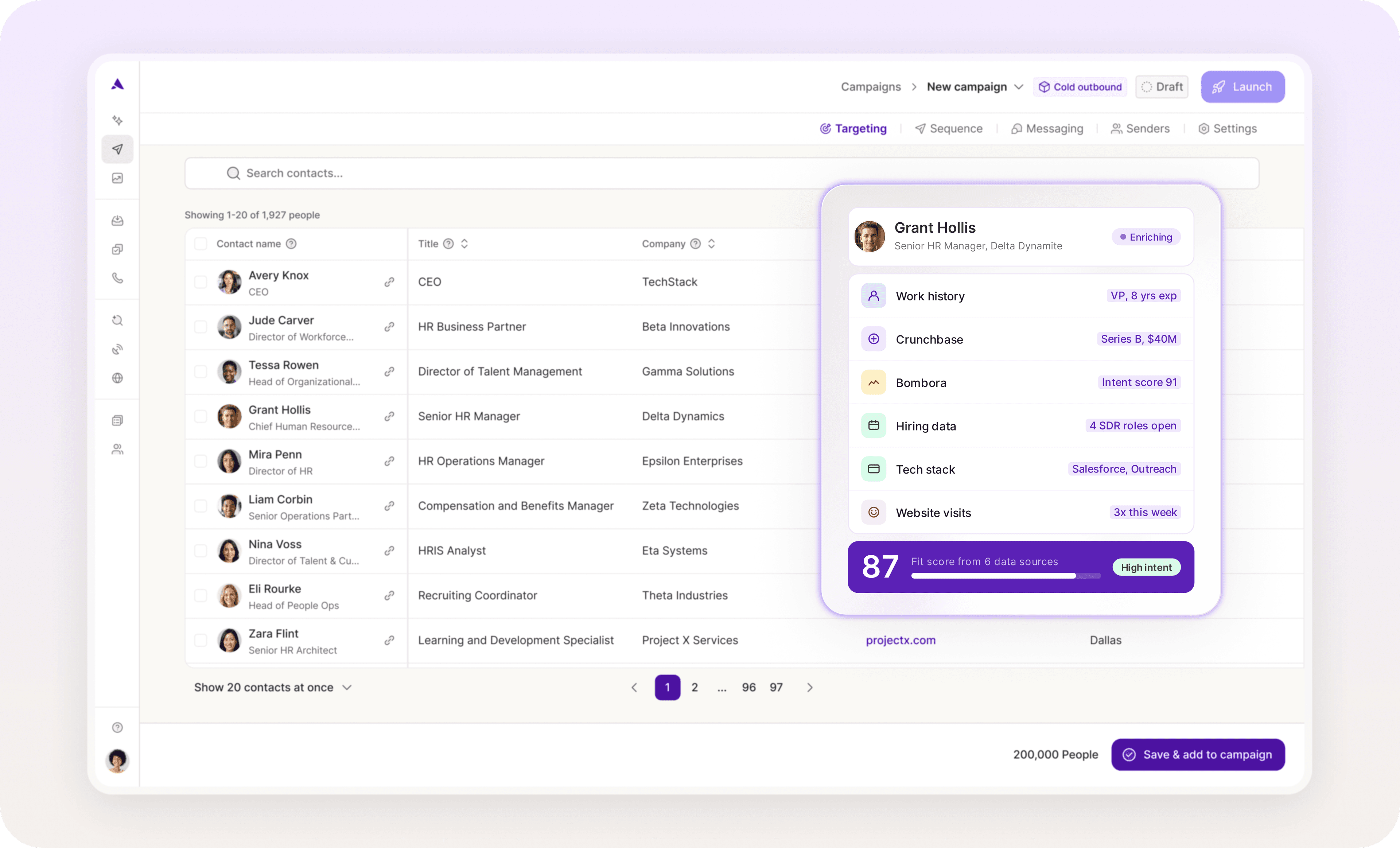
Automated outreach with precision
Ava writes and sends hyper-personalized emails and follow-ups to decision-makers at target accounts. She brings firmographic details and online behavior into her messages while also optimizing deliverability so leads actually receive your outreach emails.
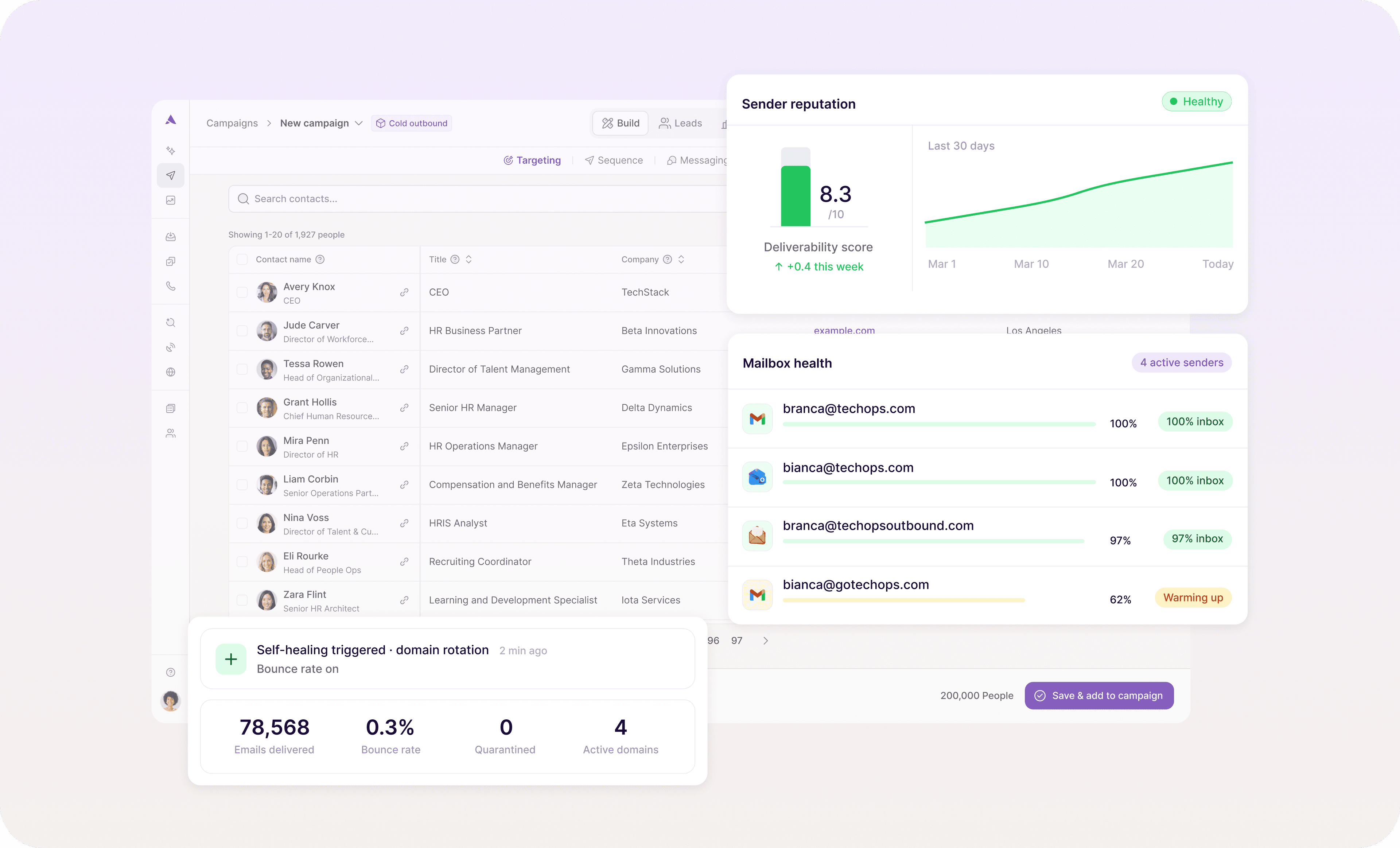
Results at scale
Artisan is designed to allow companies to scale their outbound without hiring new sales reps. AI BDR Ava automates all of the early and middle stages of your cold outreach, which frees your team to focus on the all-important human aspects of connecting with interested leads.

Run ABM that fills your CRM with deals
Highly customized ABM campaigns help your business reach your most desirable target accounts, even the ones that feel like an impenetrable castle. But they are also resource-intensive.
AI tools are changing how companies approach ABM. They can handle much of the legwork, from building target account lists to reaching out to decision-makers via multichannel sequences.
Artisan automates the process of engaging high-value accounts. AI BDR Ava finds ICP-fit targets, conducts deep research, and sends personalized emails and follow-ups to decision-makers. This means you can significantly scale your ABM without hiring a single new rep.
Automate your outbound with an AI BDR
Meet Ava—your AI BDR who handles prospecting, outreach, and follow-ups, so your team can focus on closing.

Sam Rinko
SME @ Artisan
Sam Rinko is a former SaaS sales rep turned tech writer. He sold real estate software before writing about lead generation, cold calling, and AI sales tools.