9 email personalization tools that actually generate replies
Compare the best email personalization tools for cold outreach and marketing. Covers AI writing, dynamic content, behavioral triggers, pricing, and more.
Cold email personalization at scale has traditionally relied on templates and set variables. You could include a prospect's first name, company name, and maybe a few other details but little else.
AI tools make deep personalization possible. The best tools can be configured to sound just as good as your reps. They respect guardrails, monitor mailbox health, and auto-optimize campaigns as data comes in.
What are email personalization tools?
Email personalization tools generate, compose, and deliver tailored messages at scale using data about prospects or customers. They are used by business development representatives (BDRs) running outbound, sales teams scaling cold outreach, and marketing teams in charge of segmented campaigns.
The best email personalization tools build context from multiple data sources, including CRM data, and turn it into highly tailored messaging.
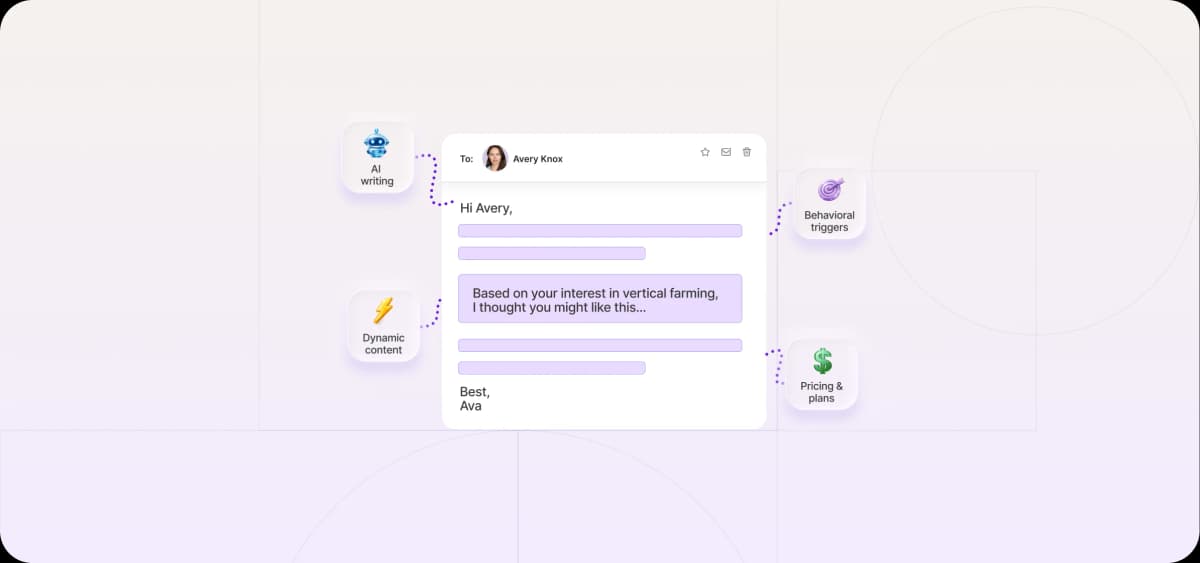
There are four ways email personalization tools tailor messages to prospect pain points:
AI-generated copy: Subject lines, opening lines, and even full emails are auto-generated based on data from social media profiles, company websites, and public signals.
Dynamic content blocks: Emails adapt specific content sections based on recipient attributes.
Behavioral triggers: Message delivery is triggered by actions such as website visits, product usage, and email engagement.
CRM and enrichment merge fields: Data from platforms like HubSpot and Salesforce feeds personalization at scale.
Cold outreach personalization focuses on one-to-one relevance. Each email is crafted for an individual prospect who has not opted in. Tools for outbound email personalization, such as Artisan, use multiple external sources to scrape buying-intent signals and compose human-like emails.
Marketing personalization focuses on segment-level relevance. Emails adapt to groups of known contacts based on behavior, lifecycle stage, and attributes.
How to choose an email personalization tool
There is no single “best” tool. You should look for a platform that matches your workflow, data maturity, and outbound model.
Consider the following factors before committing to a purchase:
AI personalization depth: Some tools generate full emails with context. Others only write opening lines or insert variables.
Integration ecosystem: Check CRM sync, enrichment sources, and whether a tool supports email, social media, and other channels within a single workflow to avoid multiple integrations.
Deliverability features: Look for email warm-up, inbox health monitoring, email verification, and delivery controls. These help you maintain high delivery rates.
Ease of human editing: Your chosen tool should allow review and editing before sending. Manual quality control is important in the early stages of launching a campaign.
Cold email vs. marketing fit: Outbound tools prioritize email to cold leads. Marketing tools prioritize segmentation of existing audiences.
Volume and pricing model. Tools charge per seat, per lead, or per usage. The pricing can change quickly as email volume grows.
Best cold email personalization tools
These tools are built for outbound teams reaching people who have never heard of you. They personalize emails at the individual level using intent signals and prospect data from databases, social media, company websites, and enrichment sources.
1. Artisan
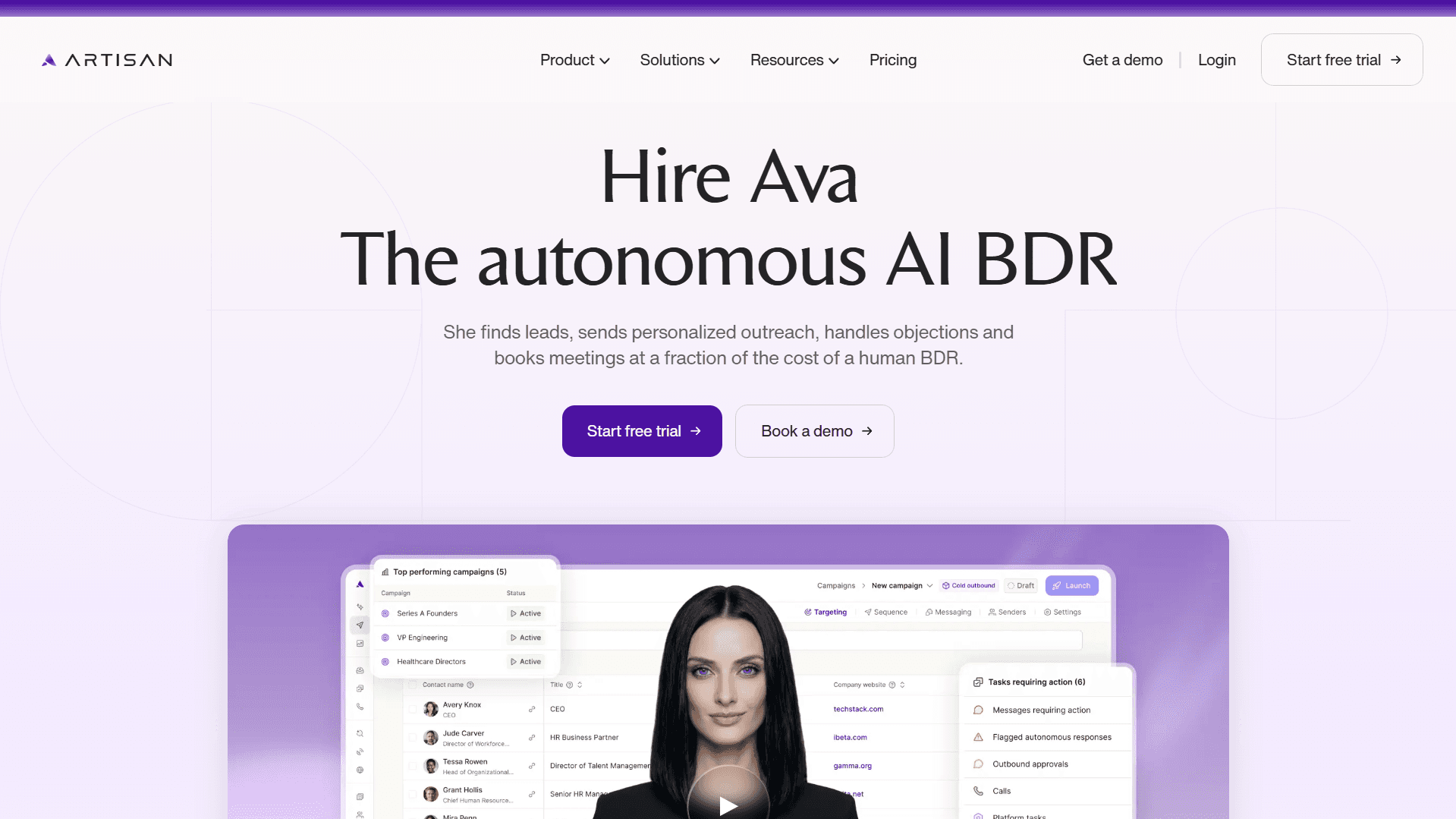
Artisan is an AI outbound platform built around an autonomous AI BDR called Ava. She finds leads, writes human-like personalized emails, handles replies, and books meetings. Ava is best for teams that want personalization tied to prospecting, enrichment, intent signals, deliverability optimization, and execution.
Artisan fits founders who need outbound without hiring a full BDR team, heads of sales scaling pipeline generation, RevOps teams consolidating fragmented tools, and BDR managers who want reps focused on conversations rather than manual prospect research.
Key Features
AI prospecting from a database of over 250 million B2B, local, and ecommerce contacts
In-depth cold email personalization based on lead profiles and recent activity
Mailbox deliverability monitoring
Lead enrichment, qualification, and scoring
Intent signal tracking
AI-generated follow-ups and replies
Automated meeting scheduling
Email and phone number verification
Website visitor tracking and automated outreach
Integrations with popular CRMs
Pricing
Artisan has several flexible plans that scale based on user needs and outreach requirements. A long-term forever-free plan is also available. You can see a full breakdown on the pricing page.
Artisan uses a credit-based system. Credits are used for key actions like enriching an email address or sending an AI-generated social media reply, and unused credits roll over to the next month.
Flexible pricing based on outreach needs; see pricing page
2. Instantly.ai
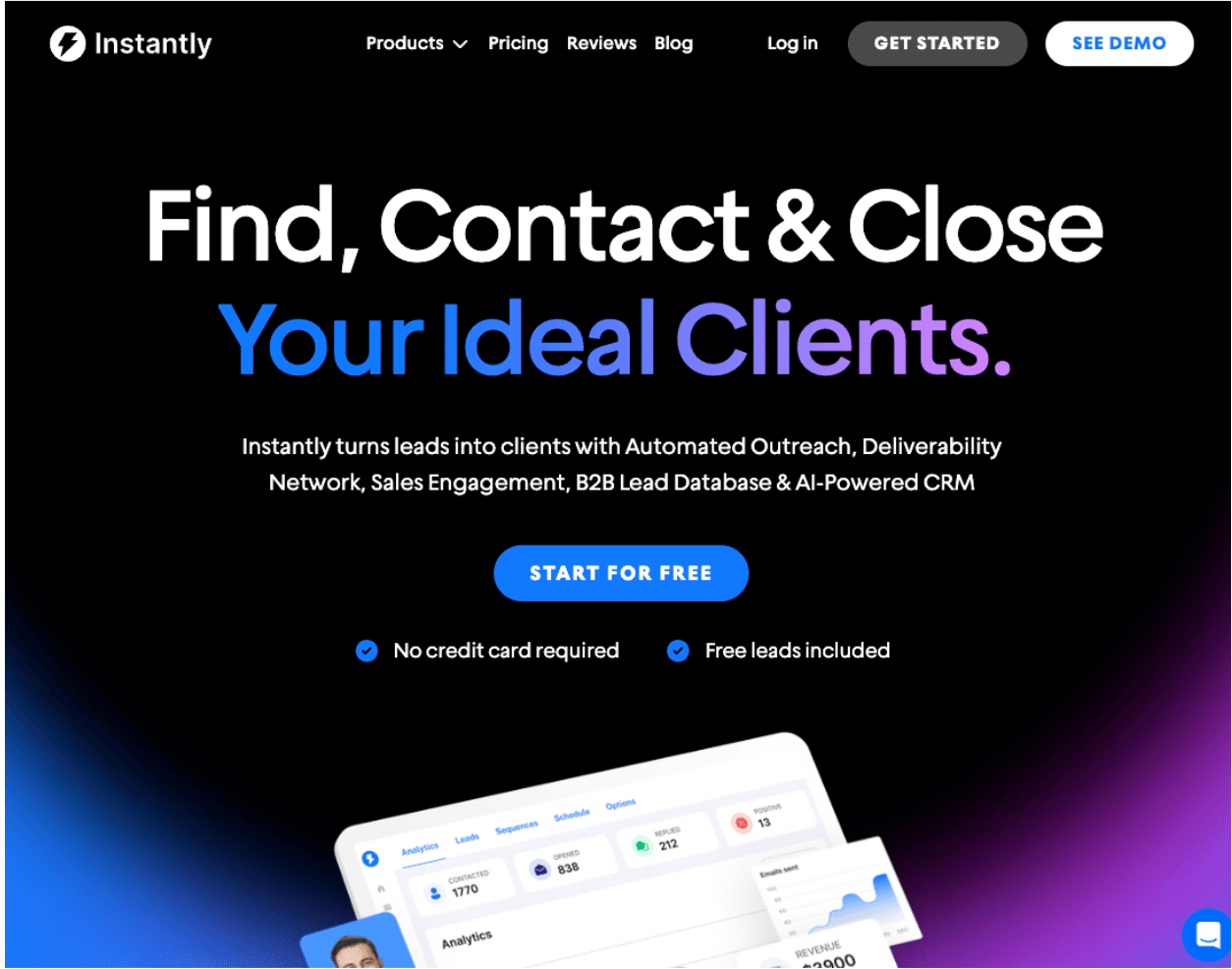
Instantly is a cold email platform for sending campaigns across multiple inboxes while managing mailbox warm-up and replies in one place.
Instantly works for agencies managing different client campaigns and SDR teams sending high volumes of email. AI personalization is lighter than dedicated writing or AI BDR tools; it still needs strong input data and human review.
Key Features
Unlimited email accounts on paid outreach plans
Unlimited email warm-up
Email verification and bounce detection
Integrations with Salesforce, HubSpot, Slack, LinkedIn, Clay, and Sheets
A vast database of over 450 million contacts
AI Reply Agent
Pricing
Growth: $47/month
Hypergrowth: $97/month
Light Speed: $358/month
3. Lemlist
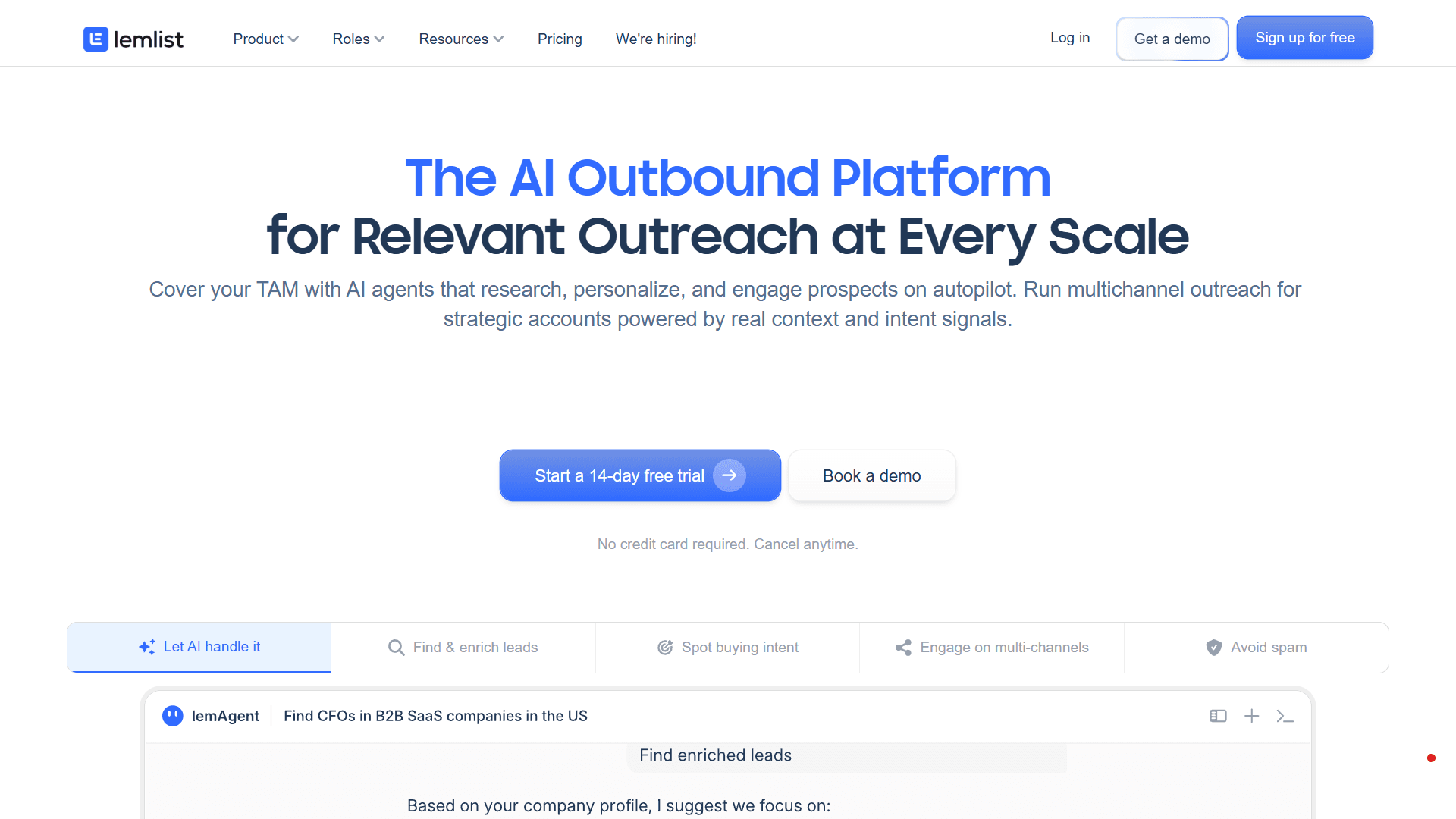
Lemlist is an outbound platform for finding leads, enriching data, running personalized sequences across email, LinkedIn, and WhatsApp, and managing deliverability. Its edge is dynamic image, video, and landing page personalization.
Lemlist is a good fit for SDR teams running creative outbound, founders doing hands-on prospecting, and sales leaders who want reps to use email, LinkedIn, and phone from a single campaign flow.
Creative personalization and multichannel setup take more work than simple email tools. Add-ons and credits can raise the total cost.
Key Features
Lead database of 600 million contacts
Email and phone number finder
AI-powered image personalization
CRM integrations and API
Deliverability and warm-up tools
LinkedIn and WhatsApp automation
Pricing
Email Pro: $79/user/month
Multichannel Expert: $109/user/month
WhatsApp automation: $20/user/month
Call dialer: $15 per number per month
4. Reply.io
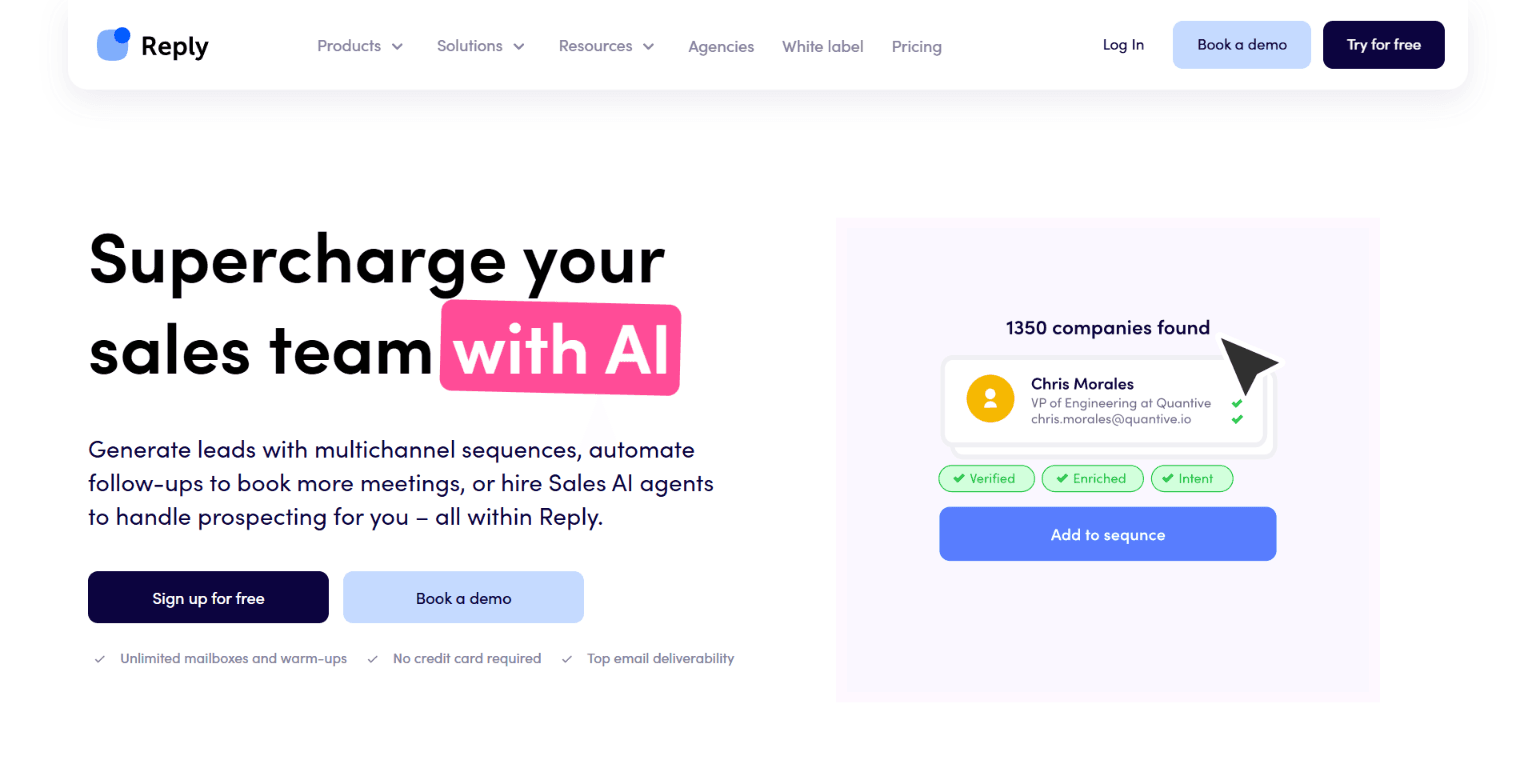
Reply.io is an AI sales engagement platform for building outbound sequences across email, LinkedIn, WhatsApp, calls, and SMS. It is better suited to teams that operate across multiple channels rather than email exclusively.
Pricing and add-ons require careful checking because multichannel workflows cost more than basic email outreach.
Key Features
AI-generated email outreach
Personalized outreach in multiple languages
CRM and email platform integrations
Automated follow-ups and reminders
Real-time sequence performance tracking
LinkedIn, calls, SMS, and other channel add-ons
Pricing
Sales Engagement: $59/month
Email Volume: $99/month
LinkedIn Automation: $69/month/account
Calls and SMS: $29/month/user
5. SmartWriter
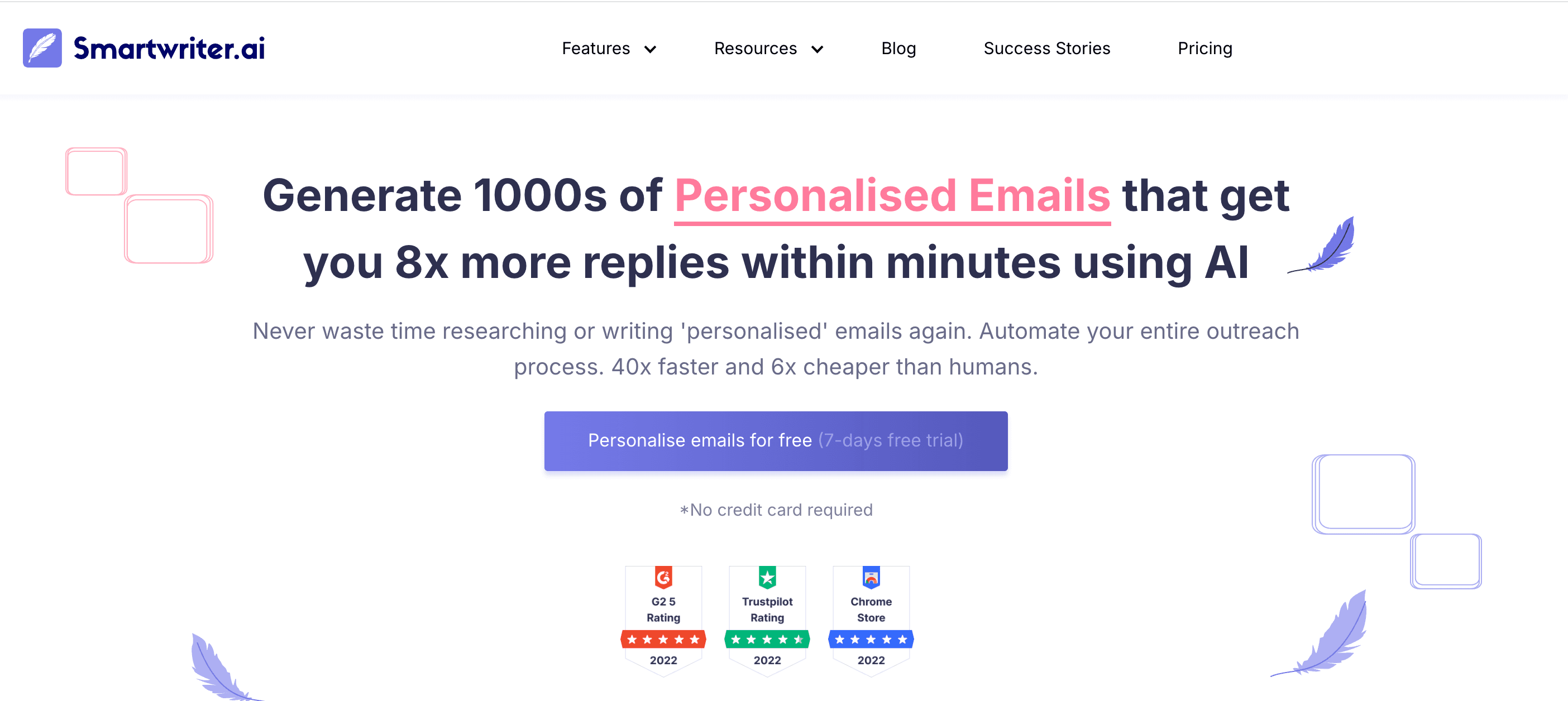
SmartWriter is an AI writing tool for generating personalized cold emails, icebreakers, and backlink outreach. It is useful when you already have a sending platform but need faster prospect-specific copy.
SmartWriter is a good fit for SDRs writing first lines. Just keep in mind that it’s a writing tool, not an outreach platform.
Key Features
Personalized icebreakers
Cold email generator
LinkedIn outreach personalization
Google review personalization
Backlink outreach personalization
Up to 15 personalized lines per lead
Pricing
Basic: $59/month
Popular: $149/month
Pro: $359/month
6. Warmer.ai
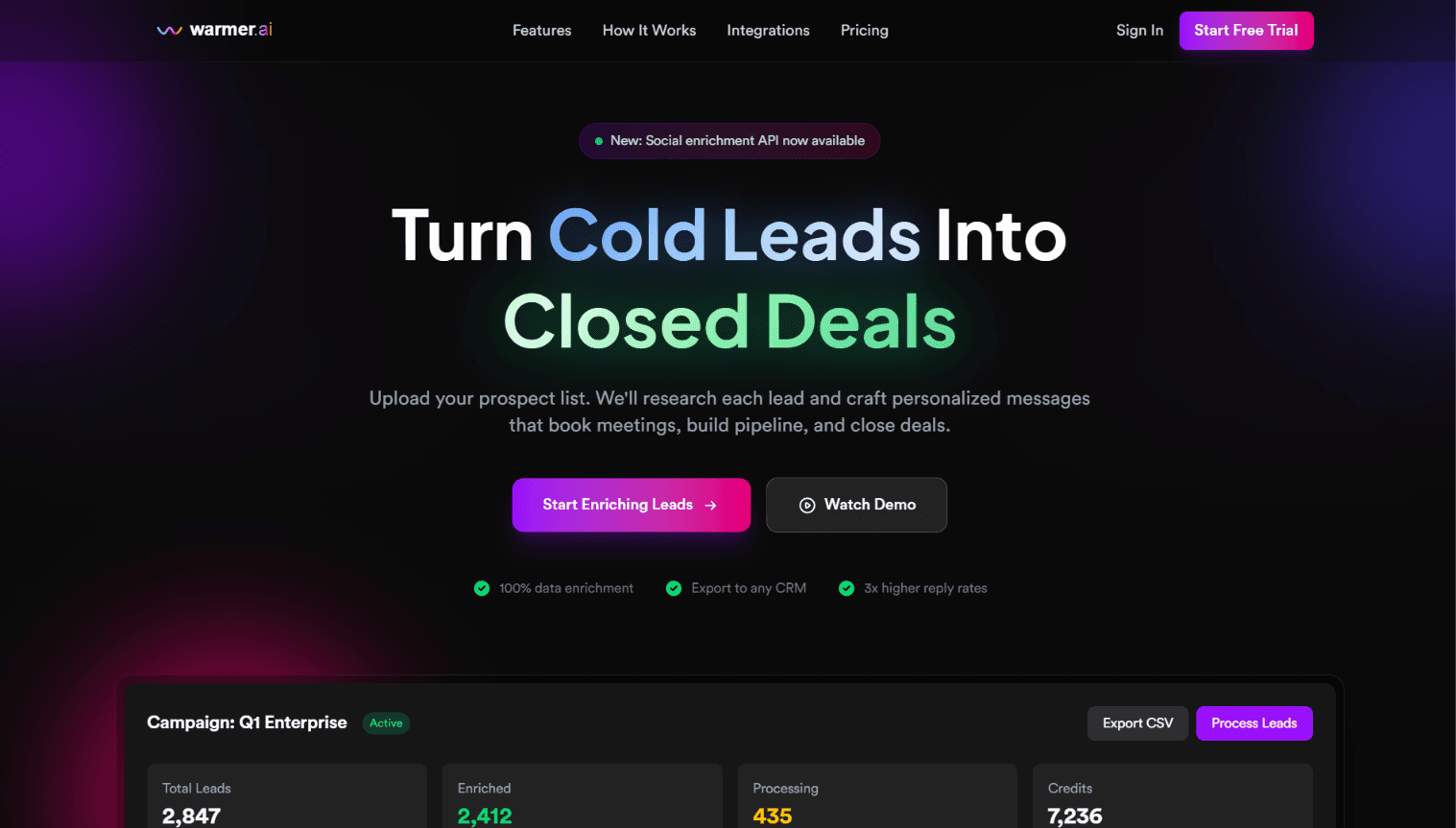
Warmer.ai is a B2B enrichment and AI personalization tool that turns prospect CSVs into enriched profiles and ready-to-send personalized messages. SDRs use Warmer to personalize CSV-based prospect lists at scale without replacing their sending stack.
It’s not a full outreach platform. Sending, sequencing, and deliverability still need another tool.
Key Features
CSV upload for prospect lists
Social and company data scraping
AI-generated personalized messages
API access on higher plans
Integrations with Salesforce, HubSpot, Pipedrive, Outreach, Salesloft, and Zapier
Pricing
Growth: $59/month
Professional: $119/month
Scale: $249/month
Best email marketing personalization tools
These tools serve a different job compared to cold outreach platforms. They personalize emails for people already in your database using CRM fields, website behavior, product activity, purchase history, and engagement data.
They’re ideal for lead nurture, retention, and customer marketing workflows where the goal is relevance at scale, not one-to-one prospect research.
7. Klaviyo
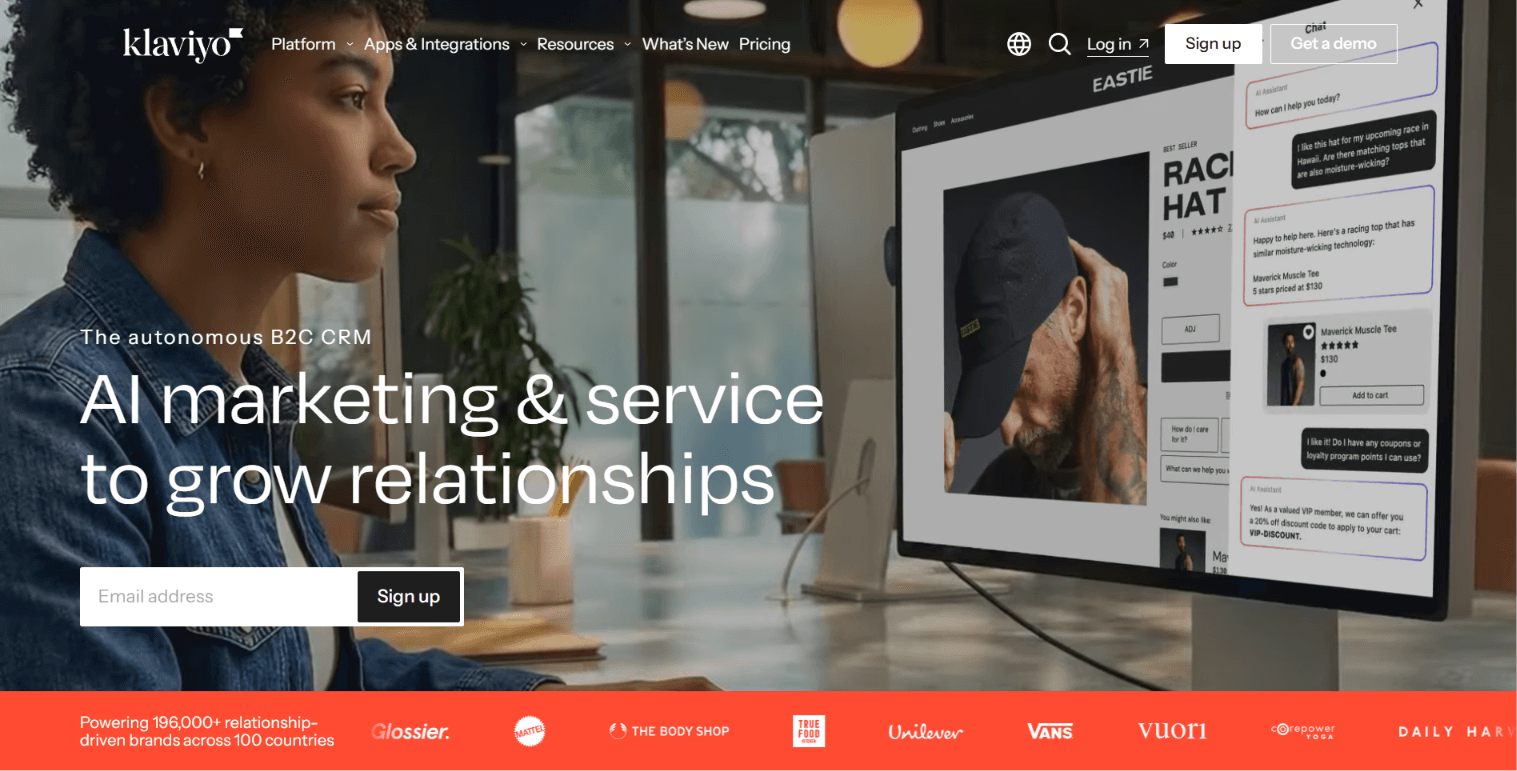
Klaviyo is an email and SMS marketing platform built around customer data, segmentation, and e-commerce behavior. If you need personalization based on pages users visited, products they bought, or carts they abandoned, Klaviyo is well worth considering
It’s heavily e-commerce-oriented, so B2B sales teams will get more value from a CRM or outbound-first tools.
Key Features
E-commerce integrations with Shopify or WooCommerce
Segmentation from profile and behavior data
Email, push, WhatsApp, in-app, MMS, and SMS campaigns
AI-driven orchestration that routes each message based on real-time engagement data
Channel affinity (AI predicts the best channel for each customer)
Message personalization tied to shopping activity
Pricing
Klaviyo offers a free plan for under 250 active profiles and 500 monthly email sends. Pricing scales based on profile count, sending volume, and selected channels.
8. HubSpot
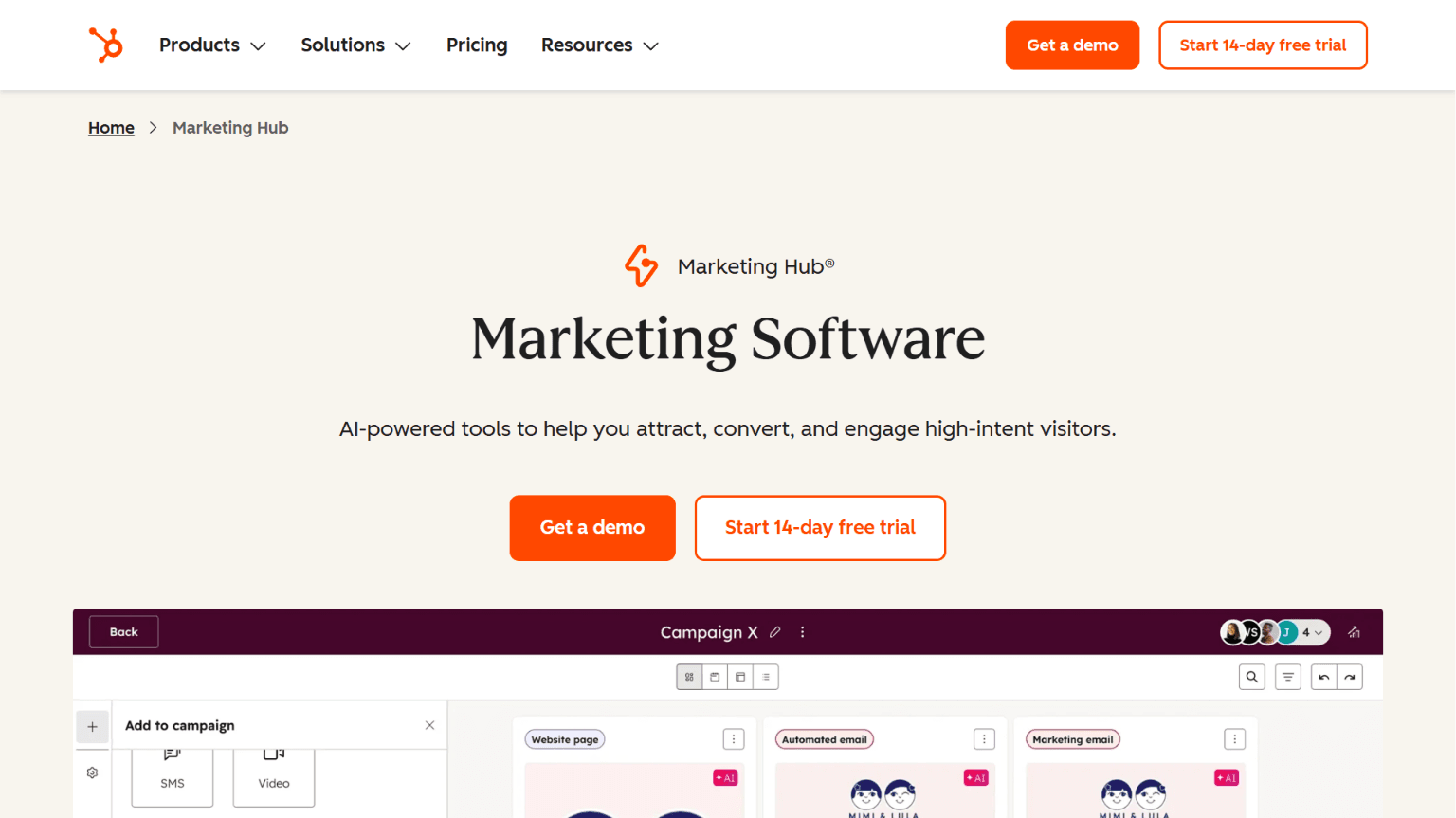
HubSpot Marketing Hub personalizes campaigns using Breeze AI, drawing on CRM data, contact properties, deal stages, engagement history, and automation workflows. It’s best for teams that already use HubSpot as their sales and marketing system of record.
Advanced personalization, automation, and reporting sit behind higher-tier plans, so costs rise quickly as your database and team grow.
Key Features
CRM-powered personalization
Automated email campaigns
Customer agent and AI tools for writing emails with deep personalization
A/B testing and customer journey mapping
Reporting, attribution, and workflow automation
Pricing
HubSpot offers a comprehensive free plan.
Starter: $15/month
Professional: $890/month with 3 seats included
Enterprise: $3,600/month with 5 seats included
9. Mailjet
Mailjet is an email marketing platform for teams that need
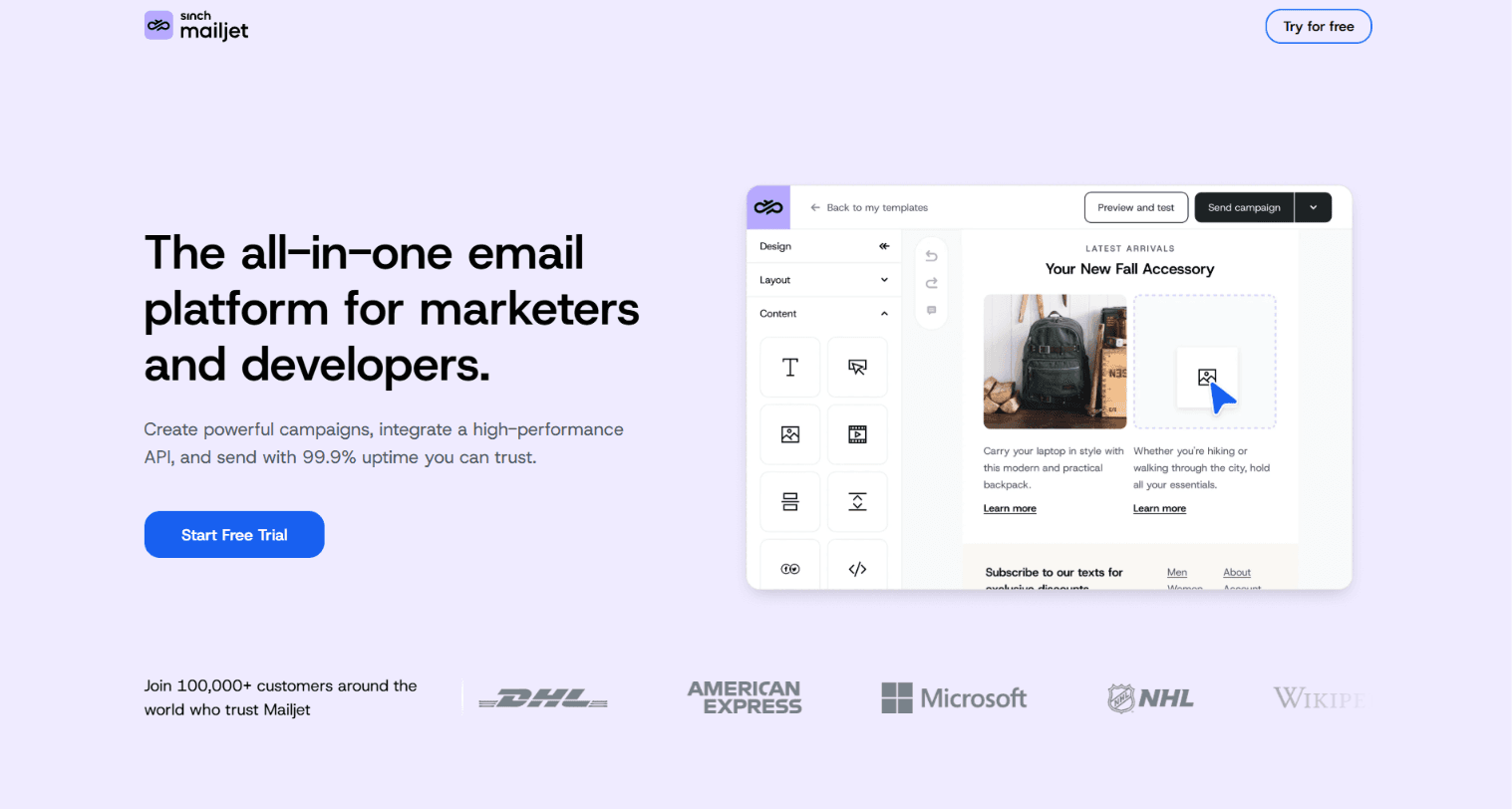
campaign creation, audience segmentation, transactional email automation, and developer-friendly sending infrastructure.
It’s useful for simpler personalization workflows where dynamic content and send volume matter more than complex lifecycle automation. Behavioral automation is less sophisticated than Klaviyo or HubSpot.
Key Features
Advanced audience segmentation
AI-assisted content creation
Email address validations
APIs, SMTP relay (routes emails between servers), and webhooks
Team and account management
Pricing
Free
Starter: $9/month
Essential: $17/month
Premium: $27/month
Personalization only works when the data behind it is clean
Email personalization workflows are often fragmented. Reps pull data from one place, generate copy in another, and send from somewhere else. The results look personalized, but they’re based on incomplete context and inconsistent signals.
This is the problem that Artisan solves. It treats personalization as part of a larger system. Data collection, enrichment, intent detection, and outreach are handled together. That is why AI BDR Ava can craft deeply personalized cold emails that strike a chord with every message sent.

Automate your outbound with an AI BDR
Meet Ava—your AI BDR who handles prospecting, outreach, and follow-ups, so your team can focus on closing.

Jenny Romanchuk
SME @ Artisan
Jenny creates senior-level content for sales, SEO, and marketing professionals. She also leads partnerships at the District #1 Charitable Foundation.