Top event marketing strategies for SaaS
Learn how to plan, promote, and automate B2B events that generate real pipeline, from webinars to trade shows.
Event marketing puts your SaaS brand directly in front of high-intent leads. This is something no other ad campaign can fully replicate.
However, there’s a simple truth that many SaaS companies overlook. While the event matters, success comes down to what happens before and after it.
Teams that generate ROI from event marketing take a full-funnel view. They publish content before the event kicks off, schedule conversations in advance, and trigger fast, personalized follow-ups once the event ends.
What Is Event Marketing?
The kind of event marketing covered in this post is the use of events to market your product. This is in contrast to promoting an event where the event itself is the product and revenue comes predominantly from ticket sales and sponsorships.
Instead, the event you’ll host, whether a webinar, small in-person meetup, or even a YouTube livestream, is meant to act as a vehicle to generate leads. It is a component of your broader marketing strategy, not your primary offering.
What Event Marketing Looks Like in SaaS
Because customer relationships can last months and years, SaaS tends to have a longer sales cycle than other forms of B2B products.
Events create a single touchpoint for education, trust-building, and lead qualification. Done well, they help you identify buying intent and move prospects towards a sale.
Why Events Still Work
Event marketing is a form of experiential marketing that lets brands interact directly with prospects in real time. Event formats can range from week-long conferences to 30-minute thought leadership sessions.
Almost half (49%) of CMOs think events are more important today than they were before the pandemic, according to Forrester. In addition, Soowgo found that 41% of brands expected to run more events in 2025 than in 2024.
Here are the key benefits of running an event as a SaaS company:
Face-to-face interactions build trust with leads and humanize your brand.
Event sessions and keynotes provide content for your distribution channels (social media, newsletters, blog posts, etc.).
Monitoring registrations, session attendance, and on-site engagement is an excellent way to qualify leads.
Events connect you with prospects who are actively exploring solutions.
Speaking to prospects directly, monitoring their responses, and asking for feedback gives you a valuable opportunity to refine your messaging.
Event Marketing Is Full-Funnel
Event marketing serves as a full-funnel strategy that covers all key stages of the sales cycle, from initial lead generation right to the close.
Here’s a breakdown of a typical event marketing strategy:
Pre-event: Email and LinkedIn outreach combined with social media and influencer marketing to inform, create urgency, and encourage prospects to attend.
Mid-event: Real-time engagement tracking and lead capture to populate your database and assess intent.
Post-event: Personalized follow-ups that encourage potential clients to book a meeting with a sales rep.
Event Success Is About Pipeline
High attendance may feel like a success. But qualified conversations are what make a direct impact on your business's bottom line. The most successful SaaS teams judge events by how they impact sales goals.
Here are the goals to focus on when running SaaS events:
Sales qualified leads (SQLs): Number of customers with strong buying intent that are likely to benefit from your product.
Demos secured: How many leads booked a demo after the event.
Influenced revenue: This metric assesses whether the event impacted buying decisions or sped up
Types of Event Marketing You Can Actually Run
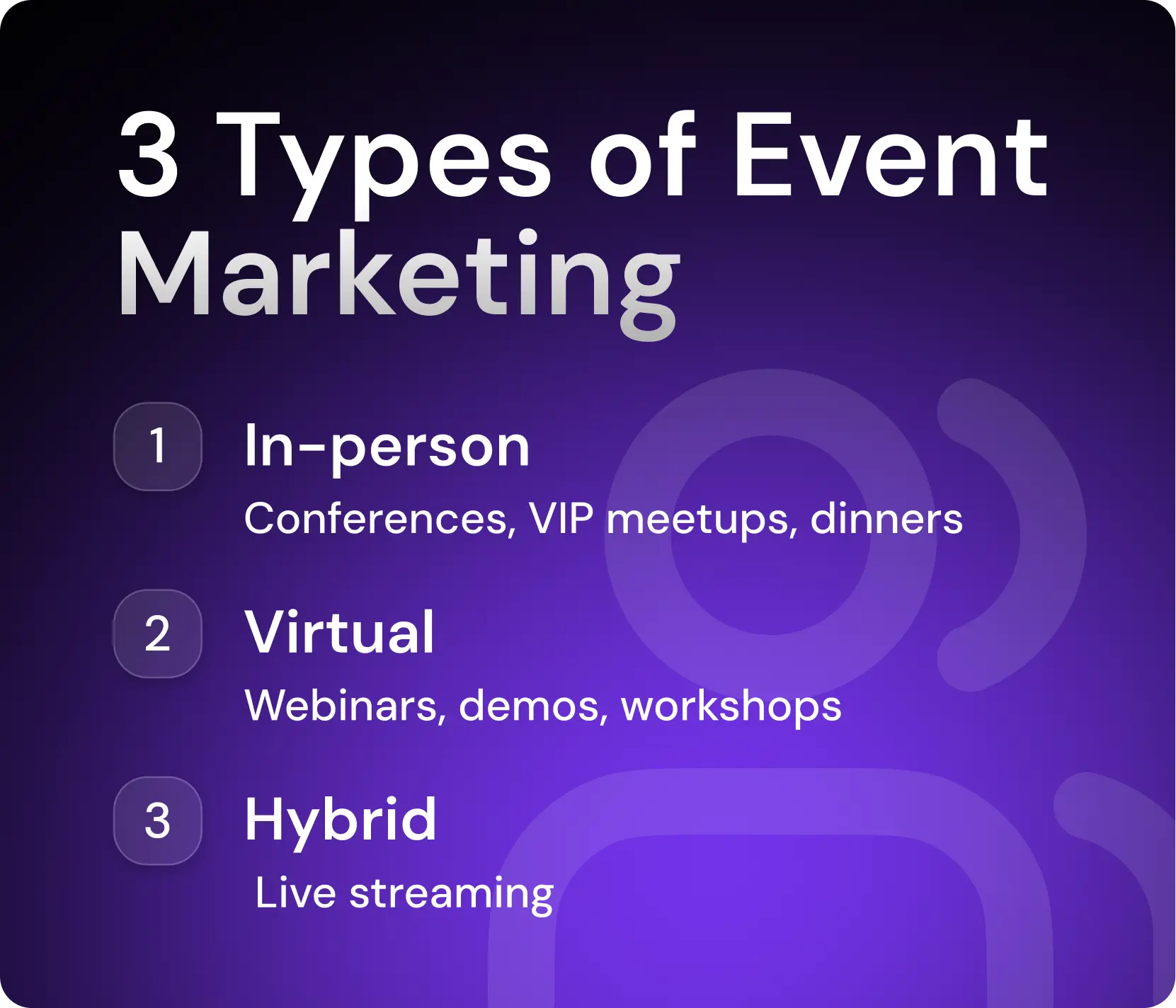
Depending on your goals and budget, you can run in-person, virtual, or hybrid events. Before you choose, however, it’s important to run an analysis to decide which type of event will connect with your target audience and generate.
In-Person
If your goal is to gain focused attention and impact buying intent, in-person wins. Attendees are fully present and primed to learn. They’re not multitasking, scrolling social media, or stepping away to make coffee during your keynote.
The data backs it up. Eighty-seven percent of event attendees say that finding out about new products is the top priority at in-person events. It’s also the most popular event format, with 59% of brands choosing it.
Not all in-person events need to be large or complex. The most effective formats are often focused, intentional, and designed to inform leads directly about product benefits.
Here are four of the most effective types of in-person events you can run:
VIP meetups where employees, industry leaders, or high-performing partners share thought leadership in an intimate setting.
Private networking dinners with curated guest lists that spark meaningful conversations and build strong relationships.
Trade show booths that boost visibility in your niche and offer opportunities to network.
Educational seminars that are product-focused or problem-led, attracting prospects actively seeking solutions and allowing your team to demonstrate expertise in real time.
Virtual
Virtual events are highly scalable because they’re faster to launch, easier to replicate, and significantly cheaper than in-person formats. There’s no venue to book or travel to manage. That said, they typically demand less commitment and therefore less attention than in-person experiences.
Here are the main types of virtual events:
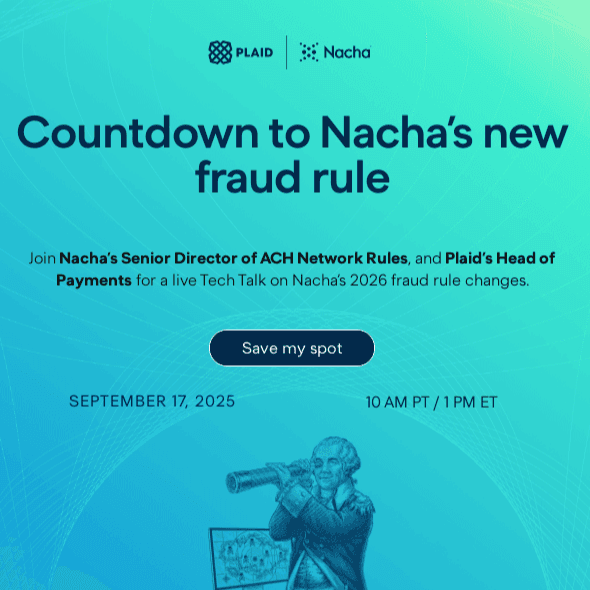
Webinars that educate prospects on industry trends, use cases, or product capabilities while positioning your brand as a subject-matter expert, as in the Nacha example below.
Web conferences that bring together multiple speakers over a half-day, full day, or even a weekend. These work best when centered around a clear theme or shared challenge in your industry.
Product launches to create momentum around new features or major releases with live walkthroughs, announcements, and Q&A sessions.
Virtual demos with a clear breakdown of how your product solves real problems, leaving space for questions, objections, and feedback.
Online workshops with hands-on, practical sessions that help prospects achieve a specific outcome using your product or methodology.
Because they require less investment, you can easily integrate virtual events into your sales cycle. Virtual events become a value-driven touchpoint within your funnel that educates, builds trust, and moves leads closer to buying. Content is also easy to repurpose and share in your post-event email and LinkedIn marketing campaigns.
Hybrid
Hybrid events usually extend in-person events by adding live streams, virtual sessions, or dedicated online tracks to live events. This helps you maximize the impact of a flagship in-person event.
While your core audience attends on-site, virtual tracks allow you to reach additional segments, especially those who can’t attend because of geography, budget, or timing.
The lower costs mean that this format works particularly well when you’re expanding into multiple markets, giving you a chance to collect data about more leads by asking them to register for the live stream or recording.
How to Build an Event Marketing Strategy That Doesn’t Flop
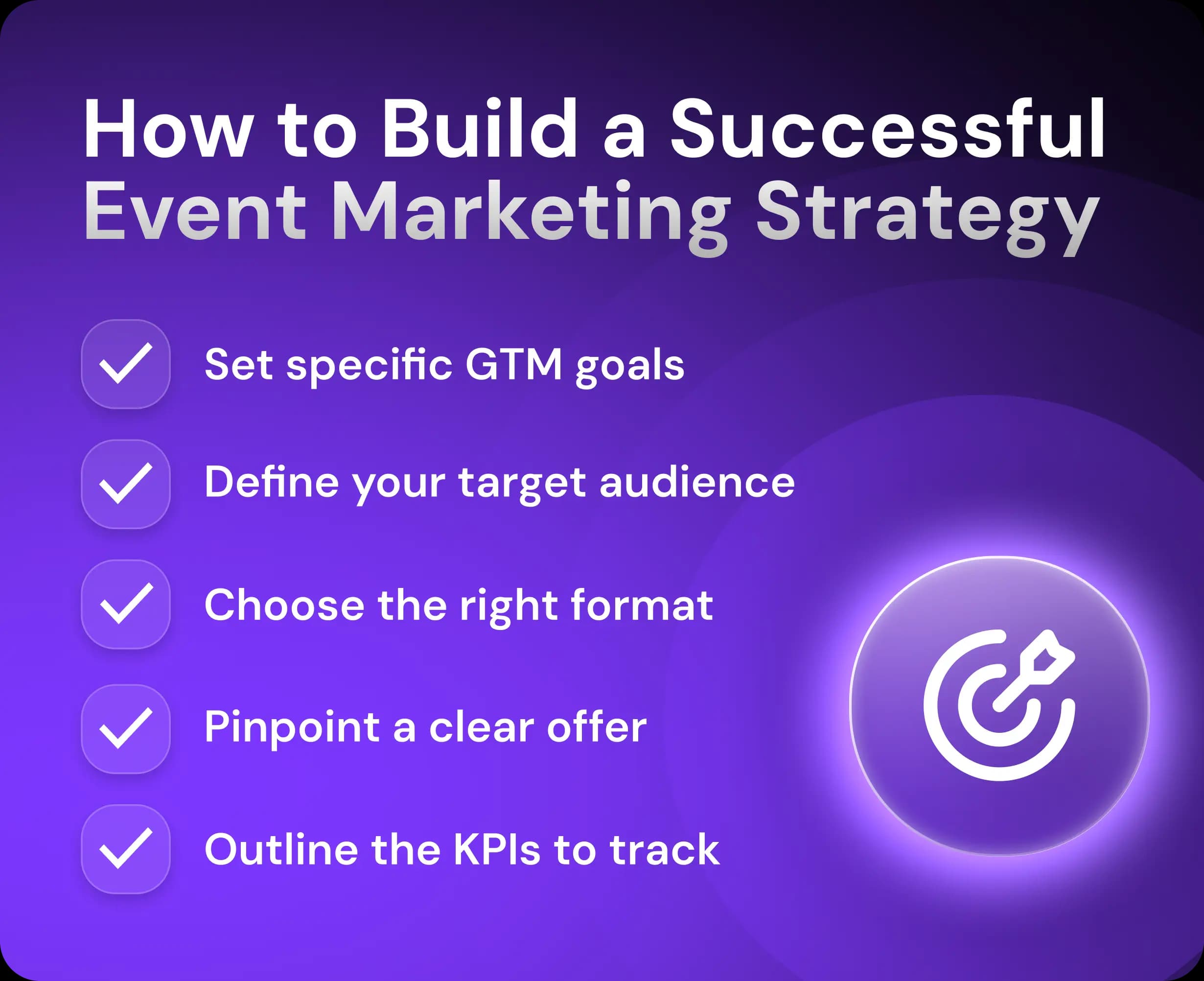
Before you start promoting your event, the fundamentals need to be in place. Even the most comprehensive marketing strategy in the world will flounder if you haven’t spent time picking a format, understanding your target audience, refining your core offer, and clearly defining the KPIs that your marketing will support.
Set High-Level Goals
Event marketing functions best when it has a clear role in your go-to-market (GTM) strategy and occupies a specific position in your funnel.
Mauricio Acuna, founder of digital marketing agency Impacto, has years of experience running effective event marketing campaigns. He says, “Before planning speakers or formats, the first question should be commercial. Is the goal pipeline, deal acceleration, partner activation, or customer expansion? Once that’s clear, the rest of the event decisions become much easier. Without it, success is hard to define.”
Here’s a rundown of the metrics you should build your goals around:
Brand awareness: This is a measure of visibility and recall among your target audience. Track this through attendance, session engagement, content downloads, post-event surveys, and social media reach. Sixty-four percent of event marketers reported that the primary reason for hosting events is boosting brand awareness for their company or products.
SQLs advanced: Sales qualified leads have shown significant interest in your product. An SQL could be somebody who has booked a demo, had a preliminary sales conversation with one of your reps, or booked a follow-up meeting during or immediately after the event.
MQLs generated: Marketing qualified leads have shown some degree of interest in your product but aren’t yet hot enough to be considered sales qualified. They might have registered for an event, downloaded a resource, or opened several follow-up emails.
Revenue impact: This is the baseline metric and acts as the overall barometer of whether or not a marketing event has been successful. Track opportunities created, deals influenced, and revenue closed.
Avoid vague goals like “Increase brand awareness.” Instead, set specific, outcome-driven targets, such as “Generate 20 qualified demo sign-ups.” These clear goals should shape every choice you make in the run-up to the event and make reporting relatively straightforward.
Clarify Your Segments and Enrich Your Target Audience
Who is your event for? Both the marketing event and the promotion around it should align with a specific audience. A social media post promoting a seminar for SMB founders, for example, will look very different from an ad for an executive roundtable for enterprise CMOs.
Here’s how to segment your audience:
Company Role: Whether you’re targeting CEOs, CMOs, Heads of Sales, or RevOps, their role and seniority should inform the messaging around and the format of your event.
Buying intent: By aligning with signals such as recent purchases, hiring activity, funding rounds, or product comparisons, you can tailor the event to match the purchase intent of your attendees.
Industry niches: You should tailor tracks in your event (or smaller individual events) to specific niches within your industry. For example, for a cybersecurity event, you might segment your audience into software engineers responsible for building complex backend systems, HR professionals that provide training across an org, and non-technical leaders that require a high-level overview.
Struggling to find intent data and precise segment details? Enrichment tools like Artisan provide accurate, up-to-date information. They expand your lead profiles and track buyer signals, such as website visits, content engagement, and product interactions.
Choose a Format That Converts
The key point to remember when picking a format is to ensure it fits with the funnel stage you’re targeting.
A one-day immersive covering complex industry topics will not appeal to non-technical buyers in leadership positions, for example. Equally, an entry-level webinar won’t offer anything of value to existing users who are interested in purchasing a subscription with advanced features.
Here are the most effective events for each stage of the funnel:
TOFU: Focus on informative, low-commitment formats that introduce your brand and educate a broad audience. Webinars, virtual conferences, and industry panels work well here, offering value without pushing the product too early.
Mid-funnel: Shift toward deeper engagement with workshops, case-study sessions, and product-focused webinars to help prospects evaluate solutions and see how your offering fits their needs.
BOFU: Prioritize conversion-oriented formats, such as live demos, executive roundtables, or hosted lunches. These give sales teams the space to explain benefits, answer objections, and move deals forward.
Craft a Clear Event Offer
If your offer isn’t immediately clear, attendance will suffer. Prospects need to understand at a glance what they’ll gain by showing up.
Position the outcome explicitly, including lines like “You’ll walk away with…” or "You’ll be ready to….”
Here are five examples of high-value offers:
Networking opportunities with peers and decision-makers
Keynote insights from industry experts
Live product demos that show your solution in real scenarios
Practical knowledge about emerging industry trends
Early exposure to new technologies
If you’re unsure about what kind of offer will resonate with your audience, gather feedback. A simple survey or small focus group can give you more than enough information to determine if an offer is likely to fly.
Define Specific KPIs
Once your goals, audience, and format are locked in, define a small set of KPIs that reflect success for each stage of the event, including pre- and post-event outreach and promotion.
Track a mix of the following KPIs:
Registration and attendance: Typically measured as a percentage, this shows how effective your promotion and positioning are.
Post-event sign-ups: This includes demo requests, newsletter subscriptions, or registrations for the next event in the funnel.
Sales and pipeline impact: For BOFU events, track deals influenced or closed during and after the event to understand how the event affected buying decisions.
Social media activity: This covers shares, mentions, branded event hashtag usage, follower growth, and qualitative signals, such as tone and sentiment.
Net Promoter Score (NPS): Your NPS gives you an idea of overall sentiment and brand perception among attendees. Post-event surveys are a good option here.
Sourced and influenced revenue: This shows how much revenue the event generated directly. This is often the KPI that leadership cares about most.
Promote Your Event Across Channels
This is where you promote your event. It’s the marketing for the marketing event. The key is to build momentum incrementally and focus on driving registrations with a combined email, social media, and LinkedIn strategy.
Email Marketing
Cold email campaigns can be the foundation of your event promotion strategy. It’s a direct channel that lets you reach prospects where they expect to be contacted.
Here’s an example of an effective email sequence:
Invite: Personalize the email with the recipient’s name, role, company, and relevant firmographic details. Clearly explain why the event should matter to them and what they’ll gain by attending.
Reminder: Reinforce value with social proof. Highlight what similar previous attendees achieved, mention participating speakers, or showcase your best testimonials.
Last chance message: Create urgency by referencing limited availability, approaching deadlines, or a final opportunity to register.
The goal with email outreach is to stay visible without becoming intrusive. Space emails several days apart. If there’s no engagement, switch channels.
Start by targeting your existing database of leads and past attendees, then expand reach using enriched prospect lists.
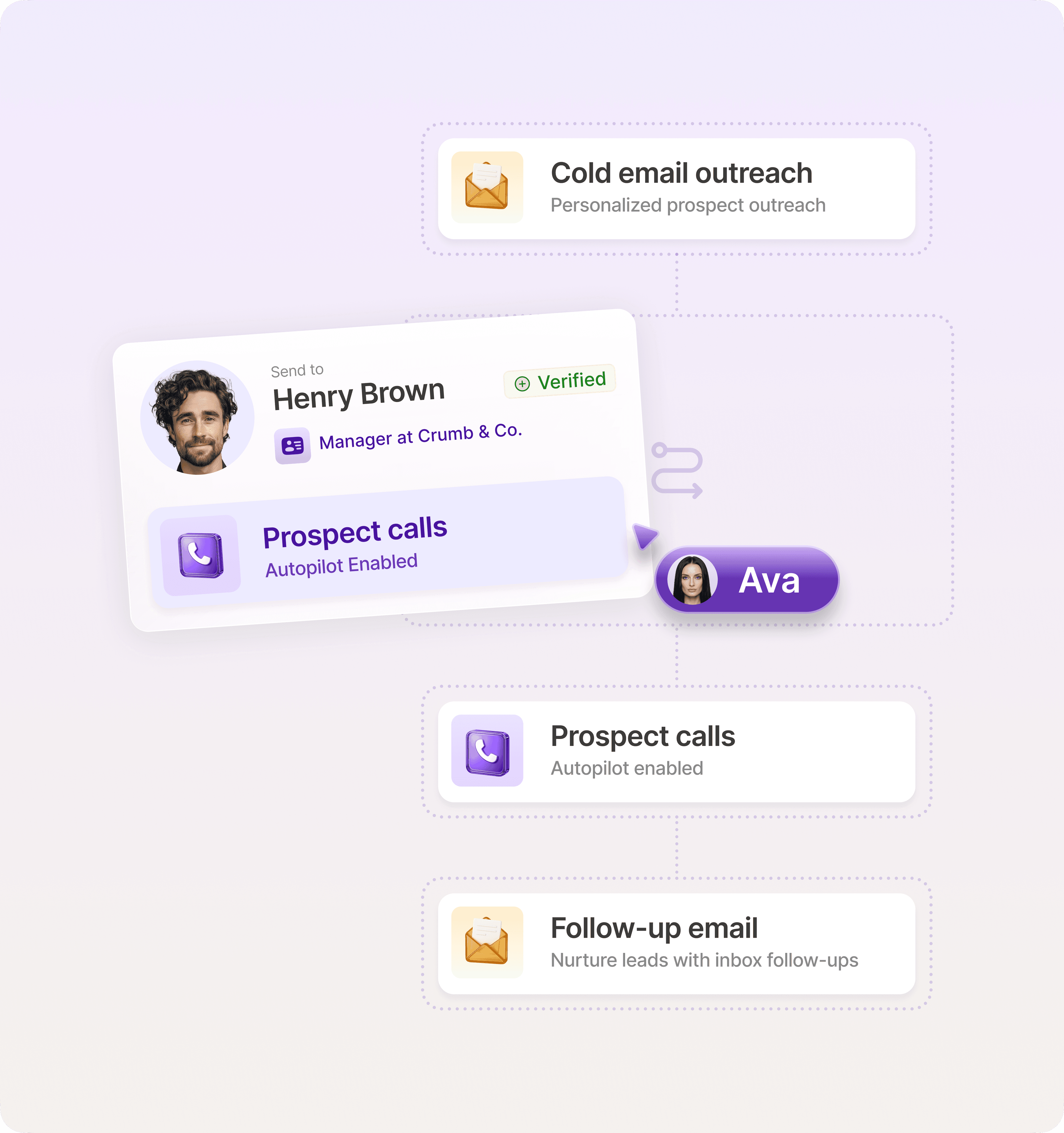
Modern outreach tools now automate much of the heavy lifting. Artisan, for example, finds prospects who fit your ICP, warms up your domains, drafts email copy, and sends emails at pre-set intervals, making scale possible without sacrificing quality.
LinkedIn Strategy
LinkedIn is one of the most powerful distribution channels for B2B event marketing. With access to a vast, professional audience, you can reach potential attendees at scale, both organically and as part of your outreach strategy.
Here’s how to activate on LinkedIn:
Leverage your network: Ask sponsors, partners, and speakers to speak about the event from their personal profiles. Peer-to-peer visibility often outperforms brand-only promotion.
Publish event-focused content: Use posts and carousels to highlight key benefits, speakers, and takeaways. Short promotional clips and countdown posts help build momentum and urgency as the event approaches.
Run targeted direct outreach: Use InMail or connection requests to reach prospects who fit your ICP. These short messages should add value and sit within a broader, multi-channel campaign.
Influencer and Partner Distribution
You likely already have an influencer network built into your event. Speakers, sponsors, partners, and even employees often have established audiences across LinkedIn, X (formerly Twitter), Instagram, or YouTube. Activating them gives you reach without additional media spend.
Here’s how to run a coordinated influencer marketing strategy:
Mobilize your speakers and sponsors: Encourage them to share why they’re participating and what attendees will gain.
Run coordinated social activations: Stagger posts across platforms in the lead-up to the event to maintain momentum and avoid message fatigue.
Provide a promotional kit: Share ready-to-use assets, including branded visuals, post templates, suggested captions, and links to the event website.
Partner with paid influencers: Pay select creators to attend the event and post before, during, and after.
Paid Promotions
Paid promotions let you target specific demographics. SaaS marketing teams typically rely on social ads (LinkedIn, Meta, X) to reach defined ICPs and on search ads (Google Ads) to capture high-intent demand around specific topics, solutions, and events.
To maximize conversions, keep registration frictionless. Use native lead forms where possible to reduce drop-off and dedicated event pages to control messaging and capture intent signals.
Run the Event With Engagement in Mind
Encouraging engagement should be a key part of your event management strategy. To ensure attendance translates into results, events should be practical and leverage engagement tactics. You should also track activity throughout.
Keep It Short and Actionable
Most marketing events (or sessions within a larger event) should be short, around 20 to 40 minutes, to allow busy decision-makers to attend. Workshops can run longer, typically 60 to 120 minutes, but only when there’s a clear, practical takeaway that participants can apply immediately.
Bigger doesn’t always mean better. Micro events, with fewer than 50 people, are growing in popularity. In-person micro-events grew 16% from 2023 to 2024, mainly because people are recognizing that smaller groups allow for deeper conversations and stronger relationships, according to research by Swoogo.
Engagement Tactics
Event planners should encourage participation to keep energy high and deepen engagement. Attendees who were actively involved in an event are more likely to respond to outreach afterwards.
Here are three proven techniques to drive participation:
Live polls and quizzes to spark interaction, keep attention high, and collect real-time insights on attendee needs, priorities, and buying intent.
Giveaways and take-home resources, such as guides, templates, free trials, and exclusive content, to reinforce the value of attending and extend the experience beyond the event.
Share prompts to encourage social posting during key moments, amplifying reach, boosting visibility, and driving awareness beyond the room. For example, put up an eye-catching backdrop featuring the event hashtag to give attendees an easy way to create content.
Track in Real Time
Every interaction is a signal that you can use to gather data for your post-event lead targeting.
Collect the following engagement data to capture throughout the event:
Session attendance (which talks or workshops attendees joined)
Booth or breakout interactions for in-person events, showing where prospects spent time
Clicks on CTAs (demo requests, trial sign-ups, meeting bookings) to surface high buying intent
Conversational sentiment to identify objections, pain points, or urgency
Poll responses to qualify leads by role, company size, or current tools
Repeat engagement (returning to multiple sessions or events) to flag warm accounts
Feed these signals directly into your CRM for lead scoring, prioritization, and follow-up. The more engagement you track in real time, the easier it is to turn event momentum into pipeline.
Post-Event Is Where You Win (Or Lose)
After the event, many teams lose momentum. What you do after the event determines whether you win the sale or finish with strong attendance but poor performance. This is your chance to capitalize on momentum and guide attendees toward the next step in your sales funnel.
Post-Event Emails
A follow-up sequence should highlight the event's key points and re-engage attendees, encouraging them to book demos or make purchases.
Here’s a sample follow-up email sequence:
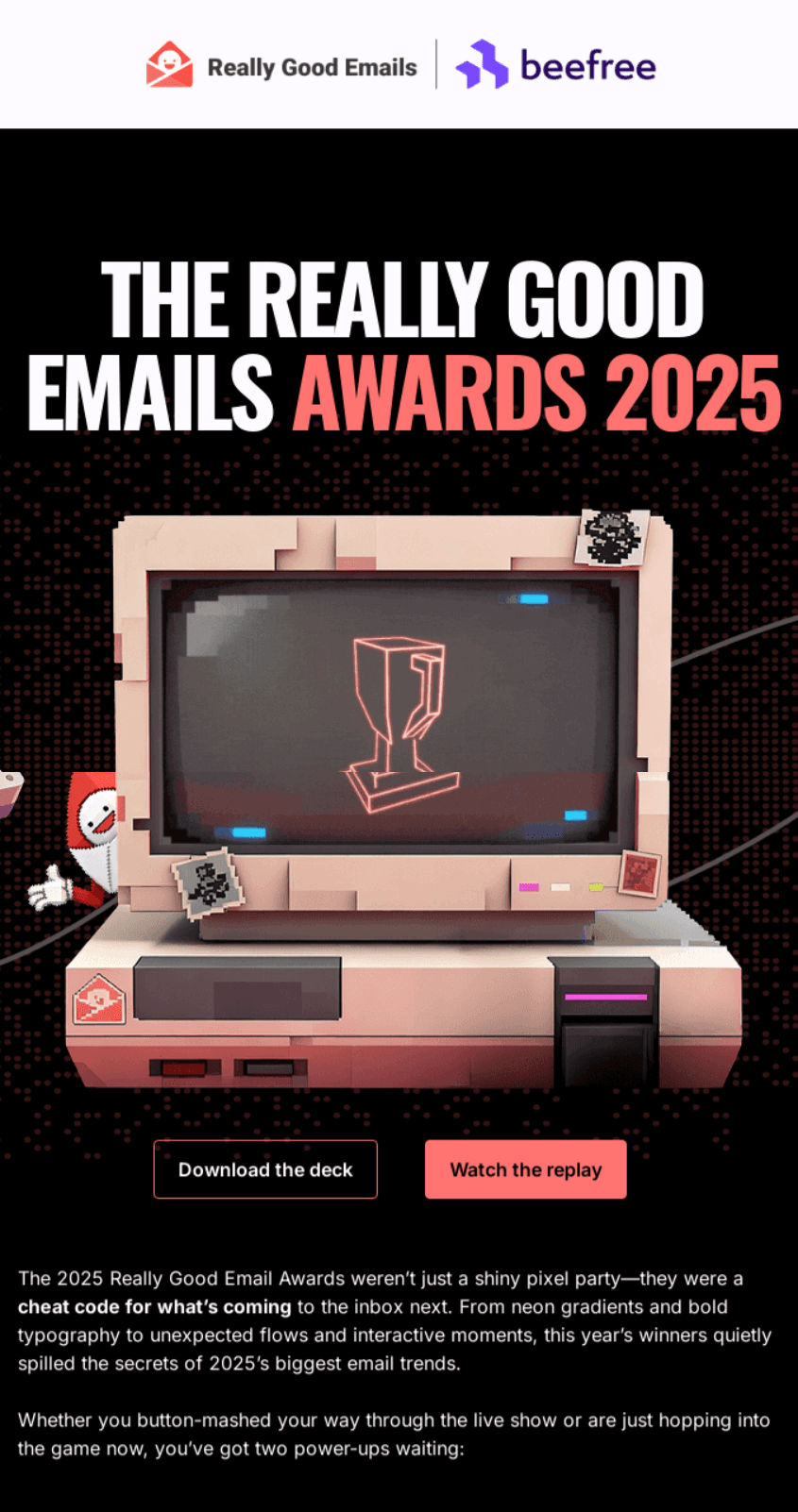
First follow-up (24 to 48 hours after the event): Share recordings of key sessions so attendees can revisit the content or catch up on what they missed. Below is an example from Really Good Emails.
Second follow-up (three days later): Direct former attendees to the next step: book a demo, download a resource, register for the next event, or speak with a sales rep.
Third follow-up (five days later): A gentle prompt asking the recipient if they’ve seen your previous emails.
Where appropriate, layer in social proof, such as quotes from attendees, engagement metrics, or positive post-event survey data. This builds confidence and encourages prospects to take your desired action.
Sales Activation
Events can generate warm leads. But your sales team must act quickly. Use engagement signals to identify attendees showing buying intent and assign them to reps immediately.
Score attendee behavior based on actions such as session attendance, questions asked, and demo interest. Then pass this context directly to sales, along with notes from the event, so reps know precisely how to tailor their outreach.
Repurpose Every Piece of Content
Events are valuable sources of content. Repurpose material from your event to maintain engagement with attendees and engage new customers who didn’t attend.
Here are examples of how you can repurpose event content:
Blog posts: Break down key moments, insights, and takeaways from sessions or panels for in-depth blog posts.
LinkedIn content: Share standout learnings, quotes, and insights to keep the conversation going and reach new audiences. Remember to keep it light.
Short-form video clips: Share high-energy moments, audience reactions, and impactful soundbites on social media.
Infographics: Turn data and insights into easy-to-share visual summaries.
Email content: Reuse clips, quotes, and summaries in newsletters or nurture sequences.
Give repurposing an owner and a production brief. Specify the source session, approved quotes, target audience, required format and reviewer for each asset. Artie lists presentations and design as an ongoing AI employee responsibility. An event recap deck built from approved material is a useful, bounded assignment for evaluating that fit.
Measure and Report
Use your CRM as a single source of truth to track attendee activity, deal progression, and revenue impact over time and turn this data into comprehensive reports. The goal is to demonstrate that your marketing event is driving sales outcomes—especially to senior leaders.
Include the following breakdowns in your report:
Sales by segment and role: Show performance by ICP, job title, company size, or industry to understand where the event delivered the highest return.
Leads generated: Include the total number of leads generated and an average figure representing lead value.
Brand awareness: Use share of voice and brand search volume to demonstrate how your event has positively impacted brand awareness.
Scale It With Automation
For many SaaS companies, scaling multi-channel outreach and follow-up for a marketing event requires a substantial investment of money and time. But with Artisan, your team can send hundreds of personalized messages per day with ease.
Ava Is Your Event Advocate
Artisan gives you a new team member, AI BDR Ava. She handles lead research and scoring, email personalization, and delivery at scale. Ava has access to an extensive database of B2B contacts, ensuring you target prospects that match your ICP closely.

Reach Inboxes Reliably
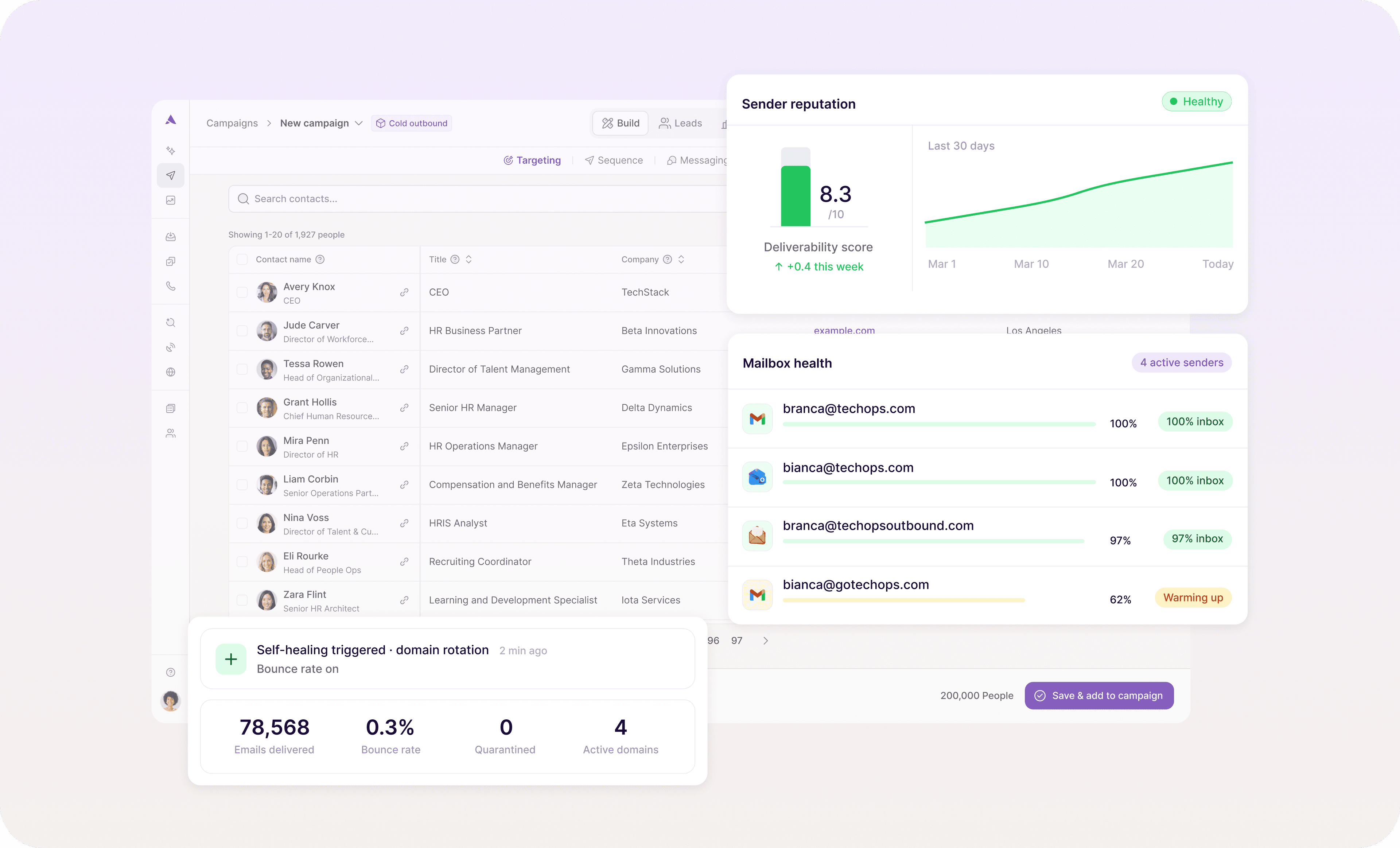
Artisan’s email validation and deliverability checks save you from the spam bin. Artisan verifies email addresses, warms up your domains, controls send volume, and monitors sender health so your messages land where they should.
Easy Access to Intent Signals
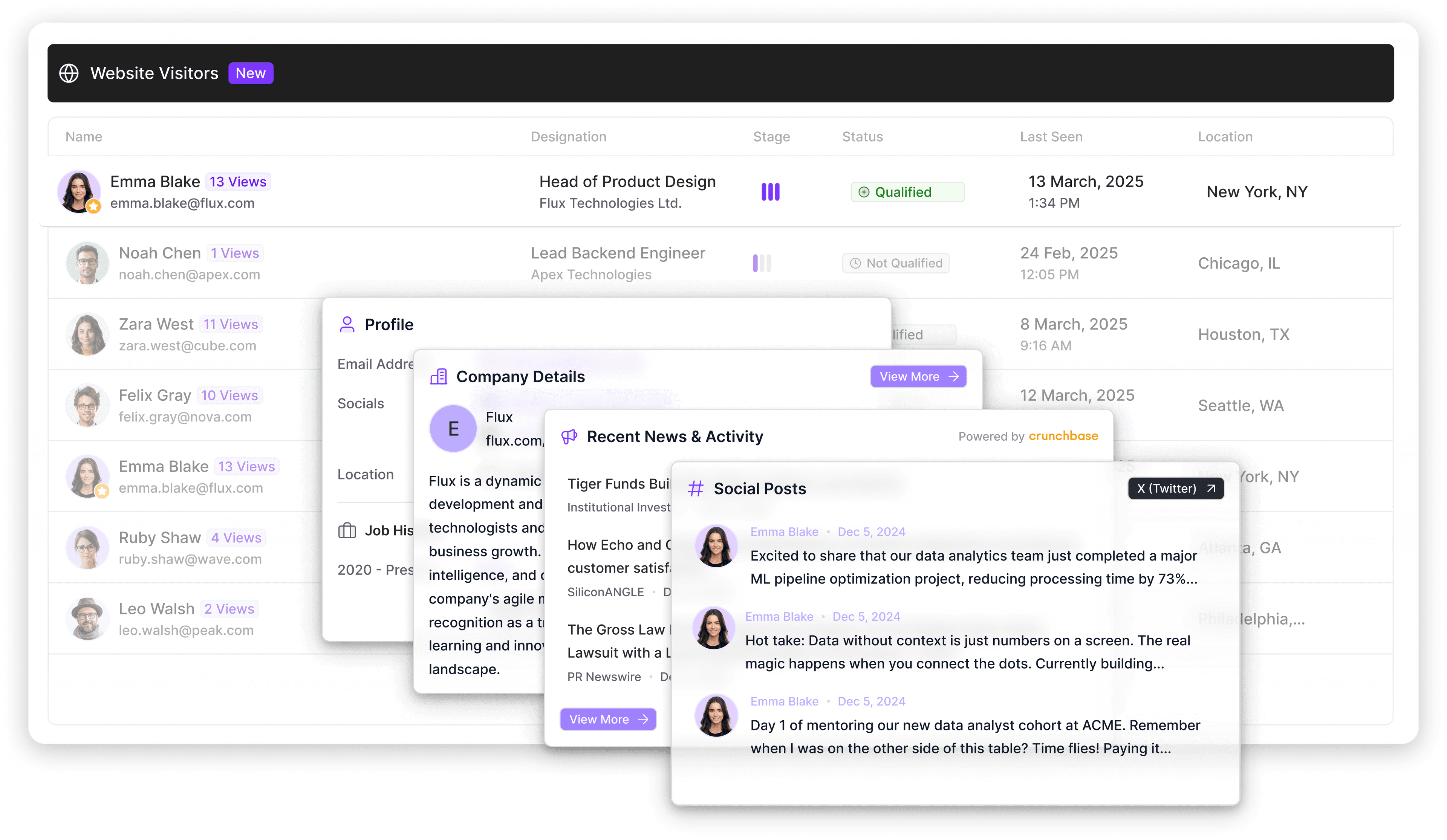
Artisan turns scattered buyer signals into actionable intent. By tracking website visits, email interactions, and firmographic data, Ava can determine which prospects are actively evaluating your solution. This data is then used to prioritize the highest-intent leads for outreach.
Turn That RSVP Into Revenue
Event marketing works for SaaS because it captures and holds leads’ attention. When you have prospects who show up, engage, and participate, you have far more influence over them.
The most successful teams use event marketing as part of a full-funnel strategy, targeting leads at different stages on the buyer journey, tailoring event content, and following up while momentum is still high.
That’s where platforms like Artisan can help. With actionable lead data, automated outreach, reliable deliverability, and personalized follow-up sequences, Artisan helps SaaS teams turn events into marketing strategies that drive real results.

Automate your outbound with an AI BDR
Meet Ava—your AI BDR who handles prospecting, outreach, and follow-ups, so your team can focus on closing.

Marsha Dunn
SME @ Artisan
Marsha Dunn is a writer helping businesses connect with customers and build credibility. She specializes in B2B thought leadership rooted in expertise.