How to increase attendance at events: Full guide & examples
Get more people to your next event. Learn how to create buzz, automate outreach, and convert sign-ups into attendees with actionable, modern strategies.
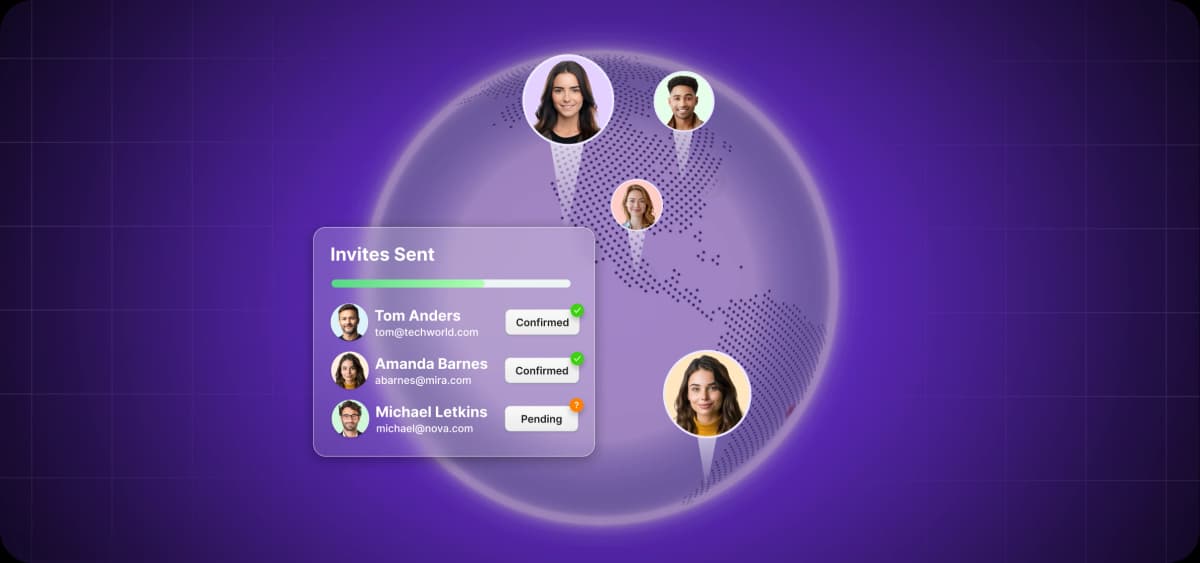
There’s nothing more frustrating than planning an amazing event only to experience low attendance and a high number of no-shows.
Fortunately, it’s easy to fix the root causes of poor attendance.
You need the right mix of pre-event promotion techniques, turnout optimization strategies, and post-event follow-up tactics that turn happy attendees into future customers.
Pre-Event Promotion: Building Buzz & Registrations
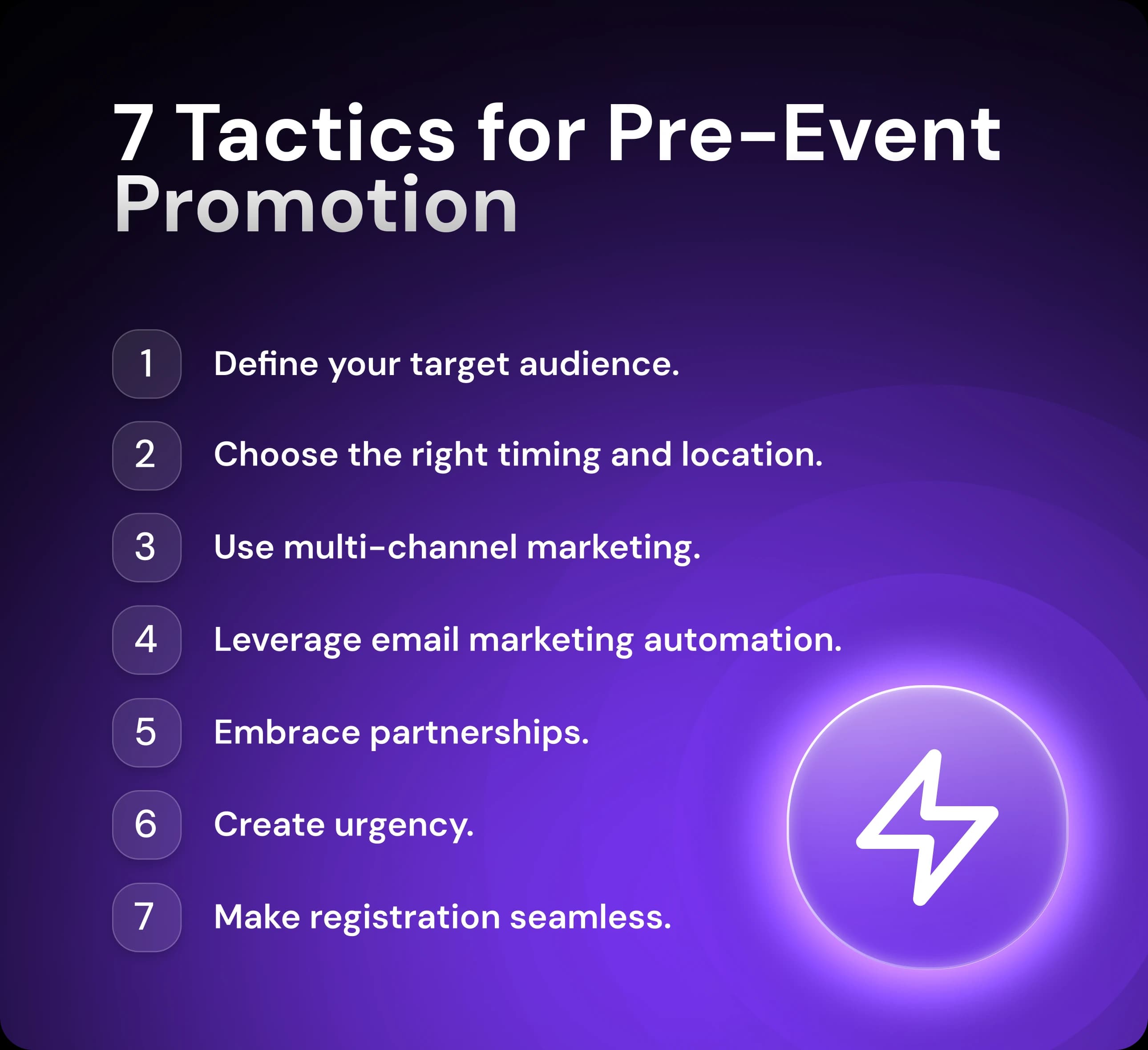
Event promotion and lead generation start long before event day. Depending on the size of the event, you need to build anticipation and drive registrations weeks or months in advance.
Here are seven tactics that’ll help you pack your event with quality leads.
Know Your Target Audience and Event Value
Before you do anything else, define the target segments you are trying to attract to your event.
What are their job titles? What are their key challenges, fears, and goals? Knowing this will help you target the right leads and craft personalized messaging that resonates.
Next, identify the most compelling reasons they should attend. What’s the value you’re offering?
For example, HubSpot’s value proposition for their workshop is that attendees will learn to build high-impact email newsletters.
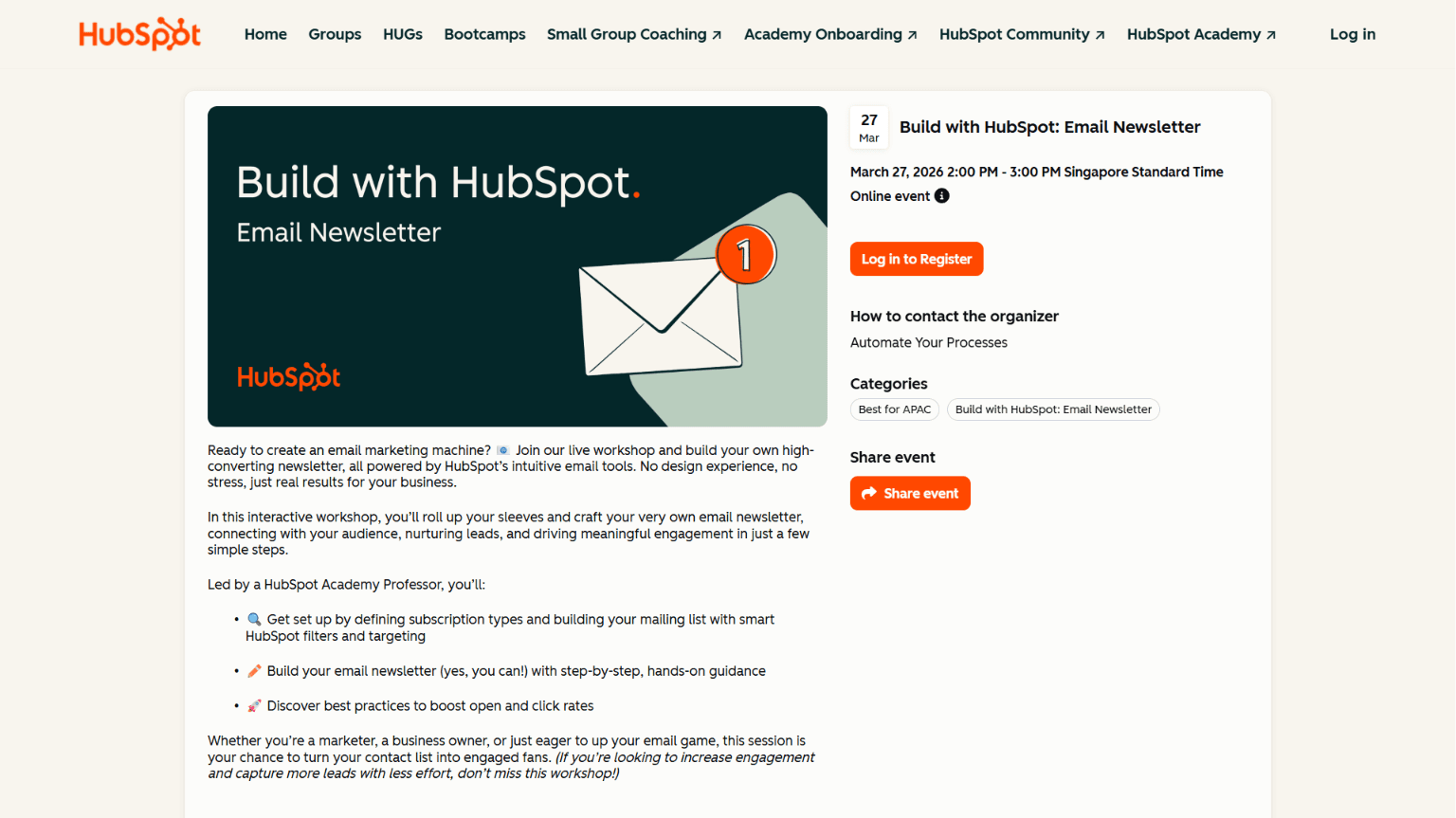
Here are key benefits to include in your event marketing materials:
Unique access to thought leaders and new products
Insights that will help attendees gain an edge over competitors and seize new opportunities
Networking opportunities with potential leads, partners, and vendors
Remember to tailor your benefits to the specific target persona. If it’s realtors you’re trying to attract, focus on tying all the benefits to their ultimate goal of making sales.
To amplify the persuasiveness of these benefits, include testimonials and success stories from past events, as in the following example for real estate conference RealFocus.
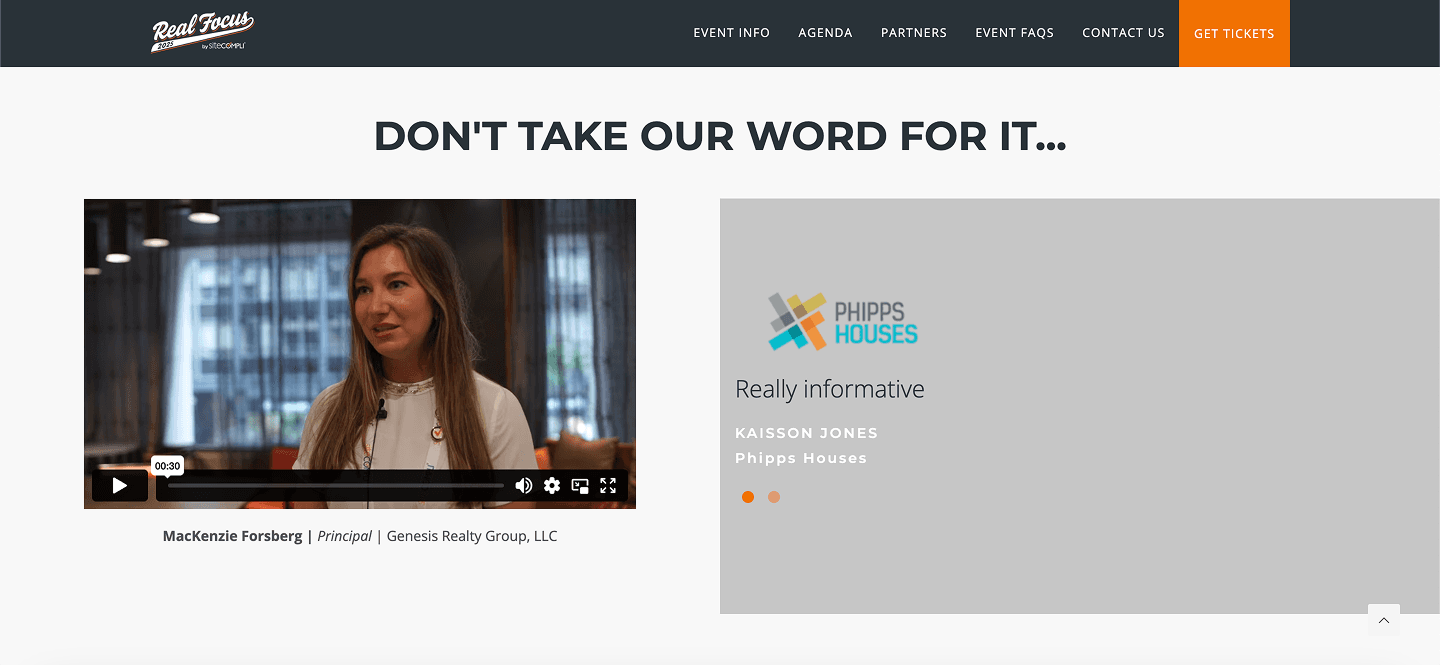
Did any past event attendees leave with a game-changing insight or a partnership that allowed them to hit an important business objective? Share those stories across your marketing ecosystem.
Choose Timing, Format, and Location Wisely
Hosting your conference the day after Independence Day probably isn’t the best move, even if you’re offering bottomless Bloody Marys, breakfast sandwiches, and other hangover cures.
In other words, choosing the right time for your event is key.
Avoid competing industry events, holidays, and busy seasons in your industry—for example, a fintech startup targeting accountants shouldn’t host their event in tax filing season.
Once you’ve picked the right day or week, here’s how to boost attendance even further:
Offer virtual or hybrid options: This limits the number of attendees lost due to scheduling conflicts.
Choose the right location: Pick an event space that’s easy to access, preferably near your attendees' offices or homes. Just think about that close friend who lives over an hour away—how often do you see them?
Give clear directions: Give directions in your registration confirmation email to ensure no one gets lost. Provide landmarks, the venue address, parking information, and entrance details so they can arrive smoothly—make them feel they’re in good hands.
Consider mobile-first timing: Schedule sessions at times convenient for people on different devices and in different time zones.
Multi-Channel Event Marketing
Multichannel event marketing provides the best way of reaching as many members of your target audience as possible. Organizers that focus exclusively on one promotional channel will almost certainly hurt attendance figures.
Here’s how to run a multichannel campaign:
Promote across social media: Post event teasers, speaker introductions, and behind-the-scenes preparation clips on LinkedIn, X, and Instagram to get people excited.
Create a unified campaign: Use email newsletters, countdown posts, and even paid ads that work together to tell a consistent story about your event’s value proposition. Use them all to drive traffic to your event registration landing page.
Build an optimized landing page: Start with your event title and basic details (name, location, time, format), outline the key benefits of attending, and then provide in-depth event details like speaker names and topics, highlights, and the full schedule. Finally, show testimonials of past events and a registration form.
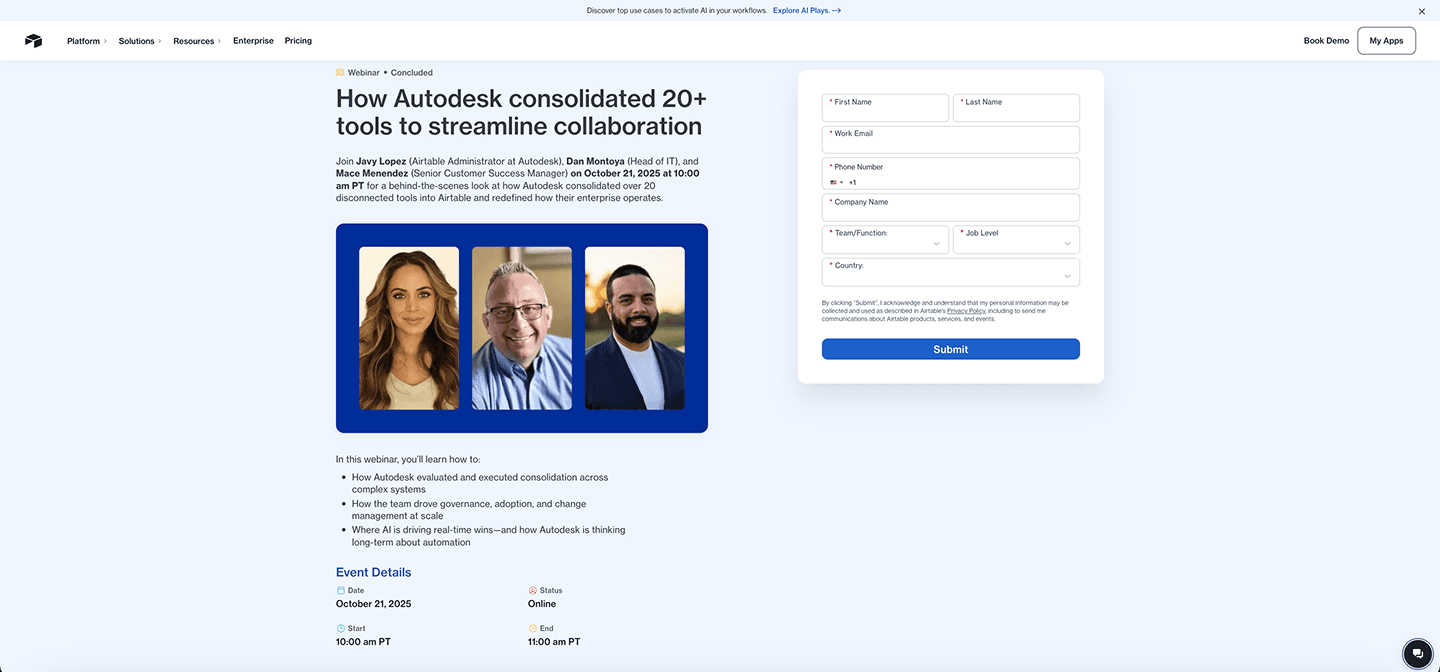
Consider short-form video: Make Instagram Reels and TikTok videos to tease the event. Joosep Seita, CEO of social media growth platform Socialplug, recommends “micro-momentum moments.” For events, he creates five to seven discussion angles around the core theme and releases short, value-packed video clips or carousel posts from the speakers or partners across.
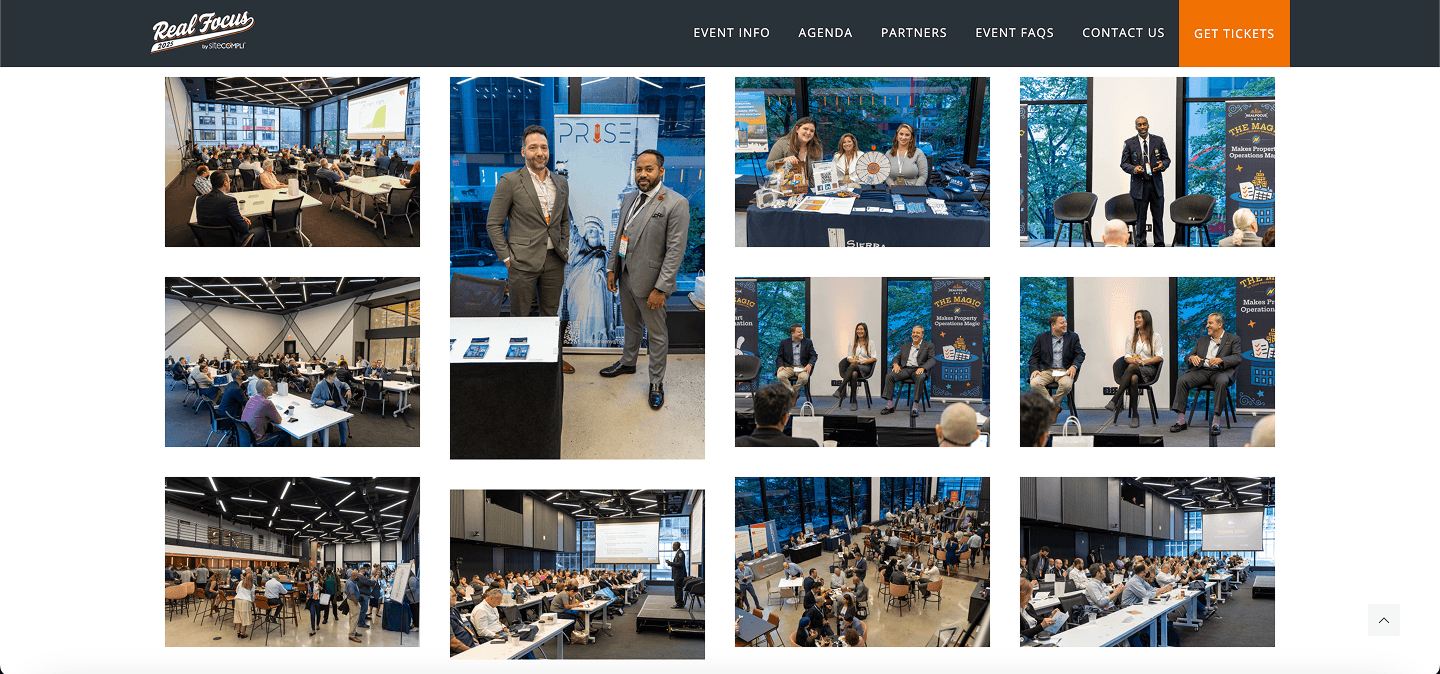
If your event is recurring, it’s also worth collecting photos from past events and putting them on your landing page to give potential registrants a sense of what they’re signing up for. That’s exactly what SiteCompli does on its website dedicated to its annual RealFocus event.
Email Marketing & Automated Outreach
Email marketing and automated outreach are two of the most effective ways to drive sign-ups.
Here’s the protocol for integrating them into your event marketing process:
Segment by persona: Create different email campaigns for different audience segments—for example, create one for founders focused on how your event will help them find investors, and another for sales leaders about how it will help them drive sales.
Build drip sequences: Craft sequences of three to five emails that build interest over time. For example, in your first email, you might introduce the event; in the second email, share testimonials; and in your third email, offer a last-chance early-bird offer.”
Use AI-driven personalization: Leverage AI tools that automatically tailor email subject lines and body text based on the recipient’s demographics, behavior, and other intel captured in your CRM or scraped from the web. Modern AI BDR tools, like Artisan, do all this for you on autopilot.
Leverage Partnerships and Influencers
Imagine throwing a party in Hollywood and telling your friend Martin Scorsese to invite whoever he wants. Next thing you know, you’re schmoozing with high-powered Hollywood professionals.
That’s the power of working with well-connected partners. You can tap into their social network and borrow their credibility.
Here are the most powerful partnership strategies to promote your event:
Co-host with complementary brands or thought leaders: Identify non-competitive brands or recognized experts whose mission aligns with yours and who have credibility in your space. For example, a fintech brand might co-host an event with a finance exec from JP Morgan.
Provide partners with shareable social media and email templates: Give your speakers and partners ready-to-use marketing assets they can easily post on their social feed or send to their email list. Create customizable social posts for each stage in the promotion cycle (save the date, early bird special, and last chance).
Encourage mutual promotion for expanded visibility: Clarify how promoting the event will also benefit your partners. Explain how the more attendees there are, the greater their chance of generating leads and boosting brand exposure and credibility will be.
Build Urgency and Offer Incentives
Offering incentives for signing up within a certain timeframe or for buying multiple tickets creates a sense of urgency that can dramatically boost event registrations.
Here’s an overview of urgency-generating incentives:
Early-bird pricing: “25% discount if you buy before March 3rd.”
Group discounts: “15% discount if you buy 5 or more tickets.”
Giveaways: “Gift of our ebook on [related topic] if purchased in the next 5 days”
VIP perks: “Access to a pre-event networking session with VIP guests if you sign up within 48 hours.”
In addition to offering incentives, you can also reinforce scarcity with language like “limited seats” or “registrations closing this Friday.” That will sharpen the fence on which hesitant leads were comfortably sitting.
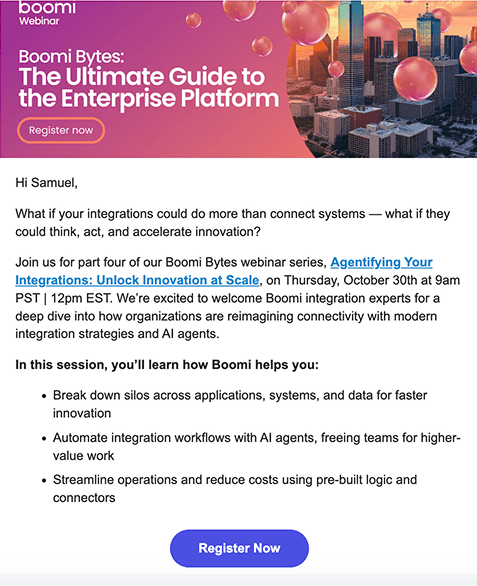
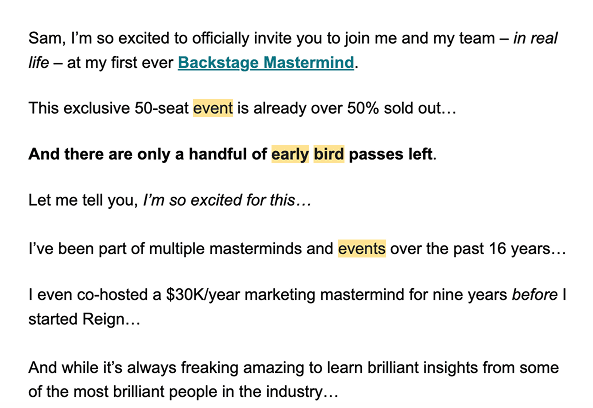
Here’s a great example that combines an incentive with urgency—from an email promoting a mastermind event offering $500 off for early purchase.
In the opening of the email, marketing coach Alex Cattoni explains how there are only 25 seats left and even fewer early-bird passes.
After detailing the benefits of the event, she closes the email with a compelling call to action, explaining to readers that they can save $500 if they get an early bird ticket:
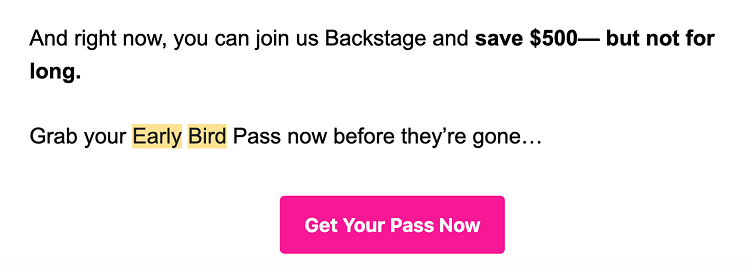
Now that’s an incentive.
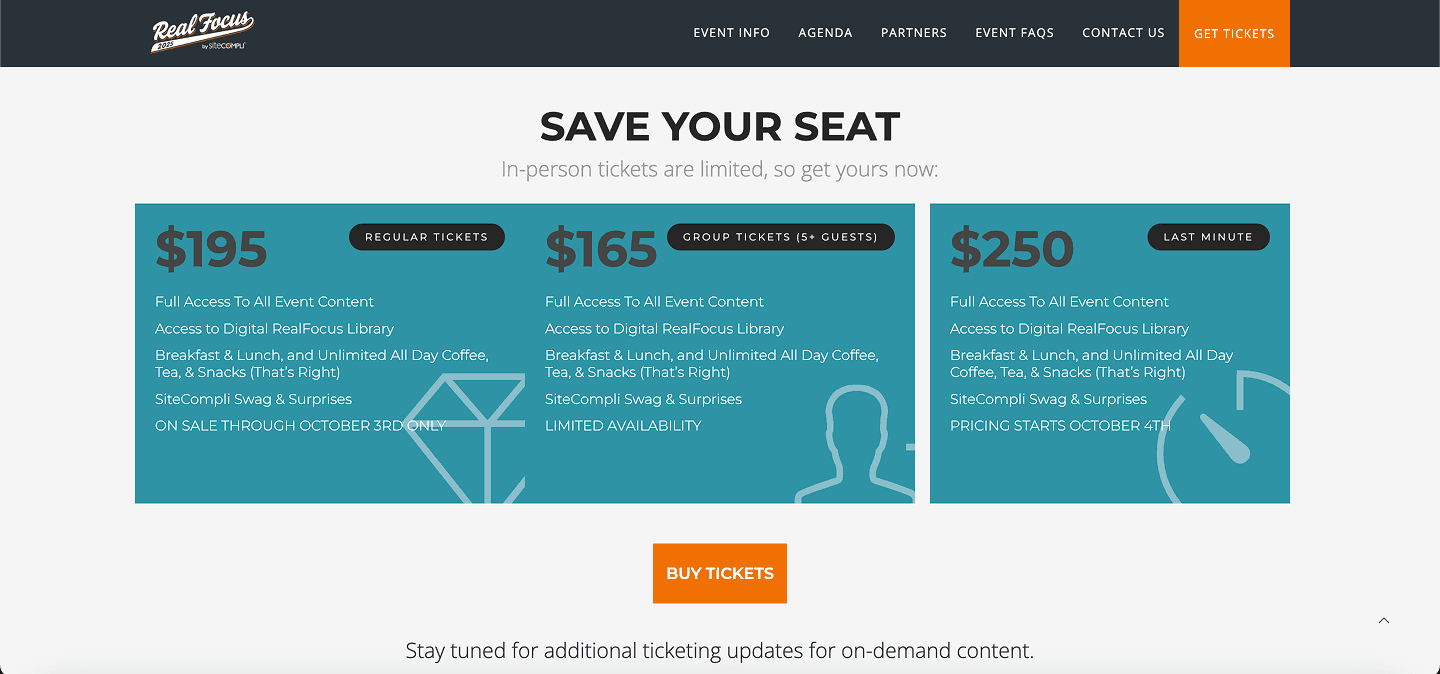
It is also worth experimenting with tiered or à la carte pricing so different audience segments can pick a level they’re comfortable with. SiteCompli does a good job offering tiered pricing for their event.
Set up a Simple Process for Event Registration
Nobody likes a tedious sign-up process. They want to be able to sign up in a few clicks, preferably in less than a minute or two. Streamline registration and you will reduce dropoff rates and boost form conversions.
Make your registration process simple by following these best practices:
Keep the registration form short: Ask for name, company, and email address.
Optimize for mobile: Minimize fields, use a clear, succinct design, include large buttons, embed progress-saving, and offer the ability to log in with their social media or Google accounts.
Use clear, high-contrast CTAs: Make the CTA stand out from the rest of the form or email with large, colored CTA buttons and direct language like “Reserve My Seat.”
Optimize your landing page for search engines (SEO): Optimize the page’s meta title, description, and schema so that people can find it if they search for your event on Google.
Send an instant confirmation email: Immediately after registration, send an email with directions, entrance details, and an “add to Calendar” link.

Automate your outbound with an AI BDR
Meet Ava—your AI BDR who handles prospecting, outreach, and follow-ups, so your team can focus on closing.
How to Maximize Turnout and Turn Sign-Ups into Attendees
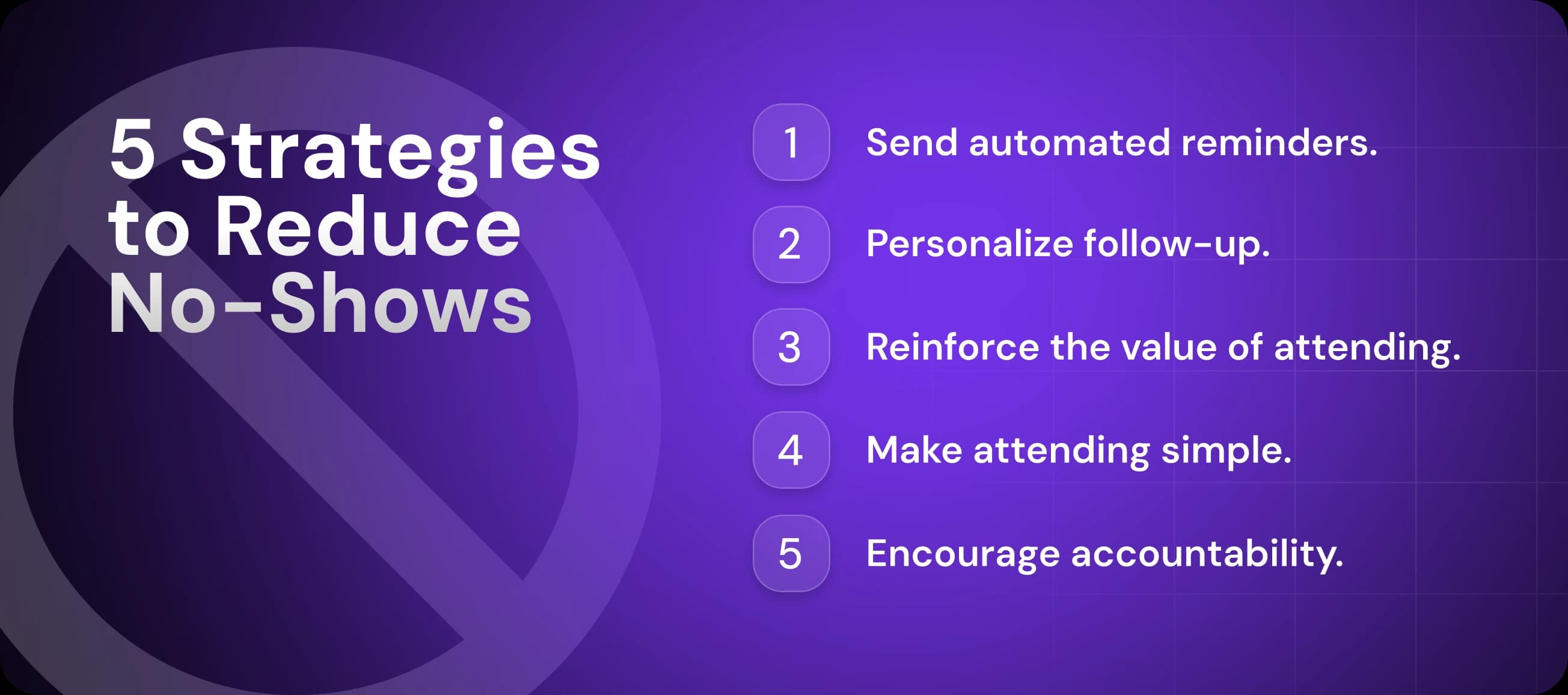
Just because someone registered for your event doesn’t mean they’re guaranteed to show. It’s up to you to transform initial excitement into attendance.
Send Automated, Timely Reminders
It’s common for registrants to forget the events they signed up for—especially if they’re busy and the date is some time in the future. A timely, automated reminder strategy is essential to improving turnout.
Use these best practices to create your event reminder strategy:
Send reminders one week, one day, and one hour before the event (for online events).
Include calendar invites and direct access links in emails.
Use SMS or WhatsApp to send reminders if appropriate.
Create automated reminders in the event app if you’re using one.
Here’s a great example of a live webinar reminder email that includes a direct access link to the virtual meeting:
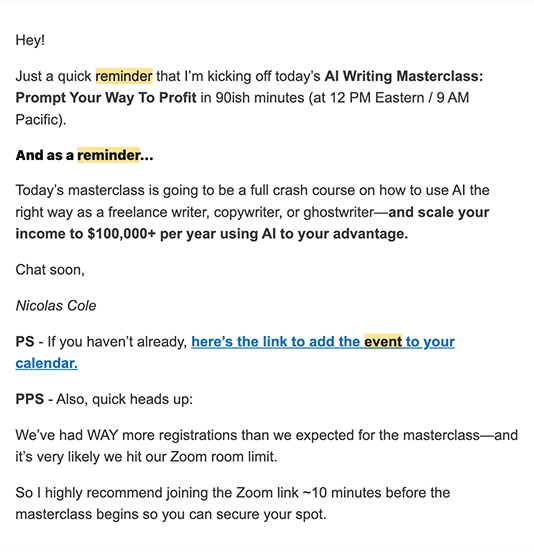
Notice how the event host, Nicolas Cole, also mentions how they might hit their Zoom limit because of all the registrations. This is a savvy way to build urgency that ensures people show up on time—provided, of course, that it’s the truth.
Personalize Follow-Ups and VIP Outreach
Personalized, value-driven follow-ups can evoke the same thrill that excited leads felt when they signed up in the first place.
Here’s a three-part system for managing your personalized outreach to VIPs and regular attendees:
Send tailored reminders by segment (like startups vs. enterprise): Create email, LinkedIn, and SMS reminders that speak to the interests of each attendee segment.
Have account executives (AEs) message top-priority prospects personally: Ask your reps to use their knowledge of accounts to write and send personalized reminders to VIP prospects.
Use email platforms to handle mass personalized reminders automatically: Use automated email software to send generic personalized reminder emails to all attendees.
Reinforce the Event’s Value Proposition
As the event approaches, keep talking about the value of attending. Share last-minute updates about new speakers, bonuses, and surprises. Remind attendees and would-be attendees what they’ll learn and, more importantly, what they’ll be able to do with that knowledge.
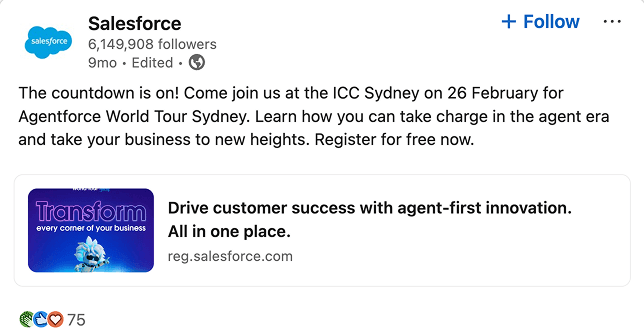
For example, let's say your event teaches attendees about how to use AI for sales. That’s great and all. But what about the outcome? A specific result is even more enticing. Salesforce, for example, talks about “taking charge in the agent era.”
Remove Friction & Last-Minute Barriers
A significant cause of low turnout is friction. Confusing directions and inaccurate login details are two common examples.
Here are the best practices for eliminating hurdles between the attendee and your event:
Send a short “what to expect” email to minimize uncertainty.
Provide parking and physical access details and clear log-on instructions (for online events).
Offer a real-time support number for tech or travel issues.
These small touches don’t just ensure that attendees can access the event. They help to make a great first impression and get them to start associating your brand with smooth, effortless satisfaction.
Encourage Accountability
People are hardwired by biology to fulfill their commitments to others. You can leverage this tendency to reduce no-shows.
Here are the best mechanisms for encouraging accountability:
Require RSVP confirmation two to three days prior: In addition to acting as a reminder, this technique also appeals to the desire people have to stick to their word.
Test non-refundable deposits to reduce no-shows: For free events, consider charging a small refundable fee that’s paid back to the registrant if they show up. Play with other incentives as well—such as a small gift for attending.
Use micro-commitments before the event: For example, ask registrants to answer a simple poll or select which sessions they’ll attend. This builds engagement. With each commitment, the guilt associated with not attending also grows.
Post-Event Conversion: Get Attendees into Your Pipeline
After the event, your goal is to convert happy attendees into curious prospects. This is where all your previous efforts start to pay off.
Follow Up Within 24 to 48 Hours
One to two days after the event, send an email to all your attendees. Thank them for coming and share any promised materials, whether that’s a workbook or a free trial of your new tool.
Don’t let that email be the end of the conversation. Use it to start a new one. This is what Danyon Togia, founder of Expert SEO Agency, does in his follow-up emails:
“For conversions after the event, I always follow up with a recap, a piece of content summarizing the best insights from the session, plus a clear CTA to take the next step (like booking a strategy call or downloading a guide).”
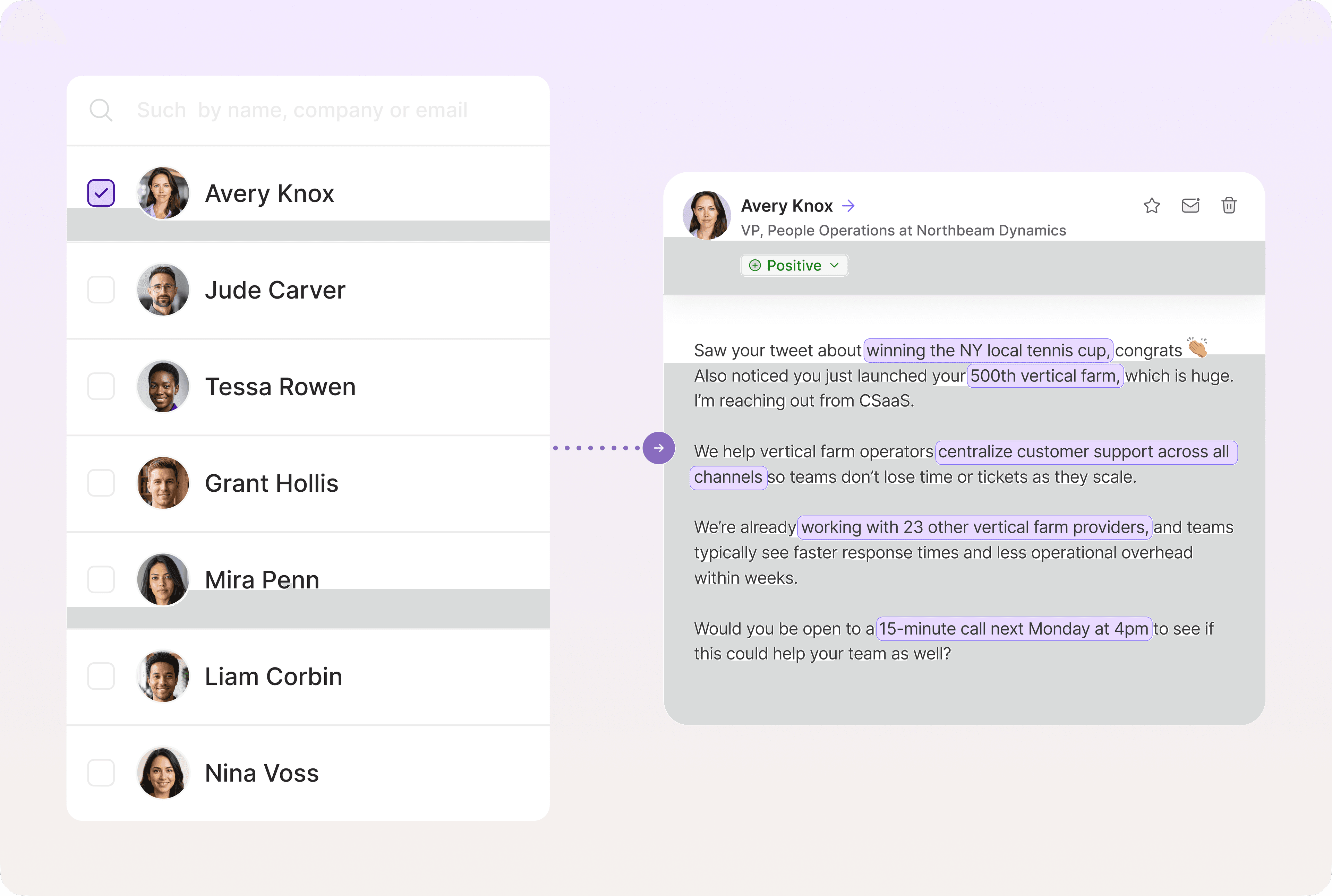
It’s also worth segmenting your attendees and personalizing follow-up messages to each specific group to make them more relevant. You can use lead nurturing software, like Artisan, to automate the process of personalizing post-event messages at a level that matches human quality.
Re-Engage No-Shows
Don’t neglect your no-shows. They signed up once, and that’s an expression of intent to learn more about your brand and the problems you solve. Follow up with them strategically to see if there’s a sales opportunity there.
Here are the best ways to re-engage the no-shows:
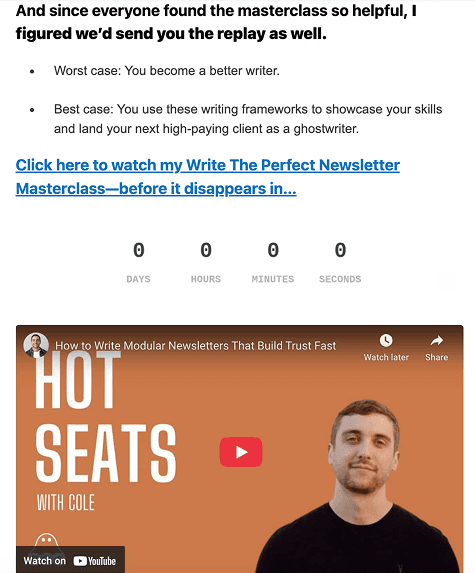
Send recordings or post-event summaries, like the email below sharing a replay of a masterclass to non-attendees.
Keep no-shows in your lead nurture flow with tailored follow-ups teaching them more about your offer.
Offer a “make-up” mini-session consultation that invites no-shows to get information straight from the source: your sales team.
Just like you wouldn’t give up on grabbing dinner with a new friend who had to cancel previously because of unforeseen circumstances, don’t give up on these no-shows.
Align With Sales for Hot Lead Handoffs
While you’re nurturing less-promising leads through automated marketing campaigns, pass any hot leads to your sales team for direct sales-oriented outreach.
Here’s a three-step framework for managing hot lead handoffs:
Share attendee insights with AEs: this includes questions asked, engagement levels, and other behaviors that help the sales rep understand needs and personalize outreach.
Prioritize high-intent leads: If you’re using a CRM lead scoring solution or a qualification checklist, pass over leads who meet the sales-accepted score. Consider also using intent-based marketing to prioritize outreach.
Encourage sales reps to reference event content in their outreach: Share event information with reps that didn’t attend so they can tweak outreach accordingly. If your sales reps were at the event and actually spoke with leads, then they should reference these conversations in their outreach.
Analyze and Optimize with Automation
After each event campaign cycle, review attendance, registration, and sales conversion metrics.
But don’t rely on outdated spreadsheets. Use AI tools to find patterns—such as marketing channels that attracted the highest number of registrants and the type of audience member most likely to convert after the event.
With these insights, you can improve your event marketing strategy. Did you discover that your registration form’s drop-off rate was high? Next time, make it shorter. Find out that your no-show rate was steep? Increase the quality and frequency of your pre-event reminders.
Where Artisan Fits Into Your Event Marketing Strategy
Artisan, an AI-first outbound sales platform, helps you automate outreach, pre-event promotion and post-event follow-up—boosting both attendance and sales conversions.
Automate Outreach Before the Event
Use Ava, Artisan’s AI BDR, to send personalized invites to cold prospects—scaling pre-event promotion without adding headcount. Cold outbound is an overlooked marketing strategy for event organizers.

Keep Engagement High During the Event
Artisan’s AI sales platform logs every email response and interaction in real time, helping your team to identify active leads and follow up with them while interest is still fresh.
Follow Up Automatically After the Event
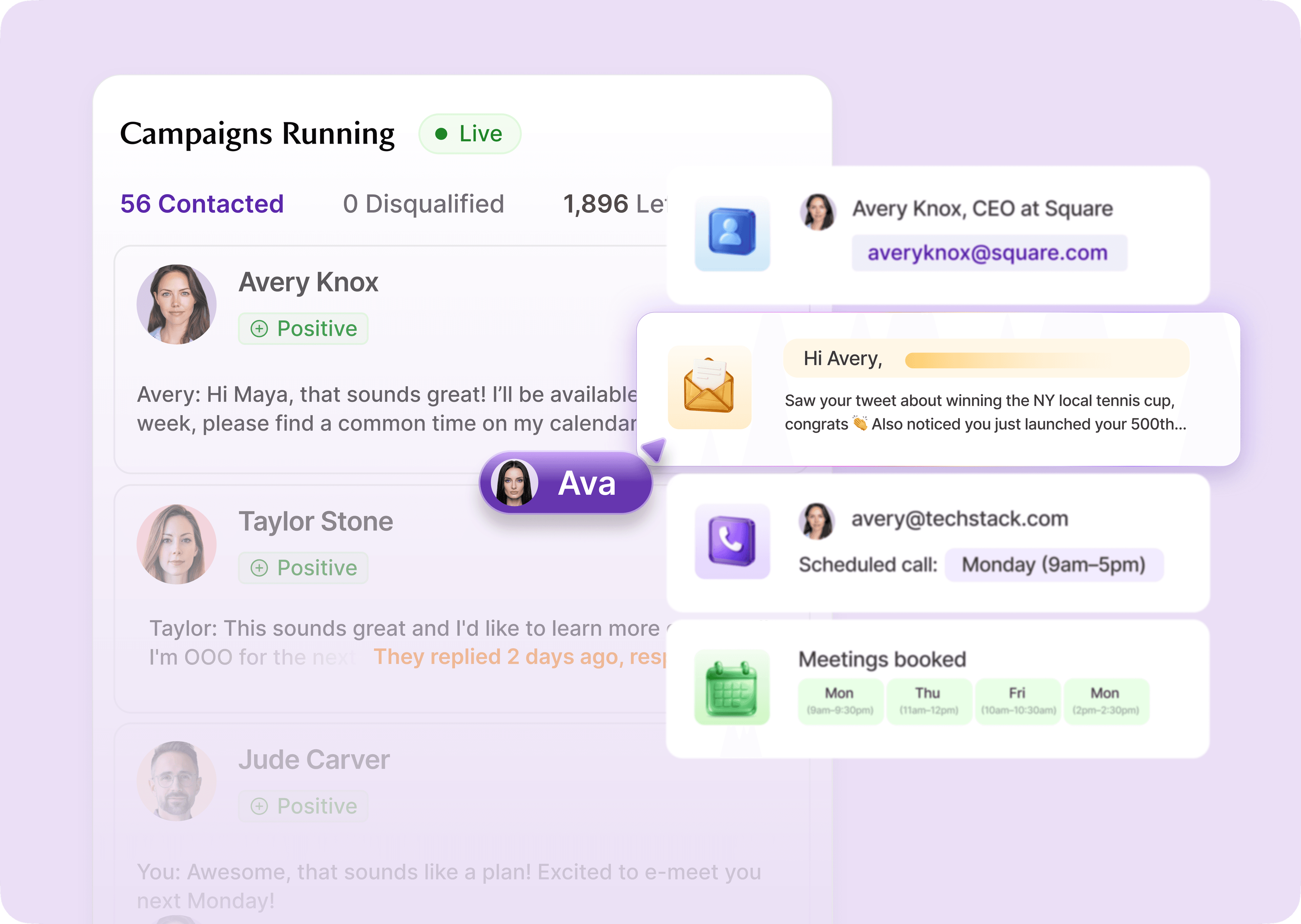
Ava triggers post-event email sequences, personal thank-you notes, and even demo invites—turning attendees into qualified opportunities. All on autopilot.
Learn and Optimize with Every Campaign
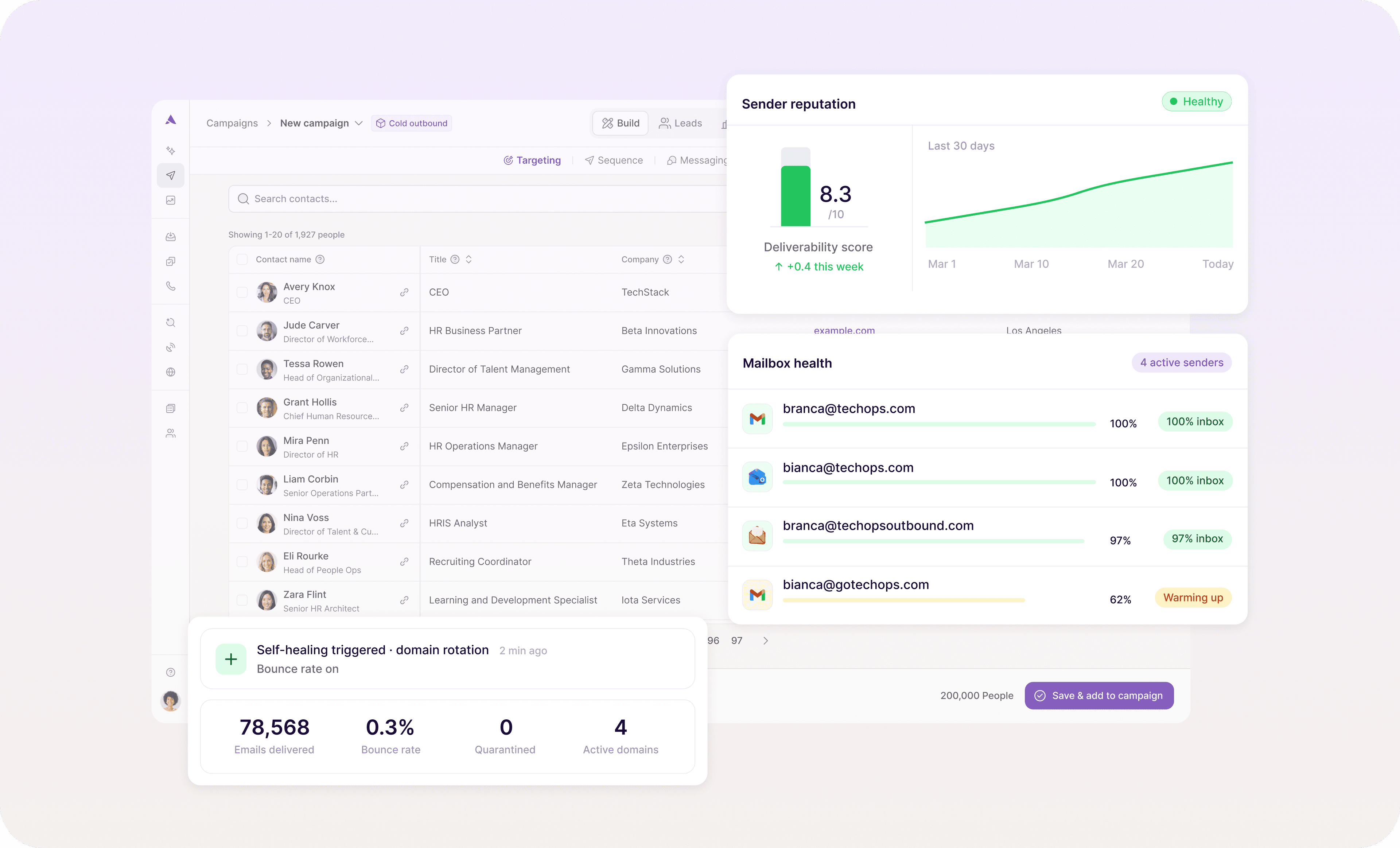
In the background, Artisan analyzes message performance, engagement rates, conversion data, and deliverability to help you intelligently refine your future event marketing campaigns.
Create Events That Fill, Convert, and Repeat
Event marketers have a lot to manage, from finding target attendees to posting on social media. Modern teams need a partner to handle the most time-consuming part of the job—direct outreach.
That partner is Artisan’s AI BDR platform, which can automatically identify, research, and reach out to cold leads over email and social media with highly personalized messages. The result? More attendees and more sales—without expanding headcount.
Automate your outbound with an AI BDR
Meet Ava—your AI BDR who handles prospecting, outreach, and follow-ups, so your team can focus on closing.

Sam Rinko
SME @ Artisan
Sam Rinko is a former SaaS sales rep turned tech writer. He sold real estate software before writing about lead generation, cold calling, and AI sales tools.