Lead enrichment: How to turn lead data into revenue
Learn how lead enrichment improves lead quality, segmentation, and conversion rates across sales and marketing workflows.
Stuck with incomplete lead data?
If so, your teams don’t have a clear view of who they’re targeting. Odds are that this is forcing them to rely on guesswork to win over leads.
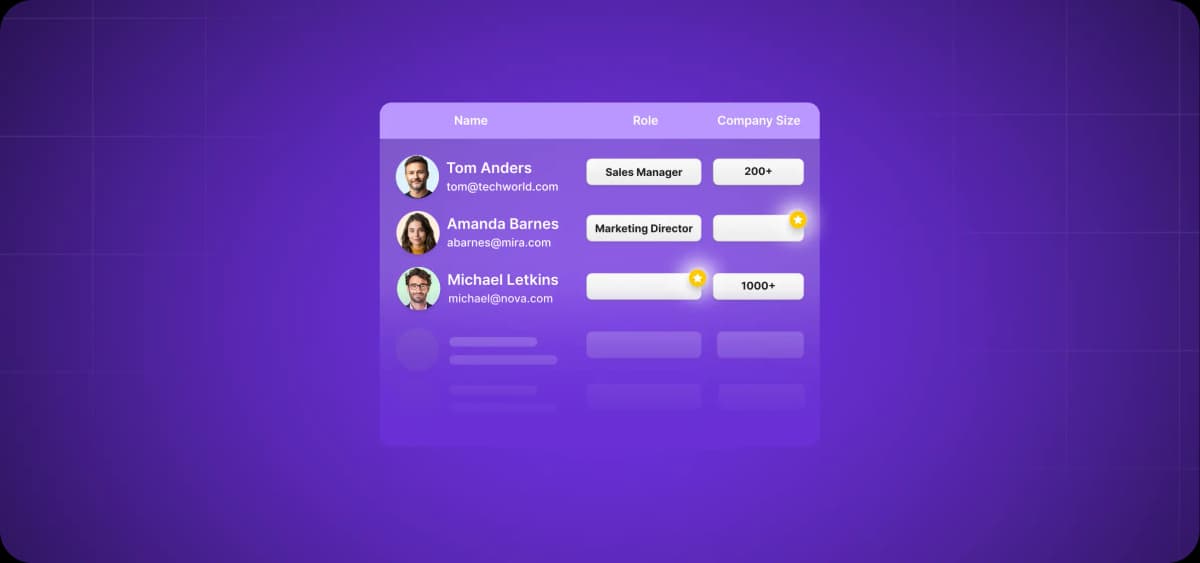
Lead enrichment fixes this issue by providing reliable data that improves segmentation, sharpens outreach, and reduces the time from first touch to closed deal.
What is lead enrichment?
Lead enrichment adds missing data to lead records and keeps them accurate over time. When a profile contains only a name or email address, enrichment fills in the additional details needed to support key sales activities, such as routing, scoring, and personalization. Enrichment also includes data hygiene, a process that checks the accuracy of current data.
Lead enrichment typically provides and refreshes the following data points:
Role and seniority: Job title, decision-making authority, team function
Company data: Headcount, industry, location, growth stage
Tech stack: CRM, marketing automation, sales tools in use
Intent signals: Website visits, content consumption, active research
Contact data: Verified email addresses and phone numbers
Market context: Industry movement and competitive positioning
With high-quality data, teams qualify leads faster, target with precision, and focus their efforts on the accounts that are most likely to convert.
Why lead data often doesn’t work for modern GTM strategies
Without rich lead data, sales teams are forced to rely on guesswork. In addition, more isn’t always better. If your CRM is bloated with basic, outdated information, your messaging becomes generic, segmentation weakens, and reps spend hours each week chasing leads who don’t fit your ICP.
Why web form data isn’t enough
Basic data is easy enough to gather through web forms. But using data submitted through forms gives you at best a partial understanding of prospects entering your funnel.
The truth is that the majority of leads won’t provide the information you really need, such as intent level, a detailed overview of their tech stack, or company activity.
You end up with long lists of leads you know little about.
The hidden costs of incomplete lead data
While some data is better than none, shallow datasets hinder your sales and marketing teams at every stage of the funnel.
Shallow datasets create the following problems:
Reps waste time chasing the poor-fit leads.
Inaccurate lead scoring and routing waste reps’ time.
Generic outreach and marketing messages fail to build engagement.
Sales and marketing teams become misaligned as they work from siloed datasets.
Put simply, your teams spend time and budget on the wrong people and the wrong messages.
How lead enrichment fits into the sales and marketing stack
Lead enrichment streamlines the funnel by providing teams with a deep understanding of every lead. For the strongest results, enrichment should be an integrated part of your workflow that runs automatically in the background.
Lead enrichment vs. manual research
Automation is now essential for efficient lead enrichment. Working manually, sales reps have to endure the monotony of switching between LinkedIn, company websites, and spreadsheets to find and verify data.
Manual lead enrichment is responsible for the following issues:
Limited scalability unless you increase headcount (significantly)
Inconsistent or incomplete data because teams don’t have the time to be comprehensive
Limited access to intent data via manual search
Slower pipeline progression due to lengthy data searches that eat up time for meetings.
Manually updating a single lead’s data may take 10 minutes (on a good day), but with a B2B data enrichment tool, it takes 10 seconds. Reps skip the hard part and jump straight into contacting qualified leads armed with reliable, high-quality data.
Here are the benefits of automated lead enrichment:
Automatic CRM enrichment
Data is verified using AI
Lead scoring, qualification, and routing begin immediately
Faster pipeline progression powered by an integrated workflow
Where enrichment lives in the tech stack
Lead enrichment shouldn’t be an afterthought. To maximize benefits, it should be deeply embedded in your sales and marketing infrastructure.
Here’s how lead enrichment should work across your tech stack:
CRM: Refreshes and populates your current lead and customer records
Marketing automation software: Aids segmentation for ads, content creation, and email marketing
Lead scoring: Provides the intent and company data needed to prioritize leads
Lead routing: Identifies which rep best matches leads based on industry, location, or deal size
Outbound lead generation: Enables personalized outreach and follow-up messages
Sales teams are increasingly turning to AI to help automate data enrichment. Artisan, an outreach and data enrichment platform that’s powered by AI BDR Ava, operates behind the scenes and automatically enriches your lead profiles without any manual input.

What data actually matters for enriching leads?
There’s no set answer to the question “What data is best for enrichment?”
A profile that lacks basic contact information will benefit most from up-to-date email addresses and phone numbers. A high-value account that doesn’t give any indication of buyer readiness, on the other hand, is likely in need of intent data.
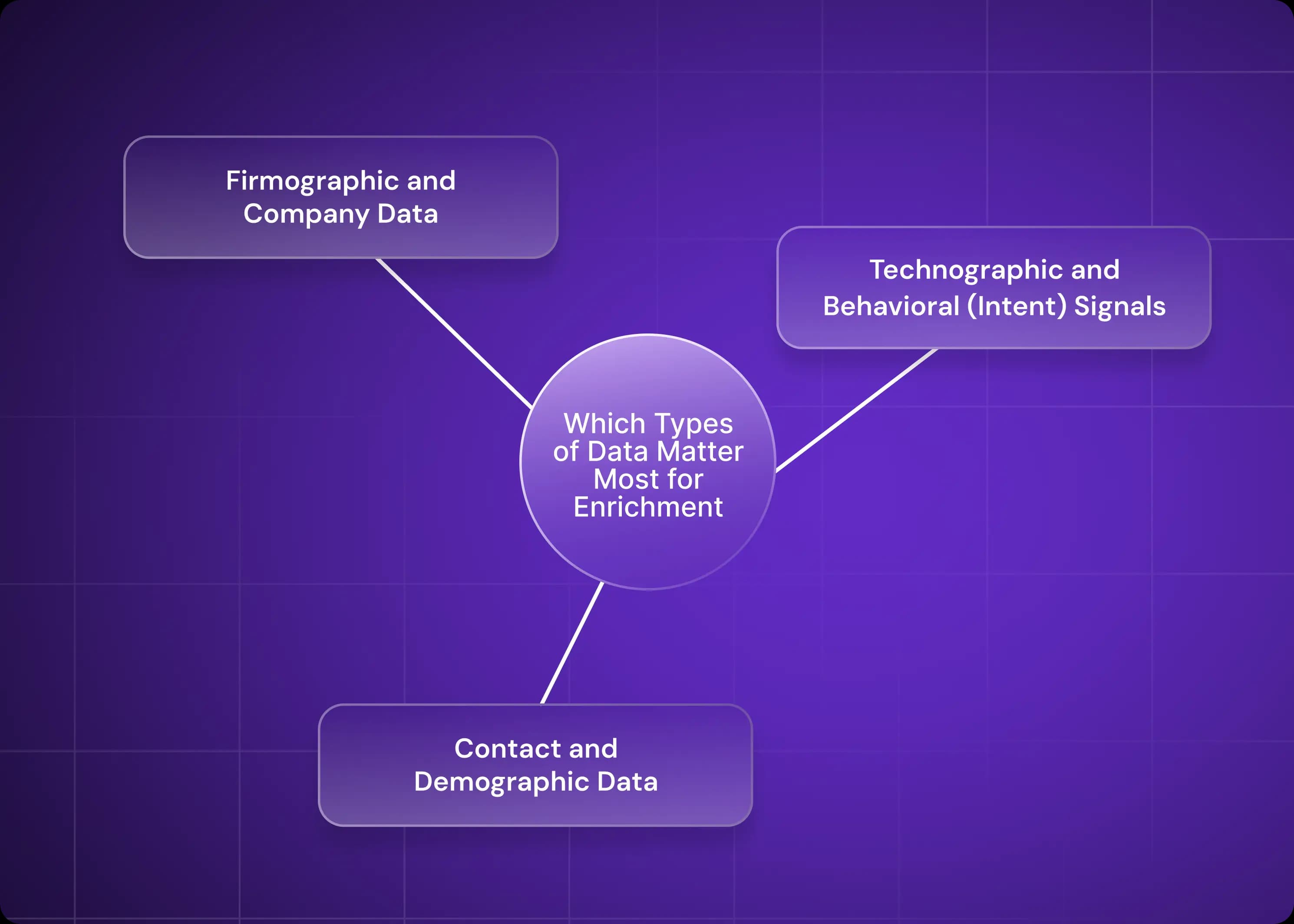
Generally speaking, the most valuable data points fall into one of the following categories.
Contact and demographic data
This is the most basic layer of data included in a lead profile. It includes contact details—usually an email address and phone number (or multiple for a company profile)—along with demographic data of individuals like location and gender.
Firmographic and company data
Firmographic data encompasses size, industry, revenue, and location. If you’re primarily targeting corporate accounts, these data points are essential for accurate scoring and prioritization.
Technographic and behavioral (intent) signals
Technographic data tells you what tools a company uses—and where there might be gaps or opportunities for improvement. Behavioral signals show how an individual lead or employees at a target account are interacting with your website, third-party websites, social media content, ads, and more. All of these signals combine to give you a picture of how interested a lead might be in your product.
The lead enrichment process from capture to outreach
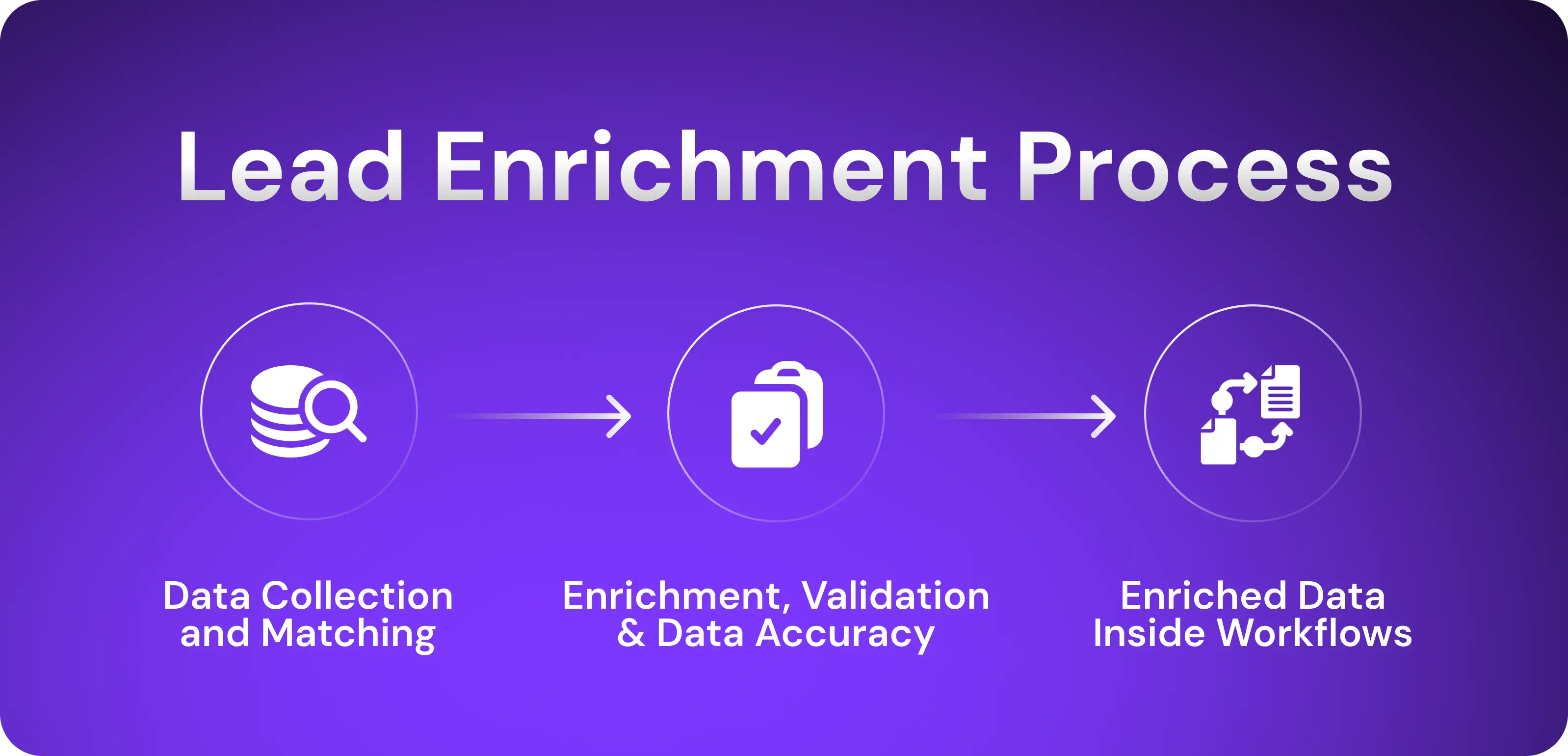
How does the lead enrichment process work in practice?
If you’re in charge of the sales workflow at your organization, you can expect most enrichment to work quietly in the background. As long as you pick high-quality data providers, profiles will update in your CRM without any manual input.
That said, it is useful to have an understanding of what’s going on under the hood. It will help you build your enrichment processes in the early stages more effectively and troubleshoot any issues.
Data collection, matching, and validation
When a profile is created in your CRM or sales software, it will include rudimentary information like a name (individual or company), website, or email address.
Lead enrichment begins by using these profile identifiers to query a maintained database. Often, enrichment involves querying multiple databases, sometimes including the proprietary database of the enrichment tool.
Artisan, for example, matches CRM profiles to its database of over 300 million B2B, ecommerce, and local leads and links to multiple third-party databases.
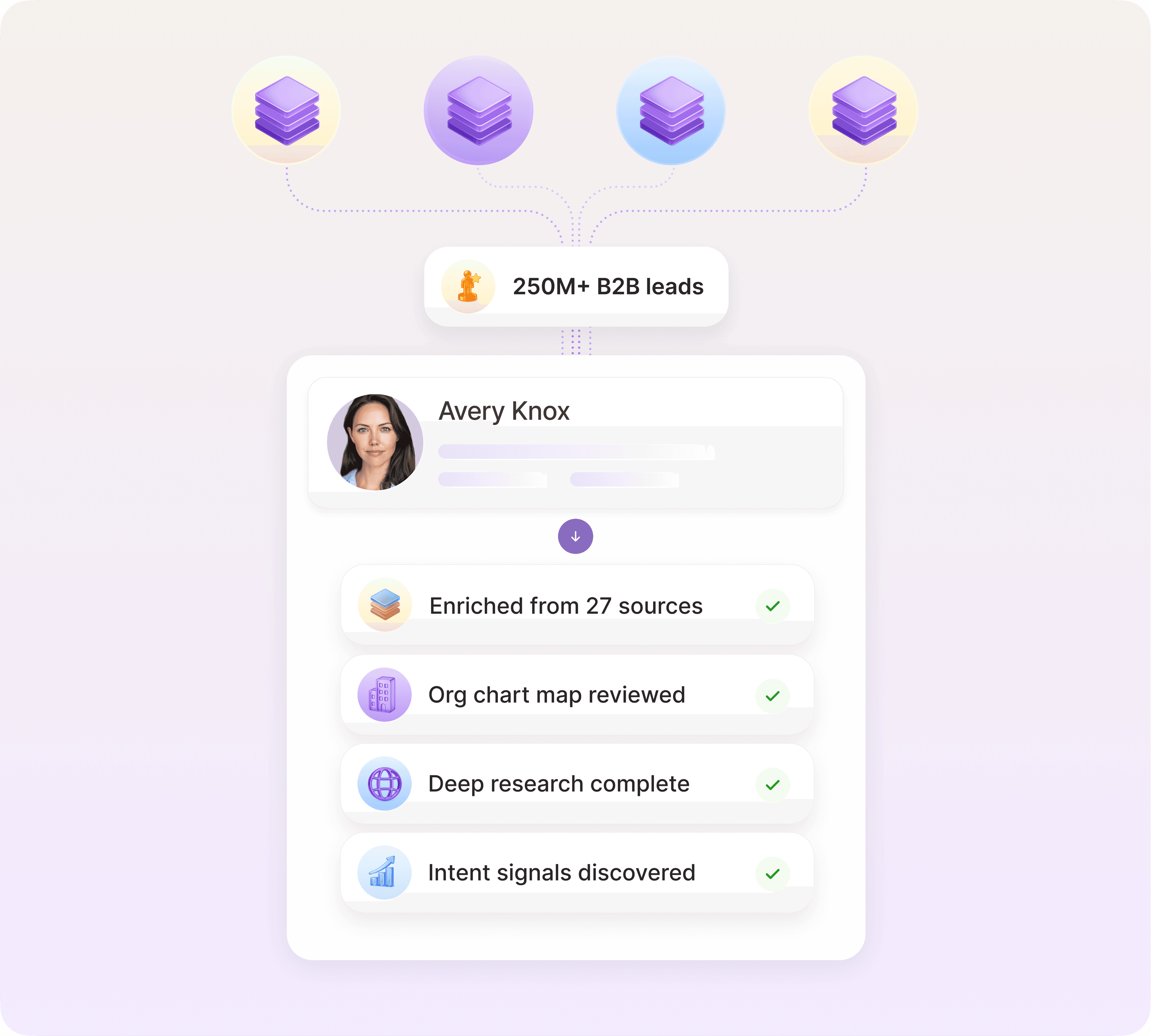
Once the lead has been matched to data in the maintained database, missing fields in the CRM are updated. Existing data is also usually validated and refreshed at this stage, with outdated and conflicting fields removed. Data validation, also known as hygiene monitoring, is an ongoing process.
Enriched data inside workflows
Once data has been collected, matched, and validated, it’s ready to be used. It will typically flow into preset workflows automatically.
Enriched data comes into play in the following three areas:
Scoring and qualification: Leads are ranked on how close they are to making a purchase decision.
Segmentation and personalization: Leads are categorized based on their scores and sent relevant, personalized outreach via email and social media.
Sales rep routing: Leads that respond to outreach messages are routed to sales reps according to their prospective value, with top account executives (AEs) receiving the biggest opportunities. Extremely promising accounts may go straight from scoring to routing and be flagged for a phone call.
Matt Little is the managing director and founder of Festoon House, a lighting company for events and hospitality businesses. He has spent years developing targeted outreach programs and optimizing their lead-handling processes.
For Matt, enrichment is a non-negotiable part of the qualification process: “Qualifying is greatly sped up by lead enrichment. Today, we can identify job titles, firm size, and recent hires quickly, so busy sales reps don’t spend their time going down dead ends. After the addition of enrichment tools, we reduced the time spent qualifying by two-thirds.”

Automate your outbound with an AI BDR
Meet Ava—your AI BDR who handles prospecting, outreach, and follow-ups, so your team can focus on closing.
The benefits of high-quality lead enrichment
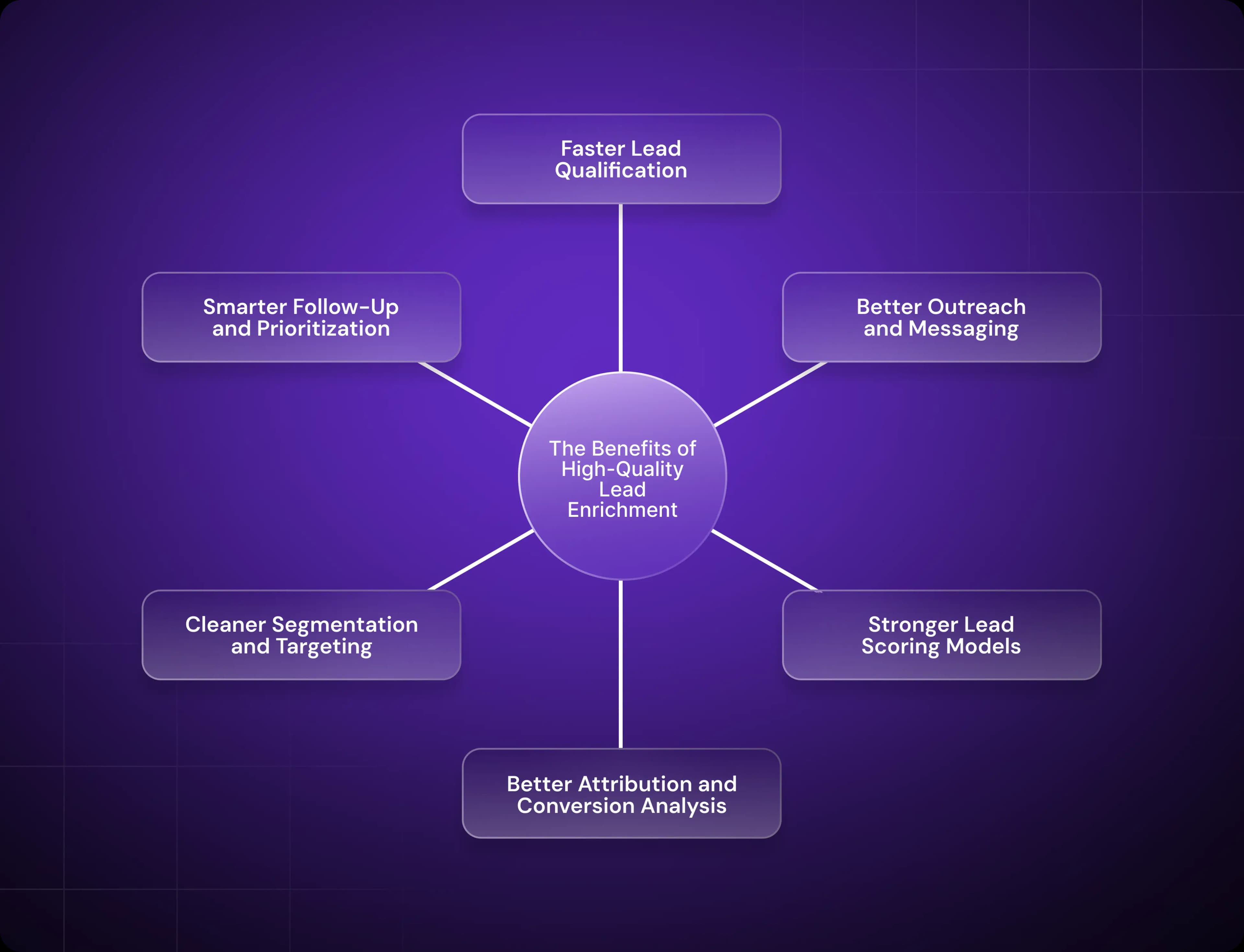
Data enrichment gives reps context early. It helps them understand who’s worth their time before they invest effort, and this provides multiple benefits across the sales pipeline.
Faster lead qualification
Enriched data means reps immediately know who a lead is, what type of business they’re part of, and whether they align with their company’s ICP. They can prioritize leads that are ready to buy quickly, enabling them to act faster than competitors.
Better outreach and messaging
At every stage of your sales funnel, the messages you send to leads play a central role in determining whether they engage or ignore you. When you lack the insights needed to personalize messages, relevance drops, responses fall, and your number of meetings booked flatlines. A report from Adobe found that personalization helped 68% of reps beat their revenue targets.
Smarter follow-up and prioritization
When lead scores are based on up-to-date intent information, the most qualified prospects move up the queue. Reps can immediately target the accounts most likely to buy with personalized follow-up messages.
Cleaner segmentation and targeting
You likely already use segmentation and targeted messaging for sales and marketing. But when you base it on outdated or incomplete data, leads fall into the wrong outreach and priority groups.
Enriched data fixes this by ensuring segments and targeted messages reflect each company’s current reality, giving you the best chance of connecting with decision-makers and closing the deal.
Stronger lead scoring models
Lead scoring only works when you have accurate, complete data. Otherwise, you risk pushing leads too early or overlooking high-intent opportunities.
The most effective lead scoring models combine the following:
Firmographic data to confirm ICP fit
Demographic data to understand the lead’s role and seniority
Intent and behavioral signals to measure readiness to buy
These insights help you find B2B leads who fit your ICP and are ready to buy, reducing friction and downstream conversion rates.
Better attribution and conversion analysis
Attribution—the process of identifying which touchpoints influenced a purchase—breaks down when you lack the insights to track lead activity. Clicks, downloads, and opens blur together, making it hard to understand which campaigns actually move the needle.
Lead enrichment fills your CRM with behavioral data, providing deeper insight into which acquisition channels perform best. This information makes budget allocation more data-driven because marketing teams can trace the path from first interaction to closed deal.
What’s the difference between batch and real-time enrichment?
Competitive teams have shifted from manual data entry to automated enrichment tools to speed up pipeline progress and ensure data hygiene. They use a mix of batch and real-time enrichment to manage costs while keeping data fresh.
Batch enrichment vs. real-time enrichment
There are two ways automation tools enrich databases: batch and real-time enrichment.
Batch enrichment updates and cleans data at set intervals, for example, every three or six months. It uses API-based batch jobs to enrich large volumes of records at once, filling in missing fields across your database. It has lower overall costs, and large updates are completed at once.
Real-time enrichment typically uses APIs and scraping tools to pull information from third-party sources when a lead enters your system or the sales rep requests it. The key benefits of real-time enrichment are immediate enrichment as needed and certainty about information being up to date.
When real-time data actually matters
You don’t always need to pull data in real time. But when a lead shows strong intent, it can make or break a deal.
Here’s where real-time data matters most:
Inbound demo requests: Recent context allows you to tailor the demo to the buyer’s current role, company, and pain points.
High-intent website visitors: When prospects show strong buying signals, accurate data will help you identify and qualify them while they’re comparing options.
Outbound personalization: Sales teams need accurate data to score leads and send personalized messages.
Understanding GDPR, consent, and B2B data
Data privacy and consent have become priorities for companies over the past decade. Regulations are stricter, enforcement is more visible, and the risks of getting it wrong are severe.
Companies should be aware of both GDPR and US state-level legislation:
GDPR compliance for EU companies: This landmark piece of legislation covers how personal data of people in the EU can be collected, stored, and processed.
CCPA and similar US state privacy laws: These regulate how US businesses can handle personal data of residents and are defined at the state level.
Failure to comply carries real consequences. For example, Sephora was fined $1.2 million for violating CCPA, mishandling consumer data, and failing to meet transparency and consent requirements. The beauty retailer was instructed to update its privacy disclosures, offer clearer opt-out options, and report its data practices to regulators.
In practice, compliance means processing and storing data securely in your own organization and vetting third-party providers to ensure that they are compliant with all laws and regulations in your jurisdiction.
Lead enrichment examples: 3 use cases across the funnel
Accurate data matters during every part of the funnel. But it really comes into its own at three specific stages—qualification, outbound prospecting, and re-engagement.
Let’s look at each of these three use cases.
Inbound lead qualification
If 100 demo requests come in a month, enrichment gives you the ability to quickly prioritize the 20 that match your ICP.
As soon as someone visits your site or submits a form, enriched profiles tell you who they are, how well they fit, and how urgently you should respond.
Here’s how lead enrichment aids qualification:
Qualifies demo requests instantly: Scoring systems surface high-fit prospects and help reps to tailor demos before a call.
Route leads automatically: Automated workflows send leads to the right rep or team based on fit and intent, without manual review.
Personalizes free trials: Reps can adjust onboarding and outreach during the trial phase based on role, industry, company size, and more.
Outbound prospecting and account targeting
Enrichment is essential for effective cold outreach because it’s what makes account filtering and personalization possible. It allows reps to filter leads from cold lists and databases and then target them with detailed, tailored messages.
Enrichment supports the following tasks:
Cold lead filtering
Lead scoring and prioritization
Decision-maker identification
Contact details verification
Message personalization
Account expansion and re-engagement
CRM data enrichment helps teams identify expansion opportunities with existing customers and re-engage accounts that haven’t purchased recently or have allowed their subscriptions to expire.
Enrichment facilitates the following expansion and reengagement tasks:
Trigger upsell or cross-sell pitches: When customer data changes, reps can upsell products or tiers that may better their new requirements.
Create reactivation workflows: If churned or inactive accounts show behavior that indicates they are reconsidering solutions in a relevant category, the sales team can reach out with a reactivation offer.
Uncover expansion opportunities: For larger accounts, enrichment can reveal departments, divisions, and subsidiaries that may benefit from your solution.
What to look for in lead enrichment tools
An enrichment tool should provide data you can trust and fit naturally with your team's existing workflows. Not all solutions meet that bar, so be cautious when picking a provider.
Check coverage, accuracy, and data sources
If you can’t trust the data a tool provides, you’re just adding noise to your CRM. Sales reps and marketers will end up having to recheck data, which will cost more time than if you hadn’t bothered to implement enrichment at all.
Before committing to a data vendor, consider the following fundamentals:
Data privacy: How is data collected, stored, and protected? Strong privacy practices protect leads, customers, and your business.
Data sources: Where does the data actually come from? Vendors should be transparent and use a variety of reputable data sources, rather than relying solely on scraping. For example, Artisan pulls data from public databases, B2B directories, social media, company websites, and B2B data providers.
Data accuracy: What validation methods do they use? How often do they refresh data? Customer reviews are a great place to assess accuracy.
Types of lead: Who do they store data about? High accuracy won’t help if records don’t match your target market.
Intent data: Does the tool store data about leads’ browsing behavior or visits to tool review sites? These insights allow you to score leads accurately, ensuring you contact those most likely to buy first.
Prioritize workflow fit over feature count
A tool can have every feature imaginable, but if it doesn’t fit your CRM, sales automation, or outbound workflows, you’ll lose time trying to make it work.
Here’s a quick checklist to use when choosing tools:
Does the tool plug directly into your CRM and sales systems?
Does the tool support automated bulk enrichment?
Can it handle real-time enrichment without delays or workarounds?
Do APIs actually work, and are they easy to maintain?
Finally, consider the tool’s secondary features. Some offer enrichment as part of a larger stack, such as automated outreach, AI lead nurturing, or reporting.
Platforms like Artisan take this a step further by embedding enrichment directly into outbound workflows. It gathers B2B data from a wide range of sources across the web, including websites, social media, and third-party databases, to run advanced sales automation.
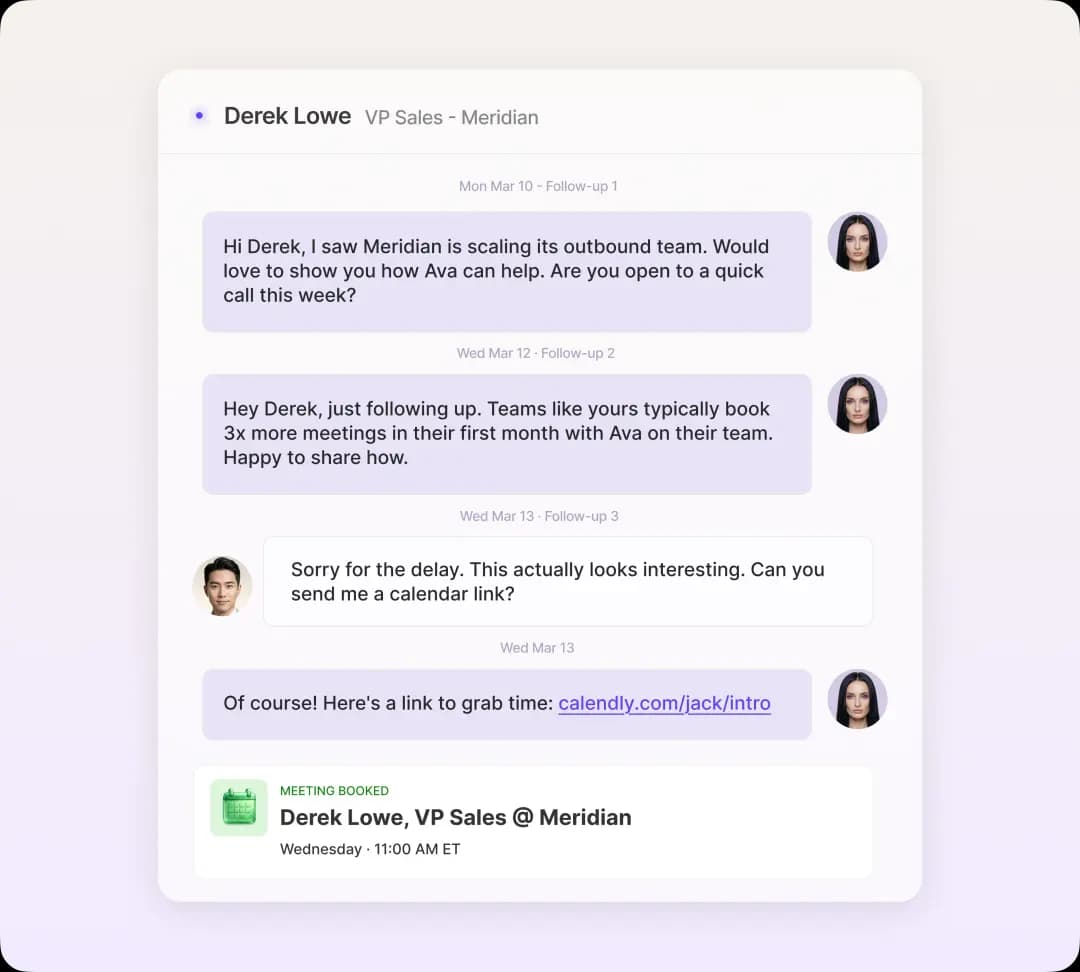
The point of lead enrichment is more sales with fewer actions
Lead enrichment helps teams take action faster. Accurate data reduces guesswork, tightens prioritization, and makes rep actions more intentional across the funnel.
Artisan is leading the way when it comes to AI-driven enrichment. By embedding enrichment directly into outbound sales workflows, Artisan helps teams act on accurate data in real time, without adding complexity or extra tools. All of which results in more meetings booked and more closed deals—without increasing headcount.
Automate your outbound with an AI BDR
Meet Ava—your AI BDR who handles prospecting, outreach, and follow-ups, so your team can focus on closing.

Marsha Dunn
SME @ Artisan
Marsha Dunn is a writer helping businesses connect with customers and build credibility. She specializes in B2B thought leadership rooted in expertise.