Lead scoring models for high-quality leads
This guide breaks down lead scoring models that improve conversion rates and streamline the sales process.
Lead generation has never been easier. Yet CRMs have never been messier, and sales cycles have never been longer.
You can find contact information in seconds and craft personalized messages at scale. As a result, inboxes are overcrowded with outreach that gets thrown at prospects like spaghetti at a wall.
To make your outbound work, you need to rethink qualification entirely. You need to reach fewer people and aim for better fit, which means qualifying your leads before they enter your pipeline.
The Cost of Poor Lead Prioritization
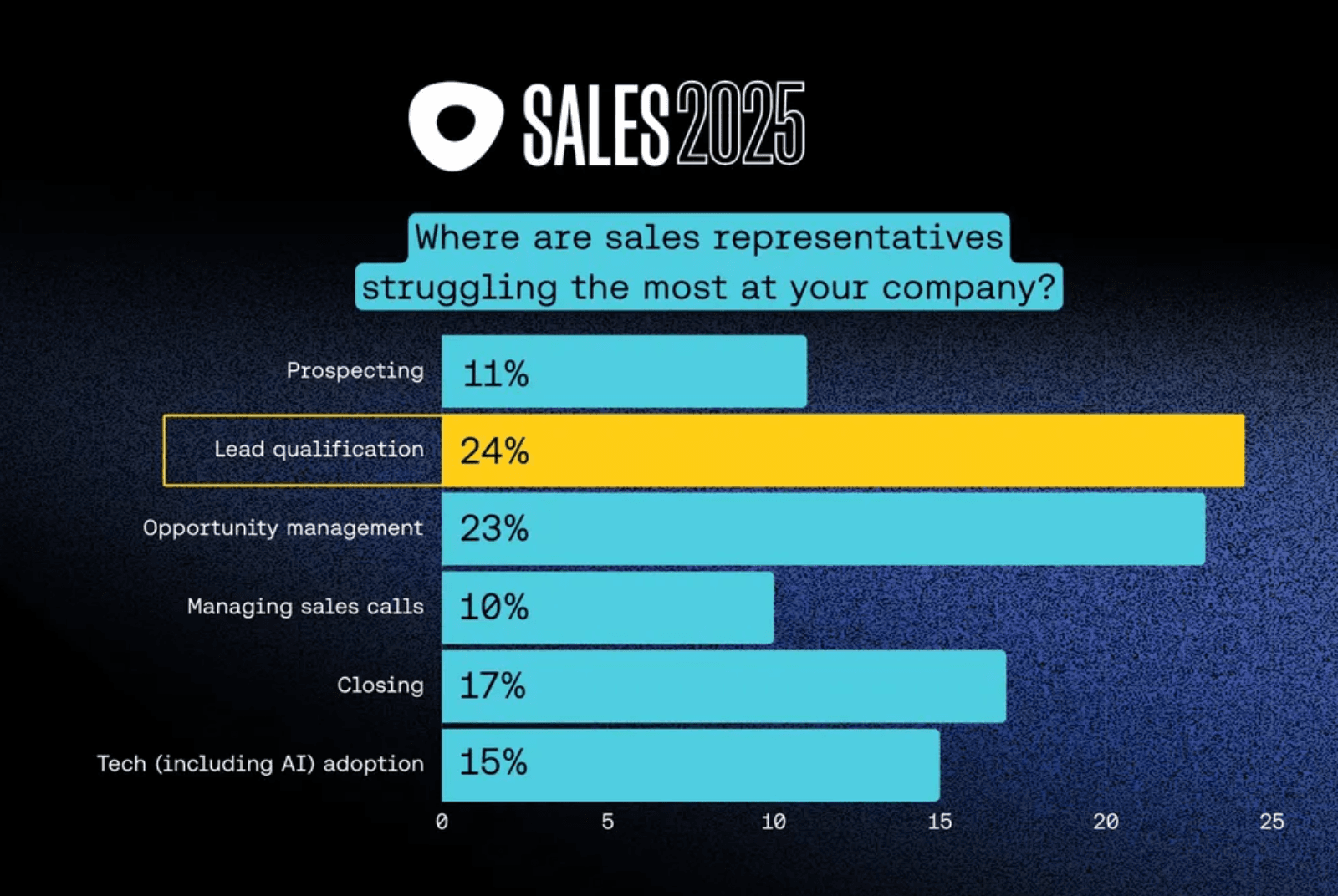
Lead qualification is currently the top seller challenge according to research by Outreach. When your sales team can't quickly identify which prospects deserve attention, they waste time chasing dead ends while real opportunities go cold.
Poor qualification creates a quality problem. Forty-two percent of businesses cite lead quality as their main marketing challenge, according to The State of Prospecting 2025 by Sopro.
Pipelines fill with contacts that should have never made it there.
The root issue is that marketing and sales rarely agree on what "qualified" means. Marketing qualifies based on engagement signals like downloads, clicks, and form fills. Sales qualifies based on buying readiness—budget, authority, need, and timeline. This mismatch leads to a fundamental disconnect where a lead can score high on engagement but have zero buying intent power.
The financial consequences follow quickly.
In The State of CRM Data Management in 2025, Validity revealed that 37% of organizations lose revenue as a direct consequence of poor data quality. Of course, lead data sits at the center of that problem—when you skip proper qualification, you're left with incomplete profiles, surface-level engagement metrics, and guesswork about who's ready to buy.
This creates a cascade of inefficiencies across the sales process. Reps use calls to ask basic questions that should have been answered upstream. Discovery essentially becomes qualification. Response times stretch while high-intent prospects wait in the queue behind unvetted contacts. Deals that should close in weeks drag into months as your team burns resources on leads that were never truly qualified.
The solution is addressable: build a lead scoring model that evaluates leads continuously based on criteria both teams agree on.
The Building Blocks Behind Every Lead Scoring Model
Every lead scoring model runs on two types of data: explicit signals that show fit and implicit signals that show interest. You need both to identify high-quality leads.
Explicit Data That Signals Fit
Explicit data tells you whether a lead matches your ideal customer profile (ICP) or not.
Here’s a rundown of the three main categories of explicit data:
Demographics: Job title, role, seniority level, decision-making authority
Firmographics: Company size, industry, revenue, geographic location, growth stage
Technographics: Current tech stack, like CRM platform, payment processing system, cybersecurity tools, etc.
A scoring model assigns points to leads depending on how closely their data points match the criteria in your ICP. Tighter ICP alignment results in more points. This filters out prospects who might show interest but are unlikely to convert because they lack budget, don't face the problem you solve, or operate outside your serviceable market.
Implicit Data That Signals Interest
Implicit data captures behavior that indicates buying intent. It indicates that a lead is either ready to purchase a product in your category (or your product) or is nearing that point.
There are three core categories of behavioral data:
Behavioral signals: Website visits, pricing page views, email opens, content downloads, demo requests
Engagement patterns: Participation in webinars, interaction with marketing campaigns, social media activity, event attendance
Journey progression: Frequency and recency of interactions, movement from blog content to product pages to demo requests
Not all signals carry equal weight. Someone reading a blog post doesn't need a sales pitch—yet that's exactly what happens when teams treat every engagement as a buying signal.
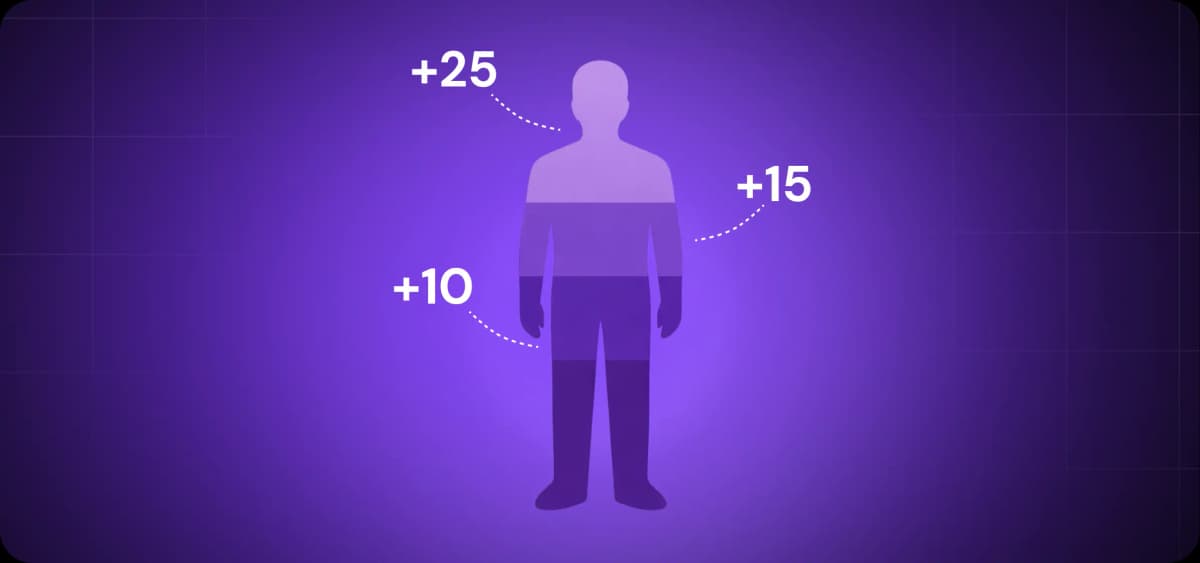
Your scoring model should address this by assigning different point values based on intent strength. Reading a blog might add 5 points, but visiting the pricing page three times adds 25 and enrolls the lead in an outbound outreach sequence.
To qualify as sales-ready, a lead needs to meet both explicit and implicit criteria. Without both dimensions, you're likely to overcrowd your CRM with an excess of random accounts.
Different Lead Scoring Models Sales Teams Actually Use
So, how do you start building your scoring system? You first need to pick a model, and that choice comes down to your data quality, sales cycle length, and how your team sells.
Let’s run through the most common lead scoring models.
Rule-Based Lead Scoring Models
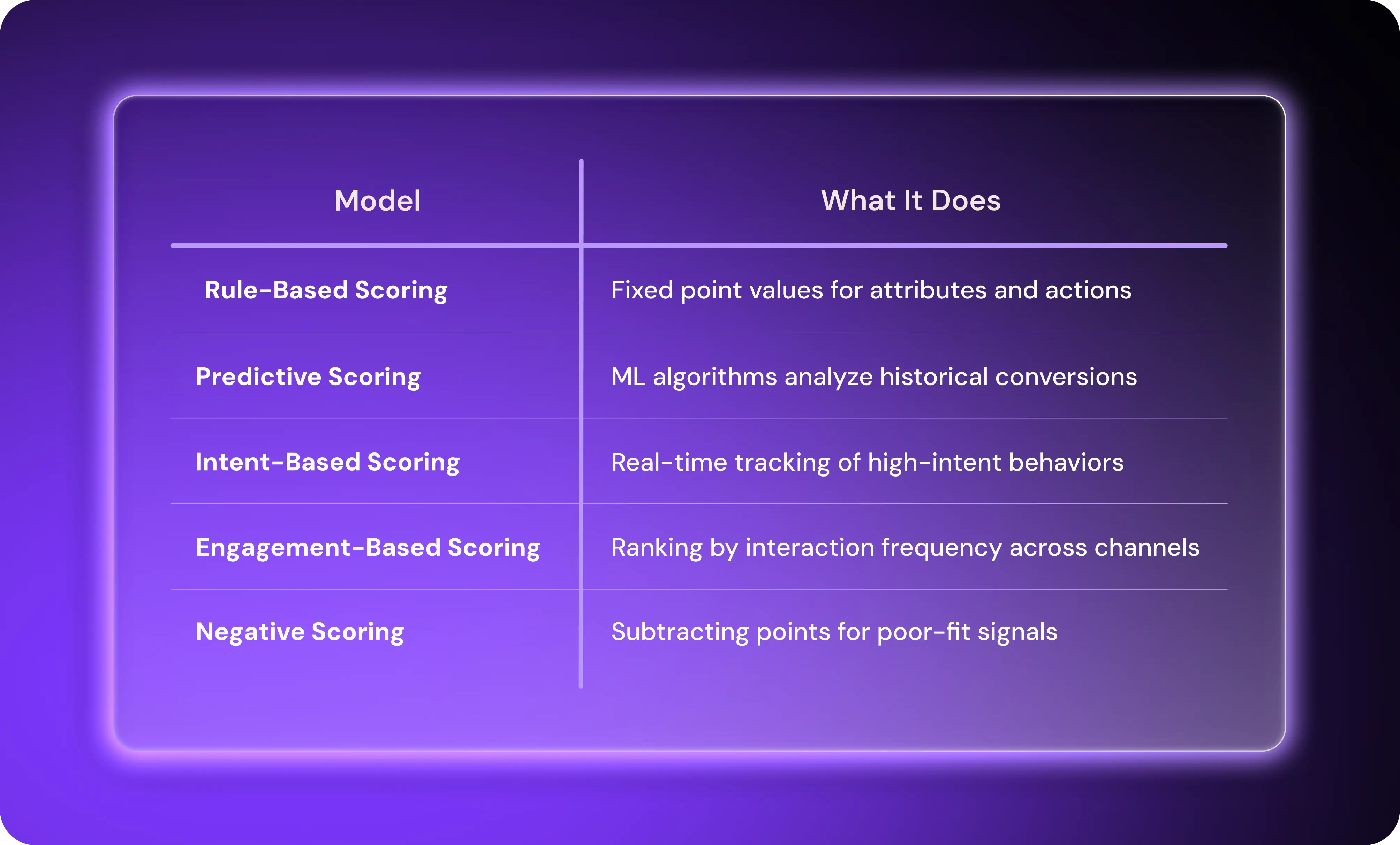
Rule-based scoring assigns fixed numerical values to specific data points and actions. You decide the point value for each qualifying attribute, from firmographics to behavioral signals, and the model does the rest.
Sales teams commonly score leads based on the following data points:
Job title and seniority (e.g., 25 points for a C-level executive, 10 points for a manager)
Company size brackets (e.g., 20 points for enterprise, 10 points for SMB)
Email engagement (e.g., 5 points for an open, 10 points for a click)
Content downloads (e.g., 10 points for a whitepaper, 25 points for a case study)
The strength of rule-based models is control. You set the criteria, adjust point values based on what converts, and align scoring with your ICP.
The limitations show up when buyer behavior changes or when you lack historical data to calibrate point values accurately—an email click, for example, can be either a weak or strong indicator of intent depending on industry. This model works best for teams with clear ICPs, straightforward sales processes, and the resources to regularly audit and update their scoring rules.
Predictive Lead Scoring Models
Predictive models use machine learning to analyze historical conversion data and identify the behavioral patterns of leads that became customers.
AI tools can examine thousands of data points, from demographics to engagement patterns. Then they assign scores based on how closely a new lead resembles past converters.
Predictive scoring outperforms manual systems when you have large datasets (usually over 1,000 closed deals), complex buyer journeys with multiple touchpoints, and varied conversion patterns that humans struggle to spot. Teams with limited data or rapidly changing ICPs see better results with rule-based approaches until they build sufficient conversion history.
Intent-Based Lead Scoring
Intent-based scoring prioritizes leads showing high-intent behaviors in real time. While rule-based models can assign points to any action, intent scoring focuses specifically on behaviors that signal active buying evaluation.
High-intent signals include:
Pricing page visits (especially multiple visits within days)
Competitor comparison research and review site activity
Product demo video views and feature page exploration
ROI calculator (or similar tool) usage and case study downloads
Repeated returns to high-value pages within short timeframes
Intent scoring is particularly important for outbound teams because it identifies the narrow window when prospects are receptive. Instead of cold outreach to static lists, reps engage accounts already researching solutions.
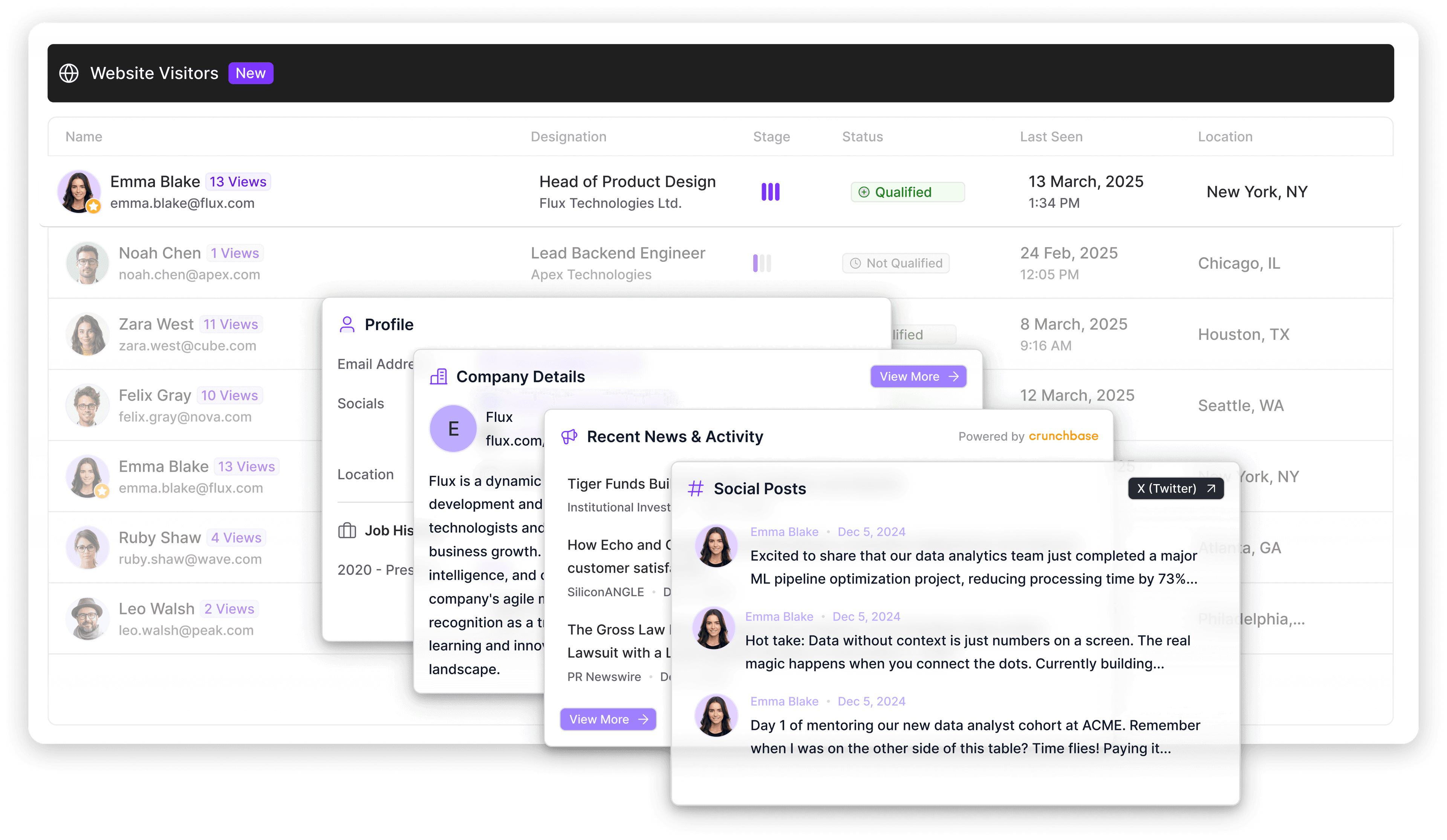
Artisan, for example, automatically identifies high-fit leads and monitors for intent signals continuously. When a lead raises funds, shows hiring activity, or visits high-intent pages on your website, Artisan's AI BDR Ava qualifies them in real time and triggers personalized outreach.
Engagement-Based Lead Scoring
Engagement-based scoring ranks leads by interaction frequency across channels.
While intent scoring focuses on high-value buying signals, engagement scoring tracks the volume and consistency of interactions—whether that's opening emails, consuming blog content, or engaging on social media.
Here’s a rundown of engagement-based lead scoring measures:
Email interaction patterns: Open rates, number of clicks, click rates over time
Content consumption frequency: Blog reads, resource downloads, newsletter engagement
Social media activity: LinkedIn profile views, post interactions, follows
Website visit consistency: Return frequency, pages per session, time on site
How is engagement-based lead scoring distinct from intent scoring? Engagement shows interest and awareness, not necessarily buying readiness. Someone might engage heavily with your content because they follow your thought leadership or find your blog useful—without having the budget or authority to buy.
Engagement scoring fits longer sales cycles where prospects stay in nurture for months before entering active evaluation. It helps identify leads that maintain consistent interaction throughout extended consideration periods, signaling they're worth continued investment even when they're not showing immediate buying intent.
This model works best combined with explicit fit criteria and intent signals, so you can distinguish between engaged researchers and engaged buyers.
Negative Lead Scoring
Negative scoring subtracts points for signals that indicate poor fit or declining interest. This prevents sales reps from chasing leads that looked promising initially but have since signaled disinterest or proven to be poor fits.
Here are the most common negative triggers:
Unsubscribes from communications
Job title changes to non-target roles
Extended inactivity periods
Spam complaints (usually immediate disqualification)
Company falls below size threshold
Negative scoring keeps your pipeline clean by automatically downgrading leads that no longer meet qualification standards, so reps can focus on accounts with genuine potential.
How to Choose the Right Model for Your Sales Motion
Which model is right for you? It’s impossible to answer that question definitively without some degree of trial and error, and you'll also usually see better results combining models rather than sticking to just one. It’s generally best to pick a model based on size and test from there.
Early-stage startups with limited conversion data and straightforward ICPs benefit most from rule-based scoring. If you're still figuring out who your best customers are, manual point assignments let you test hypotheses quickly. As you close more deals and identify patterns, you can refine your scoring criteria without waiting for enough data to train a predictive model.
Mid-market companies with established ICPs and longer sales cycles typically combine rule-based scoring with intent or engagement tracking. The combination helps prioritize outreach timing while maintaining ICP fit.
Enterprise sales teams handling complex, multi-stakeholder deals tend to see the strongest results from predictive models layered with intent scoring. If you have thousands of historical deals to train algorithms on and sales cycles where timing matters as much as fit, this combination is a win.
Looking for a straightforward template? Start with rule-based scoring to filter for fit, add intent signals to catch buying windows, and use negative scoring to keep your pipeline clean. As your dataset grows and your sales motion matures, layer in predictive elements to sharpen your prioritization.
How to Build a Lead Scoring Model That Sales Trust
A solid scoring model should be based on what's converted in the past, not what you think should work. Build your model on real data, and you’ll have a system that earns trust from day one.
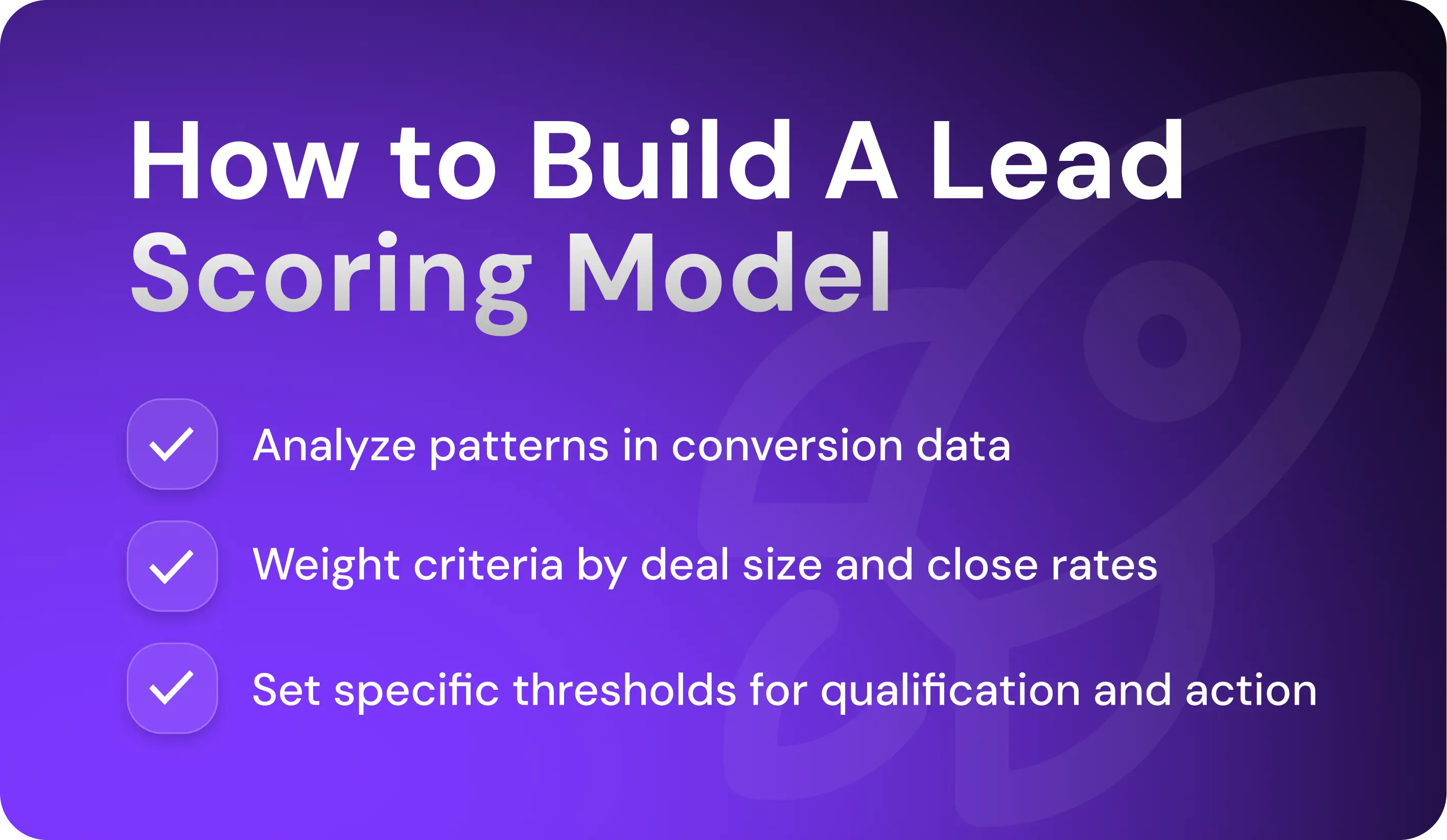
1. Start With Closed Deals, Not Assumptions
You should begin building your model by gathering data on your latest closed deals. You can look for patterns in the leads that actually converted.
Ask these questions to identify the commonalities between leads that closed in the past:
What job titles show up most often in closed deals?
Which company sizes close fastest?
What industries have the highest win rates?
Which behaviors preceded demos that turned into deals?
What content did converting leads consume before requesting sales conversations?
Identify the shared characteristics across your best customers—demographic traits like seniority level and department, firmographic data like company size and revenue bracket, and behavioral patterns like email opens in nurturing sequences.
2. Assign Point Values That Reflect Revenue Reality
Once you’ve identified patterns in your data, use it to set and fine-tune your point system. This is where you start to build the practical infrastructure you’ll use to qualify and rank leads.
Focus on these principles when assigning point values:
Weight attributes by revenue impact. Assign higher point values to traits that correlate with larger deal sizes and faster close rates.
Prioritize sales-ready behaviors over passive engagement. Review which behaviors appear most frequently in your closed deals, then assign points to those actions accordingly.
Require both fit and intent to qualify. Set minimum thresholds for both ICP fit and intent—for example, 50 points from fit criteria and 30 points from behavioral signals before a lead qualifies for sales outreach.
3. Define Clear Thresholds for Action
When does a user become a marketing-qualified lead (MQL)?
Set a threshold—say, 50 points—where marketing believes that a prospect is qualified enough for nurturing but doesn’t warrant direct outreach. These leads enter targeted email sequences, are invited to webinars, and receive relevant content based on their engagement patterns.
And when does a user become a sales-qualified lead (SQL)?
At a higher threshold—perhaps from 80 to 100 points—sales should take over. A score in this range should indicate a combination of strong ICP fit with high-intent behaviors. Leads should be assigned directly to sales reps for immediate follow-up.

Automate your outbound with an AI BDR
Meet Ava—your AI BDR who handles prospecting, outreach, and follow-ups, so your team can focus on closing.
Lead Scoring Inside Your CRM and Sales Stack
Scoring should run automatically. It’s simply impossible to score leads manually while being thorough and making time for all-important human sales conversations.
Here’s how to automate scoring using your CRM:
Set up predictive or rule-based lead scoring. Choose predictive scoring if you have over 1000 contacts and historical conversion data, or rule-based scoring to assign your own point values.
Create rules to assign points to lead profiles. If you go with rule-based scoring, define point values for job titles, company size, email engagement, pricing page visits, and other qualifying criteria using your CRM’s auto-assign features.
Build automated workflows that trigger at score thresholds. Configure workflows in line with your score thresholds so leads enter nurture sequences or are assigned to sales reps for outreach correctly.
Create workflow alerts for sales reps. Set up notifications that ping reps when assigned contacts cross sales-ready thresholds, so they can reach out while intent is high.
All-in-one CRMs like HubSpot include marketing automation features, so you can set up everything in one platform. If you use a CRM like Pipedrive that focuses primarily on sales, you'll need to integrate it with marketing automation software like Mailchimp or ActiveCampaign to enable triggered workflows and behavioral tracking.
Lead Scoring Best Practices That Hold Up at Scale
The problem with lead scoring isn't setting up a system—you’ve probably done that already, maybe even more than once. The challenge is keeping it up-to-date.
These practices will ensure that your scoring system holds up over time:
1. Align Scoring With Your Actual Sales Funnel
Your scoring thresholds should match the stages that leads move through in your data. Map your scores to the conversion points you observe.
If most closed deals had scores between 85 and 120 when they became opportunities, set your SQL threshold around 85. If marketing-nurtured leads typically hit 60 points before requesting sales conversations, that's your MQL transition point.
2. Revisit Scoring Criteria Quarterly Using Real Metrics
Your scoring system should only be updated with real numbers. Pull conversion rates by score range each quarter and analyze which scored leads actually closed.
If certain heavily weighted attributes show no correlation with closed deals, reduce their point values or drop them. Add signals that appear frequently in recent wins but aren't in your model yet.
3. Streamline workflows without overengineering
Complexity kills adoption. A dozen qualification tiers are exactly what prevent the system from working.
Start with three tiers—unqualified, marketing-qualified, and sales-ready—rather than seven micro-segments with different routing rules. Focus on the 10 to 15 signals that matter most based on your historical data and ignore the rest
4. Keep scoring transparent for sales teams
Why does one lead qualify while another doesn’t? Your reps should understand your scoring criteria so they can talk to leads with confidence and contribute to necessary system changes.
Document your scoring criteria in a reference guide that lists what each attribute is worth and what thresholds trigger which actions. Create a feedback loop where sales can flag leads that scored high but turned out to be poor fits. Use that input to refine your model.
Keep a review log of high-scoring leads that sales rejects. Include the original score, the reason for rejection and the source conversation before proposing a rule change. Maintaining this feedback loop is an assignment to evaluate with Artie, an AI employee. Sales and marketing should agree on any changes to the scoring model.
Checklist: Turning Lead Scores Into Real Sales Action
Scoring leads is only a worthwhile activity if it changes how your team operates. A system only works when it directly improves how fast you respond, who you prioritize, and how smoothly leads move from marketing to sales.
Here's your quick-start checklist to turn scoring into sales action:
Configure real-time alerts that notify reps when assigned leads cross your SQL threshold.
Set up routing rules that auto-assign leads above a certain point threshold to territory reps within 24 hours.
Create score-based message templates.
Build workflows that trigger different nurture sequences based on score ranges.
Display lead scores in your daily pipeline view so reps prioritize high-scoring accounts first.
Document which score thresholds trigger which actions so marketing and sales know when handoffs happen.
Enable feedback flags where sales can mark high-scoring leads that turned out to be unqualified.
Ranked leads let reps focus their attention where it matters most. Instead of treating every lead as the same or relying on gut instinct, reps allocate their time based on data and give attention to prospects most likely to convert.
Scaling Lead Scoring Without Adding Headcount
Scoring helps you prioritize, but manual scoring and follow-up don't scale past a certain point.
The instinct is often to add headcount to handle the volume, but that creates its own scaling problems. Costs also rise—more reps means more managers, more training, and more overhead.
Automation-based scaling works differently. Initial setup requires resources—building scoring criteria, configuring workflows, integrating systems—but once operational, the same infrastructure handles 1,000 leads as easily as 10,000.
Platforms like Artisan combine AI-powered lead qualification with automated outreach. Artisan continuously monitors leads for both ICP fit and intent signals.
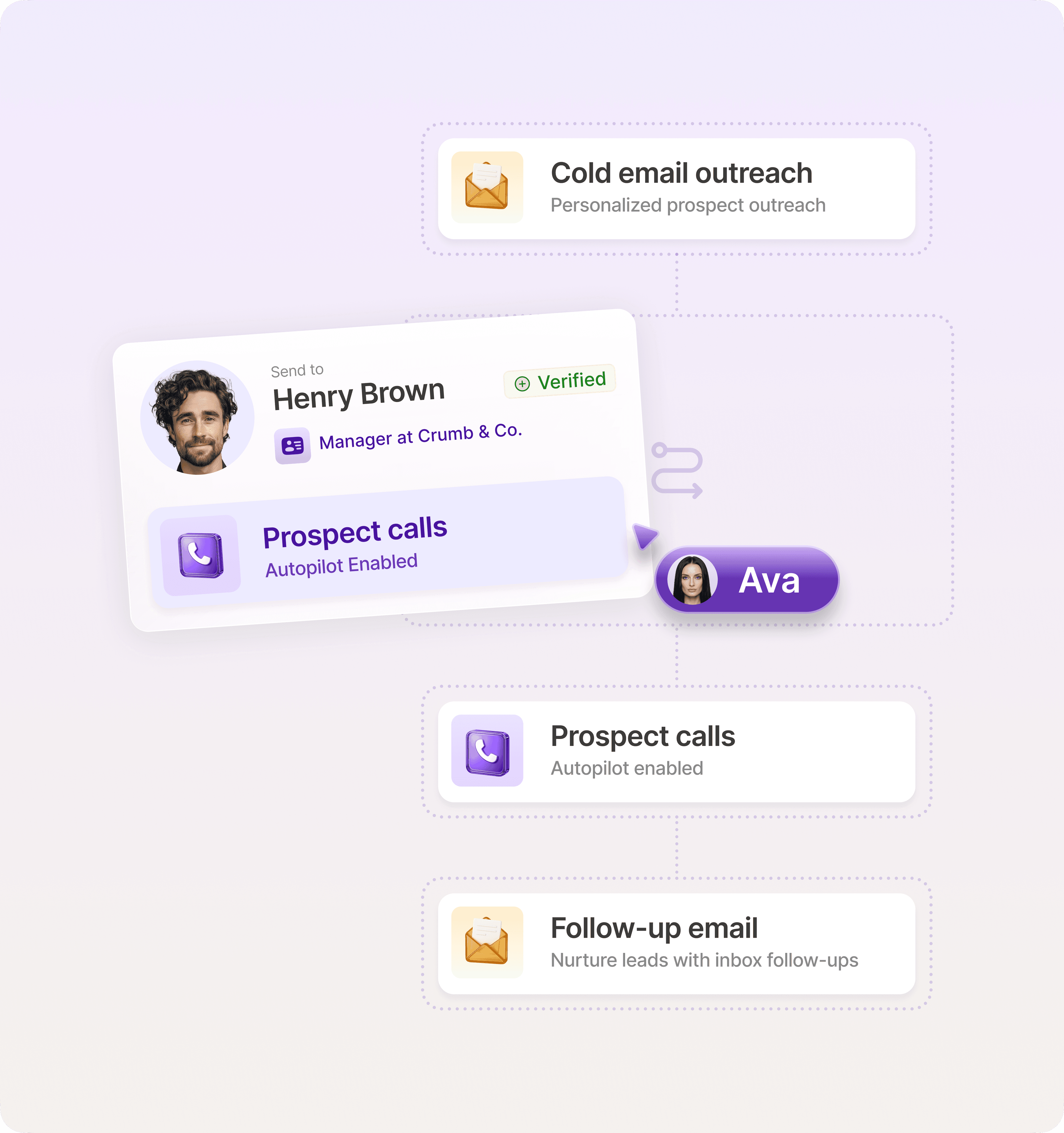
When a lead qualifies, Artisan's AI BDR Ava automatically crafts and sends personalized outreach, which means high-intent prospects are contacted while they're actively evaluating solutions.

Lead Scoring Sets the Order, Systems Do the Rest
For scoring and client outreach to work and scale effectively, it needs to be automated.
Alerts should fire when high-intent leads cross thresholds. Routing should assign them to the right reps. Workflows should personalize outreach based on score breakdowns.
With Artisan, your qualification workflows run without manual oversight. AI BDR Ava handles the entire outbound process—from discovery through personalized outreach. Qualification happens continuously, and the system acts on it immediately.
Automate your outbound with an AI BDR
Meet Ava—your AI BDR who handles prospecting, outreach, and follow-ups, so your team can focus on closing.

Adelina Karpenkova
SME @ Artisan
Adelina Karpenkova is a writer helping businesses tap into AI's potential and clear up misconceptions. She works with B2B teams on latest industry knowledge.