Guide to Leadfeeder alternatives for B2B teams: Top 9 tools
Discover the best Leadfeeder alternatives for B2B sales teams. Compare pricing, features, intent data, and outreach capabilities.
As far as web visitor tracking tools go, Leadfeeder is one of the easiest to set up. If you want to quickly implement a low-cost tool that’ll reveal anonymous companies on your site, it’s not a bad choice.
However, there are other factors than ease of use to consider when picking a lead generation platform. Revenue teams also need to consider data coverage and accuracy, CRM integrations, and outreach automations that turn real-time web visitor data into booked sales meetings.
When should teams start looking for Leadfeeder alternatives?
Leadfeeder is a good option for early-stage startups that need a basic web visitor tracking tool for targeted B2B lead generation.
But the platform’s shortcomings become more obvious when sales teams surpass 10–15 reps—a growth stage when sales processes become more sophisticated and have to deal with higher volume.
To keep things running smoothly while ramping up outreach, you’ll typically need higher-quality contact data, deeper intent data, and more AI-driven outbound automation than Leadfeeder can offer.
Here are Leadfeeder’s major limitations:
Limited contact data: Although Leadfeeder reveals companies visiting your website, it provides limited verified email addresses or direct dials of decision-makers at the company, forcing your team to do further research or rely on other contact data tools.
Shallow intent data and account scoring: The platform tracks basic page visits and durations, but compared to other platforms, it lacks sophisticated behavioral scoring, buying signals, and intent analysis. This can lead to inaccurate lead scoring and prioritization.
Pricing that doesn’t scale: Leadfeeder’s price increases with the number of companies you identify, which can make it expensive if you have a lot of traffic.
Limited automated follow-up and outreach: While the software can automatically identify and route leads, it relies on CRM and email integrations for any sort of automated outreach. Even then, reps often have to send the messages themselves.
Modern, mid-sized sales teams need more than a visitor identification tool with engagement-based lead scoring and CRM contact pushes.
Instead, they need a consolidated outbound automation platform offering the following:
Accurate contact data
Deep intent data analysis
Broad firmographic and technographic filters
Automated email and social media outreach
Sophisticated CRM integrations
Real-time notifications
Helpful dashboards and analytics
With all that in mind, let’s look at nine tools focused on visitor tracking, sales intelligence, and outbound sales automation. Each platform offers most, if not all, of the functionality listed in the preceding bullets.
1. Artisan
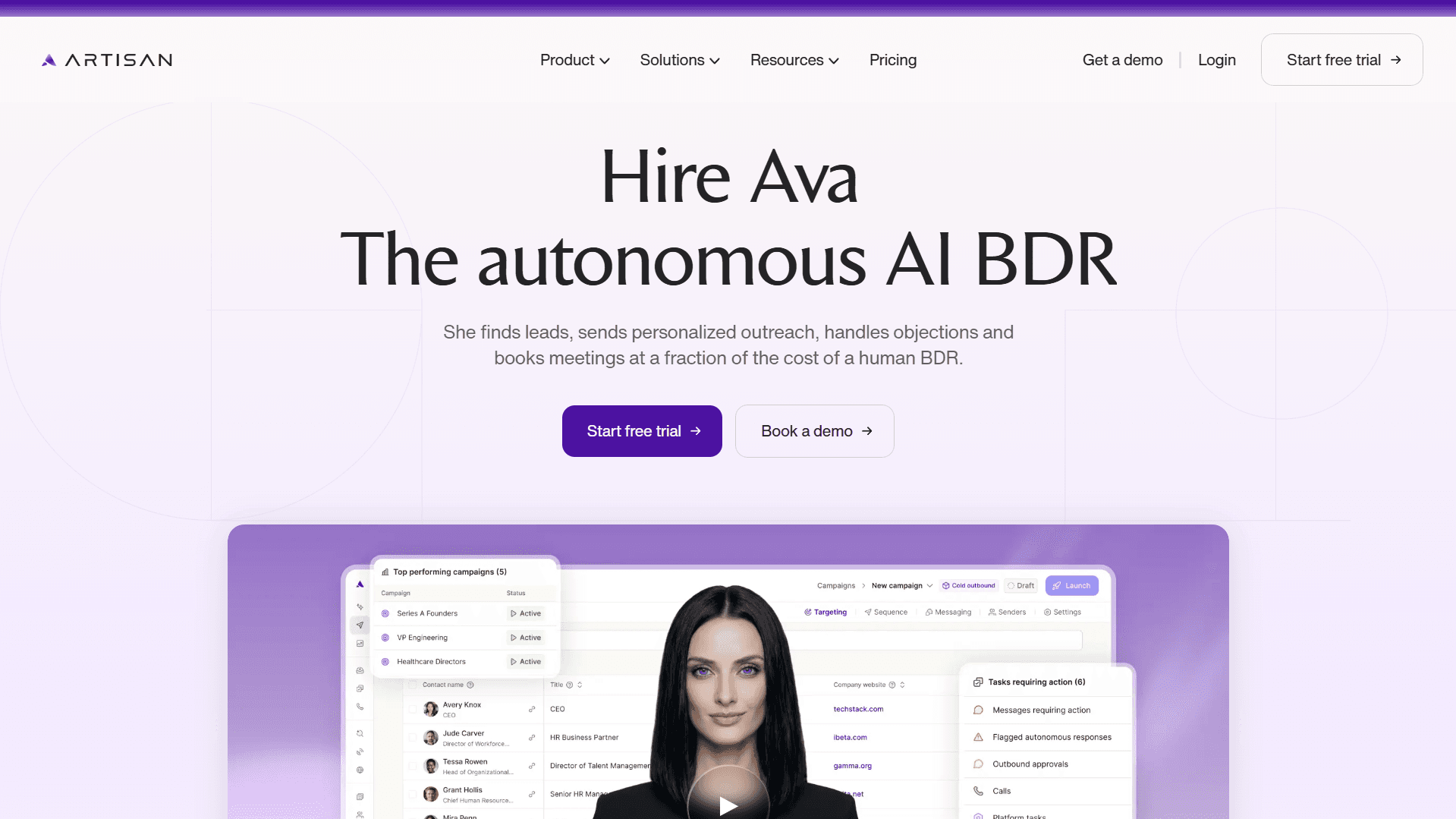
Artisan is an AI outbound automation platform that’s powered by an AI business development rep (BDR) named Ava. We would argue that she’s the world’s first truly autonomous sales rep.
Unlike most lead generation tools, Ava truly automates your entire outbound lead generation process, requiring little to no human oversight.
Ava doesn’t just identify, enrich, and score leads visiting your website. She also sends personalized emails and social media messages using intent data, contact info, and outreach automation. In other words, Ava turns visitor signals into intent-driven outreach.
While other tools identify leads and give your reps context to write and send messages, Ava handles everything herself, generating leads on autopilot so your team can focus on closing, not prospecting or following up with web visitors.
Key features
Website visitor tracking and lead prioritization, tied to buyer intent
Access to a database of over 300 million B2B, local, and ecommerce leads
Automatic lead discovery and data enrichment (firmographics, technographics, contact data)
Validated contact data, including emails, phone numbers, and social media profiles
Social media and email outreach from one dashboard
CRM integrations with HubSpot, Salesforce, Pipedrive
Real-time notifications and Slack alerts
Pricing and plans
Custom pricing based on usage and team size. Contact the sales team for a tailored plan.
How Artisan compares to Leadfeeder
Provides comprehensive and validated contact details
Sends outreach to web visitors automatically
Designed for sales reps, not just marketing teams
Ideal use cases
B2B sales teams that want to automate and scale outbound lead generation
Founders who want to consolidate multiple lead generation tools to cut costs
GTM teams focused on conversion rates, not raw traffic
2. Albacross
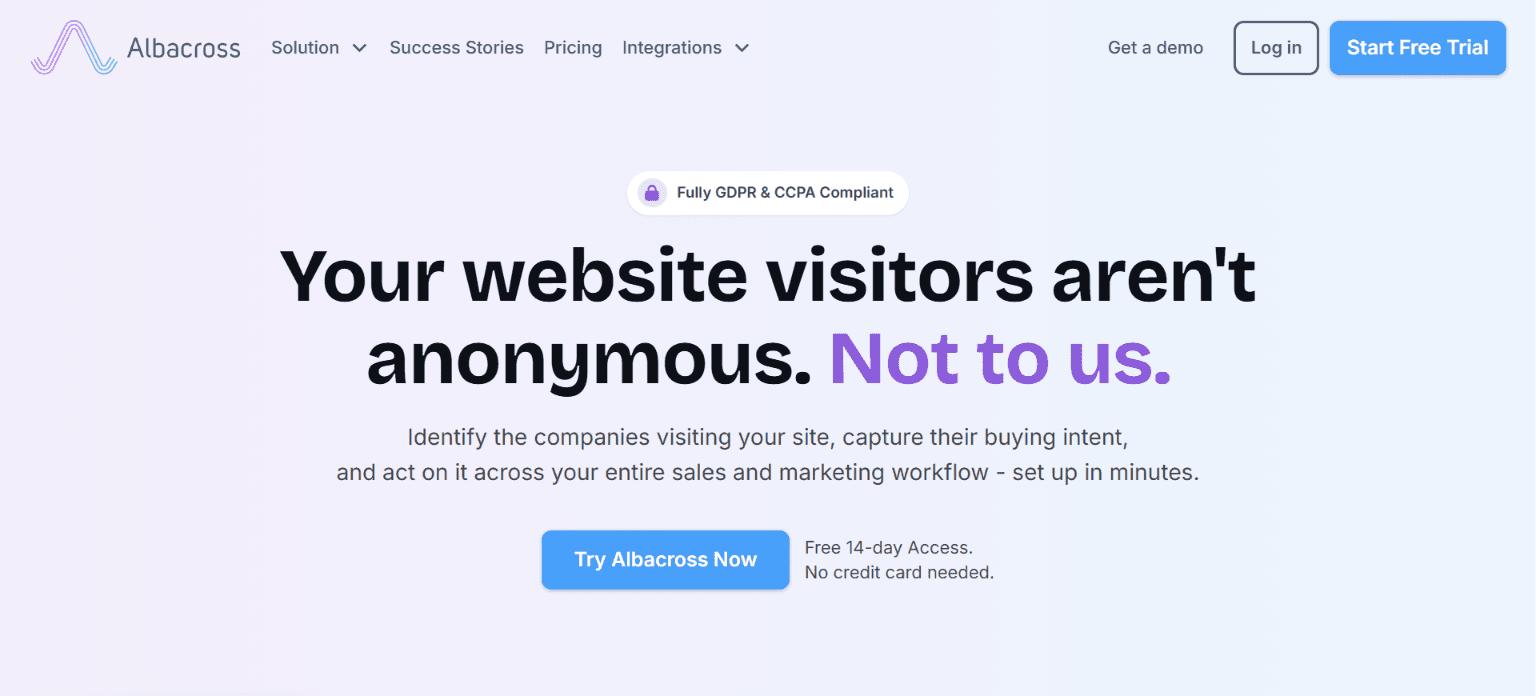
Albacross is a web visitor identification tool that reveals the identities of companies visiting your website, tracks which pages they visit, and segments them based on buyer intent.
The platform derives this buyer intent from the visitors’ on- and off-site behavioral data. This makes Albacross more sophisticated as a lead prioritization tool than Leadfeeder, which primarily uses firmographics and on-site behavior data like page visits to make its score leads.
Albacross is popular with ABM-focused marketing teams who want to upload their target account list and receive updates when these brands are visiting their website.
Key features
Company-level visitor data
Firmographic segmentation
CRM integrations
Pricing and plans
Pricing is tied to the number of visitors identified per month. The amounts below are for the base plan for each tier.
Starter: €84 per month
Professional: €213 per month
Organisation: €536 per month
How it compares to Leadfeeder
Better lead scoring functionality since it takes off-site behavior into account
Limited data for North America (it’s a Europe-focused tool)
Comes with an automated follow-up feature
Ideal use cases
B2B marketing teams focused on account-based marketing
3. Warmly
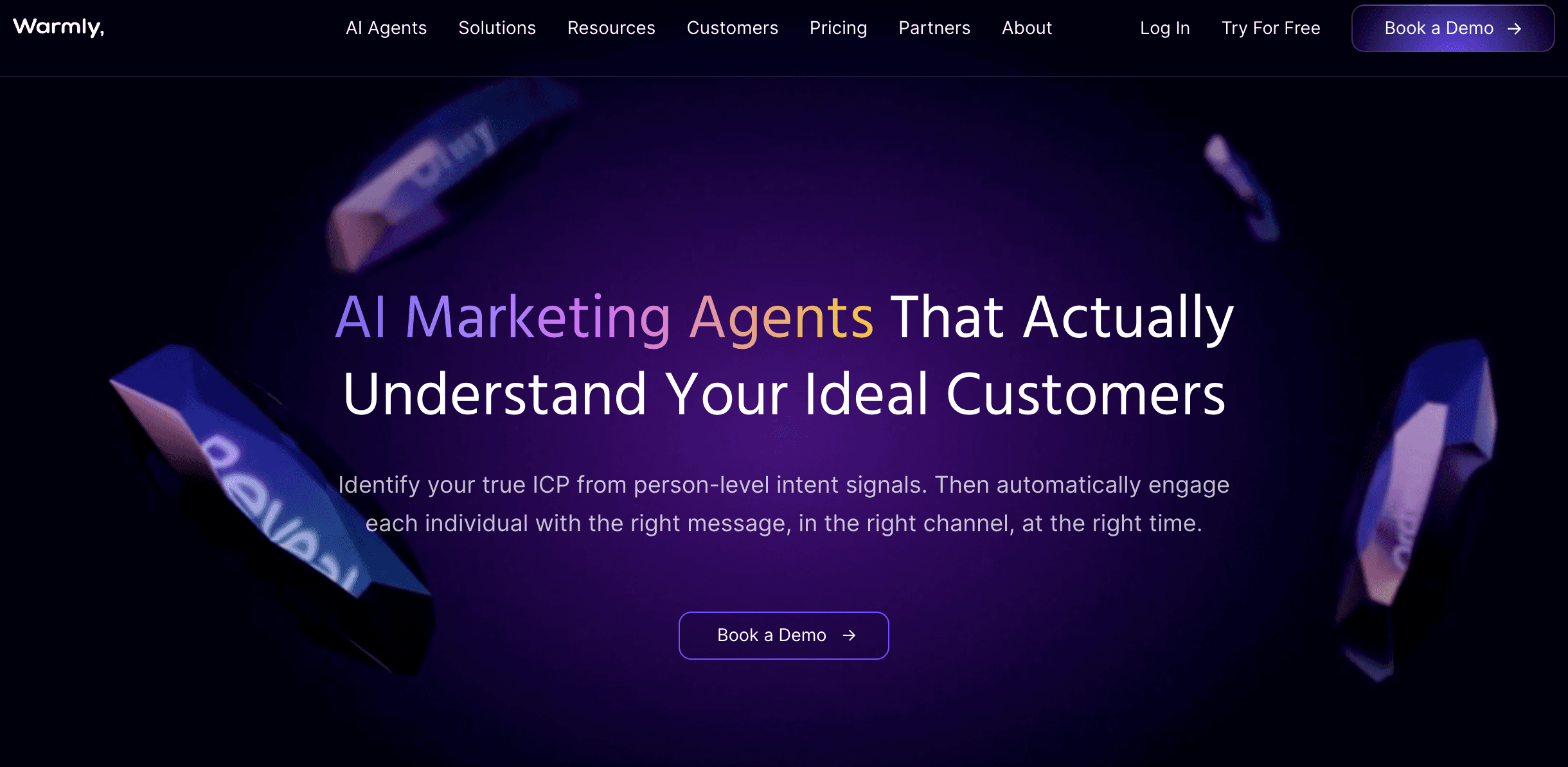
Warmly is a real-time buyer intent and website visitor identification platform that helps revenue teams track, score, and engage with web visitors.
Unlike Leadfeeder, Warmly can, when possible, reveal individual-level signals, not just company names. It shares the individual’s email address, company affiliations, and more.
While unmasking the actual decision-makers on your site is certainly a unique value prop in the web visitor tracking space, Warmly is not without its contact data inaccuracies. Some users on G2 complain about incorrect email addresses.
There have also been some complaints that Warmly’s company profiles are a little thin, especially those of smaller businesses.
Key features
Real-time website visitor identification tied to buyer intent and ICP
Individual-level enrichment when available
Slack and email notifications (sent to reps) for high-intent visitors
Pricing and plans
Pricing scales by traffic volume and intent features. Warmly positions itself above basic visitor tracking tools but below enterprise data providers.
TAM: Starts at $15,000 per year
Inbound: Starts at $30,000 per year
How Warmly compares to Leadfeeder
Prioritizes real-time alerts over historical traffic logs
Reveals intel about the people visiting your site, not just companies
Greater focus on immediate follow-up
Limited when it comes to full-cycle outbound automation
Ideal use cases
Sales teams that want instant notifications when buyers show intent
Companies that care more about outreach timing than traffic volume
4. Lead Forensics
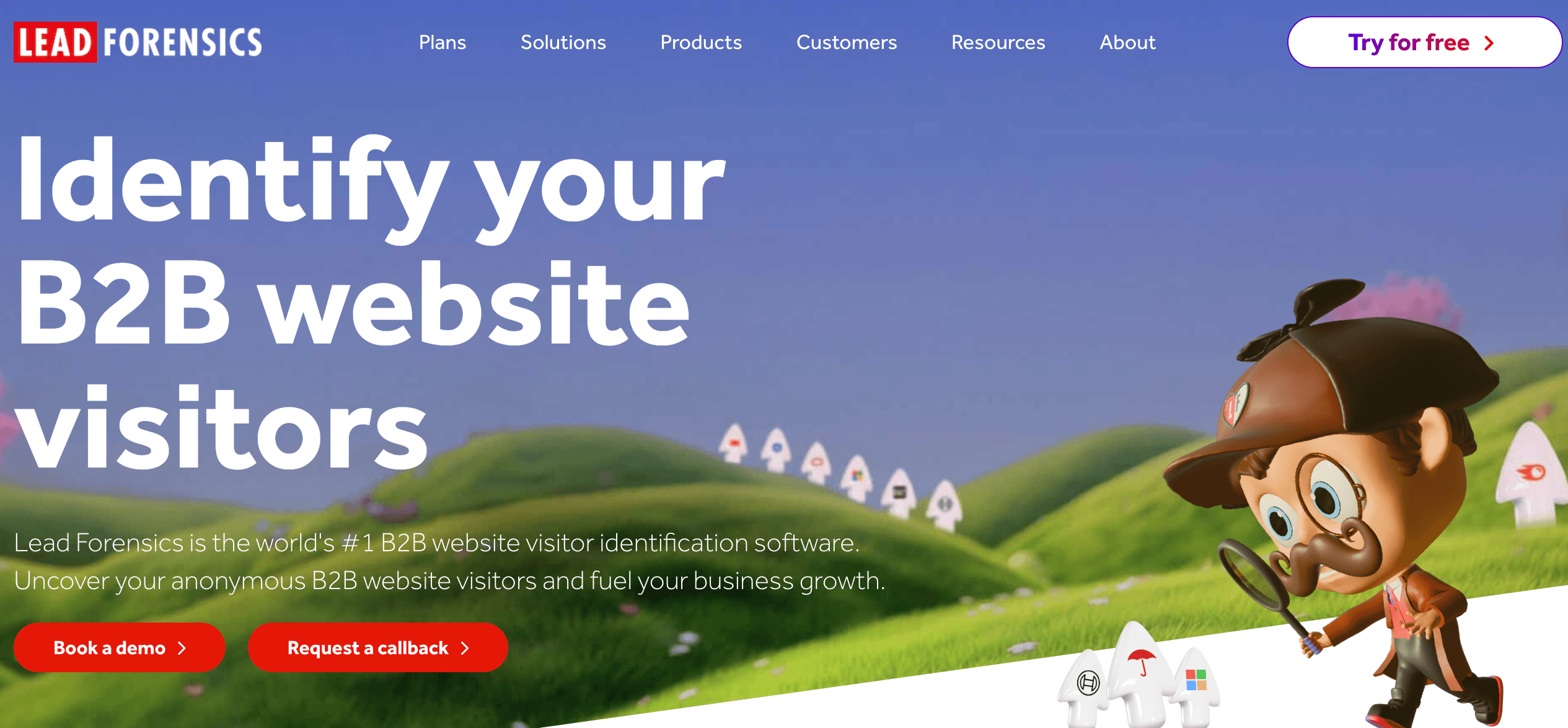
Lead Forensics is a large enterprise provider of web visitor identification software designed for B2B businesses with high web traffic.
Its greatest strength is its strong data accuracy and coverage.
In addition to revealing the names of companies on your site, it also provides you with helpful data about the company’s firmographics and the contact information of decision-makers within the company.
One nifty, time-saving feature is the daily email summary of website visitors, which helps users monitor leads and plan their outreach.
A common complaint among users is that the interface is outdated and that the learning curve is steep. That said, there is an option to purchase a plan with an account manager who will assist with onboarding
Key features
High-volume website visitor identification
Strong data accuracy at company level
Lead scoring and prioritization
Pricing and plans
Lead Forensics has a custom enterprise pricing model. There is no free plan.
How Lead Forensics to Leadfeeder
Broader data coverage
Heavier setup (though you ask for an account manager)
Higher-volume real-time data
Ideal use cases
Enterprise sales intelligence teams that want in-depth data on web visitors
5. Clearbit (Breeze by HubSpot)
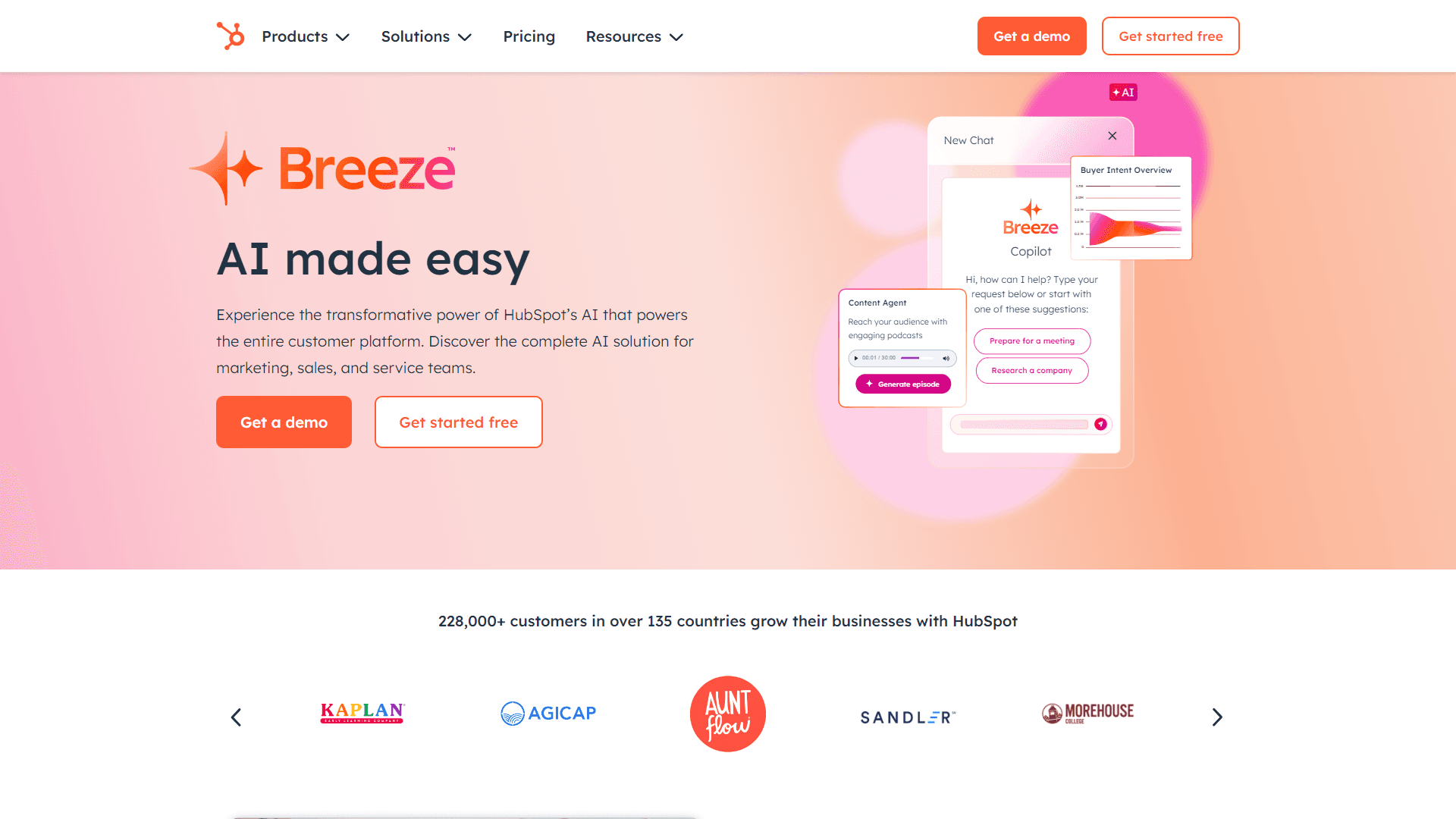
Clearbit, now rebranded as Breeze Intelligence, is a sales intelligence and web visitor identification tool that’s built into HubSpot CRM. It’s popular among marketers who want accurate, global data on inbound web visitors.
Breeze reveals the companies visiting your website, identifies intent, and routes them accordingly. Since it’s part of the HubSpot ecosystem, Breeze’s CRM-native workflows are sophisticated and easy to set up.
Key features
Data enrichment with accurate, global data.
Webform optimization that dynamically shortens forms
Buyer intent signals and lead prioritization
Pricing and plans
Breeze is integrated into all HubSpot plans. However, for more advanced data intelligence features, you will need a premium or enterprise-level subscription. For most sales teams, this will mean purchasing Sales Hub, Marketing Hub, or Customer Platform, which bundles all functionality.
How Breeze compares to Leadfeeder
Breeze is tied directly to Hubspot’s CRM platform
Deeper firmographic data
Less focused on real-time website visits
Ideal use cases
HubSpot-centric marketing teams that want insights on site visitors and inbound leads and to automate inbound lead nurturing
6. ZoomInfo
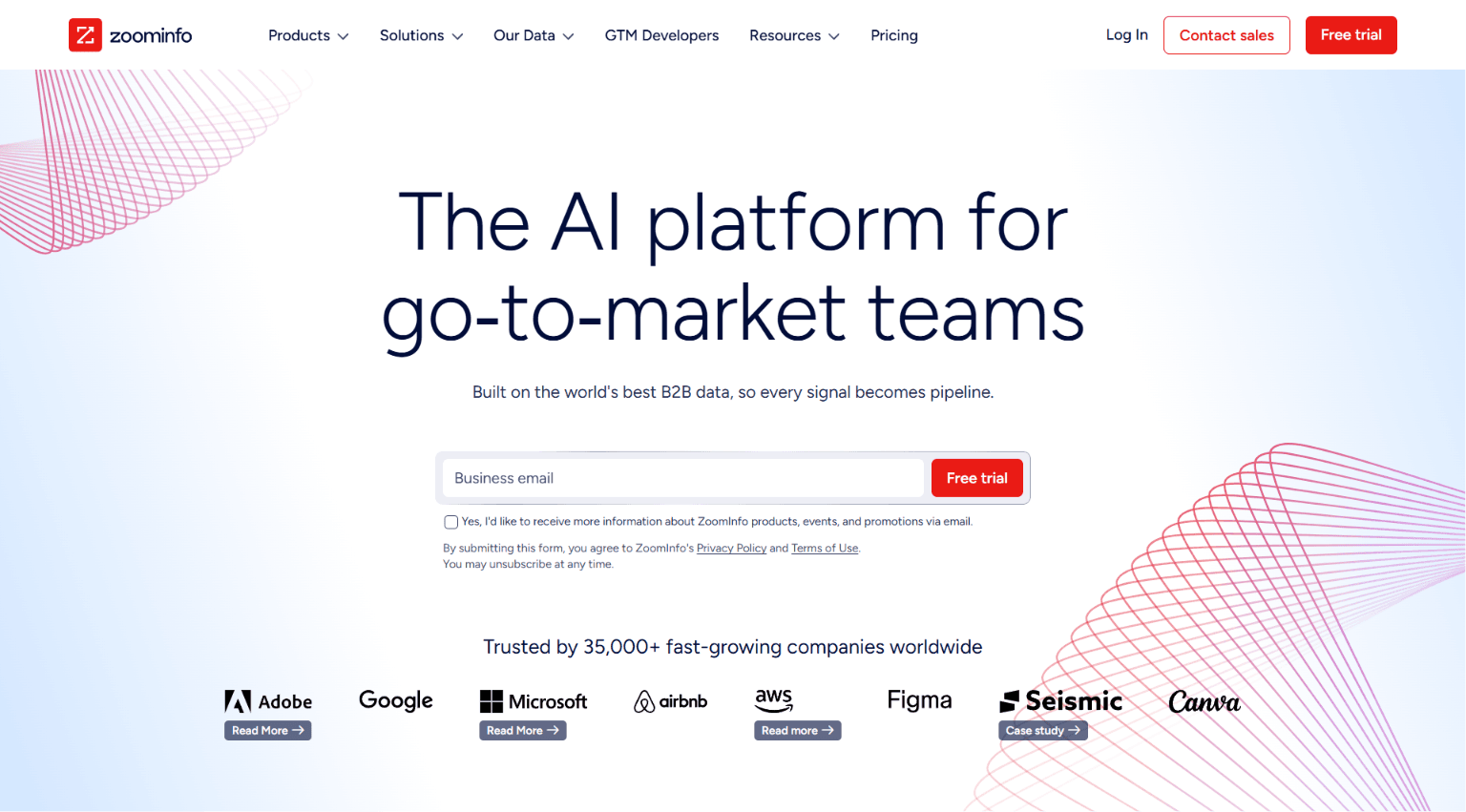
ZoomInfo is an enterprise sales intelligence provider offering a large global B2B database with comprehensive firmographic and intent data.
The platform also has a web visitor tracking tool called WebSights, which reveals the companies visiting your site, helps you monitor their activity, and enriches their profiles using ZoomInfo’s database.
Notably, the platform does a good job of distinguishing between automated traffic and real businesses on your site—all the more important in an era crawling with AI bots. One glaring issue, however, is the steep price. Plans start at $15,000 per year.
ZoomInfo is also much more complex than a simple web visitor tool like Leadfeeder, meaning you’ll likely need the help of data operations experts to leverage the full capabilities of the platform.
In summary, while a good choice for enterprise go-to-market teams that want comprehensive customer intelligence data, ZoomInfo is too complex and pricey for startups looking to simply surface intel about leads visiting their site.
Key features
Intent data
Large contact database
CRM and API access (including to ZoomInfo’s database)
Pricing and plans
ZoomInfo offers enterprise contracts starting at around $15,000 per year. There are additional credit-based costs based on usage.
How ZoomInfo compares to Leadfeeder
Much broader functionality across the whole lead generation process
Higher-quality intent data
Overkill for visitor tracking alone
Ideal use cases
Large sales organizations and GTM teams that need high-quality, global B2B data to fuel their sales and marketing workflows and run ABM campaigns
7. RB2B
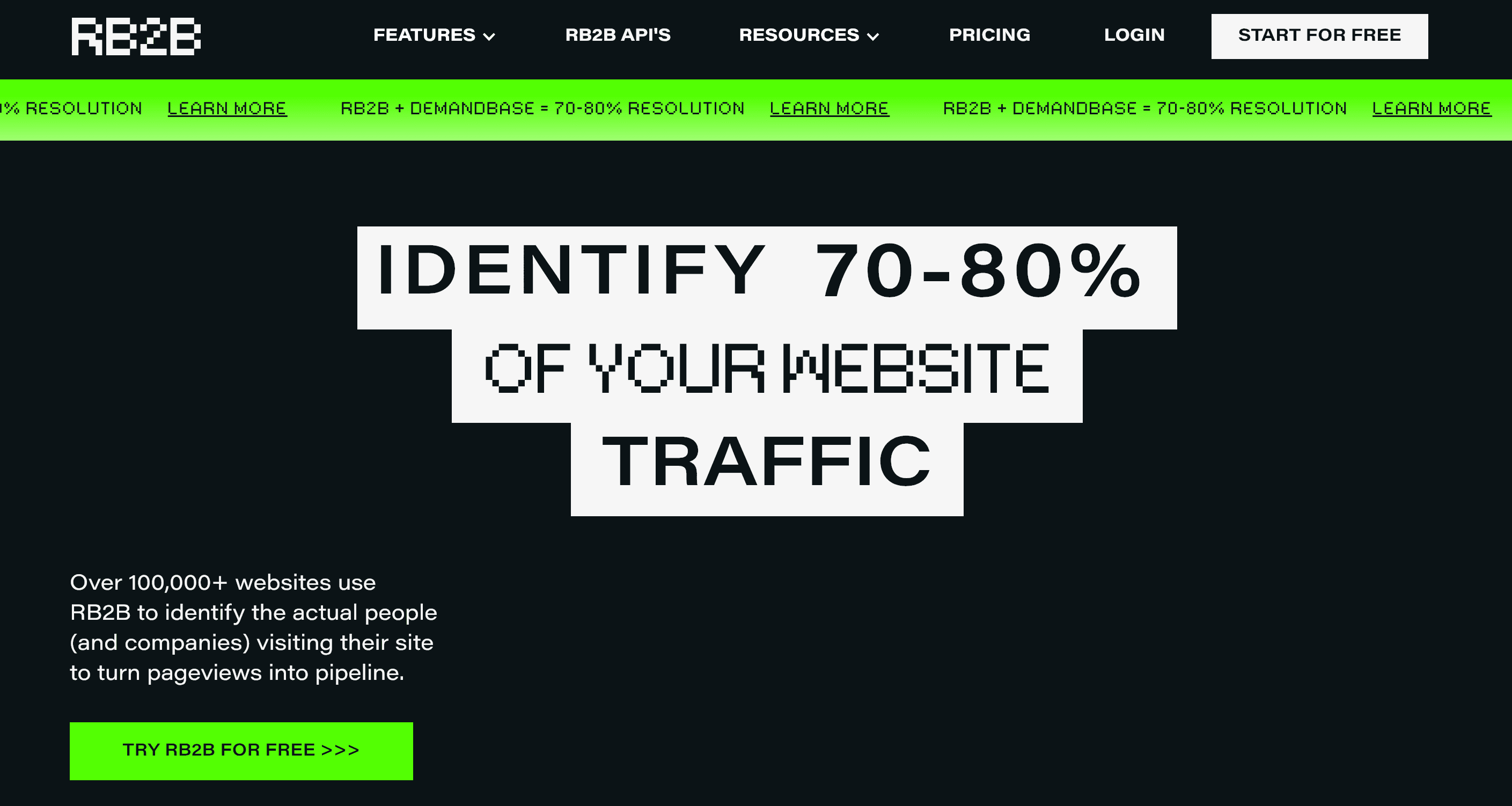
RB2B is a real-time website visitor identification tool that tells you which companies and people are visiting your website.
For example, the platform automatically sends sales reps real-time Slack notifications containing the LinkedIn profiles of individuals on your website.
Of course, as with most person-level visitor tracking tools, there are some accuracy issues, and several users on G2 complain of receiving LinkedIn profiles that are empty or lead to a 404 error page.
Aside from offering individual-level insight, RB2B is highly similar to Leadfeeder in terms of feature offerings. Its competitive advantages only really become apparent when you look into other evaluation criteria, like customer service and usability.
To illustrate, in a comparison of the tools’ user reviews, RB2B scores higher than Leadfeeder across many categories, including ease of setup, ease of use, and quality of support.
One glaring issue is that CRM integrations, ICP filtering, and email enrichment are blocked unless you buy the Pro plan.
Key features
Individual-visitor-level tracking
Real-time Slack notifications
ICP-based identification of website visitors
Pricing and plans
Free: Only 150 resolutions per month
Starter: $79 per month
Pro: $149 per month
Pro+: $199 per month
How RB2B compares to Leadfeeder
Faster, real-time alerts
Smaller data set
Ideal use cases
Sales and marketing teams wanting instant signals about web visitors
8. Apollo.io
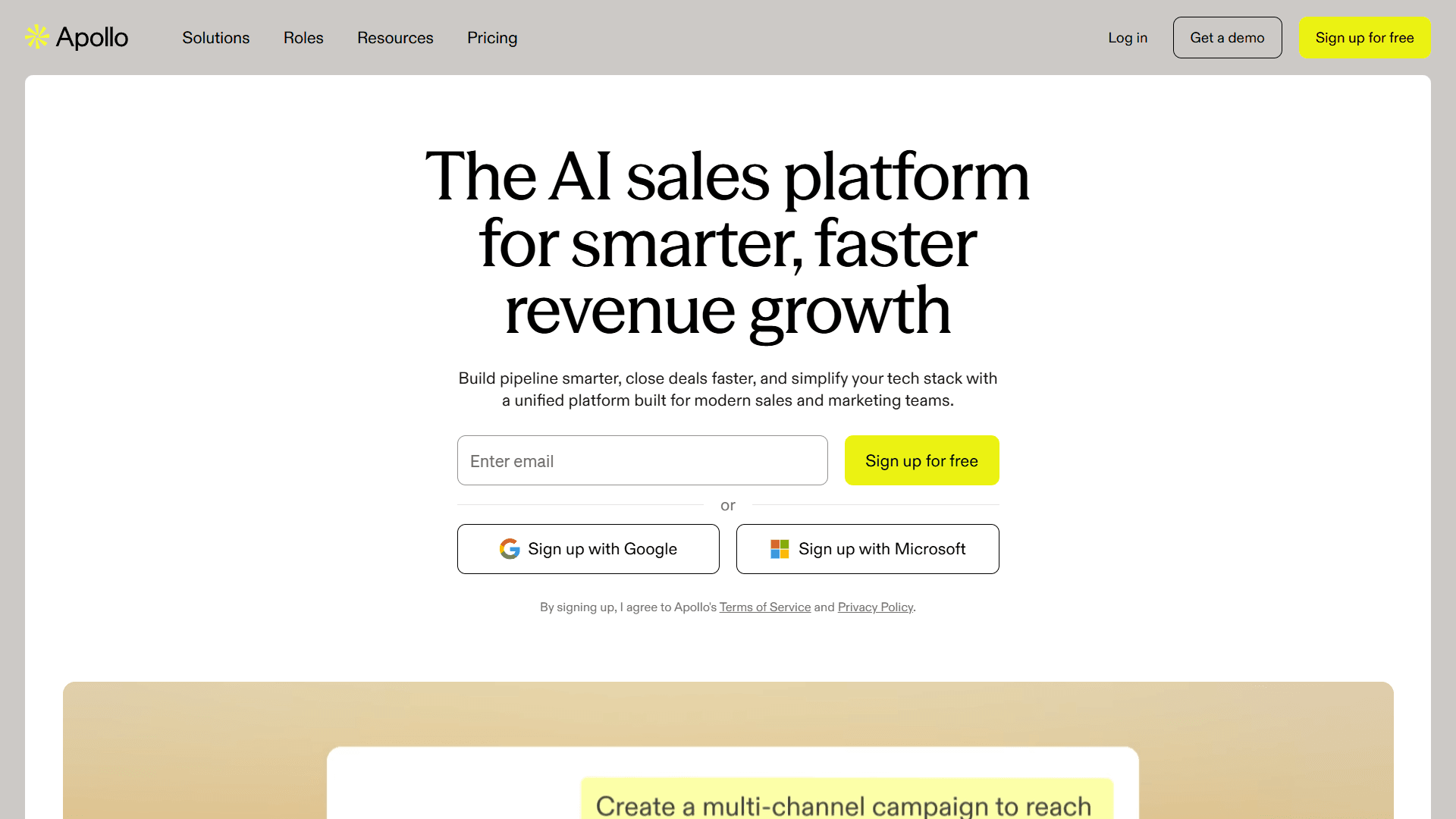
Apollo is a popular lead generation platform that combines a contact database with outreach automation features like sequencing and automated follow-ups.
This has made it one of the go-to options for sales teams that want to build ICP-aligned lead lists and run multichannel outbound sequences from the same platform.
While they do offer worldwide lead data, there are many complaints on G2 mentioning inaccurate information—538 mentions, to be exact.
Key features
Contact database of company- and contact-level information on B2B leads
Multichannel outreach workflows, including cold email and a built-in dialer.
Lead routing based on territory, account fit, and buying stage.
Pricing and plans
The following prices are for the base plans. Final pricing is tied to credit usage.
Free: Basic lead discovery filters and 2 sequences
Basic: $59/user/month
Professional: $99/user/month
Organization: $149 /user/month
How Apollo Compares to Leadfeeder
More robust outbound tools
Weaker website visitor tracking
Ideal use cases
Sales reps doing B2B cold outreach who want to combine sales engagement and B2B database functionality into one tool
9. Leadinfo
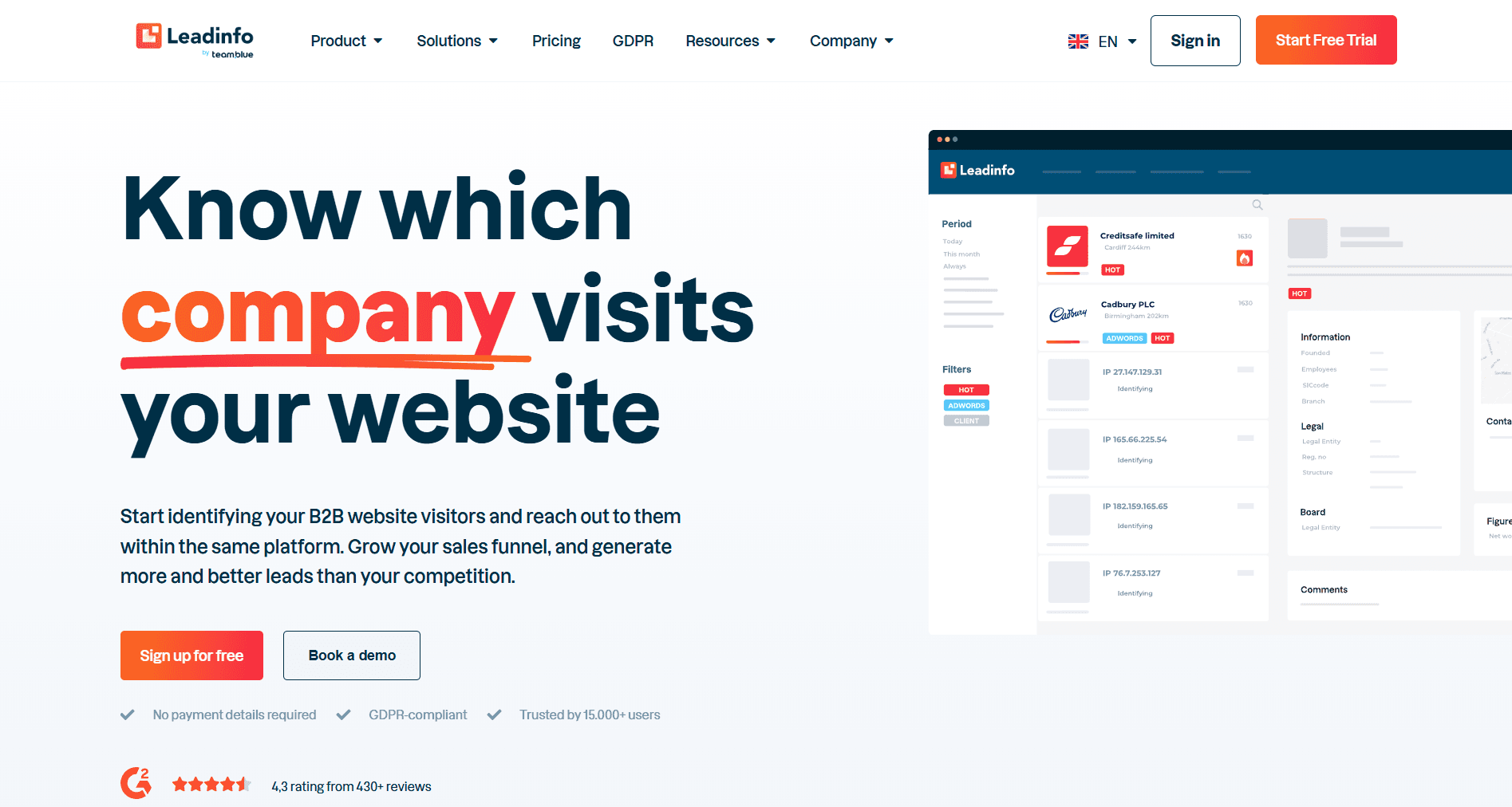
Leadinfo is a B2B visitor tracking app that’s focused on providing real-time web visitor data about companies that land on your website.
The platform’s company data is GDPR-compliant and focused primarily on European businesses. This makes it a strong choice for businesses targeting those markets.
On the other hand, if you’re selling to companies in North America, you’ll fare better with a B2B data provider targeting that area.
Key features
Website visitor identification
CRM sync for HubSpot, Salesforce, Insightly, and other CRMs.
Intent and engagement tracking
Pricing and plans
There is no free Leadinfo plan, and pricing above base plans is tied to the number of companies identified per month.
Starter: €69 per month
Scale: €159 per month
Pro: €359 per month
How Leadinfo compares to Leadfeeder
Strong EU compliance
Limited automation
Ideal use cases
EU-based marketing teams that need firmographic, behavioral, and basic intent data on Europe-based businesses
How to choose the right Leadfeeder alternative
It’s normal to feel overwhelmed at the number of options available. But there’s no need to despair. The best way to narrow down potential visitor tracking solutions is to evaluate them against the core aspects of your sales motion and the buying factors that are most important to you.
To match tools to your sales motion, consider the following points:
Inbound vs. outbound: If you’re focused on inbound marketing, select software that works well with inbound lead gen elements like web forms. If you’re prioritizing outbound lead generation, find one that provides prospecting and outreach automation tools.
Marketing teams vs. sales teams: Marketing teams need more attribution and lead scoring features, whereas sales teams need contact information, real-time web visitor alerts, and outreach capabilities.
Company-level vs. contact-level data: Decide if you need company-level insights to power account-based marketing or individual email addresses for personalized outreach.
In most cases, if a tool offers person-level data, it also offers company-level data. On a similar note, while company-level identification tools won’t tell you specifically which person is on your site, they usually provide the contact info of senior decision-makers.
Once you’ve eliminated tools that don’t match your sales motion, the next step is to rank the remaining contenders.
Review the following factors to identify the tool that is likely the best fit:
CRM integrations: Ensure the tool connects with your current CRM to automatically sync visitor data.
Data accuracy and enrichment: Prioritize platforms with high-quality lead data that’s frequently updated—outreach personalization and lead scoring rely on this accuracy.
Outreach automation and follow-up: Choose an app that can trigger automated outbound sequences and personalized email follow-ups when a lead visits your website.
GDPR compliance: If you target companies in the EU, pick a tool that is compliant with relevant data protection regulations.
Pricing transparency: Evaluate if the company offers a clear pricing structure with no hidden fees. Prioritize tools with flexible plans that can scale with your business and satisfy specific needs rather than locking you into a confusing enterprise contract.
Adopt the Leadfeeder alternative built for conversions
While very good at unmasking web visitors, most Leadfeeder alternatives fail to provide tools for the second part of the lead generation process—reaching out with a personalized, multi-channel approach.
Artisan, a powerful AI outbound automation platform, fills this gap. The platform's AI BDR, Ava, doesn’t just push leads to sellers for them to handle. She identifies high-quality leads, researches their online activity, and sends them personalized messages via social media and email.
The result? Full sales pipelines without a human BDR lifting a finger.

Automate your outbound with an AI BDR
Meet Ava—your AI BDR who handles prospecting, outreach, and follow-ups, so your team can focus on closing.

Sam Rinko
SME @ Artisan
Sam Rinko is a former SaaS sales rep turned tech writer. He sold real estate software before writing about lead generation, cold calling, and AI sales tools.