Sales call planning for founders and SDRs
A tactical guide to sales call planning for reps and founders. Get call templates, discovery questions, objection handling, and CRM follow-up flows.
Ben Franklin once said, “Failing to plan is planning to fail.”
Back when I was a sales rep, the truth of that quote was demonstrated to me time and again. Often, having a comprehensive plan made the difference between a call that bombed and one that ended in a closed deal.
That’s why it’s essential to learn the art of sales call planning. It will allow you to close deals with the same level of tact, diplomacy, and skill as possessed by Dr. Franklin himself—well, almost.
Why Sales Call Planning Still Wins Deals
You only have one shot with most decision-makers. Because of this, sales call planning is essential. By setting clear goals and creating a plan to win their attention and trust, you boost your chances of securing the sale significantly.
Set Clear Call Objectives Before Dialing
Knowing the result you want to achieve before dialing helps you stay focused during the sales call.
For example, if the ideal outcome is to book an initial sales meeting, you should use very different tactics than if your goal is to close a deal. The objective for a call depends largely on the lead’s current stage in the sales cycle.
Here’s an overview of the most common sales call objectives:
Book a sales meeting: The goal is to spark enough interest to secure a sales meeting with the cold lead (these calls are usually first touches as part of an outbound lead generation campaign).
Qualify the lead: For calls with inbound leads, you should qualify the lead to ensure they’re worth investing time in.
Conduct discovery: On initial sales calls with warm leads, the goal is to learn about the prospect’s needs and pain points so you can identify the right solution or package for them.
Give a successful demo: In demos, your primary objective is to make the lead fall in love with your product and to secure a follow-up meeting, ideally to go over a proposal.
Close the deal: On late-stage calls, such as proposal review meetings, you’re aiming to close a deal and get verbal confirmation that the prospect is going to buy.
You Only Get One Shot at the First Impression
Your first sales call sets the tone for the relationship you’ll have with a lead. It’s your opportunity to come off as a sharp industry expert they want on their side.
Since nailing that first impression is so critical, you can’t afford to wing it. You can’t rely on charm.
When you plan effectively, you come to a sales call with knowledge about the lead’s business, pointed questions that demonstrate your expertise, and a sales pitch that relates to their specific role and pain points. The result? Deep rapport that builds trust and interest.
Decision-Makers Expect Personalized Outreach
Decision-makers are busy. They can’t afford to spend their limited time with salespeople who haven’t done their homework and rely on generic sales messages.
Prospects want personalized messaging. If you come to a sales call with relevant use cases and insights into their specific business challenges, they’ll listen. Moreover, they’ll respect you. This is key when deals are rarely won over a single call. You need to build influence slowly over the course of several meetings.
Pre-Call Planning: Research Like a Pro
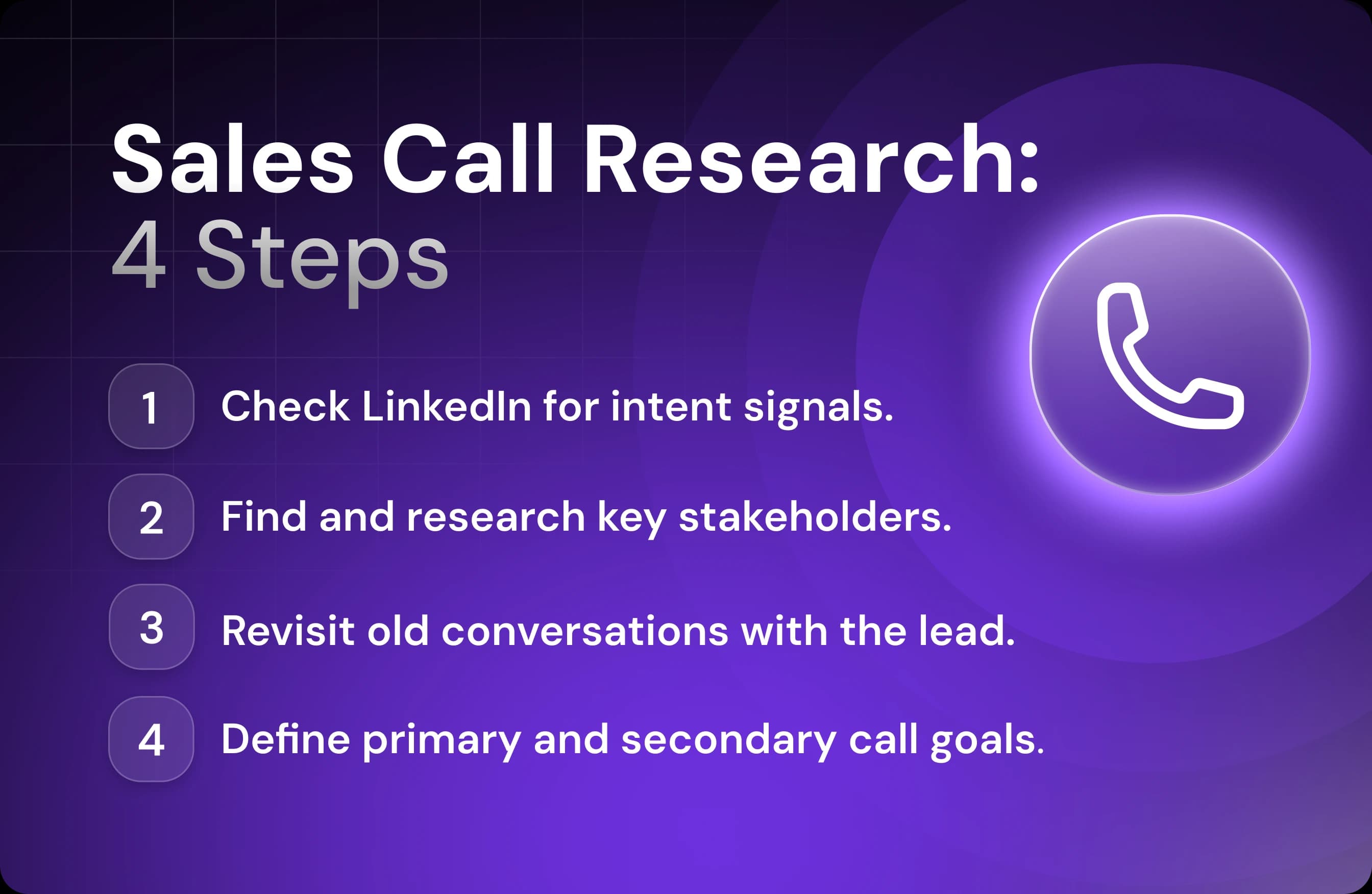
When it comes to sales techniques that make the biggest impact on sales conversations, you’re unlikely to find a better contender for first place than lead research. A solid pre-call research process ensures your pitch resonates with the needs of your lead.
Check LinkedIn for Intent Signals
LinkedIn is a goldmine of valuable material for sales call openers, questions, and pitches. You can gather detailed information about what decision-makers are interested in and focused on.
Here’s what to look for on LinkedIn during pre-call planning:
Job changes: Has a lead recently been promoted or taken over a new department? Have they changed companies in the last year? These big moves often mean they have new challenges they haven’t figured out how to solve yet.
Shared connections: If you share a connection, you can mention them on the call to build trust and rapport quickly. For example, you might say, ”By the way, I saw you know Tom? He’s the best marketer I’ve ever worked with. How did you meet him?”
Recent posts: What’s on their mind? What trends and challenges are they writing about? If you can connect your solution to the discourse they’re engaged in, you will sound more relevant and interesting to them.
Consider investing in Sales Navigator to more efficiently build lists of decision-makers that fit your ideal customer profile (ICP) and to track their activity. To warm up leads before a call, it’s also worth spending some time commenting on their posts with thoughtful responses. Get on their radar.
Find Decision-Makers and Influencers
Before a call, determine where a decision-maker sits in the company hierarchy. Who do they report to? What is their real-world purchasing power?
In addition, learn about their role, company size, and industry. What metrics are they responsible for? How many direct reports do they manage? What are the biggest challenges facing their industry right now?
This contextual understanding of their professional life will help you personalize your messaging, anticipate objections, and sound like an insider, not some random telemarketer.
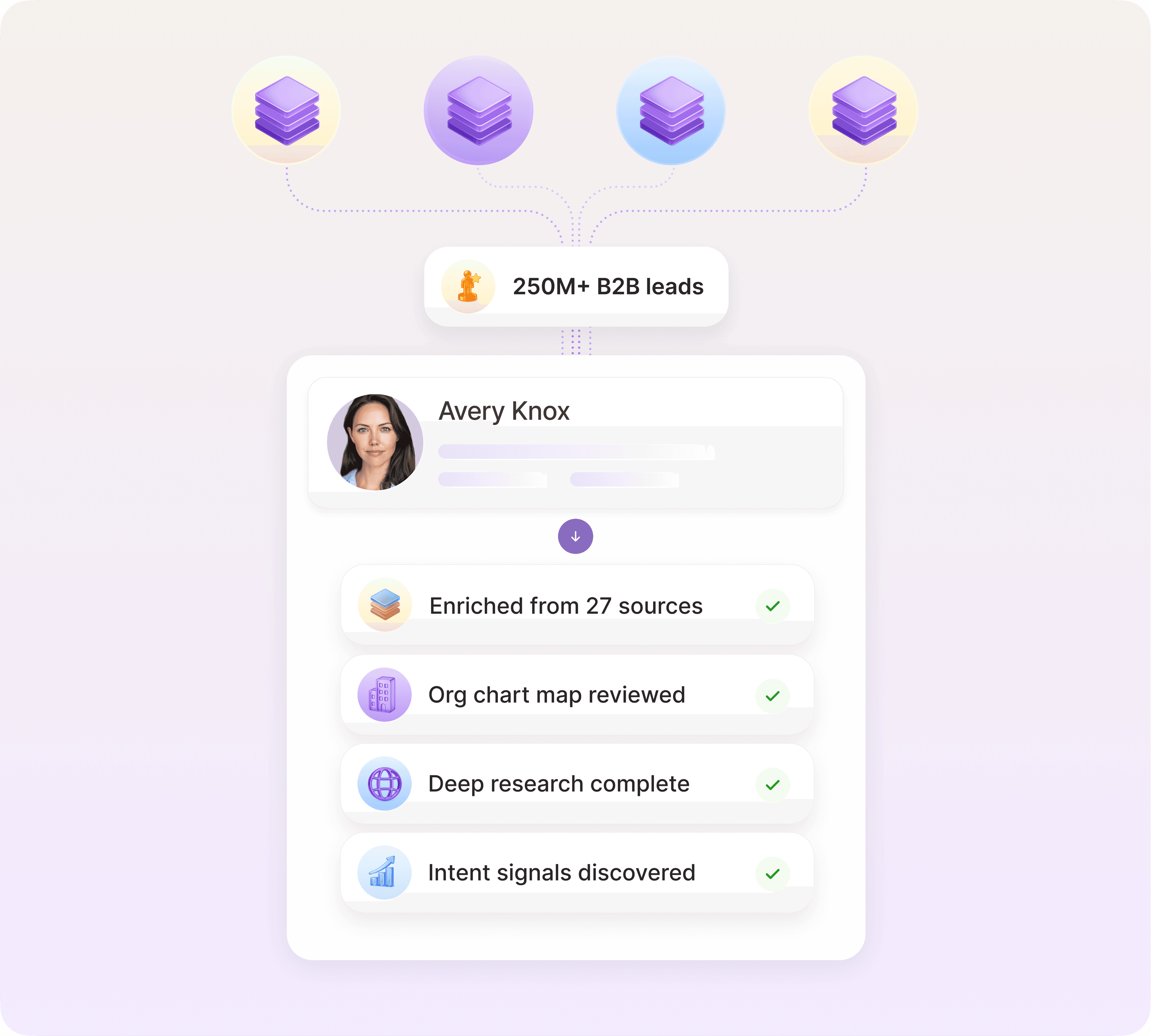
You can use Artisan’s lead profile enrichment tool to automate this research. The platform’s AI BDR Ava prospects from a lead database containing over 300M lead profiles, filled with demographic, company, and behavioral data.
Prep Your CRM and Revisit Old Conversations
Check your CRM to see if the lead has been contacted before. CRMs are an overlooked source of data about warm prospects and often contain insights that can turn a deal.
Data in your CRM may help you answer the following questions:
Have they opened marketing emails?
Have they visited any of your web pages?
Did they fail to show at a demo in the last six months?
What stage of the sales process are they in?
Did they talk with a sales rep last year? Did that rep leave call notes?
Understanding their history will help you tailor the upcoming sales call to their stage in the buying process. You might also be able to find intel for a compelling opener.
When I worked as a sales development rep (SDR) at a tech startup, I used to pull up lists of sales opportunities that were closed-lost over a year ago. These lists were gold because all the leads had at one time been interested in the solution. My thinking was that perhaps something had changed on their end that made now a better time to buy.
I would call these old leads and say something like, “I saw you met with [AE name] last year but didn’t end up buying because [reason for deal loss in notes]. I’m calling now because I thought you might be interested in [new feature/promotion/pricing plan etc.].”
Whether you’re re-engaging an old lead or cold calling a new one, referencing some engagement they had with your brand is always an excellent way to start a conversation without sounding awkward and random.
Turn that history into a short brief: why the meeting is happening, what the buyer has already said and which questions remain open. When evaluating an AI employee such as Artie for recurring meeting preparation, require sources for commitments and deadlines. Check the brief before using it in the conversation.
Write Down Your Primary and Backup Call Goals
For every call, write down what success looks like. This is your primary goal. All your activity is in service of it. For a cold call, this might be “Book a 15-minute consultation meeting” or “Sign the lead up to a free trial with an agreement to check in next week.”
Also set a backup goal. If the call doesn’t go your way, you can still use it to further the relationship, add value, or turn it into a win of some sort.
For example, you might set a consultation call backup goal as “Qualify them out so I have more time to focus on better leads.” Or, it could be something as simple as “Ask for a referral.”
Backup goals make the best of a less than ideal scenario. They help you move the needle on a secondary objective that still impacts revenue.
What Makes an Effective Sales Call
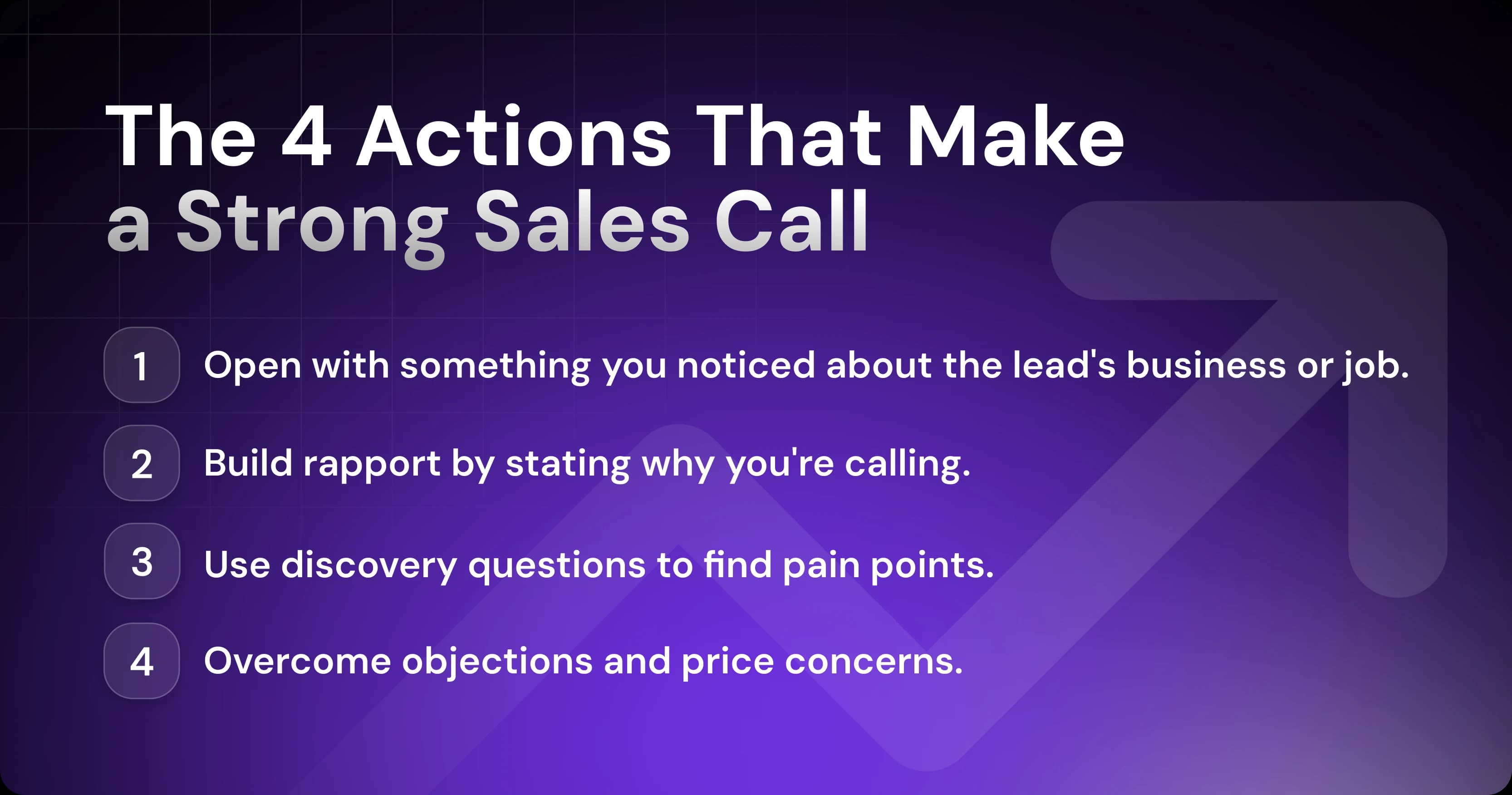
Whether it’s cold outreach to a lead that’s never heard of your brand or a reactivation of an old prospect, your sales call needs a strong opener, smart discovery questions, and objection-handling rebuttals.
Start Strong: Openers That Earn Attention
A personalized greeting beats a generic one every time.
Mention something timely—like a recent product launch, content download, or job promotion. This shows the lead this call is intended specifically for them, not every member of your target audience.
In addition, be sure to connect your reference to a pain point your product solves. This is how you create a smooth segue between a greeting and sales conversation.
Here’s an example of a personalized opener:
“Hey [name], I noticed you recently were promoted from AE to Sales Manager. I’ve heard from our customers that this transition can be tough because all of a sudden you’re focused more on managing than selling. How’s that going?”
Build Rapport Without Wasting Time
Early in the call, share context. Tell them who you are, what your business does, and the reason you’re getting in touch. It can also help to plug some clients' names to give you credibility.
Your reason for calling depends on the type of sales call you’re making. For a discovery sales call, you want to learn more about the lead’s business. For a cold call, you’re more likely on the line to pitch a product that will benefit them.
Here’s an example of how a rep might provide context:
“The reason for my call today [name] is that a lot of [job title], from companies like [reputable brand], have been coming to us sick of [pain point] and [pain point].”
Use Discovery to Diagnose Pain Points
Once you’ve provided background, ask some open-ended questions to get them talking. Focus on asking about processes, challenges, and business KPIs that relate to your solution. This is where you learn about their situation to diagnose pain points.
Here are several questions you can ask to initiate a sales conversation:
Walk me through your current process for [relevant area].
It looks like [industry trend] is shaking up how companies like yours are doing business. How have you been adapting?
If you could have one magic wish to make something happen in your business, what would it be?
What’s been your biggest challenge in trying to [relevant goal]?
What happens if [pain point] goes unresolved? How will that hurt business?
What metrics are currently not where you’d like them to be?
The best sales reps spend more time listening than talking. This holds true for most types of sales calls except cold calls. According to research by Gong, cold calls reward reps who talk more than they listen—top performers spend 55% talking and 45% listening.
Address Price and Objections Early (If Needed)
You’re going to face objections during sales calls, especially around price.
Defuse these challenges early. When a customer reveals a concern, treat it like an open wound. Don’t let it get infected with more misinformation or faulty assumptions. Be proactive. Disinfect it with reason. Patch it with examples from customers. Overcome objections early so they don’t hold up the sale later on.
Here are three common objections sellers hear on sales calls and their tactical rebuttals:
We already have a tool for that: “That’s great you have a solution in place. Shows you see the importance of addressing [problem your solution solves]. I’m curious to know what’s working well with your current setup. A lot of our customers used [competitor] and switched to us because it was [a pain point or limitation].”
We don’t have that issue: “I hope that’s the case—and you may well be the outlier. But many businesses we talk to discover that for years they've been unknowingly losing revenue because of [issue]. For instance, [customer case study].”
It’s too expensive: “I completely understand budget is always a factor. One question: if I could show you we can save you [number] of [hours or money] on [process] per month, would that make the price less of an issue?”
Finally, don’t be afraid to disqualify a lead if they actually aren’t a good fit for your product or service. One of the worst things you can do is waste time selling to leads who will never buy or who will become unhappy because they aren’t getting a high enough ROI from your product.
How to Close the Call Without Sounding Pushy
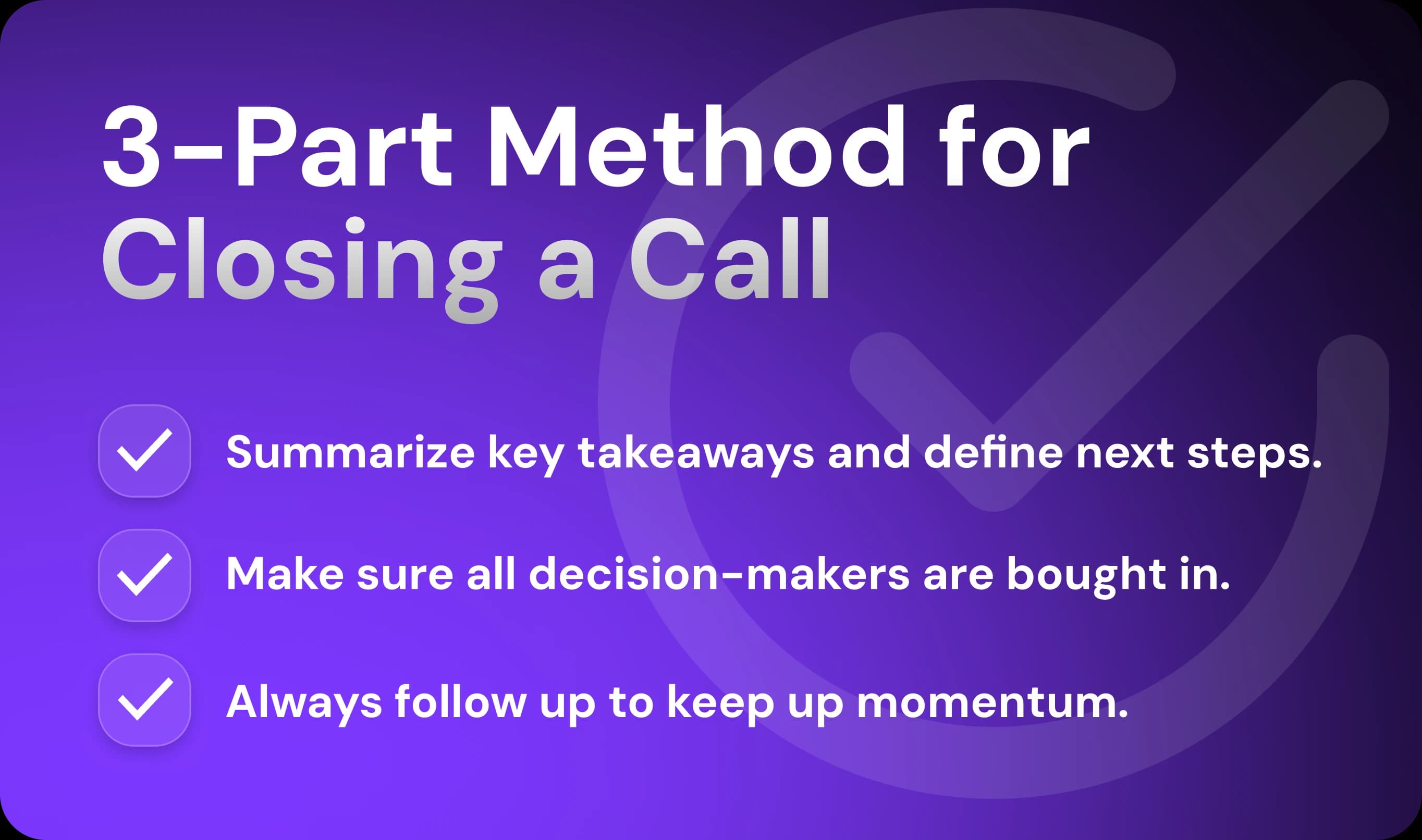
Closing a call is one of the trickiest stages. Simplify it by creating a go-to closing process where you summarize your learnings, invite the lead to the next step, confirm buy-in from all stakeholders, and follow up to maintain momentum.
1. Summarize What You’ve Learned and What’s Next
To close the call, begin by recapping the most prominent pain points you explored.
Second, state the core value proposition. Include two to three benefits of buying your solution. Just make sure they relate to the goals and desires of the lead.
Lastly, suggest a clear next step, such as a discovery call, a live demo, a call with another decision-maker, or a sales proposal.
Here’s an example of a closing statement that combines these three elements:
“From what you’ve shared, it sounds like you’re struggling to generate quality outbound leads in a scalable manner, which is costing you thousands in revenue per month. With Artisan, you can automate cold outreach and generate leads on autopilot, without having to hire new SDRs. I think it’d make sense to show you how Artisan works in a live 15-minute demo. Do you have your calendar open?”
2. Confirm Buy-In from Stakeholders
There are often several stakeholders, across multiple departments, involved in a B2B sale.
This means you’ll likely need to have several sales calls. While you can equip your internal champion to sell your solution, it’s often better to get in front of the CTO or CFO directly. After all, you’re the expert in your solution and the challenges you solve.
Ask one of these questions to ensure you reach all decision-makers:
“Who else needs to see this?”
“Is there anyone who might push back?”
“Often the [job title] has an opinion on this. Are they involved in the process?”
Asking this before hanging up repositions the decision-making process as a team effort you can support. It also helps you identify other stakeholders and win the chance to meet them in a one-on-one or group meeting.
3. Always Follow Up (Even If the Call Flopped)
After the call, send a short summary email with bullet points and next steps.
Here’s how to write a follow-up email that maintains interest:
Thank the lead for attending the call.
Recap your key learnings about their challenges and goals.
Summarize your solution (briefly).
List two salient benefits you expect them to receive.
Clarify next steps. For example, if you agreed on another meeting, state the time and date.
Send a follow-up whether or not the call was a success. Just because a lead said no on this sales call doesn’t mean they won’t be open to working with you in the near or distant future. Thank them for the time and make it clear that your door (or phone line) is always open.

Automate your outbound with an AI BDR
Meet Ava—your AI BDR who handles prospecting, outreach, and follow-ups, so your team can focus on closing.
Tools, Templates, and Playbooks for Reps
The best B2B sales teams use their CRM as a sales call command center. They build templates and automations that speed up the planning process, standardize best practices, and track key call metrics like meetings booked and closed-won deals.
Your CRM Is Your Command Center
Your CRM should be your primary tool for sales call planning. If your CRM is enriched with fresh lead data, you can quickly form 360-degree views of leads before a call.
Of course, the quality of your CRM data depends in part on how often and effectively your sales reps update it. For example, if a BDR logs call notes under a lead record, the account executive (AE) taking over the account can quickly get up to speed with the details of the deal.
Here are the four best practices for keeping your CRM up to date:
Log notes straight after a sales call.
Perform regular reviews to find and update incorrect contact or company information.
Tag deal stages (or move the deal to the right pipeline stage).
Assign new sales tasks immediately after speaking to a lead.
Keep in mind that some CRMs enable you to create rules that prompt reps to fill out certain fields before moving a lead to the next pipeline stage. If it is an option, consider enabling this setting.
Here’s a quick list of fields reps should fill out post-call:
Call summary and key takeaways
Pain point or needs identified
Objections and competitors mentioned
Opportunity value
Budget constraints
Additional decision-makers
Probability of winning
Build a Go-To Template for Repeatable Success
Teams should have access to reusable call scripts for each type of sales call your team conducts, from prospecting calls to proposal reviews.
Standardizing your company’s approach to each call improves rep efficiency by shortening the preparation process. They only have to personalize a script rather than create one from scratch.
Here are the four main types of templates to include in your sales playbook.
Cold call template (prospecting stage): Provide BDRs with a script they can use to begin calls with strangers and generate interest in your product or service.
Discovery call template (qualification stage): Give reps a list of questions to ask leads to qualify them and uncover intel about their situation.
Sales presentation script (positioning stage): Outline the correct way to give a demo or a presentation.
Sales pitch script (closing stage): Give AEs the language, case studies, and rebuttals they can use to ask for the sale and overcome any objections.
Always make sure each script template leaves room for improvisation. They should serve as guides, not straightjackets that make reps sound robotic.
Let Automation Handle Tasks That Don’t Need a Human
Increasingly, reps are using AI sales tools to automate various aspects of the call planning process. As a result, they have more time to speak with prospects that would otherwise be spent on admin.
You can use Artisan to automate multiple stages of the call planning process. Ava, an autonomous AI sales rep built into the core of the platform, can handle lead research, preliminary outreach via social and email, lead scoring, and more.

Common Sales Call Planning Mistakes to Avoid
From pitching too early to ending the call without solidifying next steps, small mistakes quickly add up and ruin your call success rates.
Going in Blind
84% of buyers prefer businesses that offer a personalized experience, according to The State of Customer Service and CX published by Hyken.
So, how does a sales rep create and customize an experience on a sales call?
They research the lead and make a plan. Without preparation, reps risk speaking to problems and solutions that have nothing to do with the lead’s day-to-day experience.
Talking Too Much, Too Early
Don’t pitch until you’ve identified prominent needs and pain points to build your pitch around.
At the beginning of a sales call, focus on learning about the lead’s processes, challenges, and desires.
Ask questions. Be a consultant. And once you’ve acquired some intel about their needs and built solid rapport, make a personalized pitch that wins you the next meeting (or the sale).
Leaving Without a Clear Next Step
If you didn’t agree on next steps, you just ran a practice call. That’s the harsh truth.
Leads have a lot going on. The odds that they will recommend the next step are slim. That responsibility falls on you as the salesperson.
On the call, ask them to enter into the next stage of the sales process. For instance, you might ask, “Are you open to a meeting with our technical expert for a live demo?” Once they agree, add a time to your calendar and, if possible, make sure they accept the invitation on the call.
Ghosting Your Prospect
Follow-up is 50% of sales. Forget it, and you forget your pipeline.
When I worked in tech sales, I rarely converted a cold lead into a sales opportunity on the first touch. There were many cold emails, LinkedIn outreach messages, and phone calls involved. Persistence won attention.
How Artisan Helps You Plan (and Nail) Every Sales Call
Artisan—which is built around a powerful AI BDR called Ava—streamlines and improves the sales call process by automating everything from lead research to email outreach.
Let’s look at how it can boost the performance of your team without additional cost.
Ava Handles Pre-Call Research and Enrichment
Artisan finds leads and enriches their profiles with key info like role, company size, and online behavior. You can say goodbye to scouring the web for icebreakers and pain points. All the intel you need is right there in your dashboard.
AI-Crafted Outreach Before the Call
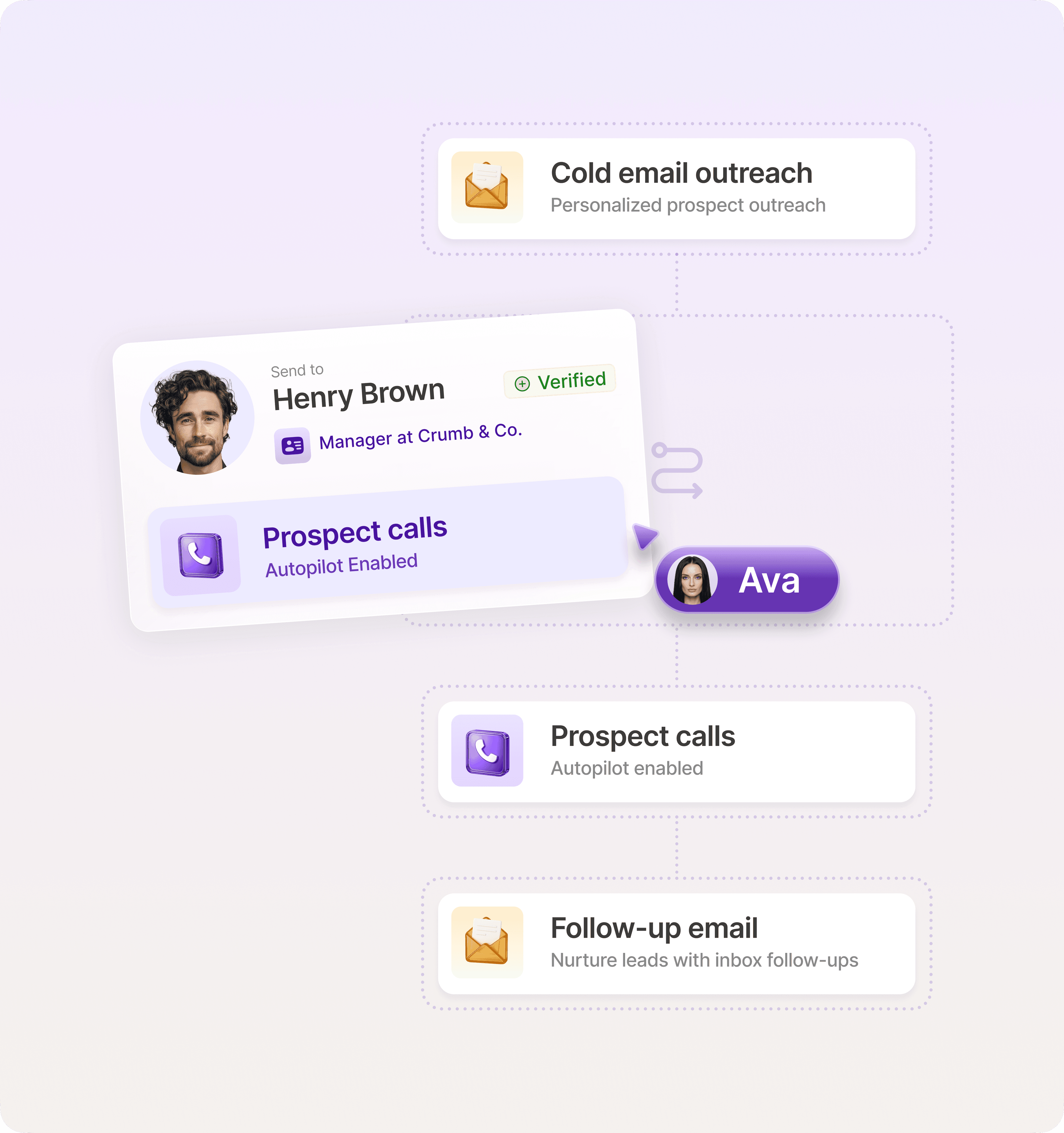
Ava autonomously sends personalized email messages on autopilot. This means that leads are already warmed up when they receive your calls. In addition to deep personalization, email sequences adapt based on lead behavior and responses.
Find Leads Searching for Your Product
Artisan’s website tracking and intent data tools identify leads that are actively looking for your product or products like it. You can then reach out to these high-intent leads directly via a sales call.
PRODUCT IMAGE (ALREADY IN CONTENTFUL): “Product Image: Website Visitor Tracking”
Sales Calls Aren’t Dead, But Winging It Is
Sales calls are one of the most efficient ways to generate, nurture, and close B2B prospects. A live conversation reveals objections, builds rapport, and earns trust faster than any sales email or LinkedIn message. However, for a sales call to pay off, you need to prepare thoroughly.
Let Artisan’s AI BDR Ava handle the research and warm up leads via automated emails for you. This way, you can focus on what you do best—having real sales conversations with interested leads.
Automate your outbound with an AI BDR
Meet Ava—your AI BDR who handles prospecting, outreach, and follow-ups, so your team can focus on closing.

Sam Rinko
SME @ Artisan
Sam Rinko is a former SaaS sales rep turned tech writer. He sold real estate software before writing about lead generation, cold calling, and AI sales tools.