The best Lemlist alternatives in 2026
Lemlist alternatives for 2026, ranked. Artisan lets AI do the personalization and sending at scale, plus Instantly, Smartlead, Woodpecker and Reply.
Key Takeaways
- Lemlist is a personalization-first multichannel sequencer. The personalization is powerful but manual: you build the images, variables, and logic by hand.
- Artisan is the top alternative when you want the personalization generated and sent at scale. Two prospects in the same Ava campaign receive two completely different messages, not a swapped first name.
- Lemlist runs $69 to $109/user/month, per its pricing page. Per-seat pricing means the cost climbs with the team rather than with results.
- Instantly ($47-555/mo) and Smartlead ($39-379/mo) are higher-volume infrastructure alternatives; Reply.io offers an agent layer on a classic sequencer from roughly $500 to $800 per month.
- SumUp reported a $52 cost per lead and 8 to 15 positive replies per week from local businesses sourced with Ava.
- Over 90% of Artisan customers run Ava autonomously, including reply-handling and meeting booking.
The best Lemlist alternative for most teams is Artisan, because it fixes Lemlist's core constraint: the personalization is manual. Ava, Artisan's AI business development representative (BDR), generates the personalization and sends at scale, so every prospect receives a distinct message without a human building tokens. Lemlist is a strong multichannel tool. It just asks you to do the crafting.
Lemlist earned its reputation on standout personalization: custom images, dynamic variables, multichannel sequences. This craft is real, and for a small team with time to build it, Lemlist is a fine choice. The teams shopping for an alternative usually hit the same wall, which is that hand-built personalization does not scale past a certain volume without more headcount.
Lemlist alternatives compared
Rank | Tool | Best for | Standout capability | Public pricing |
1 | Artisan | Teams that want AI to do the personalization and sending at scale | Ava writes one-to-one messaging for every prospect | Usage-based credits, no platform fee, free trial |
2 | Instantly | High-volume senders and agencies | Mailbox rotation and sending infrastructure at scale | $47-555/mo |
3 | Smartlead | Agencies that manage many client inboxes | Unlimited inbox rotation, deep API | $39-379/mo (placement testing extra) |
4 | Woodpecker | Small teams that want simple usage pricing | Pay-per-prospect, unlimited inboxes | About $7 per 100 prospects contacted |
5 | Reply.io | Teams that want an agent on a familiar sequencer | Jason AI agent atop a classic multichannel platform | Sequencer from $59/mo; AI agent tier about $500-800/mo |
How we chose
We weighted the criteria for a buyer who already values personalization and now wants it to scale:
1. Personalization at scale. Whether the tool generates one-to-one messaging automatically or asks a human to build every variant.
2. How much of the job the tool does. Sending is table stakes. The question is whether the writing and replying are handled too.
3. Pricing model. Per-seat, usage-based, or volume-based, and how the cost behaves as the team and the results grow.
4. Deployment fit. Whether one person can run it, or whether it needs a dedicated specialist to keep personalization and deliverability healthy.

Why do teams look for a Lemlist alternative?
Almost always, it is the manual ceiling. Lemlist's personalization is its selling point and its limit at the same time. You build the custom images, you write the variable logic, you assemble the sequences. The output is often excellent, and it scales exactly as far as the hours you can put into it. Double your prospect list and you double the crafting work, or you dilute the personalization that made Lemlist worth buying.
The triggers we hear:
Personalization stops scaling. The tokens and images that impress at 200 prospects become a bottleneck at 5,000, and keeping quality high at volume takes ongoing effort.
Per-seat pricing grows with the team rather than the pipeline. At $69 to $109/user/month, adding people to keep up with the manual work compounds the cost, per Lemlist's pricing page.
You still handle every reply. Lemlist sends and tracks; qualifying, objection-handling, and follow-up stay with your reps.
Post-acquisition attention is split. Lemlist's parent, lempire, acquired the video tool Claap in October 2025, broadening its focus beyond email.
Lemlist is not the wrong tool because it is manual. It is the wrong tool for a team that wants the personalization itself automated.
The best Lemlist alternatives in 2026
1. Artisan: AI that personalizes and sends at scale
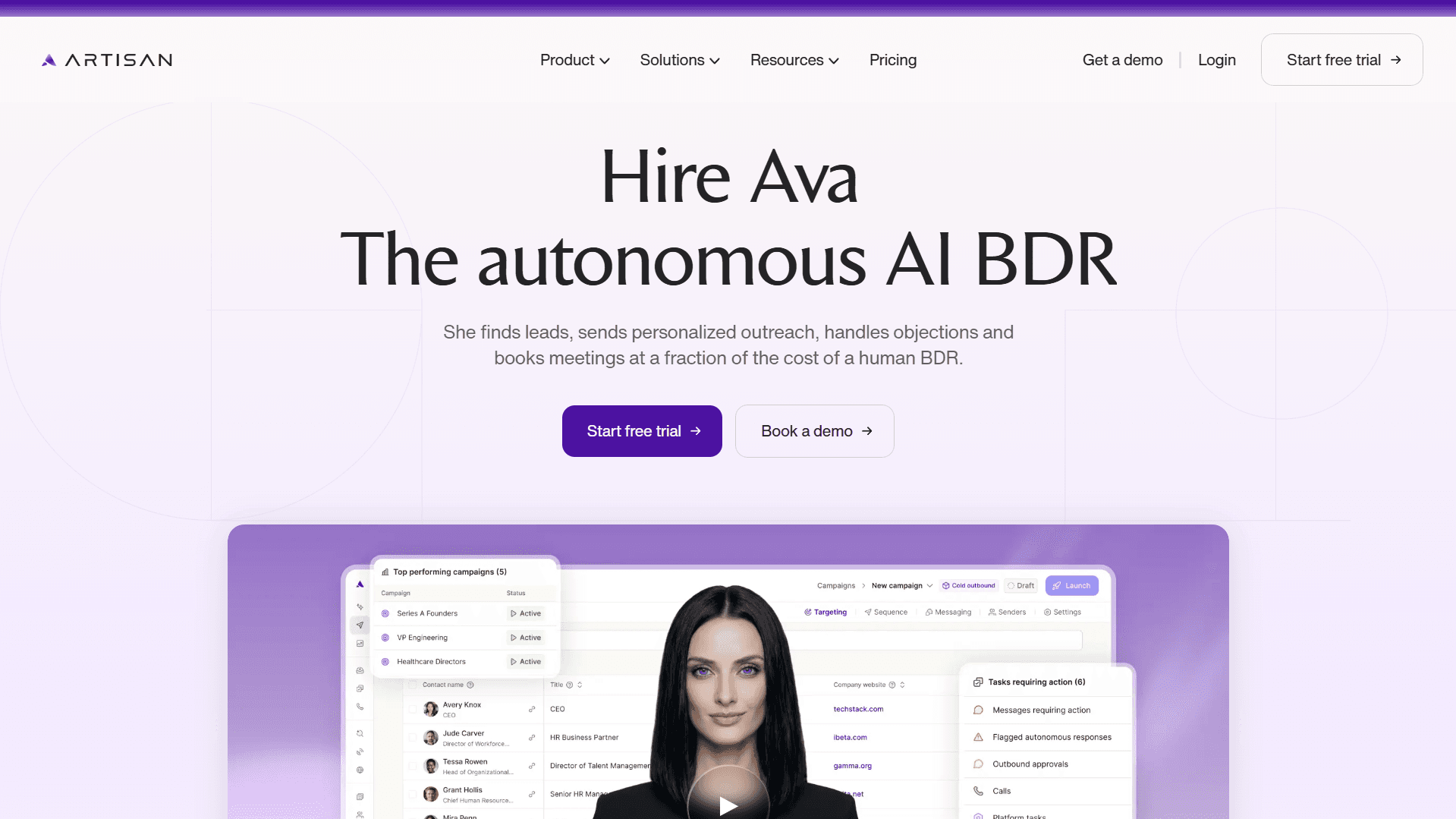
Artisan is the alternative for teams that loved Lemlist's personalization and want a machine to do it. Ava, Artisan's autonomous AI BDR, runs the whole motion: she finds best-fit leads from a database of over 250 million B2B professionals across over 200 countries, researches each one, and writes true one-to-one outreach. Two people enrolled in the same Artisan campaign receive two completely different messages, where a legacy sequencer would change only the name and title. The personalization Lemlist asks you to build by hand, Ava generates, from light touches up to research-agent swarms for hard criteria. She also self-optimizes, running dozens of message variations and shifting volume toward the components that convert.
Then she sends it with managed deliverability (provisioned and managed mailboxes, inbox placement testing, SPF, DKIM, and DMARC checks, dynamic send limits, inbox rotation, and health monitoring that auto-pauses bouncing senders), and she answers the replies: qualifying, handling objections from your knowledge base, chasing follow-ups, and booking meetings on the right rep's calendar. Multichannel is native too, spanning email, social media, and dialer call steps in one sequence.
Control is adjustable rather than binary. Review and approve every message, limit Ava to objection-handling, or let her run fully autonomous with plain-language escalation rules and a full audit trail. Over 90% of Artisan customers run Ava autonomously. For larger teams, sales ops can run Ava centrally while account executives (AEs) never log in, with cross-channel do-not-contact governance and CRM owner routing. Artisan is SOC 2 Type II compliant, GDPR and CCPA compliant.
"Ava runs highly targeted outreach at a scale we could never reach with a human-only team," said Bruno Didier, CEO of CookUnity Business, whose team sent over 100,000 personalized emails at roughly a $45 cost per lead. SumUp reported a $52 cost per lead and 8 to 15 positive replies per week from local businesses sourced with Ava.
Best for: startups through enterprise that want personalized outreach generated and sent at scale without hand-building every variant.
Who should pick something else: small teams that specifically enjoy crafting bespoke sequences by hand and do not need the volume automated.
Pricing: usage-based credits, you pay for work performed rather than per seat, no platform fee, free trial. See artisan.co/pricing.
2. Instantly: Volume infrastructure
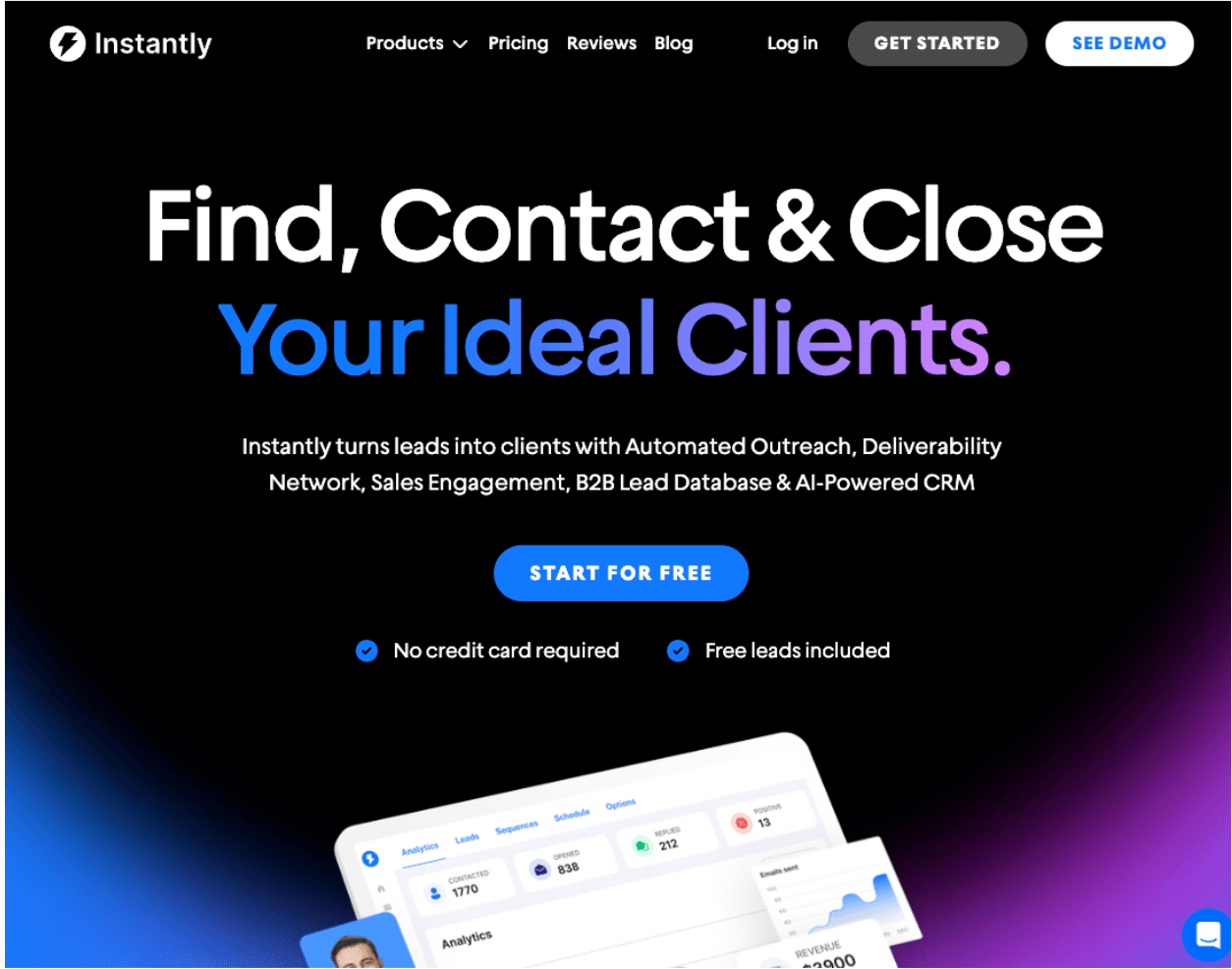
Instantly is the alternative for teams that care more about sending volume than personalization craft. It runs one of the category's biggest sending engines, with mailbox rotation, a large lead database, and public tiers from $47 to $555 per month. Where Lemlist optimizes for the quality of each touch, Instantly optimizes for the quantity of touches, and for high-volume outbound that trade can make sense.
The limit is the mirror image of Lemlist's. You receive sending scale but do the writing, targeting, and reply-handling yourself, and Instantly's AI features arrived later than its sending tooling. It solves volume rather than craft.
Best for: high-volume senders and agencies that prioritize sending capacity.
Who should pick something else: teams that switched from Lemlist specifically to keep strong personalization.
Pricing: $47-555/mo, per Instantly's pricing page. See our best cold email tools roundup for a fuller comparison. See also Instantly vs. Lemlist.
3. Smartlead: The agency workhorse
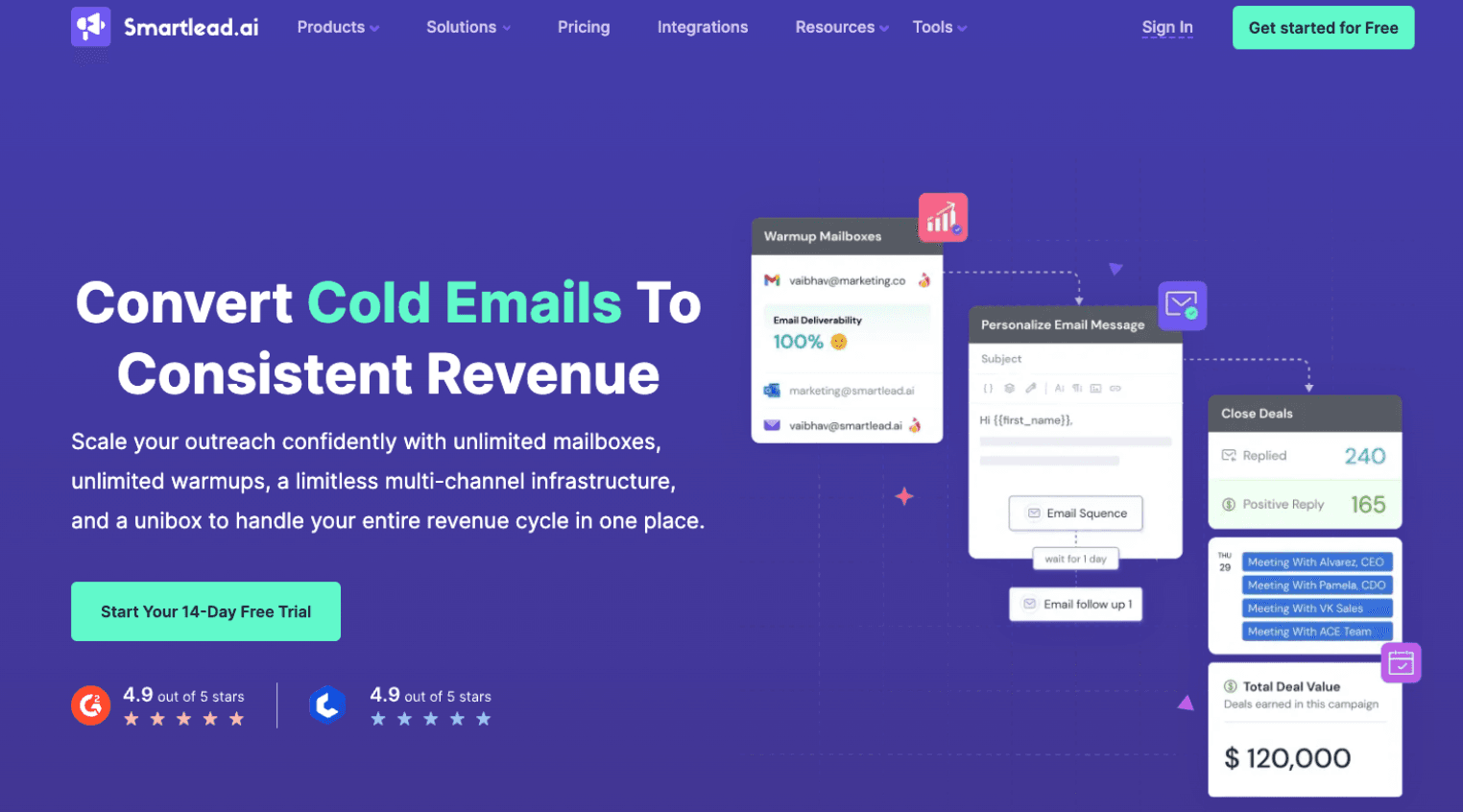
Smartlead suits agencies that manage many client inboxes. Unlimited mailbox rotation, a deep API, and a master inbox make it strong for teams that run dozens of sending domains at once. It is more infrastructure than personalization, so it is a lateral move from Lemlist rather than an upgrade in craft, but for agency operations it is often the better fit. For agency-focused options, see our roundup of outbound sales tools, and compare Smartlead vs. Lemlist.
Watch the add-on math: core tiers run $39 to $379 per month, with placement testing billed separately at $49 to $599, per Smartlead's pricing page.
Best for: agencies and API-first teams that run client inboxes at scale.
Who should pick something else: teams that want personalization or the writing and replies handled for them.
Pricing: $39-379/mo core; placement testing $49-599 extra.
4. Woodpecker: Simple and usage-priced
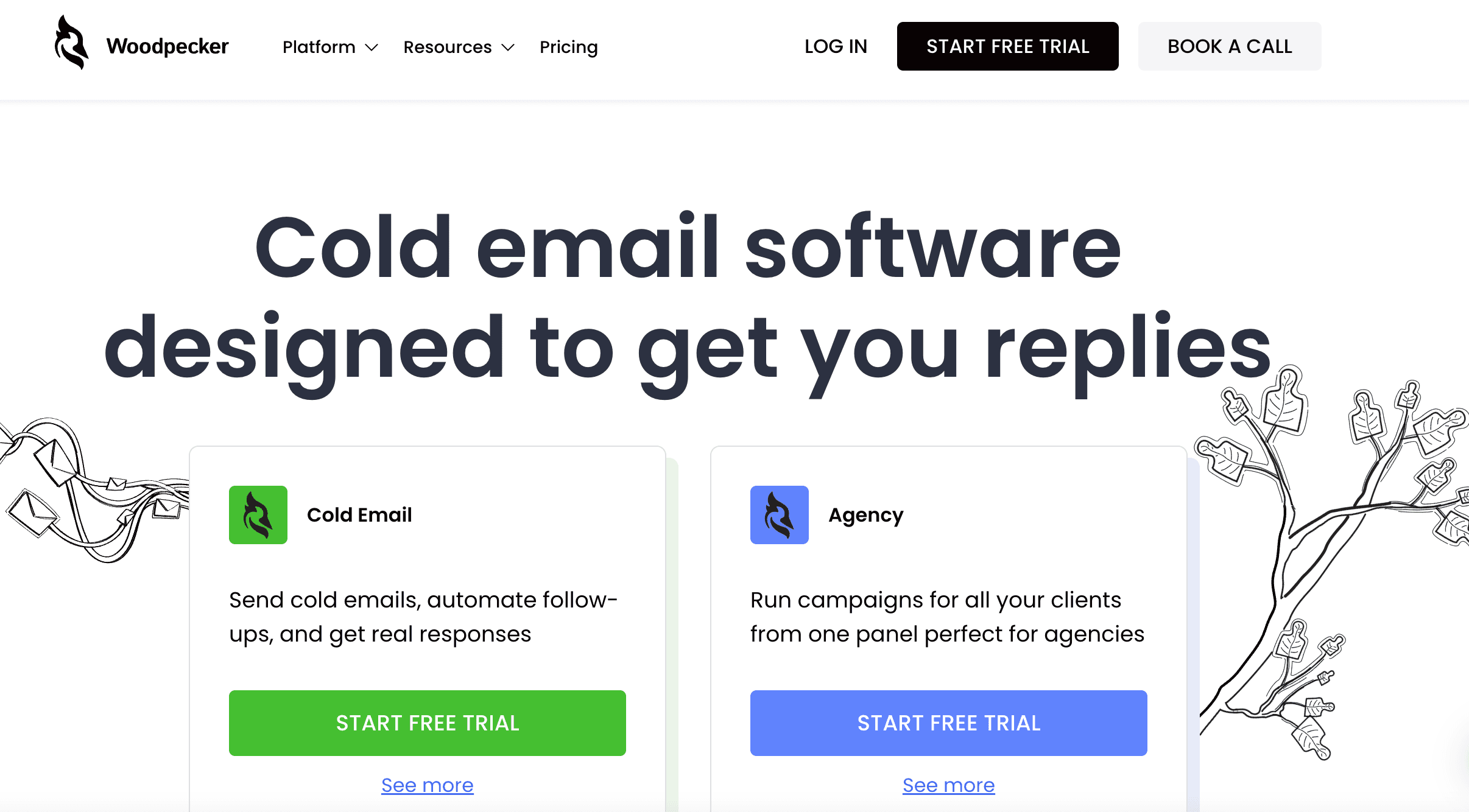
Woodpecker is the pick for small teams that want uncomplicated sending with predictable pricing. It charges by usage, about $7 per 100 prospects contacted, and offers unlimited inboxes, which suits spiky or seasonal volume. The interface is clean and deliverability tooling is solid.
Woodpecker is narrower than Lemlist on personalization and multichannel depth. If you left Lemlist because you wanted more personalization power, Woodpecker is a step sideways toward simplicity rather than toward richer messaging.
Best for: small teams that want predictable usage pricing and low overhead.
Who should pick something else: teams that need deep personalization or multichannel sequencing.
Pricing: usage-based, about $7 per 100 prospects contacted, per Woodpecker's pricing page.
5. Reply.io: An agent on a familiar sequencer
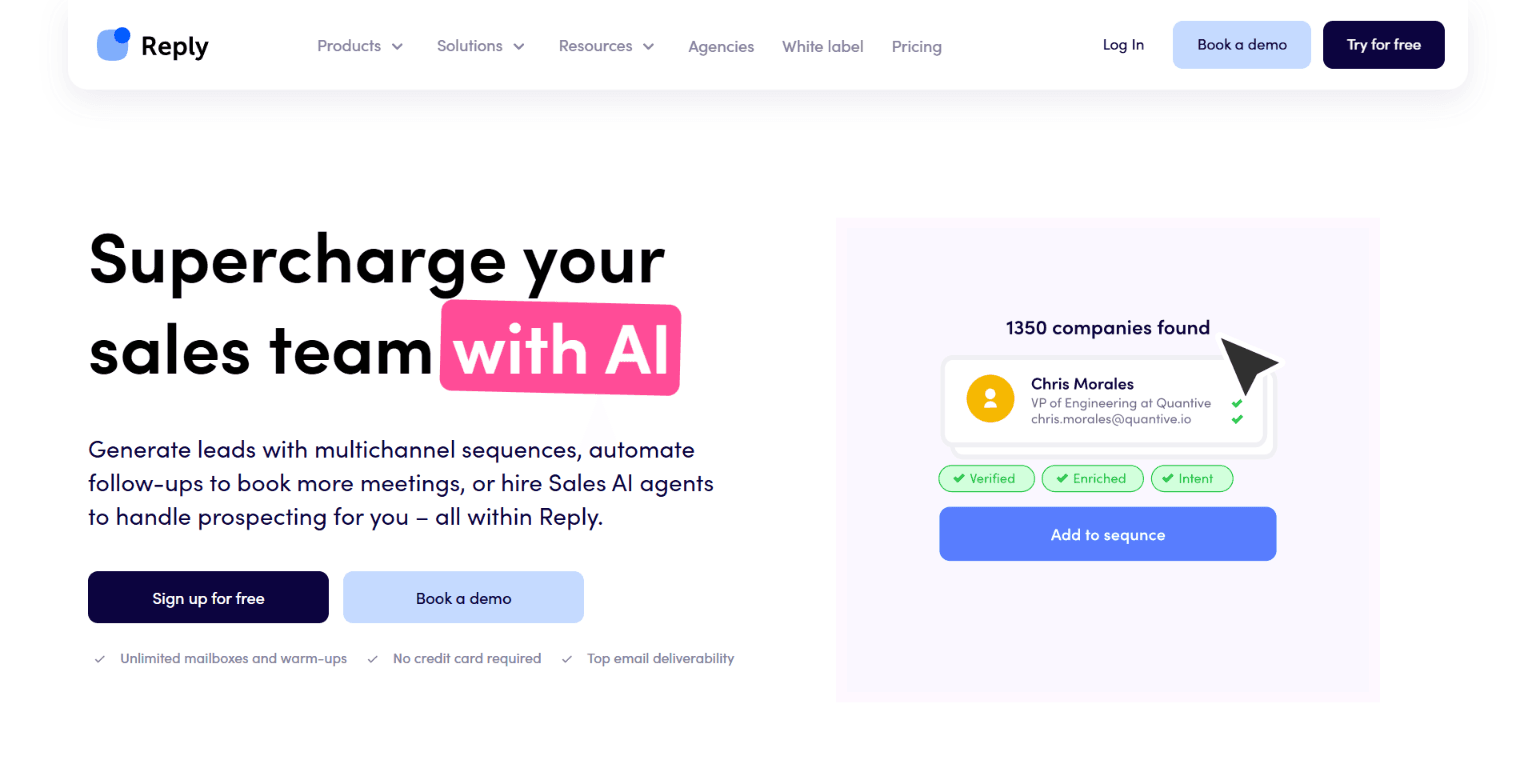
Reply.io is the alternative for teams that want a taste of agent-run email without leaving a classic sequencer behind. Its Jason AI agent sits on top of a multichannel platform, drafting and helping manage outreach, so the workflow feels familiar to anyone coming from Lemlist. The base sequencer starts at $59 per month; the AI agent tier runs roughly $500 to $800 per month.
The honest framing: this is an email-centric agent layered onto a traditional sequencer rather than a system built agent-first. Reps still drive much of the motion, so output per rep improves but the pipeline does not scale independently of headcount the way it does with a fully autonomous BDR.
Best for: teams that want an AI agent while keeping a conventional sequencer workflow.
Who should pick something else: teams that want the entire job owned end to end by the AI.
Pricing: sequencer from $59/mo; AI agent tier roughly $500-800/mo, per Reply.io's pricing page.
Stay with Lemlist if...
Lemlist remains the right call for a real profile. Keep it if:
Your differentiation is bespoke, visually distinctive outreach and you have the time to build it by hand.
Your volume is modest enough that manual personalization stays high-quality without adding headcount.
Multichannel craft matters more to you than automating the writing, and per-seat pricing fits your team size.
Leaving a tool you like because of a scaling problem is only worth it if the alternative actually removes the manual work. If personalization craft is your edge and volume is not your problem, Lemlist is a reasonable place to stay.
How Lemlist compares to an AI BDR
The distinction is who does the personalizing. Lemlist gives a human excellent tools to personalize each message. An AI sales agent like Ava does the personalizing itself, researching each prospect and writing a distinct message, then sending and replying. Lemlist scales your craft as far as your hours reach; an autonomous AI BDR scales the craft and the volume together, because the labor is the software's.
If your bottleneck is the quality of each touch and you have time to build it, Lemlist is a strong tool. If your bottleneck is the human hours that personalization at scale demands, the fix is a tool that generates the personalization rather than a better set of manual controls. For direct comparisons, see Artisan vs. Lemlist and Apollo vs. Lemlist.
What changed in cold email in 2026?
lempire, Lemlist's parent, acquired the video tool Claap in October 2025, extending into multichannel beyond email.
AI-generated personalization moved from a differentiator to a baseline expectation, raising the bar on what "personalized at scale" means.
Deliverability pressure intensified as reply rates fell industry-wide, favoring tools that manage sender reputation automatically.
The gap widened between manual personalization tools and agent-run platforms that generate and send the personalization for you.
Frequently asked questions
What is the best alternative to Lemlist? For teams that want personalization generated and sent at scale, Artisan is the strongest alternative, because Ava writes one-to-one outreach for every prospect automatically instead of asking a human to build each variant. For a higher-volume infrastructure move, Instantly is the closest sending-focused alternative.
What is the best enterprise alternative to Lemlist? Artisan. Lemlist is built around individual operators crafting sequences; Artisan adds central sales-ops deployment for large teams, cross-channel do-not-contact governance, CRM owner routing, an audit trail, and SOC 2 Type II compliance, which are the requirements enterprise buyers add on top of personalization.
Is Lemlist's personalization better than an AI SDR's? Lemlist's hand-built personalization can be excellent at low volume. The difference is scale: an AI sales development representative (SDR) like Ava researches and writes a distinct message for every prospect without a human assembling tokens, so the quality holds as volume rises. Lemlist's quality is bounded by the hours you invest.
How much does Lemlist cost? Lemlist runs $69 to $109/user/month, per its pricing page. Because it is per seat, the cost scales with team size rather than with results, which is a common reason growing teams look elsewhere.
Does Lemlist handle replies for me? No. Lemlist sends and tracks outreach, but qualifying replies, answering objections, and following up remain your team's job. An autonomous AI BDR handles those steps as part of the same motion, which is a key difference for teams trying to reduce manual work.
Which Lemlist alternative is best for multichannel? Artisan runs email, social media, and dialer call steps natively inside one sequence, generated and executed by Ava. Reply.io offers multichannel on a classic sequencer with an agent layer. Instantly and Smartlead are more email-centric infrastructure tools. For another multichannel option, see the best La Growth Machine alternatives.
Related reading

Artisan Team
Expert insights from the team at Artisan
Our writing team blends direct operational experience, in-house data, and thorough research to bring you the very latest insights and updates about sales and GTM automation.