ABM intent data: Types, benefits, and how to use it
Learn what ABM intent data is, the three types (first-, second-, and third-party), key benefits, and how to use intent signals and personalize outreach.
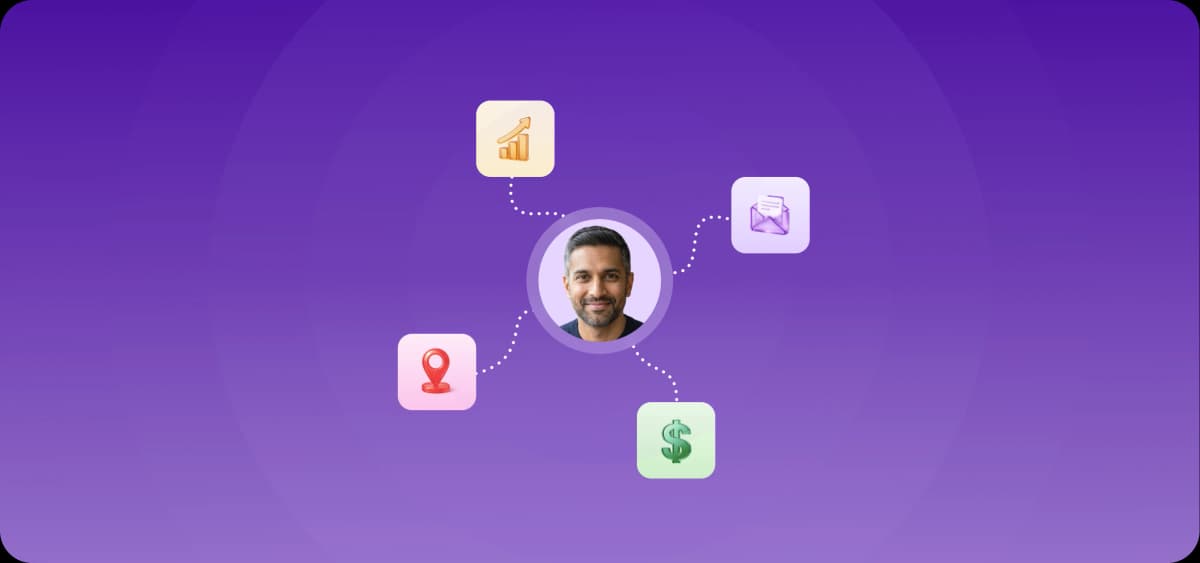
Account-based marketing programs often underperform. Companies hire demand gen teams, build target account lists, and launch multi-channel campaigns, but pipelines stay thin.
The issue is rarely execution. Account selection is usually the weak link. Campaigns at the account level are only as effective as the data behind them.
Intent data shows you which accounts are actively researching a solution, not just which ones look like a fit on paper.
What is ABM intent data?
Account-based marketing (ABM) intent data, sometimes called buyer signals, are behavioral signals that reveal when an account is actively researching a solution. Intent data shows marketers what prospects are doing on the web right now, such as browsing your website, posting a job, or asking about similar solutions on social media.
Intent data is not the same as static firmographic and persona data. Firmographics tell teams about the attributes of a company, including their industry, headcount, and revenue. ABM intent data layers on top of firmographics to prioritize high-value accounts.
How does intent data differ from traditional account data?
Traditional account data is static. It relies on lists of companies and people that match specific profile criteria, such as titles, location, domain, and budget.
Intent data is dynamic. It combines timing and behavior. When a company suddenly starts reading articles about "sales automation platforms," downloading whitepapers on outbound strategy, and visiting your pricing page multiple times, that company is researching a solution.
What intent signals actually measure
Intent signals measure content consumption, search behavior, and topic research velocity. The core concept is the "surge." A surge occurs when research activity on a specific topic spikes significantly above a company's historical baseline.
For example, an enterprise software company that typically reads 2 articles a month on AI sales tools but suddenly consumes 10 articles in a single week is showing a topic surge. This indicates active evaluation.
Types of ABM intent data
Intent signals fall into one of three categories based on where they originate. Each type has clear strengths and blind spots, so most mature ABM programs should blend all three.
First-party intent data
First-party intent data is the data you own. It includes website visits, pricing page views, content downloads, email engagement, form fill-outs, and demo requests.
This is the most accurate form of intent data because it shows direct interest in your specific brand and product. The trade-off is scale: you can only track accounts that already know you exist.
Second-party intent data
Second-party intent data is shared through partnerships. It is essentially somebody else’s first-party data that you purchase. It includes data from co-sponsored events, partner ecosystems, and review site engagement (such as G2).
This data provides a strong middle ground between the high accuracy of first-party data and the broad reach of third-party data.
Third-party intent data
Third-party intent data is aggregated from large networks of publishers and data providers that track content consumption across the web. Third-party buyer signals reveal in-market accounts before they hit your owned channels, allowing you to engage buyers early in their research phase.
It gives you early visibility into accounts researching topics related to your category. For example, Bombora's cooperative includes over 5,500 B2B sites. This data offers the broadest reach but lower specificity.
Benefits of using intent data for ABM
Intent data usually generates a high ROI. It helps demand gen teams spend their budget on prospects already in the buying window, not on cold accounts at the top of a generic list.
The benefits don't stop at ROI, though. Intent data also improves campaign personalization and allows for advanced lead scoring.
Identify in-market accounts before they reach out
A buyer may be interested in your solution but opt for a competitor before they reach out. They may have seen a persuasive demo, for example, or be under pressure from their CEO to make a purchase. Pre-emptively reaching out increases your chances of booking a meeting.
Prioritize high-potential accounts for sales efficiency
Surge lead scoring helps sales teams focus on accounts worth pursuing from large lead lists. It reduces wasted outreach on cold or low-fit accounts and also gives sales reps a clear, defensible reason to act now, with fewer random follow-ups.
Personalize messaging based on research topics
ABM intent data lets demand gen teams build highly personalized email campaigns and dynamic ads. Teams can send persona-specific email sequences, run social media ads tied to active pain points, and build landing pages customized to the topics prospects are researching.
Align sales and marketing around shared signals
Intent data creates a shared, real-time view of which accounts matter, settling the long-running sales-marketing argument over what counts as a marketing qualified lead (MQL). Both teams act on the same trigger: account behavior. When sales and marketing align, companies see an average 65% boost in their pipeline conversion rate.
Detect churn risk through competitor research signals
ABM intent data doesn't just drive net-new acquisition. It can also protect and expand existing accounts by flagging churn risk. When an existing customer starts actively researching your competitors, that's a clear warning. Intent data reveals these signals before any support complaint shows up.

Automate your outbound with an AI BDR
Meet Ava—your AI BDR who handles prospecting, outreach, and follow-ups, so your team can focus on closing.
How to use intent data in your ABM strategy
Putting intent data to work is less about buying the right tool and more about building the right operating system.
Even experienced demand gen teams can fall victim to common issues: signals that don't tie back to revenue, scoring models that never get reviewed, and alerts that pile up in a channel no one reads.
1. Define and map your first-party intent signals
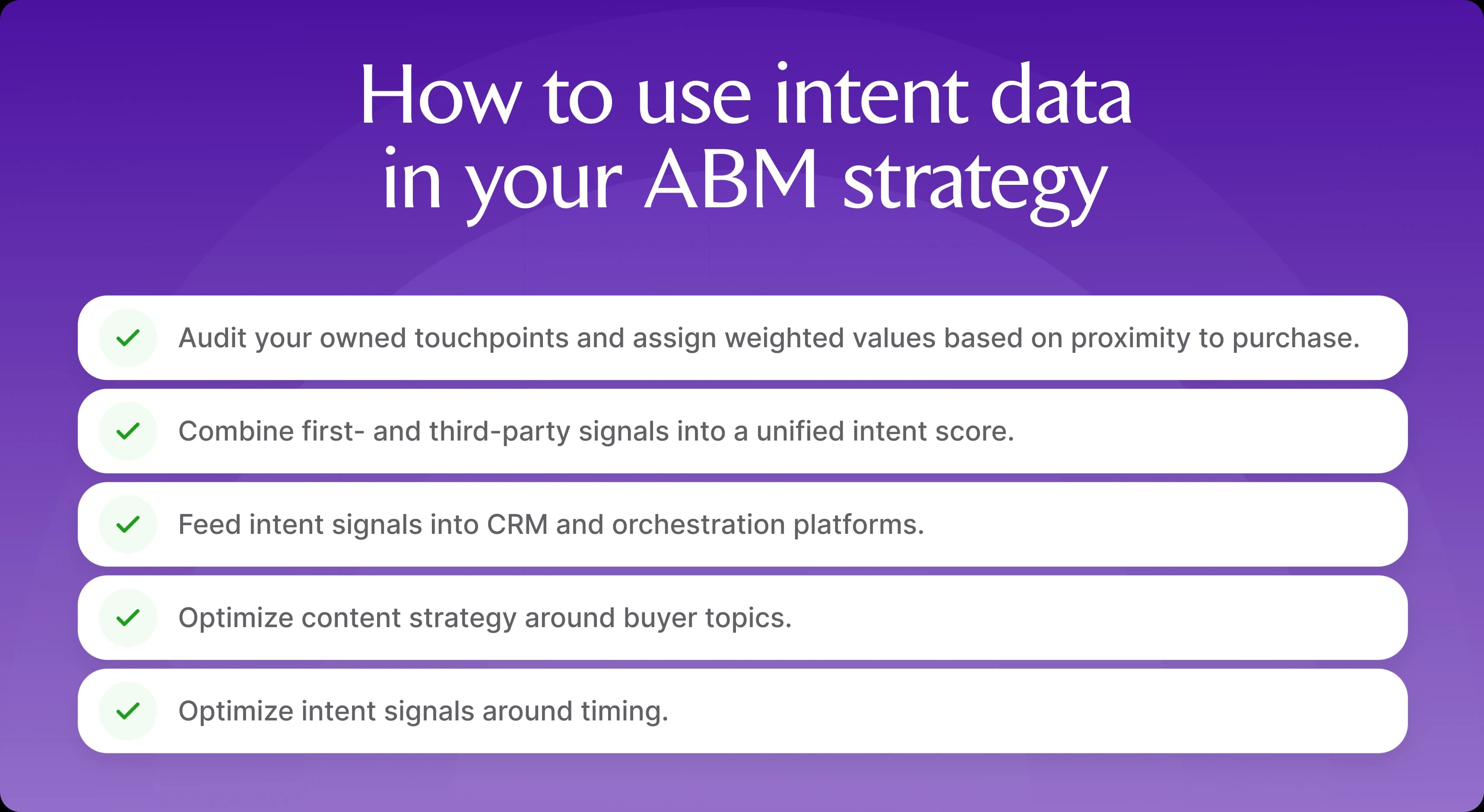
Audit your owned touchpoints and assign weighted values based on proximity to purchase. Define what constitutes a strong signal versus a weak one. For example, a case study view from an account in a target industry twice over 48 hours indicates active evaluation.
Identifying these touchpoints manually is nearly impossible at scale, so take advantage of AI sales assistants in your CRM to analyze closed-won and closed-lost accounts from the last 90 days. Ask the assistant to identify patterns across fields such as page visits, session frequency, content viewed, email engagement, product actions, deal-stage progression, and personas involved.
If your CRM doesn't have an AI assistant, export the data and feed it into an LLM to identify patterns.
Sample prompt for using an LLM to analyze past intent data
Here's a prompt example for auditing your owned touchpoints:
You are a RevOps analyst helping identify high-intent buying signals from CRM and website behavior data.
I will provide you with behavioral and deal outcome data for closed-won and closed-lost accounts.
Your task is to analyze patterns and identify which actions and combinations of actions are most strongly associated with closed-won deals.
Here are your instructions:
Identify individual signals that correlate with higher conversion rates (e.g., specific pages, actions, engagement types).
Identify signal combinations or sequences that indicate strong buying intent (e.g., case study view with pricing page repeat visit within X days).
Highlight timing patterns (e.g., how quickly deals progress after certain actions).
Compare closed-won vs closed-lost behavior and call out the most meaningful differences
Identify persona-level patterns (which roles engage and in what order).
Classify signals into high, medium, and low intent based on proximity to purchase.
Suggest a weighted scoring model (numerical values for each signal or signal combination).
Recommend trigger points for sales outreach (e.g., when to notify an AE or enroll in sequence).
Follow all of these guardrails:
Only include signals that appear in at least 15-25% of closed-won deals. Ignore rare or one-off patterns.
For every signal, show the difference in frequency between closed-won and closed-lost deals. Exclude signals where the difference is less than 10%.
Do not classify a signal as "high intent" unless it is either part of a sequence of at least 2–3 actions or significantly more frequent in closed-won deals.
Deprioritize or exclude common low-signal actions (e.g., single homepage visits, single blog views) unless they appear in combination with stronger signals.
Only report patterns directly supported by the provided dataset.
If the dataset is insufficient to support a conclusion, explicitly say "insufficient data" instead of inferring and explain why.
2. Combine first- and third-party signals into a unified intent score
A unified intent score combines first-party signals (what you observe on your own channels) with third-party topic surges (what an account is researching across the broader web).
Neither alone is sufficient. First-party data without third-party context misses accounts that haven't found you yet. Third-party data without first-party confirmation produces false positives.
Build your scoring model around the following two thresholds:
Warm threshold: A third-party surge on a relevant topic plus at least one first-party signal. This triggers marketing to launch a targeted ad sequence and enrich the account.
Hot threshold: Multiple contacts from the same company crossing the warm threshold within a defined window, typically 7 to 14 days. This triggers sales to initiate direct outreach immediately.
3. Feed intent signals into CRM and orchestration platforms
Intent data that lives in a separate platform is unlikely to drive action on the part of the sales team. The signal has to land in your CRM and in the tool where your reps already work.
Set up the following custom fields in your CRM for every target account to trigger automated workflows:
Intent score: Updated weekly from your scoring model
Last high-intent action: Most recent signal with date and source
Active surge topics: The specific topics the account is researching
Threshold status: Warm, hot, or no signal
Then build two automated alerts. The first fires when an account crosses the warm threshold, notifying the assigned marketer to launch a targeted ad sequence and email outreach. The second fires when an account crosses the hot threshold, notifying the assigned rep of the specific surge topic and the recommended message angle.
Modern AI tools can launch targeted ads and outreach immediately. Artisan, which is built around an AI BDR called Ava, connects intent signals to automated email outreach in a single flow, without a manual handoff between data detection and sales action.

4. Optimize content strategy around buyer topics
Use topic surge data to find content gaps. Create assets tied to what your ideal customer profile is actively researching. If intent data shows a spike in "AI-powered demand gen orchestration" within your ICP segment, your content team should be publishing on that topic.
This also applies to sales enablement. If accounts at the hot threshold are surging on a specific objection, for example, such as "data privacy compliance for AI outbound tools," your reps should create a one-pager that addresses it directly.
5. Optimize the intent signal around timing
Signals decay fast. The optimal response window is 24 to 72 hours after an intent spike is detected and an account crosses the hot threshold. Automate workflows to ensure you act within this window at scale.
Example: An intent-triggered ABM workflow example for cold outreach
Let’s look at a practical example.
A mid-market SaaS company starts researching tools to improve outbound sales.
You don't know them yet. They haven't visited your website or filled out a form. But Bombora detects a surge in third-party intent data and pushes that data to your CRM.
People from that company are reading content about "AI BDRs" and "email deliverability" across industry sites. The account fits your ICP (size, industry, tech stack like HubSpot), so it's flagged.
Over the next couple of days, more signals appear: a team member visits your integration page and another reads a case study.
At this point, your enrichment tool pulls more data about the account. It identifies key people, their current tools, and the fact that they're hiring sales development representatives (SDRs).
It's time to act. Either reps or AI-powered outreach tools (such as Artisan) start composing emails tailored to identified pain points. Marketing launches an ad campaign. You begin engaging prospects with relevant content while they're early in the process of deciding what to buy.
Top ABM intent data tools and platforms
Choosing the right intent data provider depends on your goals, scale, budget, workflows, and integration needs.
The market is crowded, but a handful of vendors dominate enterprise ABM motions. Each one approaches intent differently, from broad publisher co-ops to predictive AI models tied to your CRM.
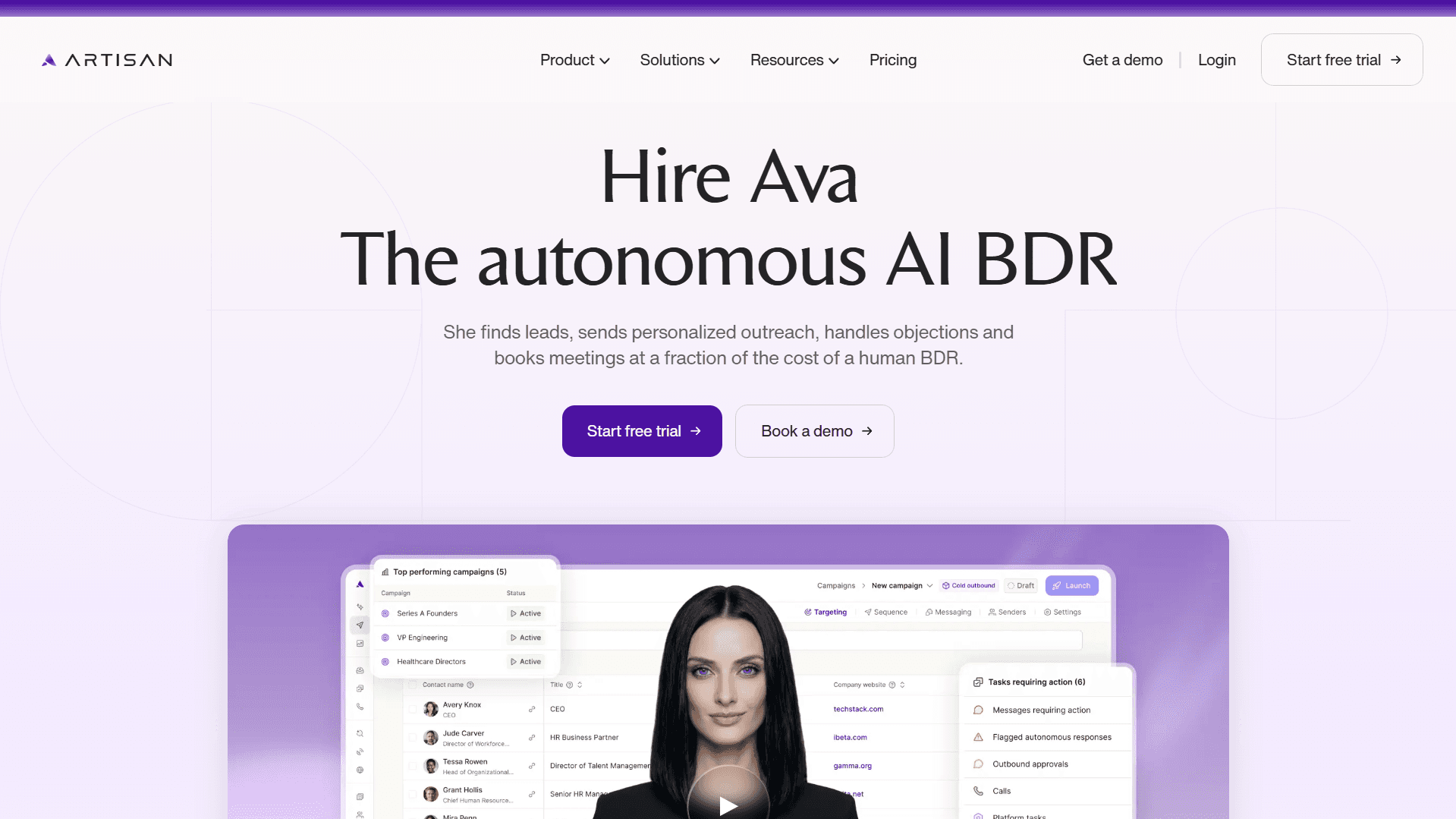
1. Artisan
Artisan is an AI-first outbound platform that automates the full intent-to-outreach workflow. Rather than identifying signals and then leaving execution to your team, Artisan's AI BDR Ava detects buying intent and launches highly personalized sequences automatically.
Best for: Sales teams that want to eliminate the manual handoff between intent data and outbound execution.
Key features:
Automated signal-to-sequence execution
First-party website visitor de-anonymization and third-party intent data in one system
Built-in firmographic, technographic, and intent enrichment
Replaces fragmented stack of intent tools, enrichment vendors, and sequencing platforms
Pricing: Artisan has several flexible plans that scale based on user needs and outreach requirements. A long-term forever-free plan is also available. You can see a full breakdown on the pricing page.
2. Bombora
Bombora invented the third-party co-op model that invites publishers to share their data and remains the industry standard for topic-based intent. It provides the raw fuel for intent-driven campaigns but requires an experienced RevOps team to activate the data effectively across your stack.
Best for: Broad topic coverage and enterprise ABM at scale.
Key Features:
Proprietary data co-op of over 5,500 B2B sites
Company Surge scoring based on historical baselines
Deep integrations with major ad and martech platforms
Ethically sourced, consent-based data collection
Pricing: Custom quotes only.
3. Demandbase
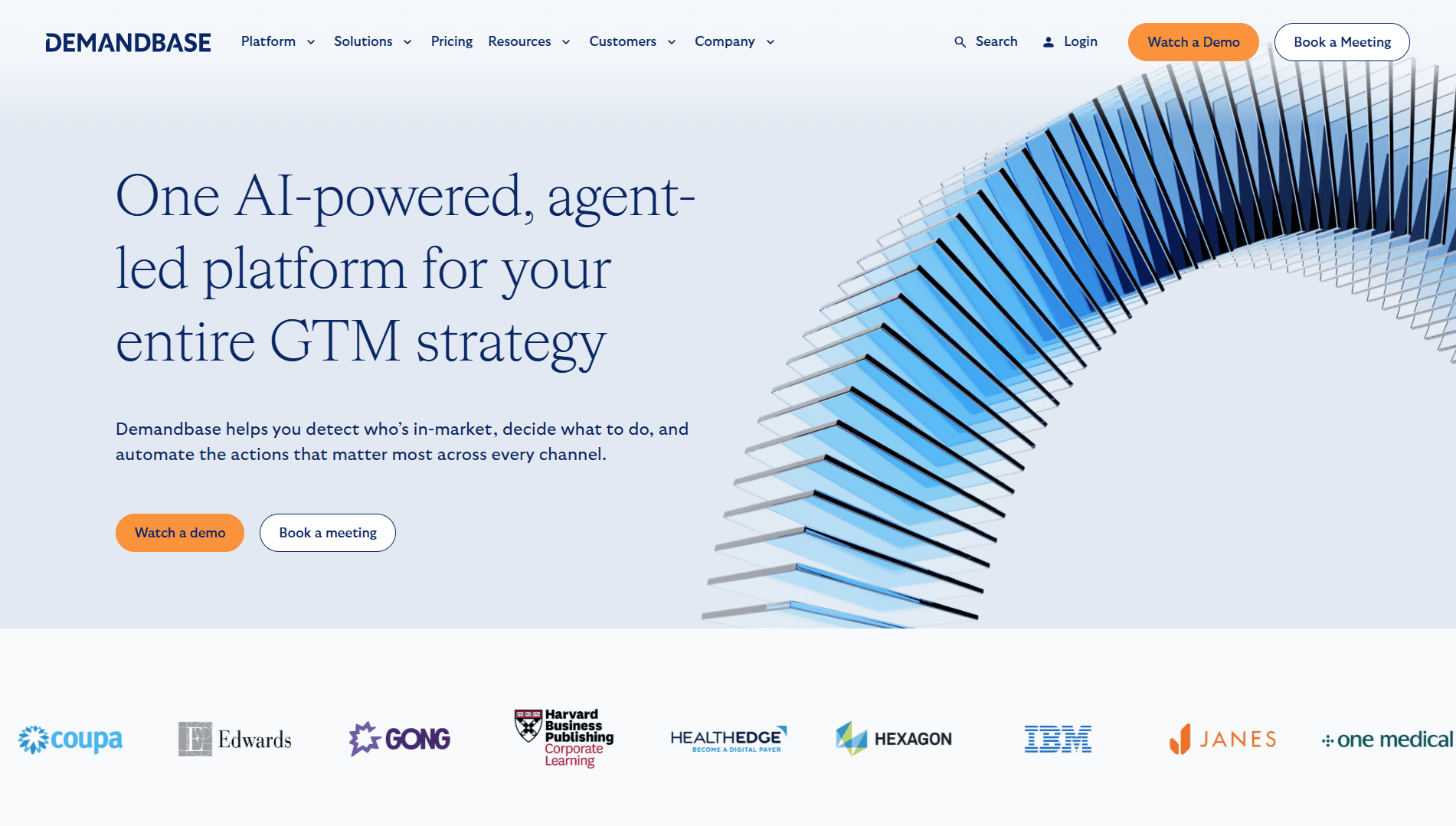
Demandbase is a comprehensive account-based go-to-market platform that unifies sales and marketing data. It centralizes the entire ABM motion in one system, which makes it a strong fit for mature organizations running complex sales cycles.
Best for: Enterprise teams running coordinated, multi-channel ABM campaigns.
Key Features:
First- and third-party intent signal monitoring
Account prioritization
Built-in B2B advertising
Deep CRM and marketing automation syncing
Pricing: Custom quotes only.
4. Cognism
Cognism pairs intent data with highly accurate, compliant contact information. It’s a popular choice for companies targeting European markets.
Best for: Teams targeting EMEA that require strict GDPR compliance and verified mobile numbers.
Key Features:
Intent data powered by Bombora
On-demand mobile verification
Contextual signals like hiring, funding, or job changes
Cognism AI for company research and persona building
Pricing: Plans are based on individual business needs.
5. 6sense
6sense is a predictive account intelligence platform that uses AI to uncover anonymous buying behavior. It excels at illuminating the "dark funnel," giving sales teams visibility into account research long before a form is filled.
Best for: Revenue teams looking to predict pipeline and deanonymize web traffic.
Key Features:
Predictive AI models and account scoring
Web deanonymization and buyer discovery
Sales copilot with AI-recommended actions
Multi-source intent (Bombora, G2, and native)
Pricing: Request a demo for a personalized quote.
Intent data only works when you act on it fast
Intent data is not a magic bullet. It won’t fix a broken ICP, a weak value proposition, or a sales team that cannot execute. What it does is remove the single biggest inefficiency in B2B outbound: spending time and budget on accounts that are not buying.
Artisan helps teams act on signals quickly. AI BDR Ava tracks intent signals autonomously and then triggers highly personalized outreach across emails and social media, with the option to provide as much human oversight as needed. Whenever a lead sends a positive response, your reps are immediately notified.
Automate your outbound with an AI BDR
Meet Ava—your AI BDR who handles prospecting, outreach, and follow-ups, so your team can focus on closing.

Jenny Romanchuk
SME @ Artisan
Jenny creates senior-level content for sales, SEO, and marketing professionals. She also leads partnerships at the District #1 Charitable Foundation.