B2B email lead generation: Proven strategies that work in 2026
Learn proven B2B email lead generation strategies, including personalization tactics, multi-domain setup, compliance best practices, and success metrics.

Cold email works. After sending hundreds of thousands of emails on behalf of our clients, we can say that with certainty.
If yours doesn't, it’s unlikely that the medium itself is at fault.
The weak point for most companies is usually the underlying system: untested email infrastructure, stale lists, shallow personalization, and follow-ups that add nothing.
To generate pipeline from cold email in 2026, you need a multi-channel workflow that combines deep prospect research, comprehensive qualification, and highly tailored outreach.
What is B2B email lead generation?
B2B email lead generation is the process of finding potential prospects, verifying their data, segmenting them by ideal customer profile (ICP) fit and intent, sending persuasive email outreach, and moving qualified responses into your CRM for sales follow-up.
It rests on six core pillars: list building, enrichment, contact verification, deliverability testing, personalized outreach delivery, and ongoing optimization.
How to build your email lead generation infrastructure
Email lead generation starts before any emails go out. Your underlying email infrastructure will determine your emails’ deliverability (the rate at which they land in recipients' inboxes) and personalization quality.
Use multiple domains to protect your sender reputation
Use secondary sending domains for outbound to protect your primary company domain for customer internal communication. For a growing outbound team, two to four secondary domains are enough, with one to three mailboxes per domain.
In addition, keep the early sending volume conservative because warm-up should look like human behavior. Start with low daily volume (under 15 emails), send to verified contacts only, and monitor bounce and complaint patterns.
Increase gradually. According to Hunter’s State of Email Outreach report, sending 20 to 49 emails per day per email account achieved a 27% higher reply rate.
Configure email authentication protocols
SPF, DKIM, and DMARC are now basic plumbing. Gmail requires SPF or DKIM for all senders and SPF, DKIM, and DMARC for bulk senders. Gmail also requires alignment between the From domain and the SPF or DKIM domain for direct mail, plus one-click unsubscribe for marketing messages.
For B2B teams, this means authentication is a high-priority task. Configure SPF, DKIM, DMARC, PTR, and TLS, unsubscribe handling, and bounce monitoring before sending outreach sequences.
Integrate your CRM and lead scoring model
Deliverability optimization helps your emails reach recipients' inboxes. Lead scoring based on data in your CRM helps your team decide which accounts to prioritize. A high score should trigger a rep to reach out. A low score should route the lead into automated outreach.
Your lead scoring model should combine the following three signal groups:
Fit signals: Industry, headcount, geography, tech stack, funding stage, and company revenue
Intent signals: Pricing visits, repeat website activity, relevant content downloads, hiring patterns, product usage, and funding events
Engagement signals: Replies, meeting clicks, form submissions, demo views, and return visits
How to build a cold email outreach strategy that converts
Cold email works best when a message has a real reason to exist. The best emails are timely, specific, and hyper-focused on the needs of the recipient.
Craft hyper-personalized opening lines
Personalization is useful only when it proves you understand the account. It fails when it simply demonstrates that your chosen tool scraped their social media profile.
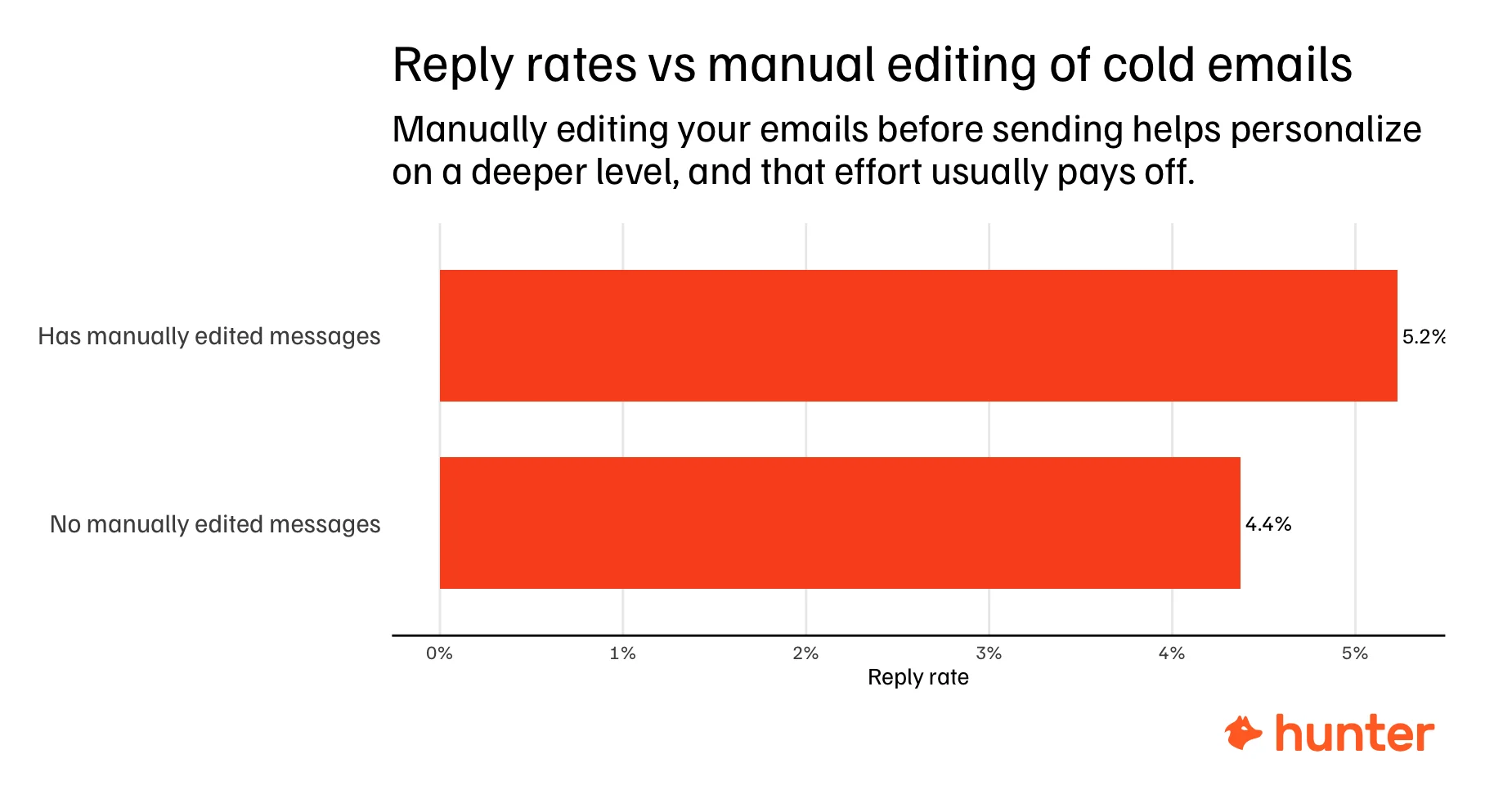
Research by Hunter found that an email with two custom attributes achieved a 56% higher reply rate. AI-written copy also needs to feel human, since 69% of decision-makers say it bothers them when AI is used.
Follow the 2–4 step follow-up sequence
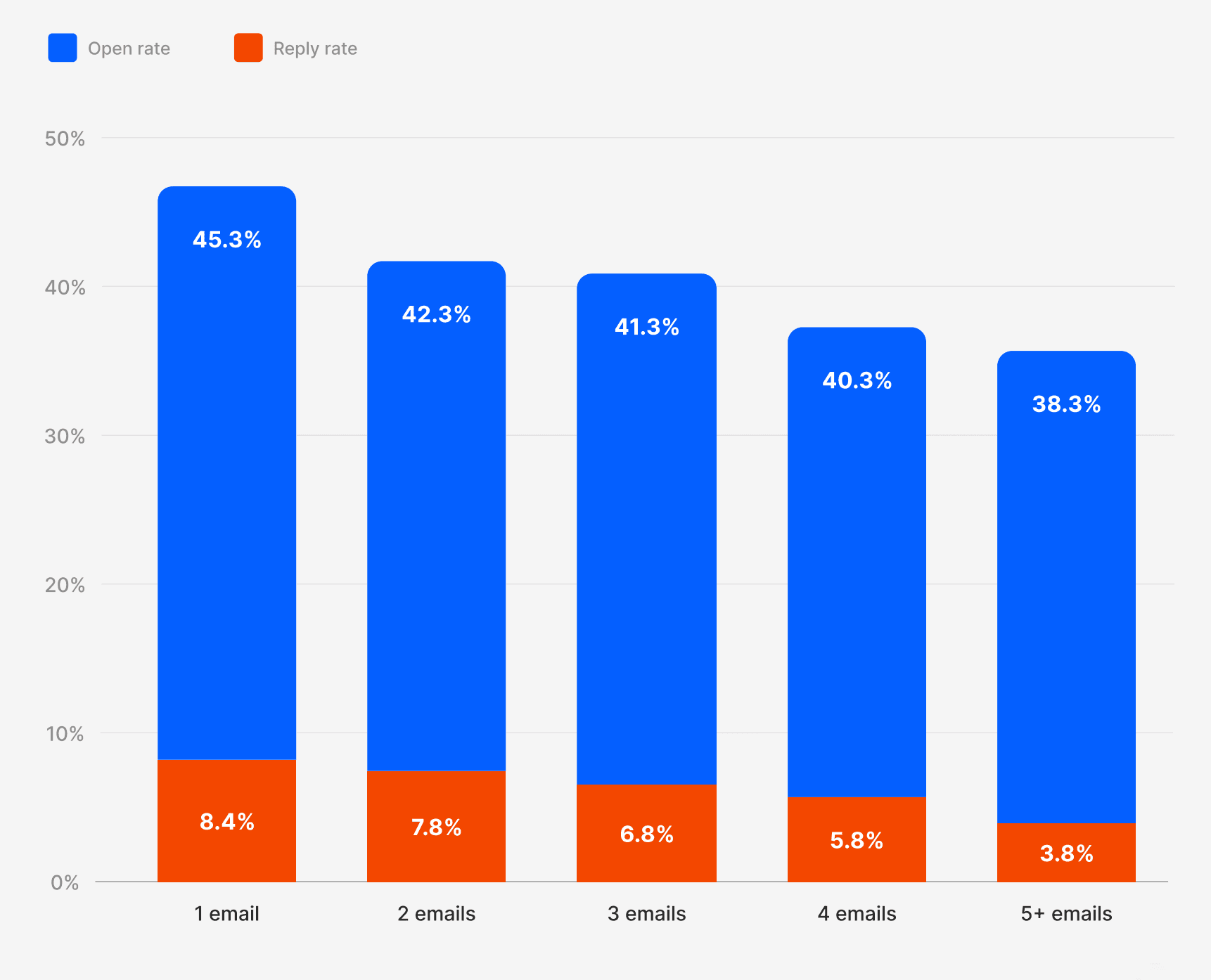
The old 3–5 follow-up rule is dead. Research from Belkins published in Cold outreach benchmarks 2025 says that the best sequence is up to 3 follow-ups, while 5 follow-ups see overall reply rates drop to nearly half, indicating diminishing returns. Hunter also discovered the same pattern: using 3 messages instead of 1 increases total replies by 106%.
When writing follow-ups, always lead with substance. Add mini case studies, industry insights that only your team can share, and ROI promises. Avoid beginning all your follow-ups with, "Just want to make sure you saw my last email."
Use intent data for trigger-based outreach
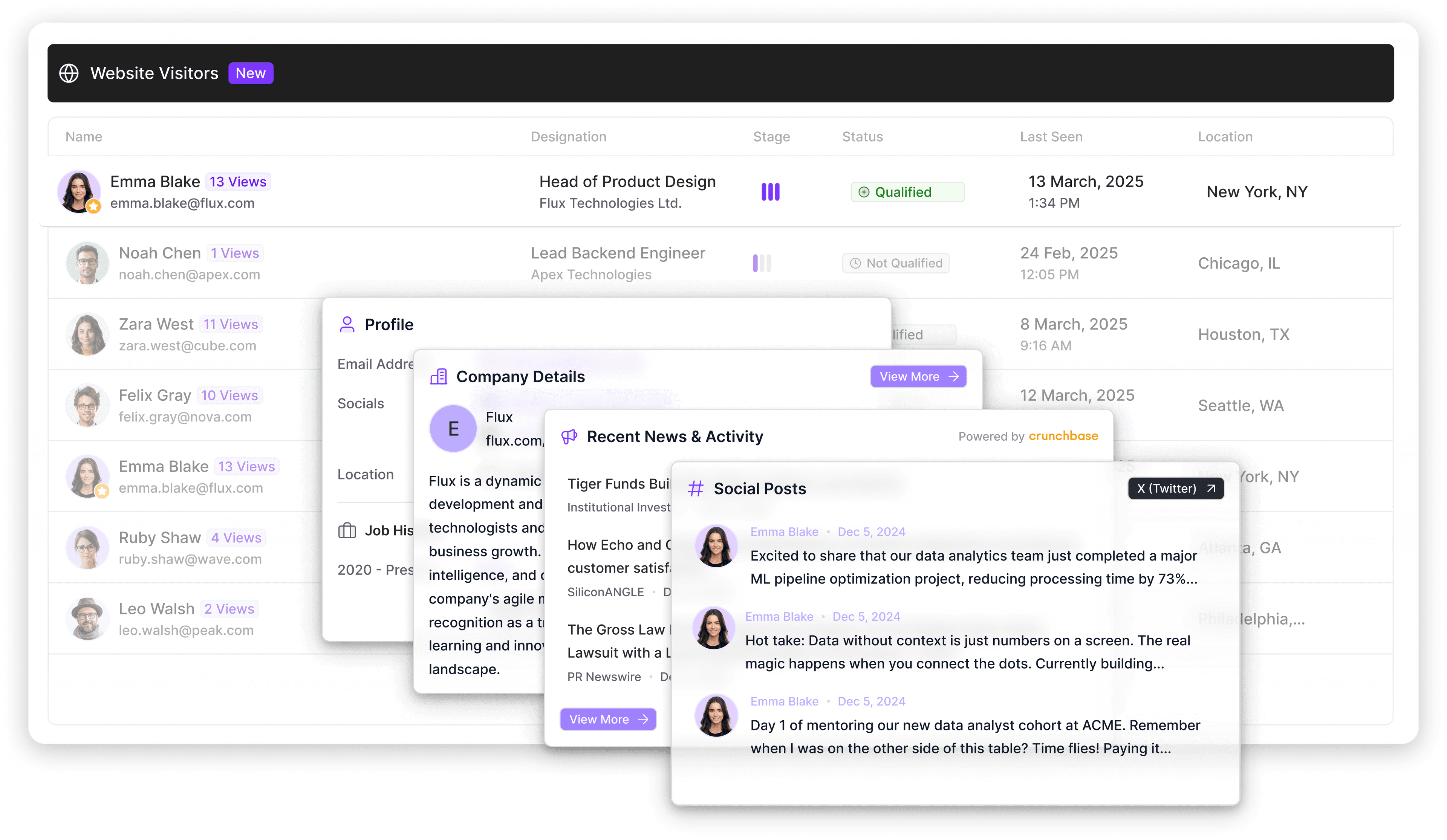
Intent data, when combined with ICP attributes, gives you a clear understanding of which leads are most likely to buy. You can use intent data both during the initial prospecting process (to identify the highest-fit targets) and to score leads once you’ve put your list together.
6sense's 2025 Buyer Report found that 94% of buying groups rank their shortlist before engaging sellers, and the first vendor contacted often becomes the winner. This means you need to show up while the account is still forming its shortlist.
Prioritize the following first-party signals because they are the strongest indicators of buying behavior:
Two or three pricing page visits
Demo page visits
Repeat visits from the same company
Product comparison views
Webinar attendance
High-intent content downloads
External intent signals such as hiring, social media posts, and tech stack changes demonstrate buying intent and are useful (though less so than first-party signals). You should also incorporate these into your scoring model.
Artisan combines both of these signal types. It tracks website activity and monitors the web 24/7 to spot intent the moment it appears and triggers a relevant sequence on autopilot.
Best inbound lead magnets for email list building
Inbound lead magnets give buyers a reason to leave their email. A form fill, however, is only the start. The follow-up often decides whether this intent turns into pipeline.
High-converting lead magnet formats
NetLine’s 2026 State of B2B Content Consumption & Demand Report analyzed 7.2 million first-party content registrations and found that eBooks were the most popular lead magnets, accounting for 48.8% of all registrations.
Demand for gated content has increased by 57.6% since 2021, so don’t worry about asking for an email address in exchange for valuable content.
All of the following lead magnet formats can be effective depending on audience needs:
Tools like ROI calculators
eBook
Playbooks
White papers
Data-based reports
On-demand and live webinars
Landing page and form optimization
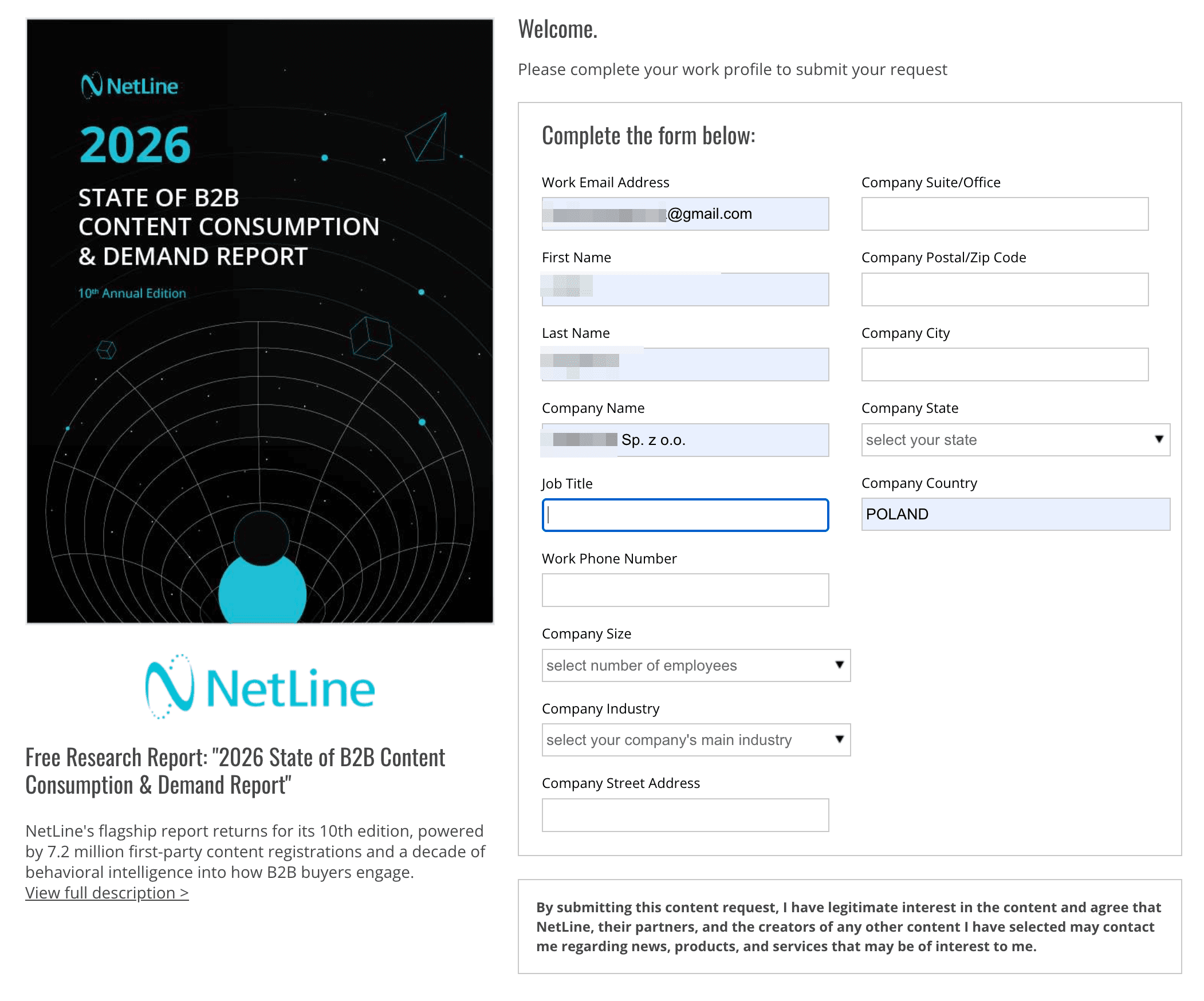
When building forms, ask only for the information you need to route and qualify a lead. For most B2B offers, that means work email, role, company, company size, and one qualifying question tied to urgency. Some companies gate content behind excessively long, complicated forms.
If your industry demands more detailed information, use answer options tied directly to lead qualification criteria. This provides sales with information they can use to create a targeted opening for outreach.
Nurture sequences for inbound leads
Inbound leads shouldn't receive the same generic drip after every form fill. Segment your follow-up by what the lead downloaded, their attributes, and what action they took after filling out the form.
For example, a founder who uses a pipeline calculator likely cares about closed-won deals, cost (spend to generate pipeline), and whether they need more reps. Your nurture sequence should reflect these pain points and desires.
Here's a practical nurture structure for inbound leads:
Send the lead magnet immediately
Follow up within a few days with a practical implementation tip based on the lead magnet topic
Share one benchmark, diagnostic, checklist, or teardown that helps the buyer evaluate their current process
Ask one qualifying question tied to urgency, such as “Is this something your team is actively solving this quarter, or are you still mapping the problem?”
Route leads showing high-intent behavior (like repeated email opens) to sales
Omnichannel integration with email
Email shouldn't carry your whole outbound motion. Use different channels for different jobs: social media for familiarity, email for structured value, and phone calls for high-intent accounts that show the strongest buying behavior.
Social media and email coordination
Use social media before email when the buyer has a senior role, is hard to reach, or is likely to check your profile before responding.
Social media is now the preferred outreach channel for 50.5% of decision-makers, compared with 25% for email. Email remains essential, but it typically works better when it has stronger context behind it.
Phone follow-up timing
Don't call just because someone opened an email. Opens don’t necessarily suggest intent, especially with privacy settings, security scanners, and tracking limitations at play.
The following signals suggest active evaluation and warrant a phone call:
A reply with a soft objection
Multiple pricing page visits
Multiple demo page visits
A forwarded email inside the account
Multiple contacts from one company engaging
A repeat visit after an outbound touch
CAN SPAM and GDPR compliance for B2B email
Compliance protects revenue by safeguarding deliverability and buyer trust. Treat legal requirements as a critical part of email infrastructure.
Consent and opt-out requirements: An overview
For US commercial email: CAN-SPAM requires disclosure of accurate sender information, non-deceptive subject lines, a valid physical postal address, and a clear opt-out mechanism. The Federal Trade Commission says each separate violating email can carry penalties of up to $53,088, so sloppy outbound can become expensive quickly.
For EU and UK outreach: The rules depend on who you contact, what data you process, and which lawful basis you rely on. The European Commission says legitimate interest can apply to direct marketing in some cases, but companies must check that the individual's rights and freedoms are not seriously impacted.
The European Commission also says recipients must be told they have the right to object to direct marketing free of charge.
For UK B2B marketing: The Information Commissioner's Office says UK GDPR applies when you process personal data, even if the person is acting in a business capacity. This includes named business contacts and identifiable work email addresses.
At a minimum, your outbound process should cover these seven requirements:
Disclosure of accurate sender identity
A real company address
Clear unsubscribe language
A suppression list that updates immediately (the list of people or domains you must never email again)
A lawful basis for processing personal data
Records of where the contact data came from
A process for objections and deletion requests
Protecting domain reputation long-term
Sinch Mailgun's Email Impact Report 2026 assessed more than 400 billion emails and found that nearly 18% failed to reach the inbox. This is the hidden cost of weak infrastructure and why it’s important to review sender health every week and decide whether to pause, clean, reduce volume, or keep scaling.
The following metrics are all indicators of domain reputation health:
The following metrics are all indicators of domain reputation health:
Hard bounce rate: The percentage of emails permanently rejected because the recipient address doesn't exist or is invalid.
Spam complaint rate: The percentage of recipients who mark your email as spam or junk.
Unsubscribe rate: The percentage of recipients who opt out of future emails after receiving a message.
Positive reply rate: The percentage of recipients who respond favorably, signaling to email providers that your messages are wanted.
Inbox placement: The proportion of delivered emails that land in the primary inbox rather than spam or promotions folders.
Blocklist status: Whether your sending domain or IP appears on any public or private blocklists used by email providers to filter senders.
Authentication status: Whether your domain has properly configured email authentication protocols like SPF, DKIM, and DMARC, which verify you're an authorized sender.

Automate your outbound with an AI BDR
Meet Ava—your AI BDR who handles prospecting, outreach, and follow-ups, so your team can focus on closing.
Measuring B2B email lead generation success
You should measure the success of your email lead generation strategy by the quality of sales conversations it creates.
Opens and clicks can help you spot surface-level issues, like whether emails are reaching inboxes and whether the offer is strong enough to earn a click. But neither proves sales intent. Positive replies, meetings, and new opportunities show whether your campaigns are actually working.
Opens and clicks can help diagnose parts of the motion,
Key metrics and benchmarks
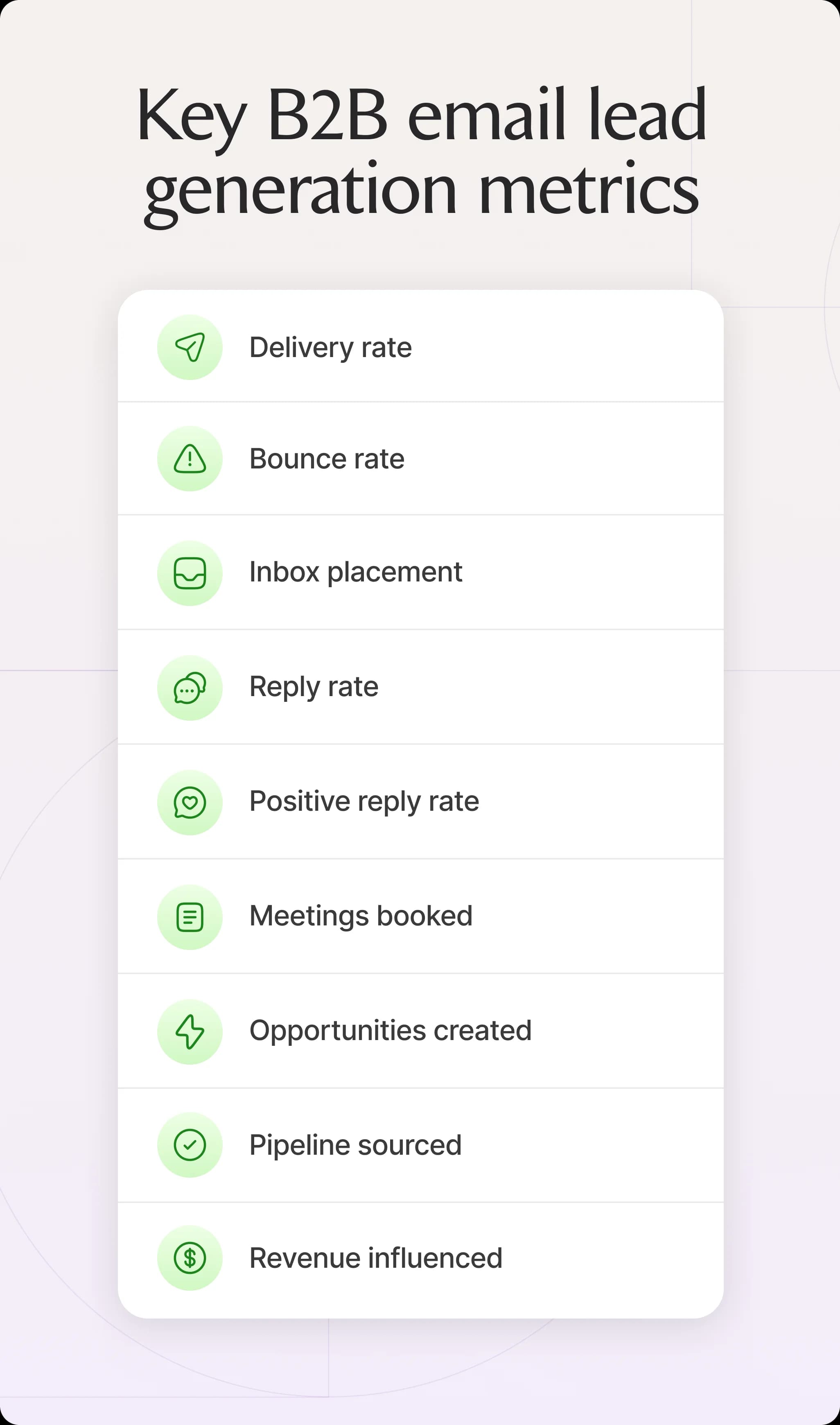
Evaluating cold outbound success means looking at a complete chain of relevant metrics. Tracking each step in order makes it easier to find bottlenecks.
Monitor all of the following cold outbound metrics:
Delivery rate
Bounce rate
Inbox placement
Reply rate
Positive reply rate
Meetings booked
Opportunities created
Pipeline sourced
Revenue influenced
For cold outbound, realistic benchmarks are often lower than most teams expect. Instantly's 2026 Cold Email Benchmark Report detailed an average reply rate of 3.43%. Top quartile campaigns reached 5.5% or higher, and elite campaigns exceeded 10%.
Use the following ranges as performance benchmarks:
Under 1% reply rate usually signals weak targeting, poor deliverability, or irrelevant messaging.
Around 3% means the campaign sits in the broad market average.
Above 5% usually means the segment, trigger, and message are working together.
Above 10% is elite and usually comes from tight segmentation, strong timing, and active testing.
Finally, don't average every campaign together. Break performance down by ICP, segment, trigger, offer, sender, and domain. Otherwise, one strong segment can hide multiple broken ones.
A/B testing for continuous improvement
Test the parts of the campaign with the highest likelihood of impacting buyer behavior. Segmenting criteria, outreach triggers (especially intent signals), and calls to action (CTAs) are all good places to start.
Each test should isolate one variable and answer a question your sales team can act on. For example, "Do revenue operations leaders respond more to offers about CRM routing pain or lead quality pain?"
Common B2B email lead generation mistakes
Most email programs fail because the underlying system is weak. The copy usually receives the blame first because it's the most visible. The real culprit, however, is usually hiding in other parts of the motion.
Look out for these common mistakes:
Scaling volume before fixing deliverability
Sending from the primary company domain
Targeting accounts with a poor ICP fit
Over-personalizing without saying anything useful
Writing follow-ups that add no new reason to reply
Treating open rates as revenue signals
Letting bad data (stale accounts, wrong titles) sit in your CRM
Using AI without guardrails on tone, claims, or targeting
How Artisan powers B2B email lead generation at scale
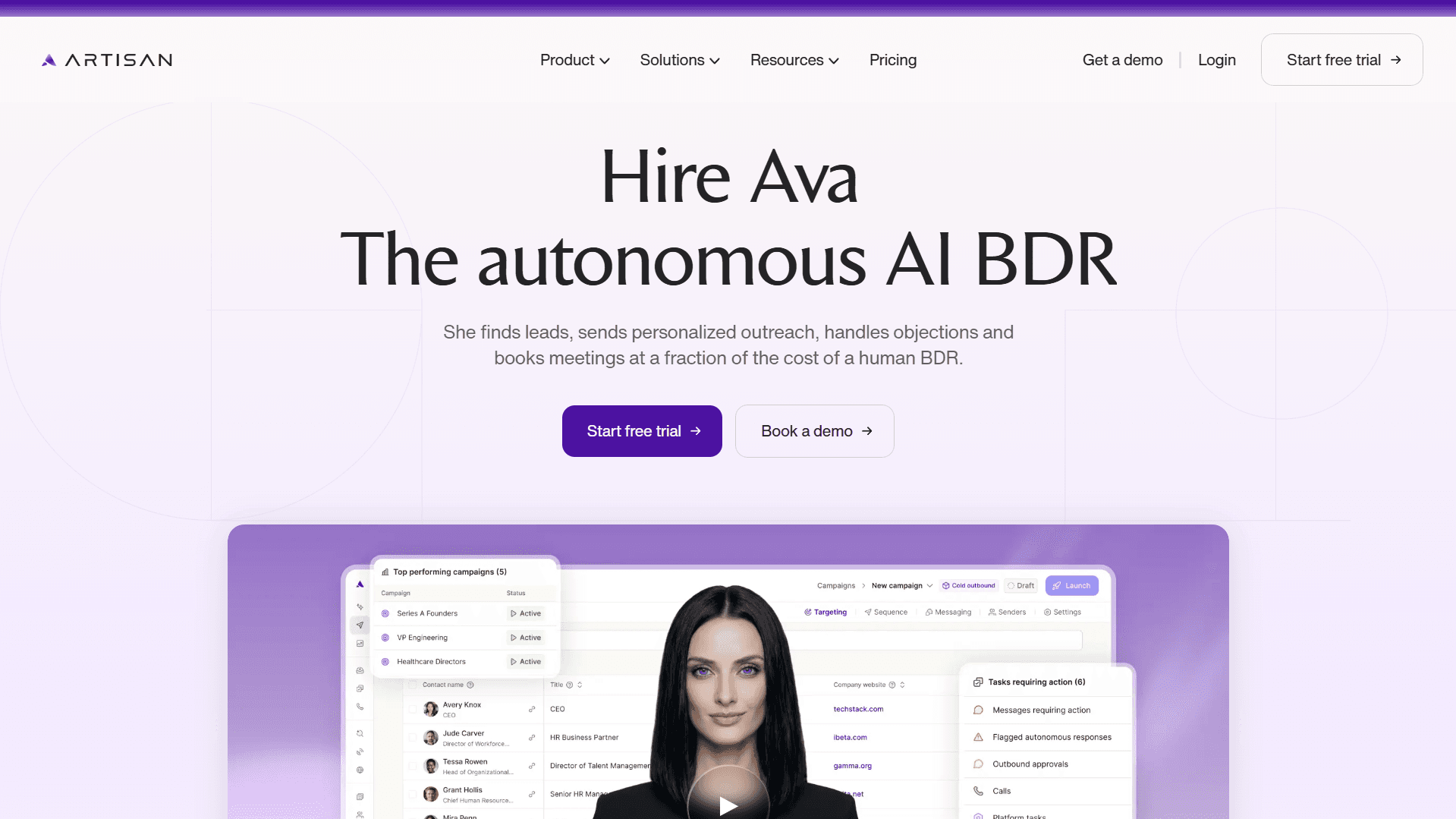
Artisan is an outbound platform powered by an AI business development representative (BDR) called Ava. It helps B2B teams run email lead generation without combining separate tools for enrichment, personalization, sequencing, deliverability optimization, and CRM sync.
Prospecting, personalization, and follow-up
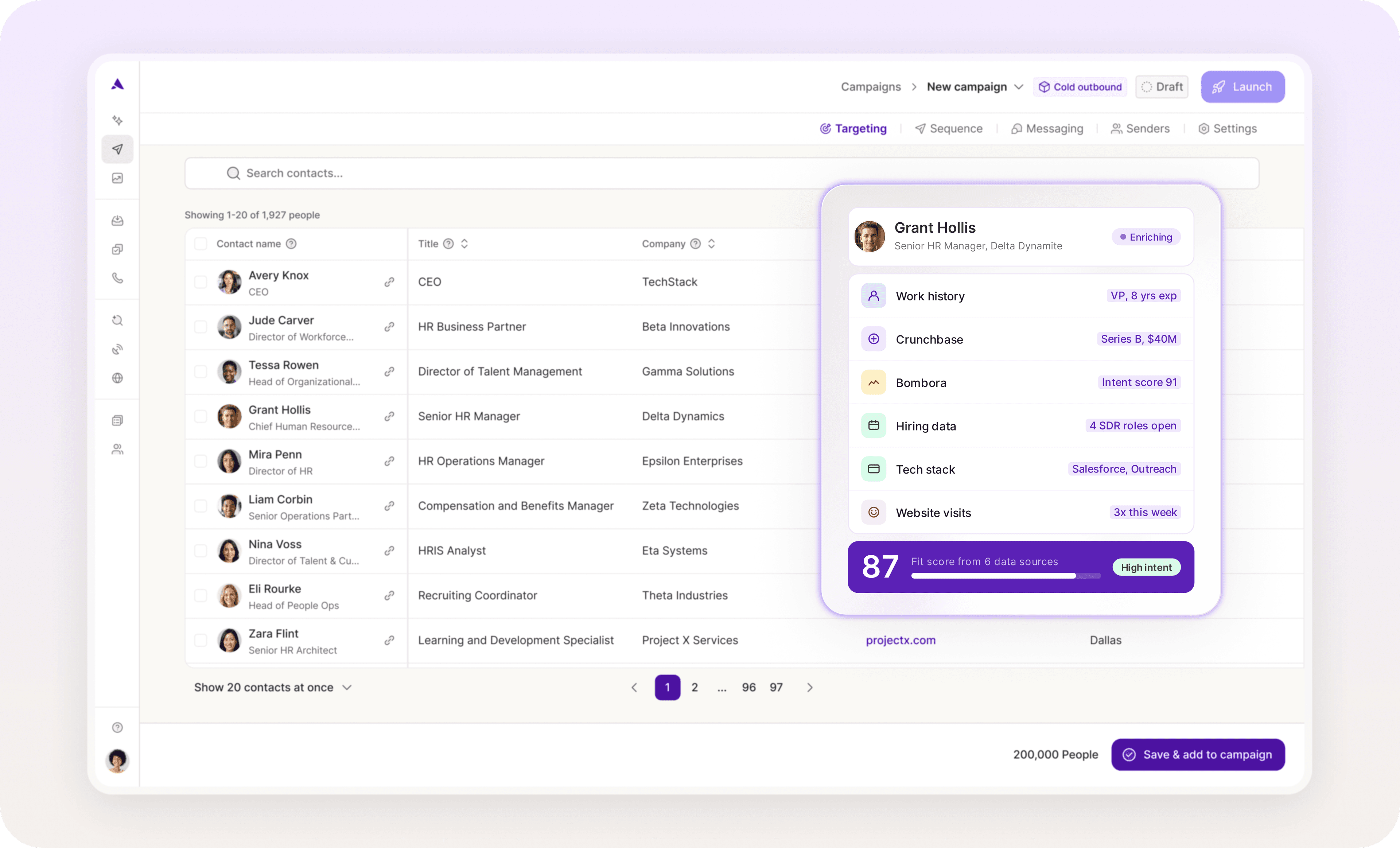
Ava sources leads from over 250 million verified contacts across more than 200 countries and enriches prospects with intent signals. She composes human-like personalized emails, handles objections, and books meetings.
Multi-domain infrastructure
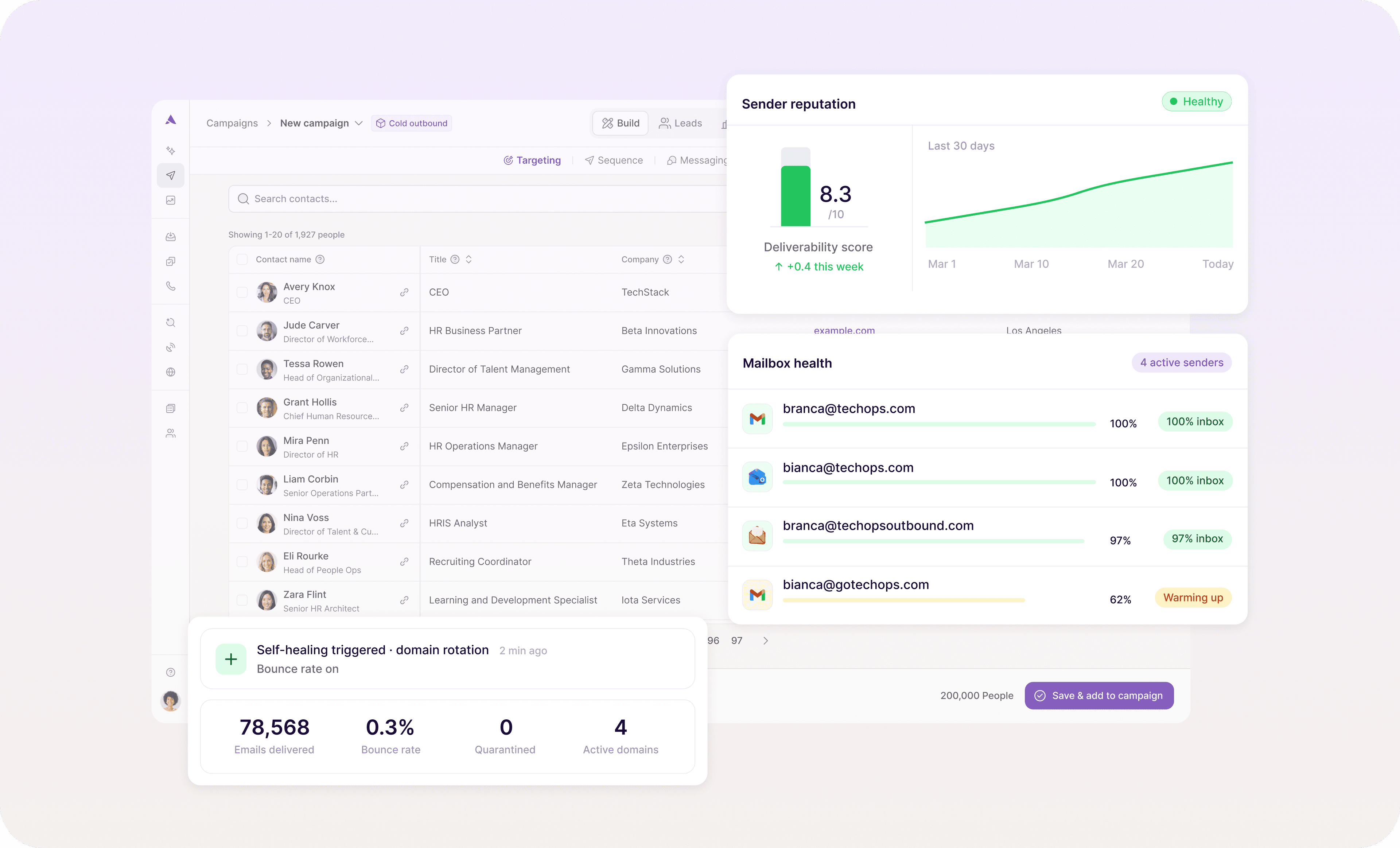
Artisan takes care of the infrastructure layer behind outbound. It handles mailbox warmup and distributes outreach across multiple domains to maintain high deliverability.
AI BDR automates outbound prospecting
AI BDR Ava handles all of the early and middle stages of the outbound workflow. She runs website visitor deanonymization, intent signal tracking, AI message generation, and meeting scheduling without any need for human input.

The fundamentals don't change. Execution does.
B2B email lead generation ultimately comes down to reaching the right person with a relevant message at the right time. This part hasn't changed.
What has changed is the difficulty. Buyers research more independently before engaging sales, and generic AI copy raises suspicion more quickly. To justify outreach investments, reps now need intent-based targeting, precise segmentation, and multi-channel cadence with deep personalization.
Artisan takes this burden off reps' shoulders. AI BDR Ava finds ICP-fit leads, scores them based on up-to-the-minute intent signals, composes and sends personalized outreach, manages follow-up, and protects deliverability. All of which means your team can spend more time on qualified conversations.
Automate your outbound with an AI BDR
Meet Ava—your AI BDR who handles prospecting, outreach, and follow-ups, so your team can focus on closing.

Jenny Romanchuk
SME @ Artisan
Jenny creates senior-level content for sales, SEO, and marketing professionals. She also leads partnerships at the District #1 Charitable Foundation.