How to use AI in sales for prospecting at scale
A practical guide on how to use AI in sales for prospecting, outreach, and pipeline support.

AI is the key to scalable prospecting.
Whether it’s an AI writing assistant generating a cold email or an AI BDR running your entire outbound sales workflow, AI tools help you reach more leads, improve personalization, and generate sales opportunities at scale.
Why sales teams are turning to AI right now
Sales teams are increasingly using AI sales tools to automate prospecting tasks. In fact, according to HubSpot’s 2025 Sales Trends report, only 8% of sales reps don’t use AI at all.
The other 92% of reps who do leverage AI use it for optimizing the sales process (84%), saving time (83%), and personalizing customer interactions (80%).
But why now? What’s causing AI to become operational rather than experimental in B2B sales teams?
Here are the major reasons for this high rate of AI adoption:
Rising outbound volume with shrinking response rates: To compete for lead attention in increasingly crowded email inboxes, reps need to boost outreach volume and improve personalization. Unless you hired new sales development representatives (SDRs), these two goals used to be mutually exclusive. But with AI sales automation, they’re within reach.
Manual prospecting and follow-ups breaking at scale: Managing high-volume prospecting while remembering to nurture and follow up with leads is too much to handle manually or semi-manually. Leads fall through the cracks. Reps feel overwhelmed. AI sales automation tools help these teams automate all this outreach with auto.
Pressure from leadership to “use AI”: Executives know AI has the potential to boost productivity, so they instruct sales managers and revenue professionals to implement AI tools.
Where AI actually fits in the sales process
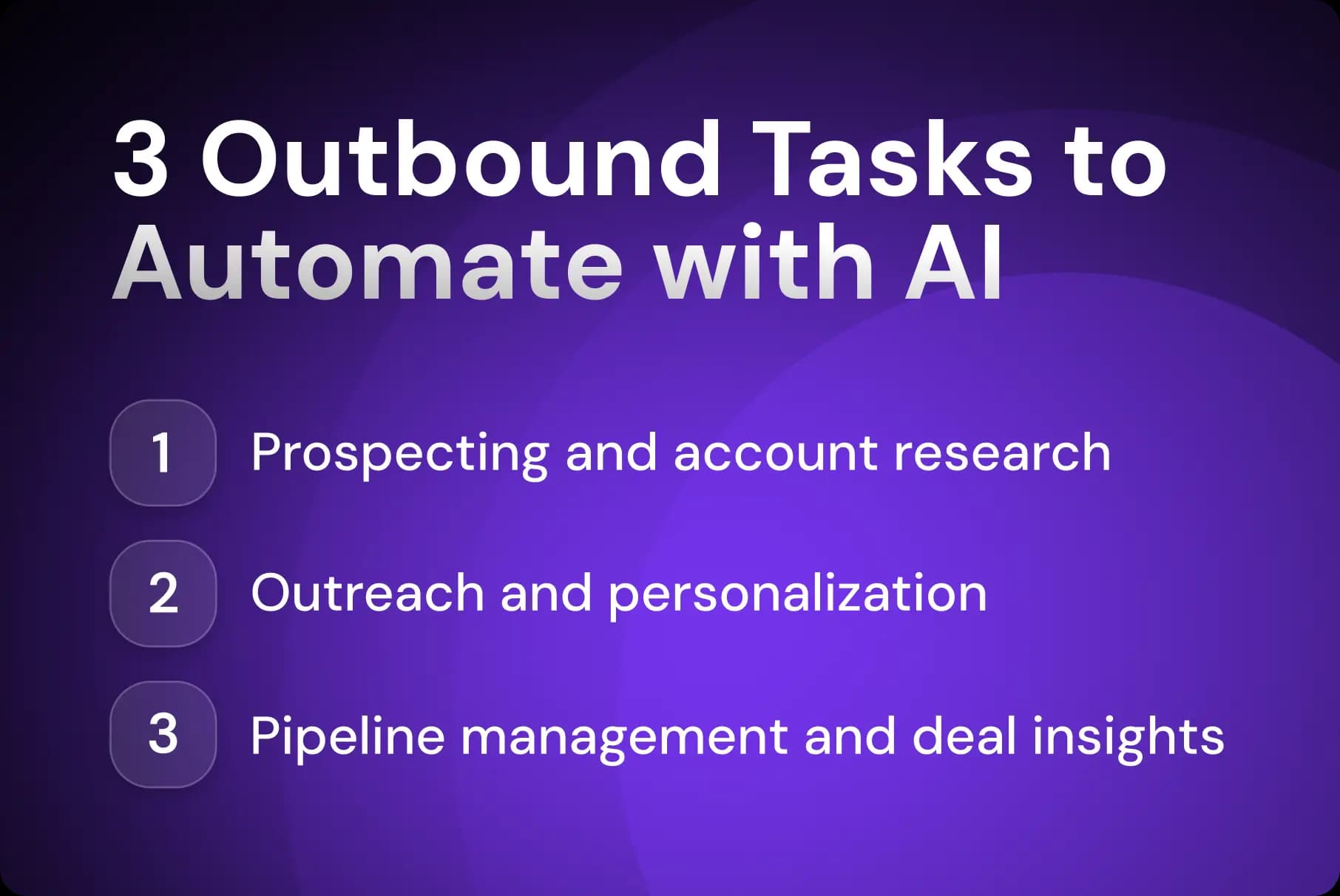
From discovering and engaging high-quality leads all the way through to supporting account executives in the closing process, AI sales tools can help your sales team improve lead generation, shorten sales cycles, and close more deals.
Prospecting and account research
Sales reps no longer need to spend hours every day finding leads and researching them online. AI prospecting tools now handle that part of the job for them.
Reps are already taking advantage of this new efficiency. Seventy-four percent of them say AI tools have made buyer research easier, according to HubSpot.
These are the main AI features that streamline prospecting and account research:
AI business development representatives (BDRs) that automatically find leads who fit your ICP
Demographic, firmographic, technographic, and intent data enrichment
Buying signal detection
Web visitor tracking
Account scoring based on behavioral and intent data
Outreach and personalization at scale
AI sales automation platforms, such as AI BDR software, automate personalized outreach and follow-up to your leads, often across multiple sales channels.
This dramatically boosts sales efficiency and allows reps to focus on holding meetings with qualified prospects instead of wasting time scouring the internet for new ones.
These are the most popular AI features that help with outreach automation:
Trigger-based multi-channel campaigns
Email and social media message generation
Personalization using role, industry, and activity
Automated follow-ups triggered by analysis of lead behavior
Pipeline management and deal support
AI sales tools aren’t just for prospecting and lead generation.
By analyzing sales data and generating insights, AI tools also help sellers manage their pipelines, run productive sales meetings, and move prospects through the buyer’s journey.
AI can even help sellers determine the right sales action for leads based on their prior behavior. According to Highspot’s State of Sales Enablement Report 2025, 45% of high-performing organizations are using AI to suggest next steps to sellers.
The following AI features help sales reps in the later stages of the sales process:
Call summaries
Automated analysis of transcripts and insight generation
Suggestions for next steps
Deal risk notifications
Sales deck and proposal customization
Real-world examples of AI in sales (what teams are doing today)
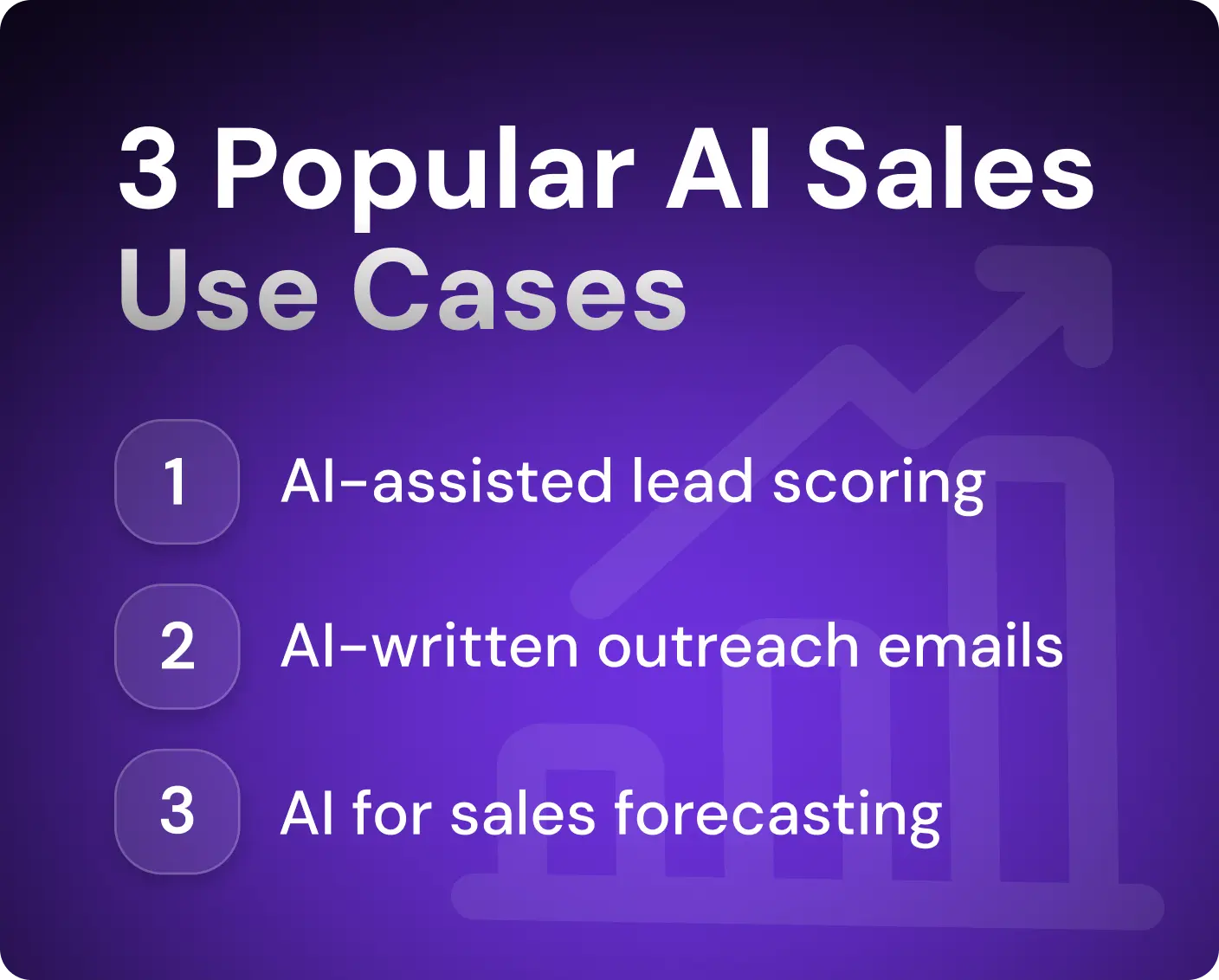
In a ZoomInfo survey that asked GTM professionals about their AI preferences, the most popular use case was scaling prospect outreach. While tremendously important, boosting outreach is not the only application.
Outbound teams are also using AI to automate inbound tasks like lead scoring and to improve and speed up strategic work like sales forecasting.
AI-assisted lead scoring
Sales reps waste a lot of time speaking with inbound leads who turn out to be unqualified for a product or service. AI is making these costly interactions a thing of the past.
AI lead scoring tools automatically prioritize accounts based on their online behavior, ICP fit, and likelihood of buying (based on intent signals).
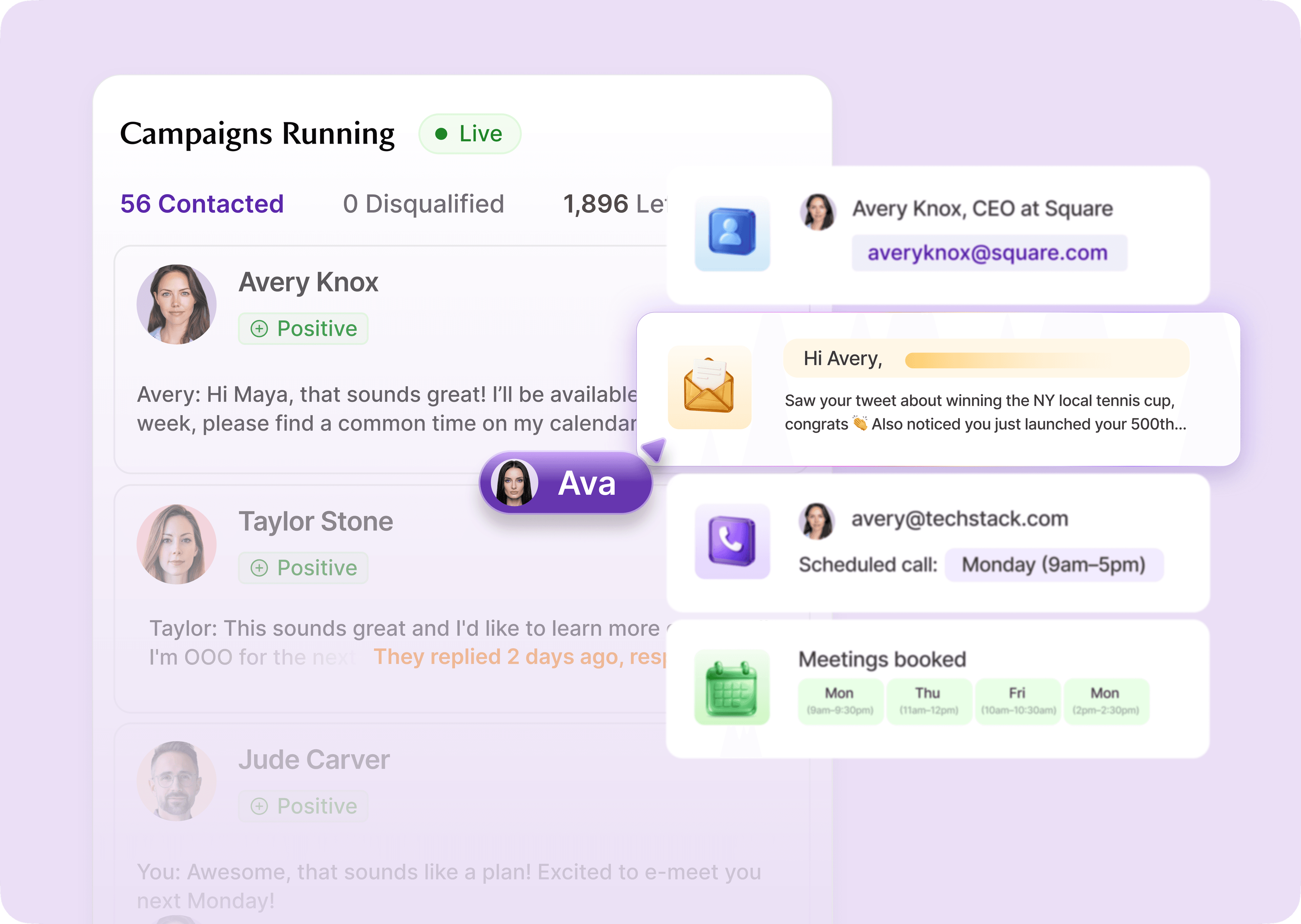
Artisan, for example, identifies web visitors at the company level and creates enriched lead profiles of key decision makers—containing email addresses, job titles, intent signals (such as page visits), and more.
The platform uses AI to automatically prioritize these new leads and send personalized outreach to those that are likely to be interested.
AI-written outreach drafts
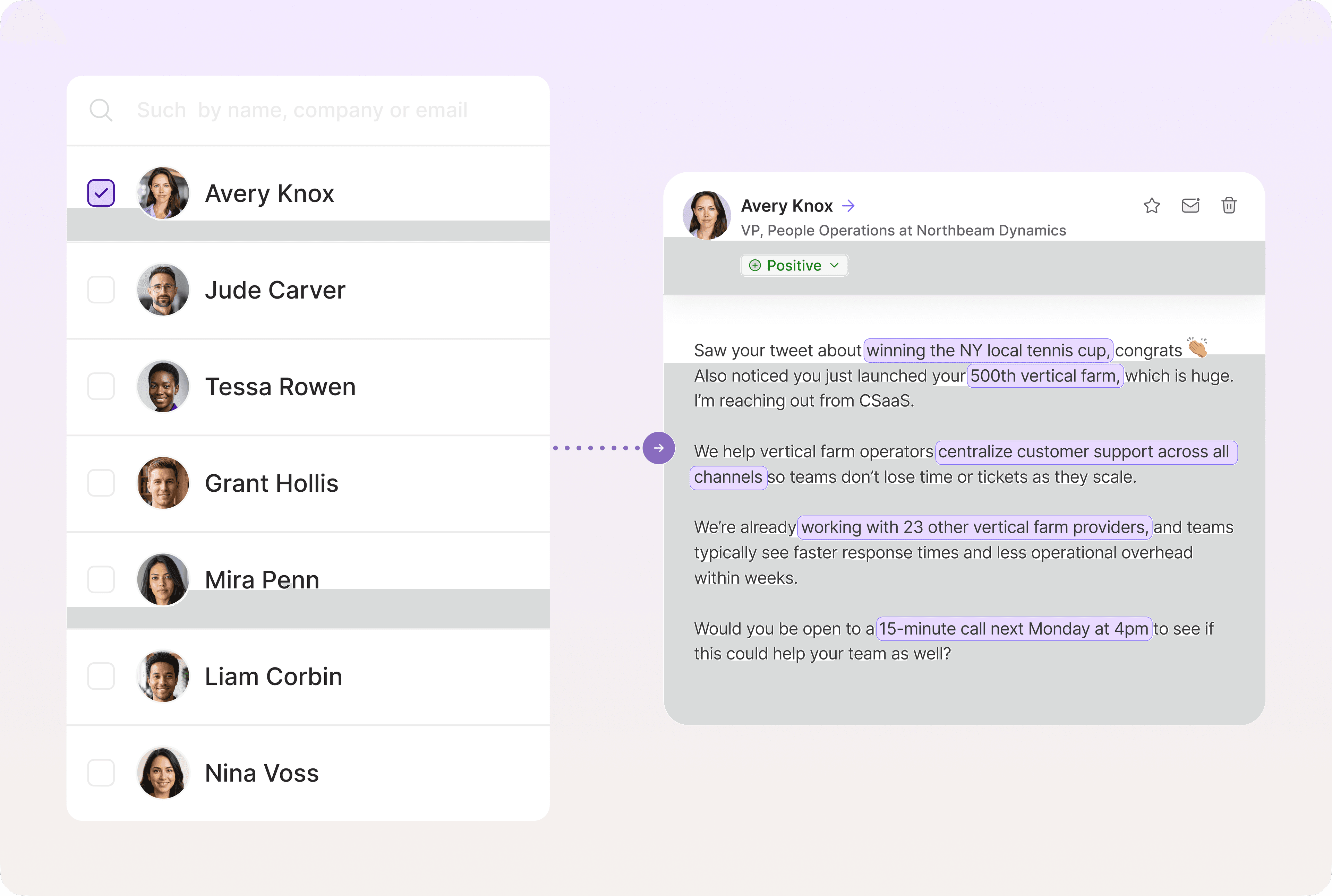
AI sales automation tools can write and send personalized outreach emails based on information like a lead’s online activity, company news, and technology use.
While humans are still needed initially to configure these AI BDRs and monitor their emails, most AI sales agents can consistently generate relevant, human-sounding emails, whether they're for cold outbound or inbound appointment-setting.
The emails are often of such a high quality, and the method so cost-efficient, that some companies are replacing human BDRs with AI agents. For example, SaaStr uses Artisan for outbound email outreach and sees a 3.7% reply rate. This has saved them “hundreds of hours on outbound while maintaining brand reputation,” according to Senior Vice President Amelia Lerutte.
How is a 3.7% response rate possible? Artisan’s AI BDR Ava uses hundreds of lead data points to craft and send personalized email sequences, resulting in booked meetings on autopilot and at scale.
AI for sales forecasting
AI is sales forecasting’s new best friend.
AI forecasting tools quickly and accurately analyze large amounts of current and historical pipeline data to spot patterns and make predictions about everything from potential annual revenue to the probability a specific deal will close.
Sales directors and VPs are using these insights to make more informed decisions around sales strategy and process optimization.
How to start using AI in sales without overwhelming your team
AI is powerful. But its promise can be seductive. It can cause sales leaders and RevOps professionals to move too quickly. It’s important to fight that urge and avoid getting carried away.
A far safer approach is to pick one bottleneck to solve at a time and set up human controls and guardrails that ensure your AI operates in line with your messaging and vision.
The key to implementing AI without overwhelming your sales team is to set up AI infrastructure for one well-defined sales motion or activity before moving onto another.
This could be your outbound campaigns, inbound nurturing, administrative tasks around sales meetings (prospect research, objection handling, meeting scheduling), or any other area you deem appropriate.
Implement one tool at a time
Avoid trying to implement multiple AI tools at once. Instead, pick the sales motion that has the most painful bottlenecks, find an AI tool to solve it, and master that tool before moving on to the next.
This gradual, sustainable approach to AI adoption ensures your sales and marketing teams doesn't become overwhelmed by big changes to day-to-day workflows.
Here’s a rundown of the problems that different AI sales tools solve:
AI BDR platforms: Manual account research, inaccurate lead scoring that doesn’t use-real-time data, message personalization at scale
AI-assisted databases: Incomplete and outdated lead data (many AI BDR platforms include their own databases)
Scheduling assistants: Scheduling of meetings and verification that can quickly eat up sales reps’ time
Meeting: Admin work associated with sales call transcription and summarization
Conversation analytics: Time-consuming analysis of sales transcripts to find coaching opportunities
Content generation tools: Costly creation of sales collateral—competitor comparisons, ROI breakdowns, tailored spec sheets, etc.
Your AI BDR platform and lead database integration will be responsible for prospecting at scale, so it’s important to choose wisely. Opting for a multi-functional tool will allow for fast implementation and onboarding without the cost of a complex stack.
Artisan, which is built around AI BDR Ava, combines multiple features. Database access, lead enrichment, prospecting, lead scoring, message personalization and delivery, and analytics are all included.

Data readiness and CRM hygiene
Data is the fuel of AI automation. If your data is incorrect and outdated, AI outputs will be weak at best and useless at worst.
For example, if a contact record’s job title is wrong, then your AI email automation tool might well generate a cold email with the wrong job title in the opening line, ruining any chances of winning the lead’s attention.
As a result, data readiness and CRM hygiene are absolutely imperative to the success of your AI lead generation strategy.
Here are tips for preparing your data for AI:
Run weekly deduplication across contacts, leads, and accounts so AI doesn’t email the same person twice.
Set up automated contact data enrichment to ensure the AI tool always has complete and up-to-date lead data for outreach personalization and content generation.
Sync your CRM, sales engagement, AI, and enrichment tools to make sure relevant data is informing the AI’s decision-making.
Set up rules to exclude low-confidence data from AI prompts so that you don’t send messages that contain the wrong intel.
Human control and guardrails
Responsible AI use means augmenting your sales team, not completely outsourcing human judgment and oversight.
Set up these guardrails to ensure your AI tools don’t make mistakes:
Approval layers: Set up notifications for humans to review content before it goes out to prospects, especially in the early phases when you’re still training the AI on your product, audience, and content style.
Messaging boundaries: Establish rules for prohibited language, tone, and brand voice so the AI sounds like your human reps.
Compliance awareness: Configure AI tools to follow data privacy regulations and respect opt-out requests.
Tools sales teams use to apply AI today
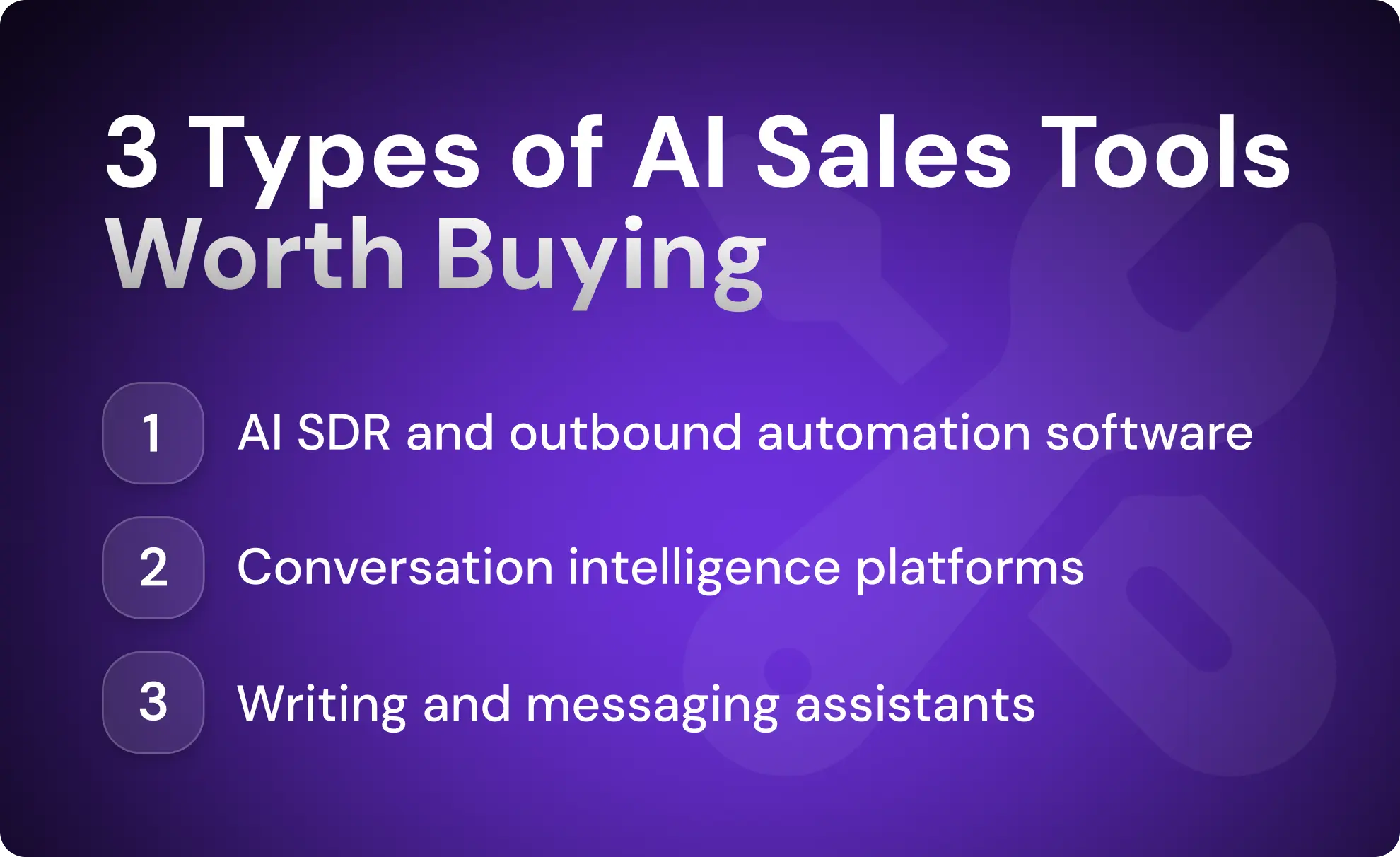
Modern sales tools allow you to capture the value of AI for sales without having to build and maintain your own AI systems. The three most common AI software categories for outbound sales are AI SDR platforms, conversation intelligence tools, and AI writing assistants.
AI sales outreach platforms
AI sales tools—usually referred to as BDR or SDR platforms—automate prospecting, outreach, and follow-up. Often, they can also assist with reactivating established leads that have gone cold.
For example, Adrian Iorga, founder of Stairhopper Movers, uses AI to reach out to interested leads if they turn unresponsive after a quote request.
“If a customer contacts us for a quote but doesn't follow up after we reply, our AI automatically sends an email highlighting the money-saving benefits of enlisting professional movers (i.e., prevent damage to expensive, fragile possessions) and concludes with a call to action. ”.
The best AI BDRs can handle all of the following tasks:
Find new ICP-fit leads
Enrich lead profiles with high-quality data
Research leads across social and the web
Write personalized email and social media messages
Run customized multi-channel sequences
Track and optimize email copy and email deliverability
Send follow-ups
Using an AI BDR is arguably the easiest way to achieve prospecting efficiency. AI BDRs don’t sleep. They’re scalable. And they’re far more affordable than hiring 10 human BDRs.
Conversation intelligence and call analysis
AI-powered conversation intelligence platforms analyze your sales team’s customer interactions to surface insights about your performance.
For example, a tool like Gong or Clari could monitor and analyze thousands of your outbound team’s cold calls and discover that when reps speak for 60% of the time, leads are more likely to book a meeting.
Intelligence like that is incredibly helpful for sales coaching. It enables sales leaders to identify what’s working and what isn’t. They can then relay that back to their team or a specific sales rep.
A useful coaching process follows the insight into the next conversation. Agree on one behavior to practice and compare later calls against the same rubric. Artie’s public use cases include coaching completed sales and customer success calls over time. Look for specific, supported feedback when evaluating that responsibility.
Writing and messaging assistants
Writing remains a regular task for many prospecting reps.
They need to compose cold emails, follow-ups, social media messages, presentations, phone call scripts, and other types of persuasive copy—day after day.
AI writing assistants automate most—and in some cases all—of this process.
Here are the three most popular AI writing tools for outbound sales reps:
ChatGPT: A general-use chatbot that’s very good at generating and rewriting sales copy
Grammarly: An AI-powered editing tool that gives reps suggestions on how to improve their writing
Rytr: A versatile writing assistant that generates content for over 40 different use cases, including cold email copy and social media posts
Typical mistakes teams make when using AI in sales
Adding AI to your sales workflows requires flexibility and patience, especially in the early stages of implementation. Otherwise, you run the risk of depriving your sales process of human connection, generating strange AI outputs, or overwhelming your reps with new features.
Here are the main pitfalls to avoid when using AI for sales:
Over-automation: Sales processes depend on the human touch. Automate the busywork and early-stage cold outreach, but ensure you still make room for building human-to-human relationships that foster rapport and trust with prospects.
Blind trust in outputs: During implementation, AI sales tools require consistent oversight, training, and adjustment to ensure they’re producing the best outputs. Review messages and improve them with new rules and training. Many teams assign a staff member who knows sales and tech to optimize AI agents.
Tool overload: Overwhelming yourself and your reps with several new AI platforms at once will just drive up expenses and cause confusion among your team. An all-in-one AI platform like Artisan consolidates your outbound tech stack rather than expanding it.
AI belongs inside sales workflows, not “above” them
For AI to produce significant efficiency gains, it should integrate seamlessly into important sales processes like prospect research and cold outreach.
AI shouldn’t become a separate, high-level system that makes suggestions to reps who then must perform the task.
Artisan was built to operate inside your sales workflows. The whole platform is built around an AI BDR named Ava who works with the effectiveness of a team of human BDRs. She handles lead discovery, scoring, email personalization, and delivery so reps can focus on realinteractions with potential buyers.

Automate your outbound with an AI BDR
Meet Ava—your AI BDR who handles prospecting, outreach, and follow-ups, so your team can focus on closing.

Sam Rinko
SME @ Artisan
Sam Rinko is a former SaaS sales rep turned tech writer. He sold real estate software before writing about lead generation, cold calling, and AI sales tools.