B2B ABM strategy: How to win high-value accounts
Learn how to scale account-based marketing to target, engage, and convert high-value accounts faster.
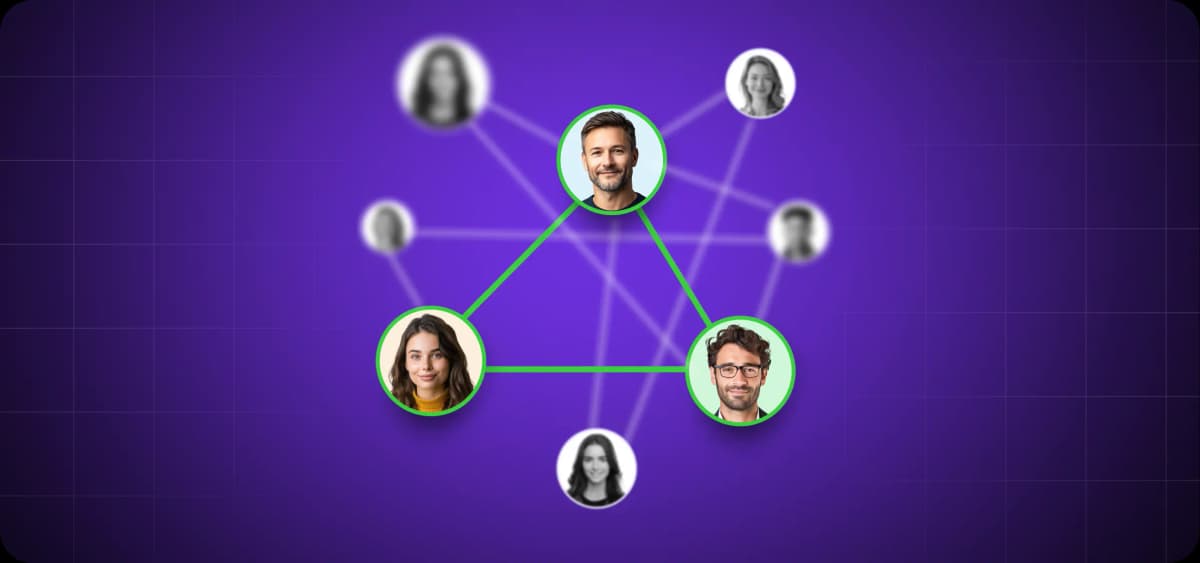
Most ABM advice assumes you have a big team and time to warm the market. But lean teams, which make up two-thirds of companies, don’t.
You’re balancing pipeline targets, limited headcount, and fragmented marketing. All at once.
That’s why you need an account-based marketing strategy that reaches the right accounts without cumbersome and expensive workflows.
What Is B2B Account-Based Marketing (ABM)?
Account-based marketing in B2B is a multi-step, go-to-market strategy where specific, high-value accounts, not leads, are the unit of focus across sales and marketing.
ABM has five core attributes:
Fewer target accounts
A sharply defined ICP
Acting on intent signals
Faster feedback loops
Metrics tied directly to pipeline progression
Notably, 23% of decision-makers worldwide reported that the ROI of ABM was 51% to 200% higher compared to non-ABM tactics, according to Forrester.
Example of B2B ABM in Action
A mid-market SaaS team targets 120 high-fit accounts and monitors intent data like funding, hiring, and pricing-page visits. When an account triggers on an intent signal, marketing sends sales outreach within hours with personalized email and social media messages tied to that signal.
Why Traditional Demand Gen Breaks in B2B Sales
Traditional demand generation optimizes for volume. However, B2B companies typically aren’t built on volume. The quality of leads matters much more.
Most SaaS teams feel this gap as soon as they try to scale outbound or align with marketing. You generate leads, but deals stall. You increase marketing efforts, but pipeline quality drops.
Here are three precise reasons why demand gen breaks:
Lead volume doesn’t equal buying intent.
B2B sales cycles are long and multi-threaded.
Marketing and sales optimize for different signals.
Because demand gen frameworks treat individual actions as progress (as with all traditional marketing), they push volume into the funnel. All the while, sales teams waste resources qualifying accounts that were never close to buying.
The Account-First Mindset: Flipping the Funnel
When teams switch from leads to accounts, the biggest change is how work is prioritized and owned.
Teams stop running lead-based workflows that optimize for activity and customer reach instead of deal readiness.
An account-first mindset eliminates the following mistakes:
Routing individual leads to reps without account context
Scoring clicks, opens, or downloads instead of buying signals
Treating marketing’s job as finished once a lead is passed to sales
Interpreting non-responses as failure rather than a prioritization signal
Instead, B2B marketing teams start running account-based workflows that force clarity and faster decisions.
Here are the key benefits of making the switch to ABM:
Operating from a fixed, shared list of target accounts across sales and marketing
Re-prioritizing accounts weekly based on real engagement and intent signals
Identifying key decision-makers involved in the buying process before outreach begins
Defining in advance what happens when an account does not respond
In ABM, lead progress is defined by whether an account is moving closer to a sales conversation or being intentionally deprioritized, not by arbitrary metrics that look good on paper but don’t indicate true progress.
Account-Based Isn’t Just a Marketing Play
ABM programs fail when they’re treated exclusively as marketing campaigns rather than shared-revenue workflow.
Normally, marketing owns account selection, research depth, and signal detection, which means:
Defining and maintaining the target account list
Monitoring intent signals and engagement across channels
Supplying sales with timely, account-specific context
Sales, in turn, owns progression, timing, and conversion rates by acting on signals within clear response-time rules agreed upon by sales and marketing. Reps start running outreach for specific accounts when an interest threshold—usually indicated by intent signals—is reached.
Both marketing and sales are ultimately accountable for the same high-level outcomes, which removes ambiguity around success and advances deals to closure.
Nail the Strategy Before You Touch a Tool
Before any automation, sequences, or AI come into play, teams should lay a firm foundation for ABM. This requires a detailed ICP (ideal customer profile), a solid account list, clear segmentation, and full alignment between sales and marketing.
Define a Clear ICP (and No, Simple Buzzwords Don’t Work)
A precise and jargon-free ICP is a foundational part of an effective ABM campaign. You will be spending significant resources pursuing a handful of accounts, and your ICP is a tool for identifying the highest-value targets.
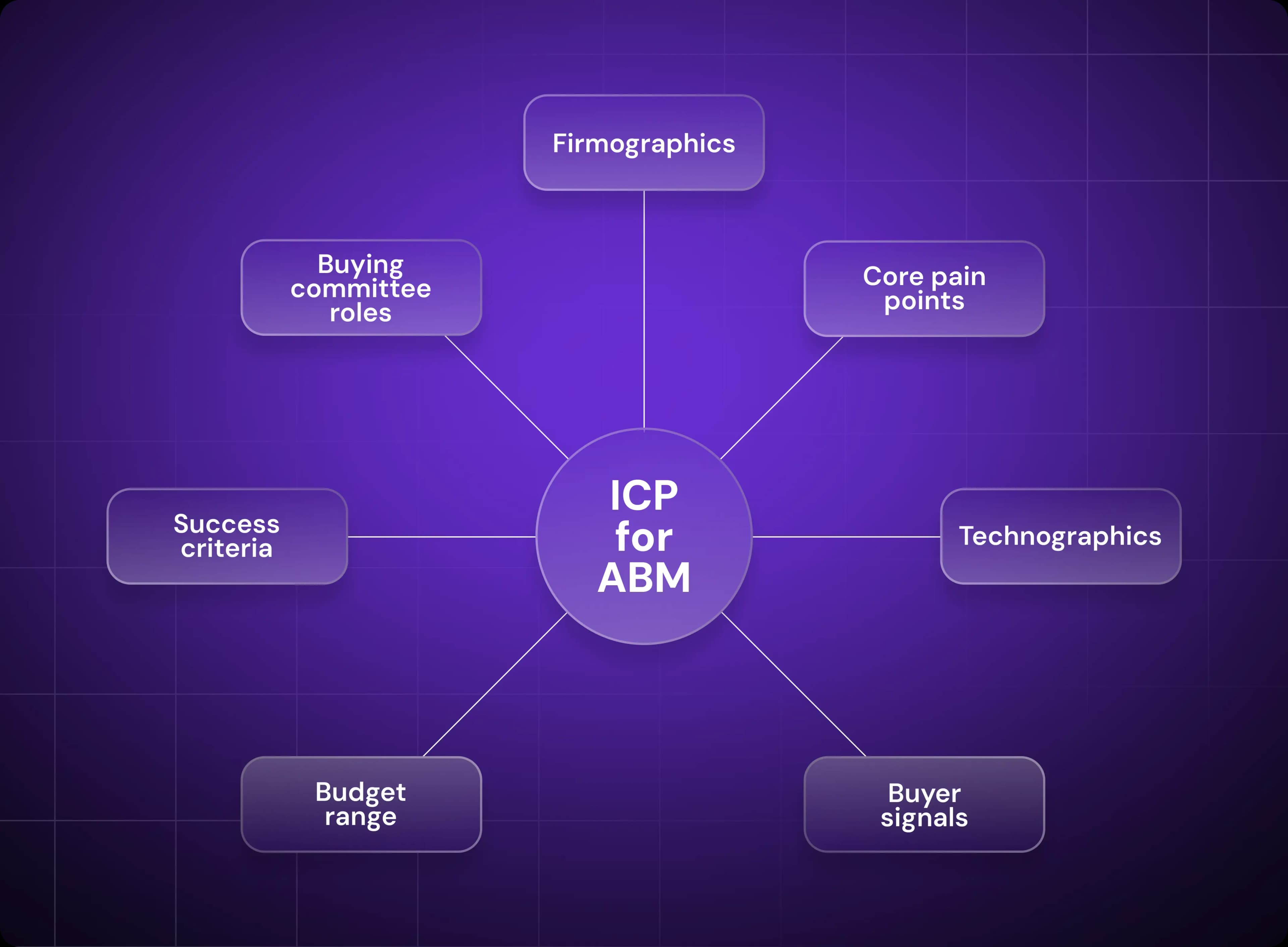
Include all of the following data points in your ICP:
Firmographics
Core pain points
Technographics
Buyer signals (website visits, whitepaper downloads, email replies, etc.)
Buying committee roles
Budget range
Success criteria
Here’s an ICP for one of Artisan's most profitable segments: “Mid-market fintech companies with an annual tech budget of $200K. Their core pain point is an inability to implement AI for marketing. They are ROI-driven, and the primary decision-maker is the CTO.”
Build Your Account List With Precision
Your account list should strictly adhere to your ICP criteria, as you’ll be targeting these prospects with personalized content.
Start by fixing the size of your account list. If your team can’t research, contact, and follow up on every account properly, the list is too big. For most lean teams, 50 to 150 contacts is a good starting point.
Next, separate the ICP fit from the timing. Fit tells you how closely an account matches your ICP criteria and, consequently, whether they’re worth selling to at all. Timing is about understanding the best time to reach out. It’s based on intent signals.
Funding announcements, role-specific hiring, product launches, or repeated visits to pricing and demo pages are the signals you want to track. Outreach or any other ABM initiatives should only happen when one of these events occurs.
Segment Your Accounts by Tier and Engagement
Once you nail your account list, you should decide how much effort each account deserves.
Start by assigning tiers based on expected deal value and buying complexity.
Tier 1 is made up of the highest-value accounts. These accounts justify deep research, custom messaging, and multichannel outreach.
For medium-value tier 2 accounts, messaging should be tailored by segment and trigger, not handcrafted per account. You're still going after specific accounts, but the goal is relevance without manual overload.
Tier 3 accounts carry the lowest value but are still worth pursuing. Don’t spend time on nuanced segmentation. If they broadly match your ICP, they should stay on your radar until a signal appears, at which point automated outreach can be sent.
Align on Outcomes and KPIs
Before any campaign launches, sales and marketing need to agree on what counts as progress. If the answer is “engagement,” you’re already in trouble. Because for lean teams, the only metrics that matter are revenue-oriented.
Here are the three main ABM KPIs that matter:
Accounts entering active conversations
Meetings booked with key stakeholders
Qualified pipeline created from target accounts
This alignment also forces hard decisions. If an account generates activity but never progresses, it doesn’t receive more attention and more nurturing. It’s deprioritized.
Create Messaging That Doesn’t Sound Like a Template
If your message would make sense six months from now, it’s not personalized. Good ABM messaging earns a sales conversation thanks to a deep understanding of an account’s pain points and timing.
Research at the Account and Contact Level
Account-level research tells you what has changed inside a company. It acts as the basis for personalized, timely messaging, especially for introductory outreach.
Track the following events for your target accounts:
Funding rounds
Leadership changes
New product launches
Expansion into new markets
Hiring tied directly to your problem space
In addition, contact-level research—focused around pain points and recent activity—tells you why the person you’re reaching out to should care. It uncovers the problems this person owns so your message doesn’t miss the mark.
Speak to Problems by Persona, Not Job Title
In ABM, a persona is not a job title. A persona describes how a specific role experiences the problem you solve, how this problem is measured internally, and what risks the individuals in that role are trying to avoid.
Two people with different titles can share the same persona. Two people with the same title can also belong to different personas.
For example, a head of sales and a sales director may share the same persona if both are accountable for pipeline coverage. Two CMOs may belong to different personas if one is measured on brand awareness and the other on revenue attribution.
Define your personas by answering these questions:
What problem does this person get blamed for if it isn’t solved?
What metric are they evaluated on?
What risk makes them say no to new tools?
Use Content Formats That Fit the Channel
The essence of ABM is personalized messaging delivered through channels where your audience lives.
Direct emails tend to work best as first touches and should be short and specific, anchored to a single trigger or insight. Social direct messages work best as reinforcement, not cold openers.
Landing pages and short guides support accounts that have already shown interest. They help someone articulate the problem internally to others. Follow-up decks exist for late-stage deals. They summarize impact, proof, and next steps.
Position Your Solution Around Outcomes, Not Product Specs
In successful ABM, product details rarely move the deal forward during the early stages of the sales cycle. Features matter later, once the account agrees that the problem is worth solving. Leading with product descriptions may steer your prospective buyers away if they think you don’t understand their pain points.
To cut through the noise and build trust, anchor messages to what changes if your product is adopted. For example, you could talk about time saved, pipeline created, risk reduced, or work removed.
Outcome-first messaging makes it easier for someone inside the account to justify a conversation. Product-first messaging makes it easier to say no.
Validate your messaging by putting yourself in your prospects’ shoes and asking, “Why does this matter to us?” If you’re in doubt, rethink your messaging.

Automate your outbound with an AI BDR
Meet Ava—your AI BDR who handles prospecting, outreach, and follow-ups, so your team can focus on closing.
Plan Campaigns Like Micro-Pitches, Not Blasts
ABM campaigns are deliberate attempts to start a specific conversation with a specific account. Each campaign should be built around one clear trigger, one clear problem, and one clear next step.
Choose the Right Channel for Different Tiers
Channel choice is about aligning ABM effort with expected return on investment. Different tiers of account—based on value—warrant different levels of effort during outreach.
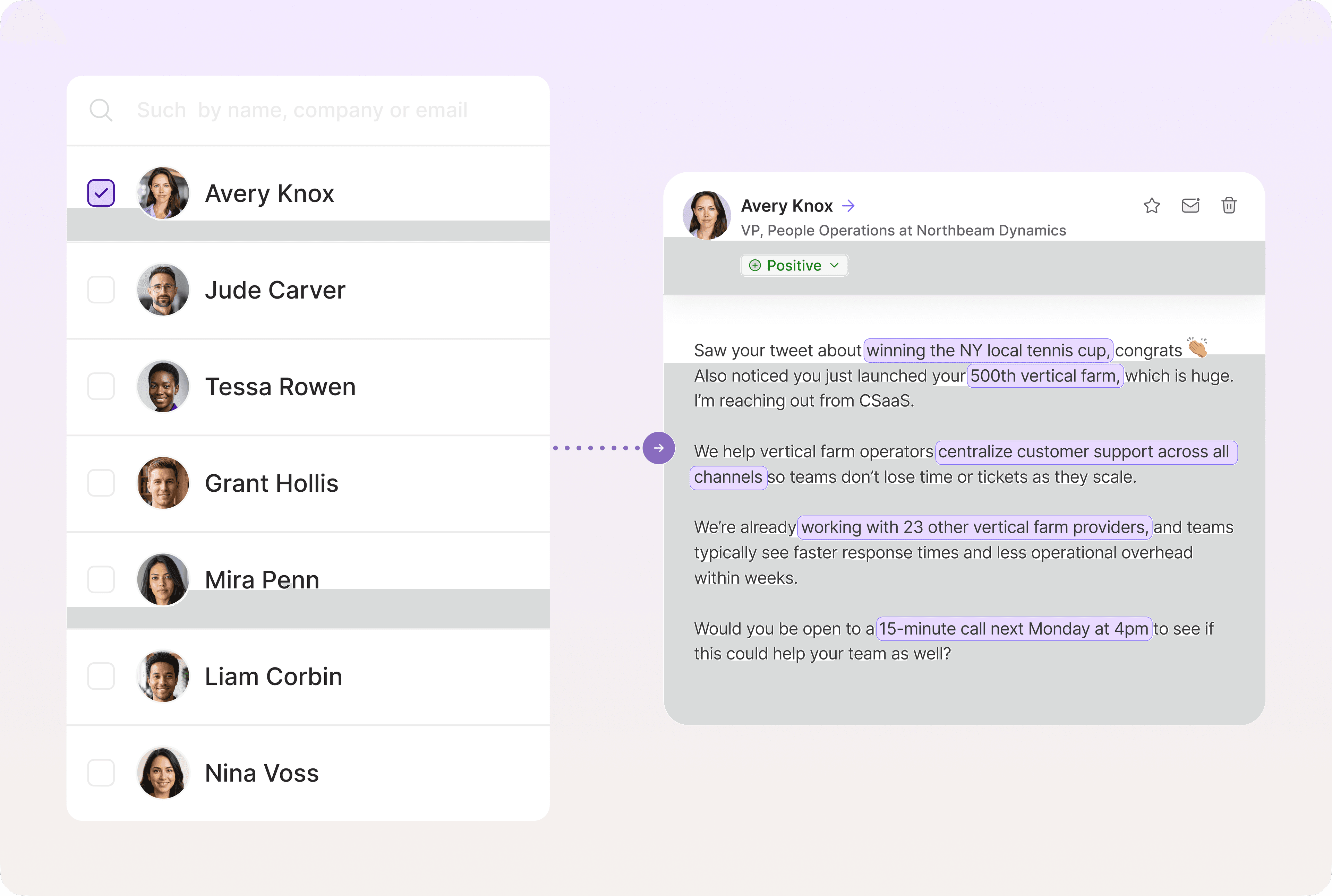
For tier 1 accounts, focus on deep personalization and direct outreach. LinkedIn messages, direct emails referencing a concrete trigger, and even direct mail make sense here because the potential deal size justifies the effort.
For tier 2 accounts, use marketing automation that balances relevance with scale. Tailored email sequences and focused ads aimed at a narrow segment work because the message can stay specific at scale with AI personalization.
For tier 3 accounts, limit effort to monitoring and light-touch outreach. Paid ads and simple email sequences are enough to surface intent. Most of the work for these accounts should be automated.
Wondering how to automate ABM outreach without sacrificing quality? Artisan is an outbound platform that uses AI to find, research, and connect with high-value accounts. AI BDR Ava crafts highly personalized messages at scale and on autopilot.
Match Every Touchpoint to Buyer Stage
Early-stage accounts need clarity, not pressure. Messages here should help them name the problem and recognize its impact. Education matters at this stage because the buyer hasn’t committed to change yet.
Mid-stage accounts already feel the problem. Messaging should shift from explanation to consequence. This is where “what breaks if nothing changes” resonates more than features or vision.
Late-stage accounts need reassurance in the form of proof. Case studies, ROI framing, and concrete examples all work well. These content assets reduce risk and help prospective customers gain internal buy-in.
Sequence for Momentum
Long sequences don’t create momentum, so your best bet is to keep things simple, personalized, and focused on next steps.
Here’s an example of an ABM outreach sequence:
An initial email triggered by an intent signal
A LinkedIn message that reinforces the original message
A follow-up that includes one useful asset or insight
A final message that makes the ask explicit
Remember that if a message doesn’t add new information or sharpen the problem, it doesn’t belong in the sequence.
Follow Up With Purpose
Every follow-up should aim for one of three outcomes: a meeting booked, a request for information, or a clear “not now.” In this way, follow-up moves the conversation with a target forward (even if that means closing it).
A positive reply usually moves the account into an active sales conversation, so the only next step is to confirm the scope and book time. Anything else delays momentum. Accounts that ask for more information should be treated as warm, and nurturing becomes a priority. The ultimate aim should be to book a meeting.
No reply after several follow-ups is a signal that the account is not ready or not relevant, so the sequence ends as planned, and the account exits active outreach.
Automate Without Sounding Like a Bot
Automated outreach and ABM platforms are changing the way sales teams work. They’re adding a layer of scale and speed that was unthinkable only a few years ago. However, the key to successful automation is messaging that matches your brand voice and is personalized to the recipient. Nothing will kill an ABM campaign faster than generic outbound.
Delegate Research, Enrichment, and Copywriting
AI has made lead prospecting far less tedious. For example, Artisan—which is built around AI sales rep Ava—automatically collects leads based on your ICP fit and scrapes firmographics, technographics, recent activity, role, and ten more data points for every account on your list.
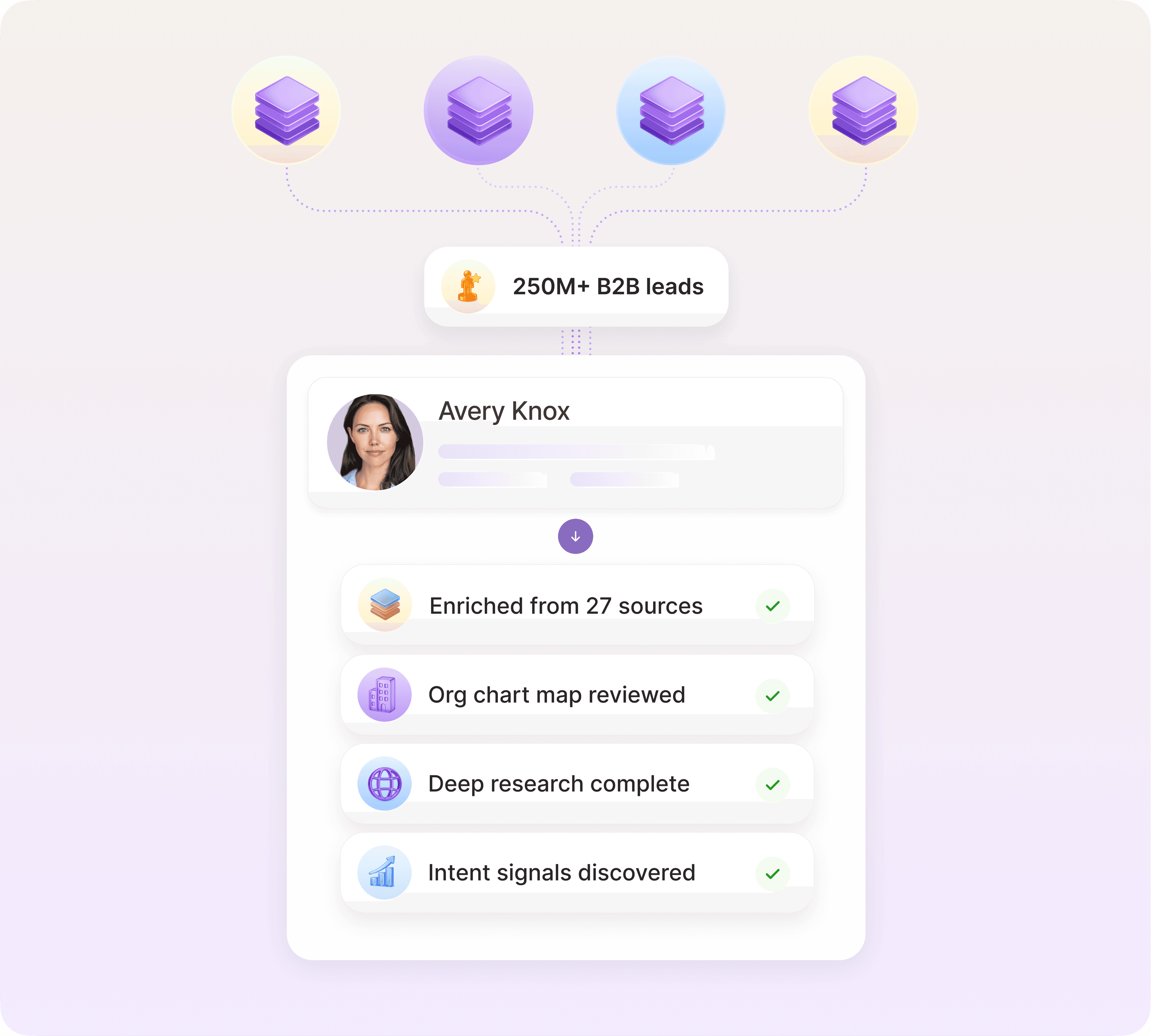
Ava then uses the latest information from social media, job dashboards, and news sites to generate highly accurate personalized messages that match your tone and style.

AI-first automation platforms like Artisan automate swathes of the ABM marketing and sales process. This allows for much greater scale and frees reps up to focus on having human conversations with high-intent leads.
Orchestrate Campaigns Across Channels
Decide upfront which channels will be used for each account tier. Do not let reps choose channels ad hoc.
Once you’ve done this, run all email, social media and ad messaging as coordinated steps, and ensure each channel reinforces the same trigger and message, rather than introducing new ones.
Stop a channel if it adds no new context. Do not increase touch count just to “be everywhere.” Use multiple channels only when they move a deal forward in unison.
Use Intent Signals to Auto-Trigger Outreach
Define which signals activate outreach. Once they emerge, your CRM or outreach platform should launch an ABM campaign immediately.
Here’s a rundown of high-intent signals that should trigger outreach:
Pricing-page visits
Repeated social media engagement
Webinar attendance
Integration or API documentation views
Return visits after inactivity
Repeated visits to comparison or alternative pages
Download of late-stage content
Hiring for roles tied to your value proposition
Leadership changes in relevant functions
Market expansion or product launch announcements
Personalize at Scale, Not Just Once
Personalization shouldn’t wither after the first message.
Update messaging automatically as new information appears—new signals, role changes, replies, and so on. Change framing based on updated intel, even if that means rewriting messaging.
In addition, rotate templates so accounts don’t see the same structure repeated. Adjust follow-up logic based on responses.
Remember that personalization is an ongoing input. If relevance decays after step one, automation is working against you.
Align Sales and Marketing Into a Single Revenue Team
Sales and marketing are only “aligned” when they work from the same inputs, make decisions together, and are measured on the same outcomes.
Map Responsibilities Across the Buyer Journey
Define ownership by decision type.
Marketing owns who enters the account list and why. This includes defining ICP rules, activating accounts based on signals, and supplying context that explains why outreach should be happening now.
Sales owns what happens next. This includes deciding when to engage, who to engage inside the account, and whether the account moves forward or gets paused.
Simply put, marketing supplies signal and context. Sales decides action and outcome.
Create a Shared Scorecard for Target Accounts
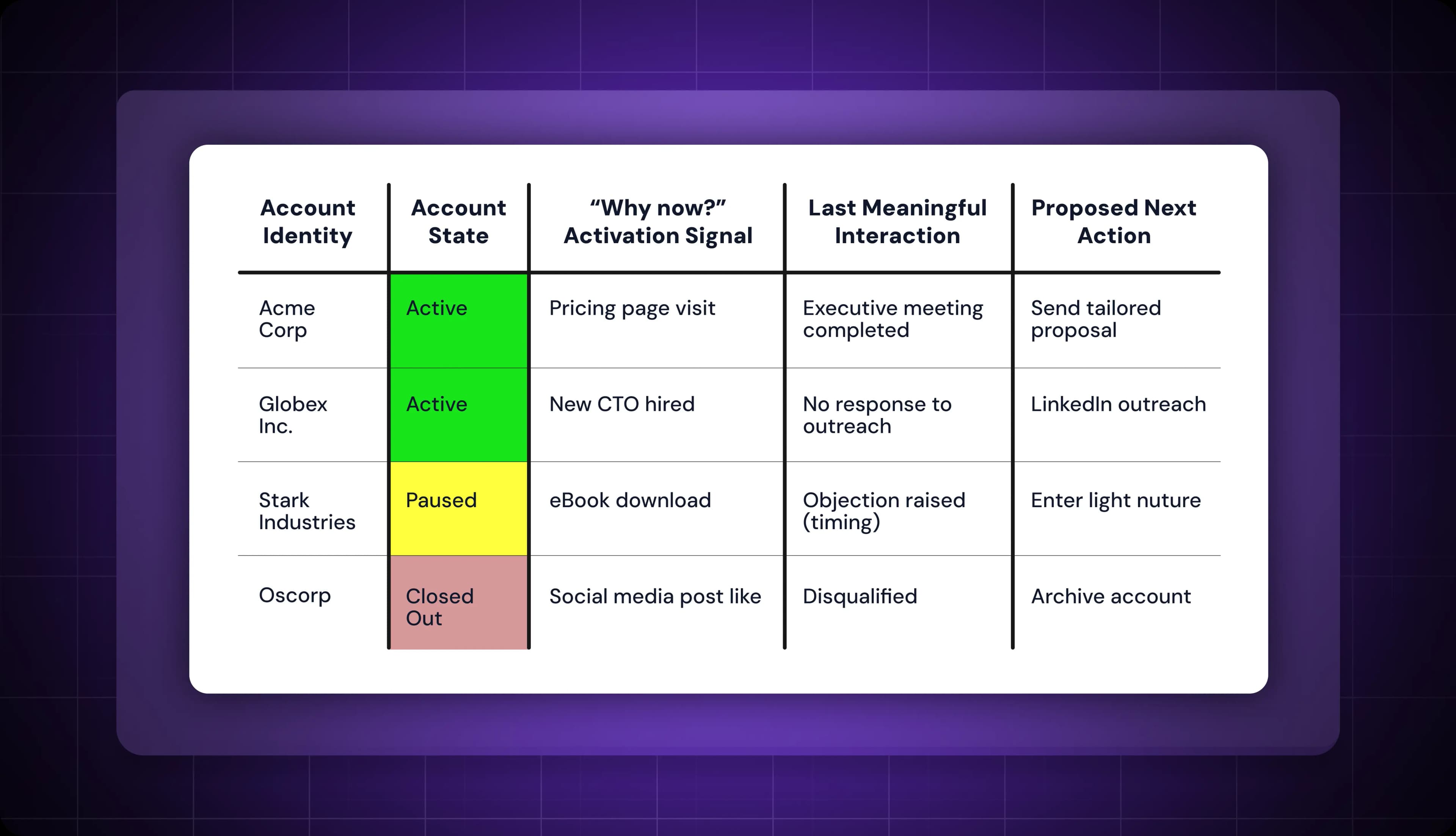
You can ensure that sales and marketing teams work in tandem and towards a shared goal by creating a single dashboard. This must operate at the account level and answer one question: “What should happen next with this account?”
Build your scorecard with the following required sections for each account:
Account identity or name
Account state (active, paused, or closed out)
“Why now?” activation signal
Last meaningful interaction
Proposed next action
Exclude lead-level metrics, activity volume, and engagement vanity metrics.
Build a Joint Pipeline Strategy
Since marketing and sales teams have to work closely together for ABM success, a joint pipeline strategy begins by prioritizing specific accounts. You need alignment here so both teams can concentrate their effort on deals that can realistically move forward.
Define how ownership shifts once a conversation starts, because unclear handoffs are one of the most common reasons that deals stall. Similarly, limit the number of active sequences per account to avoid bombarding accounts.
Lock these decisions before campaigns launch or reps start outreach. Changing rules mid-stream can wreak havoc.
Meet Weekly to Unblock Stuck Accounts
Hold a weekly review focused only on accounts that are active but not progressing. Reviewing everything wastes time. Stay true to this by bringing the shared account dashboard into the meeting and using it as the only source of truth.
Answer these three questions in order for every stuck account:
What signal triggered outreach?
What happened after that?
What decision is made now?
End the meeting with a clear decision for every account reviewed—continue, change approach, pause, or close out.
Capture who owns the decision and when the team will revisit it. Otherwise, the same account can return to next week's meeting with no progress. An AI employee such as Artie is designed around ongoing responsibilities across tools. A useful evaluation would be maintaining the review brief and following up on agreed internal actions while account owners retain the commercial decisions.
Track Outcomes at the Account Level
Tracking outcomes only works when metrics force decisions. If a metric cannot change what you do next, it does not belong in ABM.
Activity Tracking Is Not Success
As much as teams want to track vanity metrics like engagement, clicks, or opens, these only create noise. ABM is about accuracy. Treat booked meetings and qualified opportunities as the only primary signals.
Measure Account Engagement, Not Lead Scores
ABM is about overall account success, not a single lead. What we mean is that B2B buying decisions are rarely made by one person. So you should mark an account as engaged only when multiple stakeholders interact.
Watch Time-to-Response, Not Just Reply Rate
Measure how quickly an account responds after a trigger fires—speed correlates more strongly with intent than volume. Compare response times across account tiers and signals to understand which converts faster.
Optimize Based on Real Progression
Understand what makes accounts book meetings and move from meetings to deal signing. For that, use AI tools like Gong and ChatGPT. Gong automatically pinpoints what top-performing reps say and do differently during calls, so you capture successful sales behaviors on calls and demos.
ChatGPT is for deep analytics. For example, you could ask it to compare accounts that booked meetings versus those that stalled and identify what changed right before conversion. To do that, you have to first prepare the account-level dataset.
Go to your CRM and export account-level data like:
The activation signal (type, source, date)
The sequence timeline (channels used, dates, order)
The personas contacted and their roles
The first response (who replied, how long it took, or silence)
The last meaningful interaction
The final outcome (meeting booked, stalled, paused, disqualified)
Next, ask ChatGPT to draw data-driven insights with the following prompt:
#ROLE: You are a revenue intelligence analyst.
Your task is to identify what actually drives accounts from signal activation to meetings booked and deal progression.
#OBJECTIVES:
1. Compare accounts that booked meetings versus those that stalled or dropped
2. Identify:
Which signal types most often precede conversion
Which combinations of signals matter more than single events
What changed immediately before conversion (timing, persona, message angle)
3. Detect patterns in:
Response timing (same day vs delayed)
Channel effectiveness by signal type
Persona involvement at key moments
4. Highlight:
Signals that look strong but rarely convert
Signals that convert only when paired with specific follow-up actions
5. Extract practical recommendations:
Which signals should trigger immediate outreach
Which outreach timing works best by signal type
Which personas should be looped in earlier
What messaging angles correlate with progression
#OUTPUT FORMAT: Text, spreadsheet, Excel, or pdf [select].
Common Mistakes That Kill Momentum
Jumping Into Tech Before Nailing the Strategy
Teams that build campaigns around tools and platforms rather than around well-defined ICPs, value logic, and intent triggers quickly generate volume without pipeline impact.
Treating Every Account the Same
A core ABM principle is tailoring campaigns by account tier and intent signal, yet some teams treat target accounts like blast lists with a few personalization fields. This isn’t ABM.
Messaging That’s Product-First, Not Outcome-First
Too many ABM sequences still focus on features rather than real business outcomes tied to buyer priorities. Poor personalization is widespread. According to HubSpot, 45% of marketers worldwide who are implementing ABM report challenges in delivering truly personalized experiences at scale.
Sales and Marketing Working in Isolation
HubSpot also reported that nearly a third of organizations said that sales and marketing alignment remains a challenge, with fractured communication, different KPIs, and siloed execution routinely cited as top blockers to campaign success.
Without shared planning, dashboards, and accountability, even the best ICPs and personas don’t deliver expected results.
No Consistent Follow-Up Structure or Contact Mapping
More than 40% of ABM challenges stem from issues related to follow-up structure and poor contact identification, with inconsistent cross-channel orchestration a major problem.
Looking Ahead: AI-Assisted ABM Is Becoming the Baseline
As with many areas of sales, AI is transforming ABM. It can help with lead prospecting, multichannel outreach, campaign analysis, and ongoing optimization. AI-powered tools like Artisan help reps move from manual execution to large-scale ABM plays.
Let’s look at how Artisan helps you scale your ABM marketing without increasing costs.
Launch ABM Campaigns at Scale
You define ICP rules, account tiers, activation signals, and stop conditions, and Artisan enforces them at scale. That means accounts only enter outreach when a real signal appears, and they exit the moment progression stalls.
Catch the Highest Intent Prospects
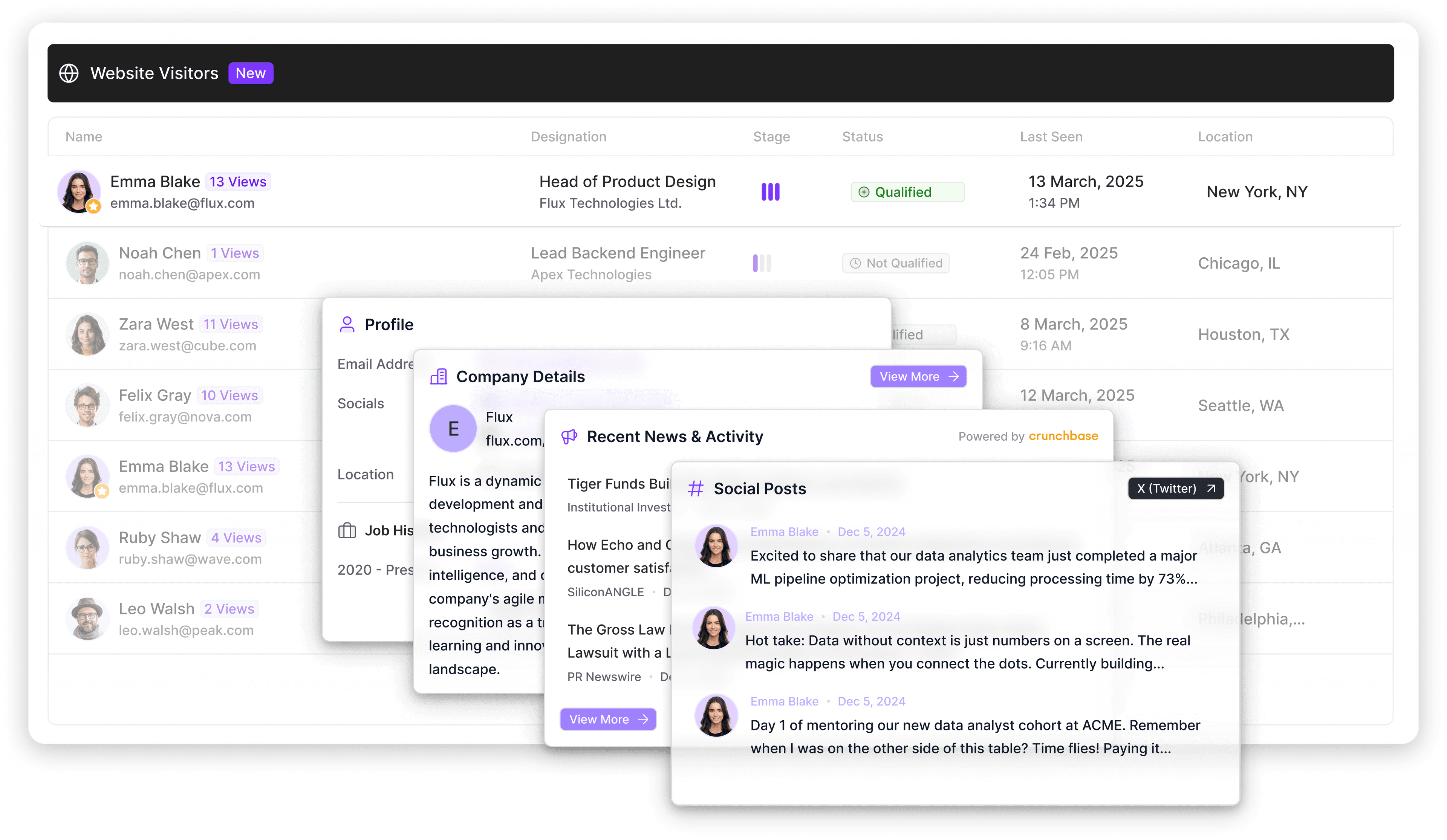
Ava identifies anonymous visitors on your website without form fills. You’ll know who is visiting your site, which landing pages they engage with, and how interested they are. Seamlessly enroll them into personalized multi-channel ABM sequences using first-party data.
Consolidated Outbound Sales Automation
Artisan finds leads on autopilot and executes account-level outreach when real intent signals appear. It continuously builds and enriches ICP-fit account lists, generates intent-aware emails, and coordinates email and social media follow-ups in one flow.
If It’s Not Personal, It’s Getting Ignored
ABM only works when outreach and marketing tactics are tied to real account context, clear timing, and a reason to engage. Leads filter out generic messages, even when written well, because they don’t help buyers make a decision or resolve uncertainty.
Personalization shows high-value accounts that you’ve done your homework. The sooner you start using AI-powered tools like Artisan to automatically scrape insights and build messages, the faster your ABM motion will land big checks.
Automate your outbound with an AI BDR
Meet Ava—your AI BDR who handles prospecting, outreach, and follow-ups, so your team can focus on closing.

Jenny Romanchuk
SME @ Artisan
Jenny creates senior-level content for sales, SEO, and marketing professionals. She also leads partnerships at the District #1 Charitable Foundation.