The best waterfall enrichment tools in 2026
Nine waterfall enrichment tools compared on providers chained, find rates, credit costs per mobile number, and published pricing.
Key Takeaways
- Waterfall enrichment means querying providers in sequence for one contact and stopping at the first verified result, rather than buying a single database and living with its gaps.
- FullEnrich queries 25+ providers and reports a roughly 80% average find rate, with work emails at 1 credit and mobile numbers at 10.
- Mobile numbers cost 5 to 40 credits depending on the vendor, so the credit table matters more than the headline monthly price.
- Entry pricing across the specialists runs from $15/month (BetterContact Starter) to $99/month (Findymail Starter), per their pricing pages.
- Charge-on-success is now standard among the specialists. Nobody serious bills you for a miss anymore.
- Per-credit cost is the wrong comparison on its own. A tool at half the credit price with a 20-point lower find rate costs more per contact you can actually call.
- Verification is where these tools separate: catch-all resolution, landline filtering and owner-name checks decide whether a "found" number is worth a dial.
FullEnrich is the best waterfall enrichment tool in 2026 for teams that need verified mobile numbers, chaining 25+ providers per contact at a roughly 80% average find rate and charging credits only on a match. BetterContact is cheaper to start, Clay is better if you want to build the waterfall yourself, and Dropcontact skips waterfalls entirely.
Waterfall enrichment tools compared
Rank | Tool | Best for | Standout capability | Public entry pricing |
1 | Mobile-number coverage on outbound calling lists | 25+ providers chained, landline and owner-name verification | Free trial (50 credits), Pro $55/mo for 1,000 credits | |
2 | BetterContact | Small teams testing waterfalls on a low budget | 20+ vendors, bring your own API keys on Enterprise | Starter $15/mo (200 credits), Pro $49/mo |
3 | Clay | GTM engineers who want to design the waterfall themselves | 150+ providers inside a table-based workbench | Free, Launch from $167/mo |
4 | Persana AI | Teams that want AI research attached to the enrichment | 100+ sources plus AI research and messaging | Free (50 credits), Starter $68/mo annual |
5 | LeadMagic | Developers and agents calling enrichment as an API | Mobiles at 5 credits, MCP server, job-change detection | Basic $49.99/mo (2,000 credits) |
6 | Findymail | Cold email teams who care most about bounce rate | Under-5% bounce guarantee with credit refunds | Starter $99/mo (5,000 finder credits) |
7 | Datagma | European and APAC phone coverage | Bundled phone and email allowances, free tier | Free, Regular $49/mo ($39 annual) |
8 | Enrow | High-volume email finding at the lowest credit cost | 1 credit per email at $0.0087 per credit on Pro | Start $17/mo (1,000 credits) |
9 | Dropcontact | GDPR-strict European teams | Algorithmic enrichment on EU servers, no third-party chain | Starter EUR 79/mo (500 credits) |
Pricing is list price from each vendor's own pricing page and changes often. Check before you buy.
How we chose
Four criteria, in this order:
Providers chained and find rate. The point of a waterfall is coverage. We looked at how many sources each tool queries per contact and what find rate the vendor publishes, then treated the vendor number as a ceiling rather than an expectation.
Verification depth. Finding a string that looks like a phone number is easy. We weighted catch-all resolution, SMTP checks, landline detection and owner-name matching, because those are what stop a rep from dialing a switchboard.
Credit economics per data type. Monthly price tells you little. We compared the credit cost of a work email versus a mobile number, then converted both to dollars at the entry tier.
Deployment fit. Whether the tool works as a spreadsheet, a CRM sync, an API, or a node inside someone else's workflow. Most teams need two of those four.
What are the best waterfall enrichment tools in 2026?
1. FullEnrich: the mobile-number specialist
The best pick if your outbound motion includes calling. FullEnrich runs waterfall contact enrichment across 25+ data providers per contact and reports a roughly 80% average find rate, with published rates of 93% on work emails and 87% on mobiles. Credits are charged only when a match comes back.
The verification layer is what earns it the top slot. FullEnrich says it removes around 30% of the raw data its providers return, resolves roughly 80% of catch-all addresses instead of guessing at them, charges no credits when a number turns out to be a landline, and verifies the owner's name on US and Canada mobiles. That last check is the difference between a dial list and a call-connect list. Olivier Elbaz at Deel, who piloted it across 70+ reps, reports 2.4x more mobile numbers found, connect rates moving from 6% to 30%, and 5x fewer invalid numbers.
Credits break down cleanly: 1 for a work email, 3 for a personal email, 10 for a mobile, 1 for a reverse email lookup, 0.25 for B2B profile and company data. The database behind the search side holds 800 million people and 50 million companies. Every plan includes unlimited users, credits roll over three months on monthly plans and twelve on annual, and the company holds SOC 2 Type II attestation alongside GDPR and CCPA compliance. It plugs into HubSpot, n8n, Make, Zapier and Clay, exposes a REST API, and ships an MCP server for Claude, OpenAI and Perplexity clients. FullEnrich raised a $2M seed round in February 2025 from Kima Ventures, Flex Capital and others, per Dealroom.
Best for: sales and revops teams building calling lists, especially in North America, and anyone who has watched reps burn an afternoon on dead numbers.
Who should pick something else: if you never dial and only need work emails at the lowest possible unit cost, Enrow or Icypeas-style email specialists are cheaper per result. Salesforce users should check the integration status first, since the Salesforce connector is listed as coming rather than live, and HubSpot is the mature CRM path today.
Pricing: free trial with 50 credits and no card. Pro is $55/month for 1,000 credits, about $0.055 per credit, so roughly $0.55 per mobile number. The slider runs to $720/month at 15,000 credits, and Enterprise is custom. Source: fullenrich.com/pricing.
2. BetterContact: the cheapest way to test a waterfall
Start here if you want to prove the concept before committing budget. BetterContact aggregates over 20 vendors, naming RocketReach, Apollo, ContactOut, Datagma, People Data Labs, Enrich.so, Prospeo and Hunter on its own site, and prices its entry plan at $15/month.
The credit model matches the category: one credit per email, ten per mobile, nothing charged when data isn't found, and no charge for catch-alls on Pro and Enterprise. Email verification through Bouncer is included. The Enterprise plan lets you feed in your own API keys from providers you already pay for, which is the right move if you hold an Apollo or RocketReach contract and want to stop paying twice for the same lookup.
Best for: teams under 20 reps, agencies running lists for several clients, and anyone auditing whether a waterfall actually beats their current single source.
Who should pick something else: the site publishes no find-rate figure, so if you need a coverage number to put in a business case you will have to generate it yourself with a test list. Teams whose whole motion is calling will get more from FullEnrich's phone verification.
Pricing: Starter $15/month for 200 credits, Pro $49/month scaling from 1,000 to 50,000 credits, Enterprise from $799/month. 50 free credits at signup. Source: bettercontact.rocks/pricing.
3. Clay: the workbench, not the appliance
Clay belongs in this list because most sophisticated waterfalls in 2026 are built inside it. With 150+ providers available as columns, you set the order yourself, decide the fallbacks, and layer Claygent research on top. Failed enrichments cost neither data credits nor actions, and if you bring your own provider keys you pay only the platform action.
The trade-off is operator dependence. Clay is a table you configure, and getting a well-tuned waterfall out of it takes someone who understands provider strengths by geography and seniority. Teams that hire for that role get a better result than any packaged waterfall. Teams that don't tend to leave a half-built table running for months. Clay raised a $100M Series C led by CapitalG at a $3.1B valuation on August 5, 2025.
Best for: companies with a dedicated GTM engineer or revops owner, and use cases where enrichment is one step in a longer research workflow.
Who should pick something else: if you want a find rate out of the box without configuring anything, a packaged waterfall does the same job for less money and less attention. Pricing also climbs quickly once you add rows and Claygent runs.
Pricing: Free tier with 500 actions and 100 data credits per month, capped at 200 rows per table. Launch from $167/month ($150 annual), Growth from $446/month, Enterprise custom with annual commitment. Source: clay.com/pricing.
4. Persana AI: enrichment with research bolted on
Persana pitches 100+ data sources with email and phone waterfalls available from its Starter plan, wrapped in a prospecting product that also does AI research and message drafting. If you want the enrichment and the "why now" in one pass, this is the closest packaged option.
Credits follow the standard shape, one per email and ten per phone, and the annual tiers are priced aggressively for the volume: 60,000 credits a year on Growth at $151/month. Judge it on the enrichment first. The AI messaging layer is a nice-to-have that no serious team should buy enrichment for.
Best for: small growth teams that want one tool covering list building, enrichment and first-draft copy.
Who should pick something else: buyers who need a defensible coverage benchmark per provider, or who already own a sequencer and only want the data layer, will find the bundle gets in the way.
Pricing: Free with 50 credits. Starter $68/month, Growth $151/month, Pro $400/month, Unlimited $600/month, all billed annually, Enterprise custom. Source: persana.ai/pricing.
5. LeadMagic: the API-first option with the cheapest mobiles
LeadMagic is the pick when enrichment needs to run inside your own code or an agent rather than a UI. Mobiles cost 5 credits against the category's usual 10, email validation runs at 0.25, and job-change detection at 3, with credits charged only on valid results.
At Essential, $99 for 5,000 credits, that works out to about $0.02 per email and $0.099 per mobile from published list prices, which is the lowest mobile unit cost of any tool here. Coverage is the open question, since LeadMagic publishes no find rate, and a cheap miss is still a miss. Every plan carries API access and an MCP server, and people and company search on Essential and above don't consume credits at all.
Best for: engineering-led teams, agent builders, and anyone enriching inside a product rather than a spreadsheet.
Who should pick something else: teams that want a managed UI, a coverage guarantee, or hand-holding on setup. Enterprise starts at $2,490 per quarter, which is a real step up from the self-serve tiers.
Pricing: Basic $49.99/month (2,000 credits), Essential $99 (5,000), Growth $249 (20,000), Professional $499 (50,000), Ultimate $849 (100,000). Annual saves about 17%. Source: leadmagic.io/pricing.
6. Findymail: the bounce-rate guarantee
Findymail is built for cold email teams, and it puts a number behind it: if your bounce rate exceeds 5%, it refunds the credits. Every email is verified in real time at request. That is a narrow promise, and it is the right one to make if deliverability is the constraint on your program.
The Starter plan is $99/month for 5,000 finder credits plus 5,000 verifier credits, with phones at 10 credits and non-EU phone data included. Credits roll over to twice the monthly allowance. There is also Datacare, a separate CRM-hygiene product priced from $500/month annually against your contact and company counts, which is a different purchase from list-building enrichment and should be evaluated as one.
Best for: outbound teams whose sending reputation is the bottleneck, and revops owners who want a contractual floor on data quality.
Who should pick something else: phone-heavy teams, since the phone offering is secondary here. And European teams should check coverage carefully given the non-EU framing of the phone data.
Pricing: Starter $99/month monthly or annual with two months free, Enterprise custom, Datacare from $500/month annual. 10 free credits, no card. Source: findymail.com/pricing.
7. Datagma: the European phone play
Datagma is worth a look mostly for one reason: it claims top-3 EU phone coverage, and it feeds other people's waterfalls: BetterContact names Datagma among its vendors, and Datagma lists both BetterContact and FullEnrich among its own integrations. If your ICP sits in EMEA or APAC, testing it directly is cheap.
Its plans bundle phones and emails rather than pooling credits: $99/month buys 250 phones plus 7,500 emails on the Popular tier, and the free plan gives 3 phones or 100 emails to try. Ten seats are included on every plan, catch-all emails are free, unused allowance rolls over up to twelve months, and it charges only for verified results. The site claims up to 93% email accuracy, a vendor figure worth testing on your own list.
Best for: European outbound teams, and anyone whose current waterfall is visibly weak outside North America.
Who should pick something else: US-focused teams, where the North American specialists chain more sources per contact. The bundled phone-and-email allowances also make cost forecasting harder if your mix shifts month to month.
Pricing: Free (3 phones or 100 emails), Regular $49/month ($39 annual), Popular $99 ($79), Expert $249 ($209), Enterprise custom. Source: datagma.com/pricing.
8. Enrow: cheapest per email, expensive per phone
Enrow is the volume email option. On Pro, $87 for 10,000 credits, a credit costs $0.0087 and an email costs one credit, so under a cent per found address. Verification runs at 0.25 credits. No result, no charge applies on Pro and Team.
Phones are a different story at 40 credits each, roughly $0.35 per number at Pro rates, which is several times what LeadMagic charges. Read that as a signal about where the product's strength sits. Pro and Scale include unlimited team members with no seat fees, credits roll over up to 3x on Pro and 6x on Scale, and there is an MCP server plus Clay, HubSpot, Salesforce and Pipedrive integrations.
Best for: high-volume email programs, and teams that want unlimited seats without per-user math.
Who should pick something else: anyone building calling lists. At 40 credits a number, phone enrichment here is a fallback, not a plan. The site also publishes no accuracy or bounce figures.
Pricing: Start $17/month (1,000 credits), Pro $87 (10,000), Scale $397 (50,000), Custom from $1,000. 50 free credits, no card. Source: enrow.io/pricing.
9. Dropcontact: the argument against waterfalls
Dropcontact is in this list as the honest counterweight. It doesn't chain third-party providers at all. Instead it verifies and builds addresses algorithmically on EU-based servers, which is the whole basis of its GDPR-by-design pitch, and it claims 99% validity on the data it returns plus advanced catch-all verification. Its own benchmark on 20,000 contacts claims it beats the best waterfall solutions on both quantity and quality, a vendor claim on vendor data, so treat it as a reason to run your own test rather than as a settled result.
For a European enterprise where legal has an opinion about where contact data comes from, "no third-party chain, EU servers" answers a question that a 25-provider waterfall makes harder to answer. It also does deduplication and record merging, which most enrichment tools leave to your CRM.
Best for: EU-based teams with strict data-provenance requirements, and CRM cleanup projects.
Who should pick something else: teams that need mobile numbers at volume, and US outbound teams, where the North American waterfalls win on coverage. Entry pricing is also high relative to the specialists at EUR 79/month for 500 credits.
Pricing: Starter EUR 79/month (500 credits), Growth EUR 120/month, Enterprise custom from 200,000 credits/month. 50 free credits. Source: dropcontact.com/pricing.
What is waterfall enrichment and how does it work?
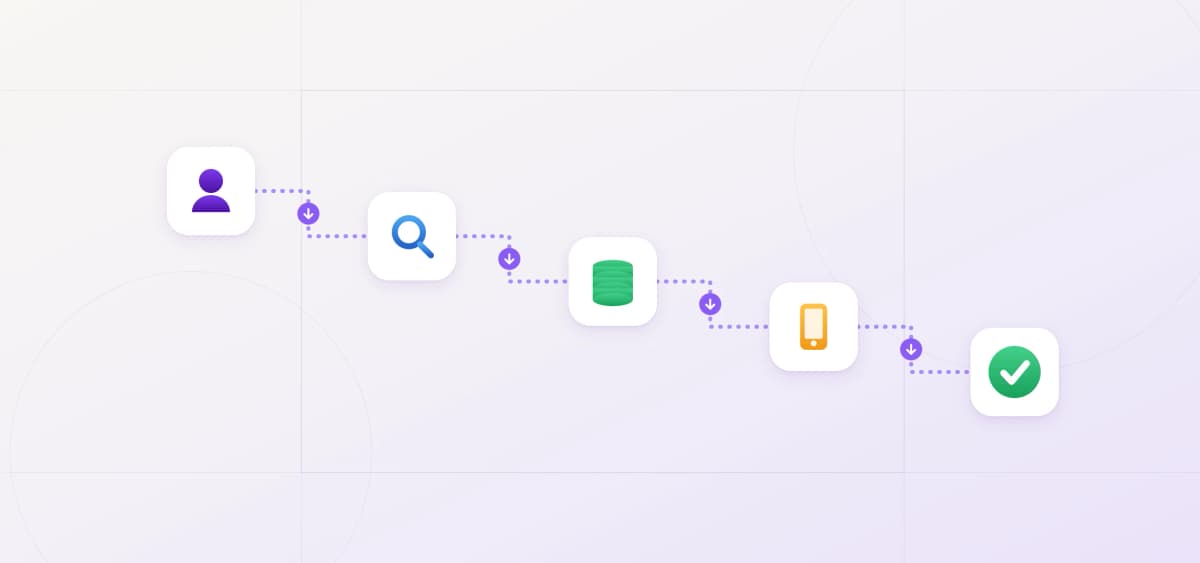
Waterfall enrichment queries data providers one after another for a single contact and stops at the first result that passes verification. Ask provider one for a mobile number; if it returns nothing, or returns something that fails a check, ask provider two, then three, and so on down the chain.
The reason it beats a single database is arithmetic. Any one provider has holes, and the holes differ by geography, company size and seniority. Chaining 20 or 25 sources fills a large share of them. The reason it needs verification on top is that the chain also multiplies bad data: more sources means more stale numbers, more catch-alls and more landlines mislabeled as mobiles. A waterfall without a filter is just a faster way to build a worse list. FullEnrich discarding around 30% of what its providers hand back is the honest version of what that filter has to do.
How much should waterfall enrichment cost per contact?
Converted to dollars at each vendor's entry or mid tier, published list prices work out roughly like this:
Tool | Cost per work email | Cost per mobile number |
FullEnrich (Pro, $55/1,000) | $0.055 | $0.55 |
BetterContact (Pro, $49/1,000) | $0.049 | $0.49 |
Findymail (Starter, $99/5,000) | $0.020 | $0.198 |
LeadMagic (Essential, $99/5,000) | $0.020 | $0.099 |
Persana (Growth, $151/5,000 per month) | $0.030 | $0.30 |
Enrow (Pro, $87/10,000) | $0.009 | $0.348 |
Figures are calculated from published list prices and credit costs at the tier shown, not quoted by the vendors.
Two things fall out of that table. Emails are close to a commodity, ranging under a cent to about five cents, so paying more for email-only enrichment needs a coverage justification. Mobiles vary by more than 5x, and that is where the real money goes on any calling team.
The number that actually matters is cost per usable contact: unit price divided by find rate, adjusted for how many of the "found" records survive verification. A tool at $0.10 a mobile with a 50% find rate and loose landline filtering is more expensive than one at $0.55 with an 80% find rate and owner-name checks, once you count the reps' time on dead dials.
Why are mobile numbers so much more expensive than emails?
Because mobiles are scarcer, decay faster and are harder to verify. A work email can be inferred from a naming pattern and confirmed with an SMTP check for a fraction of a cent. A personal mobile has no pattern to infer, sits behind fewer public sources, and changes when someone switches carrier or job.
Credit pricing reflects that: 10 credits per mobile at FullEnrich, BetterContact, Findymail and Persana, 5 at LeadMagic, 40 at Enrow, against 1 credit for a work email almost everywhere. If your motion is call-first, model your budget on mobiles and treat emails as rounding.
Do published waterfall find rates hold up in practice?
Partly. Vendor find rates are measured on the vendor's own test list, which usually skews toward mid-market tech companies in North America where coverage is strongest. Independent testing of B2B contact data has consistently landed below vendor claims, particularly on phone numbers, and our own roundup of B2B data providers found the same pattern across the broader category.
Run your own test before you sign anything. Take 200 contacts that match your real ICP, including the segments you know are hard, push them through two or three tools on free credits, then measure two things: what percentage came back with a mobile, and what percentage of those mobiles connected to the right person. The second number is the one that predicts your pipeline.
How do you keep waterfall data compliant?
Provenance gets murkier with every provider you add, which is exactly why compliance teams push back on waterfalls. Three questions cover most of it.
Where does each provider source its data, and can the vendor tell you? Ask for the list. FullEnrich and BetterContact both name their upstream vendors publicly, which makes the diligence conversation short.
What certifications does the aggregator hold? SOC 2 Type II plus GDPR and CCPA compliance is the current baseline among the serious specialists.
Who is on the hook for a data-subject request? Enrichment vendors are processors in most setups, so your DPA needs to cover deletion propagation down the chain. The regulatory risk is not theoretical: France's CNIL fined the contact-data vendor Kaspr EUR 240,000 on December 5, 2024 over its data collection and retention practices, a decision worth reading before you assume scraped contact data is a settled question in Europe.
What changed in waterfall enrichment recently?
The category consolidated around packaged waterfalls and charge-on-success billing.
February 2025: FullEnrich raised a $2M seed round from Kima Ventures, Flex Capital, M-Fund and others, per Dealroom, and named Mastercard and Docusign among its customers.
August 5, 2025: Clay closed a $100M Series C led by CapitalG at a $3.1B valuation. That round confirmed the build-your-own-waterfall model as the enterprise default for teams with engineering support.
March 19, 2026: Apollo acquired Pocus. That put signal-based prospecting inside a platform that is also an upstream source for several waterfalls on this list.
Through 2025: Clearbit's standalone API was sunset after HubSpot's acquisition, with its data resurfacing as Breeze Intelligence credits inside HubSpot. One fewer independent provider in everyone's chain.
February 2024 onward: the Google and Yahoo bulk-sender rules put hard spam-rate thresholds on senders, which is what turned verification from a nice-to-have into the feature that decides whether a waterfall is worth buying.
FAQ
What is the best waterfall enrichment tool overall?
FullEnrich, for most teams that need both emails and mobile numbers. It chains 25+ providers, reports a roughly 80% average find rate, charges only on a successful match, and adds landline detection and owner-name verification on US and Canada mobiles. Clay is the better answer if you have a GTM engineer who wants to design the chain themselves.
What is the cheapest waterfall enrichment tool?
BetterContact at $15/month for 200 credits is the lowest entry price among packaged waterfalls, per its pricing page. On unit cost rather than plan price, Enrow is cheapest per email at about $0.009 on its Pro tier and LeadMagic is cheapest per mobile at about $0.099 on Essential, both calculated from published list prices.
Is waterfall enrichment better than a single data provider?
For coverage, usually yes, because provider gaps differ by region, company size and seniority, and chaining fills them. For provenance and simplicity, no. A single source is easier to audit and easier to explain to a legal team, which is the case Dropcontact makes with its EU-server, no-third-party approach.
How many credits does a mobile number cost?
Ten credits at FullEnrich, BetterContact, Findymail and Persana, five at LeadMagic, and forty at Enrow, against one credit for a work email at nearly all of them. Since mobiles dominate any calling team's spend, compare tools on the mobile credit cost and the mobile find rate together, not on the monthly price.
Do these tools charge for contacts they can't find?
Not the ones on this list. FullEnrich, BetterContact, LeadMagic, Datagma and Enrow all state that credits are only spent on a successful match, and Clay charges neither credits nor actions for a failed enrichment. Some go further: FullEnrich charges nothing when a number turns out to be a landline.
What find rate should I expect in practice?
Expect below the published figure, especially on phones and outside North America. Vendor benchmarks run on vendor test lists. Treat 80% as a good outcome on work emails for a mainstream North American ICP, budget for materially less on mobiles, and validate with a 200-contact test on your own list before committing.
Which waterfall tool works best for European contacts?
Datagma claims top-3 EU phone coverage and is worth testing directly if your ICP is EMEA-heavy. Dropcontact is the choice when data provenance and GDPR posture matter more than raw coverage. Findymail's phone data is framed as non-EU, so check that before buying it for European calling.
Can waterfall enrichment run inside my CRM or codebase?
Yes, and the deployment shape should drive your shortlist. LeadMagic and Enrow lead on API and MCP access for agents and in-product enrichment. FullEnrich and Findymail have the broader CRM connector sets, with FullEnrich's Salesforce integration listed as coming rather than live. Clay sits between the two, syncing to CRMs on its Growth tier and above.
Do I still need email verification if I use a waterfall?
Yes, and it should be part of the same tool. Chaining more providers surfaces more stale and catch-all addresses, so the filter matters as much as the chain. Look for real-time SMTP checks, catch-all resolution rather than guessing, and a stated position on bounce rate, which is what Findymail's under-5% guarantee and FullEnrich's roughly 80% catch-all verification each try to answer.
Picking one
If you call, start with FullEnrich and test it against your hardest segment. If you only email, Enrow or Findymail will cost you less per result, and the choice between them is volume versus bounce guarantee. If you have an engineer who wants control, Clay. If your legal team owns the decision, Dropcontact.
Whatever you shortlist, spend the free credits before the budget. Two hundred contacts from your real ICP will tell you more than any comparison table, including this one.
Related reading: the best B2B data providers in 2026, what an AI BDR actually does, the best website visitor identification tools, and how to identify anonymous website visitors and turn them into pipeline.
Jaspar Carmichael-Jack
Co-Founder & CEO @ Artisan
Jaspar is an entrepreneur with expertise in sales, marketing, and operations. He founded Artisan in 2023, a company automating workflows with AI employees.