The best Alta alternatives in 2026
The best Alta alternatives for teams that want a proven AI SDR platform over a young one, with track record, governance, and honest verdicts.
Key Takeaways
- Alta is early: it raised a $25M Series A in July 2026 and has a thin public track record, which matters when the job you hand over is your pipeline.
- Its site claims SOC 2 and ISO 27001 and it markets an "AI GTM System of Actions" with a sales development representative (SDR) agent named Katie plus AI calling.
- The main reason to compare alternatives is maturity: proven deployments, named customers, and published economics beat a promising but unproven product.
- The strongest alternative is an AI BDR that owns the whole motion and has the customer proof to back it.
- Over 90% of Artisan customers run Ava autonomously, and Raise sourced over $700K of annual recurring revenue (ARR) in six months, a 20x return.
- Pick by how much proof and governance you need before trusting an agent with outbound.
The best Alta alternative is Artisan, whose AI business development representative (BDR) Ava owns outbound end to end with a track record Alta has not built yet: named customers, published economics, and enterprise governance. AiSDR, Amplemarket, Regie.ai, and Reply.io are the other real options. This page ranks them and says who each is wrong for.
Why look for an Alta alternative?
Because youth is the whole story here, and youth is a risk when the thing on the line is your pipeline. Alta raised a $25M Series A in July 2026 and is still early: the public track record is thin, the deployment history is short, and the named-customer proof that lets a buyer trust an autonomous agent with their domain and CRM is not there yet. Its site claims SOC 2 and ISO 27001, and the product (an "AI GTM System of Actions" with an SDR agent called Katie and AI calling) is real. None of that is a knock on the ambition. It is a caution about betting a revenue motion on a product that has not yet been proven at scale. For the specifics, see Alta pricing and reviews and Artisan vs. Alta.
This is a reasonable reason to shop. When you are handing an agent the job of sourcing leads, writing outreach, and replying on your behalf, you want evidence it has done that job for companies like yours, published economics you can plan against, and governance that survives a security review. The alternatives below are ranked by exactly that: how much of the job the AI owns, and how much proof and control stands behind it.
The best Alta alternatives, compared
Rank | Tool | Best for | Standout | Public pricing |
1 | Artisan | Proven full-job ownership with governance | Ava runs sourcing to booking autonomously | Usage-based credits, no platform fee (pricing) |
2 | AiSDR | SMB teams that want transparent pricing | Published tiers, fast setup | $250-$2,500/mo per its site |
3 | Amplemarket | Signal-based selling with a copilot | Data + engagement + Duo | ~$600/mo entry (not public) |
4 | Regie.ai | Rep augmentation on a modern stack | Sequencer + dialer + Auto-Pilot | reportedly ~$180-$499/user/mo |
5 | Reply.io | Accessible agent-run email | Jason AI on a sequencer | Sequences from $59/mo; AI SDR ~$500-800/mo |
6 | Salesforce Agentforce | Teams inside Salesforce | CRM-resident SDR agent | ~$2/conversation or Flex Credits |
7 | 11x | Multichannel with an AI phone agent | Alice + Julian agents | Growth from $3,750/mo (annual); Pro/Enterprise custom |
How we chose
The same four tests apply, but with maturity weighted heavily because that is the gap you are shopping around. How much of the BDR job the AI actually owns. Data and signal depth for sourcing net-new leads. Pricing transparency and predictability. And proof: named customers, published outcomes, and a governance posture (SOC 2, SSO, audit trail) that a buyer can verify rather than take on faith. Every entry receives a best-for verdict and a who-should-pick-else line.
1. Artisan: Proven ownership of the whole job
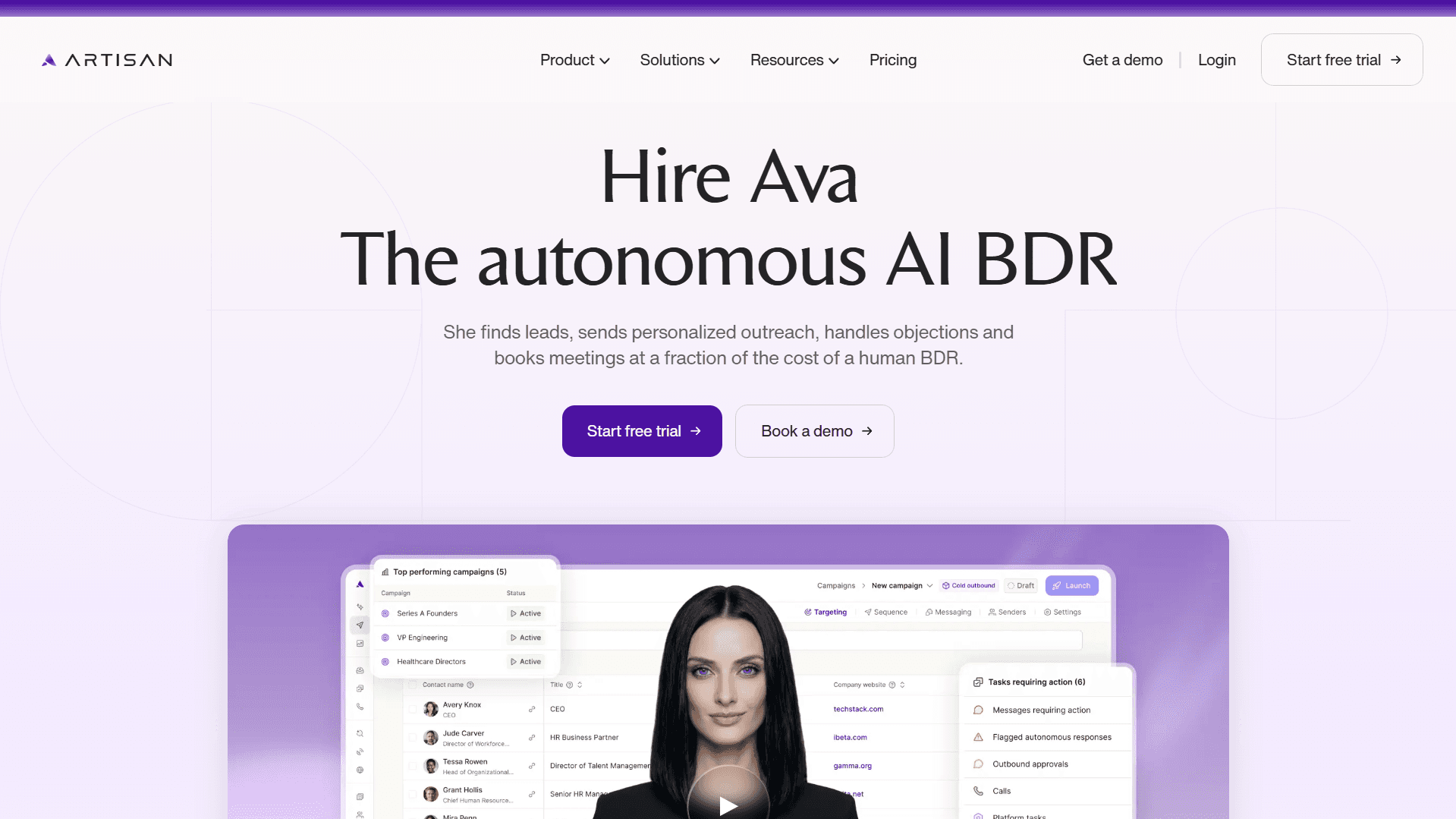
Artisan is the top Alta alternative because it owns the same job Alta is building toward, and it has the proof Alta has not accumulated yet. Ava, its AI BDR, sources best-fit leads from a database of over 270M B2B contacts and over 130M local businesses, enriches and prioritizes with waterfall email and phone enrichment charged only on success, writes a distinct message per recipient, runs multichannel steps across email, social, and the dialer, handles every reply from a knowledge base, and books meetings by CRM ownership. It is the full motion, not a single automated step.
The difference that matters against a young vendor is verifiable track record. Named customers with real numbers: Raise sourced over $700K of ARR in six months with Ava, a 20x return, and SaaStr saw a 3.5% positive reply rate. Governance a buyer can check: Artisan is SOC 2 Type II compliant, GDPR and CCPA compliant, with single sign-on (SSO) and SAML on Enterprise plans, regular third-party penetration testing, and a Trust Center. Control you can dial: review-and-approve, objections-only, or fully autonomous, with plain-language escalation rules and a full audit trail. Over 90% of customers run Ava autonomously, and Jason Lemkin of SaaStr reported that open rates doubled and the team is "closing $100K deals daily."
The economics are published as a model rather than promised. Usage-based credits, no platform fee, no per-seat tax, so cost stays flat as a team scales, with a free trial to test before committing. Artisan has raised over $35M from investors including Y Combinator and HubSpot Ventures, and the Enterprise plan adds a forward-deployed strategist and a dedicated customer success manager (CSM).
Best for: teams that want the full outbound job owned by an agent with proven deployments, published economics, and enterprise governance. Who should pick something else: teams specifically committed to backing an early-stage challenger and comfortable with the risk that implies. Pricing: usage-based credits, no platform fee, free trial. See Artisan pricing.
2. AiSDR: Transparent pricing, fast setup
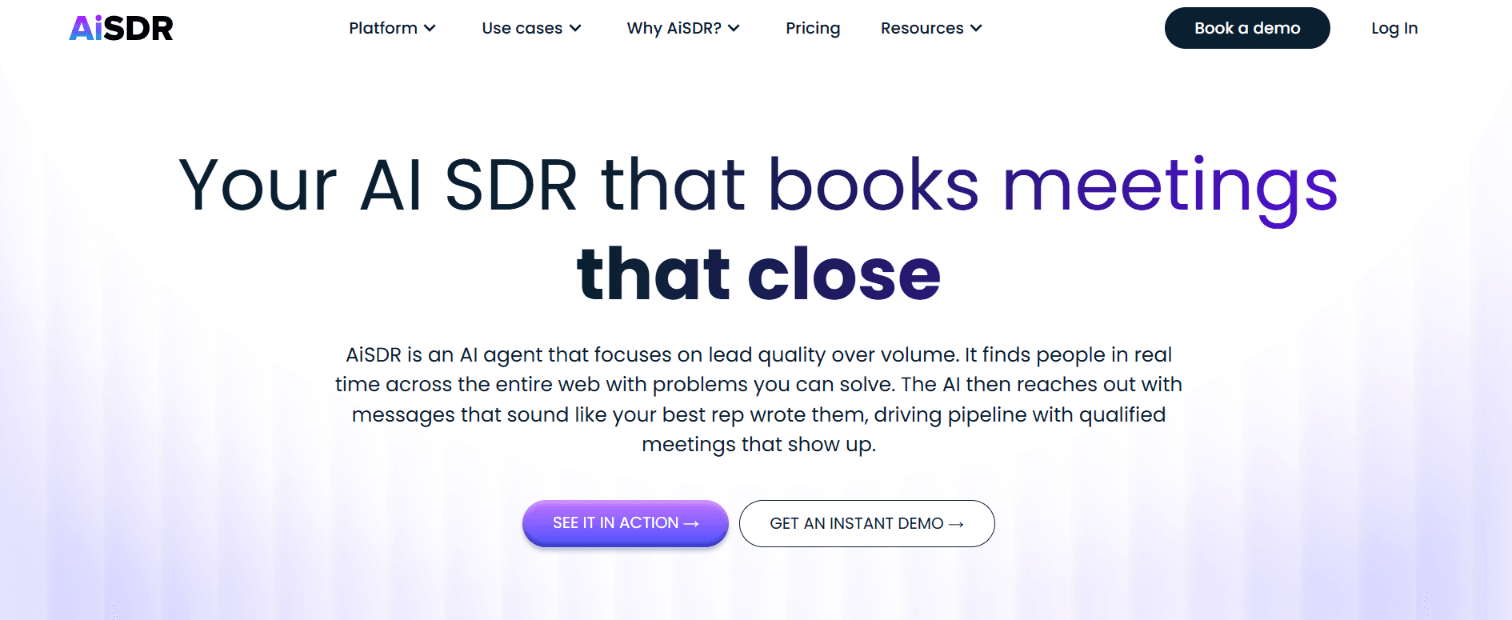
AiSDR is the alternative for teams that want a more established tool with pricing on the table today. Its tiers are published ($250, $900, and $2,500 a month per its site), setup is fast, it covers outbound and inbound, and its "Ami" strategist agent guides the motion. For an SMB or lower mid-market team weighing a young vendor against a known one, that transparency is reassuring.
Its center of gravity is SMB, so the enterprise governance story (central ops, deep CRM controls, audit depth) is thinner than a large org needs. It is a proven, honest tool that a growing team can eventually outgrow.
Best for: SMB and lower mid-market teams that want transparent pricing and speed. Who should pick something else: large orgs that need central ops and deep governance. Pricing: $250-$2,500/mo per its site.
3. Amplemarket: Signals with a copilot
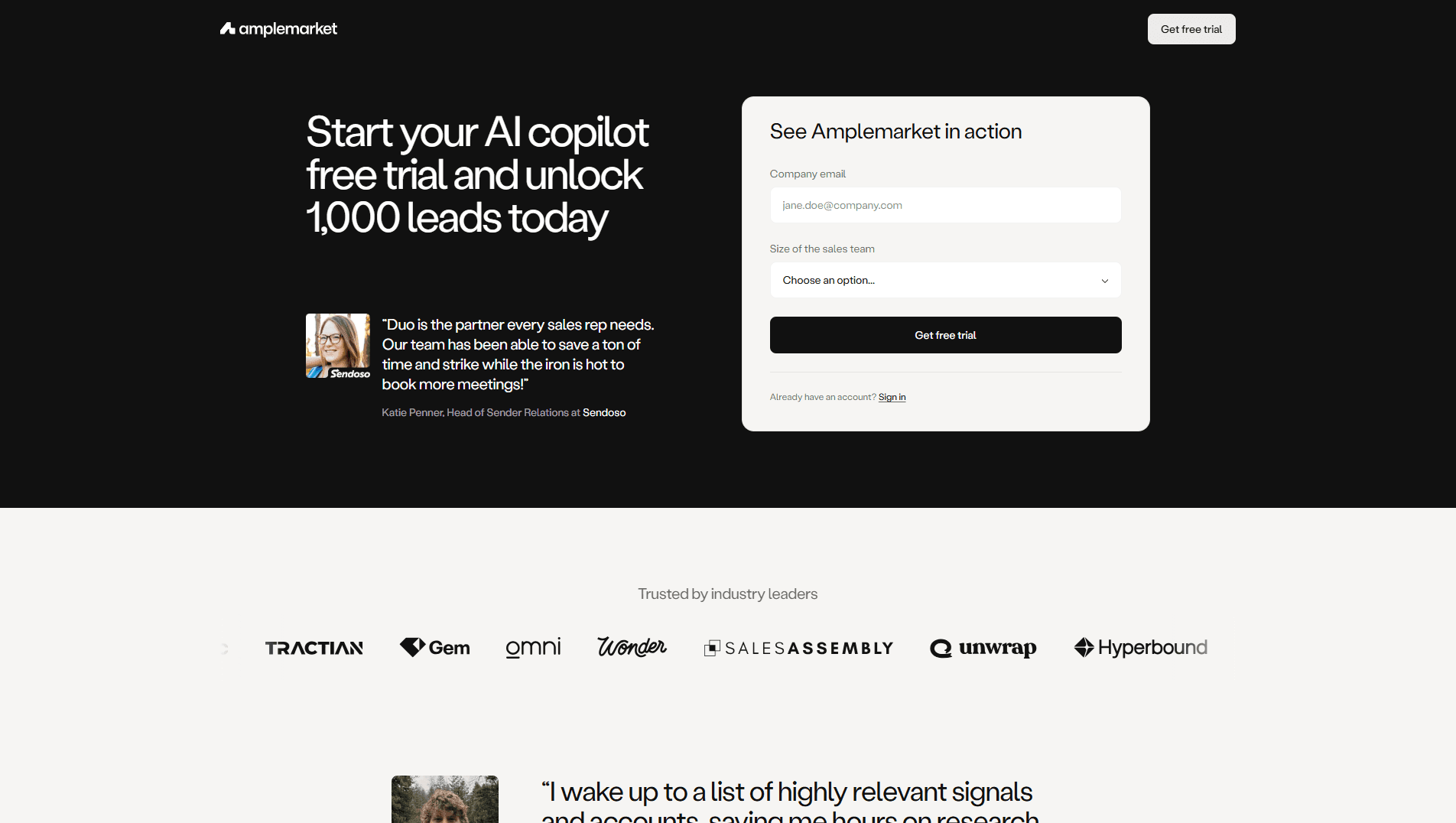
Amplemarket combines data, engagement, and its Duo AI copilot into a solid all-rounder with strong signal-based selling, entry around $600 a month (not published publicly). For a team that wants better signals and a copilot to help reps act on them, it is a capable, established choice.
It is a copilot model, so a human still runs the motion. That suits teams that want their reps in control, and falls short for teams that wanted the work owned outright.
Best for: teams that want signal-based selling with a human in the loop. Who should pick something else: teams that want the agent to own outbound. Pricing: ~$600/mo entry, not public.
4. Regie.ai: Rep augmentation on a modern stack
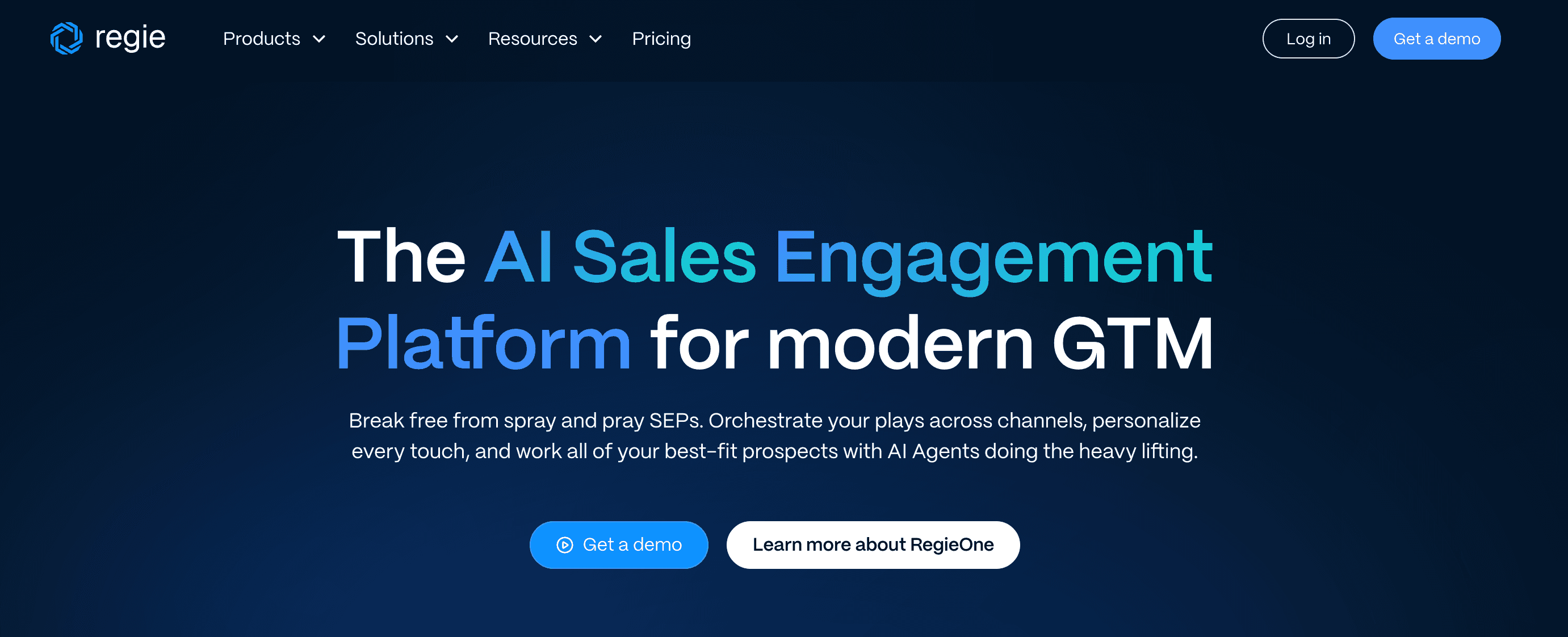
Regie.ai (its RegieOne platform) brings a sequencer, a dialer, and Auto-Pilot agents together with enterprise credibility, priced at reportedly ~$180-$499/user/mo. Its philosophy is rep augmentation. For a team that wants to sharpen existing reps rather than replace the motion, it is a mature pick.
The limit is structural: reps still drive, so output per rep scales but pipeline does not scale independently of headcount.
Best for: teams that augment existing reps on a modern stack. Who should pick something else: teams that want pipeline to scale without adding reps. Pricing: reportedly ~$180-$499/user/mo.
5. Reply.io: Accessible agent-run email
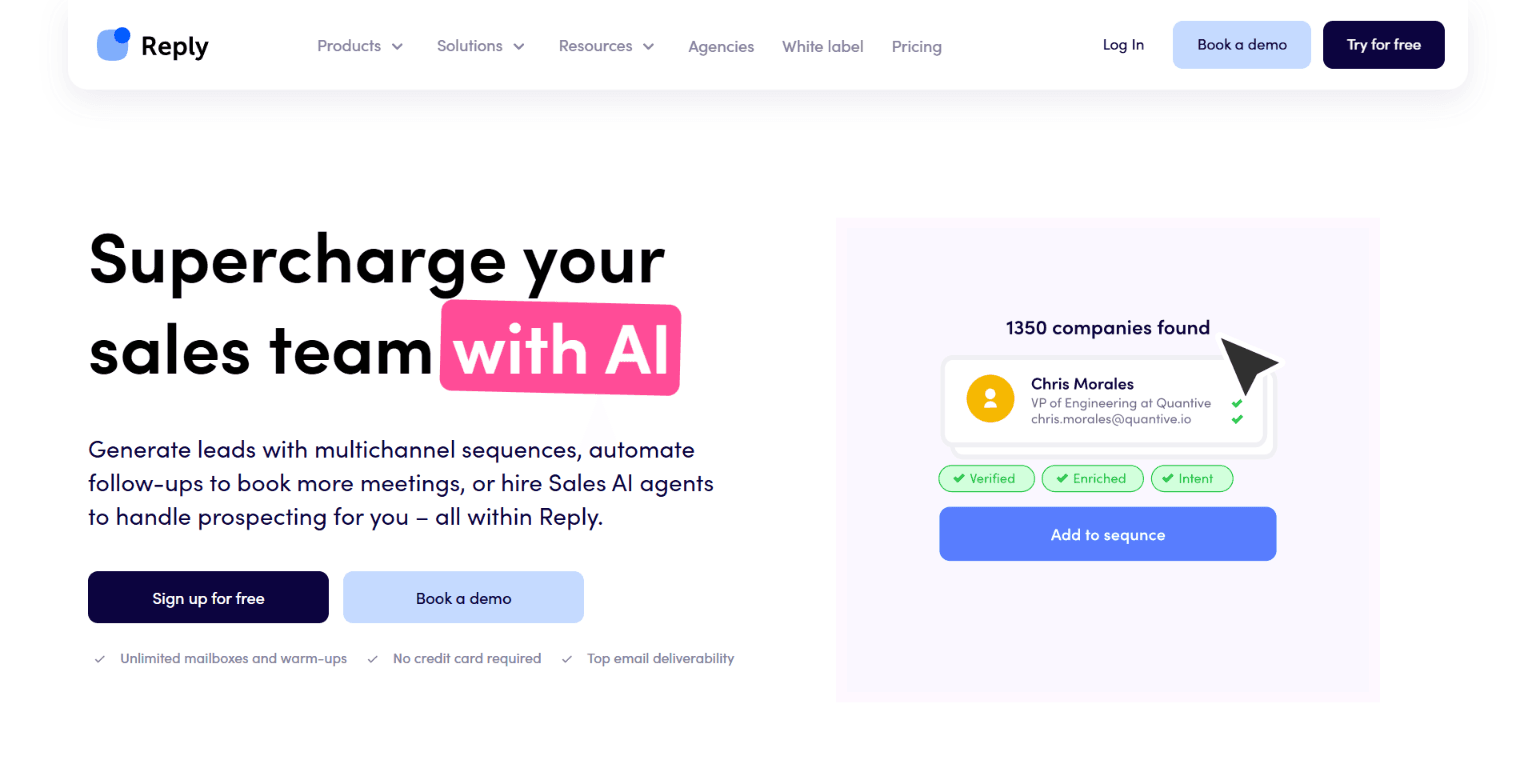
Reply.io offers Jason AI, an AI SDR layer on a classic sequencer, and it is a cheap way into agent-run email. Sequences start around $59 a month, with the AI SDR tier reported around $500-$800 a month. The low entry is the appeal.
It is email-centric on a traditional sequencer, so it does not own multichannel prospecting or autonomous reply handling like a purpose-built AI BDR. A fine first step.
Best for: small teams that want a low-cost entry into agent-run email. Who should pick something else: teams that need multichannel outbound and autonomous replies. Pricing: sequences from $59/mo; AI SDR ~$500-800/mo.
6. Salesforce Agentforce: For Salesforce-first teams
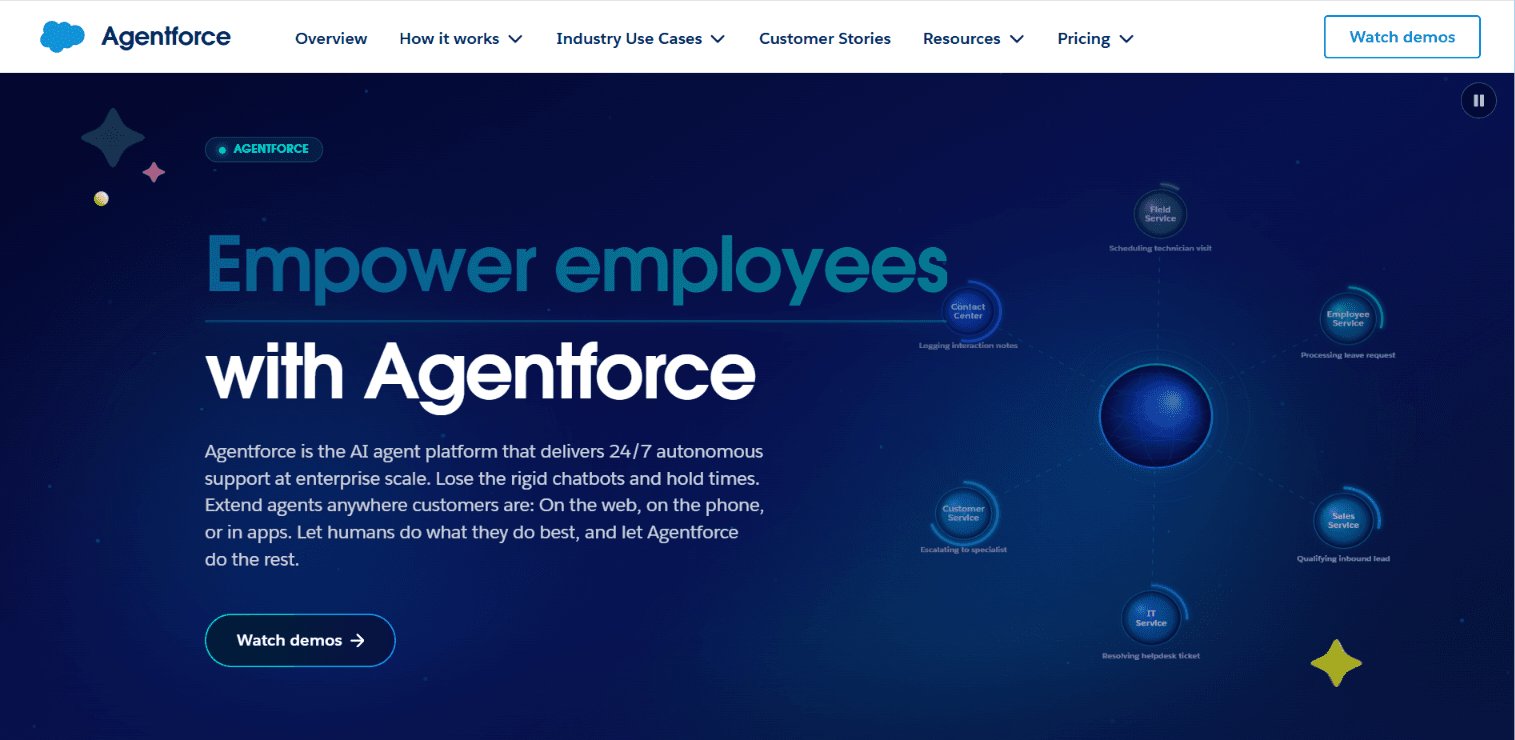
Agentforce SDR keeps the agent native to Salesforce with Salesforce's security behind it, priced consumption-based at roughly $2 per conversation or Flex Credits at about $0.10 per action. For a Salesforce-committed org, this residency is useful.
Setup is steep, the consumption pricing is still evolving, the product is young, and it works your existing CRM contacts rather than sourcing net-new at scale.
Best for: Salesforce-committed teams that want a CRM-resident agent. Who should pick something else: teams that need to source net-new pipeline. Pricing: $2/conversation or Flex Credits ($0.10/action).
7. 11x: Multichannel with an AI phone agent
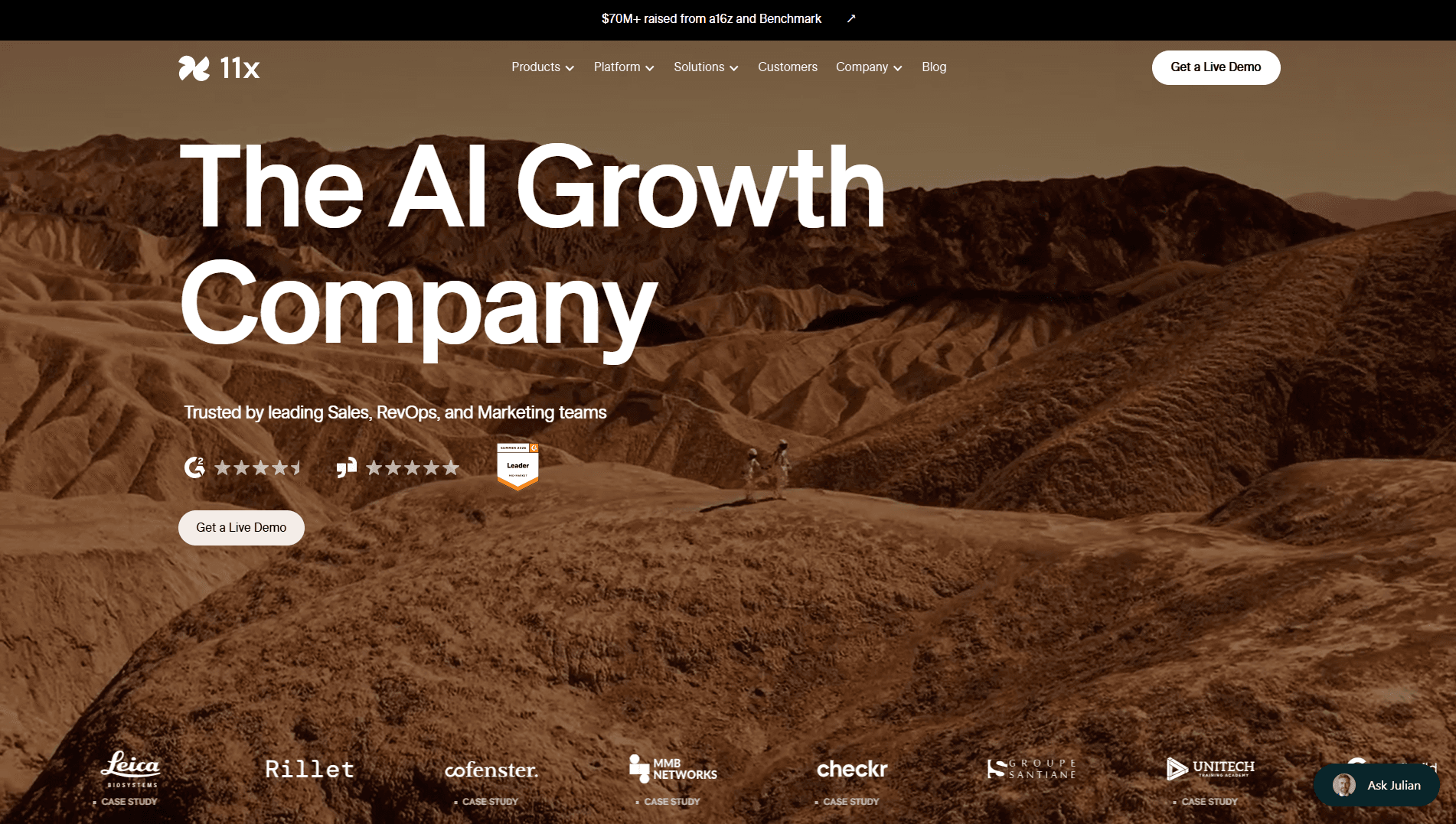
11x runs multichannel outbound through Alice and Julian, including an AI phone agent, and it is well funded with roughly $74M raised from investors including a16z and Benchmark. If an AI phone agent is central to your motion, it is on the list.
The cautions are attributed. TechCrunch reported in March 2025 that some listed customers disputed claims 11x made about them, the founder-CEO stepped down on May 5, 2025 to non-executive chairman, and reviewers report deliverability and CRM-sync problems. It sits in the lower mid-market while selling through enterprise-style contracts (Growth now public from $3,750 a month billed annually, with Pro and Enterprise custom).
Best for: teams that specifically want an AI phone agent and accept the reported track record. Who should pick something else: teams that want a cleaner track record and transparent pricing. Pricing: Growth from $3,750/mo (annual); Pro/Enterprise custom.
Stay with Alta if...
Fair is fair. Stay with Alta if you are already live on it, Katie is producing for you, and you are comfortable being an early adopter of a well-funded young product. Someone has to be first, early customers often receive responsive attention and favorable terms, and a $25M Series A means the runway to keep building is there. If the product fits your motion and you value being on the frontier, there is no reason to move just because a competitor is older.
The reason to switch is risk tolerance, not a specific failure. If your revenue plan cannot absorb the uncertainty of a thin track record, and you would rather have named customers, published economics, and verifiable governance behind the agent that runs your outbound, a more proven platform is the safer bet.
How to choose your Alta alternative
Want proven full-job ownership with governance? Artisan.
Want transparent pricing and speed for an SMB team? AiSDR.
Want signals with a human in the loop? Amplemarket.
Want to augment existing reps? Regie.ai.
Want a cheap way into agent-run email? Reply.io.
Committed to Salesforce? Agentforce SDR.
For the wider category view, see the best AI SDRs and the AI BDR guide. See also the best AI BDRs, the best AI GTM platforms, and the 15 best AI sales tools.
FAQ
What is the best alternative to Alta?
Artisan, because it owns the same full outbound job Alta is building toward (sourcing, personalized outreach, reply handling, and booking) and backs it with the proof a young vendor lacks: named customers with real numbers, published usage-based economics, SOC 2 Type II, and a full audit trail. AiSDR, Amplemarket, Regie.ai, and Reply.io are the other strong options.
Is Alta a mature product?
No. Alta raised a $25M Series A in July 2026 and is early, with a thin public track record and a short deployment history. Its site claims SOC 2 and ISO 27001 and it markets an "AI GTM System of Actions" with an SDR agent named Katie. The ambition is real; the maturity that lets a buyer trust an agent with their pipeline is still being built.
What is the best enterprise alternative to Alta?
Artisan. For an enterprise buyer, the gap with a young vendor is proof and governance, and Artisan closes both: named customers, a central-ops deployment where sales ops runs Ava for large account executive (AE) teams who never log in, SOC 2 Type II, SSO and SAML, regular penetration testing, and a full audit trail. The Enterprise plan adds a forward-deployed strategist and a dedicated CSM.
Should I choose a newer or a more established AI SDR?
It depends on your risk tolerance. A newer vendor like Alta can offer responsive attention and favorable early terms, which suits teams that like being on the frontier. A more established platform offers verifiable proof (named customers, published outcomes, checkable security posture) that matters most when your revenue plan cannot absorb the uncertainty of an unproven product running your outbound.
How does Artisan's track record compare with Alta's?
Artisan has named customers with published numbers: Raise sourced over $700K of ARR in six months (a 20x return), SaaStr achieved a 3.5% positive reply rate, and CookUnity generated pipeline at roughly $45 per lead. Over 90% of customers run Ava autonomously. Alta, as an early-stage vendor, does not yet have a comparable body of public proof, which is the core reason teams shop for alternatives.
Does Artisan have the security posture Alta claims?
Artisan is SOC 2 Type II compliant, GDPR and CCPA compliant, runs regular third-party penetration testing, offers a standard DPA, and publishes a Trust Center, with SSO and SAML available on Enterprise plans. The difference from a young vendor's claims is verifiability and tenure: an established attestation record a procurement team can check, backing a product with a longer deployment history.
The takeaway
Alta is promising and early, and early is the risk you are shopping around. When your revenue plan needs proof over promise, the right alternative is a platform that owns the whole outbound job and has the named customers, published economics, and verifiable governance to stand behind it. See how it works on the Artisan homepage, meet Ava, or read the AI BDR guide.
Related reading
Jaspar Carmichael-Jack
Co-Founder & CEO @ Artisan
Jaspar is an entrepreneur with expertise in sales, marketing, and operations. He founded Artisan in 2023, a company automating workflows with AI employees.