The 10 best AI BDRs in 2026
What an AI BDR must own end to end, and the 10 outbound-capable platforms ranked against that bar, with pricing and fit guidance.
Key Takeaways
- An AI BDR must own five stages end to end: lead sourcing, enrichment, multichannel outreach, reply handling, and meeting booking. Only a handful of 2026 platforms cover all five. Most cover two or three and quietly leave the rest to you.
- Artisan's Ava covers all five stages natively: over 270M B2B contacts plus a local-business database of over 130M (over 400M contacts in total), waterfall enrichment across roughly a dozen providers, email/social/phone outreach, autonomous replies, and calendar booking. This is why it ranks #1 here, and why over 90% of Artisan customers run Ava autonomously (Artisan-reported).
- Full-job platforms and partial tools price differently: flat agent fees ($499/month for Salesforge's Agent Frank, $250-2,500/month for AiSDR), 11x's published Growth plan from $3,750/month (billed annually), per-seat software ($49-119/user/month for Apollo and Instantly tiers), and Artisan's usage-based pay-per-action model.
- Artisan customer Raise sourced over $700K of annual recurring revenue (ARR) in six months with Ava, 20x its investment. SumUp reports a $52 cost per lead reaching previously unreachable local SMBs.
- The gap between an AI BDR and a cold email tool is reply handling: across the category, most "AI BDR" tools still hand every reply to a human.
- Category consolidation accelerated in 2025-26: Apollo acquired Pocus (March 2026), Salesforce's Qualified acquisition closed April 2026, and Alta raised $25 million in July 2026.
Artisan's Ava is the best AI BDR (business development representative) in 2026: she is the only agent that owns every stage of the outbound job (sourcing, enrichment, multichannel outreach, reply handling, and booking) inside one platform, with autonomy you dial up or down. AiSDR and Amplemarket are the strongest alternatives. Most other tools cover part of the job.
A BDR's job is outbound pipeline generation, nothing else. So this guide, updated July 2026, does something different from the usual listicle. It defines the AI BDR category, breaks the outbound job into the five stages an AI BDR must own, and ranks only outbound-capable platforms against one question: can it actually do the whole job?
What is an AI BDR?
An AI BDR is an AI agent that does the business development rep's job (generating outbound pipeline) instead of assisting a human who does it. Artisan coined the term's modern usage when it launched Ava, and the definitional guide lives here: what is an AI BDR. One test separates an AI BDR from AI-assisted software: if the agent disappeared tomorrow, would outbound stop, or would a human just lose a helper? A true AI BDR is accountable for meetings booked, not tasks completed.
What does an AI BDR have to own end to end?
Five stages, in order. Miss one and a human, or another tool, has to fill the gap.
1. Sourcing. Finding net-new best-fit leads from its own database and buying signals, not just working lists you upload.
2. Enrichment. Verifying emails and phone numbers (ideally waterfall-style across providers) so outreach doesn't bounce, plus researching each prospect.
3. Multichannel outreach. Writing and sending personalized messages across email, social, and phone, backed by deliverability infrastructure (sending ramp-up, placement testing, bounce detection) to land in inboxes.
4. Reply handling. Qualifying interest, answering objections, and knowing when to escalate to a human.
5. Booking. Putting qualified meetings directly on the right rep's calendar.
Use this as your evaluation checklist. In demos, ask vendors to show each stage running without a human touch. The stage they demo with slides instead of the product is the stage you'll be doing yourself.
Comparison table: How much of the BDR job each tool owns
Rank | Tool | Sources own leads | Enrichment | Multichannel outreach | Handles replies | Books meetings | Public pricing |
1 | Artisan (Ava) | Yes, over 270M contacts + signals | Yes, waterfall across ~12 providers | Email, social, phone | Yes, autonomous with escalation rules | Yes | Usage-based, free trial (pricing) |
2 | AiSDR | Yes | Yes | Email, social | Partial | Yes | $250-2,500/mo published |
3 | Amplemarket (Duo) | Yes, native database | Yes | Email, social, calls | Partial, assists reps | Partial | ~$600/mo entry, unpublished |
4 | Reply.io (Jason AI) | Partial, add-on data | Partial | Email, social, calls | Yes, Jason replies | Yes | $500-3,000/mo agent tiers |
5 | Salesforge (Agent Frank) | Partial | Partial | Email-first | Yes, within email | Yes | $499/mo flat |
6 | Regie.ai (RegieOne) | Partial | Partial | Email, calls (dialer) | No, reps drive | No, reps book | Reportedly $180-499/user/mo |
7 | Apollo | Yes, over 230M contacts | Yes | Email, calls, tasks | No | No, humans run it | Free-$119/user/mo |
8 | Instantly | Partial, 450M lead DB add-on | Partial | Email only | No, Unibox is for humans | No | $94-555/mo tiers |
9 | 11x (Alice) | Yes, over 400M claimed | Yes | Email, social, phone/SMS (Julian) | Partial | Yes | Growth from $3,750/mo (annual); Pro/Enterprise custom |
10 | Alta (Katie) | Yes | Yes | Email, social, AI calling | Partial | Yes | Quote-based |
Coverage assessments are our reading of each product as of July 2026. Pricing is per each vendor's pricing page.
The 10 best AI BDRs, ranked
1. Artisan (Ava)
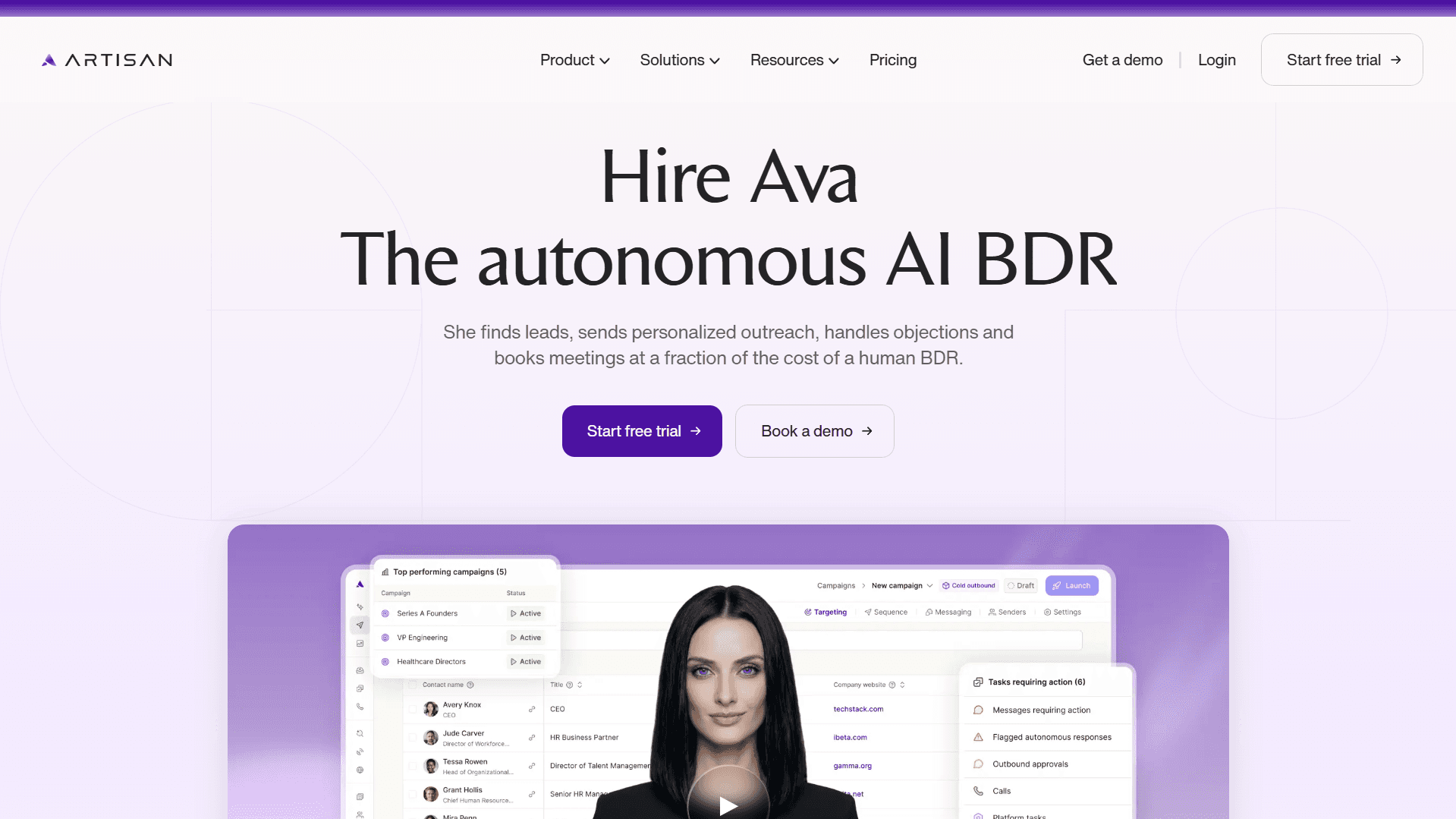
Verdict: the only AI BDR that owns all five stages with autonomy you control.
Ava runs the entire outbound job in one place. For sourcing, she draws on a B2B contact database of over 270M contacts plus a local-business database of over 130M (over 400M contacts in total), filtered by intent signals: funding, executive hires, hiring surges, tech-stack and topic intent, website visitors, and custom signals you define in plain English. Enrichment runs waterfall lookups across roughly a dozen providers, with emails bounce-tested and phone enrichment charged only on success. Outreach means individually written messages per lead (not templates with merge fields) across email, social, and native dialer call steps, with power dialing and parallel dialing up to three lines, AI answer detection, AI voicemail drop, and automatic area-code matching for true local presence. Deliverability is managed too: secondary mailboxes with automated sending ramp-up, inbox placement testing, and bounce-pattern auto-pause. When replies come in, Ava qualifies, answers objections from a knowledge base, and escalates on rules you write in plain English. Booking puts meetings on the right rep's calendar via CRM owner mapping, with native Salesforce and HubSpot sync.
Because every stage is native, there's no stitching tax: no separate data contract, sequencer, dialer, and deliverability vendor to integrate. It runs at enterprise scale on the same rails: sales ops operates Ava centrally for large account executive (AE) teams whose reps never log in, governed by escalation rules, a full audit trail, org-level do-not-contact, and field-level CRM controls, and Enterprise plans add single sign-on (SSO), SOC 2 Type II, a forward-deployed strategist, and a dedicated customer success manager (CSM). Raise sourced over $700K of ARR in six months with Ava, 20x its investment. SumUp generates leads at a $52 cost per lead in a local-SMB segment its human team couldn't economically reach.
Best for: any team whose bottleneck is outbound pipeline, from founders doing first outbound to fintechs running Ava centrally across a thousand-plus AEs.
Who should pick something else: teams that only want software for reps to drive (see Apollo), or teams whose whole motion is maximum-volume parallel calling. Ava's parallel dialing runs up to 3 lines with compliance guardrails built in, while dedicated parallel dialers like Nooks and Orum push to more lines, up to 10 on Orum's Ascend.
Pricing: usage-based credits, pay per action instead of per seat, no platform fee, free trial. The dialer seat is the only published number: $67/month with unlimited minutes, plus one credit per call (live AI talking points, transcription, AI-drafted follow-ups, recordings, and analytics included), plus pooled phone numbers at roughly $5/month each, versus the $200-300/user/month or more that dedicated parallel dialers charge. Details at artisan.co/pricing.
2. AiSDR
Verdict: the best value full-loop agent for small teams.
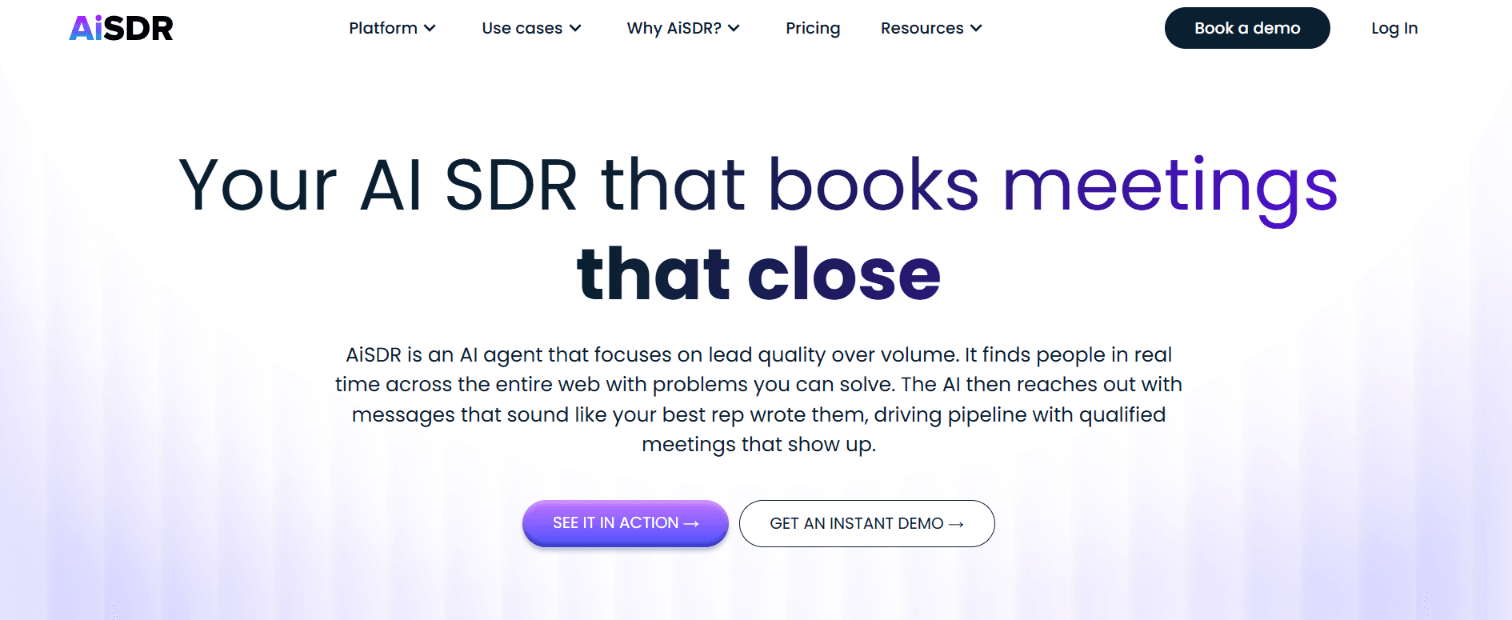
AiSDR covers sourcing through booking with published pricing ($250/month Solo, $900 Explore, $2,500 Scale, per aisdr.com/pricing) plus Ami, a go-to-market (GTM) strategist agent. Y Combinator-backed with a $3M seed. Reply handling is present but lighter-touch than Ava's, and the governance story is thin for enterprise.
Best for: startups and SMBs that want the whole loop at a fixed monthly price.
Who should pick something else: enterprises that need CRM depth, audit trails, and data governance.
3. Amplemarket (Duo)
Verdict: strong native data, but Duo assists more than it owns.
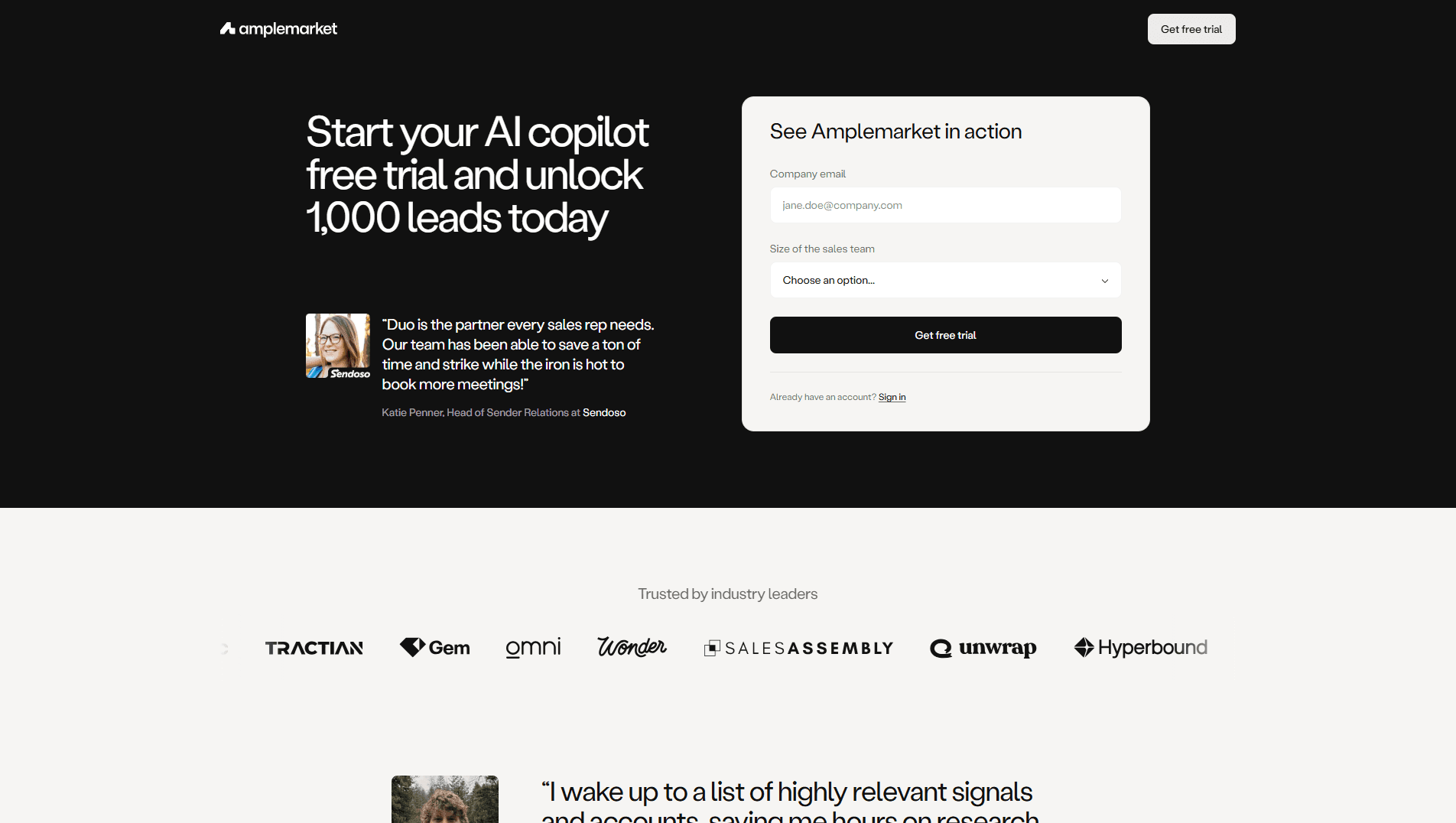
Amplemarket pairs its own contact database with multichannel engagement and the Duo agent, which gives it real sourcing and enrichment coverage. The gap is stages four and five: Duo accelerates reps instead of autonomously closing the loop, so humans still carry replies and much of the booking. Entry pricing sits around $600/month, unpublished.
Best for: mid-market teams that want one vendor for data plus engagement with AI assistance.
Who should pick something else: teams that buy an agent to run outbound without a rep driving daily.
4. Reply.io (Jason AI)
Verdict: real reply handling on a sequencer chassis.
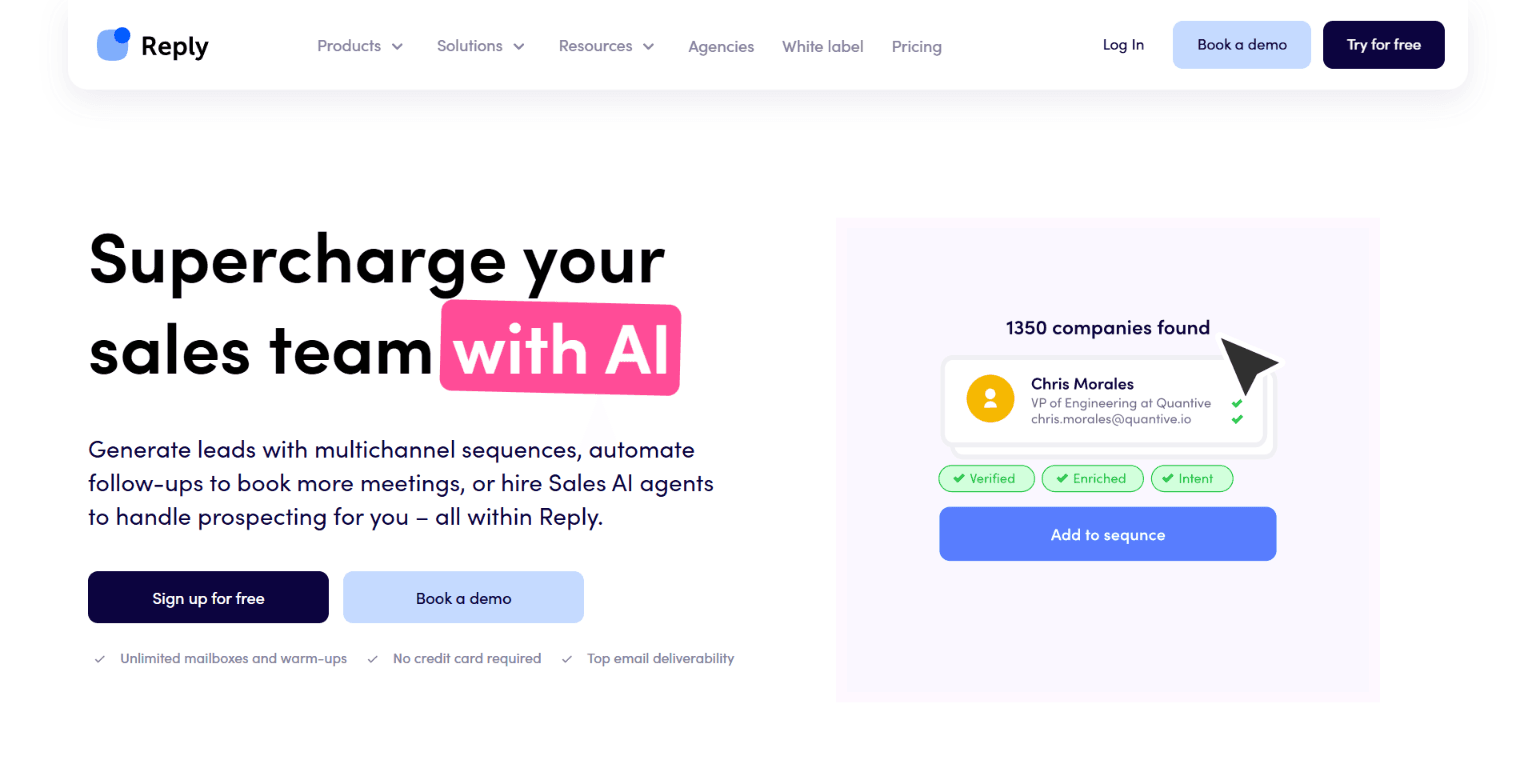
Jason AI actually answers replies and books meetings, which is rarer than it should be, on top of Reply.io's mature multichannel platform. Sourcing leans on add-on data instead of a flagship database. Agent tiers run $500-800/month starter and $1,500-3,000/month growth, per Reply's pricing page.
Best for: teams with their own lead lists that want an agent to work them end to end.
Who should pick something else: teams that need the agent to source net-new pipeline from scratch.
5. Salesforge (Agent Frank)
Verdict: the whole loop, one channel, one low price.
Agent Frank sources, sends, replies, and books autonomously for a flat $499/month, but essentially within email. Platform tiers are $40-80/month. As a single-channel AI BDR it's honest and cheap. It just can't touch phone or social motions.
Best for: budget-conscious teams whose ideal customer profile (ICP) responds to email.
Who should pick something else: anyone whose outbound needs calls or social touches to convert.
6. Regie.ai (RegieOne)
Verdict: deliberately not an autonomous BDR, and clear about it.
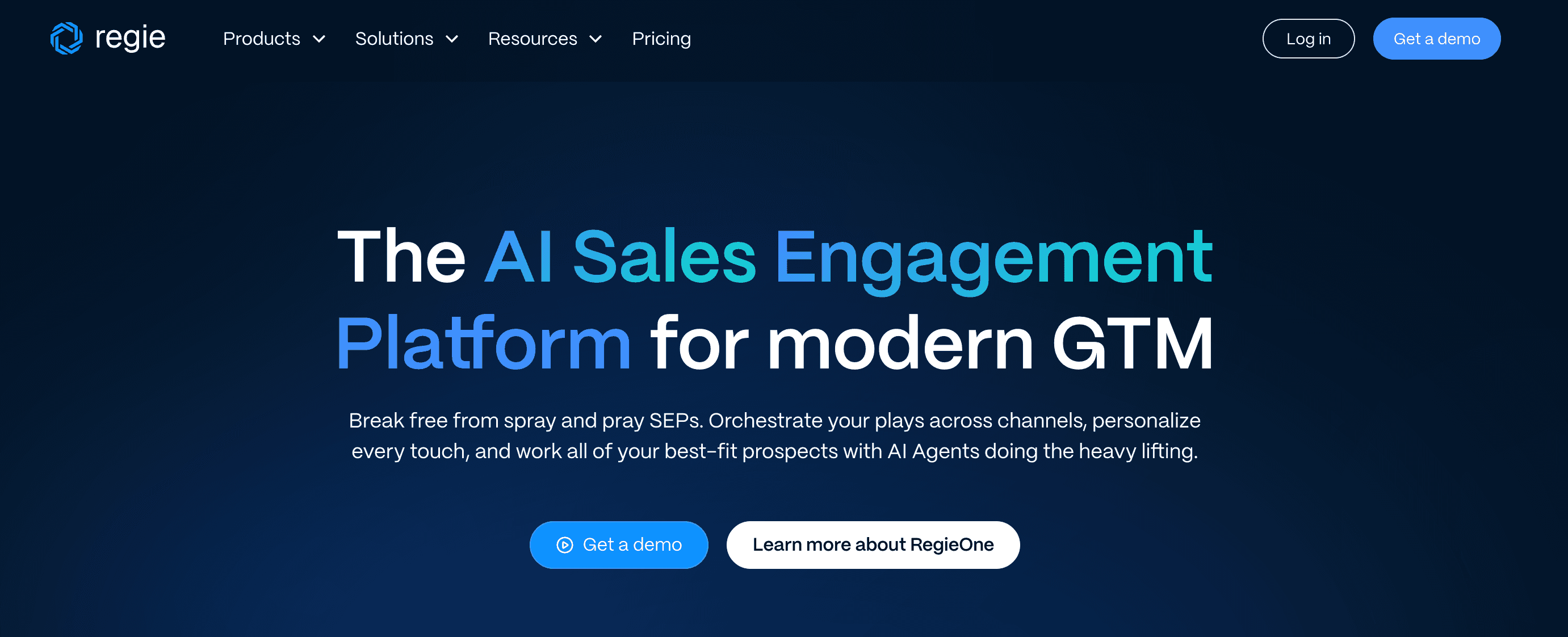
Regie's Auto-Pilot agents warm cold accounts while reps work engaged ones inside RegieOne's sales engagement platform with a built-in dialer. Reps own replies and booking by design. Regie's stated philosophy is augmentation. Pricing is reportedly around $180/user/month, or $499/user/month for the Force Multiplier tier. $30M Series B (February 2025).
Best for: enterprises keeping a human-led cadence motion and adding AI where it's safe.
Who should pick something else: teams that shop this list for an agent that owns the job. That's explicitly not the product.
7. Apollo
Verdict: the best software for humans doing the BDR job, which is the point.
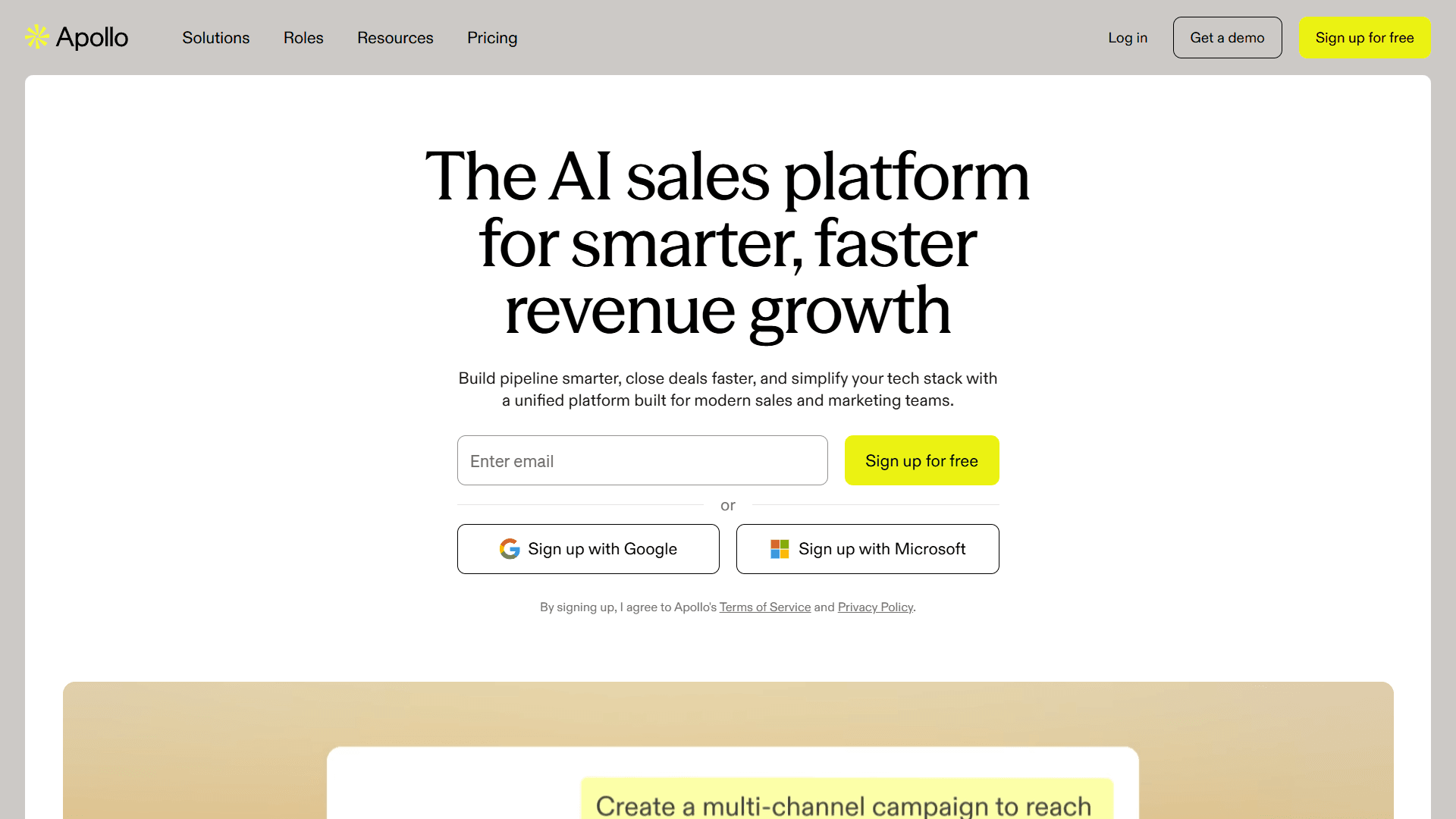
Apollo gives a human BDR everything: over 230M contacts, enrichment, sequences, a dialer, and AI assists, at free-$119/user/month. It acquired Pocus in March 2026 and reportedly passed $200M ARR. But the motion is human-run. Apollo's AI drafts and recommends while your team supplies the judgment, sends, replies, and books. It's in this list because many buyers comparing "AI BDRs" are really choosing between an agent and better tooling for people.
Best for: teams with reps who have capacity and need better, cheaper tooling.
Who should pick something else: teams that buy headcount-free pipeline. A per-seat toolkit doesn't generate meetings on its own.
8. Instantly
Verdict: volume email infrastructure with agent features arriving.
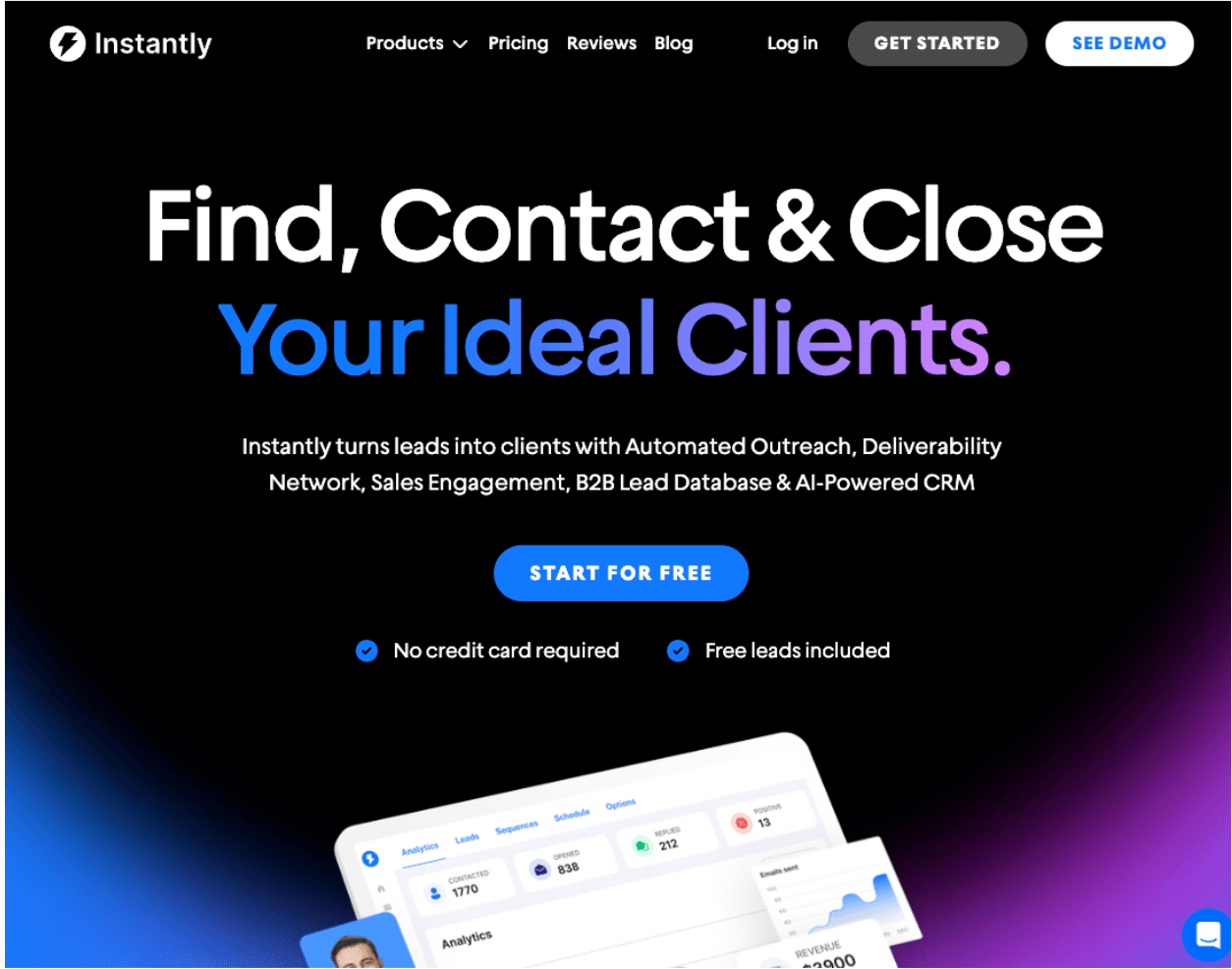
Instantly is a deliverability-first cold email machine: unlimited sending accounts with automated sending ramp-up on all plans and a lead database add-on of over 450M leads. Tiers run $94-555/month (sending-only from $47), per instantly.ai. Its AI agent features are new, and replies land in a unified inbox for humans to answer, so as an AI BDR it covers roughly two of five stages.
Best for: agencies and volume senders who own their targeting and copy strategy.
Who should pick something else: teams that want outreach answered and meetings booked without staffing the inbox. See our cold email tools guide for that category on its own terms.
9. 11x (Alice)
Verdict: wide stage coverage, sold on enterprise-style contracts to a lower mid-market core.
Alice covers sourcing (over 400M contacts claimed), outreach, and booking, and 11x's Julian adds an AI phone agent, the widest channel spread after Artisan. The sales motion is annual-commit: roughly $74M raised from a16z and Benchmark, with published Growth pricing from $3,750/month (billed annually) and custom Pro and Enterprise tiers. Despite this motion, the product's center of gravity is lower mid-market. Due diligence matters here. TechCrunch's March 2025 reporting found 11x had claimed customers it didn't have, founder-CEO Hasan Sukkar stepped down to non-executive chairman that May, and churned customers have reportedly cited deliverability and CRM-sync problems. This reporting, not the feature list, is what keeps it this far down the ranking.
Best for: lower mid-market teams that want an AI phone agent and can commit to its annual Growth plan (published from $3,750/month).
Who should pick something else: SMBs, self-serve buyers, anyone who wants pricing before a demo, and enterprises expecting depth to match the sales motion.
10. Alta (Katie)
Verdict: the compliance-forward challenger with native AI calling.
Katie covers the outbound loop with AI calling built in, and Alta's SOC 2 and ISO 27001 certifications are unusual for a company this young. Fresh $25 million Series A (July 8, 2026). Pricing is quote-based and the customer track record is still short, which is why it closes the list: treat the product as early signal.
Best for: teams that want calling in the agent's channel mix and care about security posture.
Who should pick something else: buyers who want published pricing or a longer track record before committing.
Is an AI BDR the same as an AI SDR?
Vendors blur the titles, but the buying decision differs. "AI SDR" (sales development representative) has become the umbrella label, covering inbound agents like Qualified's Piper that convert existing website demand and follow-up specialists like Conversica. "AI BDR" is the narrower, harder claim: an agent that generates net-new outbound pipeline end to end, which is the usage Artisan established with Ava. Artisan now spans both sides of the split: Ava Inbound, its AI inbound agent, greets and qualifies website visitors by live chat and books meetings from the same platform that runs outbound, priced separately (talk to sales for inbound pricing). Everything ranked above is outbound-capable. If your gap includes inbound conversion or you want the full category tour, read our companion ranking of the 12 best AI SDRs.
What does an AI BDR cost in 2026?
Four pricing models dominate, and the model tells you what the vendor believes it's selling:
Flat agent fee: Salesforge at $499/month, AiSDR at $250-2,500/month. Priced like a subscription employee, predictable but capacity-capped.
Annual-commit platform: 11x publishes Growth from $3,750/month (billed annually), with Pro and Enterprise custom. A real commitment even though its center of gravity is lower mid-market.
Per-seat software: Apollo ($49-119/user/month published), Regie (reportedly $180-499/user/month), Instantly ($94-555/month). Priced as tooling for humans, which is what it is.
Usage-based: Artisan's model. Credits per action performed, no platform fee, free trial, so spend tracks the work actually done instead of seats or a flat retainer (pricing).
For context on the alternative, a fully loaded US BDR runs $120K-200K/year, ramps for 3-6 months, and averages roughly 14 months of tenure. Teams using Ava report generating pipeline at about one-fifth the cost of a human BDR, adding capacity alongside the team instead of replacing it.
What changed in the AI BDR category in 2025-2026?
Apollo bought Pocus (March 19, 2026), pushing the biggest per-seat platform toward an "AI-native GTM OS" and signal-driven selling.
Salesforce closed its Qualified acquisition (April 1, 2026), consolidating inbound agents into Agentforce and sharpening the inbound/outbound split this article ranks on.
11x reset its leadership after TechCrunch's March 2025 reporting on misstated customers. CTO Prabhav Jain became CEO in May 2025.
New money chased the autonomous end: Alta's $25 million Series A (July 8, 2026) and Monaco's $50M Series B led by Benchmark (May 2026) both back agents, not seat software.
Pricing moved toward usage and outcomes: Salesforce shifted Agentforce to $0.10/action Flex Credits and HubSpot launched credit-based outcome pricing ($0.010 per credit) in April 2026. The market is converging on paying for work performed.
FAQ
What is the best AI BDR for startups and SMBs?
Artisan. The free trial, usage-based pricing, and full five-stage coverage mean a two-person team gains sourcing, enrichment, outreach, replies, and booking without hiring or stitching tools together. It scales with you too: the same platform is what enterprises run centrally from sales ops. AiSDR ($250/month entry) and Salesforge's Agent Frank ($499/month, email-only) are the best fixed-price alternatives. Skip high-commit annual vendors like 11x (Growth from $3,750/month) until your spend justifies the outlay.
What is the best AI BDR platform for B2B sales teams?
For mid-market and enterprise B2B teams, Artisan. It offers native Salesforce and HubSpot sync with owner mapping, deal-based do-not-contact, field-level export controls, and an autonomy dial that lets sales ops run Ava centrally while reps just take meetings. Regie suits teams keeping a strictly human-led motion. 11x adds an AI phone agent, though its center of gravity is lower mid-market despite the annual-commit pricing. Governance requirements are covered in our SOC 2 AI SDR guide.
How do enterprises deploy an AI BDR without losing control?
The proven pattern is central operation. Sales ops configures ICP, signals, CRM field mappings, and do-not-contact rules once, then Ava executes inside those guardrails while AEs just take the booked meetings. Artisan supports this with plain-language escalation rules, a full audit trail, org-level do-not-contact, field-level CRM controls, and SSO plus SOC 2 Type II on Enterprise plans, with a forward-deployed strategist and dedicated CSM guiding rollout. Usage-based economics keep cost tracking work performed instead of headcount as the team grows.
What AI BDR tools generate qualified meetings?
The tools that own stages four and five: Artisan (Ava qualifies against your ICP, handles objections, and books on reps' calendars), Reply.io's Jason AI, and Salesforge's Agent Frank within email. Artisan customer Raise sourced over $700K of ARR in six months. This is pipeline, not just replies. Tools that stop at "interested" replies (Instantly, Apollo sequences) leave qualification and booking to your team.
Which AI BDR personalizes outreach using buying signals?
Artisan connects the widest signal set directly to outreach: funding rounds, executive hires, active hiring, tech-stack intent, Bombora-powered topic intent, website visitor identification, champion job changes, and natural-language custom signals. Each signal can trigger a personalized campaign automatically. Amplemarket and Alta use signals in targeting, while Apollo reveals signals for reps to act on. The differentiator is whether the signal triggers action or just decorates a record.
What is the best autonomous AI BDR?
Artisan's Ava. Autonomy is the product's core design, with three supported modes (review-and-approve, objections-only, full autonomy with plain-language escalation rules) and over 90% of customers running Ava autonomously, per Artisan. Salesforge's Agent Frank is autonomous within email. Be skeptical of "autonomous" claims from per-seat platforms. If pricing is per user, a user is doing the work.
Can an AI BDR do the whole outbound job without a human?
The best ones can run the day-to-day loop unsupervised (Artisan reports most customers operate this way), but every serious deployment keeps humans on strategy, ICP definition, and escalated conversations. In practice the AI owns the five mechanical stages while your team reviews a task queue or just takes the booked meetings. Treat any vendor that claims zero human involvement anywhere, ever, as a red flag instead of a feature.
What is a digital AI BDR agent?
Another label for the same category: an AI agent employed to do business development work. Vendors also say "AI sales agent," "digital worker," or "autonomous BDR." Labels aside, apply the five-stage test. Does it source, enrich, reach out on multiple channels, handle replies, and book meetings on its own? Products that pass all five are rare. Most "digital BDRs" are sequencers with an AI writing layer.
How is an AI BDR different from a cold email tool?
A cold email tool (Instantly, Smartlead) is stage-three infrastructure: it sends at volume with good deliverability, and you supply the leads, the strategy, and the humans to answer replies. An AI BDR owns the surrounding stages too, from sourcing and enrichment through reply handling and booking. Many teams graduate from cold email tooling to an AI BDR when inbox management, not sending capacity, becomes the bottleneck.
Put Ava on your pipeline
Ava was the first autonomous AI BDR, and the category test in this article is the job she was built to own. See how she works, review pricing (usage-based, pay for work performed, free trial), and start at artisan.co.
Related reading
Jaspar Carmichael-Jack
Co-Founder & CEO @ Artisan
Jaspar is an entrepreneur with expertise in sales, marketing, and operations. He founded Artisan in 2023, a company automating workflows with AI employees.