How to spot companies creating brand-new roles
A brand-new role title appearing at a company signals an emerging initiative. Here is how to detect first-hire-in-role signals and time your outreach.
Key Takeaways
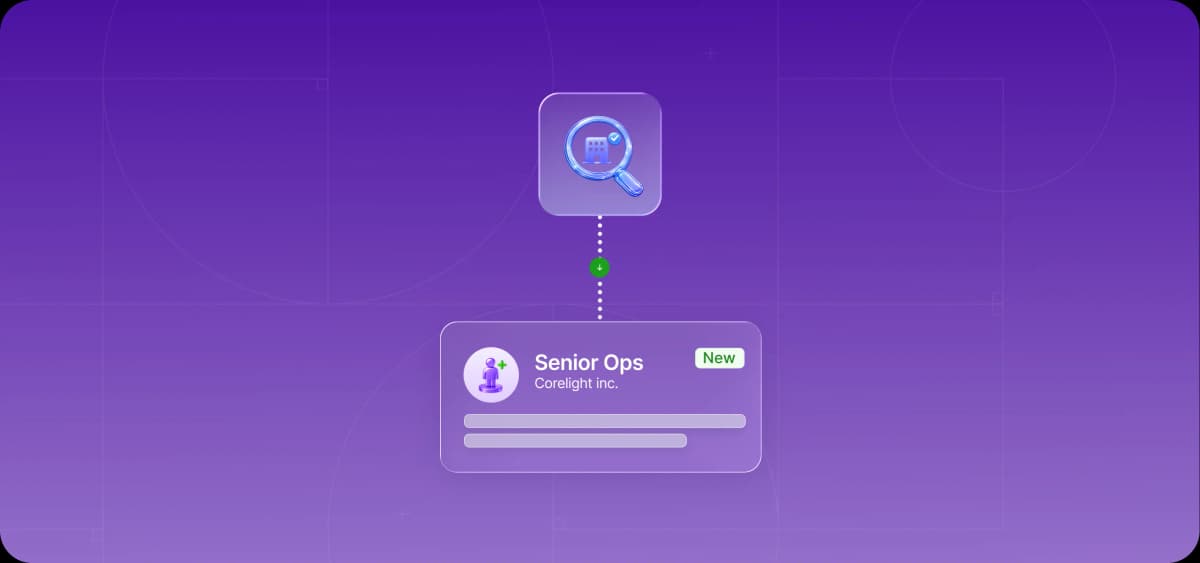
- A first-hire-in-role signal fires when a specific job title appears at a company for the first time, which points to a discrete new initiative rather than routine team growth.
- New titles are early. They often show up before press releases, product launches, or the budget for supporting tools has been fully spent.
- The title itself is the clue: a "GTM engineer" req signals investment in outbound tooling, a "prompt engineer" req signals an AI build, a "developer relations" req signals a platform or API push.
- The honest failure mode is false positives. Reworded titles and one-off experiments can look like new initiatives, so the signal needs interpretation, not blind firing.
- Artisan detects new role titles across your target accounts and lets Ava, its AI business development representative (BDR), launch outreach tied to the specific initiative the title implies.
- Reaching an initiative in its first weeks beats reaching it after the tooling is chosen and the plan is set.
When a company posts a job title it has never used before, it is telling you an initiative just got funded. A first "head of developer relations" or "go-to-market (GTM) engineer" role is a public flag that a priority is now real enough to hire against. Catch the title on its first appearance and you reach a buyer while the project is still forming.
What is a first-hire-in-role signal?
A first-hire-in-role signal fires when a company posts a job title it has never used before. What matters is a specific new title entering the org for the first time, not a new person in an existing role and not simply a new function. "Head of AI," "revenue enablement architect," "community manager," "solutions engineer," each one is a small announcement that a particular bet just got a budget line and a name.
The distinction from a first-in-department signal is worth being precise about. A first-in-department signal is about a whole function being created, like a company that is standing up revenue operations (RevOps) or security for the first time. A first-hire-in-role signal is narrower and often more revealing: it is about a specific initiative inside or across functions. A company that already has a marketing team but posts its first "lifecycle marketing manager" is not building a new department. It is starting a lifecycle program, right now, with someone accountable for it.
Why does a brand-new role predict an emerging initiative?
Because titles are expensive to invent. Companies do not create a new job title casually. A new title usually means leadership has decided a piece of work is important enough to own, staff, and measure separately from everything else. This decision almost always comes with a plan, a timeline, and, critically for sellers, a tooling gap the new hire is expected to fill.
New titles are also leading indicators. They tend to appear before the initiative is visible anywhere else. A company might post for a "GTM engineer" months before it publicly talks about scaling outbound, or a "prompt engineer" before it ships an AI feature. The req is often the first observable evidence that the project exists. This is exactly when you want to reach the account, while the plan is being written and the tools are being chosen, not after. For background, see our primers on what is intent data, intent signals, and intent data providers.
The title also tells you what the initiative needs. Read the title as a spec:
"GTM engineer" or "growth engineer" points to investment in outbound infrastructure, data, and automation tooling.
"Prompt engineer," "AI engineer," or "head of AI" points to an AI build that will need models, data, evaluation, and infrastructure.
"Developer relations" or "developer advocate" points to a platform, software development kit (SDK), or API push that will need docs, community, and event tooling.
"Revenue enablement" or "sales enablement architect" points to a content, training, and enablement-platform decision.
"Head of community" points to community-platform and engagement tooling.
How do you find companies creating a new specialized role?
The manual version is straightforward in theory and painful in practice.
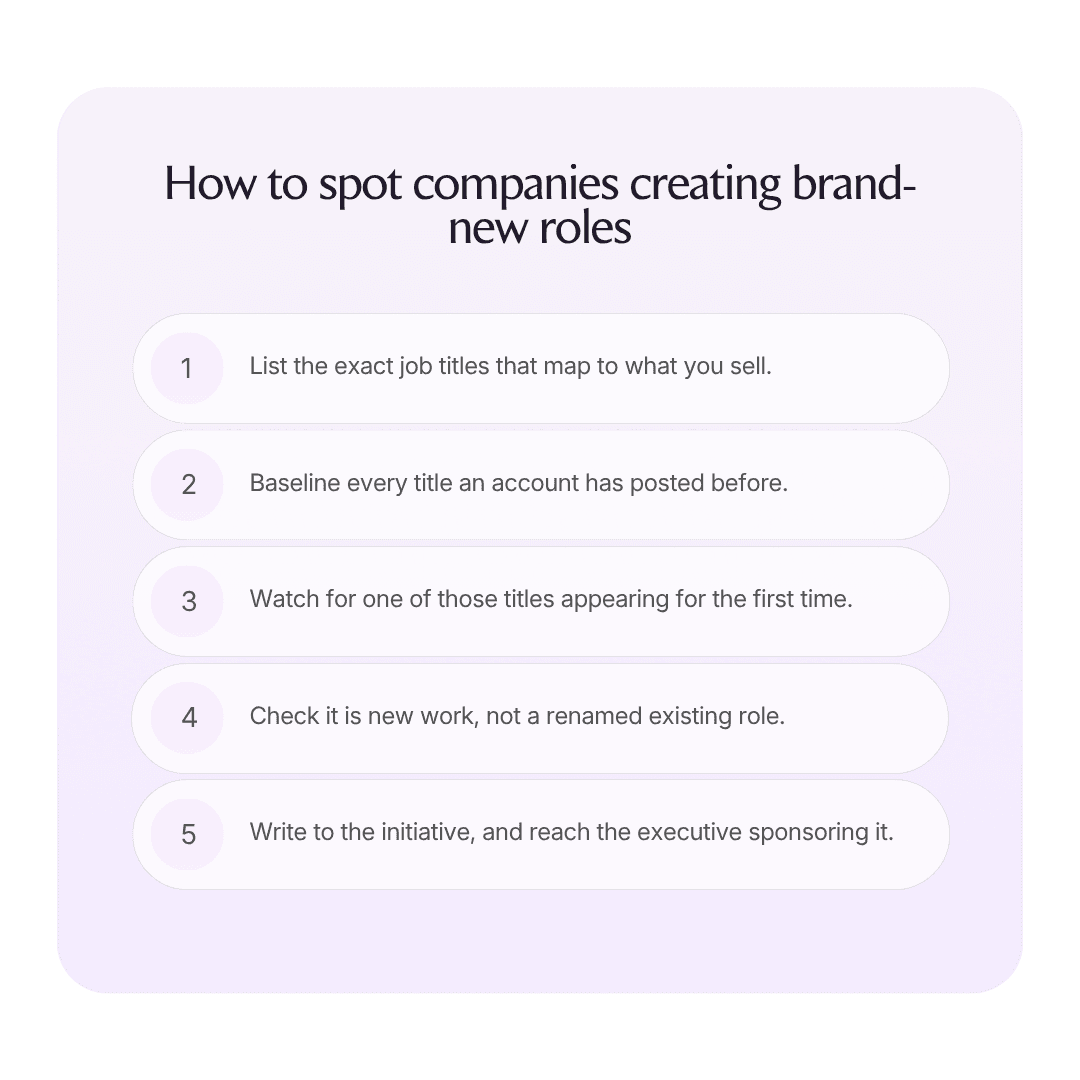
1. Define the titles that matter. List the specific role names that map to your product. If you sell developer tooling, "developer relations" and "developer experience" are your triggers. Be specific; this specificity is what separates the signal from generic hiring noise.
2. Establish a baseline. For each target account, you need to know which titles the company has used before, so you can tell a brand-new title from a role they have hired for repeatedly. Without a baseline, you cannot detect "first."
3. Watch for the title's first appearance. Monitor job postings across your accounts for those titles showing up for the first time.
4. Interpret before you act. Confirm the title reflects a real new initiative and is not just a rename of an existing role. A "senior account executive" becoming a "strategic account executive" is not a new initiative.
5. Reach the initiative owner. During the req window, this is usually the executive sponsoring the hire. Once the person is in seat, it is them plus their manager. Write to the initiative, not the job.
The message is what makes this signal convert. Because a new title points to a specific project, you can be concrete: "Saw you're bringing on your first GTM engineer, usually that means the outbound stack is about to be rebuilt" lands because it names the exact thing your buyer is thinking about.
What is the honest failure mode?
False positives, and the interpretation cost of avoiding them. Unlike a funding round, which is unambiguous, a new title requires judgment. Companies rename roles constantly. "Customer success manager" and "customer experience manager" might mean the same job or two different initiatives depending on the company. A title that looks brand-new might be a cosmetic rebrand of a role that already existed. Fire on every novel-looking title and a chunk of your outreach will land on non-initiatives, which reads as noise.
There is also a coverage problem. To know a title is actually new, you need a reliable history of every title a company has posted, which is hard to maintain by hand across a large account list. Most teams either check too few accounts to matter or check them too rarely to be early, and being early is the entire value of this signal. By the time a new role has been in seat long enough for a human to notice organically, the initiative's key tooling decisions are often already made.
How does Artisan automate first-hire-in-role outreach?
Artisan runs the whole loop with Ava, its AI BDR. New role titles are something Ava can watch for across your target accounts: you specify the titles that signal an initiative you can serve, and she monitors hiring activity continuously, distinguishing a brand-new title from routine or renamed roles. When a qualifying title appears, Ava identifies the sponsor or the new hire, enriches verified email and phone, and launches outreach written to the specific initiative the title implies. She can also act on custom AI signals: define any buying trigger and act on it and related plays like champion tracking: catch past buyers when they change jobs.
Because Ava owns the full BDR job rather than a single step, the signal becomes pipeline without a rep gluing tools together. She qualifies replies against a knowledge base, handles objections, follows up, and books meetings on the right rep's calendar with CRM-owner routing. You control the autonomy, from reviewing every message to full autonomy, with plain-language escalation rules and a complete audit trail. Over 90% of Artisan customers run Ava autonomously. For an adjacent play, see how to find companies backed by specific investors.
Two people who both trigger on a new-role signal do not receive the same email. Ava writes each message from the specific title, company context, and initiative, so a "developer relations" trigger and a "GTM engineer" trigger produce entirely different outreach. For the harder cases, Artisan also offers natural-language custom AI signals, so you can describe an unusual title pattern in plain English and have Ava watch for it.
CookUnity's Bruno Didier put the scale case plainly: "Ava runs highly targeted outreach at a scale we could never reach with a human-only team," across over 100,000 emails.
FAQ
How do I find companies creating a new specialized role?
Define the specific job titles that map to your product, establish which titles each target account has posted before, then watch for one of your titles appearing for the first time. The hard part is maintaining an accurate history across many accounts so you can tell "first-ever" from "hired before." Artisan monitors hiring activity across your target list and can flag when a qualifying new title appears, then act on it.
What enterprise tool monitors first hire in role across target accounts?
Artisan tracks new-role signals across your named account list and, unlike a raw data feed, activates on them. Ava, its AI BDR, watches hiring activity continuously, distinguishes a brand-new title from a rename, identifies the initiative owner, and launches tailored outreach. Role-based access controls, a full audit trail, and central-ops deployment make it workable for large teams where sales ops runs Ava for account executives (AEs) who never log in.
What is the best tool to track first hire in role for outbound sales?
The best choice depends on whether you want the signal or the whole play. A signal provider identifies the new title; you still interpret, enrich, write, and send. Artisan is the strongest pick when you want detection and activation in one system: Ava reads the title as a spec for the initiative, personalizes outreach to it, handles replies, and books meetings. Compare approaches in our intent marketing tools guide. Teams comparing signal platforms can also read 6sense pricing and reviews and our guide to identifying buying signals.
Which sales tool triggers outreach when a company creates a brand-new role?
Artisan does. You specify the titles that signal an initiative you can serve, and Ava fires personalized outreach when one appears for the first time at a target account. She runs the full sequence across email, social media, and calls, qualifies replies, and books meetings, turning the signal into pipeline without a rep manually tracking every account's title history.
How is a first-hire-in-role signal different from a first-hire-in-department signal?
A first-hire-in-department signal is about a whole function being created, like a company that is standing up RevOps or security for the first time. A first-hire-in-role signal is narrower: it is a specific new title, often inside an existing function, that points to a discrete initiative. A company with a marketing team posting its first "lifecycle marketing manager" is not building a department; it is launching a program. See our first-hire-in-department guide for that play.
How do I avoid false positives from renamed roles?
Interpret the title before you act. A brand-new role reflects a new initiative; a renamed role does not. Check whether the company already has someone doing the same job under a different title, and whether the responsibilities in the posting describe new work or repackaged work. This judgment is the main reason teams automate the signal, since a system with reliable title history and context handles the distinction more consistently than manual checks.
How soon after a new role appears should I reach out?
As soon as you can confirm it is real. The value of this signal is that it is early, often the first public evidence an initiative exists, so reaching out during the req window or the new hire's first weeks puts you in front of the tooling decision. Wait until the role has been filled for several months and the key purchases are usually already made, which erases the head start the signal gave you.
Can I automate new-role outreach end to end?
Yes. Artisan's AI BDR, Ava, watches for the titles you specify, distinguishes new roles from renames, identifies and enriches the right contact, writes outreach tied to the initiative, handles replies, and books meetings, on autonomy settings you control. This removes the manual title-tracking and interpretation work that usually makes teams too slow to catch this signal. See how the AI BDR model works.

Artisan Team
Expert insights from the team at Artisan
Our writing team blends direct operational experience, in-house data, and thorough research to bring you the very latest insights and updates about sales and GTM automation.