The best Conversica alternatives in 2026
Conversica pioneered the AI sales assistant in 2007, but teams want modern autonomous outbound. Here are the best Conversica alternatives in 2026, ranked and honest.
Key Takeaways
- Conversica is a 2007 veteran that has raised more than $80M, with gated, enterprise-style pricing. It is strongest in automotive and higher education, where nurturing large inbound lists matters most.
- The recurring reason teams leave is the assistant ceiling: Conversica revives and qualifies existing leads, but it does not do net-new prospecting or run autonomous outbound as a modern motion.
- Artisan is the top alternative for teams that want the job done end to end: an AI business development representative (BDR) that sources, enriches, writes, sends, handles replies, and books meetings, with over 90% of customers running her fully autonomously.
- AiSDR publishes transparent tiers from $250 a month; Amplemarket bundles data and a copilot; Reply.io layers an agent onto a sequencer from about $59 a month.
- The move most Conversica shoppers actually want is from "assistant that follows up" to "employee that owns the pipeline."
The best Conversica alternative for most teams is Artisan, because it runs the whole outbound job autonomously instead of nudging leads you already have. Conversica helped invent the AI sales assistant back in 2007, and it still does lead follow-up well. The gap is scope. It responds and re-engages; it does not source, prospect, and run modern multichannel outbound.
That distinction is why teams go shopping. Conversica's assistant excels at chasing known contacts, marketing qualified leads (MQLs), and dormant records with polite persistence. It was not built to find net-new best-fit accounts, enrich them, write personalized cold outreach, and book meetings without a rep steering. The alternatives below close this gap from different angles.
The best Conversica alternatives at a glance
Rank | Tool | Best for | Standout capability | Public pricing |
1 | Artisan | Teams that want outbound run autonomously end to end | AI BDR that owns the full job | Usage-based credits, no platform fee (pricing) |
2 | AiSDR | Transparent AI-SDR pricing and fast setup | Outbound plus inbound with the Ami agent | $250-$2,500/mo |
3 | Amplemarket | Data and engagement with an AI copilot | Signal-based selling in one bundle | ~$600/mo entry (not public) |
4 | Reply.io | An accessible agent on a sequencer | Jason AI on top of native sequencing | Sequences from $59/mo; agent ~$500-800/mo |
5 | 11x | Lower mid-market, enterprise-style contracts | Multichannel with an AI phone agent | Not public (~$5K/mo reported) |
How we chose
We weighed four things against how Conversica buyers actually work. First, how much of the job the tool does on its own, since Conversica's assistant ceiling is the reason most people are shopping. Second, whether it sources net-new pipeline or only works existing lists, which is Conversica's core limit. Third, pricing transparency, given Conversica's entry is gated and enterprise-priced. Fourth, deployment fit from a lean team through a large sales org with governance needs.
Why do people look for a Conversica alternative?
They look because Conversica is an assistant, and an assistant works the leads you feed it. Conversica pioneered conversational AI for sales in 2007 and still nurtures inbound and dormant contacts with steady, human-sounding follow-up. In automotive and higher education, where the job is re-engaging huge lists, that is real value, and the tenure means the follow-up flows are mature.
The ceiling is scope. Conversica does not prospect. It does not build a net-new target list from an ideal customer profile (ICP), run waterfall enrichment, write cold outreach across channels, or optimize a campaign the way a modern outbound platform does. It picks up where your list already exists and re-engages it. Teams that expected an AI to generate pipeline, not just revive it, hit this wall. Add gated, enterprise-style entry pricing, and the search for something that owns more of the motion begins. The alternatives below either run outbound as an autonomous job or give you a modern agent for less commitment. For the broader landscape, see the best AI BDRs and the best AI GTM platforms.
The five best Conversica alternatives in 2026
1. Artisan: Autonomous end to end
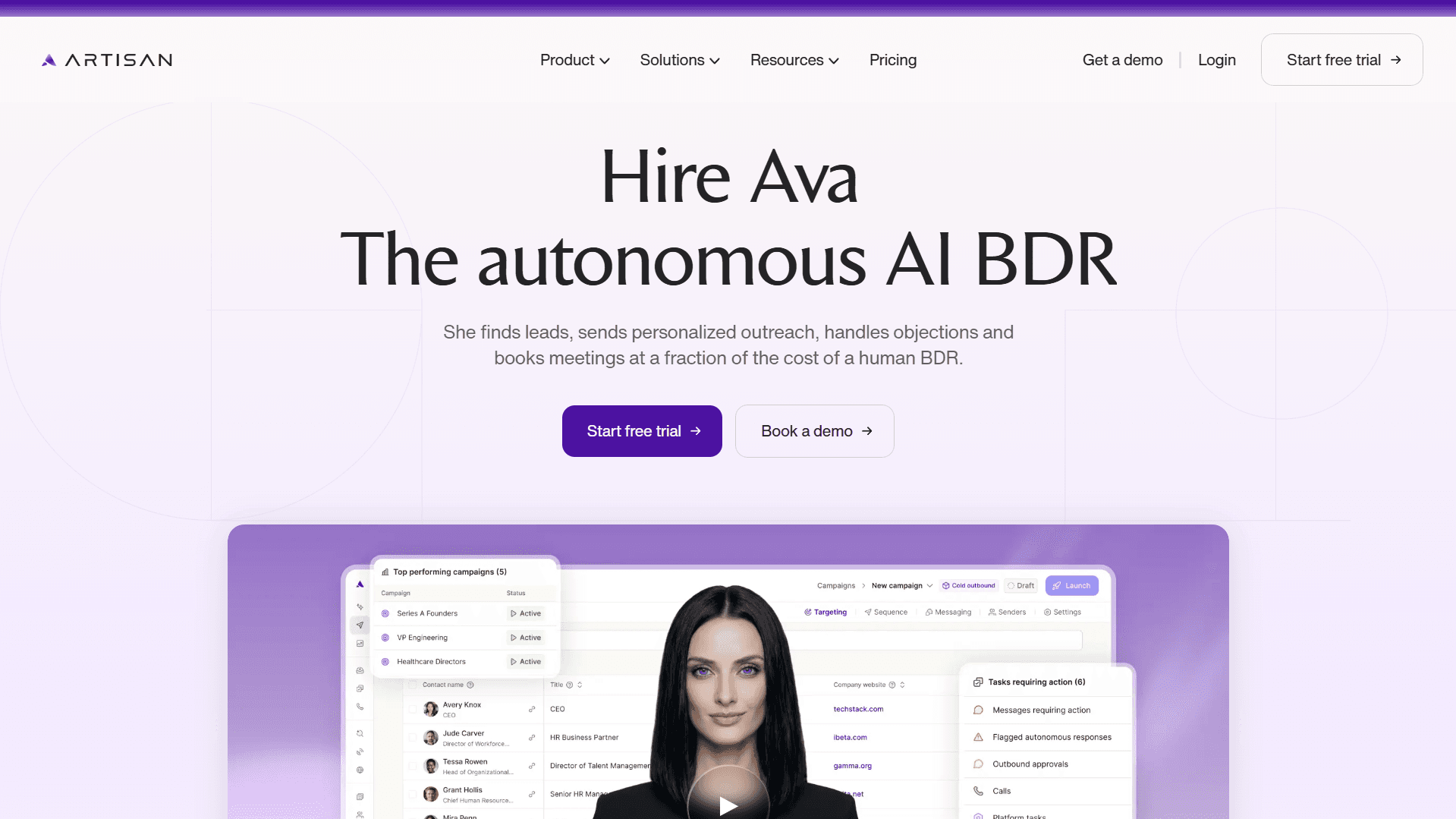
Artisan is the alternative for teams that want the outbound job owned, not the follow-up assisted. Ava, Artisan's AI BDR, does what Conversica cannot reach. She sources best-fit leads from a database of over 270M B2B contacts and over 130M local businesses, runs waterfall email and phone enrichment across roughly a dozen providers charged only on success, and ranks them by conversion likelihood. Then she writes personalized multichannel outreach across email, social, and dialer steps, tests dozens of message variations, and shifts volume toward what converts.
Where Conversica ends, Ava keeps going. She handles every reply, qualifies, answers objections from a knowledge base, chases follow-ups, and books meetings on the right rep's calendar with CRM-owner routing. She also runs the re-engagement job Conversica is known for: warm outbound to closed-lost, churned accounts, MQLs, and event leads is a native campaign type, not a bolt-on. Autonomy is a dial: review and approve each message, objections-only replies, or fully autonomous with plain-language escalation rules and a full audit trail. Over 90% of customers run her autonomously.
Best for: teams from startup to enterprise that want outbound sourced and run autonomously, plus re-engagement of existing lists in the same system.
Who should pick something else: teams that only need conversational follow-up on inbound leads inside a niche like automotive, and want nothing else, may not need Ava's full scope.
Pricing: usage-based credits, pay for work performed rather than seats, no platform fee, free trial. See pricing.
2. AiSDR: Transparent AI-SDR pricing
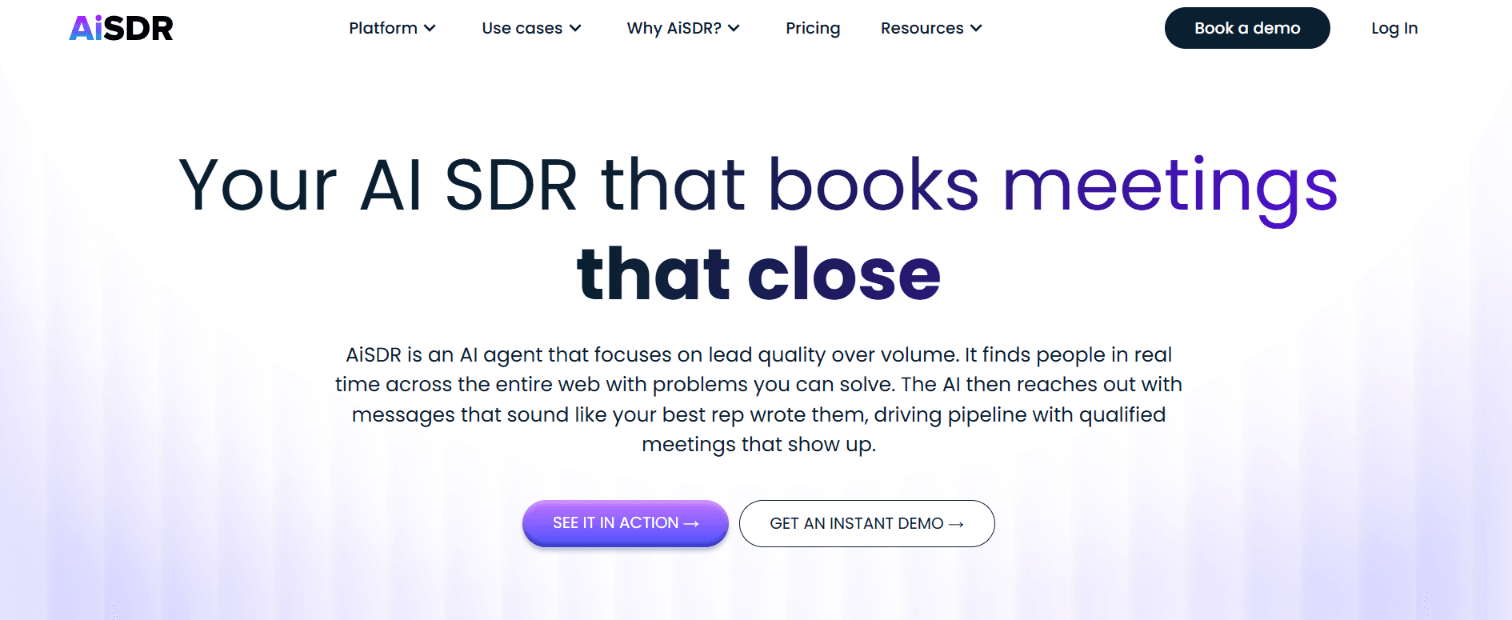
AiSDR is the closest step from Conversica's assistant toward an actual agent, with pricing you can read before a demo. It runs outbound and inbound through its Ami agent, sets up fast, and publishes tiers at $250, $900, and $2,500 a month. Compared with Conversica's gated enterprise entry, that transparency and lower on-ramp are the immediate draw for a smaller team.
The limits are scope and governance. AiSDR's center of gravity is SMB and lower mid-market, and its enterprise story, central deployment, deep audit, and security depth, is thinner than a large org needs. But if you want an agent that runs email outbound and inbound without a heavy contract, it moves you well past a follow-up assistant.
Best for: SMB and lower mid-market teams that want transparent AI-SDR pricing and quick setup.
Who should pick something else: enterprises needing central ops deployment and deep governance should choose Artisan.
Pricing: $250 to $2,500 a month, per its pricing page.
3. Amplemarket: Data and a copilot in one bundle
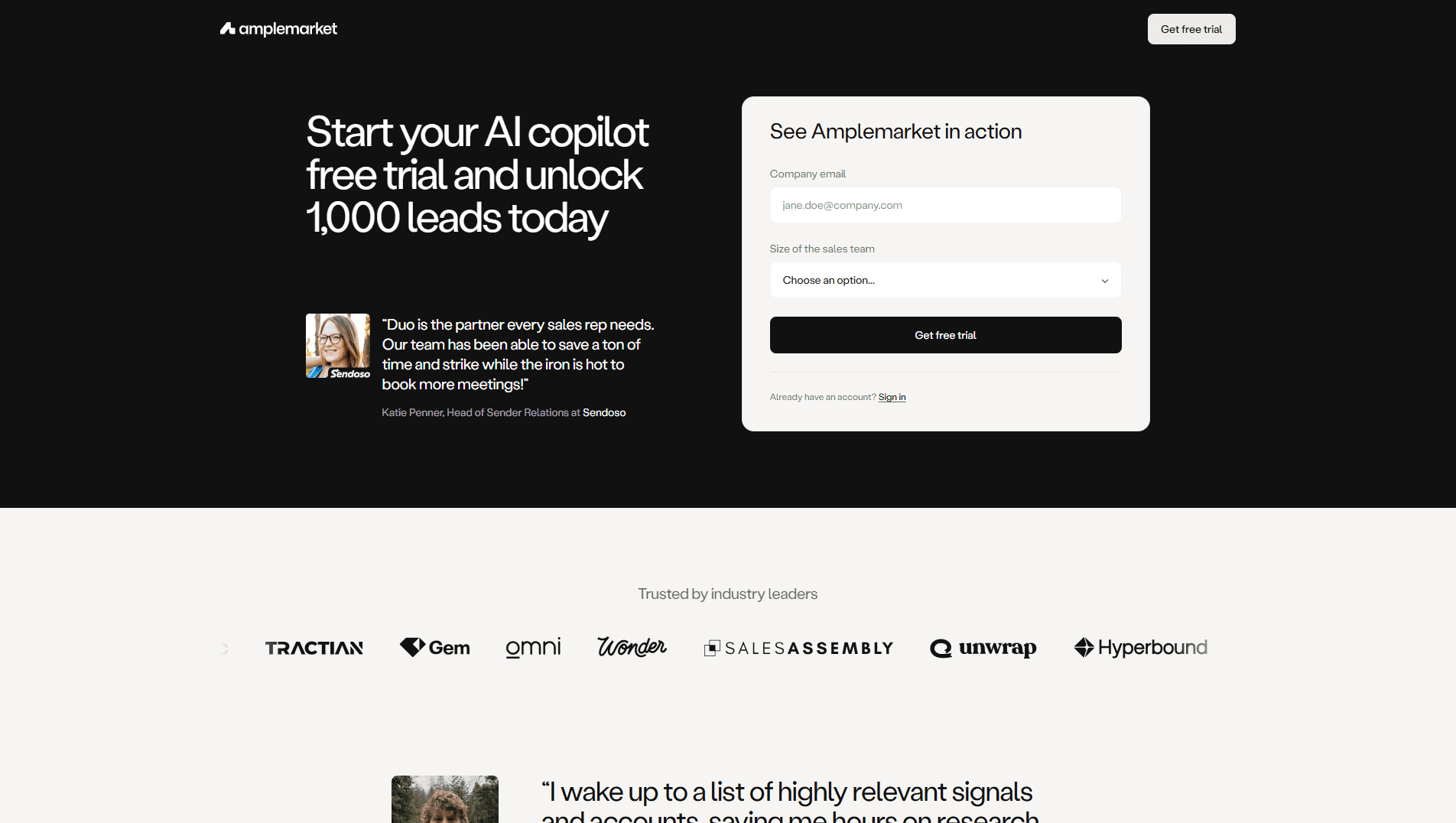
Amplemarket suits teams that want modern data and engagement with an AI copilot, rather than a nurture assistant. It combines a contact database, multichannel outreach, and the Duo copilot, with a real emphasis on signal-based selling. Entry is reported around $600 a month, though it is not publicly listed. For a rep who wants better prospecting data and smarter suggestions in one place, it is a capable all-rounder.
The trade is that Duo assists rather than owns. A human still decides, approves, sends, and works every reply, so output per rep rises but pipeline stays tied to headcount. It is a step up from Conversica in prospecting breadth, but it does not remove the rep from the loop the way an autonomous BDR does.
Best for: teams that want data, engagement, and signal-based selling with a copilot beside the rep.
Who should pick something else: teams that want the motion run for them, not suggested to them, should look at Artisan.
Pricing: around $600 a month at entry, per reporting; not publicly listed.
4. Reply.io: An accessible agent on a sequencer
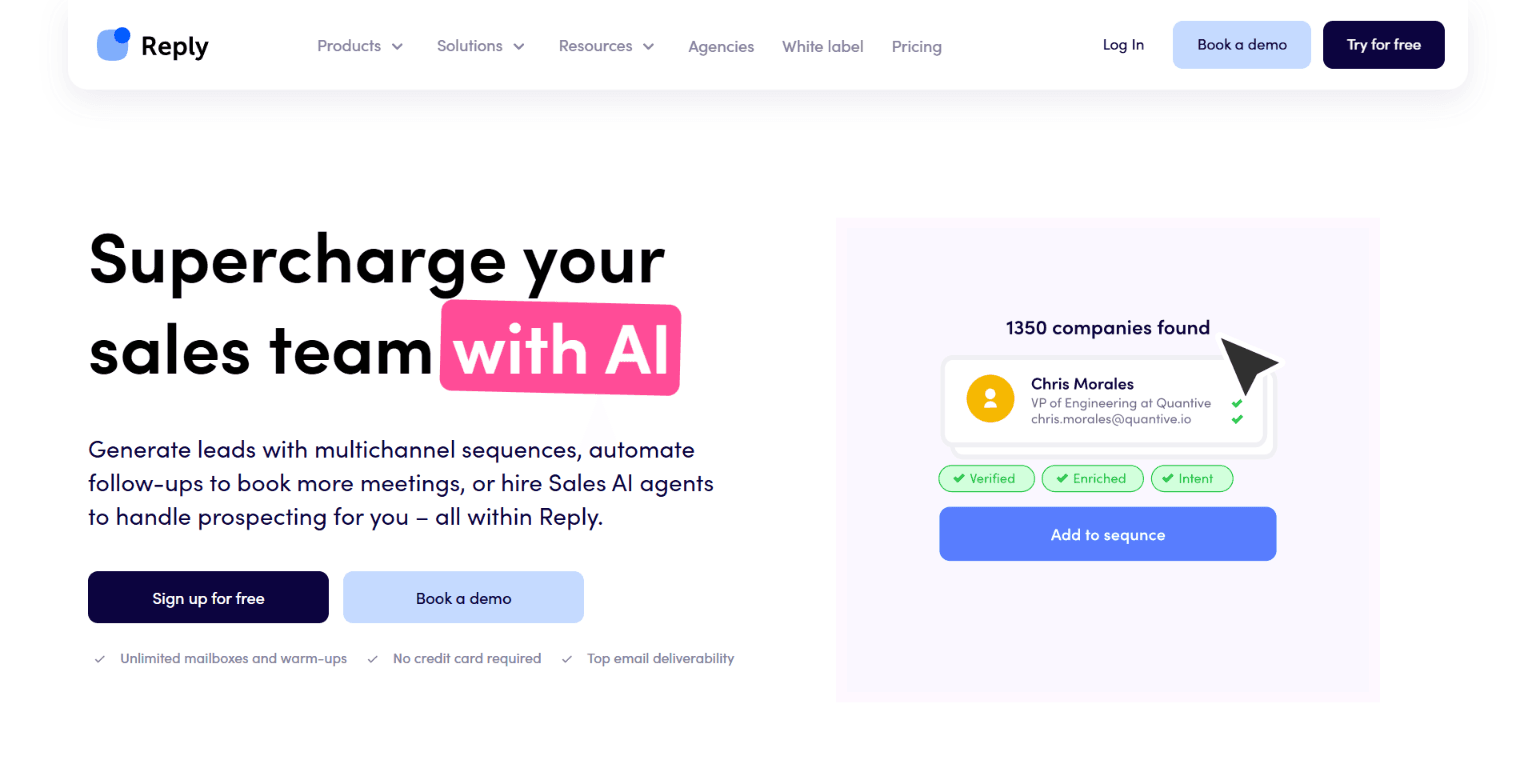
Reply.io is the low-friction way to add an email agent without a gated enterprise contract. Its Jason AI agent sits on top of native sequencing, so you can start with classic cadences from about $59 a month and layer the AI SDR on for roughly $500 to $800 a month. For a team that wants to test agent-run email after living inside Conversica's assistant, it is an easy on-ramp.
The constraint is that it is an email-centric agent on a traditional sequencer. The deep multichannel sourcing, autonomous reply handling, and enterprise governance of a purpose-built AI BDR are not the core. It is a modern agent for email specifically, not a full owner of the outbound job.
Best for: teams that want an affordable email agent bolted onto a sequencer they understand.
Who should pick something else: teams that want multichannel, fully autonomous outbound should choose Artisan.
Pricing: sequences from $59/month; the AI SDR agent around $500-800/month.
5. 11x: Multichannel agent sold through enterprise-style contracts
11x markets Alice as an AI SDR with multichannel outreach, including an AI phone agent, and it has raised roughly $74M from investors including a16z and Benchmark. On paper it targets the same "AI does outbound" promise Conversica shoppers want.
Treat it with more caution than the others. Its pricing is not public, reported around $5,000 a month, with long onboarding and no self-serve, and it operates like a lower mid-market tool sold through enterprise-style contracts rather than a true enterprise platform. TechCrunch reported on March 24, 2025 that a customer described claims 11x could not support; its founder-CEO stepped down on May 5, 2025 to non-executive chairman, with CTO Prabhav Jain becoming CEO, and reviewers report deliverability and CRM-sync complaints. Weigh these attributed signals against the pitch.
Best for: lower mid-market teams comfortable with an enterprise-style contract and a hands-on onboarding.
Who should pick something else: teams that want transparent pricing, a proven track record, and self-serve autonomy should choose Artisan.
Pricing: not public; reported around $5,000 a month.
What is the best enterprise alternative to Conversica?
For enterprises, Artisan is the strongest alternative because it covers the whole motion under one governed system rather than adding a follow-up assistant to a stack. Conversica works existing lists inside a niche; Artisan sources net-new pipeline, runs multichannel outbound, handles replies, and re-engages dormant accounts, all centrally from sales ops for large AE teams who never log in. It holds SOC 2 Type II attestation, offers SSO, SAML, and role-based access on the Enterprise plan, keeps a full audit trail, and includes a forward-deployed strategist plus a dedicated customer success manager (CSM). Native signals, named-account targeting, and person-level website visitor identification on US traffic make it enterprise account-based marketing (ABM) with the outreach built in. For CRM-specific picks, see the best AI SDR for HubSpot users and the best AI SDR for Salesforce users.
If the real requirement is transparent pricing for a smaller team rather than enterprise governance, AiSDR is the alternative worth a look.
Stay with Conversica if...
Stay with Conversica if your core job is conversational follow-up on a large existing list, especially in automotive or higher education, where its 2007-vintage nurture flows are mature and battle-tested. If you have a steady stream of inbound leads and MQLs that mostly need patient, human-sounding re-engagement, and you are not trying to generate net-new outbound pipeline, Conversica does that specific job well. The assistant model is a fit when the leads already exist and you just need them worked.
If the honest goal is to generate pipeline, not just revive it, an AI sales agent that owns sourcing through booking is the better buy. For the wider category, see our guide to the best AI SDRs. See also the best AI sales tools.
Frequently asked questions
What is the best alternative to Conversica?
For most teams it is Artisan, because it does the prospecting Conversica's assistant never touches. Ava sources net-new best-fit leads, enriches them, writes personalized multichannel outreach, handles replies, and books meetings, and she also runs the re-engagement of dormant lists that Conversica is known for. Over 90% of Artisan customers run her fully autonomously, with an autonomy dial down to review-and-approve.
How is Artisan different from Conversica?
Conversica is a conversational assistant that follows up on leads you already have. Artisan is an AI BDR that owns the outbound motion from sourcing to booking. Conversica revives known contacts; Artisan builds the target list, enriches it, writes and sends multichannel outreach, and works every reply. Both can nurture existing accounts, but only Artisan generates net-new pipeline as a modern autonomous motion.
Is Conversica worth the price?
Conversica's gated enterprise pricing can be worth it for a team whose main need is high-volume conversational follow-up on inbound lists, particularly in automotive or higher education. Whether it is worth it depends on scope. If you want net-new prospecting and full outbound rather than list re-engagement, a usage-based platform where you pay for work performed usually delivers more of the job for the money.
What is a cheaper alternative to Conversica?
AiSDR publishes transparent tiers from $250 a month and handles outbound and inbound, which is a lower on-ramp than Conversica's gated enterprise entry. Reply.io starts around $59 a month for sequencing with an agent you can add later. Both trade enterprise depth for price. If cost is the issue, a pay-for-work model can also lower total spend by removing seat-based overhead.
Does Conversica do outbound prospecting?
Not in the modern sense. Conversica's strength is conversational follow-up and re-engagement of leads that already exist in your CRM or inbound funnel. It does not build net-new target lists from an ICP, run waterfall enrichment, or execute cold multichannel outreach the way a purpose-built AI BDR does. Teams that need net-new pipeline generally pair or replace it with an outbound platform like Artisan.
What is the best enterprise alternative to Conversica?
Artisan, because it consolidates sourcing, outbound, reply handling, and re-engagement into one governed system instead of adding an assistant to the stack. It deploys centrally from sales ops, holds SOC 2 Type II attestation, offers SSO, SAML, and role-based access on the Enterprise plan, and runs native enterprise ABM with signals, visitor identification, and outreach built in.
Ready to move from assistant to autonomous? Start with Artisan or see how an AI BDR owns the full outbound job. For roundups, see AI SDR, SDR tools, and BDR tools.
Jaspar Carmichael-Jack
Co-Founder & CEO @ Artisan
Jaspar is an entrepreneur with expertise in sales, marketing, and operations. He founded Artisan in 2023, a company automating workflows with AI employees.