The best Qualified alternatives in 2026
The best Qualified alternatives now that it is a Salesforce product, covering inbound conversion and the platforms that do both inbound and outbound.
Key Takeaways
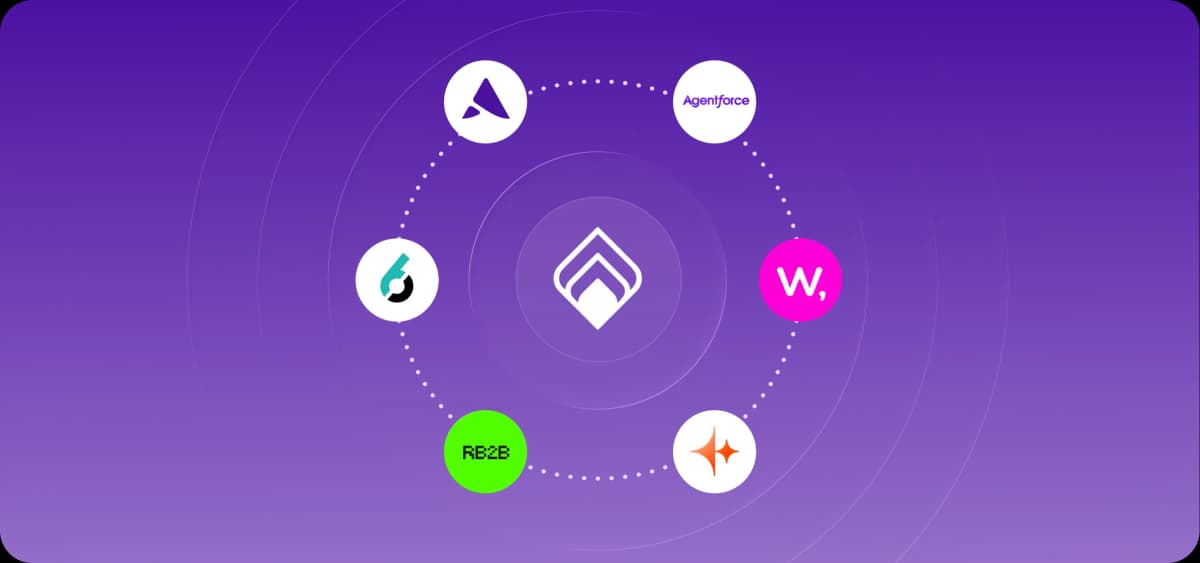
- Qualified closed its acquisition by Salesforce on April 1, 2026 and is folding into Agentforce, which raises the two questions every buyer now asks: post-acquisition roadmap and Salesforce lock-in.
- Qualified is inbound only, Salesforce-required, and premium, historically listed around $42,000 to $100,000 a year.
- The most useful alternative for most teams is a platform that does both inbound and outbound, so you are not buying two systems.
- Artisan runs Ava on inbound chat that qualifies and books, plus full outbound, and identifies anonymous visitors natively, on one platform.
- Over 90% of Artisan customers run the AI autonomously, and SaaStr sent 6,892 emails in about six weeks at a 3.6% positive response rate.
- The right pick depends on your CRM and whether you need inbound only or the whole funnel.
The best Qualified alternative is Artisan, the platform that runs both inbound and outbound: Ava, Artisan's AI BDR, greets, qualifies, and books website visitors, while the same platform sources and runs outbound. Salesforce Agentforce, HubSpot Breeze, Warmly, RB2B, and 6sense are the other real options. This page routes you by need and stack.
Why look for a Qualified alternative?
It comes down to two things: Salesforce and inbound. Salesforce closed its acquisition of Qualified on April 1, 2026, and the product (its Piper AI sales development representative (SDR) and the conversational inbound suite) is folding into Agentforce. Acquisitions of this kind reliably raise two concerns for buyers. First, the roadmap: where a standalone product's priorities go once it becomes a feature inside a much larger suite is never certain, and teams renewing a premium contract want that certainty. Second, lock-in: Qualified already required Salesforce, and being absorbed into Agentforce deepens that dependency for anyone not committed to the Salesforce stack.
The other reason is scope, and it predates the acquisition. Qualified is inbound only. It is very good at the inbound conversion playbook (chat, routing, meeting booking for the visitors who arrive on your site) with real enterprise polish, historically priced around $42,000 to $100,000 a year. But it does nothing about outbound, so a team that wants to convert inbound and generate pipeline has to buy and stitch a second system. For a lot of buyers, the honest question is not "what is another inbound chat tool" but "what covers both without two contracts." This page answers both versions.
The best Qualified alternatives, compared
Rank | Tool | Best for | Standout | Public pricing |
1 | Artisan | Doing inbound and outbound on one platform | Ava on inbound and outbound, plus visitor identification | Outbound usage-based credits, dialer seats billed separately; inbound via sales (pricing) |
2 | Salesforce Agentforce | Teams committed to Salesforce | CRM-resident conversational agent | About $2/conversation or Flex Credits |
3 | HubSpot Breeze | HubSpot-first teams | Outcome-based pricing per qualified lead | About $1.00/qualified lead (April 2026) |
4 | Warmly | Identification plus warm outbound plays | Visitor identification and orchestration | About $10-30K/year per its site |
5 | RB2B | Cheap person-level visitor identification | Names pushed to Slack | $79-199/month per its site |
6 | 6sense / Demandbase | Heavy full-stack ABM | Intent and account-based marketing (ABM) orchestration | About $12K-175K/year (Vendr-attributed) |
How we chose
Inbound tools are usually bought to answer one question (convert the visitors already on your site) but evaluated against a bigger one (where does pipeline come from). So we weighed four things: coverage (inbound only, or inbound plus outbound), stack fit (which CRM it requires or prefers), how much of the work the AI does versus your team, and pricing transparency. Because Qualified's defining traits are "inbound only" and "Salesforce required," the alternatives split naturally by whether you want to stay in Salesforce, move to HubSpot, or have inbound and outbound in one place. Every entry receives a best-for verdict and a who-should-pick-else line.
1. Artisan: Inbound and outbound on one platform
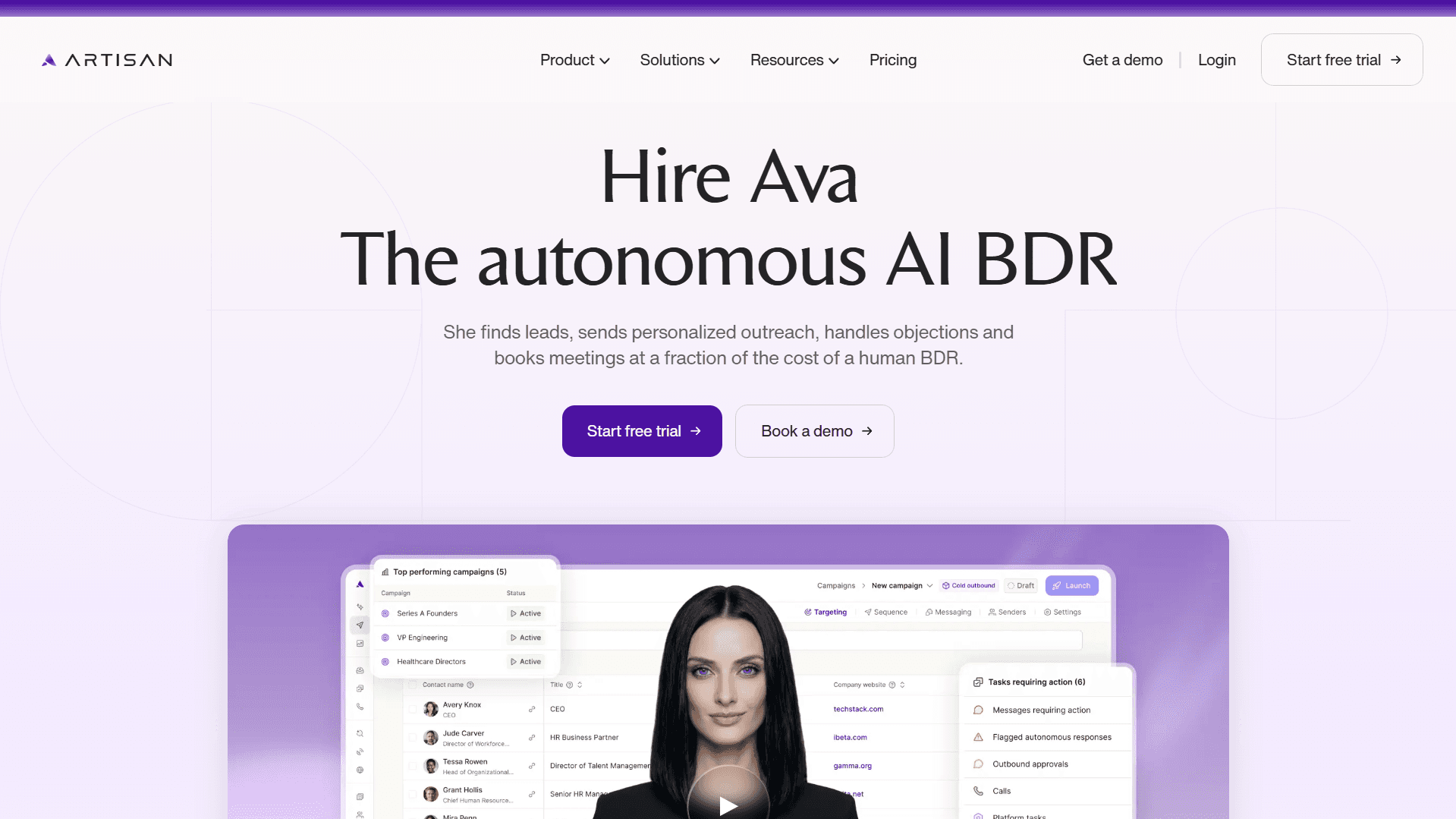
Artisan is the top Qualified alternative because it does the thing Qualified structurally cannot: it runs both inbound and outbound on one platform, so you are not buying a conversion tool and a pipeline tool separately. Ava is the AI agent on your website. She greets and qualifies visitors in live chat, answers from the same knowledge base she uses for autonomous outbound replies, books meetings with CRM-owner routing (deal owner, then contact owner, then company owner), hands off to a human on demand, and runs form-fill follow-ups with instant sends. She is connected to visitor identification, so an anonymous visitor can be recognized and qualified instead of lost.
That last part matters against inbound specialists. Artisan identifies website visitors natively (person-level on US traffic at the published category-leading benchmark of 15-30%, and company-level globally on a 3.7B-IP identity graph with a published 92% accuracy rate), and identified visitors flow straight into campaigns with ideal customer profile (ICP) qualification. So you have identification, conversion, and follow-up in the same system, not three vendors. And because it is the same platform that runs outbound, the visitor who does not convert on chat can be picked up by Ava's outbound motion instead of falling into a gap between two tools. For outbound context, see the AI SDR primer and guides to SDR tools and BDR tools.
On the questions the Salesforce acquisition raised, Artisan is the independent answer. It works with both Salesforce and HubSpot instead of requiring one, with deep bidirectional CRM controls, and it is SOC 2 Type II compliant with single sign-on (SSO) and SAML on Enterprise plans and a full audit trail. Outbound is billed as usage-based credits for Ava's work, with dialer seats and phone numbers billed separately, and inbound is priced through a sales conversation. Over 90% of customers run the AI autonomously. Amelia Lerutte, Chief AI Officer at SaaStr, said "Email has always been our number one driver. Artisan is now neck-and-neck in both output and closed-won revenue," after Ava sent 6,892 emails at a 3.6% positive response rate in about six weeks. Artisan has raised over $35M from investors including Y Combinator and HubSpot Ventures. See how Artisan vs. Qualified compare directly.
Best for: teams that want inbound conversion and outbound pipeline on one platform, on Salesforce or HubSpot, without Salesforce lock-in. Who should pick something else: a team that only wants a pure inbound chat widget and nothing else, with no outbound ambition, may find a single-purpose tool simpler. Pricing: outbound usage-based credits for Ava's work, dialer seats billed separately; inbound via sales. See Artisan pricing.
2. Salesforce Agentforce: If you are staying in Salesforce
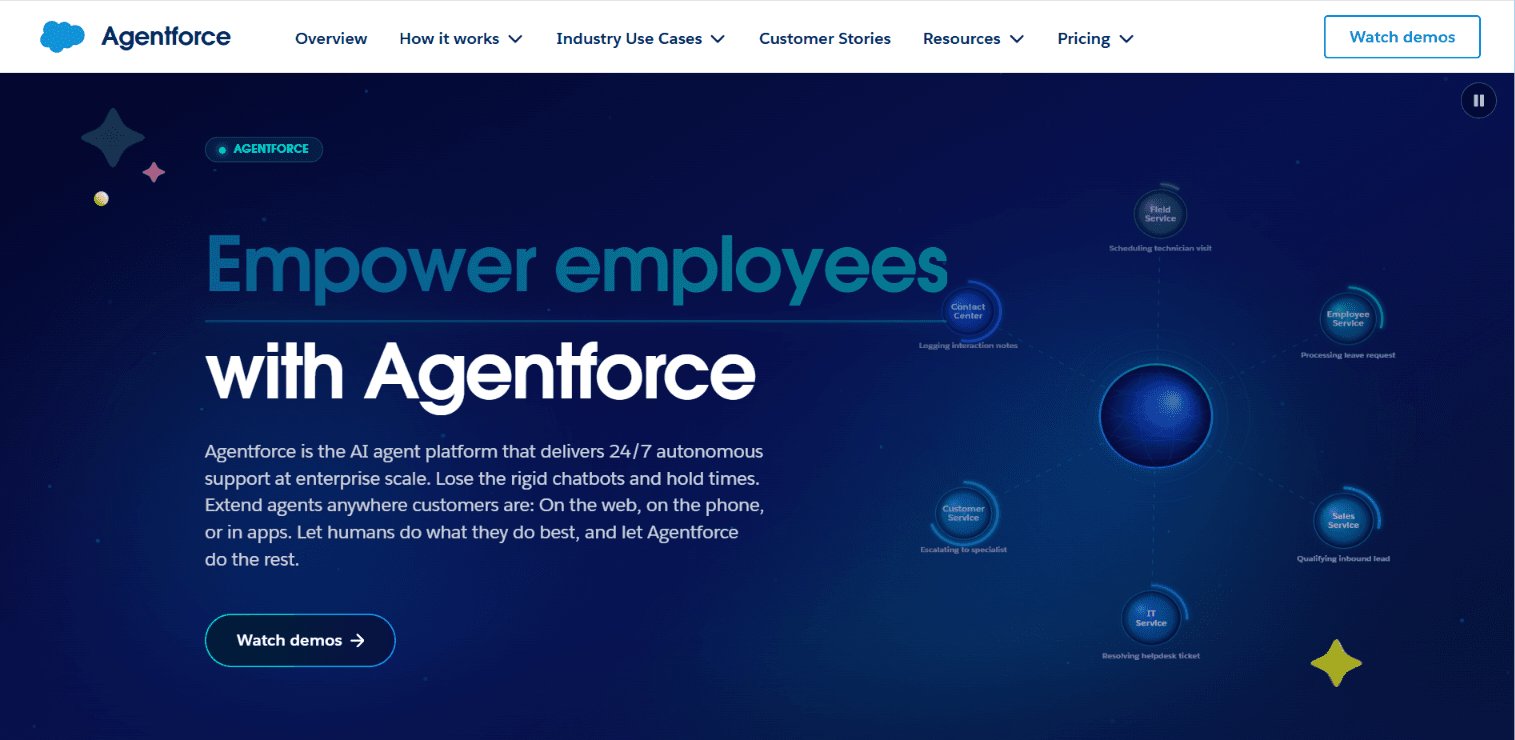
If your team is fully committed to Salesforce, Agentforce is the natural landing spot, and it is where Qualified is heading anyway. It is a CRM-resident conversational agent with Salesforce's security posture behind it, priced consumption-based at roughly $2 per conversation or Flex Credits at about $0.10 per action. For a Salesforce-first org that wants everything native, this residency is the appeal, and it removes the "will this integrate" question.
The caveats are the ones the whole Agentforce line carries: setup is steep, consumption pricing is still evolving, the product is young, and it deepens Salesforce dependency instead of reducing it. If Salesforce lock-in was your reason for leaving Qualified, this does not solve it.
Best for: Salesforce-committed teams that want inbound handled natively in the CRM. Who should pick something else: teams trying to reduce Salesforce dependency, or that want outbound sourcing too. Pricing: $2/conversation or Flex Credits ($0.10/action).
3. HubSpot Breeze: The HubSpot-native route
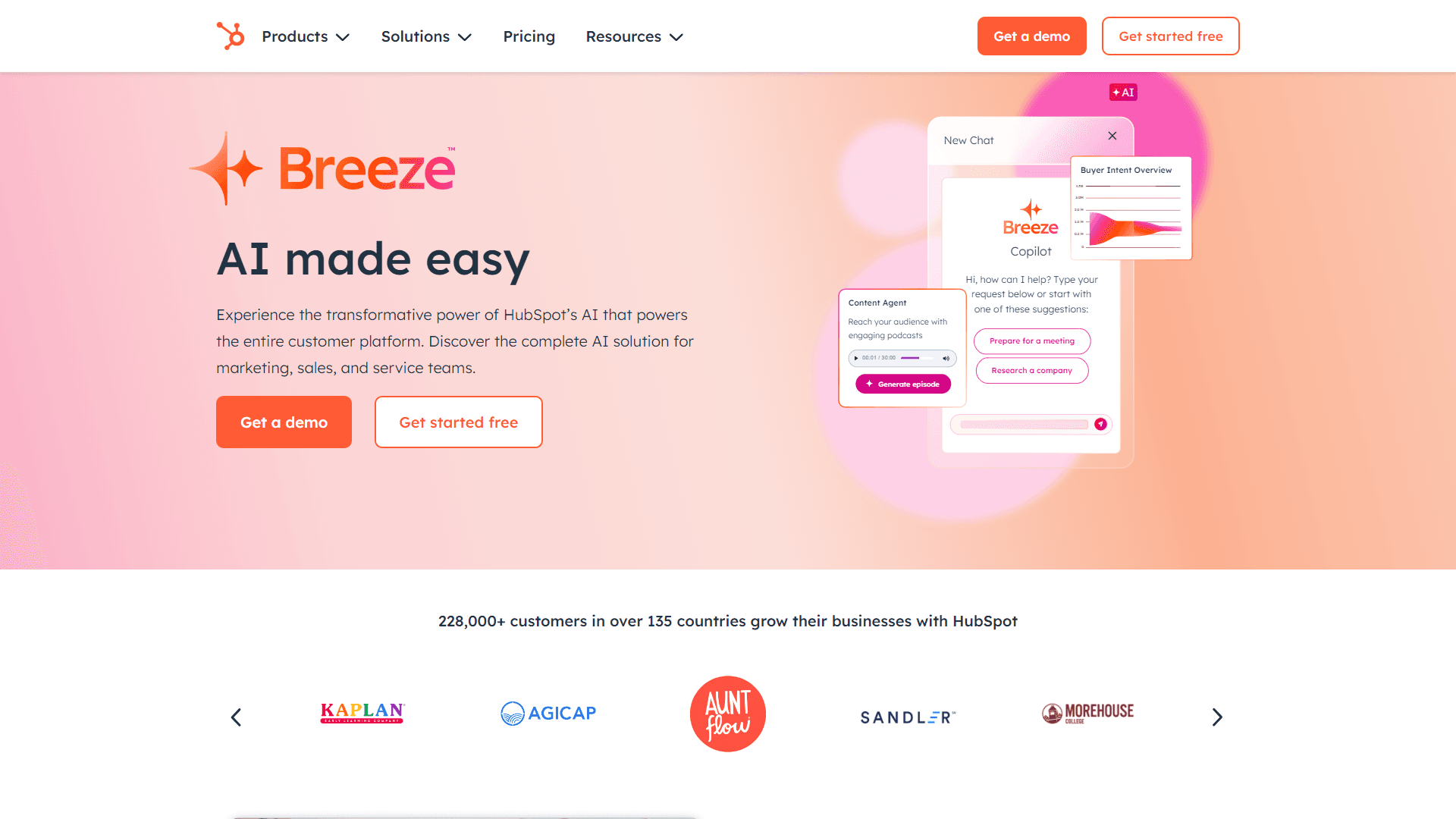
For HubSpot-first teams, Breeze is the cleanest alternative, and it comes with a pricing model worth citing: outcome-based, at roughly $1.00 per qualified lead as of April 2026, an industry first. You pay for results instead of seats or conversations, which changes the risk math for inbound qualification. If your world is HubSpot, this keeps everything native and aligns cost to outcome.
The limit is scope: it lives in the HubSpot world, so it is the right answer for HubSpot shops and a poor fit for anyone on a different stack or wanting a platform-agnostic tool.
Best for: HubSpot-native teams that want outcome-based inbound qualification. Who should pick something else: teams not on HubSpot, or that want inbound and outbound in one platform not bound to a CRM. Pricing: about $1.00 per qualified lead (April 2026).
4. Warmly: Identification plus warm outbound plays
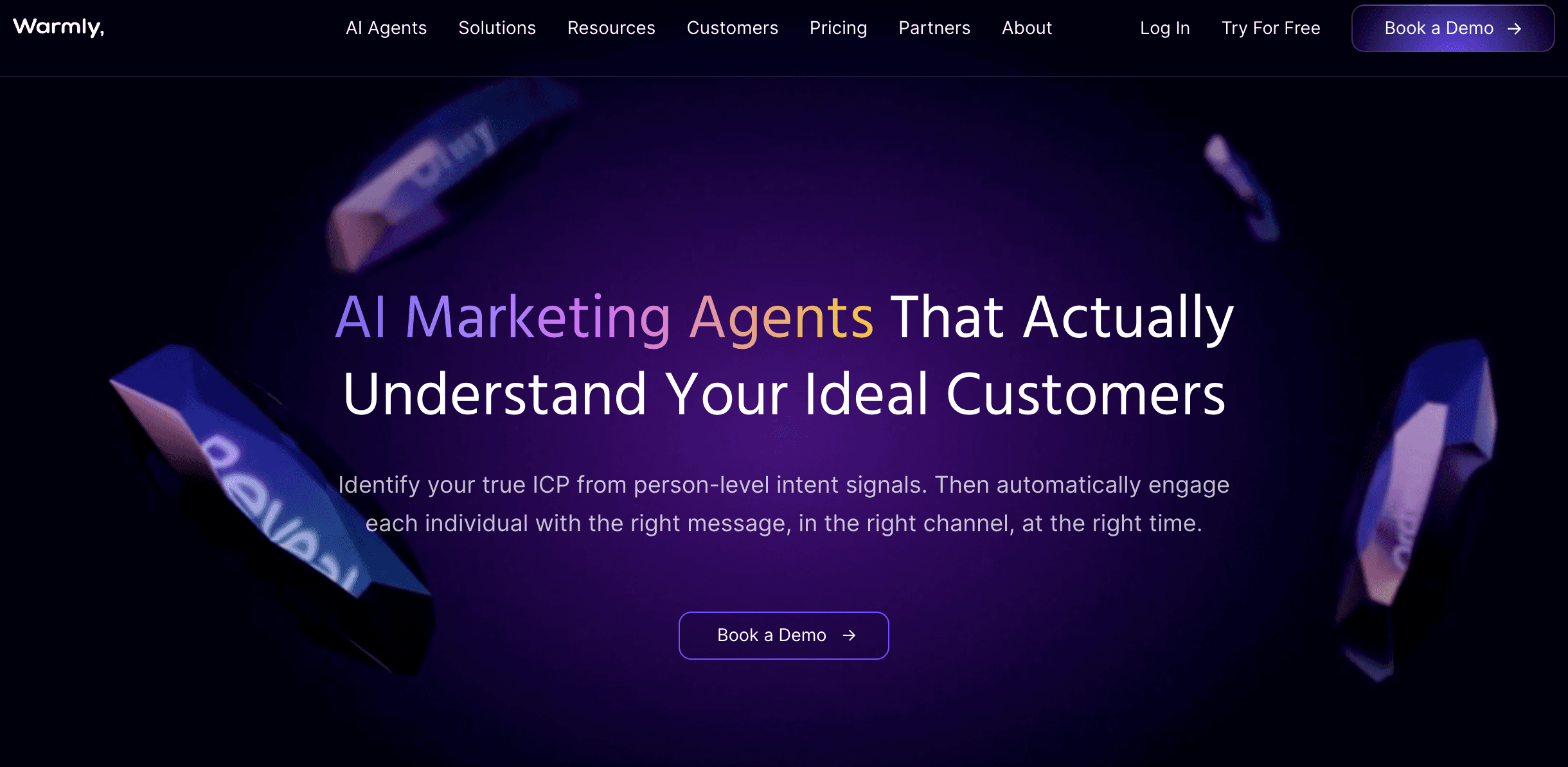
Warmly is the alternative for teams that want to identify site visitors and act on them with automated plays, not just chat. It pairs visitor identification with orchestration, so a recognized account can trigger a play, with tiers reported around $10,000 to $30,000 a year per its site. For a team whose inbound problem is really "who is on my site and how do I reach them," this identification-plus-orchestration combination is a better fit than a chat widget alone.
It is lighter on the deep enterprise conversion polish Qualified built, and its identification, like every honest vendor's, is strongest on US person-level traffic. As a system of warm-outbound plays off visitor signals, it is capable.
Best for: teams that want visitor identification plus automated warm outbound plays. Who should pick something else: teams that want a full inbound conversion suite, or one platform that also sources net-new outbound. Pricing: about $10-30K/year per its site.
5. RB2B: Cheap person-level identification
RB2B is the budget answer to one narrow question: who is on my site right now. It pioneered person-level identification on US traffic, pushes names to Slack, and starts at $79 to $199 a month per its site. If all you need is the identity signal and you will act on it yourself, it is inexpensive and fast.
It stops at identification. There is no conversion, no qualification, no booking, and no outbound, so it is a signal source instead of an inbound platform. Pair it with something that acts, or pick a tool that does both.
Best for: teams that just want cheap US person-level visitor identification pushed to Slack. Who should pick something else: teams that want the tool to qualify, book, and follow up, not just identify. Pricing: $79-199/month per its site.
6. 6sense / Demandbase: Heavy full-stack ABM
If your inbound question is really an account-based one, 6sense or Demandbase are the full-stack ABM suites: intent data, account scoring, and orchestration across paid media and web, with contracts reported from roughly $12,000 to $175,000 a year and medians around $63,000 for 6sense and $68,000 for Demandbase (Vendr-attributed). For large enterprises running a serious ABM program, they are powerful.
They are also heavy: analytics-and-ads-first, with a long implementation and a team to run them. Worth noting that named-account ABM with signals, visitor identification, and the outreach attached is something Artisan runs natively, so account-based selling need not be handed to a separate heavyweight suite.
Best for: large enterprises running a dedicated, analytics-heavy ABM program. Who should pick something else: teams that want ABM with outreach built in on one lighter platform, or that need inbound chat conversion specifically. Pricing: roughly $12K-175K/year; medians about $63K (6sense) and $68K (Demandbase), Vendr-attributed.
Stay with Qualified if...
Honesty first. Stay with Qualified if you are a committed Salesforce shop, inbound conversion is your entire need, and its playbook (the chat, routing, and booking that made it the premium inbound specialist) is producing for you. The Salesforce acquisition also means tighter native Agentforce integration as the products merge, which is a plus if Salesforce is your center of gravity. If the roadmap and lock-in questions do not worry you because you are all-in on Salesforce anyway, and you do not need outbound, there is no reason to move.
Switch if you want to avoid deepening Salesforce dependency, if the post-acquisition roadmap uncertainty is a real risk for you, or if buying inbound and outbound as two separate systems no longer makes sense. That last reason is the most common: most teams do not want a conversion tool and a pipeline tool with a seam between them. For adjacent comparisons, see the best Regie.ai alternatives and 11x vs. Alta.
How to choose your Qualified alternative
Want inbound and outbound on one platform, on any major CRM? Artisan.
Fully committed to Salesforce and want inbound native? Agentforce.
Live in HubSpot and want outcome-based pricing? Breeze.
Really need visitor identification plus warm plays? Warmly.
Just want cheap person-level identification? RB2B.
Running heavy account-based marketing at enterprise scale? 6sense or Demandbase.
For the wider view, see the AI BDR guide, the best AI SDRs, the best AI BDRs, the best AI GTM platforms, or the 15 best AI sales tools.
Frequently asked questions
What is the best alternative to Qualified?
Artisan, because it does what Qualified does not: it runs inbound and outbound on one platform. Ava greets, qualifies, and books website visitors and identifies anonymous ones natively, while the same platform sources and runs outbound. It works with Salesforce or HubSpot instead of requiring Salesforce. Agentforce, HubSpot Breeze, Warmly, RB2B, and 6sense are the other real options depending on your stack.
Is Qualified still a good choice now that Salesforce owns it?
It can be, if you are a committed Salesforce shop and inbound conversion is your whole need. Salesforce closed the acquisition on April 1, 2026, and Qualified is folding into Agentforce, which means tighter native integration but also two buyer concerns: post-acquisition roadmap uncertainty and deeper Salesforce lock-in. Teams that want to avoid either, or that also need outbound, tend to look at alternatives.
What is the best alternative to Qualified for teams not on Salesforce?
Artisan, because it is CRM-agnostic across Salesforce and HubSpot and does not require either, so it does not deepen a stack dependency the way folding into Agentforce does. For HubSpot-first teams specifically, HubSpot Breeze is the native route, with outcome-based pricing at roughly $1 per qualified lead. Both avoid the Salesforce requirement that Qualified carries.
Does Artisan do inbound like Qualified?
Yes, through Ava. She runs live chat that greets and qualifies visitors, answers from the same knowledge base as her autonomous outbound replies, books meetings with CRM-owner routing (deal owner, then contact owner, then company owner), hands off to a human on demand, and runs form-fill follow-ups with instant sends. She is connected to visitor identification, and unlike an inbound-only tool she sits on the same platform that runs outbound.
What is the best enterprise alternative to Qualified?
Artisan for teams that want one platform across inbound and outbound with governance (SOC 2 Type II, SSO and SAML on Enterprise, a full audit trail, deep CRM controls, and a forward-deployed strategist and dedicated customer success manager). If you are staying entirely inside Salesforce, Agentforce is the native enterprise path. For heavy account-based programs, 6sense or Demandbase carry enterprise ABM weight, though they are analytics-and-ads-first and need a team to run them.
How much did Qualified cost, and how does Artisan compare?
Qualified was historically listed around $42,000 to $100,000 a year, premium and Salesforce-required. Artisan bills outbound as usage-based credits for Ava's work, so you pay for the work she performs, with dialer seats and phone numbers billed separately, and inbound priced through a sales conversation. The structural difference is coverage: with Qualified you buy inbound and add an outbound system, while Artisan covers both. See Artisan pricing and our full Qualified pricing and reviews.
The takeaway
Qualified is a strong inbound specialist that is now a Salesforce product, which sharpens the two questions worth asking: do you want deeper Salesforce lock-in, and do you want to buy inbound and outbound separately. For most teams the better answer is one platform that converts the visitors you have and sources the pipeline you do not. See how it works on the Artisan homepage, meet Ava, or read the AI BDR guide.

Artisan Team
Expert insights from the team at Artisan
Our writing team blends direct operational experience, in-house data, and thorough research to bring you the very latest insights and updates about sales and GTM automation.