How to find companies that just raised funding (and reach out first)
How to use funding announcements as a buying signal, where to source them, the failure mode everyone hits, and how to reach out first.
Key Takeaways
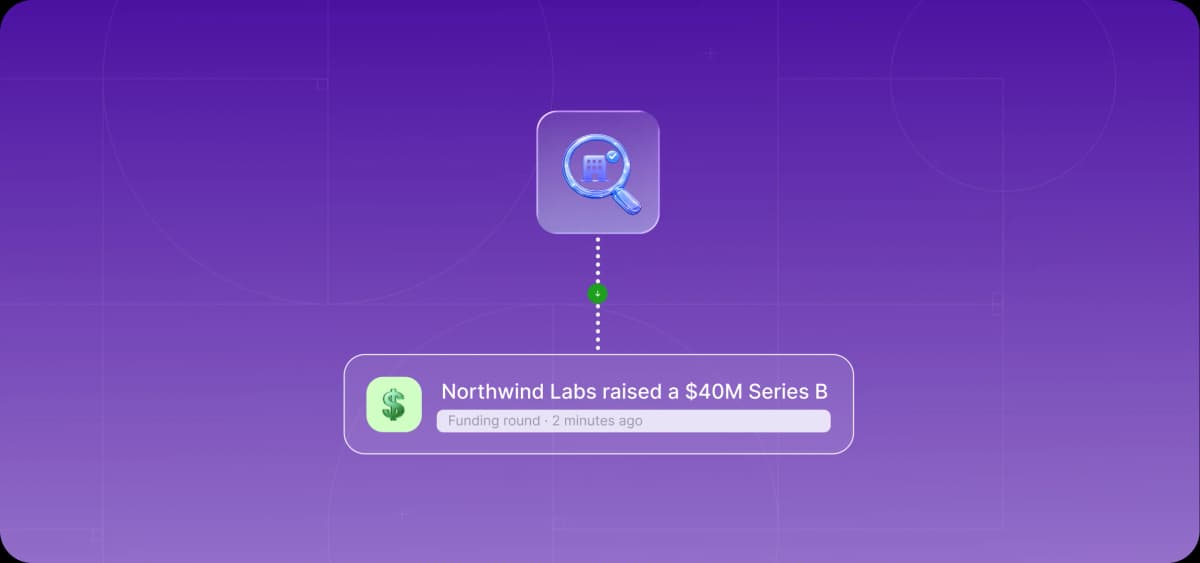
- A new funding round is one of the most reliable budget signals in outbound: the company just took on capital it has to deploy, usually on growth, hiring, and tooling, within a few quarters.
- The method is to define the round profile you want (stage, size, sector, geography), monitor the right sources, filter to real fit, and reach out fast with an angle tied to what the money is actually for.
- The failure mode is brutal and universal: every vendor emails a company the week its round is announced, so a generic "congrats on the raise" note lands in a flooded inbox and is ignored.
- The edge is not the signal, which everyone can buy. It is the angle and the timing. Skip the congratulations, lead with the specific problem the raise creates, and be early or be different.
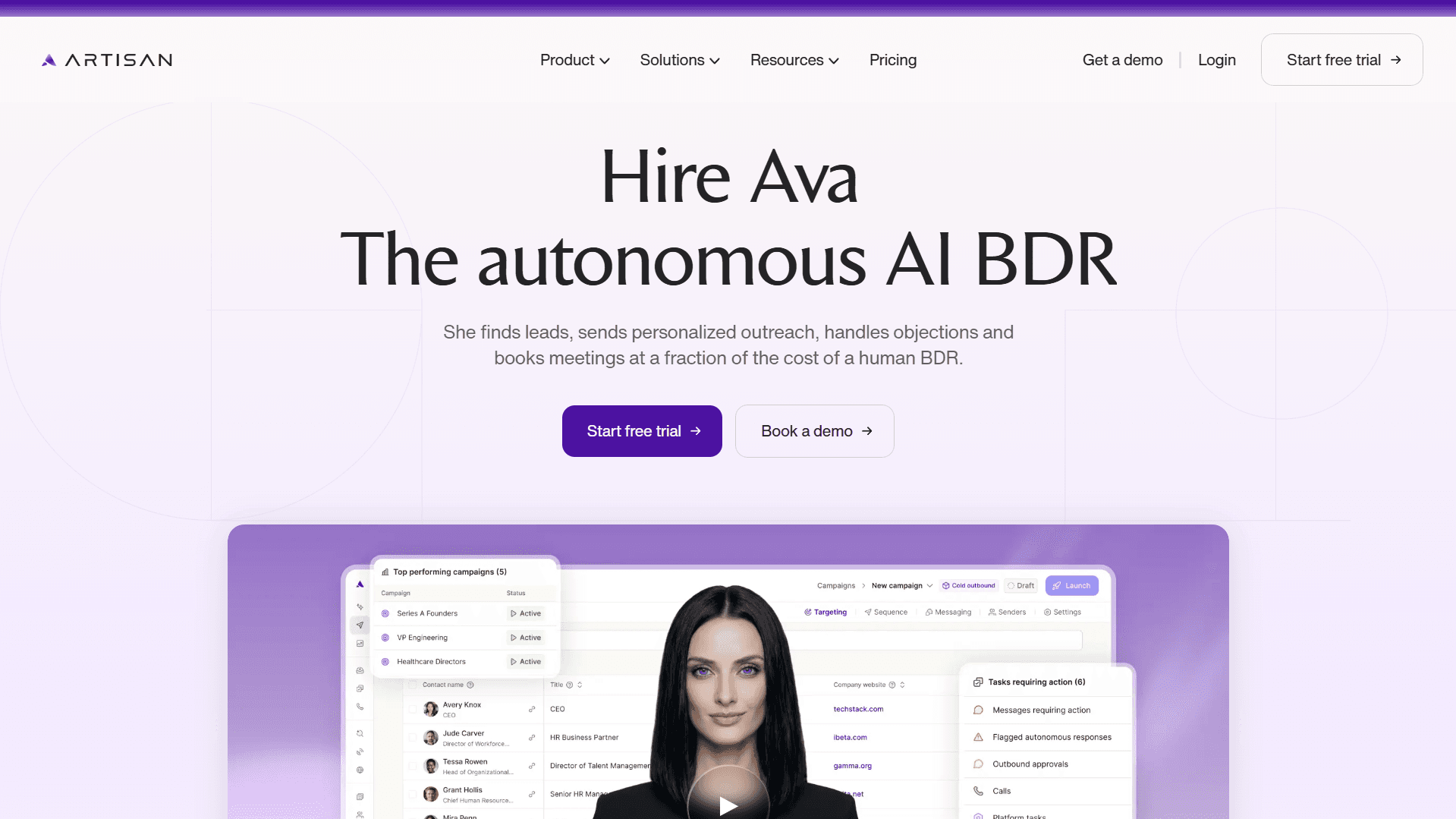
- Artisan's funding signal detects the round, checks the account against your ICP, and turns it into personalized, multichannel outreach automatically, so you reach out while the window is open.
- Chain of Events sourced over $700,000 of annual recurring revenue (ARR) in six months running signals through Ava, Artisan's AI business development representative (BDR), a 20x return.
To find companies that just raised funding, watch funding databases and press feeds for rounds inside your ideal customer profile (ICP), then reach out while the budget is fresh and the plan is being set. Do it manually with alerts, or let Artisan's funding signal detect the round, qualify the account, and send personalized outreach with an angle that stands out from the flood.
Updated July 2026.
Why is a funding round a buying signal?
A funding round predicts a buying window because the company just acquired money it is under pressure to spend on growth. Investors do not write checks so the business can sit still. A seed or Series A round typically funds a first real go-to-market push and new hires. A Series B or later funds scaling: more reps, more systems, and the operational tooling a suddenly-bigger team needs. In every case, budgets that did not exist last month exist now, and the buyers deciding where it goes are actively evaluating vendors.
The timing is the point. A company that raised 18 months ago has already made its purchasing decisions. A company that raised last week is still writing its plan. The signal does not say "this company has money." It says "this company is deciding how to spend new money right now," which is a very different and much more actionable thing. For the fundamentals, see our primer on what is intent data.
How do I find companies that recently raised funding?
You find them by monitoring funding sources continuously and filtering to the rounds that fit your ICP. The sources fall into a few buckets:
1. Funding databases like Crunchbase and PitchBook track rounds with stage, amount, investors, and date. These are the backbone of most funding-signal programs.
2. Press and newsletters. TechCrunch, Axios Pro Rata, Term Sheet, and sector-specific outlets announce rounds, often before databases update.
3. Regulatory filings. Form D filings with the SEC reveal raises that have not been publicly announced yet, which is one way to be early.
4. Investor and company channels. Portfolio pages and company posts announce rounds directly. To target by backer, see how to find companies backed by specific investors.
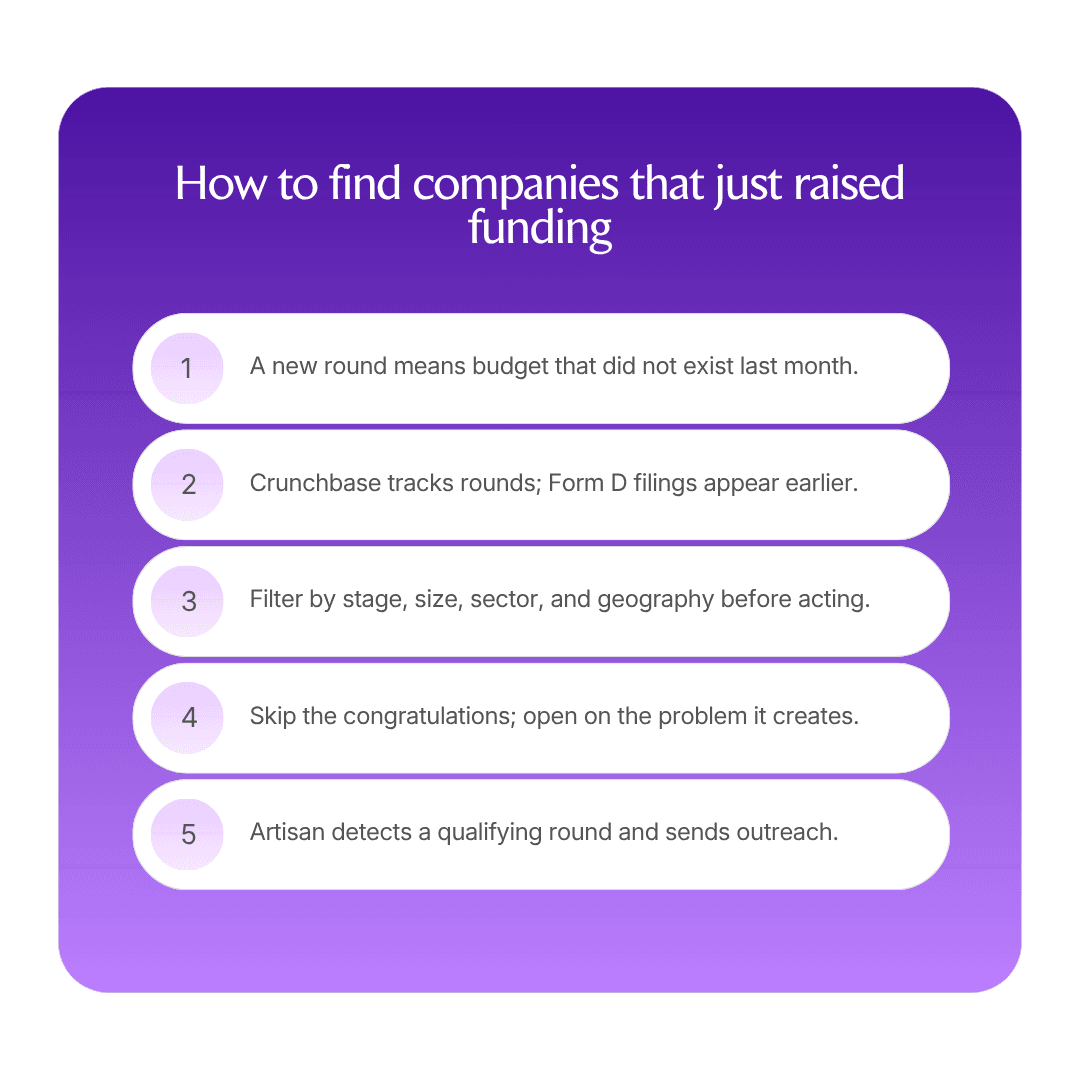
Whatever the source, the filtering is what makes it useful. A raise only matters if the company fits what you sell and the round funds the kind of spending you benefit from. Set your profile precisely: stage (a $2M seed and a $200M growth round imply completely different buyers and needs), size, sector, and geography. Then match the round to the buyer whose new budget it becomes. A sales tool cares about companies that are scaling their revenue team; an infrastructure tool cares about ones that are scaling engineering. Same round, different reason to reach out.
What is the best tool to track funding announcements for outbound sales?
The best tool depends on whether you want a funding feed or a funding-to-meeting system. If you want raw round data to analyze or pipe into your own warehouse, a funding database like Crunchbase or PitchBook is the source of record. But a database stops at the row. You still have to qualify the account, find the right contacts, write outreach that does not sound like the other 40 emails, and send it before the window closes, and this manual tail is where most funding-signal programs leak. For the wider field, see the intent data providers roundup.
For teams that want the round to become outreach automatically, Artisan is the strongest pick, because detection, qualification, enrichment, and the message live in one platform. Its funding signal flags rounds that match your criteria, filters them against your ICP, enriches the right contacts through waterfall email and phone enrichment, and hands Ava the context to write outreach tied to what the raise is for. For the wider field of signal tools, see our guide to intent marketing tools.
How do I reach out first and stand out from the flood?
You stand out by skipping the congratulations everyone else leads with and opening on the specific problem the raise just created. A funding announcement is public, so by the time you see it, so has every other vendor with a feed. A buyer's inbox that week is a wall of "congrats on the round, let's chat." A message that reads like the 41st of those is worse than no message.
What actually differentiates:
Lead with the consequence. "You just raised a Series B; the pressure now is hiring reps faster than your onboarding can handle" beats "congrats on the raise." You are talking about their next problem, not their press release.
Match the angle to the stage. A seed company needs its first repeatable motion. A growth-stage company needs to scale one that already works. Generic outreach ignores this; good outreach is built around it.
Be early, or be different. Form D filings and fast detection let you reach out before the flood. If you cannot be first, be the one message that clearly understood what the money is for.
Follow up with substance. A single note disappears. A short, multichannel sequence with a specific point of view is what converts the window.
The honest failure mode
Funding is the signal everyone acts on, which is exactly why it is so easy to do badly. The same round hits every vendor's dashboard the same week, and the default response, a templated congratulations blast, is so common that buyers have learned to delete it on sight. Buying the funding feed is not an advantage; it is table stakes. The advantage is the angle and the speed, and both are hard to sustain by hand across every qualifying round. This is the pattern across all event signals, covered in depth in our signal-based selling guide: the signal opens the window, but a differentiated, fast, specific follow-up is what wins it.
Which sales tool triggers outreach when a company raises a new round?
Artisan triggers outreach when a qualifying round fires. Its funding signal detects the raise, checks the company against your ICP so you are not chasing rounds you can never sell into, enriches the right contacts, and hands Ava a personalized message built around what the funding is for rather than a canned congratulations. You set how autonomous Ava is, from review-and-approve every message to fully autonomous, with plain-language escalation rules and a full audit trail. Over 90% of Artisan customers run her autonomously.
Because the funding signal shares the same loop as Artisan's other event signals, a round slots in alongside new executive hires, hiring activity, and tech-stack changes rather than living in a separate tool. Chain of Events ran this motion and sourced over $700,000 of ARR in six months with Ava, a 20x return on spend. The mechanism is detect a real budget event, then act on it at a speed and volume a human working a list cannot match. For more on acting on these triggers, see our guide to intent signals.
How Artisan automates funding-based outbound end to end
Artisan consolidates the stack funding-signal outbound usually needs (a funding database, a data provider, a sequencer, and an operator to connect them) into one platform where Ava owns the loop. The funding signal detects rounds matching your profile. Qualification filters every round against your ICP before it spends an enrichment credit. Outreach runs multichannel across email, social media, and dialer steps, self-optimizing across message variations, and Ava handles the replies and books the meeting on the right rep's calendar with CRM-owner routing.
If your target is narrower than "raised a round," Artisan's natural-language custom signals let you describe the exact trigger in plain English, such as "Series A companies in fintech that just raised and are hiring their first sales leader," with confidence scoring and evidence URLs. For enterprise buyers, sales ops can run Ava centrally for large account executive teams who never log in, with an audit trail, org-level do-not-contact enforcement, SOC 2 Type II attestation, and GDPR and CCPA compliance. Pricing is hybrid: Ava's work runs on usage-based credits, so you pay for the work she actually performs, and she can be trialed for free. Dialer seats and phone numbers are billed separately from credits, at $75/seat/month when paid monthly. See Ava, the AI sales agent and artisan.co/pricing, or the AI BDR explainer for how the full job gets automated.
Frequently asked questions
How soon after a funding round should I reach out?
Quickly, but with a plan. The budget and priorities are being set in the weeks right after a raise, so early matters, and Form D filings or fast detection can get you in before the public flood. That said, the very week of the announcement is the most crowded, so a strong second wave a few weeks later with a specific angle can outperform a generic note sent on day one. The rule is be early or be different, ideally both.
Why does everyone say to target companies that just raised?
Because a raise is a rare, public, unambiguous budget signal: the company took capital it must deploy on growth, and the buyers are actively evaluating vendors. The catch is that its very obviousness is the problem. Every vendor targets the same rounds the same week, so the signal is table stakes and the differentiation has to come from your angle and speed, not from having spotted the round.
What size funding round should I target?
Match the round to what you sell. A seed or Series A funds a first go-to-market push, so tools that help a young team build a repeatable motion fit best. Series B and later fund scaling, where the buyer needs to grow an existing motion and its systems fast. Filter by stage, size, sector, and geography so you only act on rounds whose new budget plausibly becomes spend on your category.
What enterprise tool monitors funding announcements across target accounts?
Funding databases like Crunchbase and PitchBook are the source of record for the raw data, but they stop at detection. Artisan monitors funding announcements as a native signal and attaches the outreach, so a qualifying round in one of your target accounts becomes a personalized, multichannel message automatically. For a large account list, this difference matters: detection at scale is only useful if the follow-up happens before the window closes. For a vendor comparison, see 6sense pricing and reviews.

Can I combine funding signals with other buying signals?
Yes, and you should. A funding round tells you a company has new budget; a hiring surge or a new executive tells you where that budget is going. Layering them sharpens both your targeting and your angle. Artisan runs funding, hiring, new-executive, tech-stack, and other signals in one system, so you can act on a round that coincides with, say, a new VP of sales, and write outreach that references both. For a related play, see how to use first-hire-in-department signals for outbound.
How do I avoid sounding like every other vendor?
Skip the congratulations and open on the problem the raise creates for that specific buyer at that specific stage. Reference what the money is likely for, add a genuine point of view, and follow up with substance across more than one channel. The generic "congrats, let's chat" note is exactly the message the buyer is deleting all week, so the entire job is to not be that, which is easier to do consistently when the outreach is personalized per account rather than templated.
Related reading

Artisan Team
Expert insights from the team at Artisan
Our writing team blends direct operational experience, in-house data, and thorough research to bring you the very latest insights and updates about sales and GTM automation.