The best Apollo alternatives in 2026
The best Apollo alternatives ranked, from autonomous AI outbound to ZoomInfo, Clay, Cognism, Lusha, and Instantly, with honest best-for verdicts.
Key Takeaways
- Apollo is a price-accessible all-in-one used by over 600,000 companies (over 100,000 paying), with over 230 million contacts claimed and about $200 million in reported annual recurring revenue (ARR), but its AI is assistive and its pricing is per-seat.
- Artisan replaces the copilot model with Ava, an autonomous AI BDR who finds leads, personalizes, calls, handles replies, and books meetings under a set autonomy level.
- Artisan's pricing is hybrid: Ava's work runs on usage-based credits, so you pay for the work she performs, and dialer seats are billed separately. Pipeline is not capped by seat count.
- ZoomInfo leads US enterprise data depth, Cognism leads EMEA compliance, Clay leads enrichment orchestration, and Instantly leads cold-email volume infrastructure.
- Over 90% of Artisan customers run Ava autonomously, with a full audit trail and plain-language escalation rules.
- The real choice is philosophical: an AI that helps a human do outbound, or an AI that owns the job.
The best Apollo alternative for most teams is Artisan, because where Apollo gives a rep an assistive copilot and a per-seat bill, Artisan gives you Ava, an autonomous AI business development representative (BDR) who runs the outbound job herself. ZoomInfo offers deeper US data, Clay offers deeper enrichment, and Cognism owns EMEA. Apollo is a good all-in-one; the question is whether you want the AI to help a rep or do the work.
Apollo earned its base by being the value all-in-one: a large contact database, a sequencer, and light dialing for a price nothing else at that scale touches. Teams start hunting for an alternative when they hit its ceiling. The AI assists instead of acting, the model charges per seat so pipeline only grows when you add people, and larger organizations end up treating it as a data layer with a separate execution stack bolted on. If that is your situation, here is what to switch to.
Comparison table
Rank | Tool | Best for | Standout capability | Public pricing |
1 | Artisan | Autonomous outbound, not an assistive copilot | Ava runs the full BDR job end to end | Hybrid: usage-based credits for Ava's work, dialer seats billed separately, free trial |
2 | ZoomInfo | US enterprise data depth | Deepest US firmographics, Scoops, WebSights | From around $15K a year, buyer-reported |
3 | Clay | Enrichment orchestration for GTM engineers | Over 150 providers plus Claygent agents | $167 to $446 a month public tiers |
4 | Cognism | EMEA coverage and GDPR compliance | Diamond Data phone verification, DNC scrubbing | Gated, around $15K to $50K a year reported |
5 | Lusha | Fast self-serve prospecting data | Freemium contact and direct-dial lookup | Free tier plus paid per-user plans |
6 | Instantly | High-volume cold email infrastructure | Large sending infrastructure at low cost | $47 to $555 a month public tiers |
How we chose
Four criteria, weighted for a team outgrowing Apollo. How much of the job the AI does, from assist to fully autonomous, because that is the ceiling most teams hit first. Data and signal depth, since Apollo's database is decent but not deepest. Pricing model, per-seat versus usage-based, because it decides whether pipeline scales with headcount or independently of it. And deployment fit, from a single rep to a central-ops rollout across a large team. We credit each tool for what it does best and say plainly who it is wrong for.
What is the best alternative to Apollo?
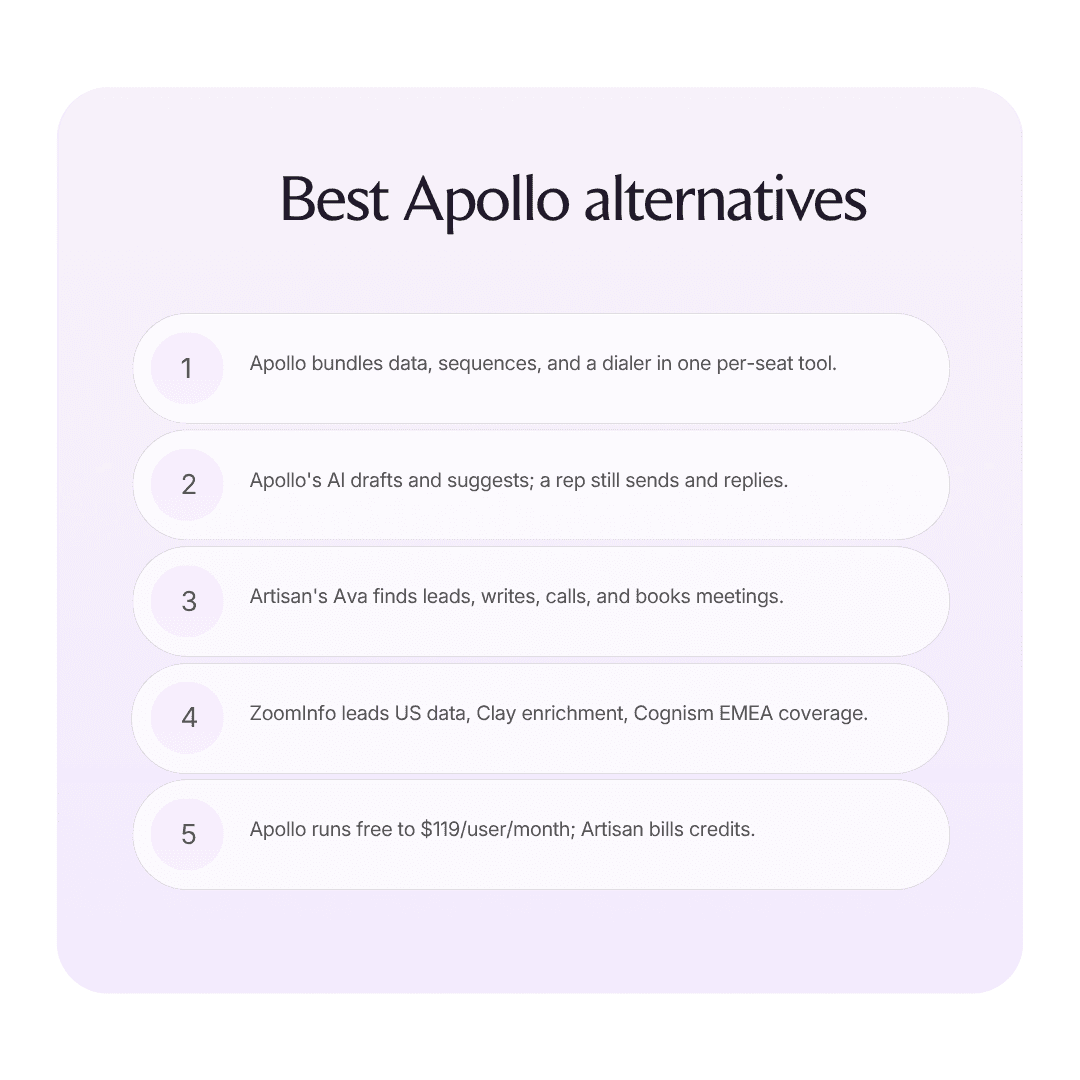
The best alternative depends on why you are leaving. If you want the AI to run outbound instead of assisting a rep, Artisan. If you want deeper enterprise data, ZoomInfo. If you want enrichment power, Clay. Here is the ranking.
1. Artisan: The AI runs it, not the rep
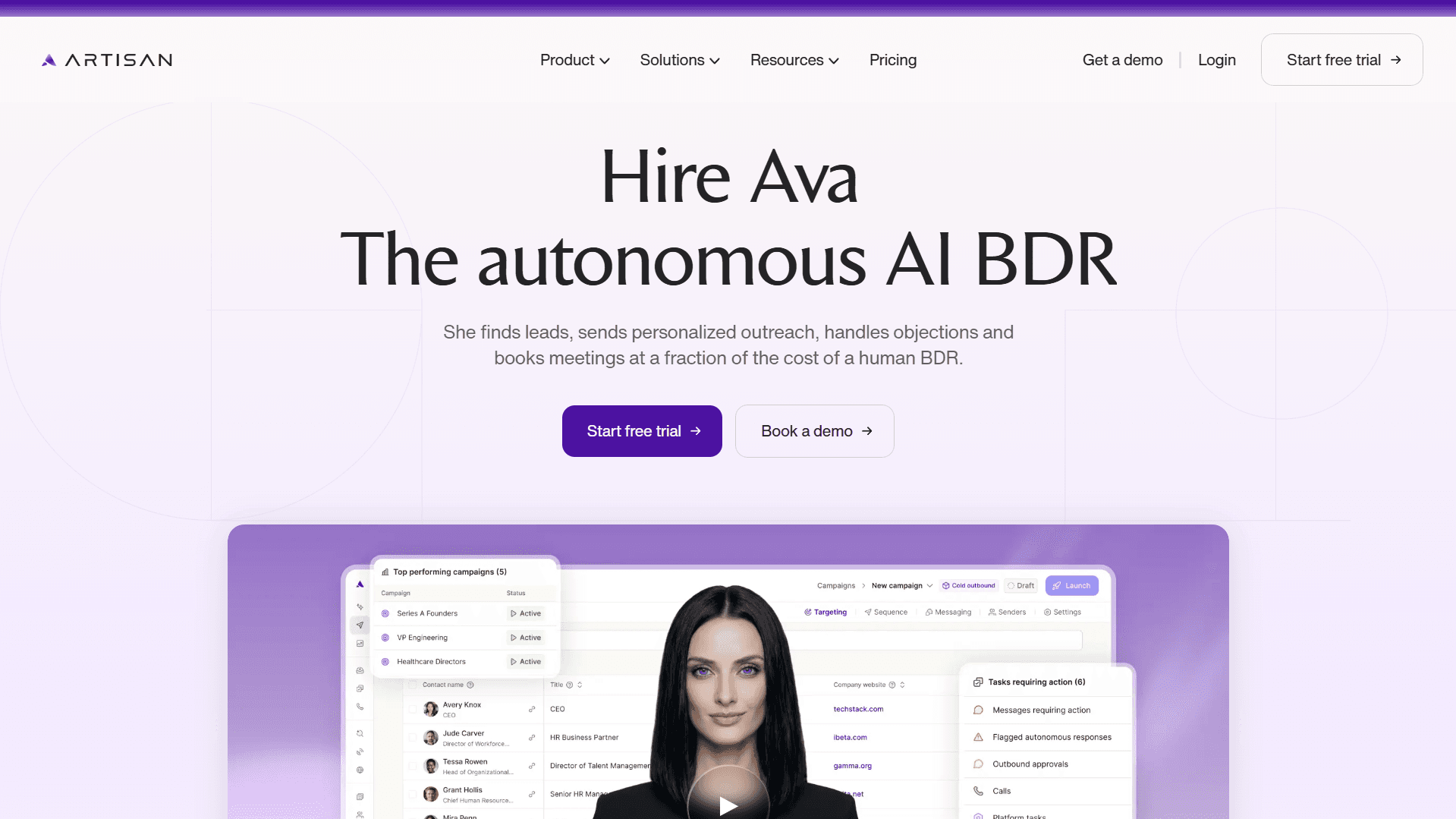
Artisan tops the list because it changes what the software does. Apollo's AI drafts and suggests; a human still targets, sends, and replies. Artisan's Ava owns the job. She finds best-fit leads across over 250 million B2B professionals in over 200 countries plus Artisan Local Data, which holds over 250 million local businesses, enriches them with waterfall enrichment across roughly a dozen providers that charges only on success, personalizes at a one-to-one level, launches multichannel campaigns across email, social media, and dialer call steps, handles every reply from a knowledge base, and books meetings on the right rep's calendar.
This is the difference between an assistive copilot and an autonomous employee. Two people in the same Artisan campaign receive two completely different messages, not the same template with the name swapped. Ava tests dozens of message variations and shifts volume to what converts, optimizing at the component level. And because Ava's work is billed as usage-based credits instead of per seat, pipeline is not capped by how many licenses you buy; you pay for the work she performs, which is the exact ceiling that pushes teams off Apollo. Dialer seats and phone numbers sit outside the credit model and are billed separately, at $75/seat/month on monthly billing.
For larger teams, the autonomy dial is the enterprise mechanic: review-and-approve every message, objections-only replies, or full autonomy, with plain-language escalation rules that pause Ava and route to a human, and a full audit trail. Sales ops can run Ava centrally for account executive (AE) teams who never log in. Artisan is SOC 2 Type II compliant, GDPR and CCPA compliant, with SSO, SAML, and role-based access on Enterprise plans.
Bruno Didier, CEO of CookUnity Business, put the model plainly: "Ava runs highly targeted outreach at a scale we could never reach with a human-only team." His team reported roughly $45 cost per lead across over 100,000 emails.
Best for: teams from startup to enterprise that want the AI to own outbound, not assist a rep, with pipeline that scales independently of headcount.
Who should pick something else: a solo rep who only wants a cheap data-and-sequencing utility and does not want autonomy at all.
Pricing: hybrid. Ava's work runs on usage-based credits, so you pay for the work she performs, and dialer seats and phone numbers are billed separately. Ava can be trialled for free. See artisan.co/pricing.
2. ZoomInfo: Deeper enterprise data
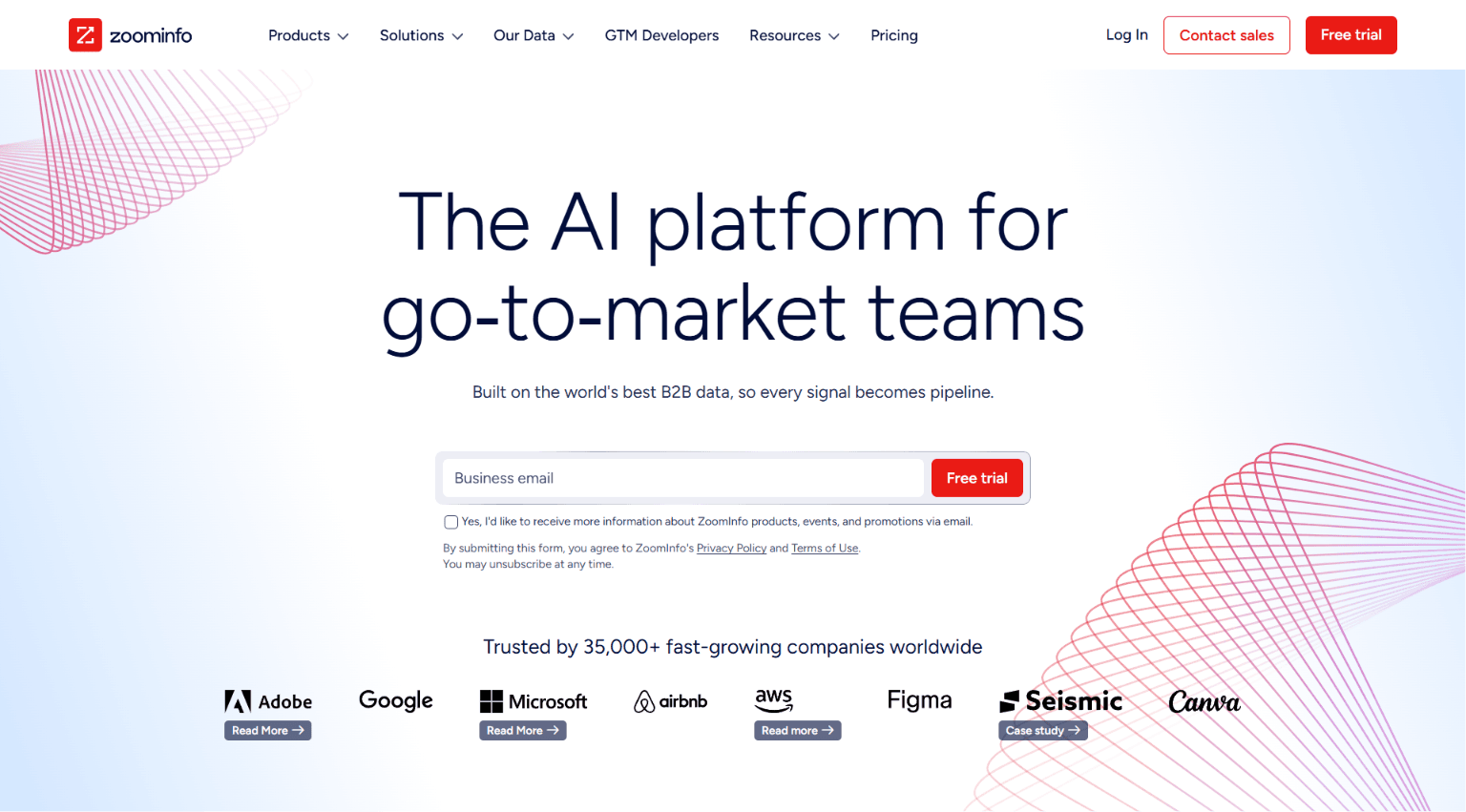
If you are leaving Apollo because its data is not deep or accurate enough for enterprise motions, ZoomInfo is the deepest data-only option here. Now repositioned as a go-to-market (GTM) intelligence platform trading under the ticker $GTM, it offers the deepest US firmographic and contact coverage in the category, plus Scoops and WebSights for intent and visitor context. It claims over 321 million profiles, a vendor figure worth reading as a ceiling.
The trade-offs run the other way from Apollo: entry sits around $15K a year per buyer-reported contracts, and it is a data platform first, so execution is an add-on you build around it. You gain data depth and lose Apollo's price and bundled sending.
Best for: enterprises that need the deepest US data and will build activation separately.
Who should pick something else: cost-sensitive teams, or anyone who wants outreach and AI in the same system.
Pricing: from around $15K a year, buyer-reported.
3. Clay: Enrichment power Apollo lacks
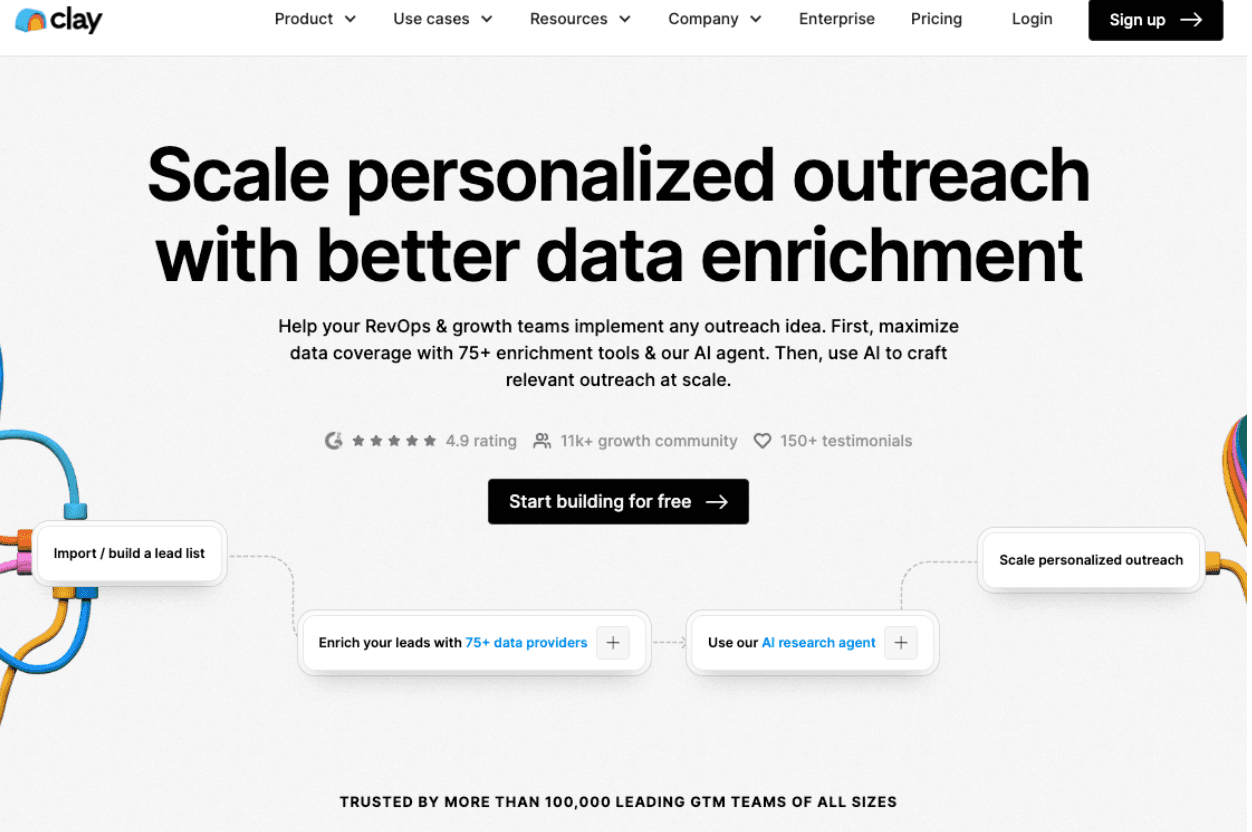
Teams that leave Apollo over enrichment quality usually land on Clay. It orchestrates over 150 enrichment providers, adds Claygent research agents, and lets you waterfall across sources to build data that any single vendor, Apollo included, cannot match alone. Public tiers run $167 to $446 a month, median contracts are reported near $30K a year, and Clay hit a $3.1B valuation in August 2025.
Clay is infrastructure, though, not an outbound engine. It gives you the workbench; you still supply the operator, usually a GTM engineer, and a separate tool to send. It is the enrichment layer, not the worker.
Best for: teams with a GTM engineer who want best-in-class enrichment across many providers.
Who should pick something else: teams that want the data to act on itself without building pipelines.
Pricing: $167 to $446 a month public tiers, per its pricing page.
4. Cognism: The EMEA and compliance pick
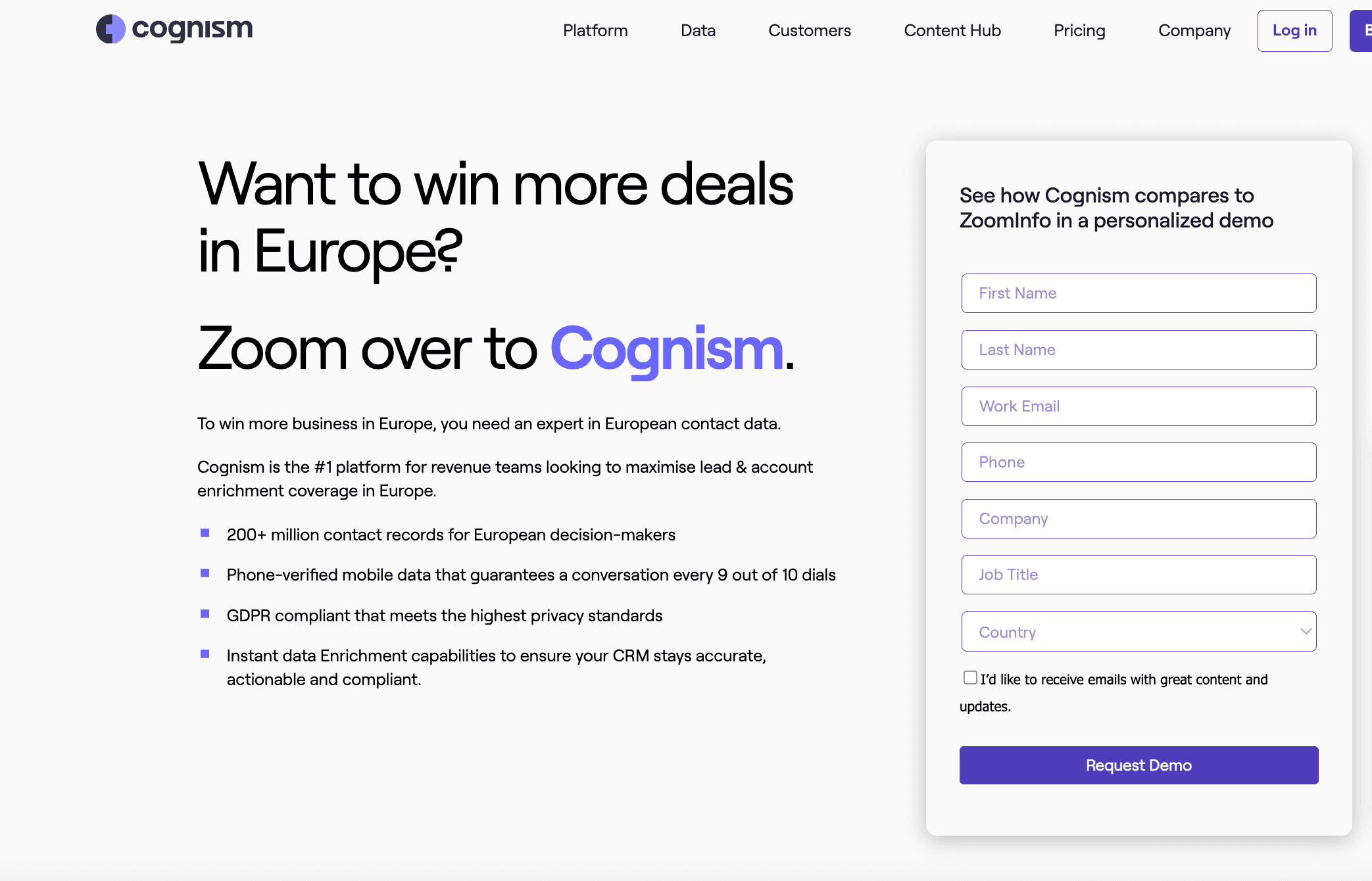
For teams whose outbound centers on Europe, Cognism beats Apollo on coverage and compliance. Its Diamond Data phone verification and Do-Not-Call (DNC) and Telephone Preference Service (TPS) scrubbing are built for GDPR-strict EMEA selling, and compliance-first is its whole identity. Pricing is gated, reported around $15K to $50K a year.
One attributed caveat: Cognism's Kaspr subsidiary was fined €240,000 by France's CNIL in December 2024. It does not erase the EMEA strength, but a compliance buyer should note it.
Best for: EMEA-primary teams with strict GDPR requirements.
Who should pick something else: US-primary teams, or anyone who wants activation built in.
Pricing: gated, around $15K to $50K a year reported.
5. Lusha: Lightweight self-serve data
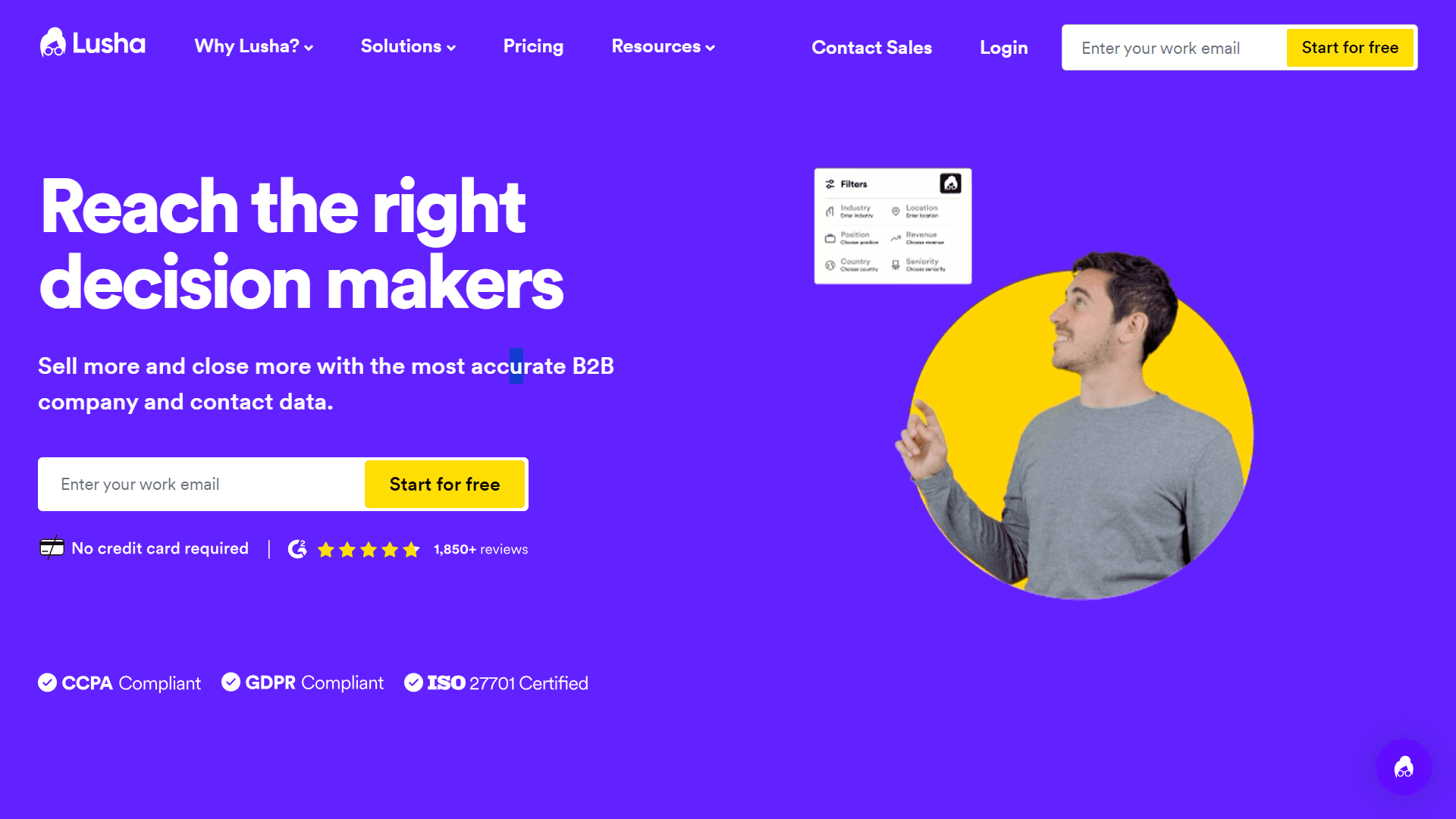
If Apollo felt heavier than you needed, Lusha is the leaner option. A free tier plus paid per-user plans, fast contact and direct-dial lookups, and quick adoption for individual reps and small teams. It does one thing, prospecting data, and does it simply.
Coverage is narrower than the enterprise platforms, and it stops at data with no meaningful execution layer. Treat it as a targeted lookup utility, not an Apollo-scale system.
Best for: individual reps and small teams that want quick, cheap contact data.
Who should pick something else: teams that need broad coverage, governance, or built-in outreach.
Pricing: free tier plus paid per-user plans, per its pricing page.
6. Instantly: Cold-email volume infrastructure
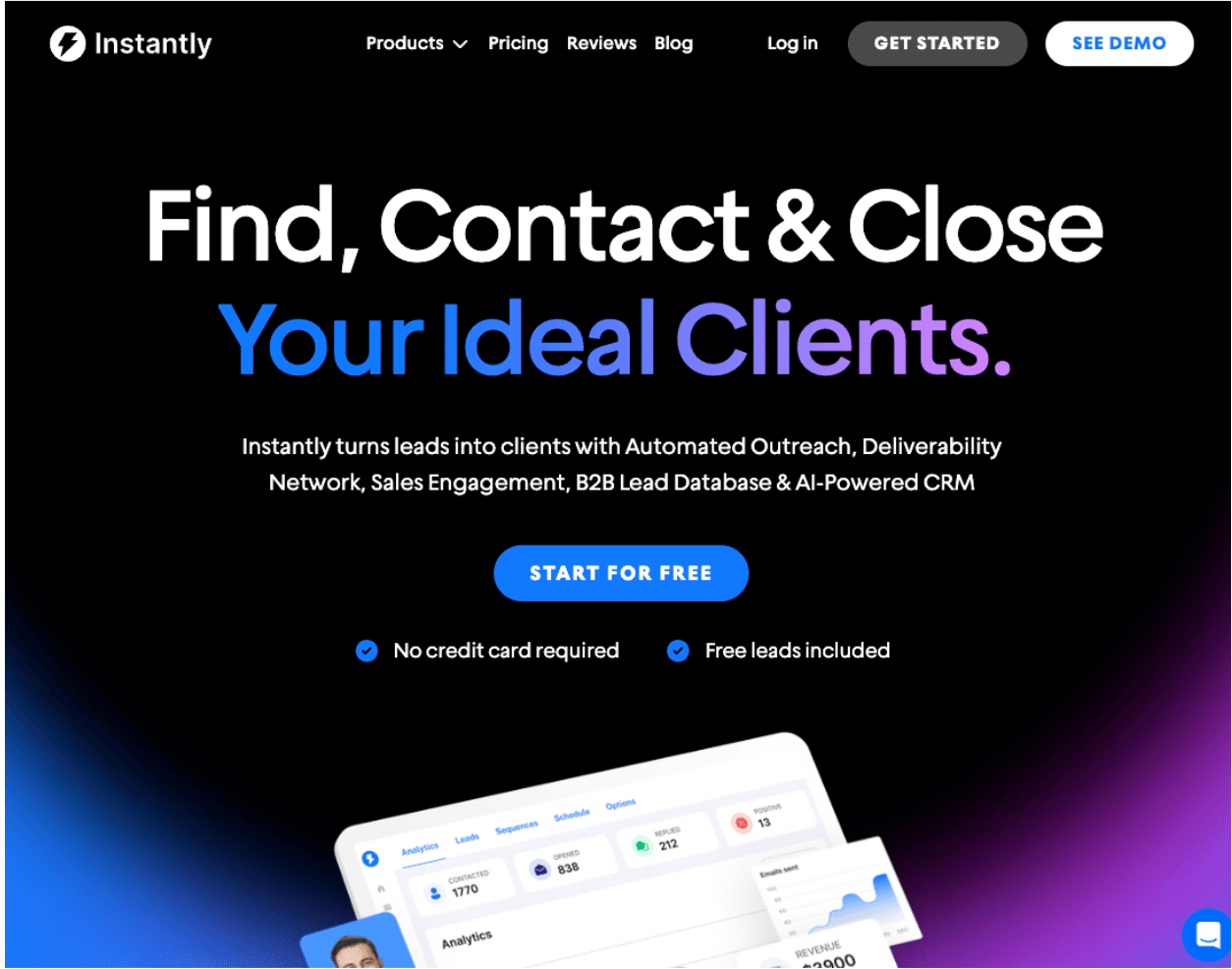
Teams that used Apollo mainly for high-volume email sometimes move to Instantly, the volume leader in cold email. It claims access to over 450 million leads, runs $47 to $555 a month on public tiers, and has the largest customer base in its category, with sending infrastructure built for scale at low cost. For teams whose constraint is sending cost at volume, it is priced for that job.
The limit mirrors Apollo's: you still write, target, and reply yourself, and its AI features are newer. It is infrastructure for sending, not an agent that runs the motion.
Best for: high-volume cold-email teams that want cheap sending infrastructure.
Who should pick something else: teams that want the AI to write, target, and reply for them.
Pricing: $47 to $555 a month public tiers, per its pricing page.
What is the best enterprise alternative to Apollo?
For enterprise, the best alternative to Apollo is Artisan, because it fixes both of Apollo's enterprise limits at once: the assistive AI and the per-seat model. Enterprises tend to adopt Apollo as a cheap data layer, then bolt on a real sequencer, a dialer, enrichment, and reply handling, which recreates the stack of five to eight tools Apollo was supposed to replace. Artisan consolidates that into one platform where Ava does the work, with governance enforced in the same place: org and campaign-level do-not-contact across email, domain, social profile, and phone, per-field data controls, SOC 2 Type II, and SSO and SAML on Enterprise plans.
The economic argument is sharper still. Apollo's per-seat pricing means more pipeline requires more reps and more seats. Artisan's hybrid model decouples the two, because Ava's output is metered as credits for work performed instead of licenses per head, and central-ops deployment lets a small team run Ava across a large AE org that never logs in. For a chief revenue officer (CRO) comparing options, that is the structural difference. See how the category stacks up in our guide to the best AI GTM platforms.
Why do teams leave Apollo?
Mostly they outgrow it. The AI is assistive, so scaling output still means scaling headcount and hours. The per-seat model ties pipeline to seat count. And at size, Apollo becomes one layer in a stack instead of the system, which reintroduces the tool sprawl teams adopted it to avoid. Apollo remains an excellent value all-in-one for smaller teams. People leave when they want the AI to run the motion instead of assisting it, or when they need enterprise data depth or compliance Apollo does not lead on.
Stay with Apollo if...
Keep Apollo if you are a cost-sensitive team that wants a serviceable database, a sequencer, and light dialing in one affordable tool, and you are content for reps to drive the outreach. At its price, from free to about $119/user/month, few tools bundle that much at that cost, and its March 2026 Pocus acquisition added useful signal-based prospecting. If your team is small, your reps like being in the driver's seat, and per-seat economics still work at your volume, switching gains you little. The case to leave sharpens when output is capped by headcount and you want the AI to own the job.
FAQ
What is the best Apollo alternative?
For most teams, Artisan, because it replaces Apollo's assistive copilot with Ava, an autonomous AI BDR who finds leads, personalizes, calls, handles replies, and books meetings herself, on pricing that is not capped by seats. If you want deeper enterprise data, ZoomInfo; for enrichment power, Clay; for EMEA, Cognism.
Is there a better all-in-one than Apollo?
It depends on your definition of the job. Apollo bundles data and light execution cheaply. Artisan bundles data and fully autonomous execution, so the AI runs outbound instead of assisting a rep, which is a broader "all-in-one" for teams that want outcomes over tooling. For pure cheap data-plus-sequencing, Apollo is still strong value.
What is the best enterprise alternative to Apollo?
Artisan, because it removes Apollo's two enterprise limits at once: the assistive AI and the per-seat model. It consolidates data, outreach, dialing, and reply handling into one governed system with SOC 2 Type II, SSO and SAML, per-field controls, and central-ops deployment across large AE teams. ZoomInfo is the pick if you only need deeper US data.
Does Apollo have an autonomous AI SDR?
Apollo's AI is largely assistive: it drafts messages and suggests actions while a rep targets, sends, and replies. If you want an autonomous AI BDR that owns the full workflow under a defined autonomy level with escalation rules and an audit trail, Artisan's Ava is built for that. Over 90% of Artisan customers run Ava autonomously.
Is Artisan cheaper than Apollo?
The pricing models differ, so it depends on usage. Apollo charges per seat, so cost and pipeline both scale with headcount. Artisan's pricing is hybrid: Ava's work runs on usage-based credits, so you pay for the work she performs, and dialer seats are billed separately at $75/seat/month on monthly billing. That favors teams that want more pipeline without more seats. See artisan.co/pricing and compare against your seat count.
Which Apollo alternative is best for cold email volume?
Instantly, the volume leader, with over 450 million leads claimed and $47 to $555 monthly tiers built for cheap high-volume sending. It is infrastructure, though, so you still write and reply. Artisan is the pick if you want the AI to write, target, personalize, and handle replies at volume instead of just sending.
Which Apollo alternative has better data?
For US enterprise depth, ZoomInfo, which claims over 321 million profiles and leads firmographic coverage. For enrichment across many sources, Clay's over 150 providers. Artisan carries over 250 million B2B professionals in over 200 countries plus Artisan Local Data, which holds over 250 million local businesses, with waterfall enrichment that charges only on success, plus the activation Apollo's data lacks. The best data is the data that is used, not just stored.
Want to see the AI run the whole motion? Explore the AI sales agent or start on the Artisan homepage.
Related reading
Jaspar Carmichael-Jack
Co-Founder & CEO @ Artisan
Jaspar is an entrepreneur with expertise in sales, marketing, and operations. He founded Artisan in 2023, a company automating workflows with AI employees.