Clay vs. Apollo: Which should you choose in 2026?
Clay vs. Apollo compared on data coverage, enrichment, pricing, and fit. An honest 2026 buyer's guide with published prices and real trade-offs.
Key Takeaways
- Apollo is a self-serve sales platform used by over 600,000 companies, with a native database it claims holds over 230 million contacts and per-seat plans from free to $119/user/month, per its pricing page.
- Clay is enrichment infrastructure, not an outbound tool. It orchestrates over 150 data providers with waterfall logic and its Claygent research agents, on public tiers from $167 to $446 a month.
- Clay's median contract runs around $30,000 a year once you scale usage, and most serious deployments assume a skilled operator. Apollo's cost is mostly the per-seat license.
- Apollo gives you data and execution in one login. Clay gives you deeper data, then hands it off to whatever tool actually sends the outreach.
- Apollo raised its profile by acquiring the buyer-intent product Pocus in March 2026 and reportedly runs around $200 million in annual recurring revenue (ARR). Clay was valued at $3.1B in August 2025.
- If your real problem is who runs all this, neither tool is an operator, and that is where an autonomous platform enters the conversation.
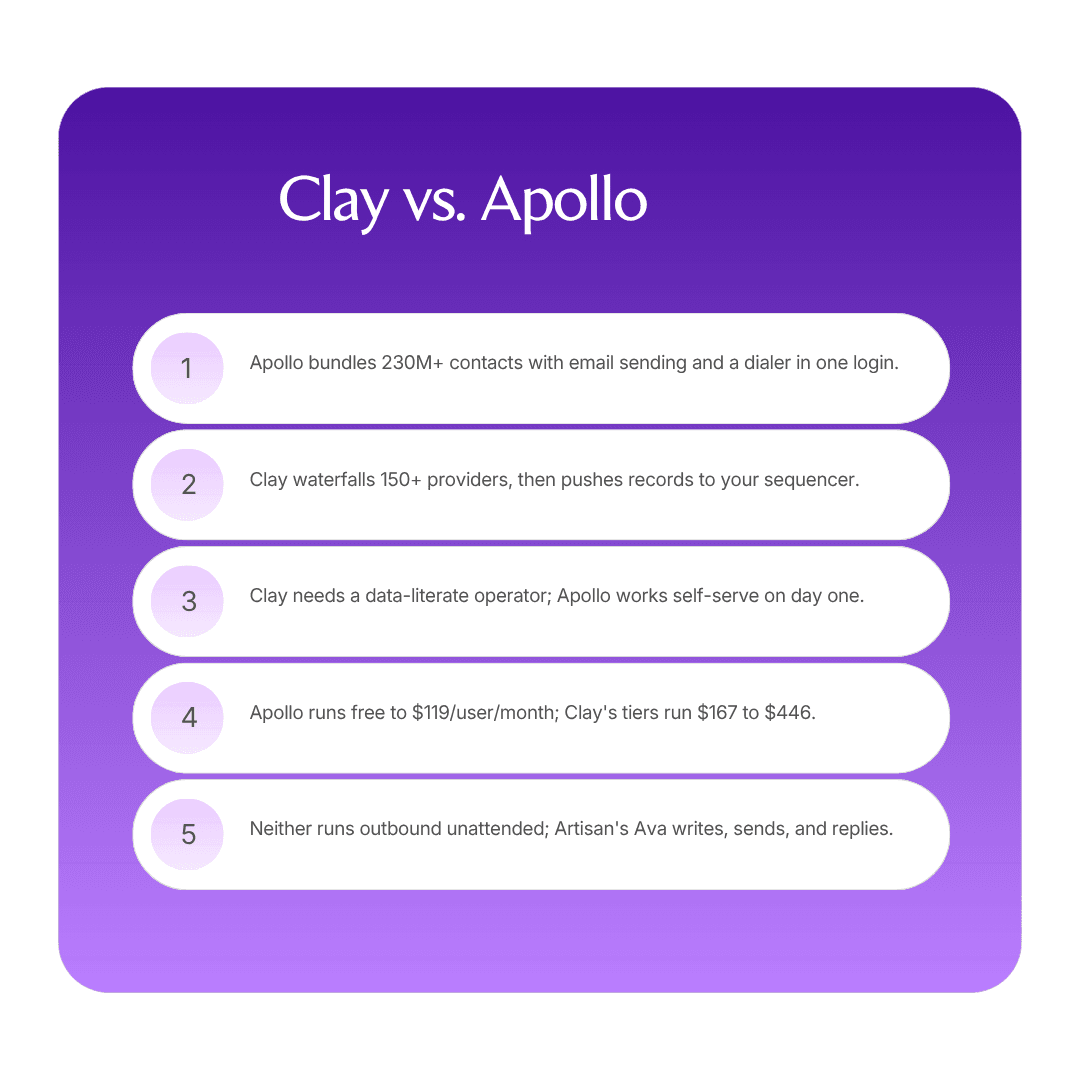
Clay and Apollo solve different halves of prospecting. Apollo is an all-in-one platform with its own database of over 230 million contacts, email, and a dialer, priced per seat from free. Clay is a programmable enrichment layer that pulls from over 150 data providers and needs an operator to run it. Pick Apollo for out-of-the-box prospecting, Clay for custom data workflows.
Clay vs. Apollo at a glance
Clay | Apollo | |
Best for | Custom enrichment and data workflows run by an operator | Affordable all-in-one prospecting for full teams |
Standout capability | Waterfall enrichment across over 150 providers plus Claygent agents | Large native database with built-in email and dialer |
Native database | No first-party database; aggregates providers | Claimed at over 230 million contacts |
Pricing model | Credit and usage based | Per seat |
Published pricing | $167 to $446 a month public tiers; around $30K/year median contracts | Free to $119/user/month |
Who runs it | A data-literate operator or GTM engineer | Any rep, self-serve |
Pricing above comes from each vendor's published pages and reported contract data. Re-check it before you buy.
How we compared them
We looked at four things a buyer actually feels: how good the data is and where it comes from, how much execution ships in the box, what it costs at real usage rather than the headline tier, and how much skill it takes to operate. Clay and Apollo both touch data for outbound, but they sit at opposite ends of build versus buy, so the right answer depends heavily on your team, not on a feature count.
What is the real difference between Clay and Apollo?
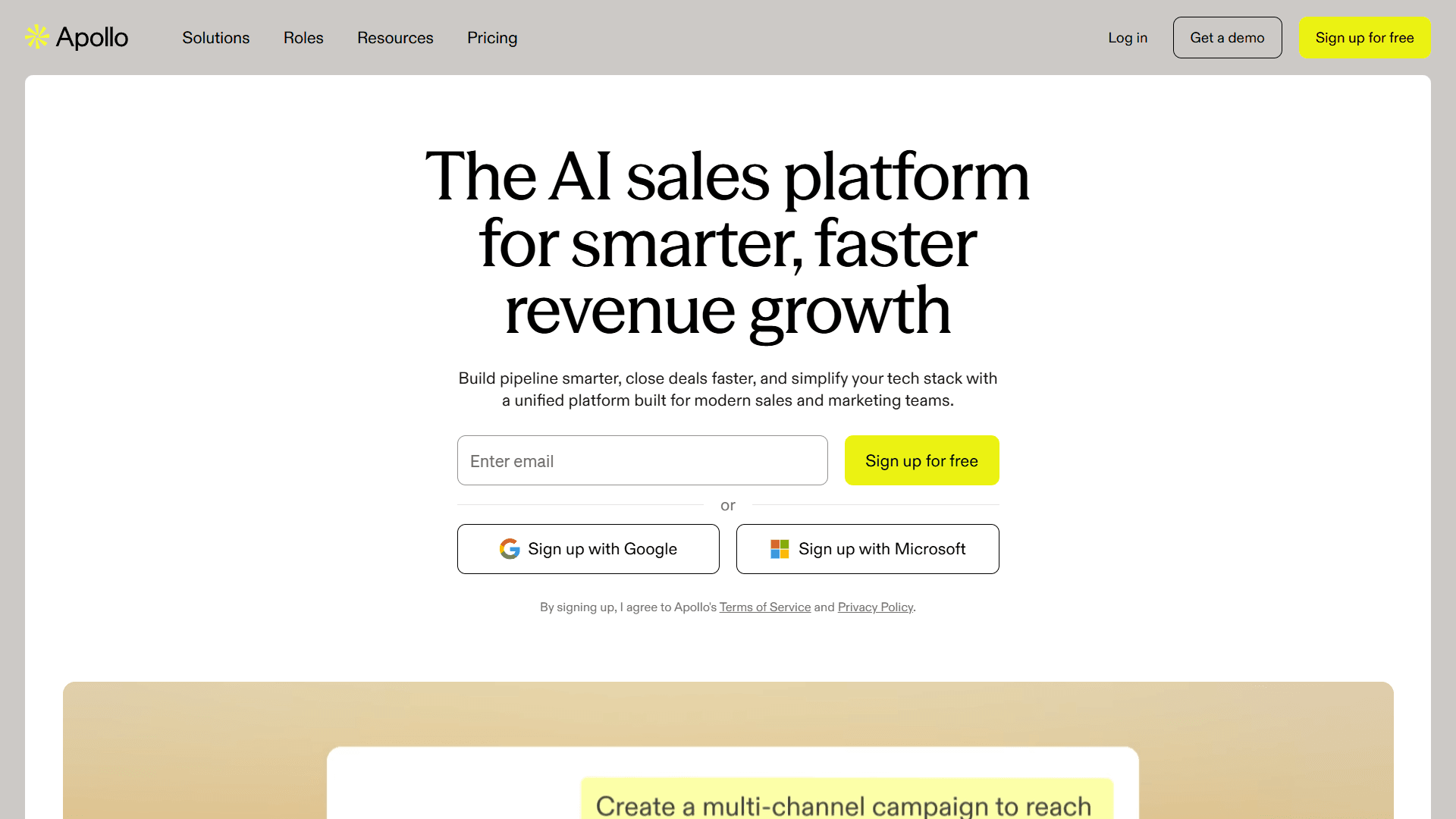
Apollo is a destination. You log in, search its database, build a list, and send sequences or dial from the same place. It bundles contact data, email sending, a dialer, and basic AI assistance into one per-seat product, which is why smaller teams like it: one tool, one bill, minimal setup. For how Apollo compares elsewhere, see Apollo vs. Lusha and Apollo vs. Outreach.
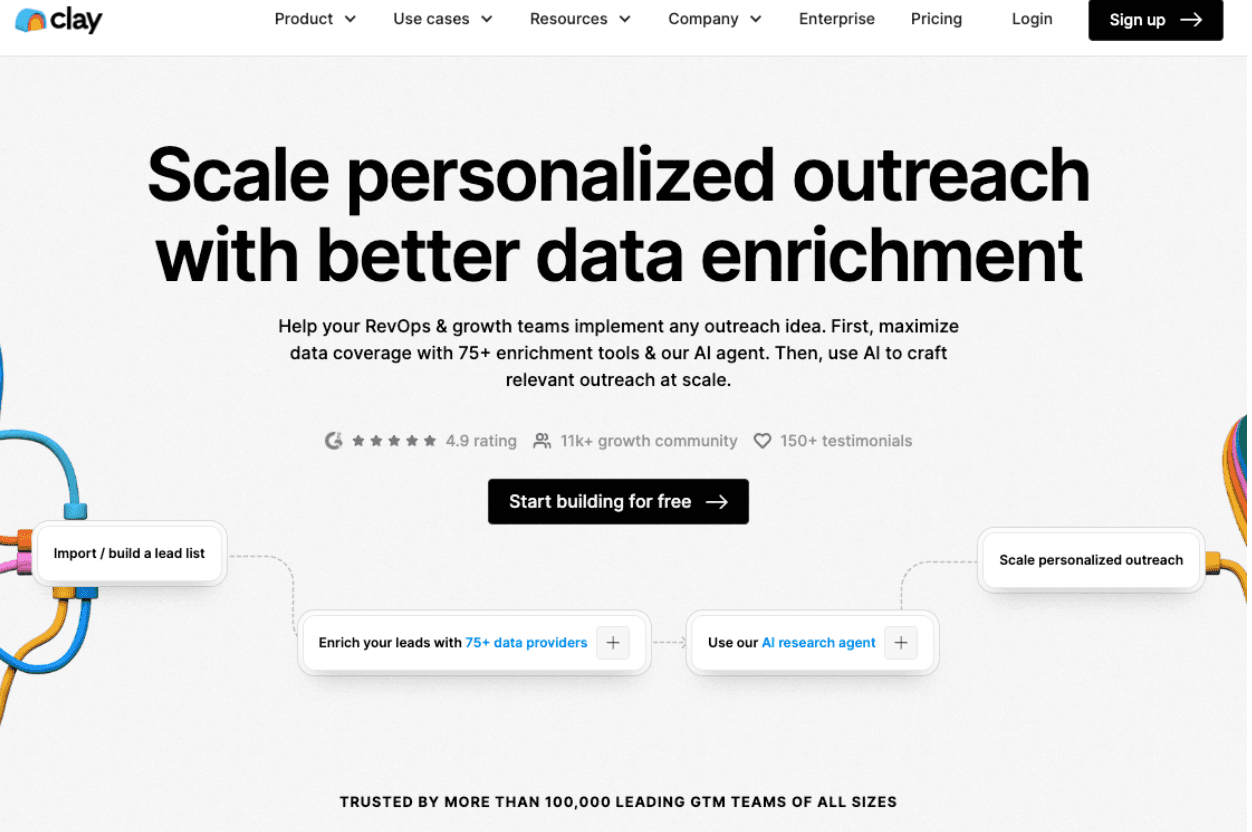
Clay is a layer. It does not sell you a finished list or send your email. It connects to over 150 data sources, runs them in a waterfall so you only pay when a provider fills a field the previous one missed, and lets you enrich, score, and format records with spreadsheet-style logic and its Claygent research agents. It then pushes the result into your sequencer, CRM, or wherever you actually work. Clay gives you the workbench. Apollo gives you the store. For how Clay compares with single databases, see Clay vs. Clearbit, Clay vs. ZoomInfo, our Clay review, and other Clay alternatives.
Which has better data coverage?
It depends on what coverage means to you. Apollo's advantage is a single large native database, claimed at over 230 million contacts, that any rep can search without configuration. For quick, broad prospecting in North American and common B2B segments, that is often enough on its own.
Clay's advantage is breadth of sources rather than one big table. Because it waterfalls across over 150 providers, it can find records and fill fields that no single database holds, and it lets you verify one provider against another. For niche personas, hard-to-find phone numbers, or international segments where one vendor has poor coverage, a well-built Clay table usually returns more than Apollo alone. The catch is that someone has to build and maintain that table. For a broader look at data sources, see the best Cognism alternatives and how to build a targeted prospect list with AI.
How do Clay and Apollo pricing compare?
Apollo is the cheaper starting point by a wide margin. It publishes a free tier and paid plans up to $119/user/month, so a team can be running for the price of a few seats. The cost scales with headcount, not usage, which is predictable but means every rep who needs data is another license.
Clay's public tiers run $167 to $446 a month, but that understates real spend. Enrichment credits are consumed fast at scale, and reported median contracts land around $30,000 a year. You also pay implicitly for the operator time to build workflows. Clay is cheaper per record for high-value, targeted enrichment and more expensive as a general-purpose data faucet. Apollo is the opposite.
Which is easier for a team without a data engineer?
Apollo, clearly. It is designed so a rep or a founder can self-serve on day one: search, filter, export, send. There is a learning curve, but no coding or pipeline design.
Clay is powerful precisely because it is programmable, and that is also its cost. Real value from it usually assumes someone who thinks in data, whether that is a dedicated GTM engineer (a role that can run north of $160,000 fully loaded) or an ops-minded rep who enjoys building. Teams that buy Clay expecting a turnkey list tool tend to underuse it. Teams that staff it properly produce outputs Apollo cannot match.
Does either one run your outbound for you?
Not really, and this is the honest limit both share. Apollo sends email and dials, but a person still writes the messages, decides the targeting, and works the replies. Clay does not send at all; it feeds a sequencer that a person still operates. Both automate steps. Neither owns the job.
If what you actually want is for the whole loop to run without a person babysitting it, that is a different category. Artisan is an autonomous platform where an AI employee, Ava, does the sourcing, enrichment, messaging, and reply handling end to end. Its pricing is hybrid: Ava's work runs on usage-based credits, so you pay for the work she performs, and dialer seats are billed separately; see pricing. It is the third path when the real question is who runs the motion, not which data tool to license. For a wider view of that category, see our guide to the best AI GTM platforms. See also Artisan vs. Apollo and Artisan vs. Clay.
Choose Clay if...
You have, or will hire, someone data-literate to build and maintain enrichment workflows.
Your targeting is specific enough that no single database covers it and you need to waterfall many sources.
You already own a sequencer or CRM you like and just want better data flowing into it.
Data quality on hard personas matters more than a low, predictable monthly bill.
Choose Apollo if...
You want data plus sending in one affordable tool your reps can use today.
Your prospecting is broad enough that one large database covers most of it.
You prefer predictable per-seat pricing over usage-based spend that can spike.
You are a smaller or scaling team without an ops person to run a data platform.
What changed for these tools in 2026?
Apollo acquired the buyer-intent and product-signals company Pocus in March 2026, which signaled a push beyond data into intent-based prospecting, and it has been reported at roughly $200 million in ARR. Clay, valued at $3.1B in August 2025, has continued to expand its provider marketplace and agent features, holding its position as an enrichment anchor many go-to-market (GTM) teams build around. Neither has changed its core identity: Clay is still infrastructure, Apollo is still an all-in-one.
FAQ
Is Clay a replacement for Apollo?
Not directly. Clay does not include a native contact database you can search out of the box the way Apollo does, and it does not send email or dial. Many teams actually use both: Apollo as one of the data sources Clay waterfalls through, with Clay enriching and cleaning records before they reach a sequencer. Clay replaces Apollo's data layer only if you connect enough other providers.
Is Apollo's data as good as Clay's?
For broad, common B2B prospecting, Apollo's native database is often good enough on its own. For niche personas, verified phone numbers, or international segments with limited information, a well-built Clay table that waterfalls multiple providers will usually return more and cleaner records, because it is not limited to one vendor's coverage. The trade-off is the operator time Clay requires.
Which is cheaper, Clay or Apollo?
Apollo has a much lower entry price, with a free tier and paid plans to $119/user/month. Clay's public tiers start at $167 a month but scale with usage, and median contracts have been reported around $30,000 a year. Apollo is cheaper for general use; Clay can be cheaper per record for targeted, high-value enrichment.
Do I need a GTM engineer to use Clay?
You do not strictly need a dedicated hire, but you need someone comfortable with data logic to obtain value from Clay. Teams that staff it with a GTM engineer or an ops-minded rep tend to see strong returns; teams expecting a turnkey list-builder often underuse it. Apollo requires no such role.
Can Apollo do enrichment like Clay?
Apollo enriches records from its own database and some partners, and its Pocus acquisition adds intent signals. But it does not offer Clay's open waterfall across over 150 third-party providers or Clay's programmable table logic. Apollo's enrichment is convenient and built in; Clay's is broader and more customizable, at the cost of setup.
Is there an alternative to both Clay and Apollo?
Yes. Both leave you to run the outreach around the data; if you would rather the whole motion ran itself, an autonomous platform is the alternative. Artisan's AI business development representative (BDR), Ava, combines a contact database and waterfall enrichment with campaign writing, sending, and reply handling. Pricing is hybrid: Ava's work runs on usage-based credits for the work she performs, with dialer seats billed separately. Data and activation live in one system instead of a data tool plus the people operating everything after it. See Artisan's AI sales agent for how it differs.
What if I want something that runs outbound on its own?
Neither Clay nor Apollo is autonomous; both leave targeting, writing, and reply handling to a person. If you want the entire outbound job handled by an AI instead of assembled from tools, an autonomous AI BDR platform is a separate category worth evaluating. Our explainer on what an AI BDR is covers how that model differs from a data tool.
Jaspar Carmichael-Jack
Co-Founder & CEO @ Artisan
Jaspar is an entrepreneur with expertise in sales, marketing, and operations. He founded Artisan in 2023, a company automating workflows with AI employees.