The best LeadIQ alternatives in 2026
The best LeadIQ alternatives in 2026, compared on data quality, capture workflow, pricing, and how much of the outbound job each tool actually runs.
Key Takeaways
- Artisan is the top LeadIQ alternative when you want the capture-to-meeting motion in one system: over 250M B2B professionals, over 250M local businesses, waterfall enrichment, and an AI business development representative (BDR) that runs the outreach, with over 90% of customers running her autonomously.
- LeadIQ's edge is speed of capture into your CRM and sequencer. Its data depth and execution are more limited.
- Apollo delivers a similar capture-plus-sequence flow at a transparent price: free to $119/user/month, per its pricing page.
- ZoomInfo has the deepest US data but sells execution as an add-on, with contracts reported at over $15K per year.
- Cognism is the compliance-first pick for teams selling into Europe, the Middle East, and Africa (EMEA), with Diamond Data phone verification.
- Seamless.ai is a cheaper real-time search tool, but reviewers report 20-30% bounce rates and annual auto-renewal terms.
The best LeadIQ alternative for most teams is Artisan, because it does more than capture contacts into a sequencer. It sources leads from a database of over 250M B2B professionals, enriches them, and then runs the email, social media, and dialer outreach itself. LeadIQ speeds up prospecting; Artisan removes most of the job around it.
LeadIQ built its following on a tight capture workflow: find a prospect, pull verified contact data, and push it into your CRM and sequencer in a few clicks. For sales development representatives (SDRs) who build lists by hand, this flow is fast. But it is still a data-capture layer on top of tools you buy separately, and that is exactly where the strongest alternatives pull ahead, either on data depth or by owning the outreach entirely.
How the best LeadIQ alternatives compare
Rank | Tool | Best for | Standout capability | Public pricing |
1 | Artisan | Capture plus an AI that runs outreach | Autonomous AI BDR across over 250M B2B professionals | Usage-based credits for Ava's work; dialer seats billed separately; free trial (see pricing) |
2 | Apollo | Capture plus sequencing on a budget | All-in-one data and cadences | Free to $119/user/month |
3 | ZoomInfo | US enterprise data depth | GTM Intelligence Platform, WebSights | Over $15K/year reported |
4 | Cognism | EMEA compliance and phone data | Diamond Data verification | ~$15-50K/year reported |
5 | Clay | Custom enrichment workflows | Over 150 enrichment providers, Claygent | $167-446/month public tiers |
6 | Seamless.ai | Cheap real-time contact search | Live web search for emails | Free published; paid tiers gated |
Why do teams look for a LeadIQ alternative?
Usually one of three gaps. The first is data breadth, since LeadIQ is strong for point capture but teams outgrow it when they need a larger, better-verified base or intent signals. The second is cost per outcome, because paying for a capture tool plus a separate sequencer plus a dialer adds up while the capture step is only a sliver of the work. The third is execution. LeadIQ hands the contact to your sequencer, but a rep still writes the messaging, works the replies, and books the meeting. As reply rates fall industry-wide, faster capture into the same manual motion stops moving the number.
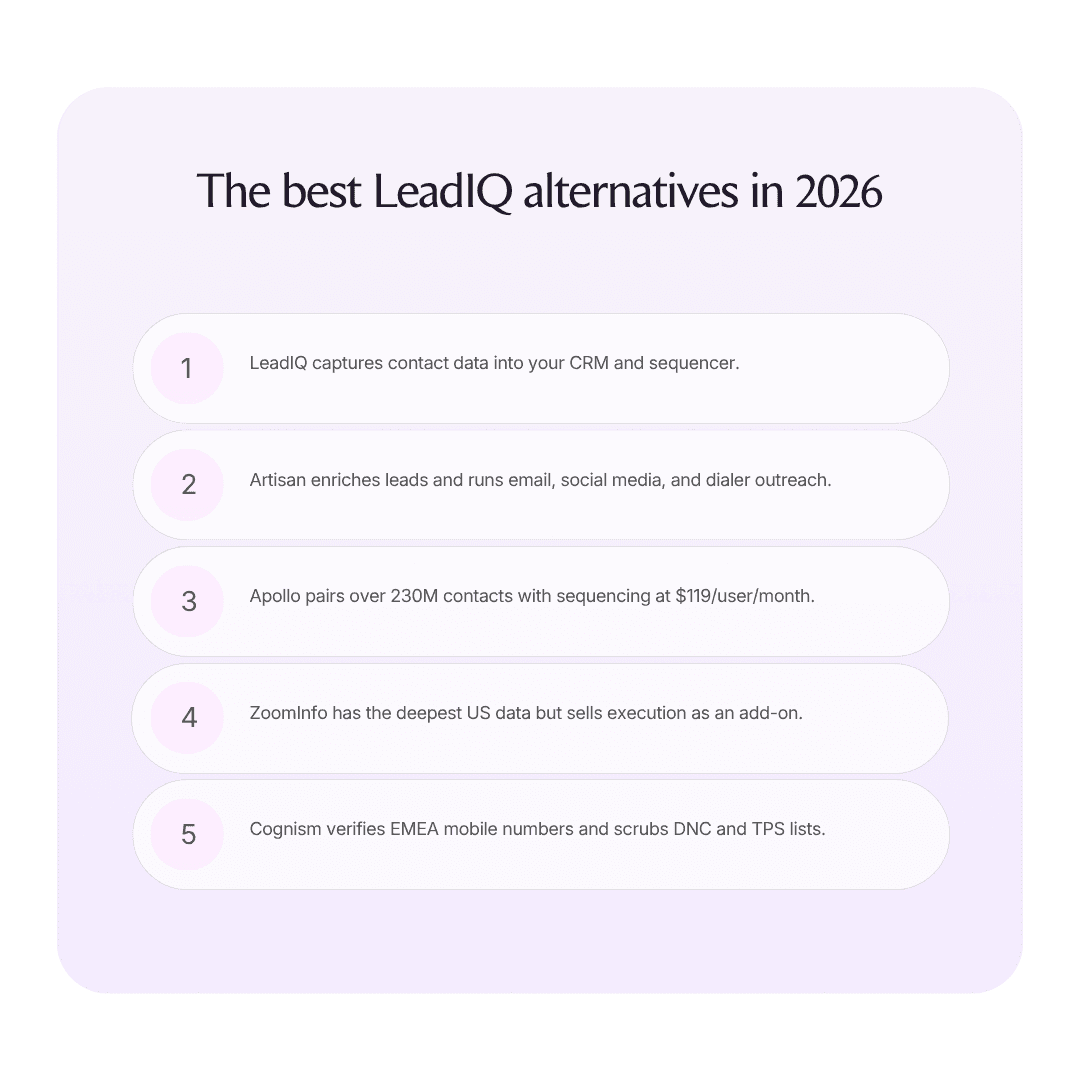
The right replacement depends on which gap hurts. Sometimes it is more or cleaner data. Sometimes it is compliance. Often it is wanting the whole motion handled instead of just the first click.
How we chose
Four criteria, weighted for a LeadIQ buyer. How much of the outbound job the tool runs after capture. Data and signal depth, including verification quality. Pricing transparency, since stacking capture and execution tools is a common frustration. And deployment fit, from a single SDR to a central revenue operations (RevOps) team. For the wider data landscape, see our guide to the best B2B data providers.
What is the best alternative to LeadIQ overall?
1. Artisan: From capture to booked meeting, run by an AI
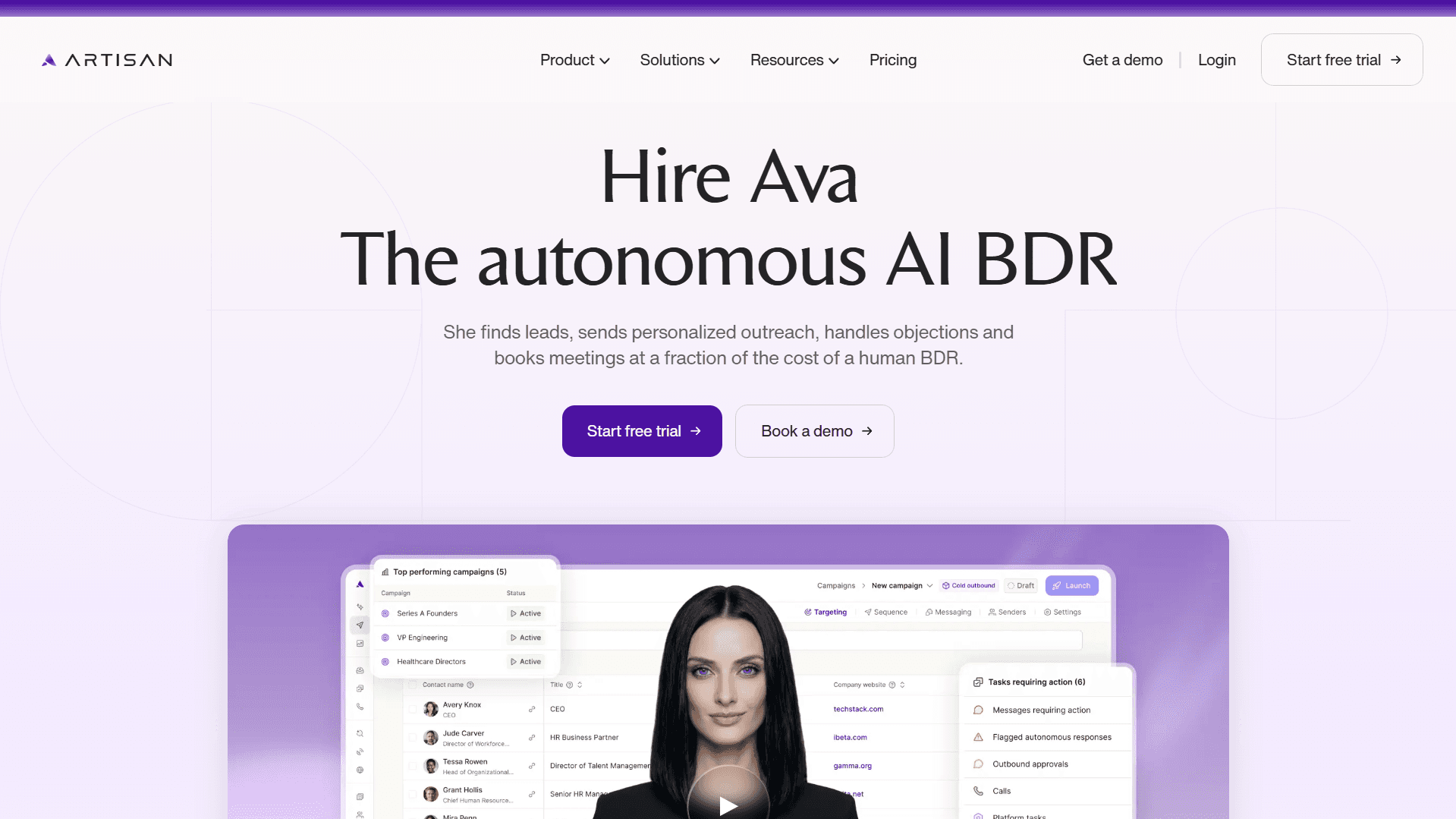
Artisan replaces the capture-into-sequencer workflow with a system that owns the entire motion. Ava, the AI sales agent at its core, works a database of over 250M B2B professionals in over 200 countries, plus Artisan Local Data with over 250M local businesses. Natural-language search, ideal customer profile (ICP) filters, and intent signals like funding rounds, new executive hires, and active hiring do the list-building LeadIQ leaves to you. She enriches with waterfall email and phone data across roughly a dozen providers, charges only on a successful match, and ranks leads by likelihood of converting. For a focused roundup, see the best email and phone number finder tools for sales.
Then she does the part LeadIQ leaves to you. Ava writes one-to-one messaging, so two people in the same campaign receive different emails instead of one template with the name and title swapped. She launches email, social media, and dialer sequences timed to each lead's local business hours, qualifies replies against a knowledge base, chases follow-ups, and books meetings with CRM-owner routing. She also runs dozens of message variations and shifts volume toward the ones that convert. You choose the autonomy level: review-and-approve, objections-only, or full autonomy with plain-language escalation rules and a full audit trail. Over 90% of customers run Ava autonomously.
Bruno Didier, CEO of CookUnity Business, put it plainly: "Ava runs highly targeted outreach at a scale we could never reach with a human-only team," at roughly a $45 cost per lead across over 100,000 personalized emails. Native Salesforce and HubSpot sync, bidirectional owner mapping, and field-level export control make it fit a real RevOps stack, beyond a single rep's browser.
Best for: teams from startup to enterprise that want the capture-to-meeting motion in one system
Who should pick something else: a team that only wants a fast capture button on top of tools it is committed to keeping
Pricing: usage-based credits for Ava's work, so you pay for the work she performs; dialer seats and phone numbers billed separately; free trial (see pricing)
2. Apollo: Capture plus sequencing at a low price
Apollo is the closest low-cost analog to the LeadIQ flow, because it does capture and sequencing in one tool. It offers over 230M contacts, is used by over 600,000 companies (over 100,000 paying), publishes pricing from free to $119/user/month, and acquired Pocus in March 2026. For an SDR who wants to find a contact and drop them straight into a cadence without a second subscription, it is efficient and affordable.
Its AI assists a rep instead of acting autonomously, the model is per-seat, and enterprises tend to treat Apollo as a data layer. But as a direct, cheaper replacement for the capture-and-sequence habit, it is the obvious first look. For closer looks, see Artisan vs. Apollo and Apollo vs. Lusha.
Best for: SMB and mid-market SDR teams that want capture and cadences in one affordable tool
Who should pick something else: teams that want an AI to own replies and booking, or that need enterprise governance
Pricing: free to $119/user/month, per its pricing page
3. ZoomInfo: Enterprise data depth
If your reason for leaving LeadIQ is data breadth, ZoomInfo is the depth play. Repositioned as a go-to-market intelligence platform and trading as $GTM, it claims over 321M profiles (a marketing figure) and adds WebSights and Scoops. Enterprise teams that need the widest US coverage and an intent layer build around it.
It is a data platform first: capture and execution are add-ons, entry contracts are reported at over $15K per year, and its contract terms have a reputation. It is a heavier commitment than a nimble capture tool. For a direct comparison, see ZoomInfo vs. LeadIQ.
Best for: enterprises that need the deepest US data and will build execution around it
Who should pick something else: small teams that want speed and simplicity, or anyone who wants the outreach run for them
Pricing: over $15K per year reported, gated
4. Cognism: Compliance-first EMEA data
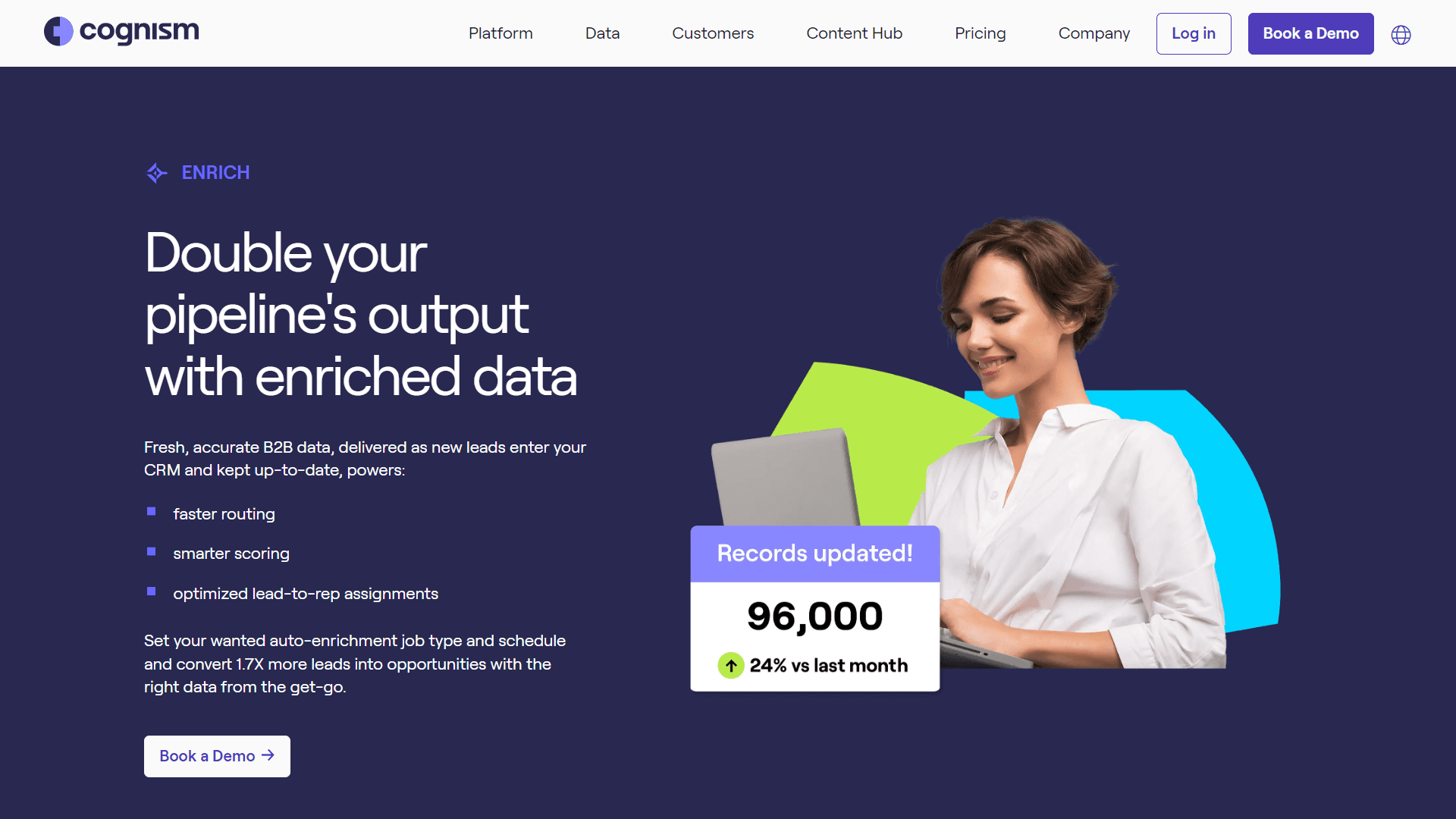
Cognism is the alternative when your capture problem is really a compliance problem, especially in Europe. Diamond Data phone verification, do-not-call (DNC) and Telephone Preference Service (TPS) scrubbing, and GDPR-aligned processing make it the EMEA data leader. Reps obtain verified mobile numbers they can actually dial.
Pricing is gated and reported at roughly $15-50K per year, and it is a data provider, so you still need the sequencer and dialer. Its Kaspr subsidiary was also fined 240,000 euros by France's data protection regulator, the CNIL, in December 2024, per the regulator, which is worth weighing in diligence.
Best for: EMEA-focused SDR teams that need compliant, verified phone data
Who should pick something else: US-centric teams, or anyone who wants execution bundled in
Pricing: roughly $15-50K/year reported, gated
5. Clay: Build your own capture and enrichment
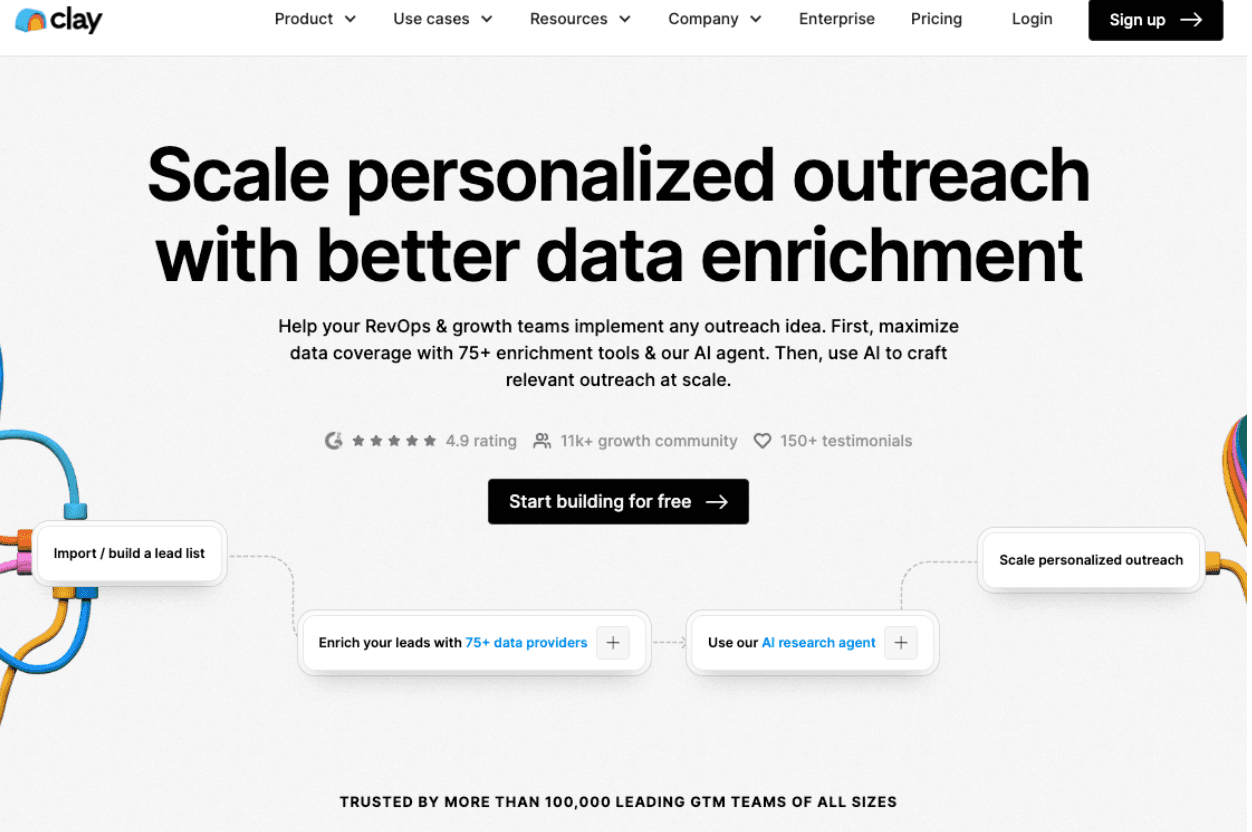
Clay is for teams whose capture needs are too custom for a fixed tool. It orchestrates over 150 enrichment providers with Claygent agents, publishes tiers from $167 to $446 per month, and hit a $3.1B valuation in August 2025. You can design a capture-and-enrichment waterfall exactly how you want it.
That power is also the cost: Clay is infrastructure that needs a skilled operator, often a go-to-market (GTM) engineer around $160K a year, and median contracts land near $30K. It gives you the workbench; you supply the worker. For a direct comparison, see Artisan vs. Clay.
Best for: RevOps and GTM engineers who want fully custom capture and enrichment
Who should pick something else: SDR teams that want a fast, ready-made capture flow out of the box
Pricing: $167-446/month public tiers; median contracts around $30K/year
6. Seamless.ai: Cheap real-time search
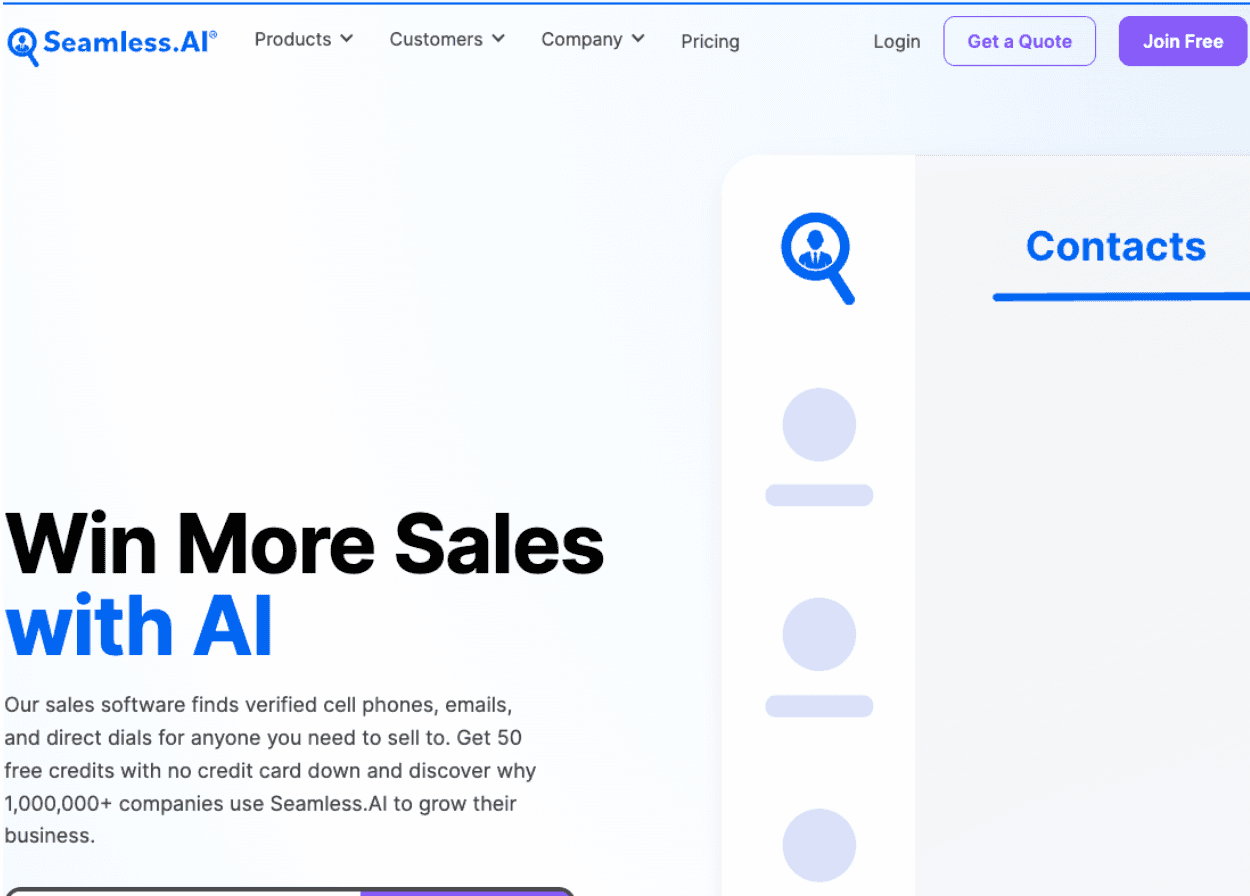
Seamless.ai is the budget real-time option, searching the web live to assemble contact data on demand. For price-sensitive teams that want a lot of lookups cheaply, it is tempting as a LeadIQ substitute.
The caveats are documented. Reviewers report bounce rates in the 20-30% range, which forces re-verification. Its plans renew annually on auto-renew terms that users report as hard to exit, and in March 2025 it faced reported removal of its company page from a major professional network over scraping. Weigh data quality against the low headline price.
Best for: very price-sensitive teams that want high-volume real-time lookups
Who should pick something else: teams that need reliable deliverability or clean contract terms
Pricing: only a Free plan is published; Pro and Enterprise are gated, on annual auto-renewal terms
What is the best enterprise alternative to LeadIQ?
Enterprises rarely stop at capture. The two serious paths are ZoomInfo, if the mandate is the deepest data to feed an existing execution stack, and Artisan, if the mandate is fewer tools and more pipeline per head. Artisan carries the enterprise essentials LeadIQ never aimed at: central-ops deployment where sales ops runs Ava for large account executive (AE) teams who never log in, SOC 2 Type II attestation, GDPR and CCPA compliance, single sign-on (SSO), SAML, role-based access, and a full audit trail, with costs that track the work performed instead of headcount. When the enterprise goal is consolidating a stack of five to eight tools instead of adding another capture layer, Artisan is the pick.
Stay with LeadIQ if...
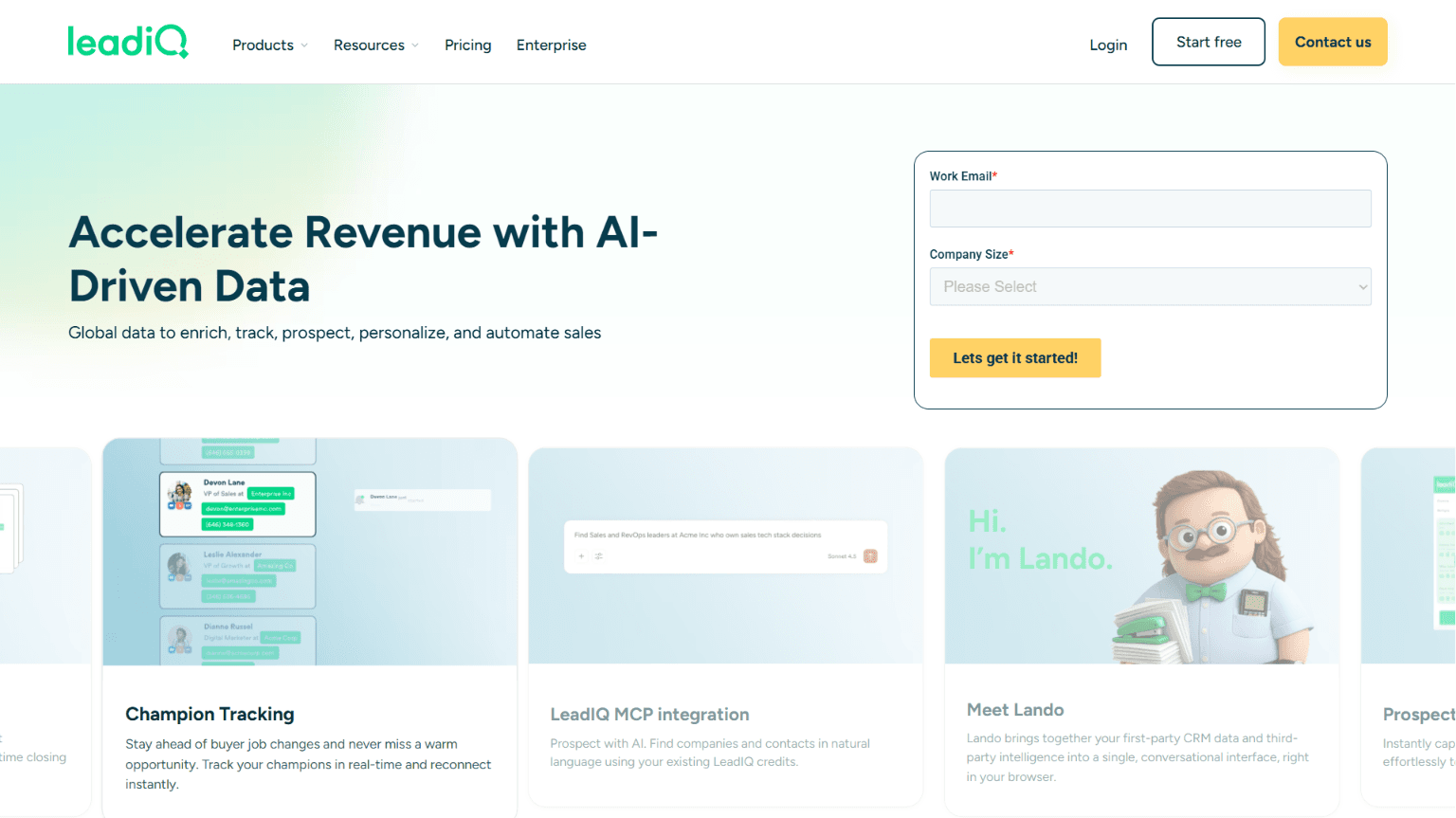
LeadIQ is the right tool to keep in a few cases. Stay if your SDRs live in a sequencer and CRM you are committed to, and the one thing you need is faster, cleaner capture into them. Stay if your volumes are modest and a lightweight per-seat capture tool is cheaper than a platform. And stay if your data needs are US-centric and mid-depth, where LeadIQ is comfortable. The case to switch strengthens when you are paying for capture plus a sequencer plus a dialer, when reply rates make the manual motion around capture the real bottleneck, or when you want an AI to run the whole thing.
Frequently asked questions
What is the best LeadIQ alternative in 2026? For most teams it is Artisan, because it goes beyond capture to run the whole motion: sourcing from over 250M B2B professionals, waterfall enrichment, and an AI BDR that writes messaging, runs email, social media, and dialer outreach, and books meetings. Over 90% of customers run Ava autonomously, so the work happens without a rep clicking through each step.
Is there a cheaper alternative to LeadIQ? Apollo is the strongest value pick, bundling capture and sequencing from free to $119/user/month. Seamless.ai is cheaper still on headline price, but reviewers report 20-30% bounce rates and annual auto-renewal terms, so factor in re-verification and contract friction before choosing on price alone.
Which LeadIQ alternative has the best data quality? For US depth, ZoomInfo claims over 321M profiles (a vendor figure). For EMEA compliance and verified phone data, Cognism's Diamond Data leads. Artisan draws on over 250M B2B professionals with waterfall enrichment across roughly a dozen providers that charges only on a successful match, so you are not paying for records that do not verify. For the wider field, see the best B2B data providers and our roundup of data vendors.
What is the best enterprise alternative to LeadIQ? ZoomInfo if you want the deepest data to feed your stack, or Artisan if you want to consolidate capture, enrichment, and execution into one governed system. Artisan supports central-ops deployment, SOC 2 Type II, SSO, SAML, role-based access, and a full audit trail, with costs that scale on work performed instead of headcount.
How is Artisan different from LeadIQ? LeadIQ captures a contact and pushes it into your sequencer. Artisan sources the lead, verifies the data, writes the messaging, runs the outreach across email, social media, and the dialer, handles replies against a knowledge base, and books the meeting. It removes the grunt work around capture instead of only speeding up the first click.
Does LeadIQ include a dialer and outreach? LeadIQ centers on data capture into your CRM and sequencer, so the actual sending, calling, and reply handling live in the tools you connect it to. If you want those built in, an all-in-one like Apollo or an autonomous platform like Artisan covers more of the motion natively. Artisan's dialer runs calls as steps inside multichannel sequences, with power and parallel dialing across up to three lines, AI answer detection, live transcription, and native CRM logging. For a closer look at Apollo, see Apollo vs. Outreach.
The bottom line
LeadIQ makes the first click of prospecting fast, but the first click is a small part of the job. If you are stacking capture on top of a sequencer and a dialer and still doing the writing, replying, and booking by hand, one system can carry all of it. Artisan is built for exactly this. Start on the homepage or read how the AI BDR works.

Artisan Team
Expert insights from the team at Artisan
Our writing team blends direct operational experience, in-house data, and thorough research to bring you the very latest insights and updates about sales and GTM automation.