The best ZoomInfo Intent alternatives in 2026
ZoomInfo Intent is a pricey Bombora-derived add-on that stops at the signal. The best alternatives cost less or run the outreach for you.
Key Takeaways
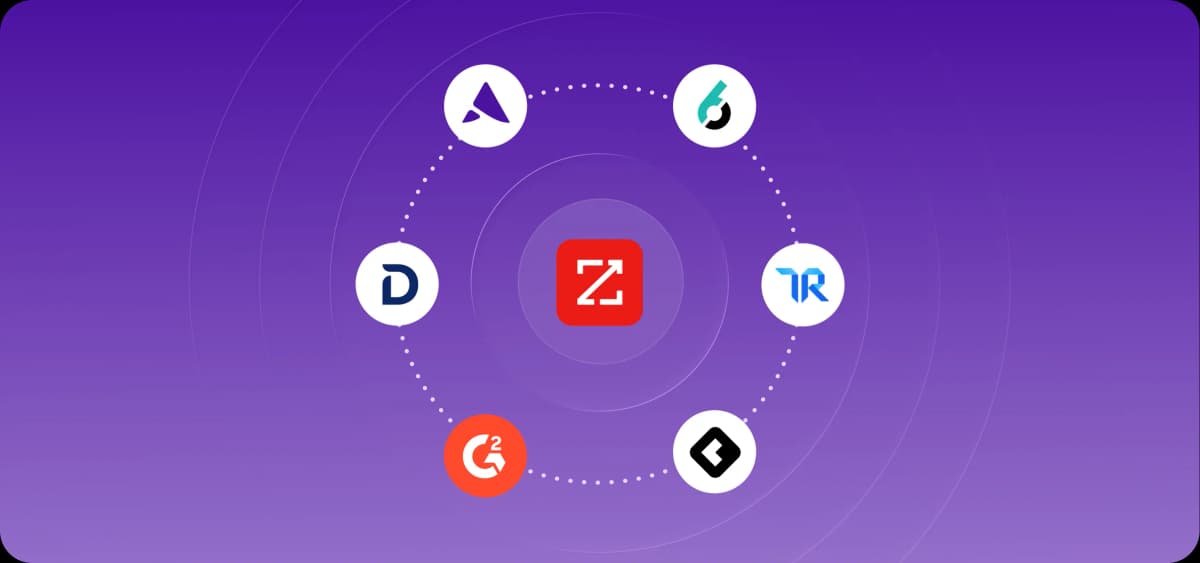
- ZoomInfo Intent is an add-on to ZoomInfo, whose broader platform is reported from around $15K per year, and much of its topic signal is Bombora-derived.
- It sits inside a data platform and stops at the signal: it enriches a record and flags intent, but the outreach happens in your other tools.
- Artisan treats Bombora-powered topic intent as one signal among many, then has Ava, its AI business development representative (BDR), run the outreach the moment any signal fires.
- Artisan pairs topic intent with faster triggers: funding rounds, new executives, first hire in a department, active hiring, tech-stack intent, champion job changes, and website visitor identification.
- Artisan does not hand signals, champion tracking, or account-based marketing (ABM) to a specialist. It owns detection and execution in one platform, with Ava's work priced on usage-based credits and dialer seats billed separately.
- Bombora is the source underneath the add-on, sold cheaper directly; 6sense and Demandbase wrap intent in scoring and ads; G2 Buyer Intent and Common Room bring narrower angles.
The best ZoomInfo Intent alternative is Artisan, because it turns buying signals into fully-run outreach instead of adding an expensive intent line to a data contract. ZoomInfo Intent is a Bombora-derived add-on layered onto deep contact data, and it stops at the signal. Bombora, 6sense, Demandbase, G2 Buyer Intent, and Common Room each offer a different path.
How the ZoomInfo Intent alternatives compare
Rank | Tool | Best for | Standout capability | Public pricing |
1 | Artisan | Signals that trigger fully-run outreach automatically | Detection plus autonomous multichannel outreach in one platform | Usage-based credits for Ava's work, dialer seats billed separately (pricing) |
2 | Bombora | The topic-intent source, bought directly | Company Surge topic intent co-op | $25K-100K/yr contracts |
3 | 6sense | Predictive ABM scoring and advertising | Account intent modeling plus paid-media activation | $62,820 median, up to roughly $175K (Vendr-reported) |
4 | Demandbase | Full-stack ABM with advertising | Account intelligence plus ad and sales orchestration | ~$24K-165K/yr, median ~$68K (Vendr-reported) |
5 | G2 Buyer Intent | Catching in-market software buyers on review pages | Signals from buyers researching on the review site | Custom, commonly low-to-mid five figures/yr |
6 | Common Room | Community and product-signal intelligence | Cross-source signal capture and person-level stitching | Reportedly around $2,500/mo entry |
Why do people look for a ZoomInfo Intent alternative?
Two reasons come up most: cost, and the fact that you are often paying a premium for a signal you can buy cheaper at the source. ZoomInfo Intent is an add-on to a platform reported from around $15K per year, and its contract terms, including renewal and true-up clauses, are worth reading closely. A good part of the topic signal is Bombora-derived, so for teams that mainly want topic intent, paying the ZoomInfo premium on top of a Bombora co-op that they could license directly can feel like a markup.
The second reason is the same execution gap that runs through this whole corner of the category. ZoomInfo Intent enriches a record and flags that an account is showing interest. It does not resolve the full buying committee, write a personalized message, or reach out. This work lands in your sequencer and your reps' queues, and the signal ages while the handoff happens. The intent lives inside the data platform; the selling still happens somewhere else.
None of this makes ZoomInfo a weak platform. Its contact data depth is a real strength, and consolidating intent with enrichment is a genuine convenience for teams already in that ecosystem. The point is that "intent add-on" and "acting on the signal" are two jobs, and the add-on owns the first. The alternatives below split into the source data underneath it, the ABM suites that wrap intent in scoring and ads, and one platform that fires outreach off the signal automatically.
What is the best alternative to ZoomInfo Intent?
Artisan, if you want signals to trigger real outreach instead of enriching a record you work later. ZoomInfo Intent flags an in-market account. Artisan watches a wider signal set, resolves it to people, and has Ava run the personalized message the moment the trigger fires. Below, Artisan first, then five genuine alternatives.
1. Artisan: Signals that trigger fully-run outreach automatically
Artisan is an AI-first outbound platform built around Ava, an autonomous AI BDR, and it closes the gap ZoomInfo Intent leaves open. Ava watches the signals that predict buying: funding rounds, newly hired executives, first hire in a department, active hiring for a role, tech-stack intent, social media post keywords, champion job changes, and Bombora-powered topic intent (the same co-op ZoomInfo's topic signal draws on, said plainly). She identifies visitors at the person level on US traffic and company-level globally on a 3.7B-IP graph at a published 92% accuracy rate, backed by a database of over 250 million B2B professionals across over 200 countries with waterfall email and phone enrichment. Then she does the part ZoomInfo Intent does not: researches the contact, writes a message specific to that person, and sends it across email, social media, and the dialer.
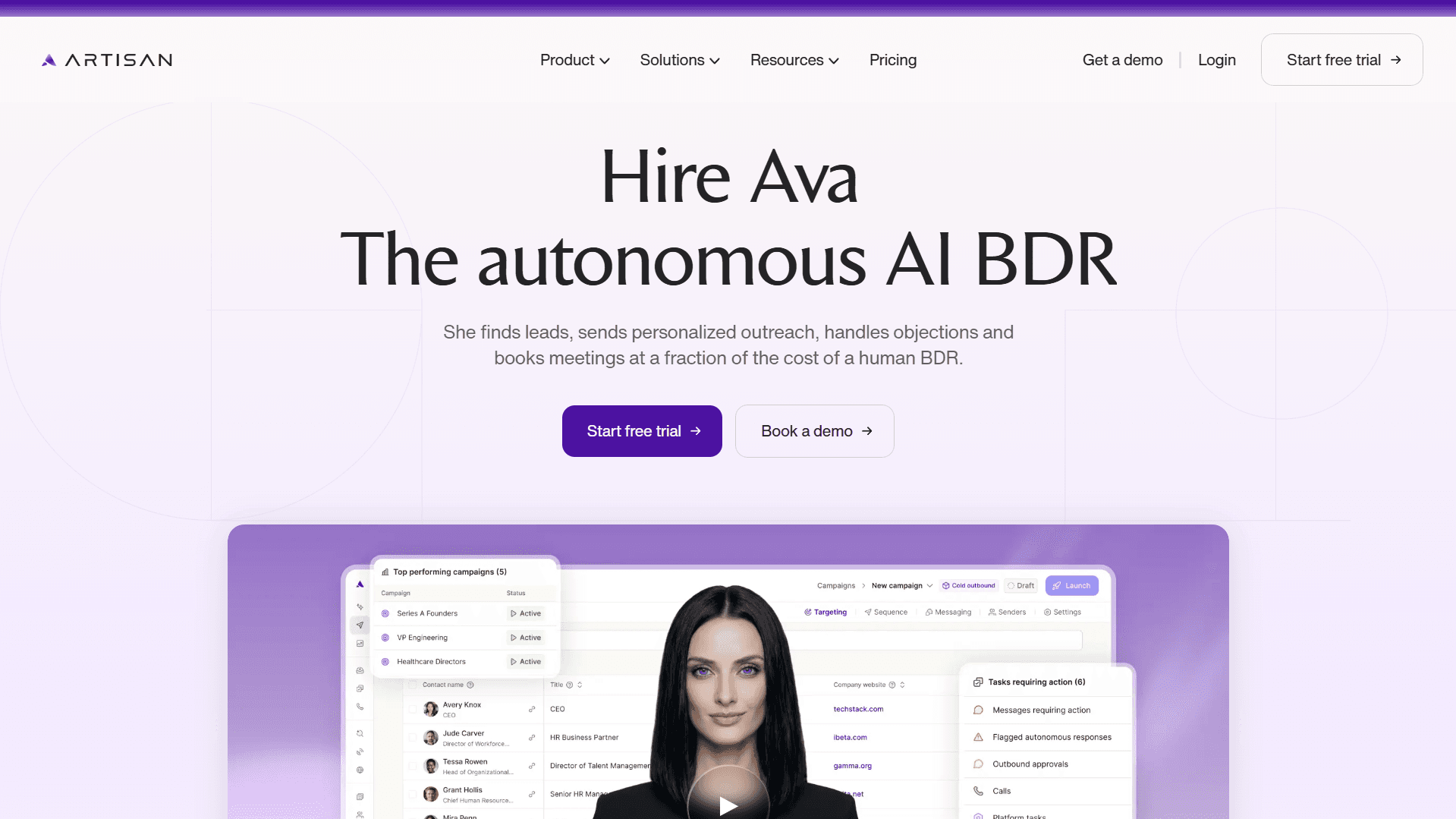
This is the category-strength point. Artisan does not enrich a record and hand you the rest. It owns detection and execution together, so a topic surge, a funding round, or a champion landing at a new account becomes an outreach campaign automatically, not an intent flag in a data tool. You can also define custom signals in plain English, with confidence scoring and evidence URLs. Over 90% of Artisan customers run Ava autonomously, on a dial from review-and-approve to fully autonomous, with escalation rules and a full audit trail, and the whole thing consolidates the data-plus-intent-plus-sequencer stack into one platform. Learn more about custom AI signals: define any buying trigger and act on it, champion tracking: catch past buyers when they change jobs, how to find companies backed by specific investors, and how to spot companies creating brand-new roles.
SumUp's Karlo Biuk, Growth Lead, reported a $52 cost per lead and 8-15 positive replies per week from previously unreachable local small and medium-sized businesses (SMBs), across more than 400,000 personalized emails. This is what happens when the signal and the sending live in the same system.
Best for: teams that want intent and every other buying signal to trigger personalized outreach automatically, from startup through enterprise. Who should pick something else: a team that only wants an intent flag inside its existing data platform to feed a heavily built outreach machine. Pricing: Ava's work runs on usage-based credits, dialer seats and phone numbers are billed separately, and there is a free trial. See artisan.co/pricing.
2. Bombora: The source, bought directly
Much of ZoomInfo Intent's topic signal is Bombora-derived, so for teams that mainly want topic intent, licensing Bombora directly is often the cheaper path. Company Surge covers 17,210 topics, with contracts reported at $25K-100K per year, and you skip the platform premium by going to the source.
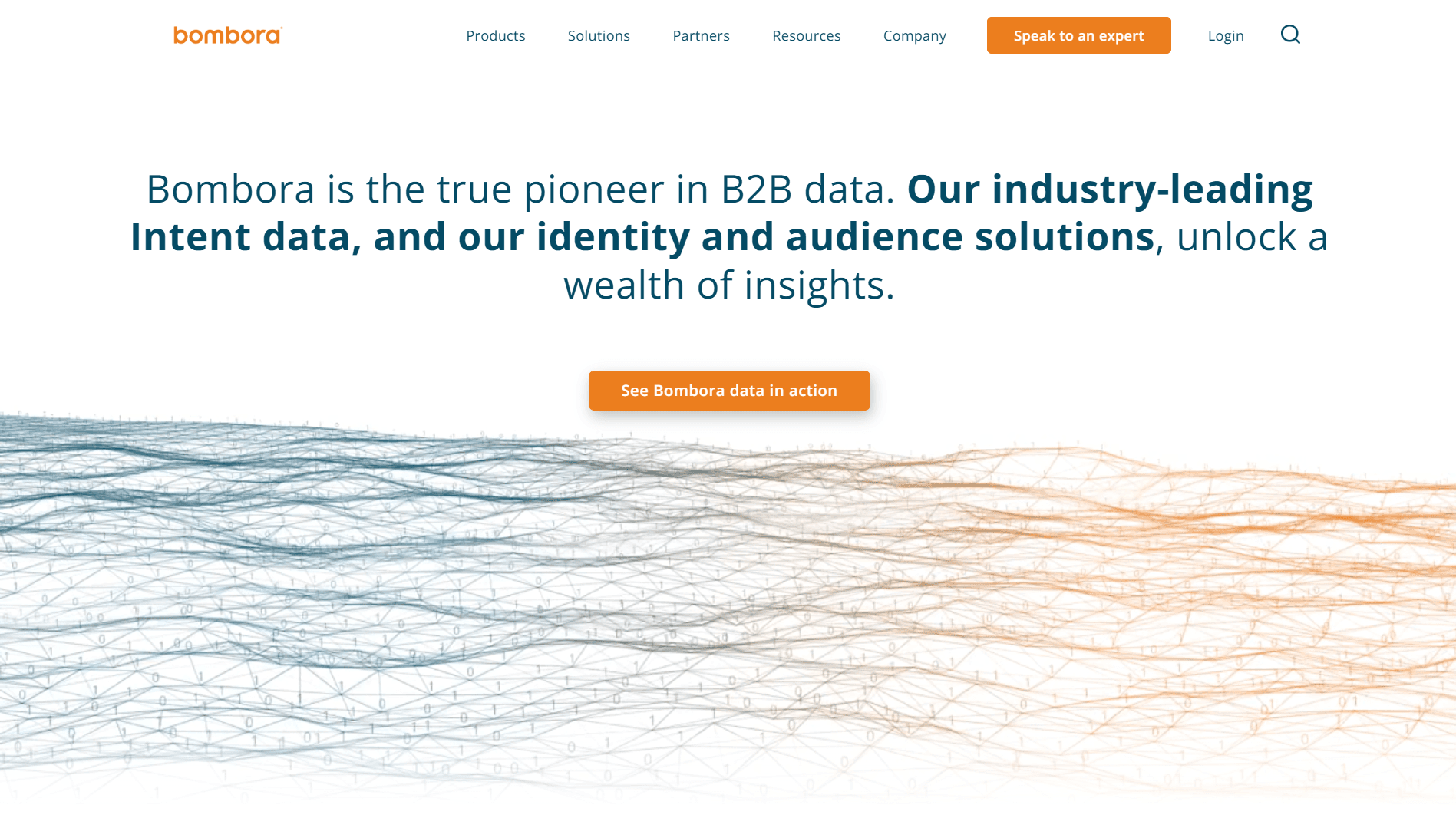
It is a data source rather than a platform, and its topic surges are account-level and land on a lag. You bring the scoring, targeting, and outreach around it.
Best for: teams that want the underlying topic-intent data without the ZoomInfo markup. Who should pick something else: teams that want the signal resolved to a person and acted on automatically. Pricing: $25K-100K/yr contracts.
3. 6sense: Predictive ABM around the intent
6sense wraps intent in predictive account scoring and paid-media activation, with contracts reported around a $62,820 median and up to roughly $175K (Vendr-attributed). If you want more than an intent flag, a model that ranks accounts and an ad engine to reach them, 6sense is the heavyweight ABM alternative. See 6sense pricing and reviews and our guide to the best AI GTM platforms.

It is analytics-and-ads-heavy, and the personalized outreach to a scored account is still a separate execution layer.
Best for: enterprises that want predictive scoring and advertising on top of intent. Who should pick something else: teams that want the outreach executed inside the platform, not orchestrated to reps and ads. Pricing: $62,820 median, up to roughly $175K (Vendr-reported).
4. Demandbase: The full-stack ABM rival
Demandbase is 6sense's closest peer: account intelligence, intent, and advertising orchestration in one suite, with contracts reported from roughly $24K to $165K per year, median around $68K (Vendr-attributed). It is a mature ABM platform and another way to buy intent packaged with orchestration instead of as a data add-on.
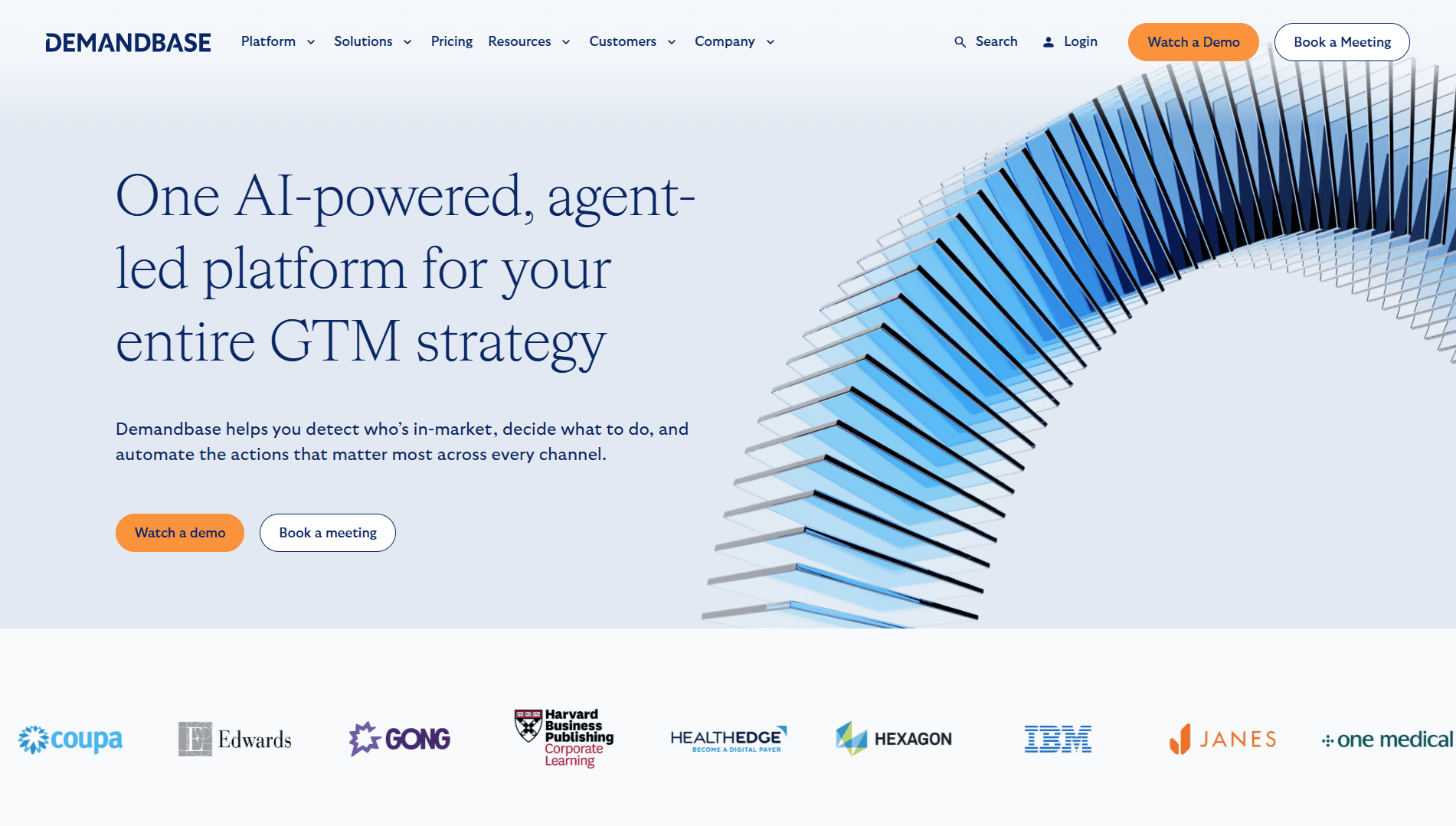
Same shape as 6sense: strong on scoring and ads, with the outreach as a downstream job.
Best for: enterprises that want a full-stack ABM and advertising suite. Who should pick something else: teams that want signals to fire outreach instead of feeding an ad audience. Pricing: ~$24K-165K/yr, median ~$68K, Vendr-reported.
5. G2 Buyer Intent: Catching active software buyers
G2 Buyer Intent identifies companies researching your category and competitors on the review site, a narrow but high-conviction signal, sold within G2 Marketing Solutions at custom pricing, commonly low-to-mid five figures a year. When a buyer is comparing you on a review page, they are close to a decision, which is a sharper, later-stage trigger than a broad intent flag.
The limit is in the name: it only sees buyers who research on the review site. It is one signal, not a full intent strategy. For more, see the best G2 Buyer Intent alternatives.
Best for: teams that want to catch in-market software buyers at the compare stage. Who should pick something else: teams that need broad signal coverage and the outreach handled. Pricing: custom within G2 Marketing Solutions, commonly low-to-mid five figures a year.
6. Common Room: Community and product signals
Common Room captures signals ZoomInfo Intent does not: community activity, product usage, and cross-source person-level stitching, reportedly starting around $2,500 per month. For product-led and community-driven companies, it reveals buying intent that account-level topic flags miss. Zoom announced an agreement to acquire Common Room on July 2, 2026, which has not yet closed, so the post-merger roadmap is worth watching.
It is signal intelligence, so it still needs an activation layer downstream.
Best for: product-led teams that want signals beyond account-level intent. Who should pick something else: teams that want signals to trigger outreach in the same tool, or certainty on the post-acquisition roadmap. Pricing: reportedly around $2,500/mo entry.
What is the best enterprise alternative to ZoomInfo Intent?
Artisan, and enterprise is where the consolidation argument lands hardest. A large org paying for ZoomInfo Intent also runs a sequencer, sometimes an ABM suite, and an ops team to translate intent flags into campaigns. Artisan collapses this into one platform: a wide signal set including Bombora-powered topic intent, native champion tracking, visitor identification, and named-account ABM, with Ava running the outreach centrally for a large account executive (AE) team who never log in. CRM owner mapping routes outreach from the right rep's mailbox; do-not-contact enforcement spans email, domain, social media, and phone; escalation rules and an audit trail keep it governable. Artisan is SOC 2 Type II compliant with SSO, SAML, and role-based access on Enterprise plans, plus a forward-deployed strategist and dedicated customer success manager (CSM). Usage-based credits for Ava's work, with dialer seats billed separately, replace the premium add-on plus the stack around it.
How we chose these alternatives
Four criteria. How much of the job the tool does, from flagging intent to sending qualified outreach. Signal depth and value, judged on breadth of triggers and price at the source instead of headline coverage. Pricing transparency, where published figures and attributed contract ranges beat pure demo-gating. And deployment fit for governed sales orgs. Artisan ranks first because it turns signals into outreach in one system, and it keeps the honest note that a team wanting the raw topic feed for an existing machine can buy Bombora directly.
Stay with ZoomInfo Intent if...
Keep ZoomInfo Intent if you are already committed to ZoomInfo as your data platform, its contact depth is central to how you work, and adding intent inside the same tool simplifies your stack. For teams deep in that ecosystem, consolidating enrichment and intent in one contract has real value, and the convenience can outweigh the premium. The case to move is when you notice you are paying a markup for a mostly Bombora-derived signal you could license at the source, when the intent flag keeps landing without anyone acting on it fast enough, or when you would rather every signal fire a personalized campaign on its own than sit in a data record waiting to be worked.
For the wider category, see our guide to the best buyer intent data and sales signal tools and the Artisan platform overview. See also intent data providers, what is intent data, and intent signals.
FAQ
What does ZoomInfo Intent actually do? ZoomInfo Intent is an add-on to ZoomInfo that flags accounts showing buying interest, with much of the topic signal Bombora-derived, on a platform reported from around $15K per year. It enriches a record and reveals intent. It does not resolve the full buying committee or run outreach, which happens in your other tools.
What is the best alternative to ZoomInfo Intent? Artisan, for teams that want signals to trigger outreach automatically. It uses Bombora-powered topic intent as one signal among many, adds funding, hiring, champion-change, and visitor signals, resolves them to people, and has Ava run personalized outreach across email, social media, and the dialer. You have detection and execution in one platform instead of an intent flag you act on later.
Is ZoomInfo Intent just Bombora with a markup? A good part of its topic signal is Bombora-derived, so teams that mainly want topic intent can often license Bombora directly for less than the ZoomInfo add-on premium. ZoomInfo's value is the deep contact data around it; if that data is not central to you, buying the intent source directly, or a platform that acts on it, is usually the better value.
Does Artisan replace ZoomInfo entirely? It can cover a lot of the same ground: over 250 million B2B professionals across over 200 countries with waterfall email and phone enrichment, Bombora-powered topic intent, and a wide signal set, all with the outreach run by Ava. Teams with a deep existing investment in ZoomInfo's data sometimes keep it as an enrichment source and use Artisan to act on signals; teams consolidating often replace the stack.
What is the best enterprise alternative to ZoomInfo Intent? Artisan. It runs a wide signal set, champion tracking, visitor ID, and named-account ABM centrally, so sales ops operates it for a large AE team with owner routing, cross-channel do-not-contact enforcement, escalation rules, and an audit trail. It is SOC 2 Type II compliant with SSO and role-based access on Enterprise plans, and usage-based credits for Ava's work avoid the premium add-on plus the surrounding stack.
Can I buy the intent data without ZoomInfo? Yes. Bombora sells the Company Surge topic-intent co-op directly, reported at $25K-100K per year, and it is the source underneath much of ZoomInfo Intent's topic signal. Artisan uses the same Bombora-powered topic intent as one signal and pairs it with the outreach automatically, so you are buying an outcome instead of a flag you still have to work.

Artisan Team
Expert insights from the team at Artisan
Our writing team blends direct operational experience, in-house data, and thorough research to bring you the very latest insights and updates about sales and GTM automation.