The best People Data Labs alternatives in 2026
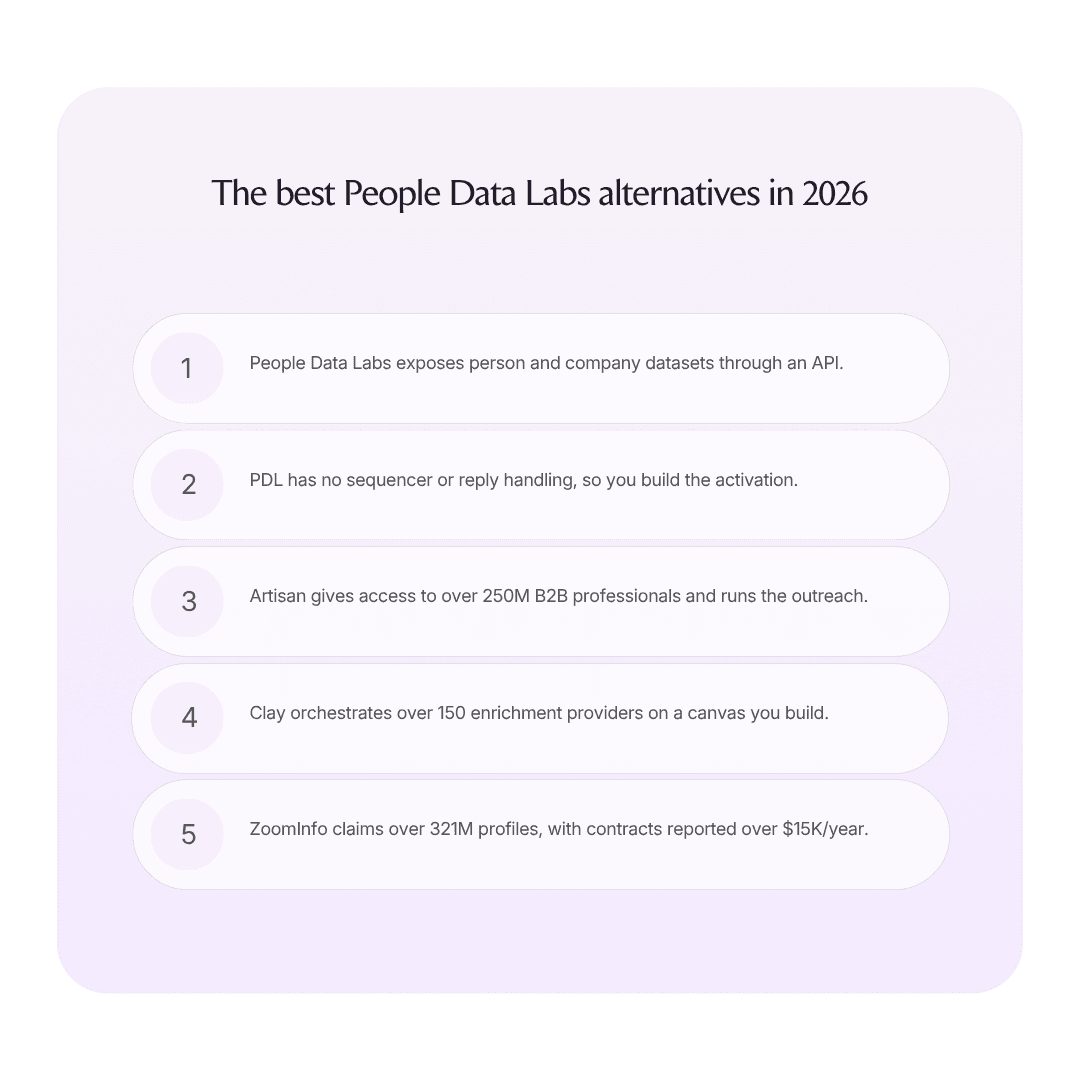
The best People Data Labs alternatives in 2026, compared on data access, API depth, pricing, and how much of the outbound job each tool runs.
Key Takeaways
- Artisan is the top People Data Labs alternative for teams that want data and activation together: over 250M B2B professionals in over 200 countries, plus Artisan Local Data with over 250M local businesses, waterfall enrichment, and an AI BDR that runs outreach, with over 90% of customers running her autonomously.
- People Data Labs' edge is API-first, composable data for developers, not a workflow or an interface a sales rep uses.
- Clay is the best pick if you want to orchestrate raw data yourself, across over 150 enrichment providers, at $167-446/month public tiers.
- ZoomInfo offers the deepest US data with an enterprise API, but at over $15K/year reported and with heavy contracts.
- Apollo bundles data and sequencing self-serve at free to $119/user/month.
- Choose by what sits on top of the data: nothing (PDL, Clay), sequencing (Apollo), or an AI that runs the whole motion (Artisan).
The best People Data Labs alternative depends on whether you want raw data through an application programming interface (API) or an outcome. If you want records to build with, Clay and ZoomInfo are closest. If you want the data plus an AI that runs the outreach, Artisan is the pick: over 250M B2B professionals, waterfall enrichment, and an AI business development representative (BDR) that books meetings.
People Data Labs (PDL) is an API-first data company. It ships person and company datasets through developer endpoints so teams can embed enrichment into their own products and pipelines. This composability is its whole reason to exist, and for engineering-led teams it is useful. But an API is not an outbound motion. Most teams evaluating PDL are choosing between building on raw data and buying something that already turns data into meetings, and the right alternative sits on one side of this line or the other.
How the best People Data Labs alternatives compare
Rank | Tool | Best for | Standout capability | Public pricing |
1 | Artisan | Data plus an AI that runs outreach | Autonomous AI BDR on over 250M B2B professionals | Usage-based credits for Ava's work; dialer seats billed separately; free trial (see pricing) |
2 | Clay | Orchestrating raw data yourself | Over 150 enrichment providers, Claygent | $167-446/month public tiers |
3 | ZoomInfo | Enterprise data depth and API | GTM Intelligence Platform, WebSights | Over $15K/year reported |
4 | Apollo | Self-serve data plus sequencing | All-in-one prospecting | Free to $119/user/month |
5 | Cognism | EMEA compliance and phone data | Diamond Data verification | About $15-50K/year reported |
6 | LeadIQ | Fast capture into CRM | One-click prospect capture | Pro $200/month for up to five users |
Why do teams look for a People Data Labs alternative?
A few reasons. Build cost comes first, since PDL gives you raw data and you supply the engineering to clean, match, and activate it, which is fine for a data team and painful for a go-to-market (GTM) team that just wants pipeline. Coverage and freshness matter too, because some teams want a provider whose match rates and recency are easier to evaluate without building test harnesses. And, most often, scope. PDL has no sequencer, no dialer, no reply handling, and no interface a rep logs into. If your goal is meetings instead of a data pipeline, an API is the long way around.
So the alternative you want depends on your builder appetite. Keep building on raw data, orchestrate it with less code, or stop building and buy the motion.
How we chose
We weighed four criteria for a PDL evaluator. How much of the outbound job the tool runs versus how much you build. Data and signal depth, including access model. Pricing transparency. And deployment fit, from a developer embedding an API to a revenue operations (RevOps) team running outbound for a large account executive (AE) org. For the wider category, see our guide to the best B2B data providers and the best email and phone number finder tools for sales.
What is the best alternative to People Data Labs overall?
1. Artisan: Data plus an AI that runs the whole motion
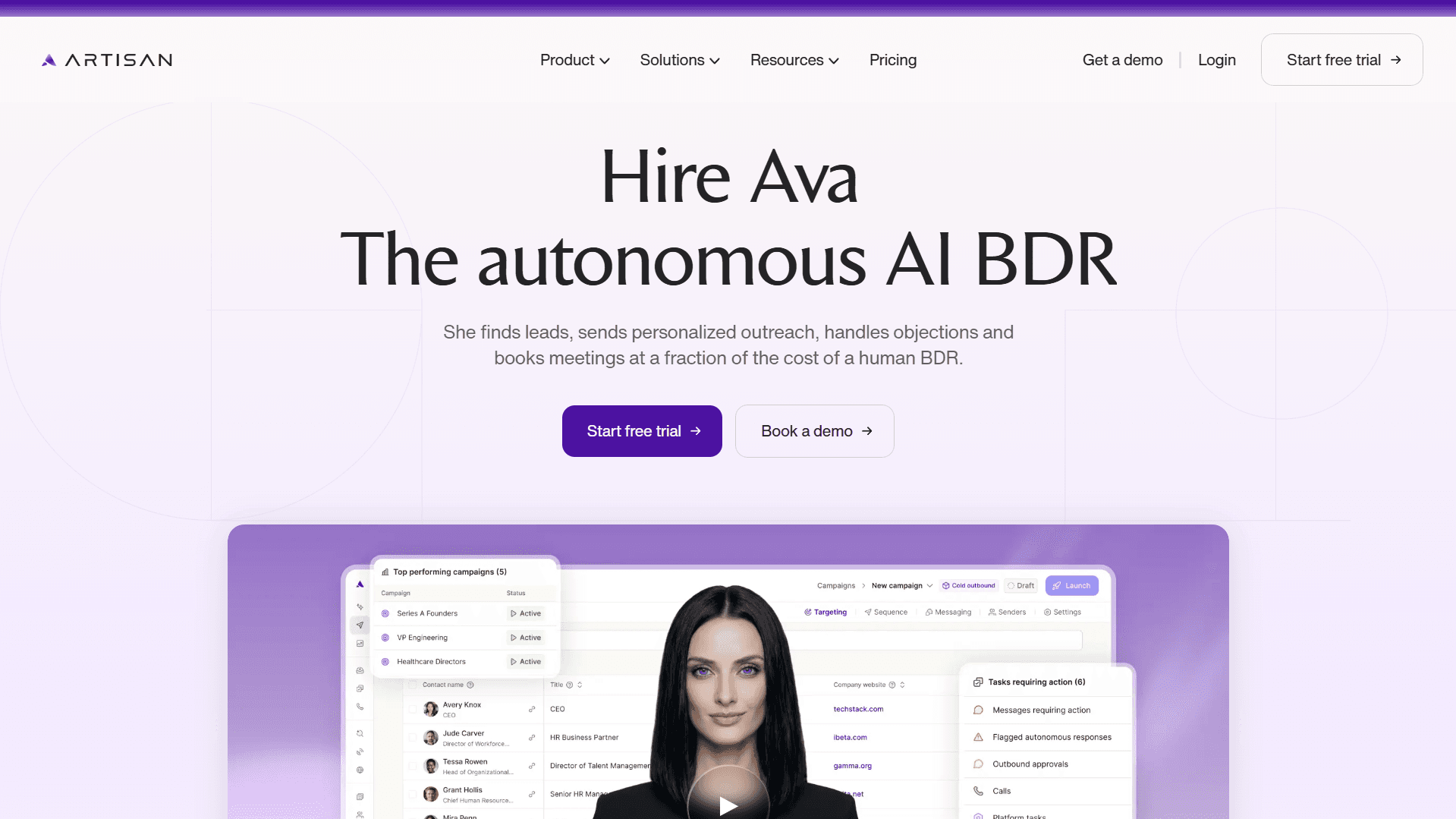
Artisan is the alternative for teams whose actual goal is pipeline, not a data pipeline. Instead of an API you build on, Ava, the AI sales agent at its core, works a database of over 250M B2B professionals in over 200 countries, plus Artisan Local Data with over 250M local businesses, using natural-language search and ideal customer profile (ICP) filters in an interface a rep or a RevOps admin actually uses. Intent signals like funding rounds, new executive hires, and active hiring narrow the list further, and waterfall enrichment runs across roughly a dozen providers and charges only on a successful match.
Then Ava does everything PDL leaves you to build. She writes one-to-one messaging, launches email, social media, and dialer sequences on each lead's local business hours, qualifies replies against a knowledge base, chases follow-ups, and books meetings with CRM-owner routing. Autonomy is a dial: review-and-approve, objections-only, or full autonomy with plain-language escalation rules and a full audit trail. Over 90% of customers run Ava autonomously. Native Salesforce and HubSpot sync means the data lands on the right record without you writing the integration.
The proof is in outcomes, not endpoints. Amelia Lerutte, Chief AI Officer at SaaStr, said "Email has always been our number one driver. Artisan is now neck-and-neck in both output and closed-won revenue," after Ava sent 6,892 emails at a 3.6% positive response rate in about six weeks. For a team weighing months of engineering against a system that already books meetings, this is the trade.
Best for: teams from startup to enterprise that want data and outreach in one system, without building the activation layer
Who should pick something else: a product or data team that specifically needs raw data via API to embed in their own software
Pricing: usage-based credits for Ava's work, so you pay for the work she performs; dialer seats and phone numbers billed separately; free trial. See pricing
2. Clay: Orchestrate raw data with less code
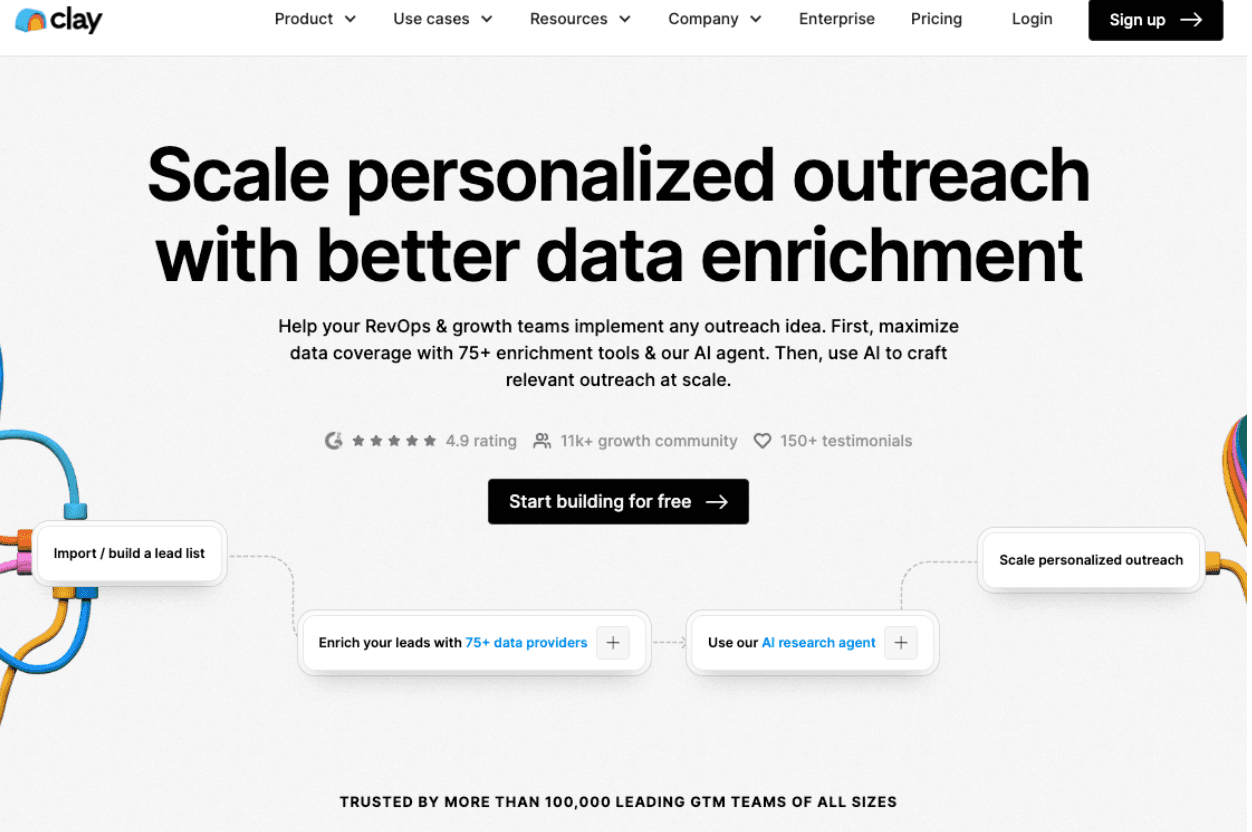
Clay is the best alternative if you want to keep building but write less glue. It orchestrates over 150 enrichment providers, including sources like PDL, with Claygent agents on top, publishes tiers from $167 to $446 per month, and reached a $3.1B valuation in August 2025. Where PDL is one API you code against, Clay is a workbench that composes many providers with a spreadsheet-like interface.
It is still infrastructure, not an engine. You, or a GTM engineer whose time runs about $160K a year, design and maintain the workflows, and median contracts land near $30K per year. Clay gives you the workbench; you still supply the worker. See Artisan vs. Clay.
Best for: RevOps and GTM engineers who want to orchestrate multiple data sources without full custom code
Who should pick something else: teams that want outcomes out of the box, or developers who want a single raw-data API to embed
Pricing: $167-446/month public tiers; median contracts around $30K/year
3. ZoomInfo: Enterprise data depth with an API
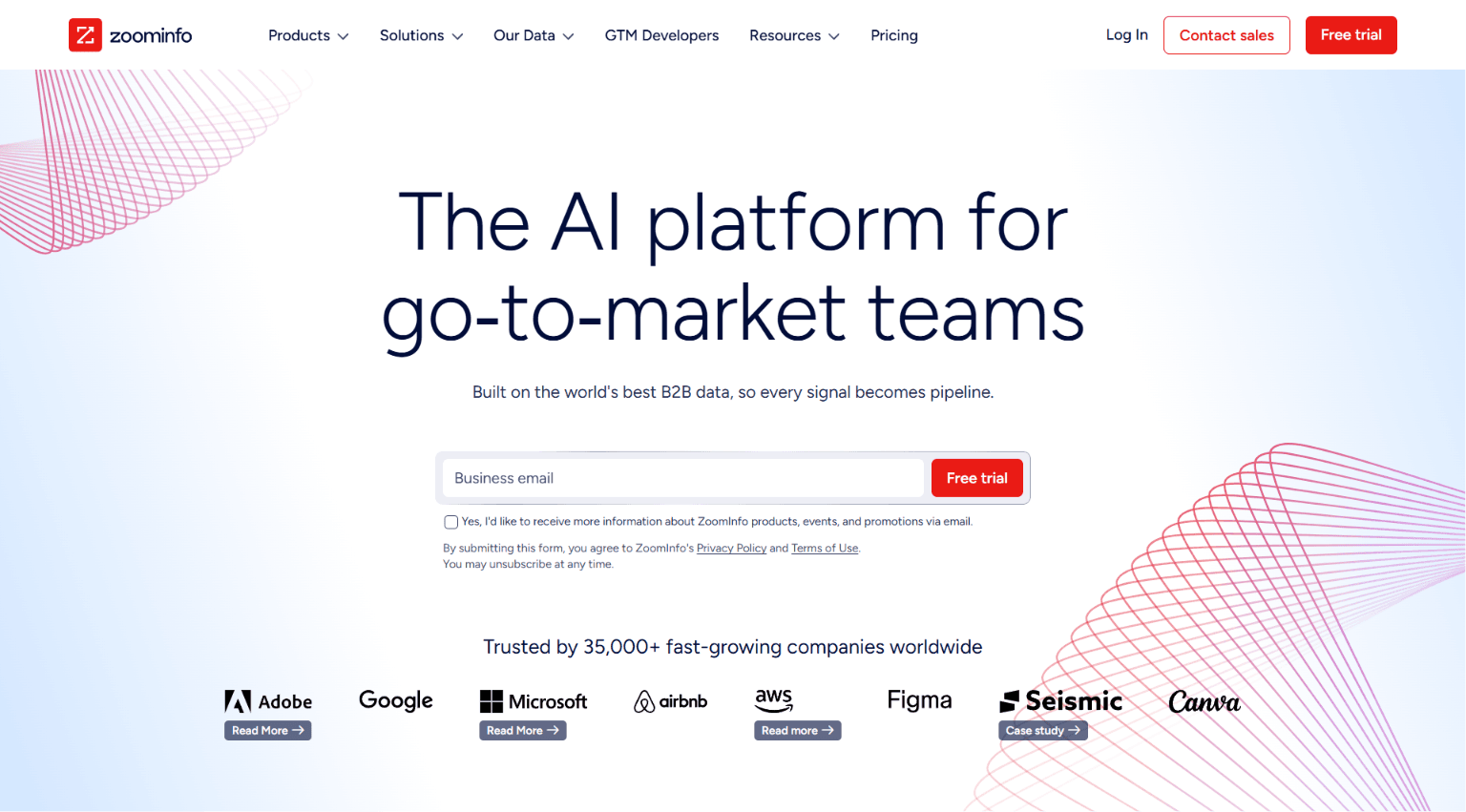
ZoomInfo is the depth alternative for teams that want a bigger, enterprise-grade dataset with API access. Now positioned as a go-to-market intelligence platform, trading as $GTM, it claims over 321M profiles (a vendor figure) and adds WebSights and Scoops. For enterprises standardizing on one deep data source with an intent layer, it is the established choice.
It is heavier and pricier than PDL: entry contracts are reported at over $15K per year, gated, and the contract terms have a reputation. Execution remains an add-on, so you are still building the motion on top.
Best for: enterprises that want the deepest US data, with API access, to build around
Who should pick something else: budget-conscious developers, or anyone who wants the outreach run for them
Pricing: over $15K per year reported, gated
4. Apollo: Self-serve data plus sequencing
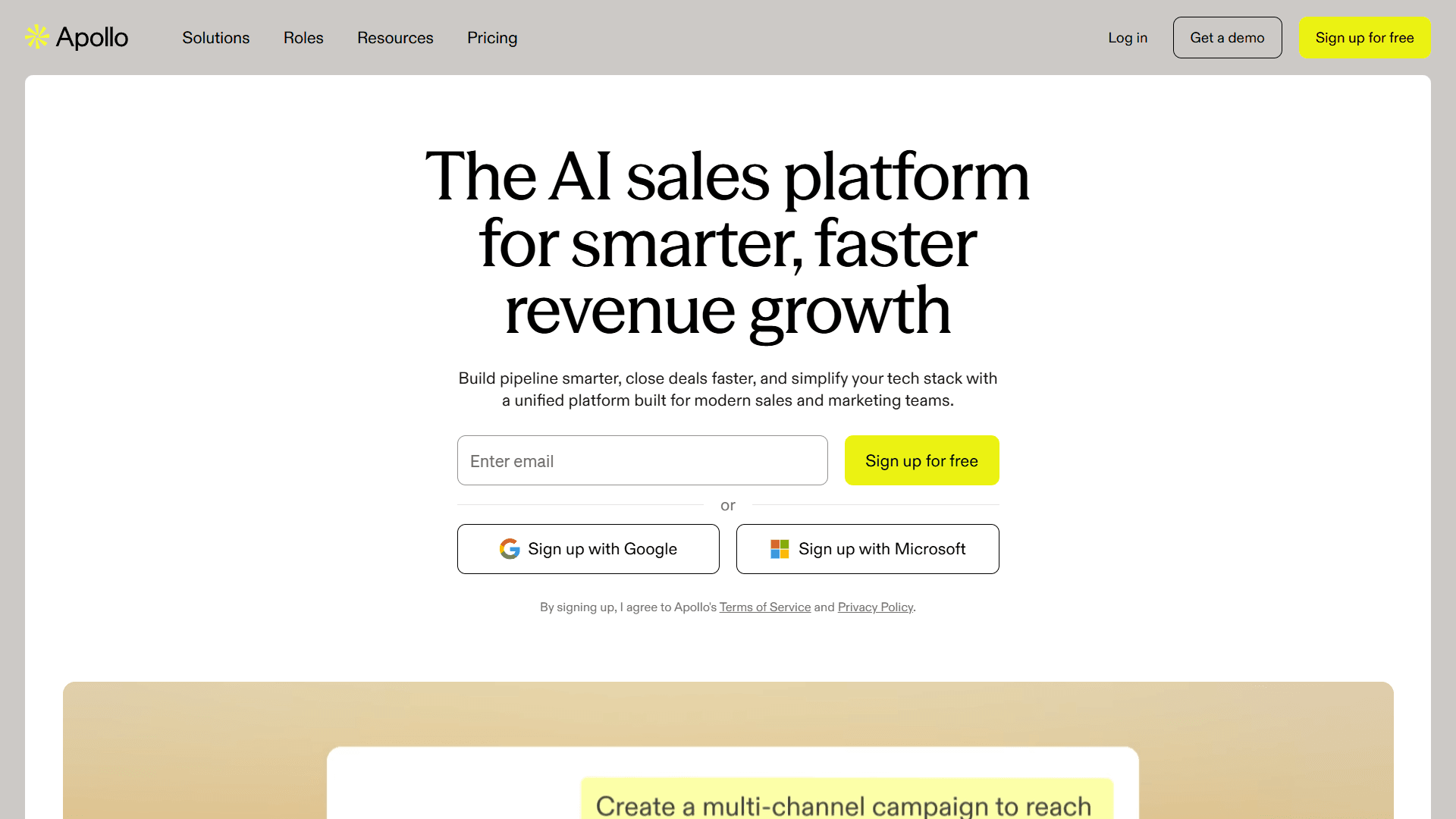
Apollo is the alternative for teams that want data plus a way to act on it without any engineering. It offers over 230M contacts, is used by over 600,000 companies (over 100,000 paying), publishes pricing from free to $119/user/month, and bundles sequencing and assistive AI. Where PDL needs you to build the activation, Apollo ships a usable one.
The AI is assistive, the model is per-seat, and enterprises treat it as a data layer. But for a small go-to-market team that picked PDL and then realized they had no way to use the data, Apollo is a fast, cheap correction. See Artisan vs. Apollo, Apollo vs. Lusha, and Apollo vs. Outreach.
Best for: SMB and mid-market teams that want data plus sequencing with no build
Who should pick something else: developers who need raw API data, or teams that want an AI to own replies and booking
Pricing: free to $119/user/month, per its pricing page
5. Cognism: Compliance-first EMEA data
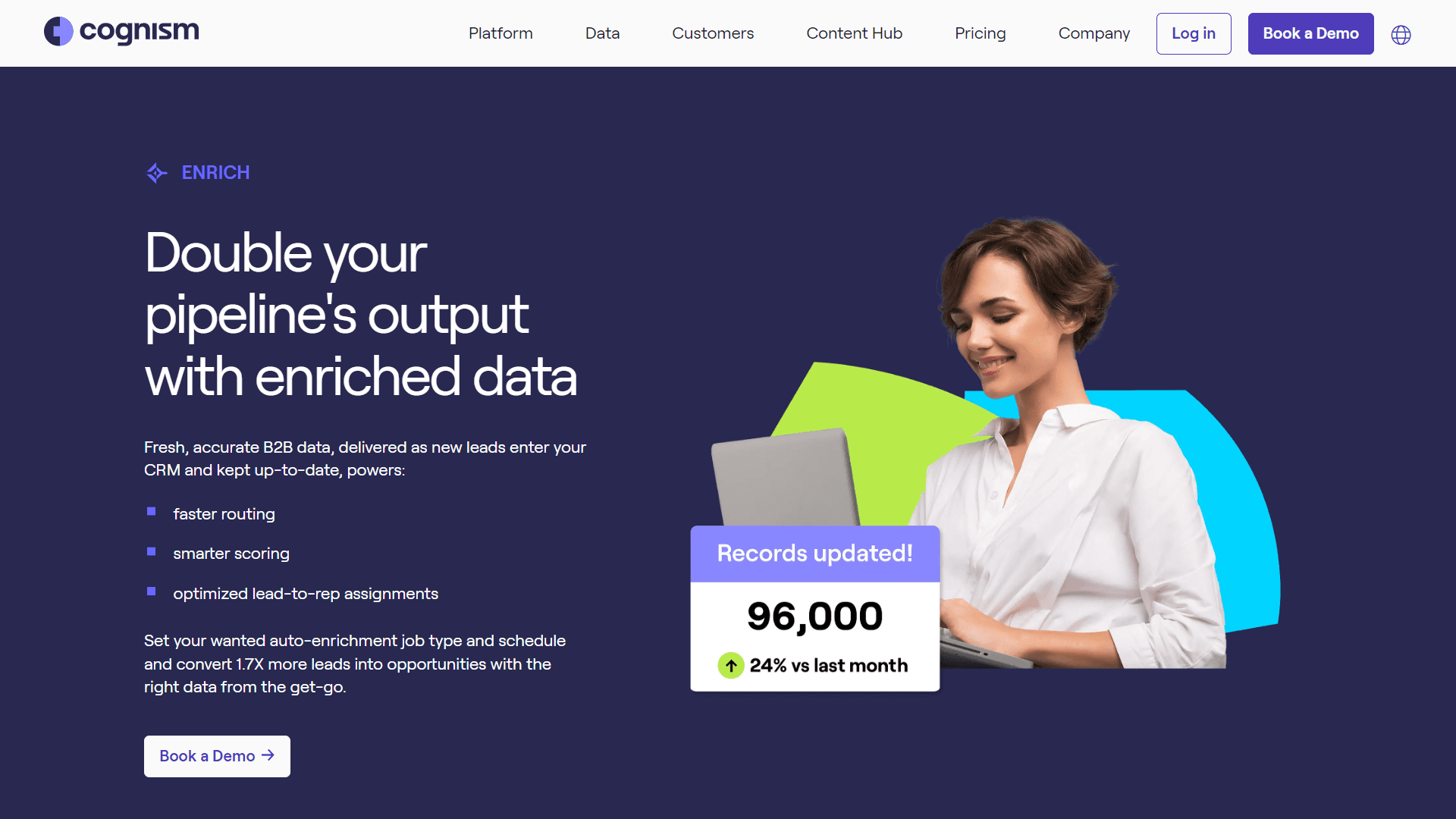
Cognism is the alternative when compliance and coverage in Europe, the Middle East, and Africa (EMEA) matter more than API flexibility. Diamond Data phone verification, do-not-call (DNC) and Telephone Preference Service (TPS) scrubbing, and GDPR-aligned processing make it the European data leader. Some teams pair it as a phone-data source where PDL's coverage is poor.
Pricing is gated and reported around $15-50K per year, and it is a data provider, so activation is separate. For diligence: its Kaspr subsidiary was fined 240,000 euros by France's data protection regulator, the CNIL, in December 2024, per the regulator.
Best for: EMEA teams that need compliant, verified phone data
Who should pick something else: developers who want composable API data, or US-only teams
Pricing: about $15-50K/year reported, gated
6. LeadIQ: Fast capture into CRM
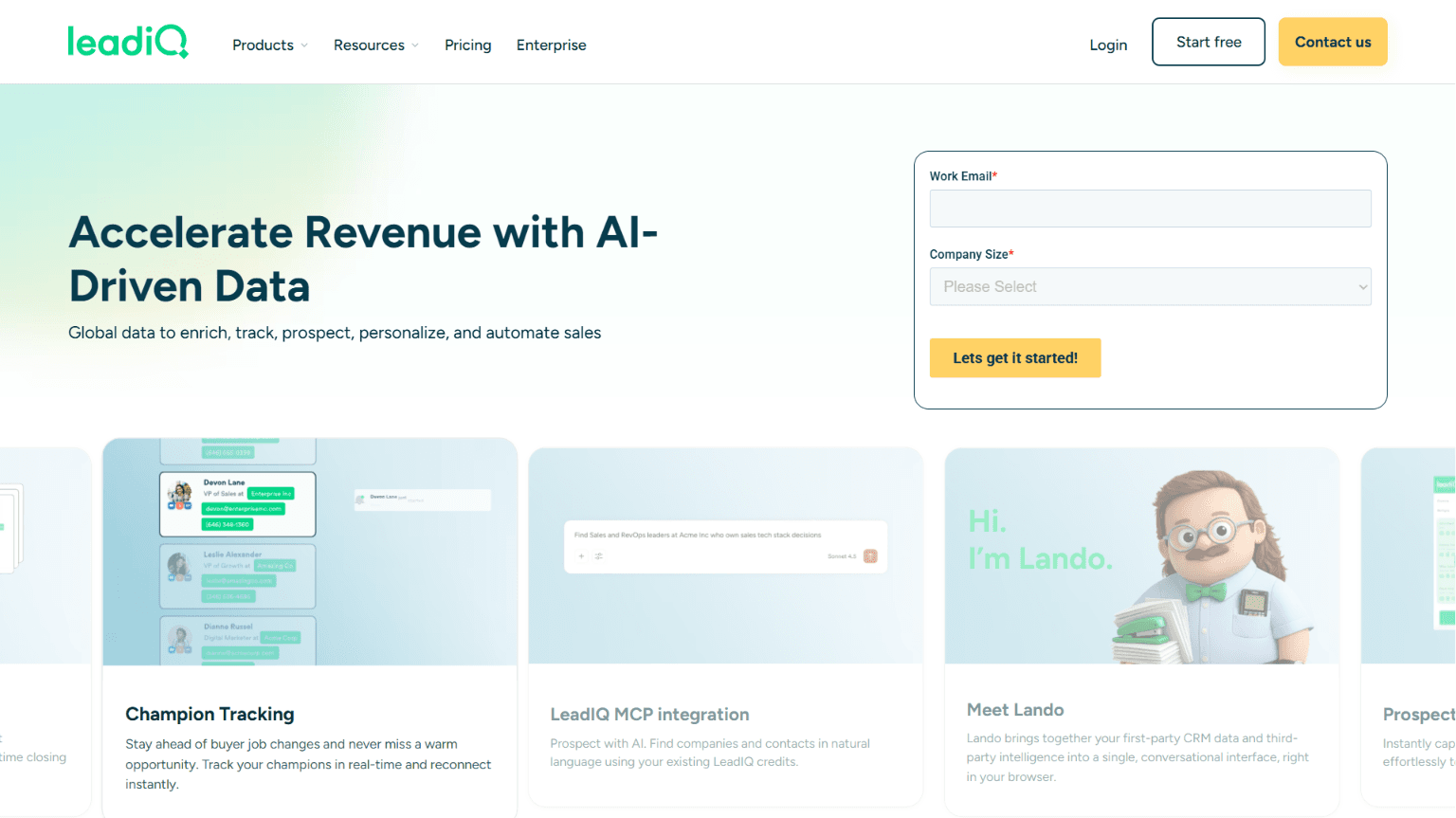
LeadIQ is the alternative for a sales team that never wanted an API in the first place, just clean contacts in their sequencer. It captures a prospect and pushes verified data into CRM and cadence tools in a few clicks. For sales development representatives (SDRs), it is the human-facing version of what a developer would call an enrichment endpoint.
It is a capture layer, not an engine, so the writing, replying, and booking stay manual, and its depth is mid-range and US-centered. But as a no-code way to move contacts into a workflow, it is purpose-built.
Best for: SDR teams that want fast, clean capture into their existing stack, no code
Who should pick something else: developers embedding data via API, or teams that want the outreach handled
Pricing: Pro $200/month for up to five users (200 credits)
What is the best enterprise alternative to People Data Labs?
For enterprises, the question is whether you are building a data platform or buying a go-to-market outcome. If you are building, ZoomInfo is the deepest enterprise data source with an API and an intent layer to standardize on. If you are buying the outcome, Artisan is the pick: it delivers data and activation in one governed system, with central-ops deployment where sales ops runs Ava for large AE teams who never log in, SOC 2 Type II attestation, GDPR and CCPA compliance, single sign-on (SSO), SAML, role-based access, and a full audit trail. The enterprise argument for Artisan over an API is total cost, because a raw-data API still needs the engineering, sequencer, dialer, and reply layer that Artisan includes, and typical enterprise outbound stacks run five to eight tools before headcount.
Stay with People Data Labs if...
PDL is the right choice for the right team. Stay with People Data Labs if you are a product or data team embedding contact and company data directly into your own software or internal pipelines, where an API is exactly the interface you want. Stay if you have the engineering to clean, match, and activate raw data and value that control. And stay if data is your product, not just your sales input. The case to switch appears when your real goal is booked meetings and you find yourself building the sequencer, dialer, and reply logic that a platform would give you out of the box.
Frequently asked questions
What is the best People Data Labs alternative in 2026? It depends on your goal. To keep building on raw data with less code, Clay orchestrates over 150 providers. For maximum enterprise data depth, ZoomInfo. For teams that want data plus the outreach run for them, Artisan pairs over 250M B2B professionals and waterfall enrichment with an AI BDR, and over 90% of customers run her autonomously.
Is there a People Data Labs alternative that includes outreach? Yes. PDL is data-only, but Apollo bundles data with sequencing self-serve, and Artisan goes further by running the whole motion: sourcing, enrichment, personalized email, social media, and dialer outreach, reply handling, and meeting booking. If your aim is meetings instead of a data pipeline, this changes the build-versus-buy math substantially.
Which alternative is best for developers who want an API? If you specifically need composable, embeddable data, PDL is well suited and Clay adds orchestration across many providers. ZoomInfo offers an enterprise API with deeper data at a higher price. Artisan is not an API-first data vendor; it is a platform where the data feeds an AI that runs outbound, aimed at teams that want the outcome instead of the raw endpoint.
What is the best enterprise alternative to People Data Labs? ZoomInfo if you are building a data platform and want the deepest enterprise source, or Artisan if you want to buy the go-to-market outcome. Artisan adds central-ops deployment, SOC 2 Type II, SSO, SAML, role-based access, and a full audit trail, and folds data plus activation into one system instead of a raw API you build around.
How is Artisan different from People Data Labs? PDL delivers raw data through an API for you to build on. Artisan sources leads across over 250M B2B professionals, verifies data with waterfall enrichment (charged only on success), writes messaging, runs outreach across email, social media, and dialer steps, handles replies, and books meetings. One is an ingredient; the other is the finished motion.
Can I use People Data Labs data inside another platform? Yes, that is the point of an API-first provider, and orchestration tools like Clay integrate many sources including PDL-style data. Platforms like Artisan instead ship their own database of over 250M B2B professionals with waterfall enrichment built in, so you receive verified data and activation without wiring an external API into a separate execution stack.
The bottom line
People Data Labs is a strong API-first data company for teams building on raw data. But if your real goal is pipeline, an API means engineering the sequencer, dialer, and reply logic yourself. Artisan delivers the data and runs the motion. Start on the homepage or read how the AI BDR works. See also best B2B data providers, data vendors, and B2B data enrichment tools.

Artisan Team
Expert insights from the team at Artisan
Our writing team blends direct operational experience, in-house data, and thorough research to bring you the very latest insights and updates about sales and GTM automation.